Sabarimala
Sabarimala, India
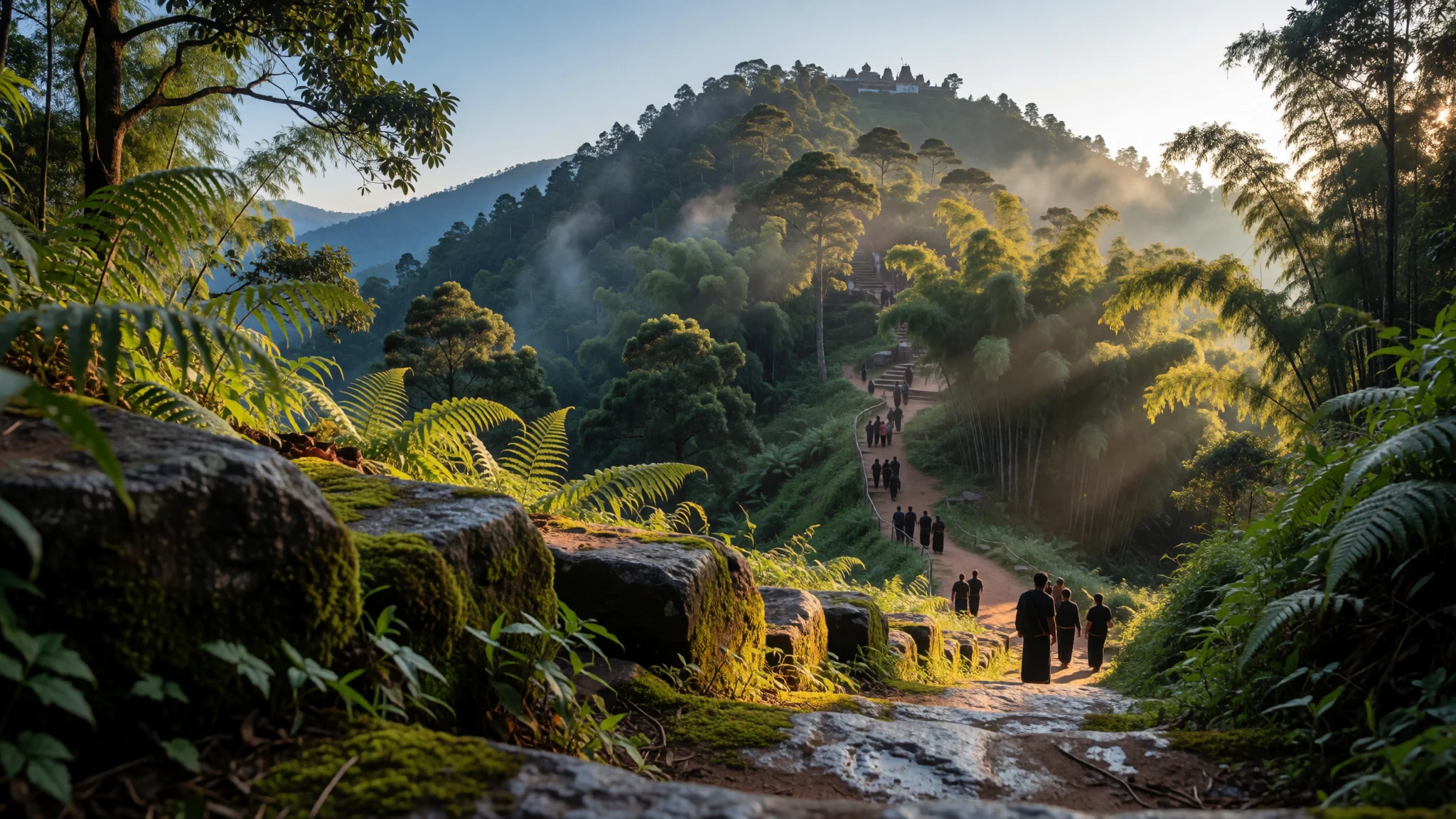
Visit Sabarimala to experience one of the world's largest annual pilgrimages, situated deep within the evergreen mountains of Kerala's Periyar Tiger Reserve.
The place
Sabarimala stands high in the southern mountains of India, positioned inside the thick tropical evergreen canopy of the Periyar Tiger Reserve in Kerala's Pathanamthitta district. The holy complex is dedicated to Lord Sree Dharma Sastha, who is widely revered as Lord Ayyappan. According to tradition, the deity is an eternal celibate and the divine son of Shiva and Mohini, the female form of Vishnu. Pilgrims arrive by the million during specific ritual periods, making this mountain shrine one of the largest annual gatherings on earth. The shrine opens its doors only during Mandala Pooja, Makaravilakku, Maha Thirumal Sankranti, and the first five days of every Malayalam month. Surrounded by peaks, the entire geography feels remote, rugged, and intensely spiritual. Visitors who make the arduous ascent find themselves immersed in an atmosphere governed by ancient customs, rigorous austerity, and absolute devotion. The journey requires walking steep forest tracks that wind through dense wilderness, where every milestone brings travellers closer to the sacred hilltop. The air carries the scent of damp earth, woodsmoke, and ritual camphor, while thousands of practitioners chant sacred verses that echo across the valley.
Its story
The narrative of Ayyappan's birth and earthly life forms the bedrock of regional legend. Long ago, after the demon Mahishasura fell, his sister Mahishi sought vengeance against the gods. Performing severe penance, she secured a boon granting her near invulnerability, with the sole exception that she could be slain only by a mortal child born to both Vishnu and Shiva. Confident that such a union was impossible, Mahishi tyrannised the heavens and earth. In their distress, the deities appealed to Vishnu, whose avatar Mohini united with Shiva to produce a boy named Manikandan, adorned with a bell around his neck. The infant was left by the Pampa River, where the childless king of the Panthalam dynasty discovered and adopted him. Years later, driven by political hostility from the royal minister, the queen feigned a mortal illness curable only by tiger milk. Twelve-year-old Manikandan ventured into the deep forest to gather it. Along the way, he successfully destroyed Mahishi. The grateful gods transformed themselves into tigers to escort the boy safely back to his foster parents' palace. This legendary feat cemented his divine status, and the route he took became the sacred path that millions of pilgrims revere to this day.
What to see
- The Sacred Ascent — Pathanamthitta district
Climbing the mountain requires traversing a legendary flight of stone thresholds that lead upward to the primary shrine. Pilgrims carry traditional cloth bundles filled with sacred offerings on their heads, ascending the slope while chanting devotional mantras that resonate across the evergreen forest canopy. - Sabaripeedam — Pathanamthitta district
This historic resting point marks a significant spiritual milestone along the uphill walking route. Devotees pause here to offer prayers and reflect before continuing the steeper climb towards the main hilltop temple complex, surrounded by towering trees and mountain mist. - Sannidhanam — Pathanamthitta district
The primary courtyard houses the main sanctum sanctorum where the deity is enshrined. This elevated plateau serves as the focal point for all rituals, where worshippers gather in vast crowds to witness daily pujas and experience the intense spiritual energy of the sacred site. - Periyar Tiger Reserve Forest Trails — Pathanamthitta district
The approach tracks wind through dense evergreen wilderness and mountainous terrain. Walking these pathways offers travellers a profound encounter with raw nature, featuring rich flora and fauna typical of southern India's high ranges, far removed from urban life.
Culture
The culture surrounding Sabarimala is defined by strict asceticism, shared devotion, and communal equality. Before undertaking the pilgrimage, practitioners undergo an intense forty-one-day period of purification. During this time, they adopt a simple lifestyle, abstain entirely from alcohol, tobacco, and non-vegetarian food, and wear specific ritual attire. Social status is temporarily erased; every participant addresses others by the divine name Swami, regardless of their background or daily profession. Free communal dining halls operate continuously, reflecting a deep ethos of hospitality and service where volunteers feed millions without charge. Visitors should note that certain traditional restrictions regarding age and gender apply to the inner sanctum based on ancient religious codes. When visiting the temple complex, always remove your footwear before stepping onto sacred stone platforms and dress in modest, conservative attire that respects local customs.
What to wear
Traditional dress for pilgrims centres on simplicity and renunciation of worldly status. Male devotees typically wear solid-coloured lungis or dhotis, most commonly in black or dark blue hues, paired with bare chests during the peak ascent. Many wrap a small cloth towel around their waist or shoulder and carry a woven cloth bundle known as the irumudi on their head, which contains sacred ghee-filled coconuts and ritual offerings. Modern visitors outside the ascetic vows generally wear loose-fitting, comfortable cotton garments suitable for tropical walking, such as simple shirts and trousers. Synthetic fabrics should be avoided due to the high humidity and strenuous physical exertion required during the mountain trek. Modesty is paramount: garments must cover shoulders and knees entirely to align with local religious sensitivities. Sturdy walking shoes or sandals that can be removed quickly are essential for the rocky paths, though much of the final ascent must be completed barefoot as part of the traditional pilgrimage discipline.
What to eat
- Aravana Appam — Temple counters and distribution stalls
A unique sweet dumpling with a dark brown hue, prepared exclusively at the temple complex using traditional methods and prized by pilgrims as a sacred prasadam to take home. - Aravana Payasam — Official temple canteens
A rich, slow-cooked temple dessert made from high-quality rice, pure ghee, and sweet jaggery, traditionally sold in sealed tins at official counters across the complex. - Kerala Style Lunch — Annadhanam halls and local eateries
A wholesome regional meal featuring boiled brown rice served with traditional lentil stews, tangy rasam, spiced buttermilk, and vegetable side dishes. - Masala Dosai — Way-station refreshment stalls
A crisp, fermented rice and lentil crepe stuffed with spiced potatoes and onions, offering a popular and energising snack along the pilgrimage route. - Milma Sambharam — Government cooperative booths
A refreshing traditional spiced buttermilk beverage infused with green chillies, ginger, and curry leaves to help travellers stay hydrated in the tropical heat.
Plan it
Best time. November through January during the Mandala Pooja and Makaravilakku festival seasons, when the temple is open and weather conditions are cooler.
How long. 2–3
Getting there. Fly into Thiruvananthapuram or Nedumbassery airports, then travel by road via Pathanamthitta to Nilackal and Pamba, where the mountain trek begins.
Budget. low
Tips
- Prepare for massive crowds during peak festival months and book travel well in advance
- Embrace the ascetic guidelines by keeping luggage minimal and practical
- Carry sufficient cash for small expenses as digital payments may be unreliable on the mountain
- Drink plenty of water and stay hydrated during the steep forest trek
Etiquette
- Remove footwear before entering temple areas and walk barefoot where required
- Maintain absolute modesty in dress, covering shoulders and legs completely
- Address fellow travellers and pilgrims respectfully as Swami
Nearby
Sources
- Wikidata Q1520207 (CC0)
- Wikipedia (CC BY-SA 4.0)
- Wikivoyage (CC BY-SA 4.0)