Saarbrücken
Saarbrücken, Germany
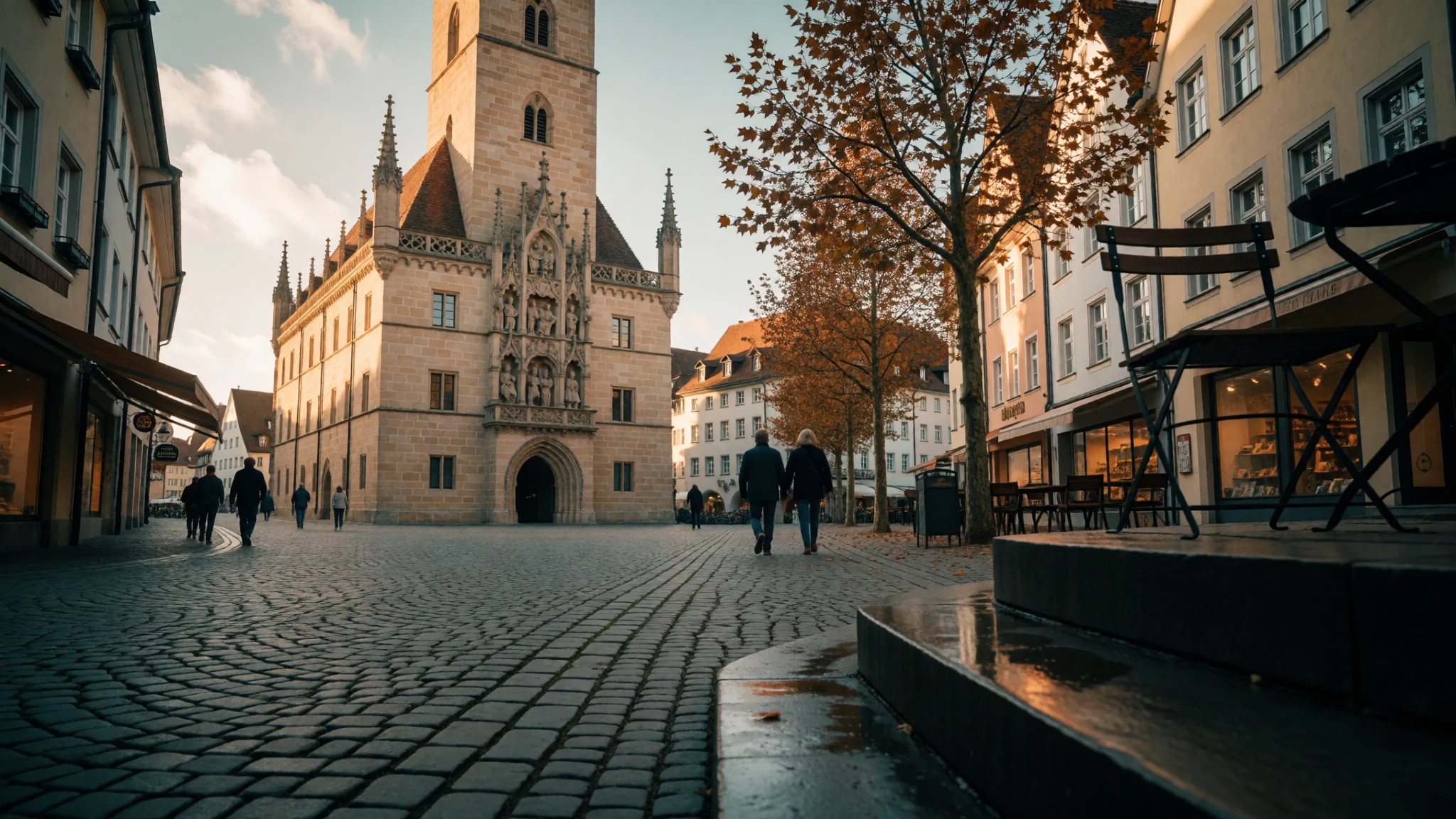
Saarbrücken is a relaxed riverside border city where Baroque squares, French-tinged food and green hills sit within an easy walk.
The place
Saarbrücken is the capital of Saarland, Germany's small south-western state, and with a population of 182,859 it is also the largest city there. It sits on the Saar river, a tributary of the Moselle, at about 190 m above sea level, and its southern edge touches France. That border shapes daily life: menus, shopping trips and weekend habits all lean Franco-German.
The city is a patchwork. It was stitched together in the early twentieth century from three separate towns: old Saarbrücken on one bank, St Johann on the other, and the industrial district of Malstatt-Burbach. Each still has its own feel. St Johann holds the pedestrian centre, with the market square, bars and shops. The old-town side climbs to the castle and the Baroque squares laid out for local princes. Malstatt carries the memory of the coal, iron and steel that once paid for it all.
Today the economy leans on administration, the university, broadcasting and culture. The main campus of Saarland University sits inside the city forest, so students and woodland share the same postcode. The regional public broadcaster has its seat on the Halberg hill. Forest, riverbanks and hills are close to the centre, which makes the city feel greener than its industrial past suggests.
Saarbrücken is a modest, walkable place rather than a headline destination. Crowds are thin even in summer, and the climate is gentle, with only mild swings between warm and cool and rain spread across the year. It works well as a two- or three-day stop between Paris, Frankfurt and the Rhine valleys.
Its story
Saarbrücken's story starts with a river crossing. Before Rome arrived, a Celtic people, the Mediomatrici, lived in the area. After Julius Caesar's conquest of Gaul it became imperial territory, and a Gallo-Roman settlement called vicus Saravus grew beneath the Halberg hill, on routes linking Metz with Worms and Trier with Strasbourg. A wooden bridge, later rebuilt in stone, tied it to the opposite bank, where a villa stood in what is now St Arnual. In a cave on the Halberg, worshippers of Mithras built a shrine, close to the old eastern harbour.
Late in the fourth century, raiders from the Alemanni tribes wrecked the settlement and its small fort, and the site seems to have stood empty for close to a hundred years.
After the Franks took over the region, a village called Merkingen grew up where the old bridge met the south-western bank, and the Frankish rulers passed it to the bishops of Metz. At the turn of the seventh century a bishop named Arnual set up a community of clergy there, and the Gothic church of St Arnual still carries his name. Later centuries brought the counts and princes whose castle and eighteenth-century town planning, much of it by the architect Friedrich Joachim Stengel, define the centre today. The stone bridge across the Saar dates from 1546.
The modern city was assembled from three towns early in the twentieth century and became the hub of the Saar coalfield, turning out iron, steel, beer and pottery. Twice in that century it was cut loose from Germany and served as capital of a separate Saar territory, before returning for good. That back-and-forth is why French influence feels familiar here rather than foreign.
What to see
- St. Johanner Markt — St Johann
The pedestrian square at the heart of St Johann is where Saarbrücken meets for coffee, drinks and market days. Townhouses frame it, café tables spill onto the stones in dry weather, and evenings get lively. It is the easiest first stop, with plenty of eating places in the lanes nearby. - Rathaus St. Johann — St Johann
The Neo-Gothic town hall, designed by Georg Hauberrisser, has a tower of about 54 m and a façade decorated with figures from historic trades. It is striking lit up after dark, which is when the photographs tend to look best. Admire it from the street and the square in front.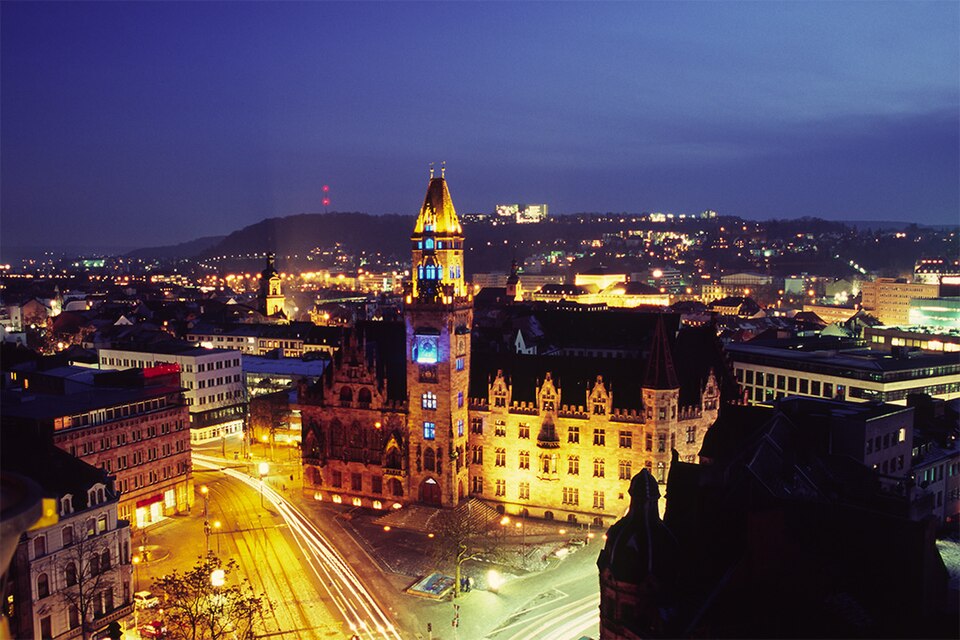
- Ludwigskirche — Alt-Saarbrücken
This Protestant Baroque church stands at the centre of a planned eighteenth-century ensemble of matching buildings around its square. The interior is bright and calm, more restrained than many Catholic Baroque churches. Visit in daylight, when the pale stone shows its detail, and step inside quietly if a service is under way.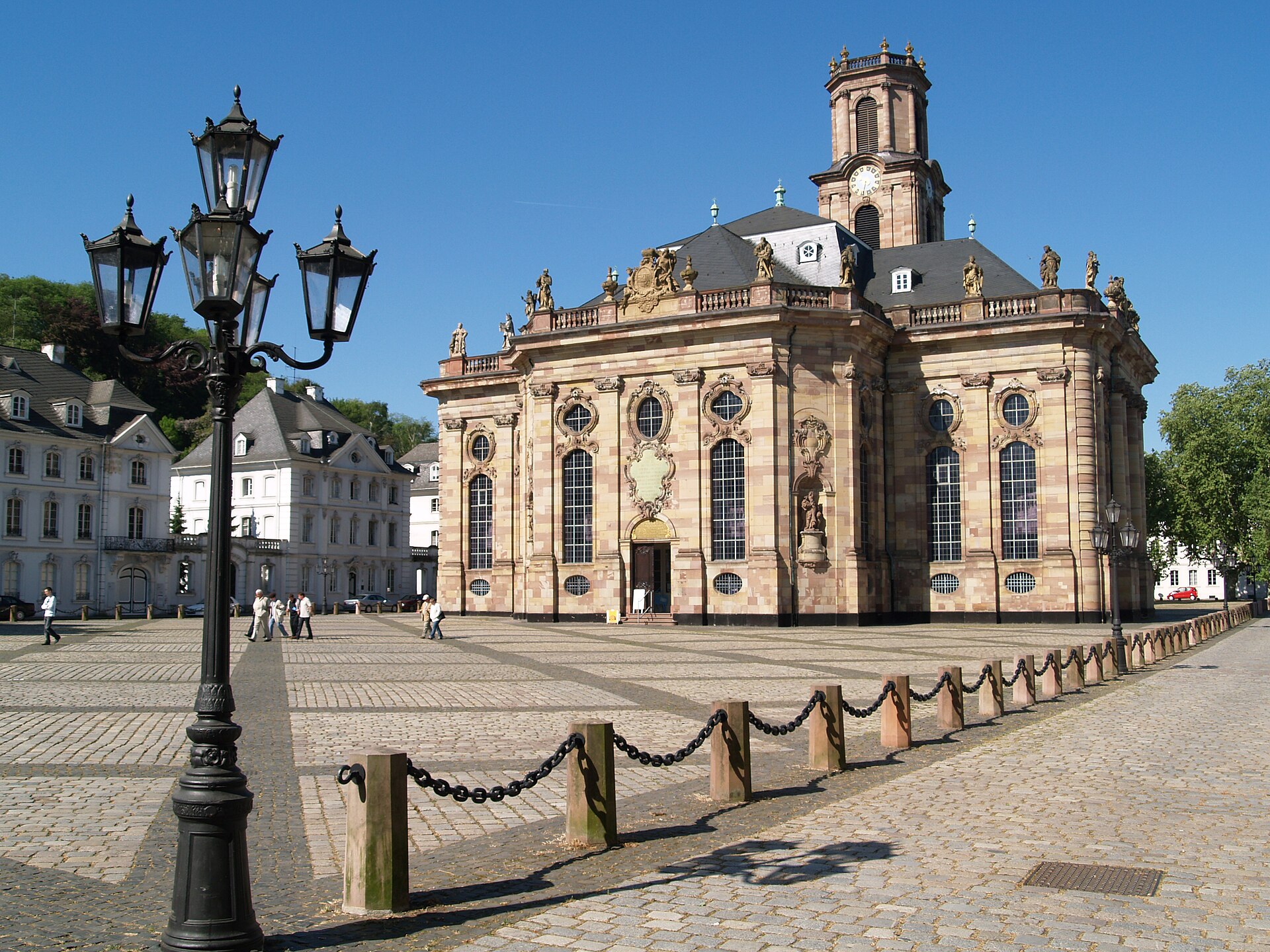
- Saarbrücken Castle and Schlossplatz — Alt-Saarbrücken
A Baroque palace with a modern glass-and-steel pavilion at its centre, standing above the river. It houses the Historical Museum Saar and gives wide views over the city. The square in front mixes old façades with modern memorial art, so allow time to read it slowly. Check the official site for opening times.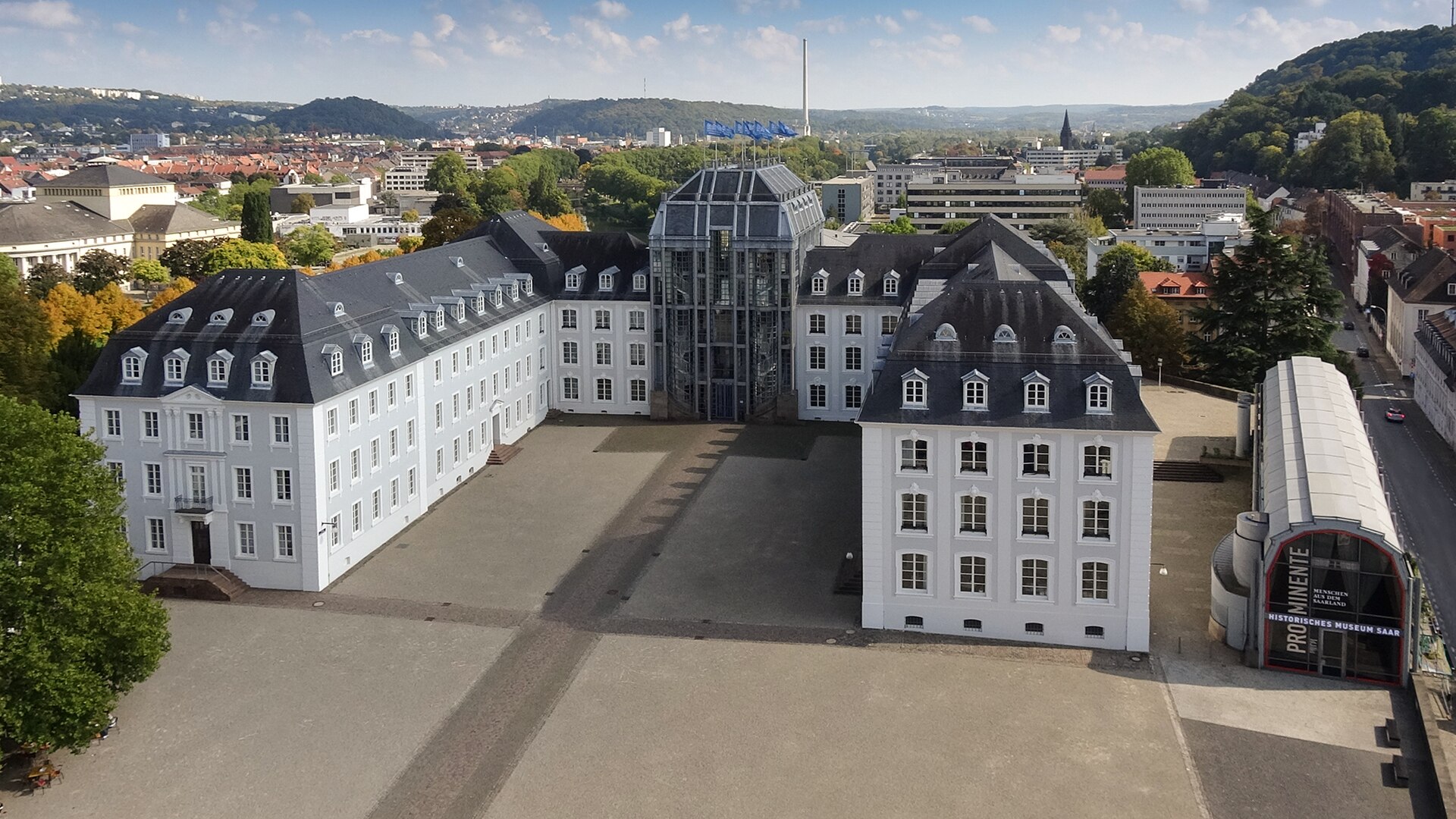
- Basilica St. Johann — St Johann
Friedrich Joachim Stengel designed this Baroque church in the middle of the eighteenth century, and it later received the Catholic title of minor basilica. It stands a few steps from the market square, so it combines easily with a coffee stop. The façade and softly lit interior reward a short visit. - Johanneskirche — St Johann
A Neo-Gothic Protestant church whose spire rises about 74 m and is a useful landmark for getting your bearings in the centre. Its pointed lines contrast with the rounder Baroque churches elsewhere in town, and the pairing of the two styles says a lot about how the city grew.
Culture
Saarbrücken's character comes from being a border city. For long stretches of its history it has looked west as much as east, and French influence is easy to spot in the crêperies, the café terraces and the habit of popping over to Lorraine for the weekend. At the same time the city is unmistakably German in its tidiness and its quiet Sundays.
Coal and steel built the Saar region, and the working past still counts for local identity, even as heavy industry has faded. Today the weight has shifted to the university, the broadcaster and the arts. The Historical Museum at the castle, the theatres and the festivals give a mid-sized city a busier cultural calendar than its size suggests.
Saarlanders have a reputation for being relaxed, sociable and fond of eating and drinking. Dialect is strong, and a few words of German go a long way. Grilling is a social ritual: the Schwenker steak, cooked on a rack swung over a wood fire, is a festival staple and the centre of many a garden gathering.
Greet staff with a clear "Guten Tag" when you walk into a shop or café, keep your voice down inside the Baroque churches, and do not count on shopping on a Sunday.
What to wear
Saarbrücken has no single famous costume. The traditional Tracht of this part of south-west Germany, with linen blouses, wool skirts, embroidered aprons and dark waistcoats, now appears mostly with folk groups and at village festivals. The most visible traditional dress in the wider Saar region is the miner's ceremonial uniform, dark and braided, worn at parades and commemorations that honour the coal-mining past.
Everyday dress in the city is modern and practical: jeans, trainers and light jackets, with students in casual layers around the university and office workers in smart casual. People dress up a little for the theatre or a good restaurant, but rarely formally. Outdoor clothing is common, because the forest and hills start almost at the edge of town.
Visitors should pack layers. Temperatures swing only mildly, but rain can fall in any month, so a light waterproof is sensible whatever the season. Comfortable shoes with decent grip help on cobbles, the hill up to the castle and any walk along the river. Churches here have no strict dress code, but covered shoulders and quiet clothing are polite, and a smarter outfit suits an evening at the theatre or a long dinner.
What to eat
- Schwenker — Festivals and Biergärten across the city
The Saarland's signature grilled steak, cooked on a rack swung over an open fire by the cook. It has a smoky, simple flavour and is usually served with bread and salad. It is a social dish, best eaten outdoors with a beer. - Dibbelabbes — Traditional Saarland taverns (Schenken) around St Johann
A rustic potato dish of grated or chopped potato baked with bacon and herbs, filling and comforting on a cool day. It comes from the region's home cooking and sits well beside a salad or a glass of local wine. - Lyoner — Butchers' counters and market stalls in the town centre
A smooth, mild pork sausage that is a regional favourite, sliced cold for bread or fried hot. It is cheap, everyday food that locals eat without ceremony, and a good way to taste ordinary Saarland cooking. - Crêpes and galettes — Crêperies in the pedestrian centre near St Johanner Markt
A reminder of the French border: thin sweet crêpes and buckwheat galettes with savoury fillings such as ham and cheese. They make a light lunch between sightseeing stops, and cider is the traditional drink alongside. - Döner and Turkish grills — Casual eateries around the town centre
Turkish-run snack eateries are part of the city's everyday eating, serving döner, grilled meats and flatbreads quickly and generously. They suit late evenings after the bars, and many have vegetarian options such as falafel or grilled cheese.
Plan it
Best time. May–June and September–October, when days are mild and the forest and riverbanks are at their best. Summers stay moderate and winters are cool, with rain spread across the year, so carry a waterproof in any month.
How long. 2–3
Getting there. Saarbrücken Airport in Ensheim is the local airport, a short transfer from the centre. Many visitors arrive via Frankfurt Airport, either on a direct regional train or on the Lufthansa bus shuttle to Saarbrücken (about two hours), which can be booked on Lufthansa flights; check the airline for details. Frankfurt-Hahn has no direct link to the city.
Budget. mid
Tips
- Check the official site, saarbruecken.de, for market days, festivals and event dates before you fix your plans
- Spend an evening around St Johanner Markt and the Nauwieser quarter, where most bars and restaurants are
- Take a day trip to the Saar loop: a regional train to Mettlach, then about 5 km on foot along the river, and roughly an hour up to the Cloef lookout
- Carry a card but keep some cash for market stalls and small snack eateries
- Pack a light waterproof, since rain is possible all year
Etiquette
- Greet staff with "Guten Tag" when entering shops, cafés and restaurants
- Keep voices low in churches and on public transport
- Expect most shops to be closed on Sundays
Nearby
Sources
- Wikidata Q1724 (CC0)
- Wikipedia: Saarbrücken (rev 1383097341) (CC BY-SA 4.0)
- Wikivoyage: Saarbrücken (rev 5416451) (CC BY-SA 4.0)
- Photo: Das Rathaus in Saarbrücken bei Nacht (Dirk Weishaar) (CC BY 3.0)
- Photo: Sarre, Sarrebruck, Hôtel de ville (Calips) (CC BY 3.0)
- Photo: Berliner Promenade (Supratim.gre2014) (CC BY-SA 4.0)
- Photo: Historisches Museum Saar am Schlossplatz (Historisches Museum Saar) (CC BY-SA 4.0)
- Photo: Campus der Universität des Saarlandes (Kondephy) (CC BY 3.0)
- Photo: Ludwigskirche in Saarbrücken (A. Josef Dernbecher) (CC BY 3.0)
- Photo: Saarbrücken (Wolfgang Staudt) (CC BY 2.5)
- Photo: Alte Brücke Saarbrücken (Flocci Nivis) (CC BY 4.0)


