Rügen
Rügen, Germany
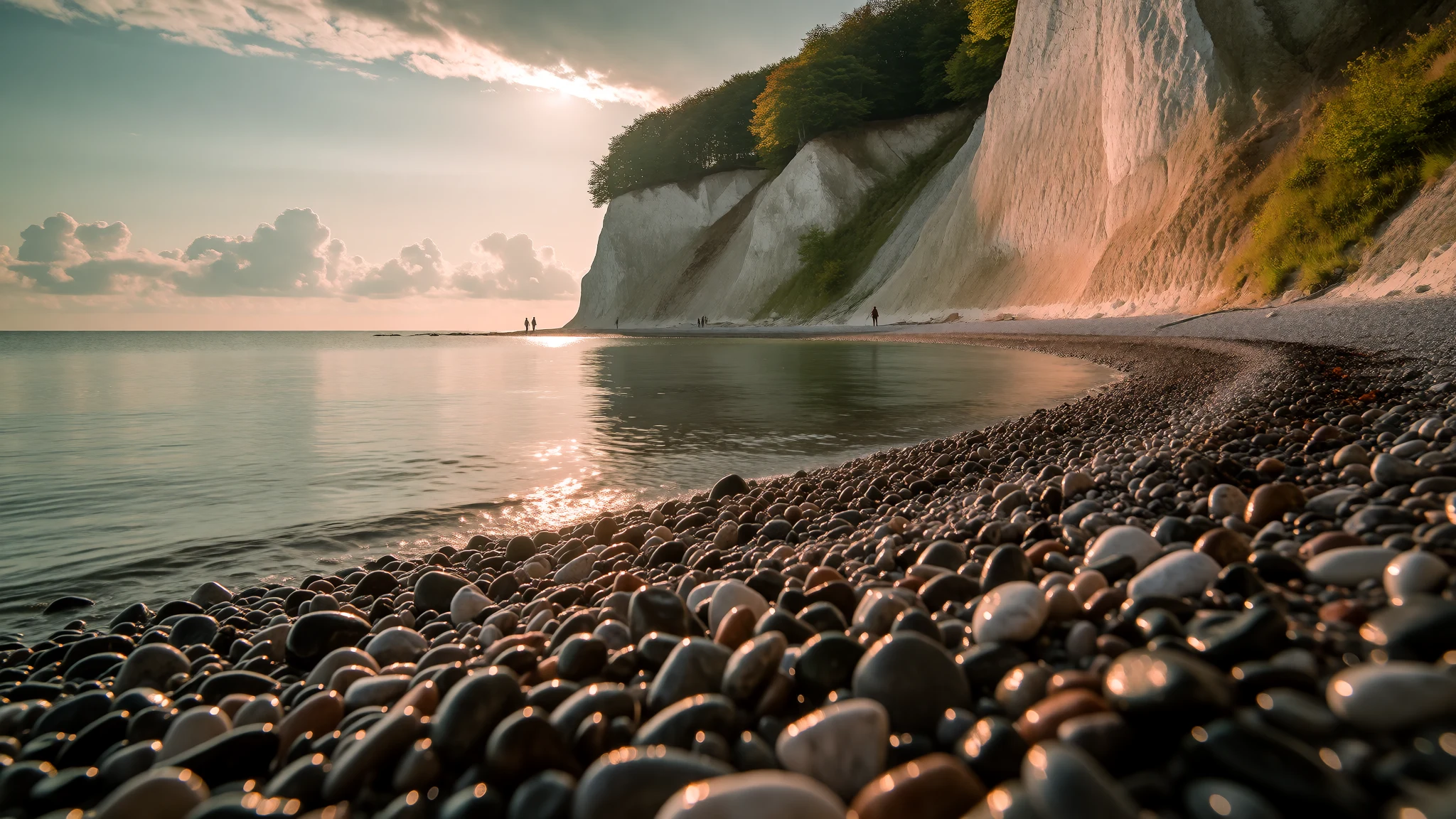
Rügen is Germany's chalk-cliff island, with long sandy beaches, seaside resort towns and a slow steam railway, all reached by a bridge from Stralsund.
The place
Rügen sits in the Baltic Sea off Germany's Pomeranian coast and belongs to the state of Mecklenburg-Vorpommern. It is the biggest island in the country, yet only about 67,500 people live here, so outside the resorts it feels rural and open. The usual way on is from Stralsund, a Hanseatic port town, across the Strelasund by a road-and-rail causeway with a long bridge.
The shape of the coast is what defines the island: sandy beaches, shallow lagoons called Bodden, open bays called Wieke, and a scatter of peninsulas and headlands. Inland the land is gentle farmland, beech woods and wetlands, and the highest point reaches 161 metres. In autumn large flocks of cranes gather on the wetlands, and birdwatchers come for them.
The north-east holds the chalk cliffs of Jasmund, now a national park and a UNESCO World Heritage Site, with the Königsstuhl as its best-known landmark. The east coast carries the old bathing resorts of Binz, Sellin, Göhren, Baabe and Thiessow, with white villas and long piers. The island's four towns are Bergen, Sassnitz, Putbus and Garz. Summer weekends bring crowds to the main beaches and the cliff path, while the quieter west and the Bodden shores stay calm. The Baltic stays cool even in August, and the weather can turn quickly.
Its story
Rügen's human story starts early. Finds from the Bodden show people living here in the Stone Age, and megalithic tombs and standing stones still dot the fields. By the first century the island belonged to the Rugii, an East Germanic people who gave it its name, though many of them later drifted south during the Migration Period.
From the 7th century the Slavic Rani took over and built a small island power. Their shrine to the god Svantovit at Cape Arkona became well known around the Baltic, and Alphonse Mucha painted a scene of his festival in 1912. That world ended in 1168, when Denmark took control and Rügen became a principality under Danish overlordship, which lasted until 1325.
Afterwards the island passed between the Pomeranian dukes, then to Sweden in 1648. Swedish rule, with short interruptions, lasted until the Napoleonic years, and Prussia took Rügen in 1815. In the twentieth century it fell in the Soviet zone and then in East Germany, from 1949 until 1990. Many resort villas faded under that system, and a good number have been restored since reunification. Today the layers sit close together: Stone Age graves, Slavic place names, Swedish-era towns and Prussian-era resorts, all within a day's cycle of each other.
What to see
- Königsstuhl and Jasmund National Park — Jasmund peninsula, north-east Rügen
Jasmund National Park, in the north-east, protects the chalk cliffs and old beech forest behind Rügen's World Heritage listing. The Königsstuhl is the famous viewpoint and gets busy in summer. Walking the cliff path from Sassnitz is quieter and shows the same white faces against grey sea. Stay well back from the edges, which overhang and can collapse.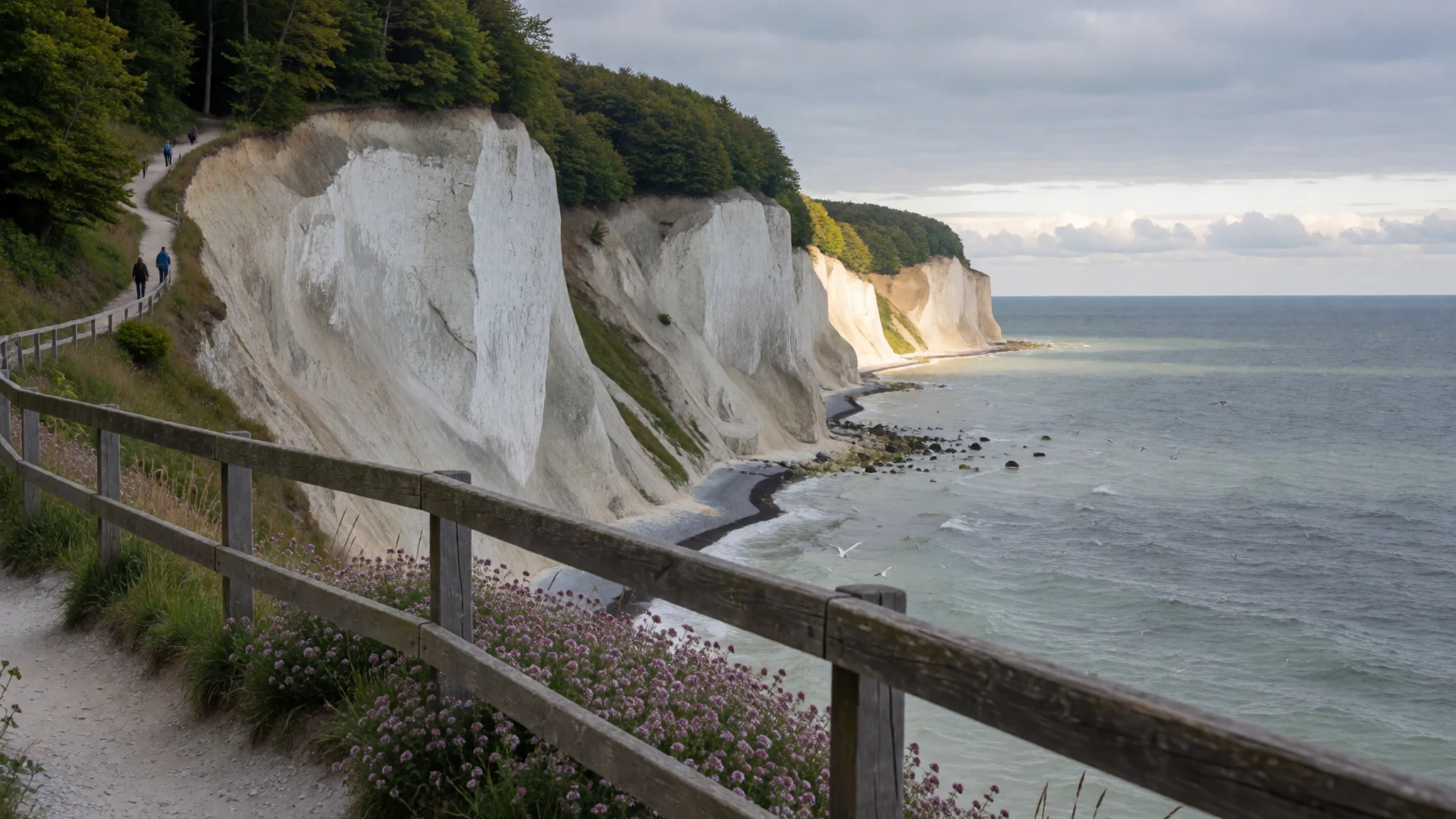
- Rasender Roland steam railway — Putbus to Göhren
The Rasender Roland is a narrow-gauge steam railway between Putbus and Göhren, a line that carried passengers and freight in East German times. It is slow, smoky and charming, and a practical way to reach the south-eastern resorts without a car. Check the official timetable before planning a day around it, since services vary by season.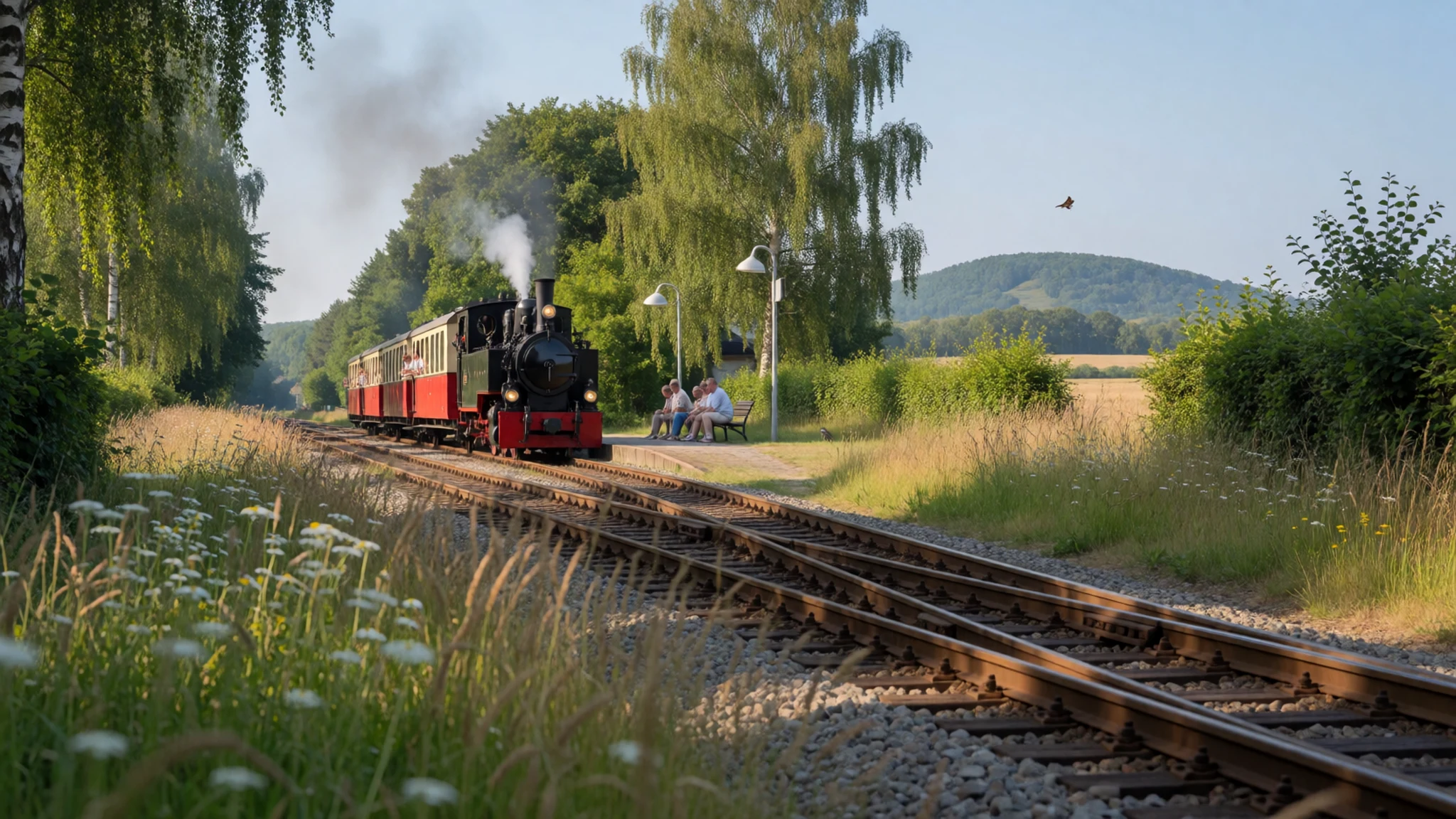
- Binz and the resort coast — East coast resorts
Binz is a busy seaside resort on the east coast, known for its seafront of white villas, its pier and a wide sandy beach. Sellin, Baabe and Göhren follow along the same shore. Expect hooded Strandkorb chairs, ice-cream queues and full promenades in July and August. May and September are calmer.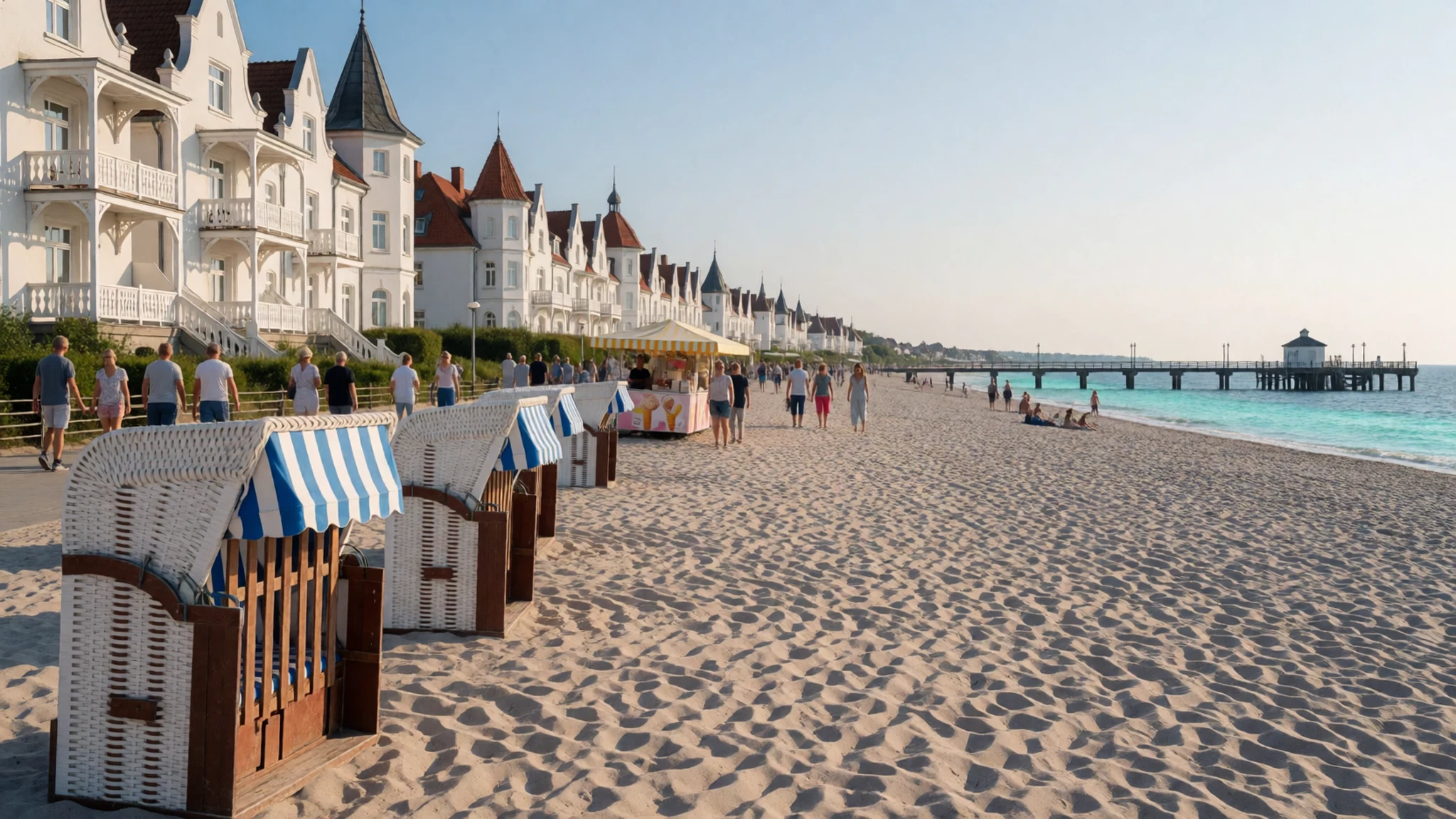
- Mönchgut peninsula — South-east Rügen
Mönchgut, in the south-east, is where Rügen turns quiet: small villages such as Groß Zicker, low hills running down to the water, and lagoon views with the Bodden on one side and the open Baltic on the other. It suits slow cycling and walking, and the birdlife is good, particularly in autumn.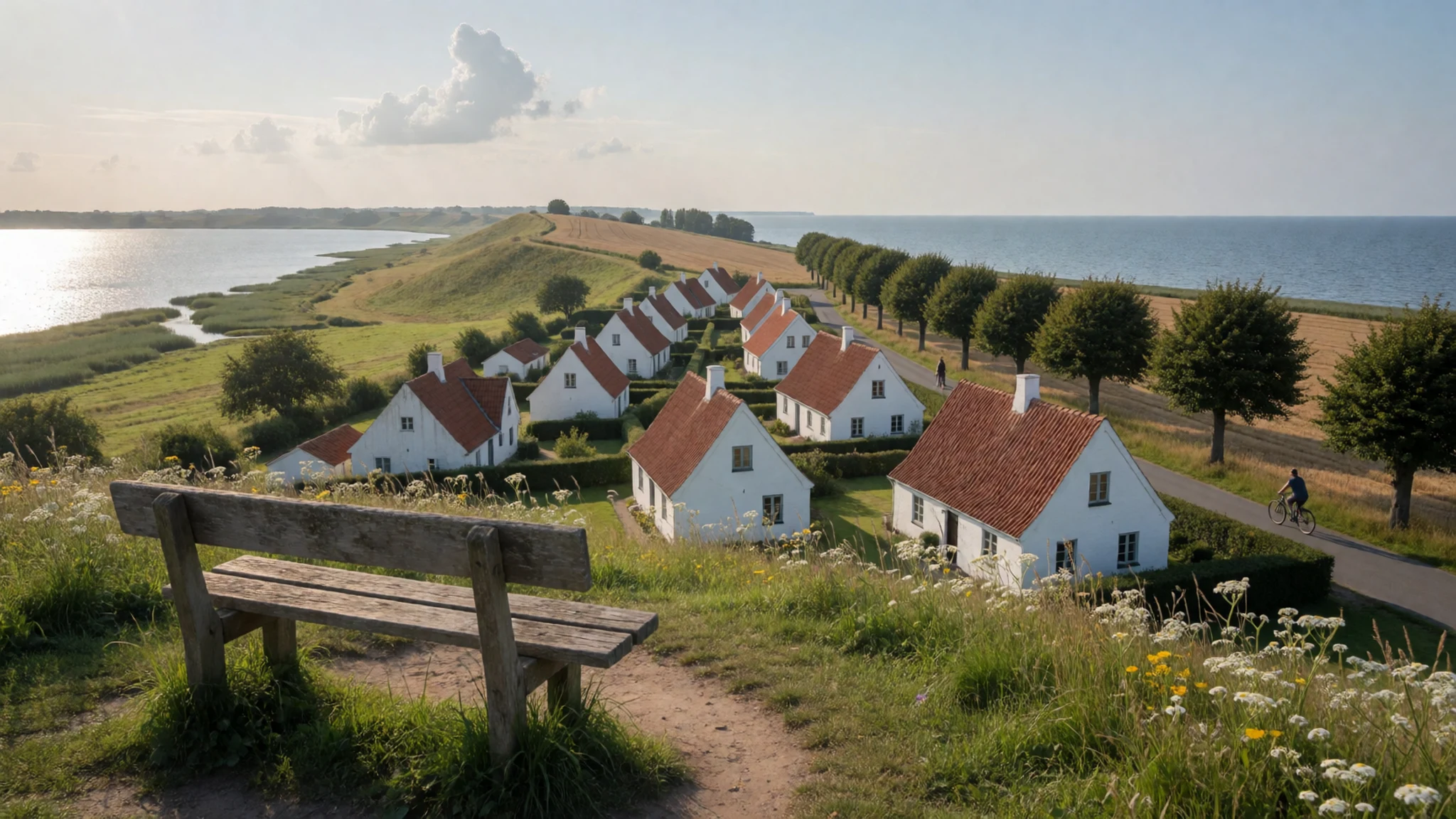
- Megalithic tombs near Lancken-Granitz — Lancken-Granitz, south-east Rügen
Stone Age burial chambers survive across the island, and the one near Lancken-Granitz is well preserved: a group of huge boulders set in open ground not far from the Granitz woods. It is reached on foot and needs only a few minutes. Go quietly, leave the stones as they are, and let it set the beach holiday against a far longer timescale.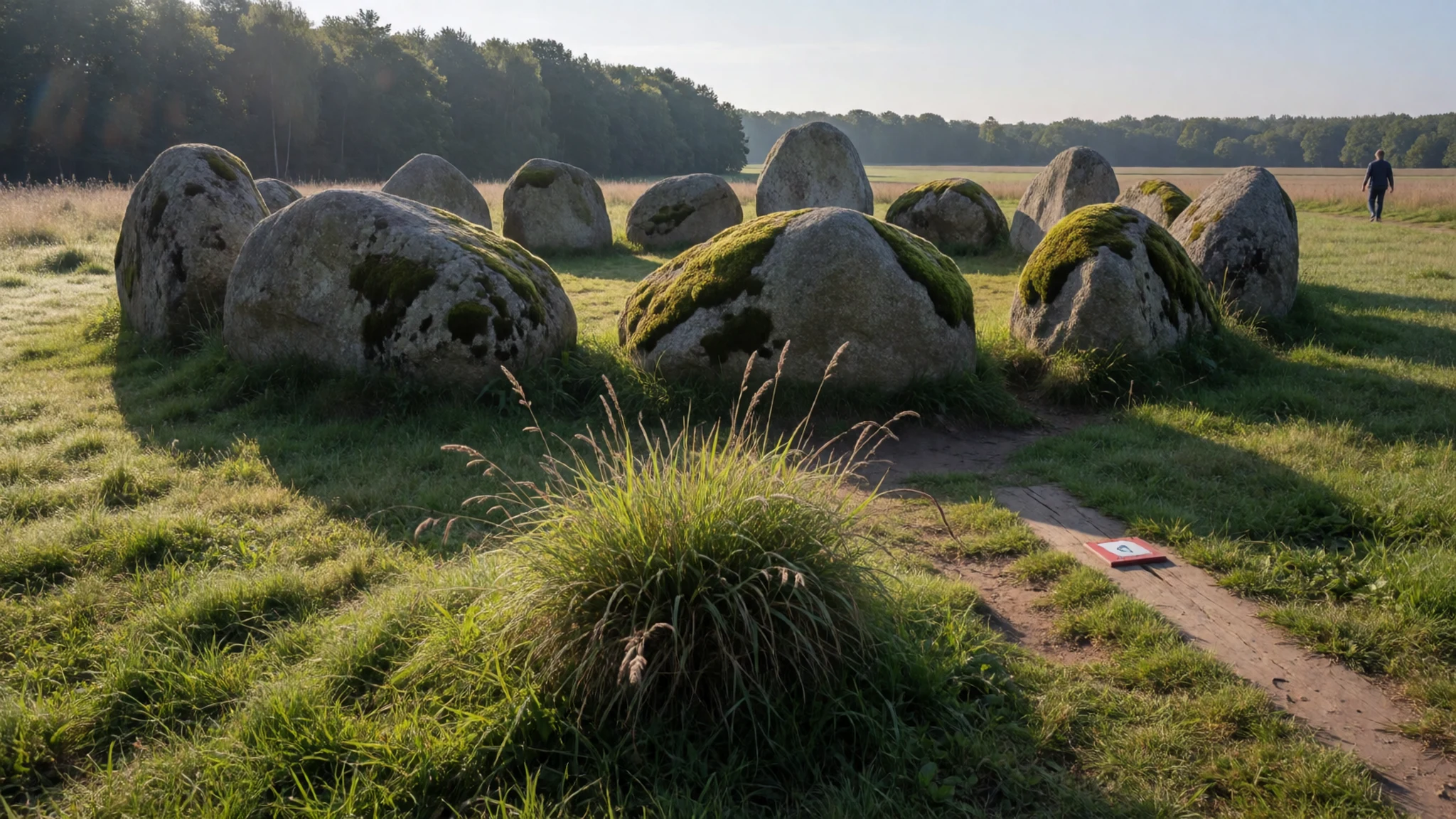
Culture
Rügen's culture is shaped by sea, chalk and a long habit of sitting between powers. Danish, Swedish, Prussian and East German rule each left traces, from Swedish-era town layouts to plain holiday blocks of the GDR years beside restored seaside villas. The island also has a place in German Romanticism: Caspar David Friedrich painted his Chalk Cliffs on Rügen here, and the view of white rock framed by beech trunks still matches the picture surprisingly well.
Older layers show in myth and stone. The Rani worshipped Svantovit, and the megalithic tombs predate any written record. Beach culture is strong as well. Hooded wicker beach chairs called Strandkörbe are rented by the day, and the Baltic coast has a long tradition of naturist stretches, signed FKK, which flourished in East German times.
Local life follows the seasons: busy and bright in summer, windy and half-shuttered in winter, with fishing, farming and small harbours keeping a steadier rhythm all year. German is the everyday language, and English is widely understood in the resorts, though a few words of German are always appreciated.
At the beaches signed FKK do not point a camera at anyone, and on the cliff paths stay behind the barriers.
What to wear
Rügen has no everyday regional costume today, and visitors should not expect to see one on the street. Historically, fishing and farming families in places such as Mönchgut wore practical wool and linen, with dark jackets and aprons, and headscarves for women. A Mönchgut folk costume still appears at festivals, in museums and with local dance and heritage groups.
What people wear now is coastal casual: waterproof jackets, fleeces, jeans, trainers and sandals, with cotton and linen shirts in summer. Locals dress down for the beach and a little smarter for dinner in the resorts, but nowhere expects formal wear. Windproof caps and sailing-style jackets are common, and nobody blinks at wellington boots after rain.
For visitors the rule is layers, whatever the month. The Baltic wind can feel cold even on bright days, and the sea stays cool. Bring a windproof, a light waterproof, a sun hat and sunscreen for the open beaches. Good walking shoes or trainers are needed for the cliff path, which turns muddy and slippery after rain, and flat shoes suit cycling. Sandals are fine on the sand, but flint and pebbles on some shores are hard on bare feet. Swimwear is for the beach only; towns and restaurants expect a top and shoes. Churches welcome visitors in ordinary clothes, though covered shoulders are a courtesy.
What to eat
- Fischbrötchen — Harbour fish stalls and seafront kiosks
A bread roll filled with smoked or pickled herring and salad, the standard quick lunch on the island. It is eaten standing at the quay, and tastes best when the fish is fresh. Look for fish stalls and kiosks in harbour towns such as Sassnitz and along the Binz seafront.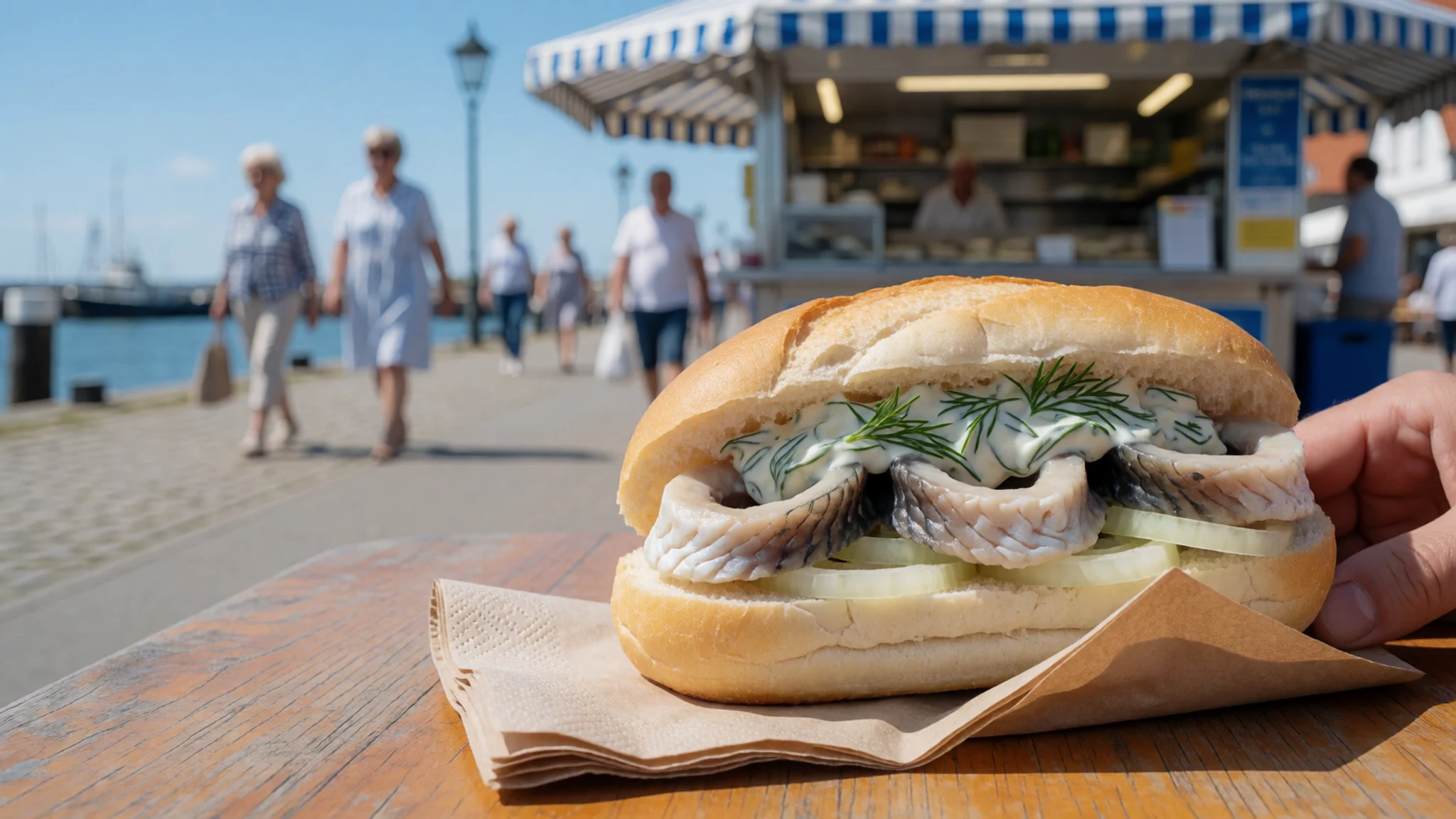
- Räucherfisch — Smokehouses and harbour stalls
Freshly smoked fish, such as herring, mackerel or eel, sold warm from small smokehouses and harbour stalls. It is usually eaten with the fingers and good dark bread. Fishing harbours around the island have at least one stand, and the Bodden villages are a good place to look.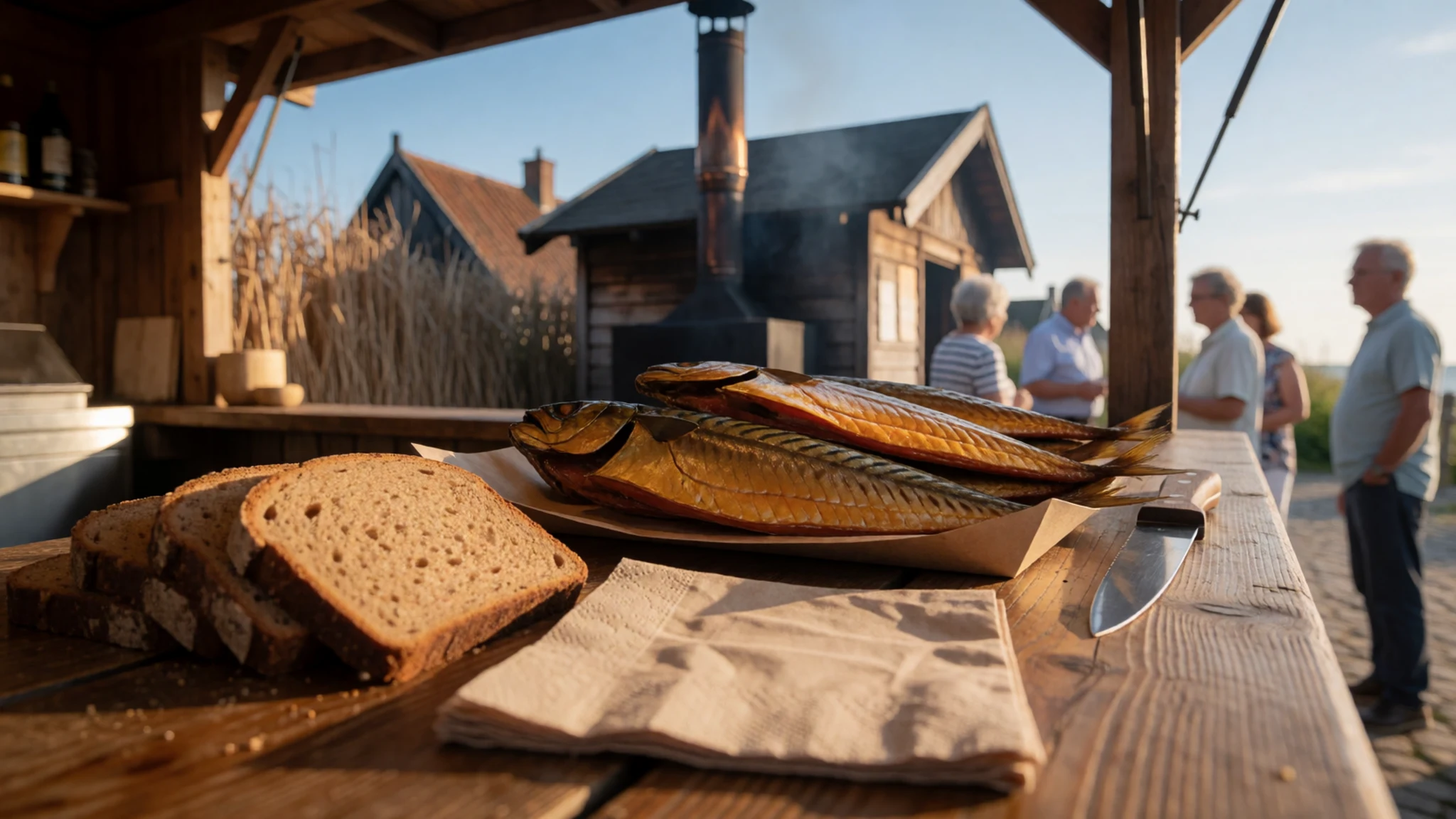
- Sanddorn — Cafés, farm shops and coastal markets
Sea-buckthorn grows along the Baltic coast, and its tart orange berries become juice, jam, liqueur and ice cream. Hot Sanddorn juice is the classic drink on a cold, windy day. Look for it in cafés, farm shops and market stalls, especially on the east coast. - Störtebeker beer — Pubs and beer gardens across the island
Brewed in Stralsund, just across the strait, this is the regional beer and is served in most pubs and beer gardens on the island. Ask for it on tap with a plate of fish. It makes an easy evening drink after a day on the cliff paths. - Spargel (asparagus) — Village restaurants and farm stalls in spring
Germans take asparagus seriously, and in season it fills restaurant menus, often served with potatoes, ham or a butter sauce. Spring is the time, and farm stalls inland sell it too. If you are visiting then, order it at least once.
Plan it
Best time. May to September for beaches, cycling and long evenings, with July and August the warmest and busiest. Late spring and early September are calmer. In October cranes gather on the wetlands. Winters are cold, windy and quiet, and many seaside businesses slow down.
How long. 3–5
Getting there. Fly to Berlin or Hamburg, then take a train to Stralsund, the gateway town. From there the road-and-rail causeway across the Strelasund leads onto the island, and regional trains continue to Sassnitz and Binz; some long-distance trains run through to Binz. Ferries link Sassnitz with Bornholm in Denmark. Check ruegen.de for current transport links.
Budget. mid
Tips
- Book seaside accommodation well ahead for July and August; holiday apartments are common and a practical choice
- Walk the Jasmund cliff path early in the day to avoid the crowds at the Königsstuhl
- Hire a bike: rentals are available in almost every town and the island suits cycling
- Carry a windproof layer even in summer, as the Baltic breeze is cool
- Check train and ferry timetables on the official sites before planning a long day
Etiquette
- Stay behind the barriers at the chalk cliffs, as the edges overhang and can collapse
- Do not photograph people on FKK beaches
- Keep your distance from wild boar in the woods and do not feed them
Nearby
Sources
- Wikidata Q3237 (CC0)
- Wikipedia: Rügen (rev 1372342554) (CC BY-SA 4.0)
- Wikivoyage: Rügen (rev 5355792) (CC BY-SA 4.0)
- Satellite Image of Rügen, NASA (Public domain)
- Map of Rugia Island, Western Pomerania, Germany (Devil m25) (CC BY-SA 2.0 de)
- Boddenlandschaft auf Mönchgut, André Petzold (CC BY 3.0)
- Königsstuhl und Viktoria-Sicht, Thomas Wolf (CC BY 3.0)
- Binz (2011-05-21), Klugschnacker (CC BY 3.0)
- Caspar David Friedrich, Chalk Cliffs on Rügen (Public domain)
- Großsteingrab Lancken 1, Ulfrain (Public domain)
- The Celebration of Svantovit, Alphonse Mucha, 1912 (Public domain)


