Rovinj
Rovinj, Croatia
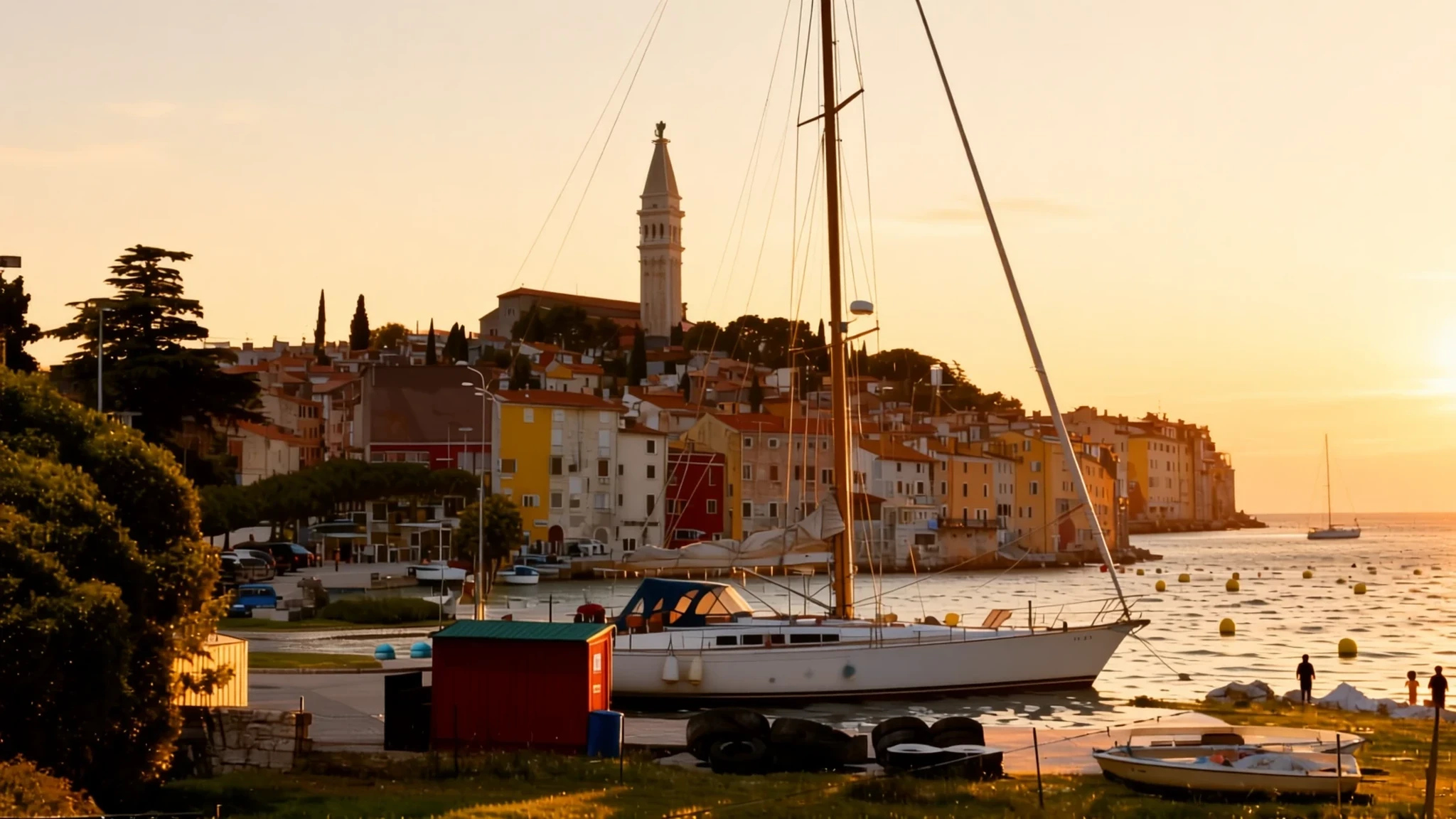
Rovinj is a fishing port and a resort built on a former island, with a hilltop cathedral above steep, shuttered old streets.
The place
Rovinj sits on the western coast of the Istrian peninsula, on the north Adriatic, and it still works as a fishing harbour as well as a holiday town. The population is 12,968, so it feels like a proper town rather than a village built around tourism. In the old quarter the streets are narrow and cars are kept out, which makes walking the main way to get around. The name shows the layered history: Rovigno in Italian and Venetian, Rovinj in Croatian. Istriot, a Romance tongue that was once widespread across the region, is still used by a number of locals. Rovinj has official bilingual status, so you will often see both place names on street signs and restaurant menus.
The old centre was built on an island close to the shore, and the channel was filled in later, so the town now joins the mainland. That history explains its shape: a compact hill of tall, narrow houses with shutters, a cathedral at the top and a harbour at the foot. The views back over the rooftops and the water are the reason many visitors climb the hill.
Outside the old town the coast is a mix of rocky shelves, small coves and pine woods. Swimming often means slipping off the rocks rather than onto sand, and the sea is warm enough from mid-June to September. In high summer the town fills with day-trippers and ferry arrivals, so early mornings and evenings feel calmer. Rovinj suits slow days, good seafood and a loop of the old streets more than a checklist of monuments.
Its story
Rovinj was settled long before it had its present name. Before the Romans took it, the place was already home to local tribes, and under Roman rule it went by several names, Ruginium among them. Its later history is one of passing hands: Byzantine control, then a place within the Exarchate of Ravenna, then the Frankish Empire, followed by a run of feudal lords and, in 1209, the Patriarchate of Aquileia.
The town's great period came under Venice. From 1283 to 1797 Rovinj was one of the leading towns of Istria under the Venetian Republic. Its walls were built in two rows, with three town gates, and remains of those walls can still be seen. Balbi's Arch, dated 1680, is one gate that survives, standing at the pier beside a late-Renaissance clock tower. The first town statute was proclaimed in 1531, setting out how the community would be governed.
The island was joined to the mainland only in 1763, when the channel was filled in. The fall of Venice in 1797 brought the Napoleonic period and then Austrian rule, which lasted until the First World War. The Austrian census of 1911 recorded a population that was overwhelmingly Italian-speaking, and the town passed to the Kingdom of Italy after the war. After the Second World War it went to Yugoslavia as part of Croatia. The name changed from Rovigno to Rovinj, and many Italian-speaking families left. Since Croatian independence the town has become one of the main centres of Istria County, the third most populous town there after Pula and Poreč.
What to see
- Cathedral of St Euphemia
The cathedral of St Euphemia (Sveta Eufemija) stands at the top of the old town, and most visitors come up for the climb. Its campanile, or bell tower, gives a broad view over the tiled roofs, the harbour and the Adriatic. The church is also a cool place to sit out of the midday heat, and the walk up through the narrow lanes is part of the pleasure.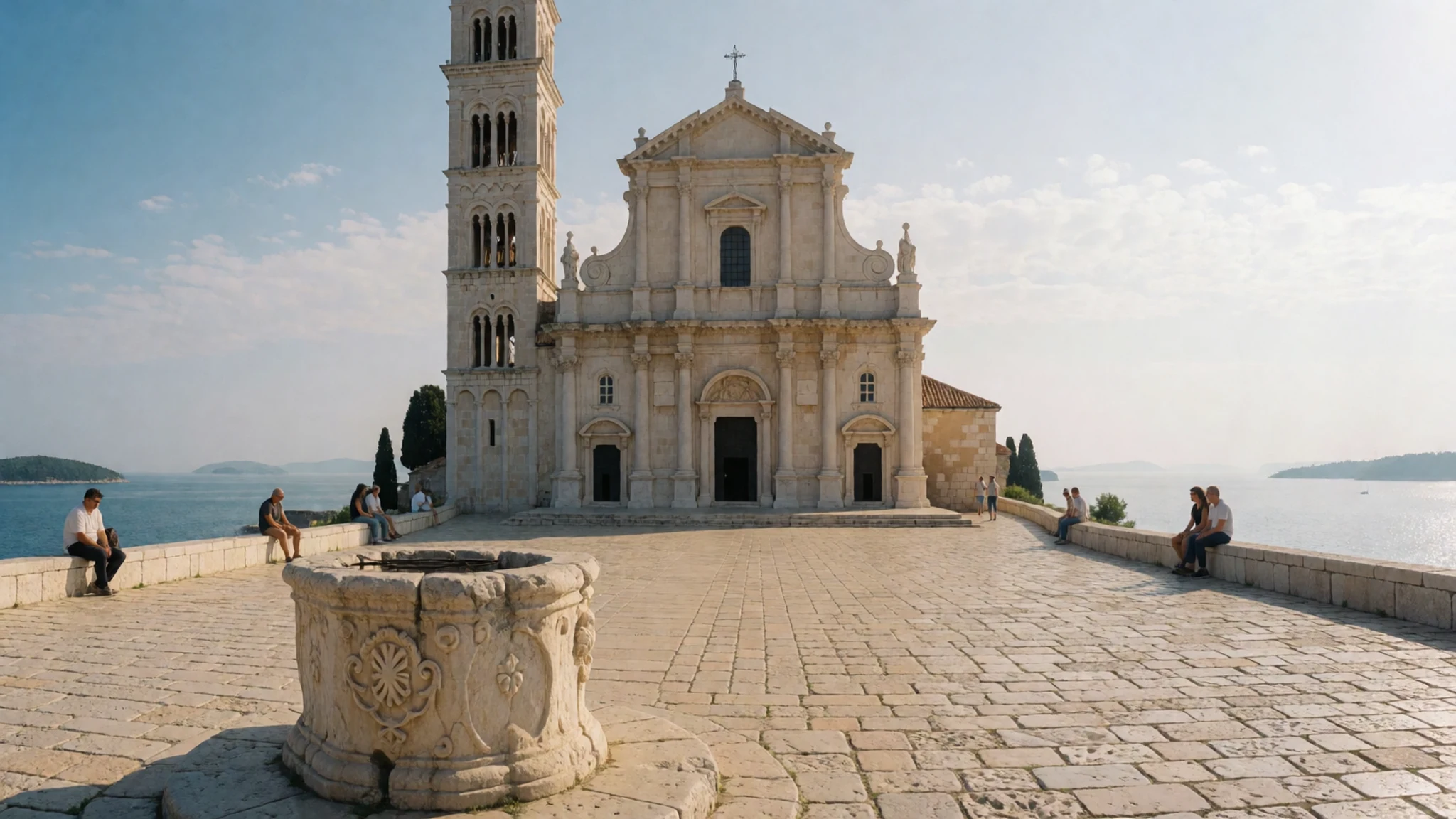
- Balbi's Arch and the pier
Balbi's Arch is one of the old town gates that survives, standing at the pier where boats tie up. It dates from 1680 and sits beside a late-Renaissance clock tower, so the pair make a natural place to pause before heading into the old town. Stop here on foot and look back over the moored boats and the stone quay, which show how the harbour has worked for centuries.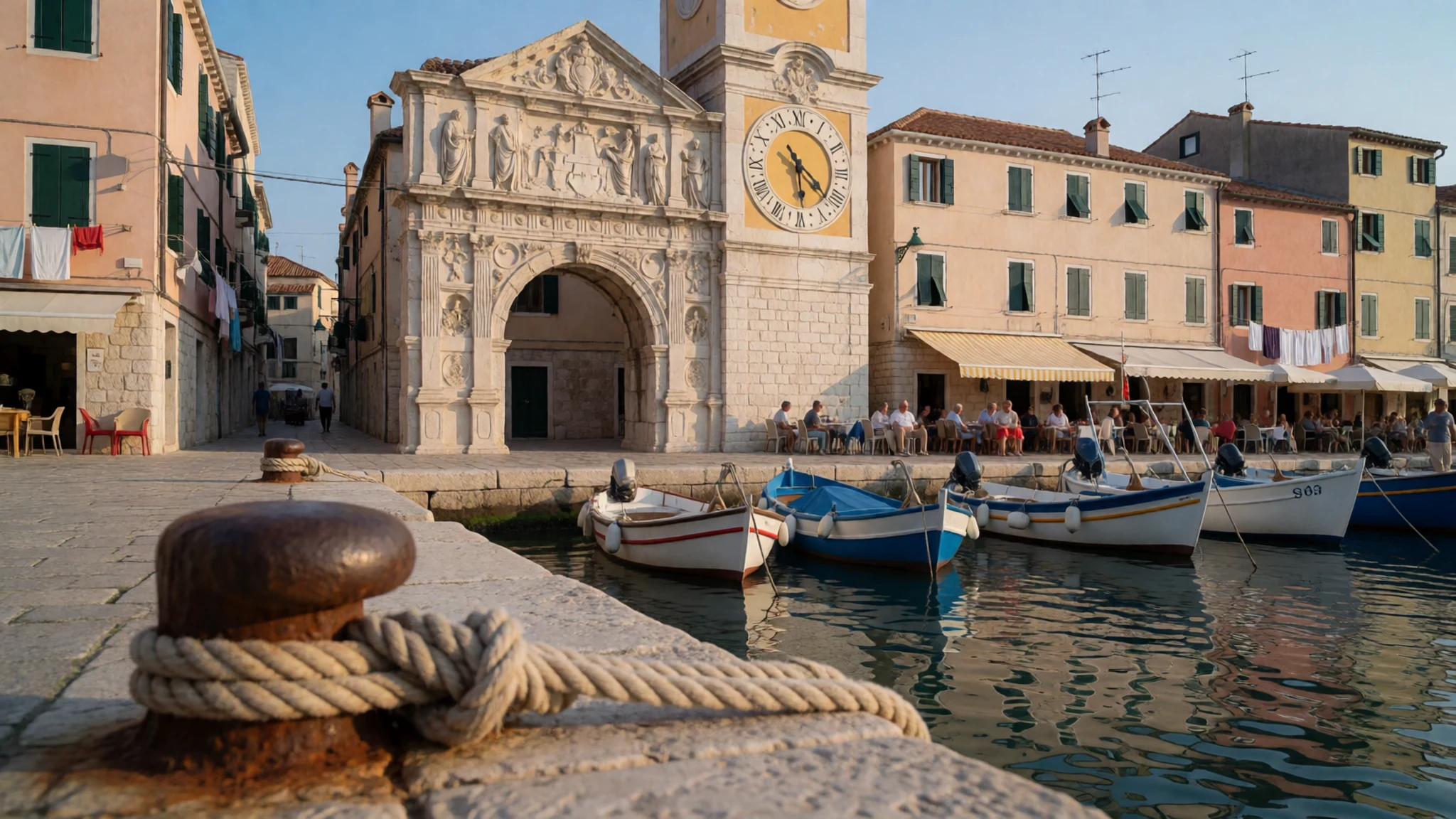
- Grisia, the artists' street
Grisia is the narrow street that climbs through the old town and has long been home to artists and their studios. It is often compared with Montmartre, and galleries, workshops and small shops line the steep lanes. Go in the morning or the early evening, when the street is quieter and the light falls across the stone walls and the shutters.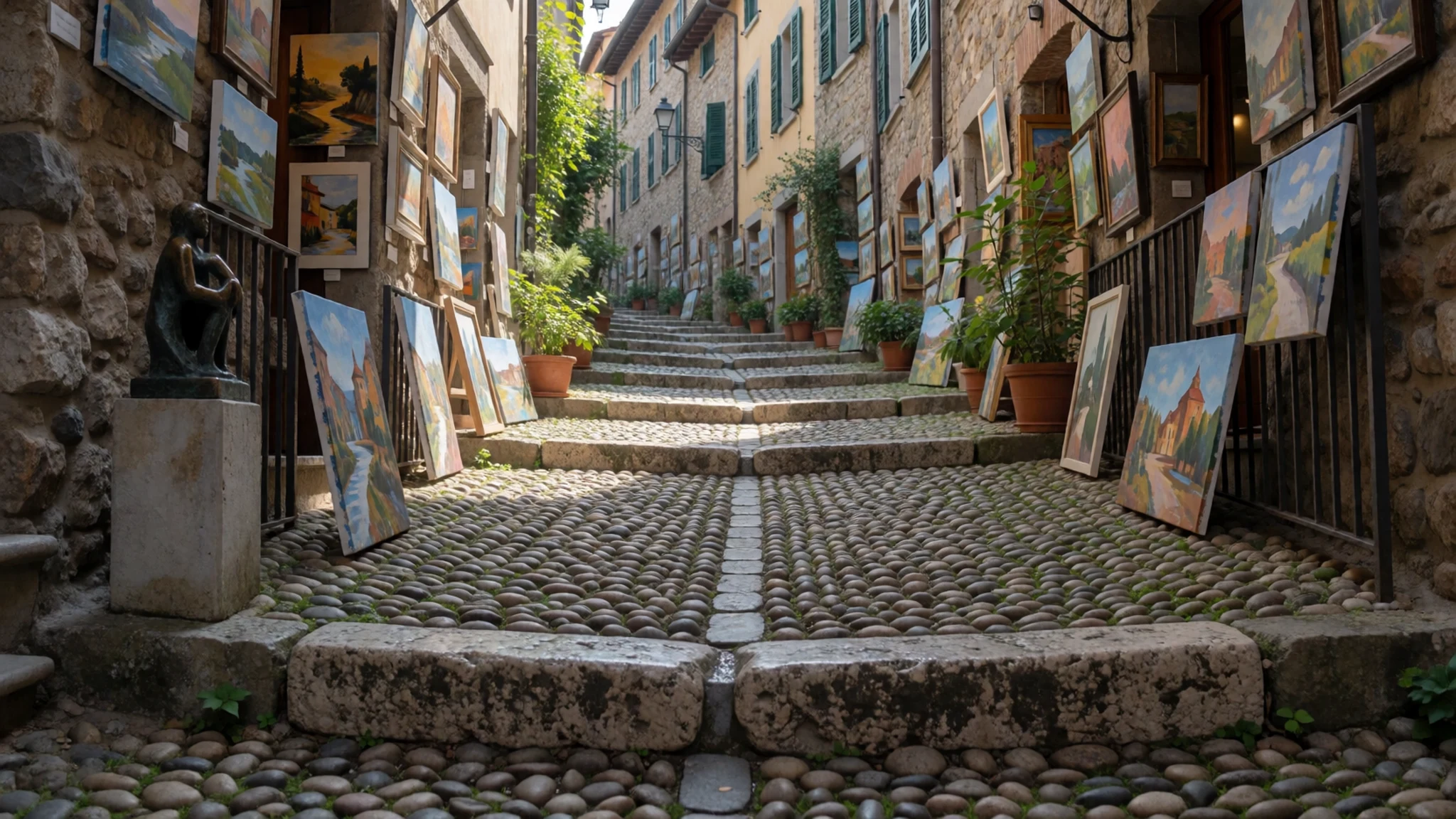
- Valdibora market
The open-air market at Valdibora is the place to see what the region produces. Stalls sell truffles, olive oil, seafood, fruit and vegetables, and the mornings are the busiest and freshest time. Browsing here is a good way to understand the local diet, and it works well for picking up olive oil or a jar of something to take home.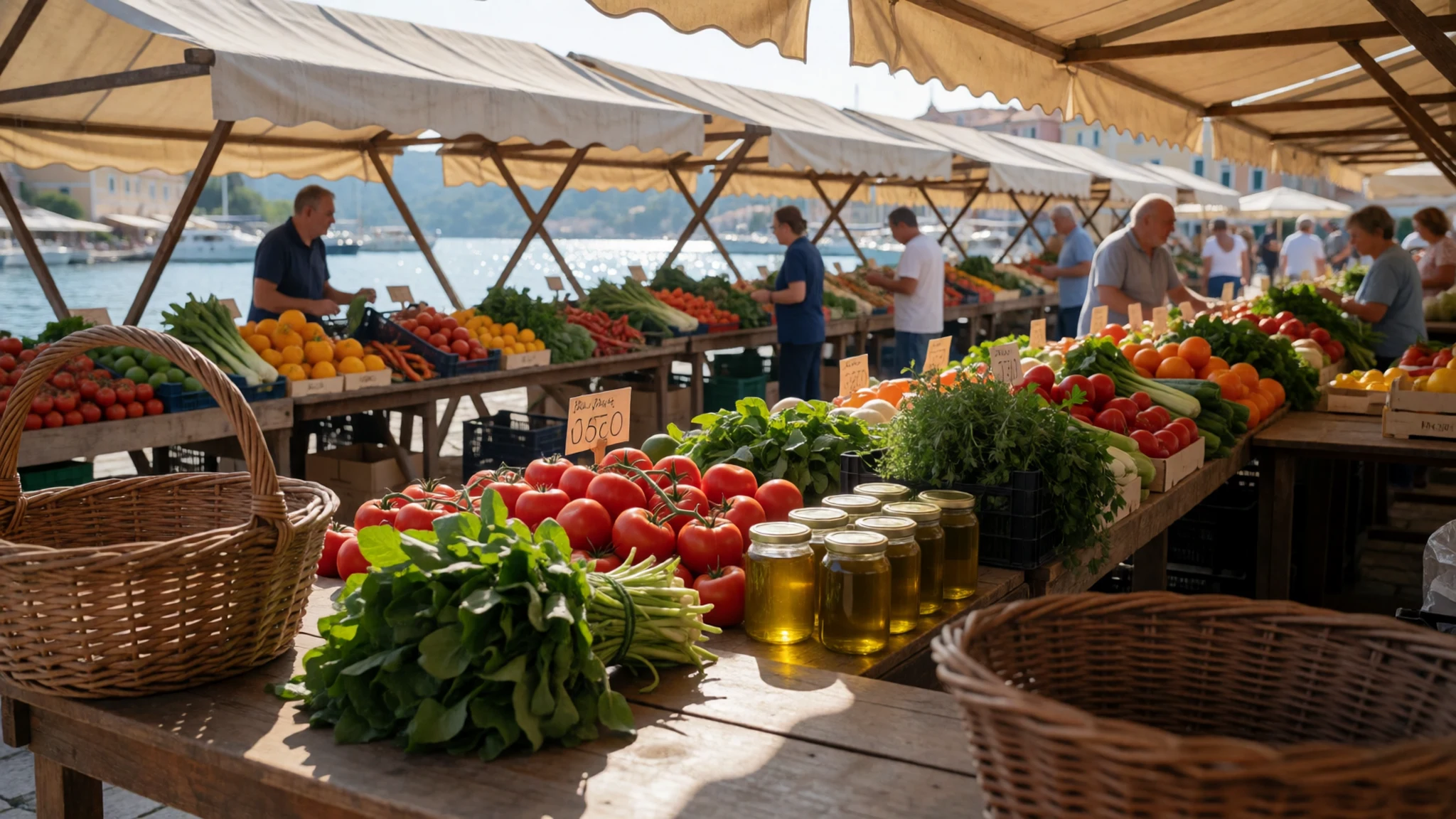
- Heritage Museum
The Rovinj Heritage Museum is housed in a Baroque palace that once belonged to the Califfi counts. It was founded in 1954 by a group of artists from Rovinj, who wanted to collect and show work connected with the town. The rooms give a good introduction to local art and history before you walk back out into the lanes.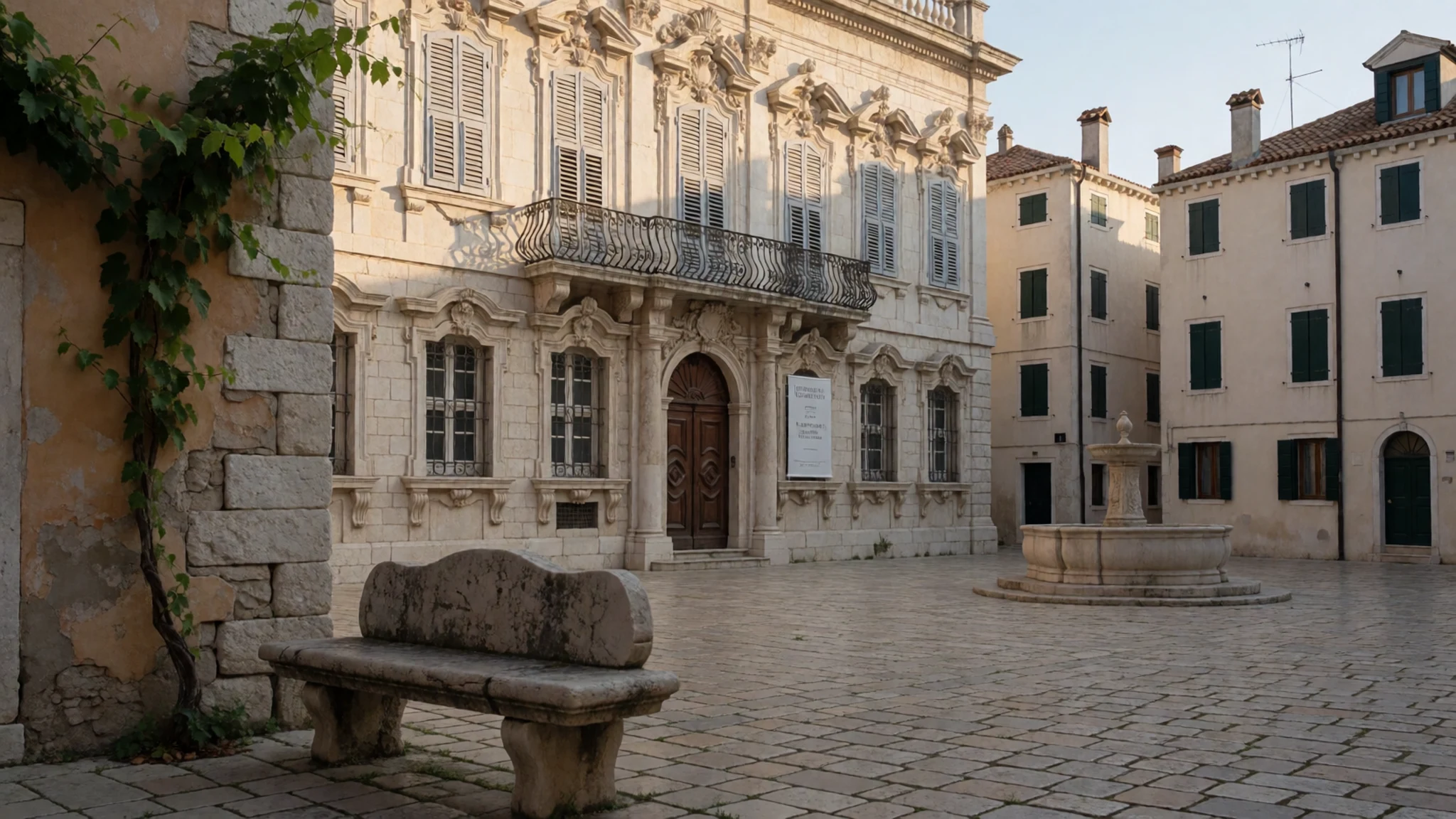
Culture
Rovinj is officially bilingual, so Croatian and Italian appear on street signs, menus and in the official names of places. Some residents still speak Istriot, a Romance language once common in this part of Istria. The harbour is a working fishing port as well as a view, and the boats and nets are part of daily life rather than a set piece. In the old town the lanes are residential, with washing hung between the houses and people living behind the shutters, so visitors should keep voices down late in the evening. Modest dress is expected inside churches, and swimwear belongs on the rocks and the shore rather than the town streets. Cover shoulders and knees before stepping into the cathedral of St Euphemia, and keep swimwear for the rocks and the sea.
What to wear
Traditional dress has largely left everyday life in Rovinj. Istrian costume, with woollen and linen garments and embroidered details, is more often seen at folk festivals and in local collections than on the street. Fishing families on the coast relied on sturdy wool knits and heavy cotton, and at sea the practical fabric mattered more than decoration. Today people in Rovinj dress for the warm months much as they do across southern Europe: light cotton and linen, sundresses, and loose shirts that suit a terrace in the evening. Smart casual is usual in the harbour restaurants.
Visitors need breathable layers in summer, a hat and sunglasses, and a light scarf or shawl for churches, where shoulders and knees should be covered. Wet and sun-warmed stone is slippery, and the rocky shore is hard on bare feet, so shoes with grip suit the old streets and the coastal paths, and a pair of water shoes is useful for swimming off the rocks.
What to eat
- Fresh fish and shellfish from the harbour — the quayside eateries and the harbour front
Fish and shellfish landed in the harbour are the backbone of the town's cooking, and the catch varies with the season and the day's boats. Grilled fish with olive oil and lemon is a simple way to eat it, and seafood platters are common. Ask what came in that morning, since the menu often follows the catch.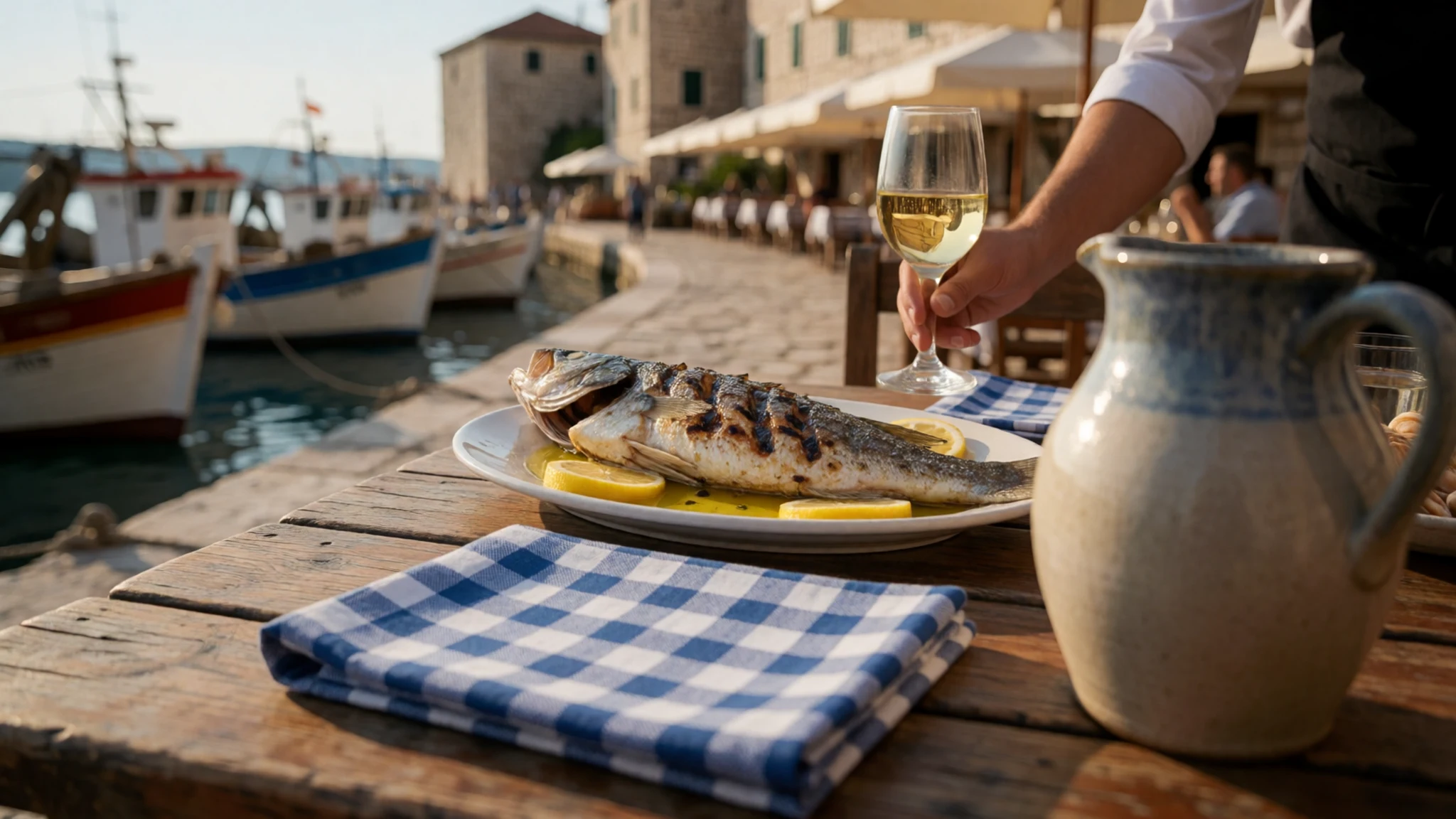
- Veal cooked under a peka — traditional konobas in the old town and the lanes behind the harbour
Veal, and sometimes lamb or octopus, is cooked under a peka, a domed metal lid covered with live coals that slowly bakes the meat and vegetables beneath. The method is patient and the result is tender and smoky. Order in advance, because the dish takes time and the coals must be prepared.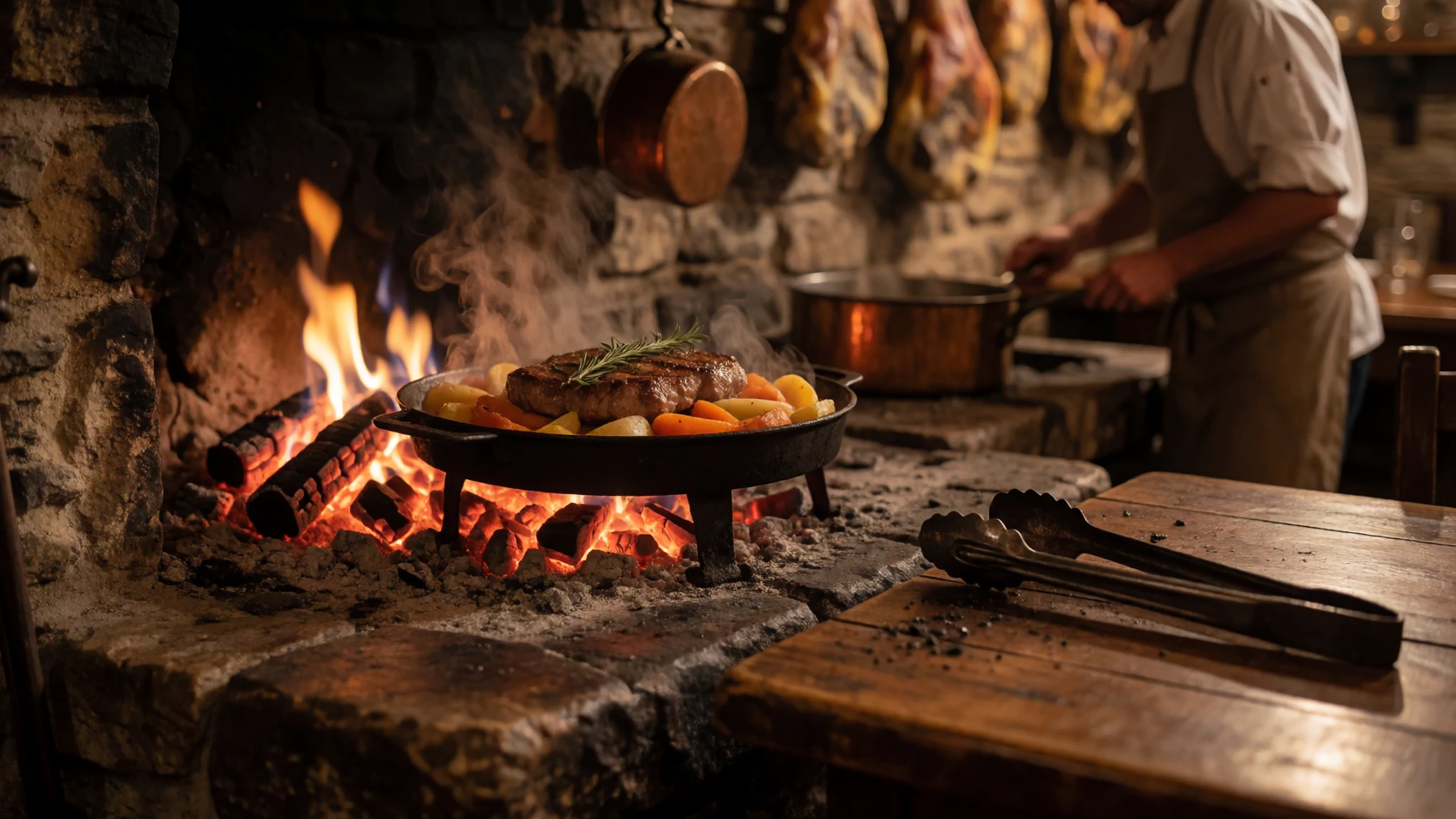
- Truffles and olive oil — the open-air market at Valdibora
Istria is known for truffles and oil, and the market at Valdibora is a good place to sample both. Look for local olive oil in small bottles and truffle products from stalls that will let you smell the produce. Buying in person is the best way to judge quality before taking anything home. - Risotto and fresh pasta — Italian-style trattorias in the old town
The town's Italian heritage shows in its risotto and fresh pasta, which appear on many menus alongside seafood. Dishes are often cooked in the Venetian style, with a light touch and plenty of fish stock. The menus are usually written in both Croatian and Italian.
Plan it
Best time. May and June, or September and October, when the sun is strong, the sea is warm from mid-June and the crowds are thinner than in the peak of July and August. Summer is hot and humid, and winter is quiet, with many places closed.
How long. 2–3
Getting there. Pula airport lies a short drive south, and the trip by car or taxi takes under an hour. Buses run from central Pula, and a high-speed ferry links Venice with Rovinj in season.
Budget. mid
Tips
- Book a table at the harbour restaurants for the evening, especially in July and August
- Carry cash, because some places do not take cards and card machines are often out of order
- Walk the old town early or late in the day to avoid the midday crowds
- Bring water and a hat for the rocky shore, where shade is scarce
- Take a boat from the harbour to St Katherine's Island for a quieter swim
Etiquette
- Dress modestly for churches and cover shoulders and knees inside
- Park on the edge of the old town, since cars are not allowed in the centre
- Keep noise down in the lanes at night, where people live
Nearby
Sources
- Wikidata Q5316 (CC0)
- Wikipedia: Rovinj (rev 1379170668) (CC BY-SA 4.0)
- Wikivoyage: Rovinj (rev 5302905) (CC BY-SA 4.0)
- Rovinj, Croatia (photo) (CC BY-SA 4.0)
- DSC_0434 (photo) (CC BY 2.5)
- Cathedral of St. Euphemia, Rovinj (photo) (CC BY-SA 4.0)
- Quaint red house (Unsplash, photo) (CC0 1.0)
- Rovinj – Vieille ville (photo) (CC BY 2.5)
- Rovinj–Ula Sveti Križa (photo) (CC0 1.0)
- Rovinj street 01 (photo) (CC BY-SA 4.0)
- Town of Rovinj, Croatia (photo) (CC BY-SA 2.0)


