Rotorua
Rotorua, New Zealand
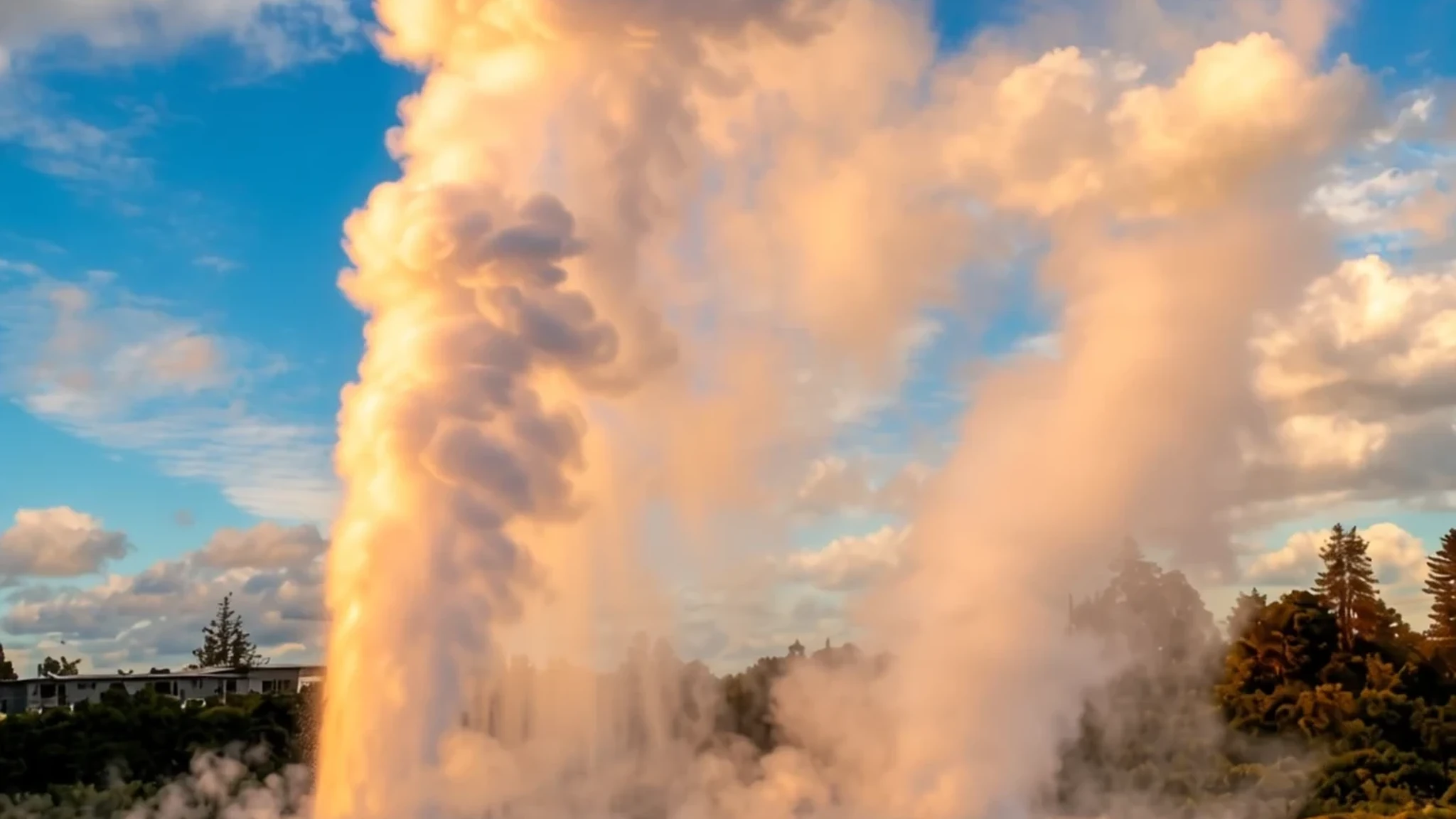
Go for geysers, bubbling mud and Māori cultural life in a lakeside city built around its geothermal ground.
The place
Rotorua is a city of about 58,500 people on the southern shore of Lake Rotorua, in the Bay of Plenty region of New Zealand's North Island. It sits about 280 metres above sea level and takes its name from the lake beside it. The surrounding land is restless: hot springs, steaming vents and bubbling mud run through the ground, and a faint smell of sulphur drifts across several neighbourhoods on a still day. That geothermal energy has shaped the town from its early days, from the pale bathhouses and boardwalks to the gardens laid out around warm ground.
The city is home to the Te Arawa people, whose presence here goes back centuries, and Māori cultural life is central to any visit. Ohinemutu, a lakeside village with its carved meeting house and church, is a living community rather than a museum piece. Across town, the Whakarewarewa valley is where geysers such as Pōhutu erupt, and where families still live and cook beside the steam.
Tourism is the main business. Visitors come for the thermal parks, the forests, the lake, and the chance to see geothermal activity up close. The centre is compact and walkable, with cafés, shops and a lakefront that suits a slow afternoon. Expect a town that is easy to enjoy, but busiest in the summer months and school holidays, when the central streets and thermal sites fill quickly.
Its story
Rotorua's history begins long before European contact, with the Te Arawa iwi, who settled the lake shore in the 14th century. A thriving settlement grew at Ohinemutu, and its people later became known as Ngāti Whakaue, named for an ancestor. Te Arawa tradition explains the district's heat through a story about an ancestral priest who asked the gods to send fire from the homeland of Hawaiki, so that the ground would carry warmth for generations. Whatever one makes of the myth, the springs and steam have been part of local life from the start.
In the 1820s the region was drawn into the Musket Wars. Northern groups led by Ngāpuhi pushed south and raided the Bay of Plenty, and a clash over an ambush escalated into a major invasion. In 1823 a Ngāpuhi-led coalition attacked Rotorua, and Ohinemutu suffered heavily. The episode left a lasting mark on the iwi and shaped the politics of the lake country for decades.
The nineteenth century brought settlers interested in the geothermal ground. Māori and European leaders alike wanted to build a spa town, and an arrangement that leased land from Ngāti Whakaue to the government for 99 years paved the way for bathhouses and visitor facilities. Tourism grew quickly, helped by the nearby Pink and White Terraces, a famous silica formation that was lost in the 1886 eruption of Mount Tarawera. The town later gained borough and then city status, but its identity has stayed tied to the heat under its streets.
What to see
- Te Puia and the Whakarewarewa valley — Whakarewarewa valley, on the edge of the city
Te Puia is the entry point to the Whakarewarewa valley, a geothermal landscape of bubbling mud pools and geysers. Pōhutu is the star, throwing its hot jet high into the air at intervals the staff track closely. Village life continues here beside the steam, and guided walks and cultural performances help explain it. Allow a few hours and arrive early for the geyser.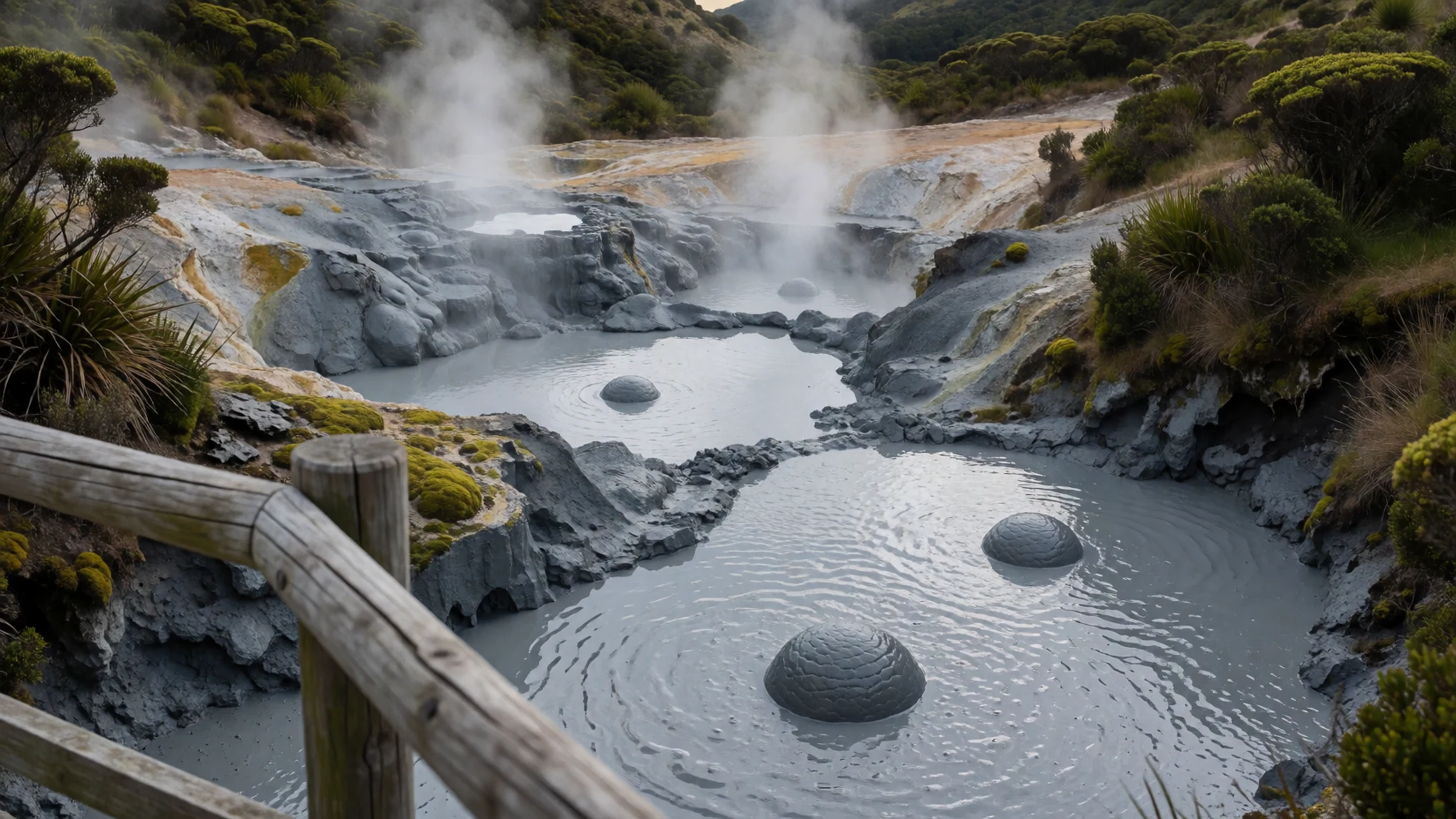
- Kuirau Park Thermal Pools — city centre park
Kuirau Park sits in the heart of town and is one of the easiest places to see thermal ground up close. Boiling pools and mud are cordoned off with low fences, so you can look closely while staying safe. The large duck pond still bubbles a little at its edges, which the ducks seem to ignore. It makes a good first stop before heading further afield.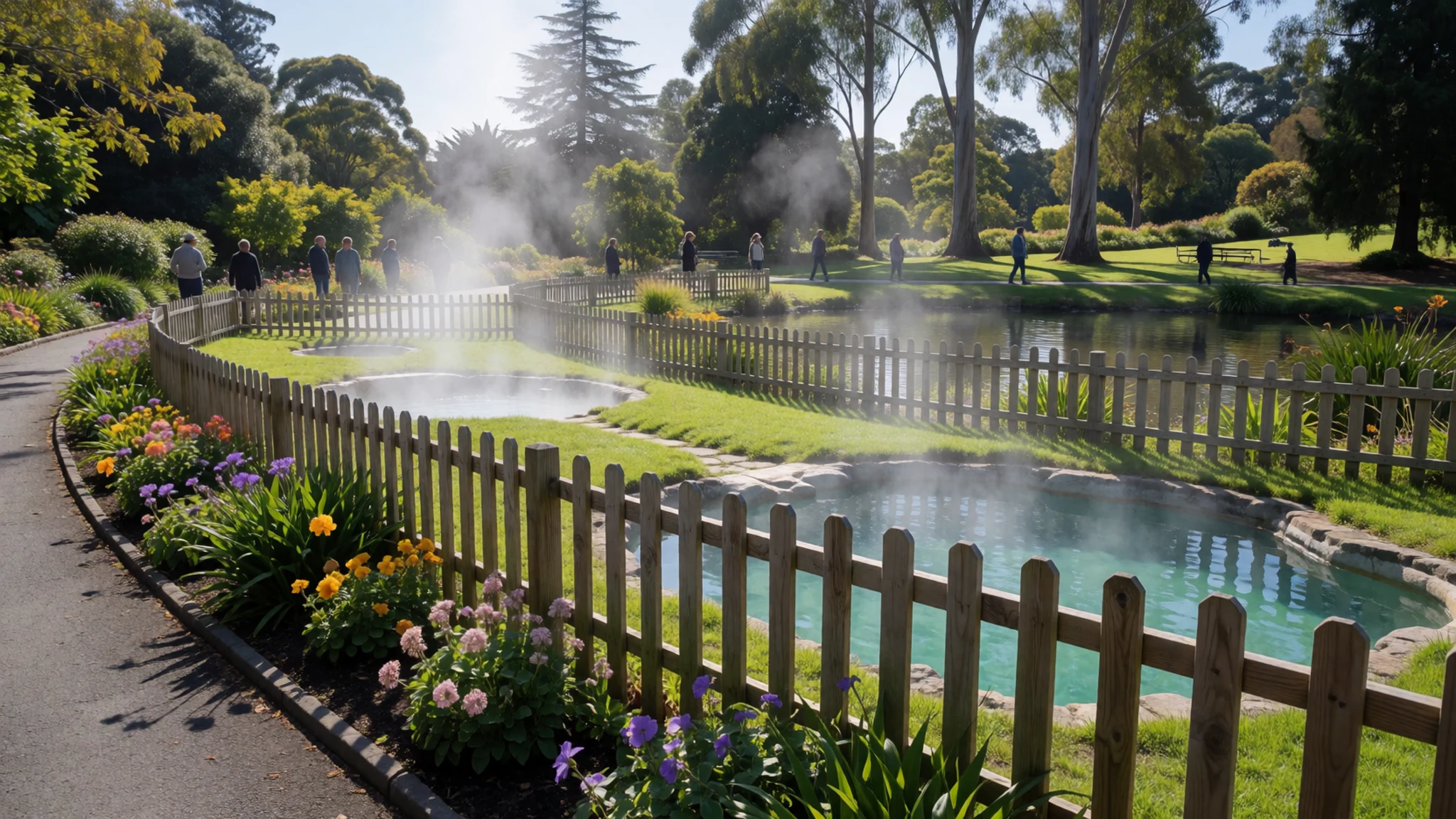
- The Redwoods, Whakarewarewa Forest — Whakarewarewa Forest, reached from Tarawera Road or the Taupo Highway
The Redwoods is a planted forest on the edge of town, where foresters trialled imported trees to see which species would thrive here. Trails range from short strolls to longer walks, and paths can be muddy after rain, so bring proper shoes. Access is from Tarawera Road, where there is a visitor centre.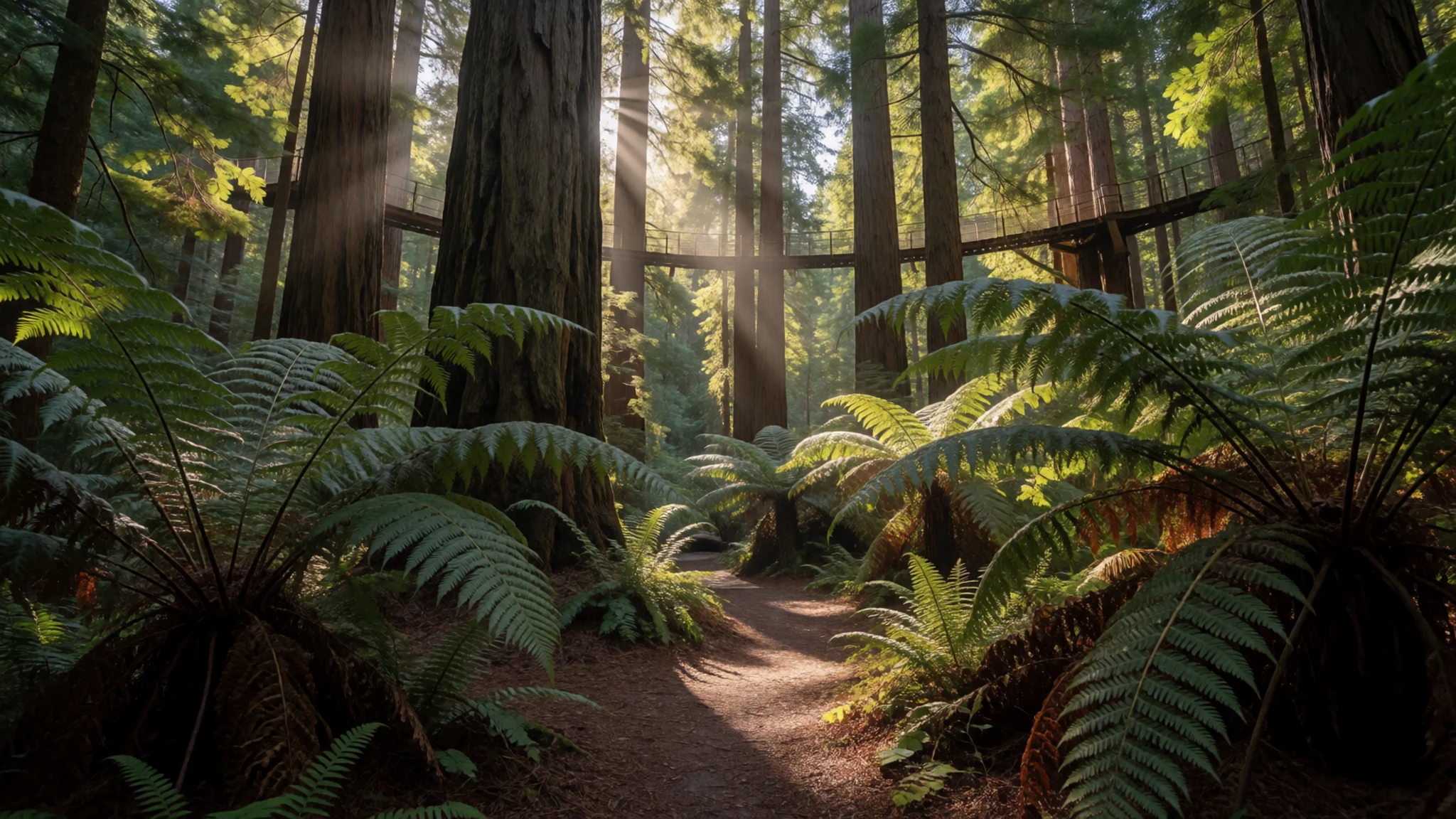
- Agrodome — farmland north of the city centre
Agrodome offers a taste of working New Zealand farm life. The farm show is followed by a ride on an all-weather, all-terrain tractor trailer through the property, which makes it a good choice for families. Check the official site for session times and prices before you go.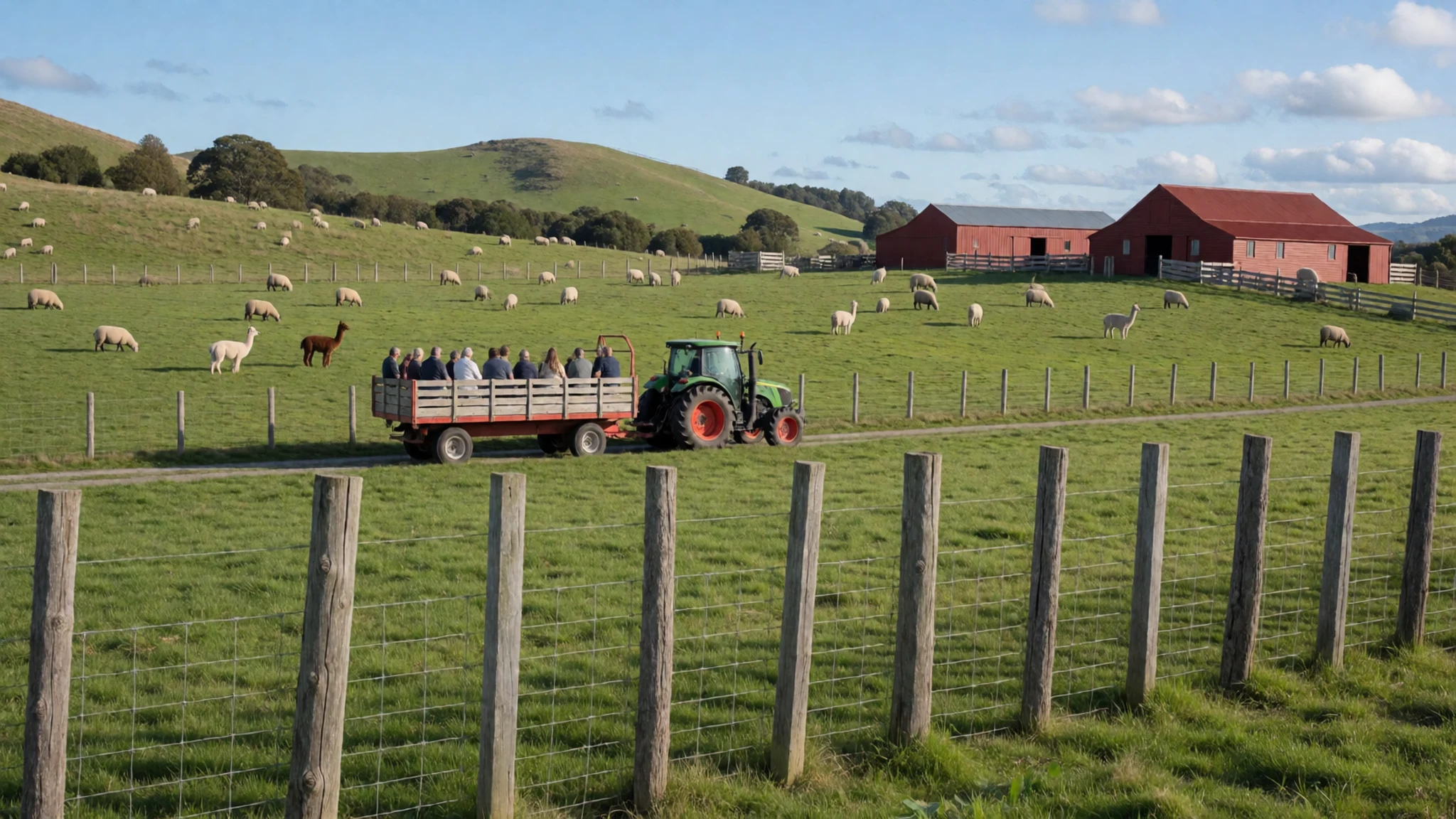
- Buried Village — Tarawera area, south-east of the city
The Buried Village marks a settlement overwhelmed by ash when Mount Tarawera erupted in 1886, with 153 people killed. It is a sobering stop, and the site helps explain what happened. Check the official site for opening details before you go.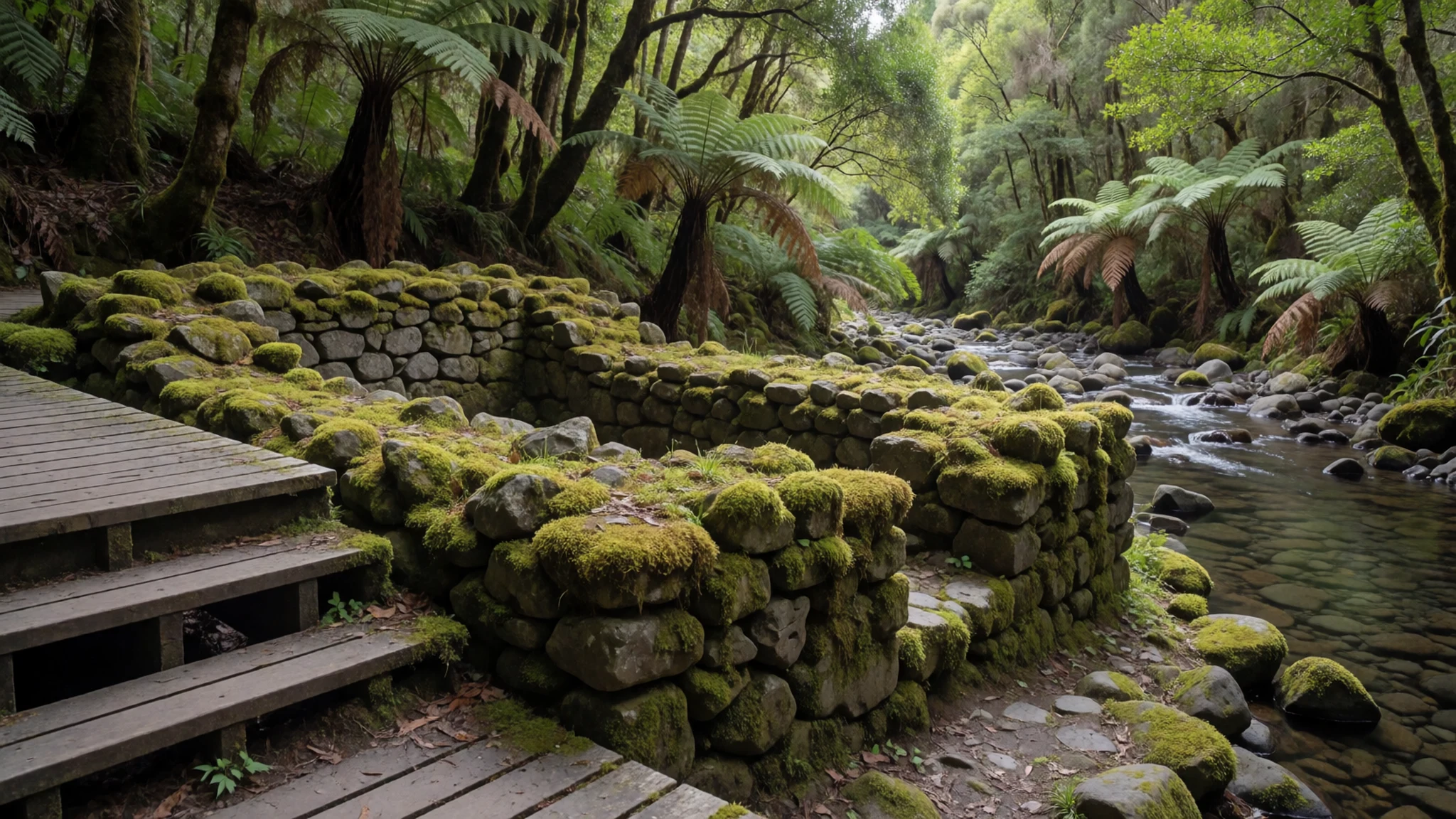
- Rotorua Walkway — city-wide loop linking parks and sights
The Rotorua Walkway is a 26 km scenic route around the city, linking many of the parks and sights in this guide. Walk a section or the whole loop, depending on your time. Bring water, and wear shoes that cope with mud after rain.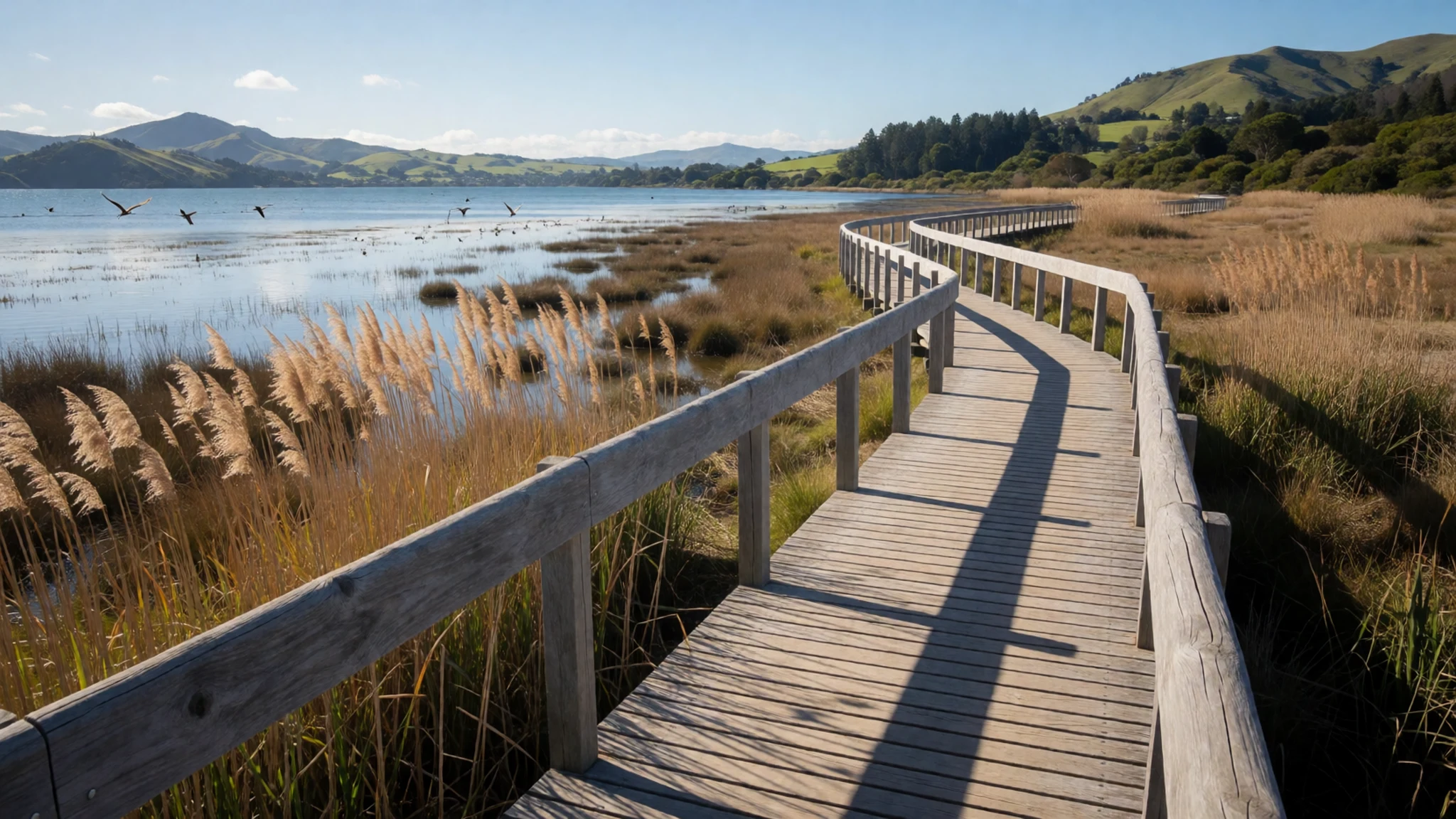
Culture
Rotorua is both a holiday town and a living Māori community, and the two sit close together. Te Arawa families still live in the Whakarewarewa valley and at Ohinemutu, so visitors are guests in places that matter to them. Marae, the traditional gathering grounds, follow protocols that are worth learning: remove your shoes where asked, follow your host's lead at a welcome, and do not walk across the front of a group while speeches are being given. Inside meeting houses and churches, keep your voice low and dress modestly, with covered shoulders and knees. Village tours and performances are part of an ordinary working community, so listen more than you talk and accept that some areas are private. Lowering your phone during karakia or a formal speech is a simple way to show respect. Photography is the most common point of friction, so ask before photographing people or carved meeting houses, and keep to the marked paths at every thermal site.
What to wear
Traditional dress in Rotorua centres on textiles made from harakeke, New Zealand flax. Kākahu, or cloaks, are woven from flax fibre and sometimes decorated with dyed patterns, feathers or, in older examples, dog-skin borders, and they mark rank and occasion. Piupiu, flax skirts with a fringe of strands, are worn in kapa haka performance and are the garment you are most likely to see on stage in Rotorua. Woven panels inside meeting houses, known as tukutuku, show the same skill with fibre and colour.
Today most people dress much as New Zealanders do anywhere: jerseys, jeans, outdoor jackets and sturdy footwear. In the thermal valleys, locals often wear gumboots or walking shoes, because boardwalks can be wet and the ground can be hot and slippery in places. Traditional dress appears at ceremonies, formal welcomes and performances rather than on the street.
For a visit, pack in layers. Rotorua's weather can turn quickly, so a waterproof shell and a warm top are useful even in summer. Choose closed, grippy shoes for boardwalks and mud. Cover shoulders and knees for meeting houses, churches and any marae visit, and bring a swimsuit if you plan to soak in a bathhouse. Sun protection matters at the lake and in open parks.
What to eat
- Hāngi — cultural experiences around the Whakarewarewa valley
Hāngi is food cooked slowly in an earth oven, traditionally meat and root vegetables wrapped in leaves and steamed over hot stones. Rotorua's geothermal ground makes the method especially practical, and it is served at some cultural experiences around the Whakarewarewa valley. Ask whether a visit includes a hāngi meal before you book.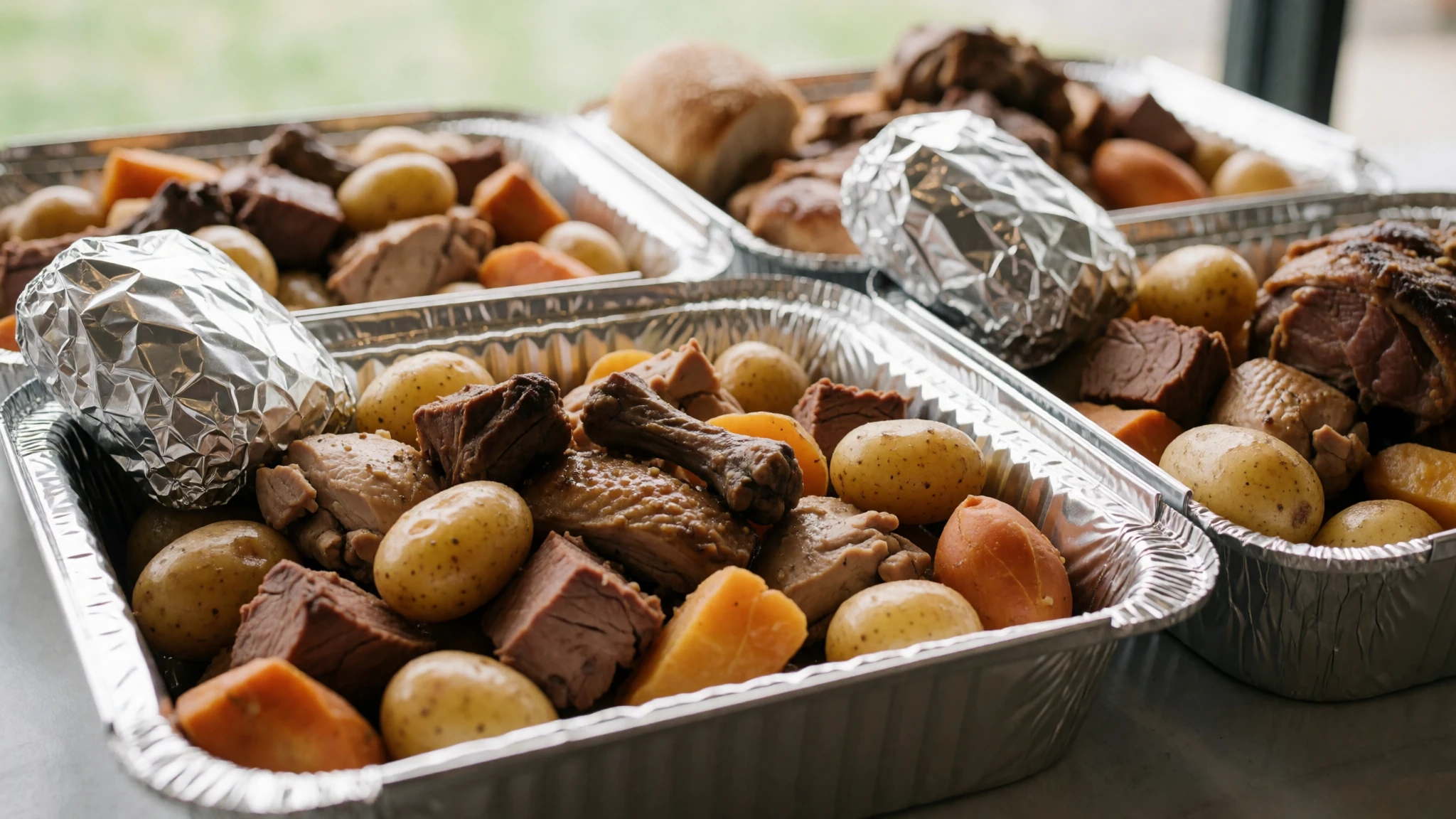
- Pastries and filter coffee — a café near the centre, with an attached health food shop
Pastries and filter coffee at Capers Epicuran, a popular café with a wide pastry selection. Its attached shop sells mostly health and organic food and drinks, so it is a handy place to stock up on snacks for a day on the trails.
- Mongolian-style barbecue — a casual eatery in town
Mongolian-style barbecue, stir-fried on barrel-shaped grills at Gengy's Mongolian BBQ. The name is tongue in cheek, since the only Mongolian element is the grill itself. Choose your ingredients and watch them cooked in front of you. - Venezuelan home cooking — a small neighbourhood eatery run by its owner
Venezuelan dishes such as arepas at Sabroso, a small, long-running eatery with only a few tables, run by a friendly owner from Venezuela. Expect a short menu and a warm welcome. Arrive early, since seating is limited. - Buffet lunch or dinner — a restaurant and bar in the town centre
A full lunch and dinner buffet at Stratosfare Restaurant & Bar, which the guide describes as arguably the best in town. The spread is wide, with plenty of choice for anyone wanting a sit-down meal after a day of walking. - Brunch at a wooden café — a café popular with locals, near the centre
Brunch at Abracadabra Café, a wood-built café that locals favour and that is rarely seen empty. The crowd is relaxed and the menu suits a slow late breakfast or lunch. Arrive early or be ready to wait for a table.
Plan it
Best time. Summer (December to February) suits the lake and the walks, but it is the busiest season. Autumn (March to May) and spring (September to November) are milder with fewer crowds. Winter is cooler and wetter, though the thermal sites look dramatic on cold mornings.
How long. 2–3
Getting there. Auckland is about 3 hours' drive north of Rotorua. Hamilton Airport is about 1.5 hours away by car, and Tauranga about 1 hour. Intercity buses arrive at the i-SITE visitor centre at 1167 Fenton Street.
Budget. mid
Tips
- Book tours and thermal park tickets ahead in summer, when the town is busiest
- Visit the thermal parks early, before the tour groups arrive
- Pack waterproof layers and closed shoes for boardwalks and mud
- Carry water and sun protection, since much of the thermal ground is open
- Check the official sites for geyser timings and opening hours before you go
Etiquette
- Stay on boardwalks and behind barriers at every thermal site
- Ask before photographing people or village life
- Remove your shoes when a host or marae asks you to
- Keep noise down at Ohinemutu and inside meeting houses
Nearby
Sources
- Wikidata Q208948 (CC0)
- Wikipedia: Rotorua (rev 1379239212) (CC BY-SA 4.0)
- Wikivoyage: Rotorua (rev 5375707) (CC BY-SA 4.0)
- W. Bulach, i-SITE Rotorua photo (CC BY-SA 4.0)
- Antilived, Rotorua Museum panorama (CC BY-SA 2.0)
- Shellie Evans, St Faiths Anglican Church, Ohinemutu (CC BY 3.0)
- Krzysztof Golik, Government Gardens in Rotorua (CC BY-SA 4.0)
- Sircha, City of Rotorua (Public domain)
- W. Bulach, Pohutu Geyser in Whakarewarewa (CC BY-SA 4.0)
- Valley2city, Prince of Wales Feathers and Pōhutu geysers (CC BY 3.0)
- Unknown author, Bath house in Rotorua (before 1913) (Public domain)


