Rishikesh
Rishikesh, India
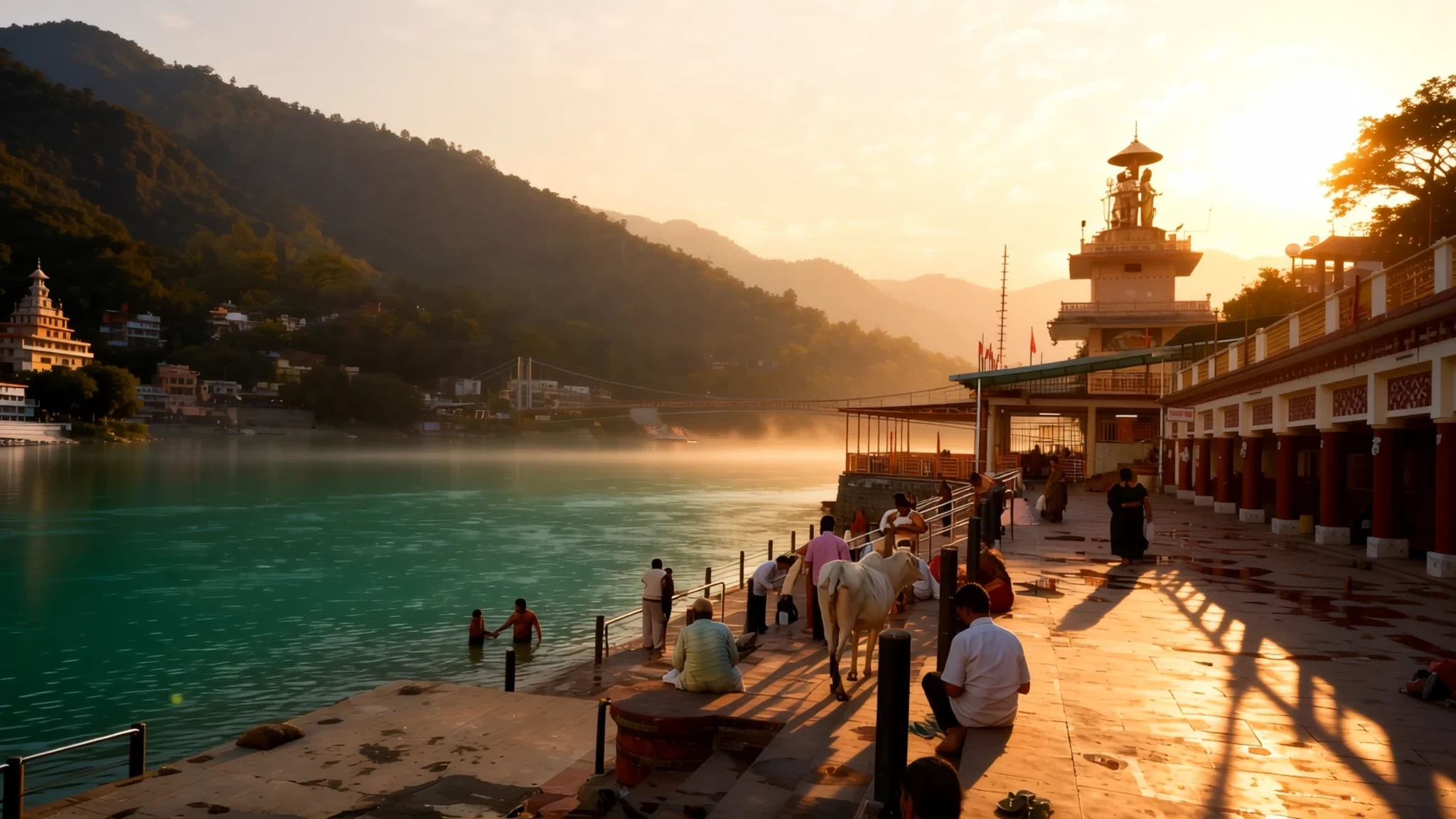
Rishikesh sits where the Ganges leaves the Himalayan foothills, a gateway to the Garhwal valleys and a long-standing centre of yoga and ashram life.
The place
Rishikesh is a town of about 102,000 people in the Dehradun district of Uttarakhand, set at about 372 metres above sea level on the right bank of the Ganges. The river is the centre of everything here. Temples, ashrams and bathing steps line its banks, and the hills rise steeply behind them, so the town feels squeezed between water and forest rather than spread across a plain. Pilgrims arrive throughout the year, many of them heading further up the valleys towards the Char Dham shrines, while others come to study yoga and meditation in the ashrams that have made the town well known. Local custom shapes daily life: meat, fish and eggs are not sold, and alcohol is banned, which gives the streets and menus a distinctive character. Expect a slower, more spiritual pace in the old quarters and a busier, more commercial atmosphere around the bridges and the main road. The town is also the jumping-off point for trekking routes into the Himalaya, so adventure sits alongside devotion. It is small enough to walk most of in a day, but traffic on the bridges and in the bazaars can be slow at busy times.
Its story
Rishikesh appears in old Hindu texts as part of the wider region called Kedarkhand, described in the Skanda Purana. A well-known story says that Rama performed penance here after killing Ravana, the demon king of Lanka. His brother Lakshmana is said to have crossed the Ganges at the spot where the Lakshman Jhula bridge now stands, using two jute ropes. Another text names a nearby bathing place as Indrakund, where the god Indra is said to have washed away a curse. Legend gathers around crossings and bathing places here, and the river has long been treated as a place where the sacred and the practical meet.
The modern history of the crossing is more prosaic. An iron-rope suspension bridge opened in 1889 was carried away by floods in 1924. A stronger replacement followed in 1927, built by the United Provinces public works department, and it linked the two banks for decades. It collapsed again in 2020, and a new glass bridge is being built across the river to replace it.
Further upstream, a suspension bridge called Ram Jhula was built in 1986 near Sivananda Nagar, and it has since become another landmark for visitors. The temples along the river, including Bharat Mandir, Shatrughna Mandir and Lakshman Mandir, are linked by local tradition to the teacher Adi Shankaracharya. Together these sites show how faith, geography and engineering have shaped the town over time.
What to see
- Parmarth Niketan and its riverside ghat — Riverside, near Muni Ki Reti
Parmarth Niketan is an ashram that still teaches Vedic study to children, and its ghat is the place to watch the river in the early evening. Pilgrims sit on the steps, prayers rise from the water's edge, and the ashram welcomes visitors who want to observe quietly. Dress modestly, keep your distance from groups at prayer, and avoid stepping onto the ghat with food or shoes.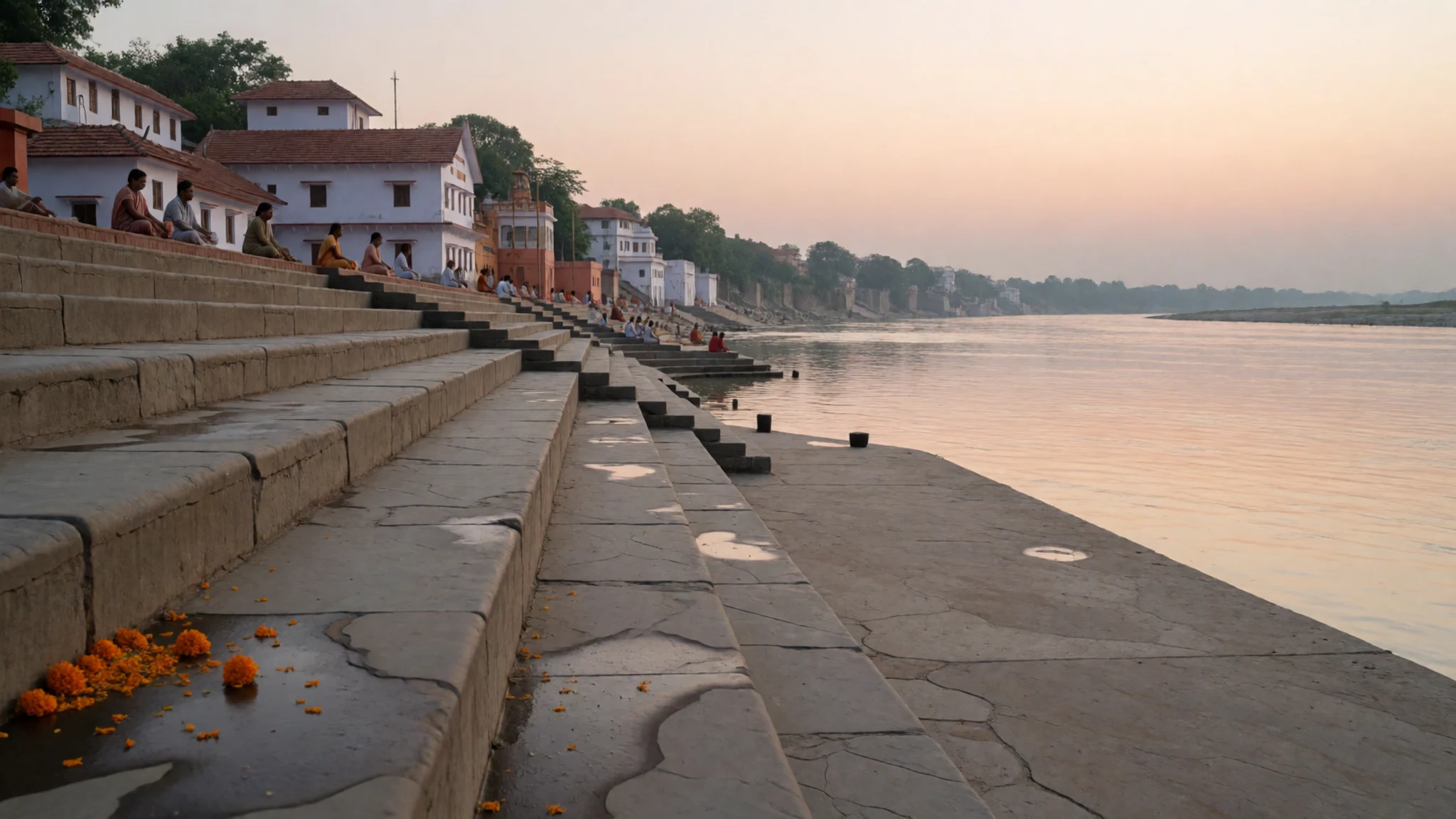
- Chaurasi Kutia — Riverside ashram complex, Rishikesh
This historic ashram is where the Beatles stayed and wrote music in 1968. The Forest Department now maintains the site. Its former meditation caves carry graffiti art, and the lecture hall has a lofty, cathedral-like feel. Visit early in the morning when it is quiet, and ask locally about current access before you set out.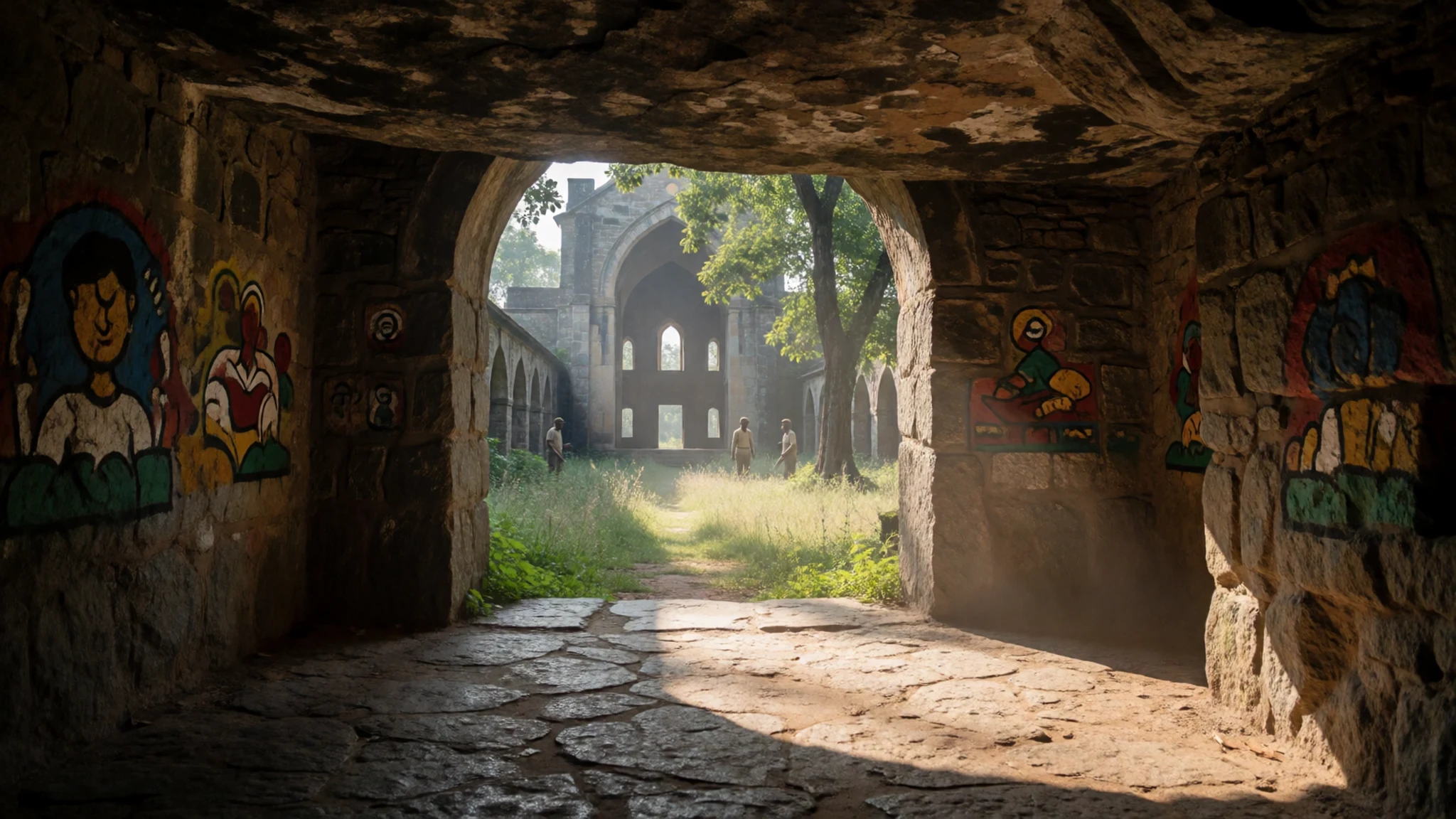
- Bharat Mandir — Old town, Rishikesh
A temple dedicated to Vishnu, set in the old part of town. Its central image is carved from a single piece of saligram, a stone revered in Vaishnava worship. Adi Shankaracharya is traditionally linked with the temple's founding. It is a calm place to see temple architecture up close, and it is best visited early, before the midday heat and the busiest hours.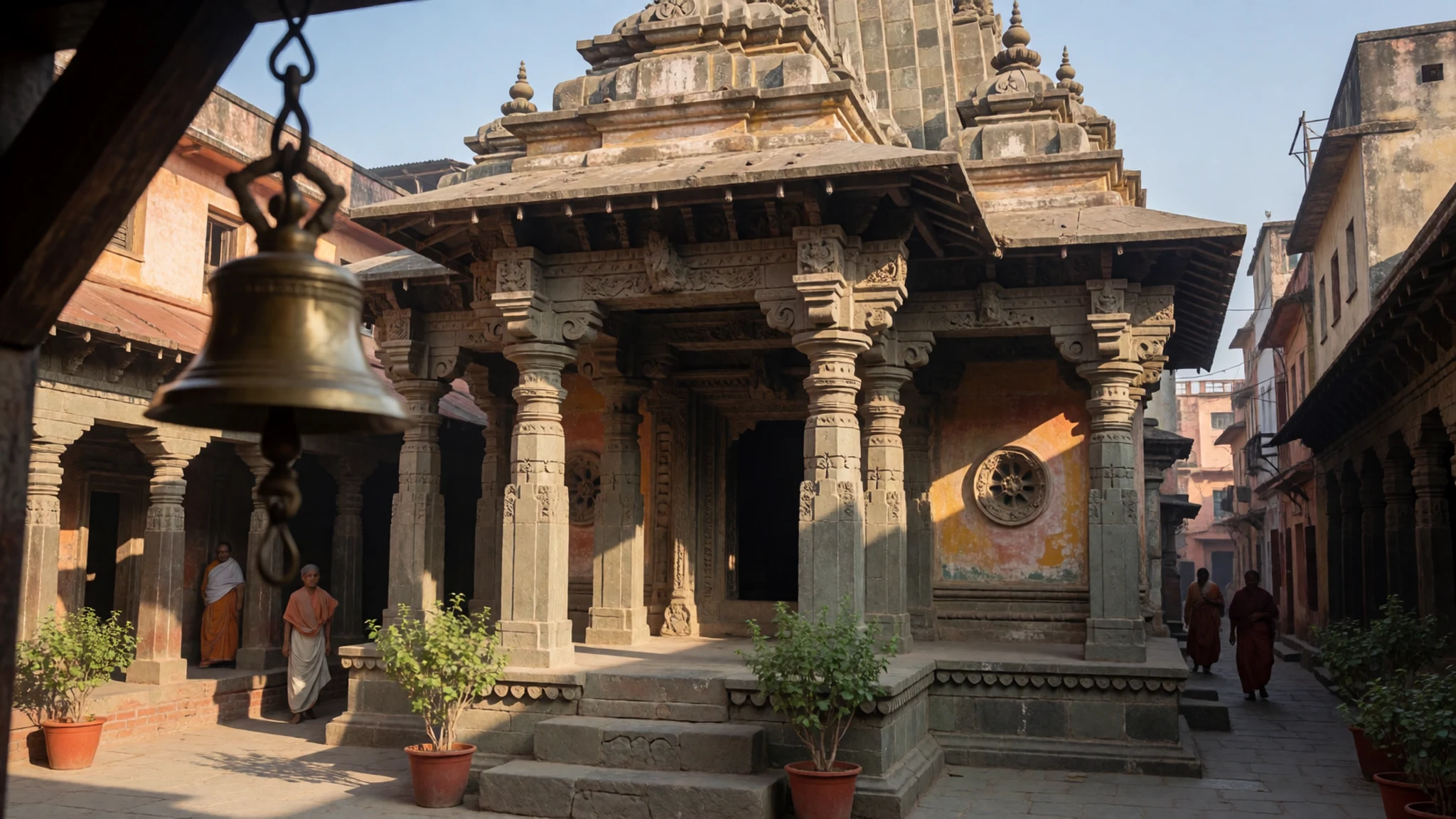
- Gita Bhavan — Riverside, Rishikesh
A gathering place linked to the teacher Ram Sukh Das and popular with local Brahmin families. The ashram hosts communal readings of the Ramayana twice a year, when the halls fill with families and visiting pilgrims. Visitors may sit quietly at the edges, and should follow the lead of those reading and keep phones silent.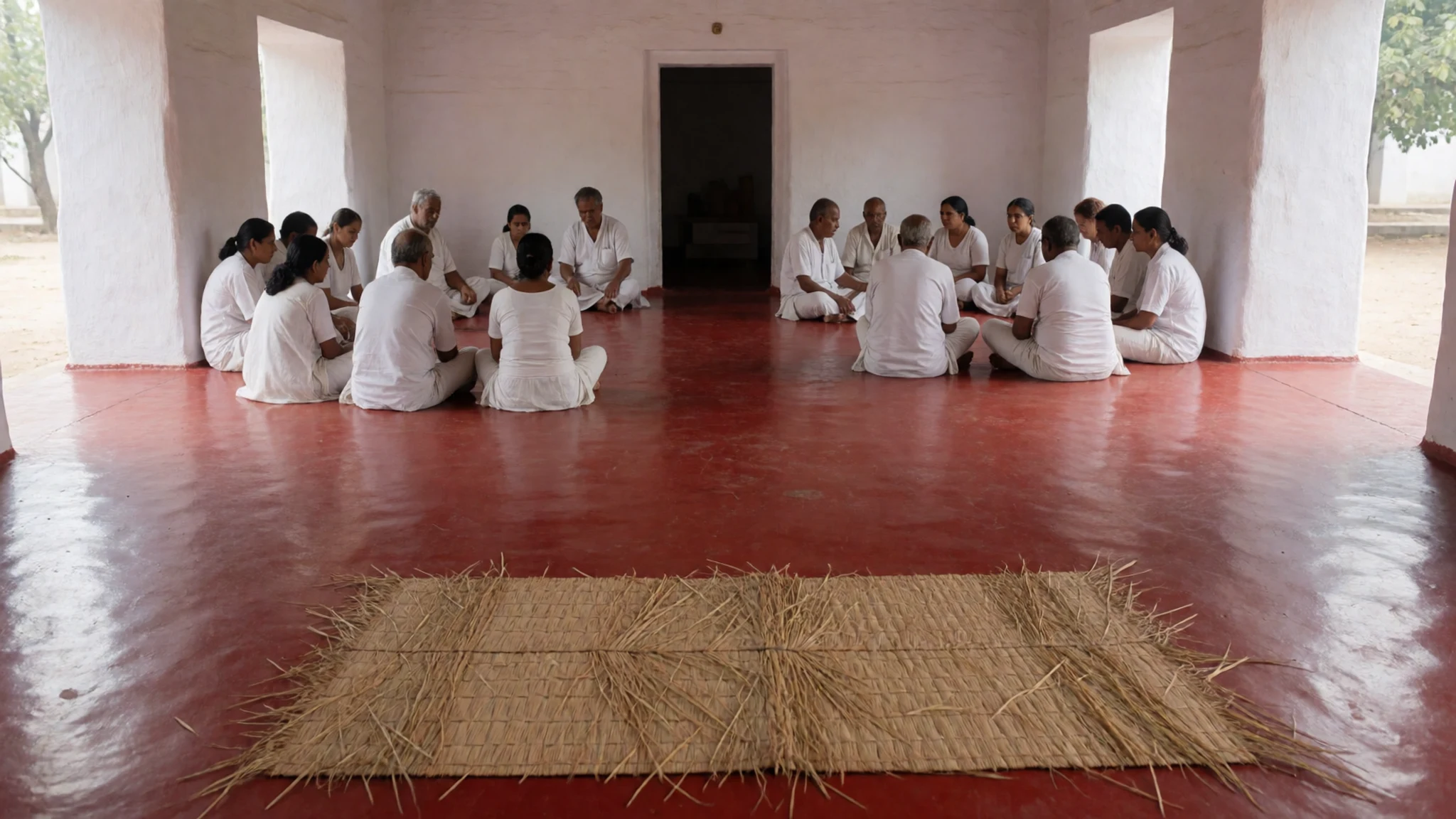
- Neelkanth Mahadev — Forest, about 28 km from Rishikesh
One of the most sacred temples in the area, dedicated to Shiva and set deep in the forest about 28 km from town. A religious fair takes place in July and August, when devotees arrive from across India. Allow a full morning for the climb, expect crowds during the fair, and carry water and sensible footwear.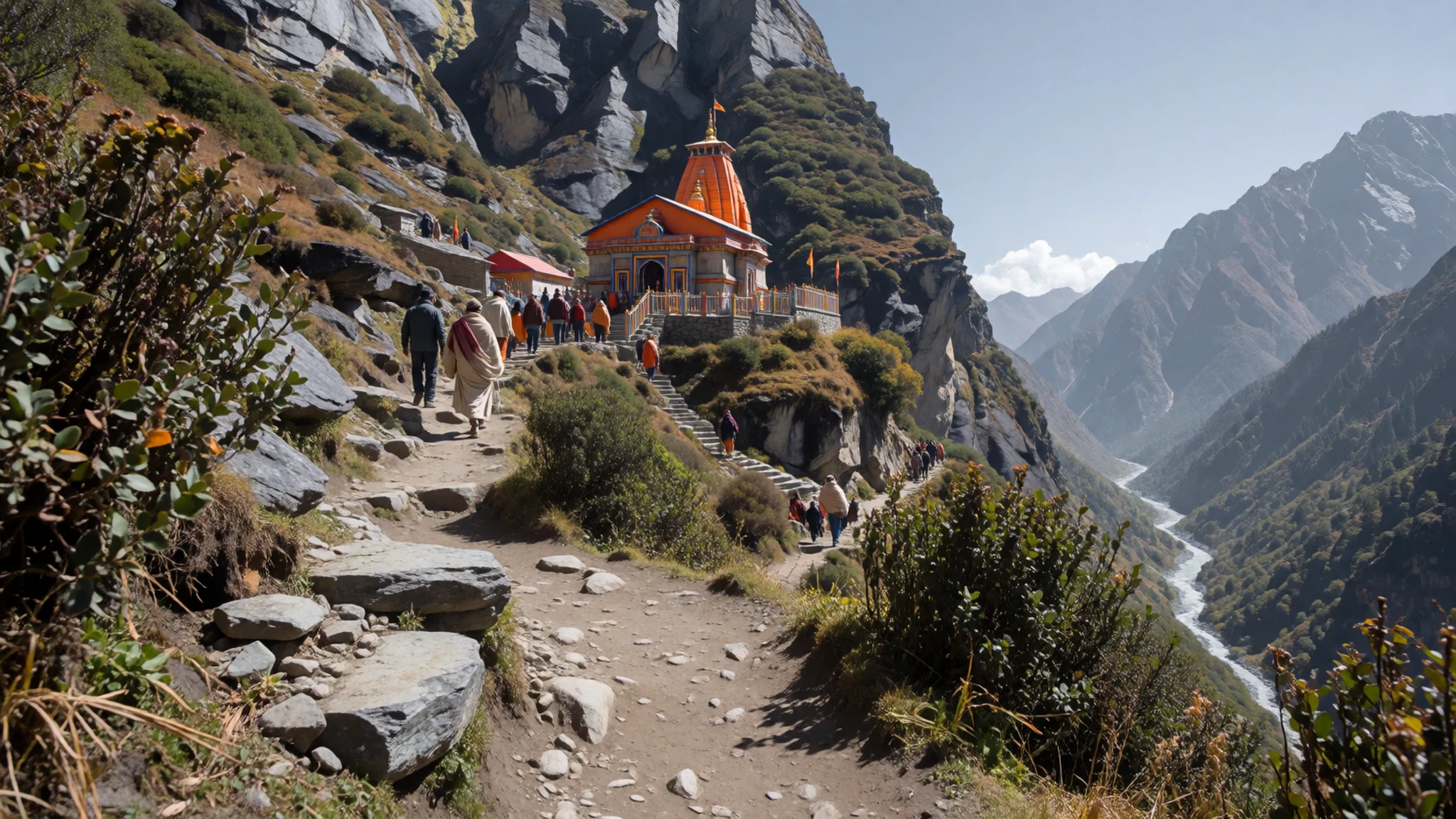
Culture
Rishikesh is a devout town where the rhythm of daily life follows the river. Pilgrims come to bathe, pray and hear teaching in the ashrams along the Ganges, and many residents keep to vegetarian food as a matter of course. Meat, fish and eggs are not sold in the town, a rule that has stood for decades and has been upheld in court, so restaurants build their menus around grains, pulses and vegetables. Alcohol is also banned, though a few upmarket hotels serve beer with meals, which gives the town a quiet evening character that visitors often notice first.
Religious life is public here. Evening aarti at the ghats draws crowds, and families gather at small shrines along the lanes. Many ashrams run daily chanting, lectures and yoga classes, and some hold readings of the Ramayana in their halls. Visitors are welcome at most of these, but they are places of worship first. Greetings are often given with folded hands, and it is polite to accept a blessing or prasad graciously rather than refuse it.
Respect also means being mindful of the riverside. Keep to the steps and paths, do not throw rubbish into the water, and avoid loud music near temples. When you visit a temple or ashram, take off your shoes at the entrance, cover your shoulders and knees, and ask before photographing people at prayer or during aarti.
What to wear
Rishikesh dresses for two worlds: the Himalayan hill communities that shape its culture, and the pilgrims and travellers who arrive from the plains. Traditional dress across Garhwal is practical and modest, built around wool and cotton. Hill communities have long worn woollen shawls and warm layers against cold mountain air, and handwoven cotton remains common for everyday clothes. Women have often worn long skirts or wrapped garments with a shawl, while men wear simple kurtas or long tunics with trousers, and more traditional dress appears at festivals, weddings and temple events.
What people wear now is mixed. Shops and streets are full of jeans, T-shirts, kurtas and salwar kameez, and saris are common at weddings and formal occasions. Sadhus and ashram residents often wear saffron or ochre cloth, and many yoga teachers dress in loose cotton. Western clothes are everywhere in the busier parts of town, but local women and older men tend to keep to more covered styles.
For a visitor in Rishikesh, the sensible choice is loose, lightweight cotton or linen that covers shoulders and knees, especially at temples, ashrams and the ghats. Carry a light shawl for cool evenings and a warmer layer for trips into the hills. Choose sturdy closed shoes or sandals with easy straps, because you will remove them often and the riverside paths are uneven. Save swimwear for the water away from the main steps.
What to eat
- Garhwali dal and gahat — Homestyle eateries in the old bazaar
Garhwali cooking is the local tradition, built on lentils, legumes, millet and barley. Dal and gahat, a traditional pulse dish, come with mustard oil and a few select spices. The flavours are simple and earthy, and the dishes suit the cool hill climate. Look for homestyle eateries in the old bazaar.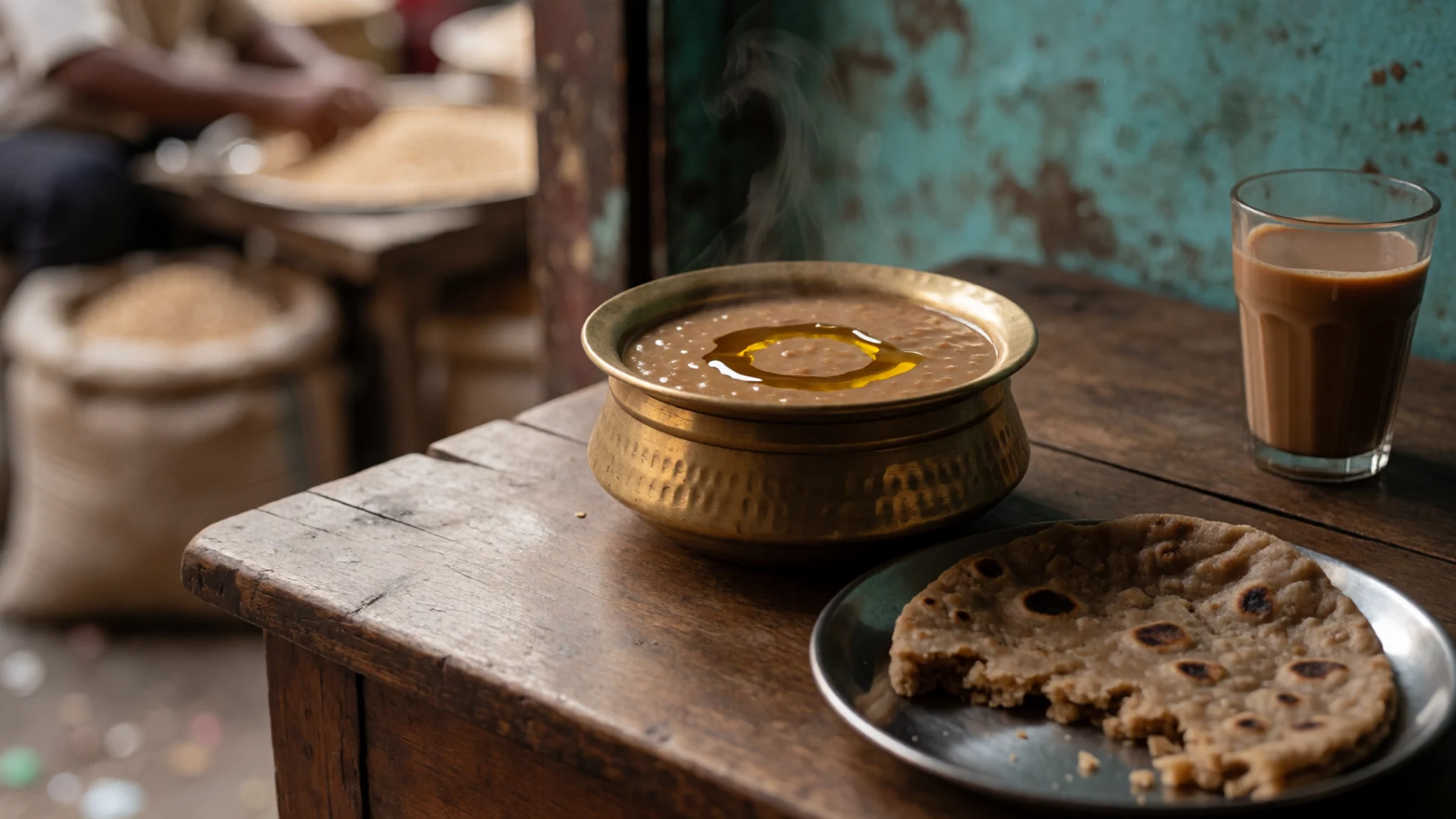
- Vegetarian thali — Restaurants along the main road and in Tapovan
A thali is the easiest way to sample variety: a metal plate with dal, vegetables, rice, bread and yoghurt, with small bowls filled as you eat. Most restaurants in town serve North Indian versions, and portions are generous. Order one at lunch, when the kitchen is busiest and the food is freshest.
- Samosas and chaat — Street carts near the bridges and in the market lanes
Street vendors sell samosas, crisp and hot from the frying pan, along with chaat: crushed potato, chickpeas, tamarind and yoghurt. Choose stalls where the oil looks fresh and food is served straight away. Eating them early in the day usually means the best flavour and the least waiting.
- Spinach pie — Bakeries in Tapovan, best in the morning
A bakery in Tapovan is known for its spinach pie, a savoury bake that sells out quickly. Go in the morning, before the trays are emptied. Eaten warm, it makes a good breakfast before a walk along the river, and it pairs well with tea from a nearby stall. - Fresh fruit juice and lassi — Cafés facing the river along the Ganga
Fresh fruit juices and lassis are a reliable treat in the heat. Cafés serve mango, strawberry and pineapple, often in large mugs. You can ask for juice without ice if you prefer it, and it is wise to choose places that look clean and use safe water. - Nepali and Tibetan dishes — Cafés in Tapovan and along the river
Nepali and Tibetan dishes, including momos and noodle soups, feature widely on café menus in Tapovan. Several cafés also serve Italian, Mexican and Israeli food, and many offer vegetarian and vegan choices. Pick a terrace with a river view, and order something light and warm.
Plan it
Best time. October and November are the most comfortable months, with warm days, little rain and clearer views of the hills, while April to June is the hottest stretch. June to September is the monsoon, bringing heavy rain, slippery paths and disruption on the roads into the hills. Winter nights can be cold.
How long. 2–3
Getting there. Fly into Jolly Grant Airport at Dehradun, then take a taxi for the road transfer. The train is simplest: Yog Nagari Rishikesh station (YNRK) has long-distance express trains to Delhi and Kolkata, and pre-paid autos and taxis wait outside. Many express trains run to Haridwar, with some continuing to Rishikesh.
Budget. low
Tips
- Book rooms early for early March, when the International Yoga Festival draws large numbers of visitors
- Go to the ghats early in the morning for quieter steps and the morning rituals
- Carry cash for autos, small shops and market stalls, and agree fares before you ride
- Drink sealed or treated water and carry a refillable bottle
- Check the official site, uttarakhandtourism.gov.in, for current road and festival information
Etiquette
- Take off your shoes before entering any temple or ashram hall
- Ask before photographing people at prayer or during aarti
- Do not expect meat or alcohol in restaurants, as neither is part of local life
Nearby
Sources
- Wikidata Q502141 (CC0)
- Wikipedia: Rishikesh (CC BY-SA 4.0)
- Wikivoyage: Rishikesh (CC BY-SA 4.0)
- Photo: Sunset - Lakshman Jhula (Tylersundance) (CC BY 3.0)
- Photo: Trayambakeshwar Temple (VK1983) (CC BY-SA 4.0)
- Photo: Ghats on the Ganges near Parmarth Niketan (Ken Wieland) (CC BY-SA 2.0)
- Photo: Evening praying time at Parmarth Niketan ghat (D E) (CC BY 2.5)
- Photo: Aarti at Triveni Ghat (ArmouredCyborg) (CC BY-SA 4.0)
- Photo: Ramjhula bridge over the Ganga (Asis K. Chatterjee) (CC BY-SA 2.0)
- Photo: Temples on the banks of river Ganges at Laxman Jhula (Raghavanand98) (CC BY-SA 4.0)
- Photo: Rishikesh Uttarakhand (Kafaldiary) (CC BY-SA 4.0)


