Rimini
Rimini, Italy
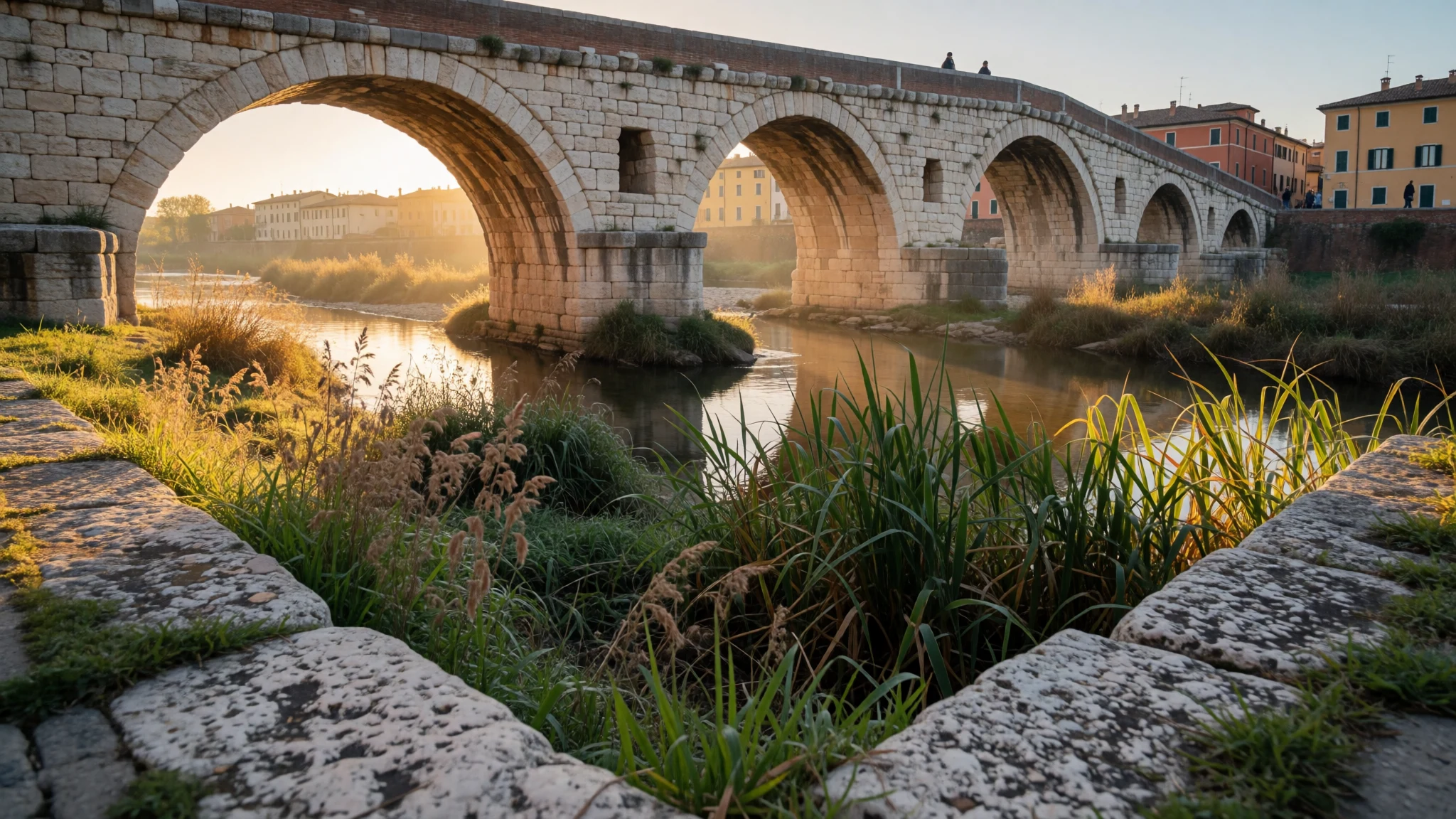
Rimini combines centuries of Roman and Renaissance heritage with long stretches of sandy Adriatic coastline and a rich regional culinary tradition.
The place
Rimini sits where the fertile Po Valley meets the Adriatic Sea in northern Italy's Emilia-Romagna region. Positioned along a flat coastal strip, the city forms a junction between northern plains and the southern Italian peninsula. Beyond the urban grid and modern developments lies a geographical divide: the historic city centre rests slightly inland around ancient waterways, while the coastal resort stretch extends directly along the wide sandy shores.
The city displays two distinct urban personalities that function side by side. Inland, the old quarter revolves around leafy plazas, stone arches, and Renaissance monuments built around paved pedestrian paths. Here, narrow lanes connect historic markets with quiet residential neighbourhoods, reflecting centuries of civic life away from the water. To the east, along the shoreline, the seafront district presents a completely different layout. Parallel avenues run along miles of open sand, lined with row upon row of neat umbrellas, seasonal cafes, and seaside lodging.
Between these two zones flows the Marecchia river, which shaped local geography before being redirected in modern times. The old riverbed now forms a green park corridor that connects the historical centre directly to the harbour area. The surrounding landscape rises gently towards the Apennine foothills in the west, visible on clear days across the coastal plain. Rimini's location delivers warm summers tempered by sea breezes, followed by cool, damp winters where quiet streets return the city to its local rhythms.
Its story
Rimini began as a strategic settlement established by the Roman Republic in 268 BCE under the name Ariminum. Built near the mouth of the Ariminus river, the outpost served as a defensive stronghold against Celtic tribes and a stepping stone for expansion across the northern plains. Its geographic position quickly made the settlement a pivotal transportation hub, serving as the northern terminus for the Via Flaminia. From this point, major roadways stretched outward, including the Via Aemilia towards Piacenza, linking the capital directly with northern territories and river trade routes.
During the late Roman Republic, the settlement became entangled in civil conflict. Julius Caesar gathered his legions in the municipal forum after making his decisive crossing of the nearby Rubicon. The early Empire adorned the town with grand infrastructure, including a five-arched bridge constructed from Istrian stone under Emperor Tiberius and a prominent triumphal arch dedicated to Augustus in 27 BC.
Centuries later, Rimini flourished during the Renaissance under the rule of the Malatesta dynasty. Sigismondo Pandolfo Malatesta transformed the city into a vibrant cultural court, commissioning artists and scholars, and converting an earlier church into the elaborate Tempio Malatestiano mausoleum. Subsequent centuries brought quiet provincial status until the nineteenth century, when the town became an active participant in the struggle for Italian unification. The mid-nineteenth century also marked the opening of the first commercial bathing facility, laying the foundation for modern coastal travel before heavy destruction and subsequent rebuilding followed during the Second World War.
What to see
- Arch of Augustus — Historic Centre
The Arch of Augustus stands at the southern entrance of the historical town, marking the historic terminus of the Roman Via Flaminia. Constructed in 27 BC from white stone, the single-arched monument is among the oldest surviving Roman triumphal arches. Its broad opening served a symbolic purpose, reflecting an era of political stability when town fortification gates were kept open. - Tiberius Bridge — Borgo San Giuliano
Spanning the original course of the Marecchia river, the Tiberius Bridge consists of five sturdy arches crafted from durable Istrian stone. Completed in 21 AD under Emperor Tiberius, the bridge continues to carry pedestrian traffic and connects the central historic district to the colourful streets of Borgo San Giuliano, standing as a testament to ancient engineering. - Domus of the Surgeon — Piazza Ferrari
Discovered beneath a public square, this archaeological site reveals the uncovered foundations of a Roman residential home from the second century. The complex preserved intricate mosaic floors and a remarkably intact collection of ancient surgical instruments. A glass-walled enclosure allows visitors to walk directly over the exposed ruins and trace layers of structural history. - Tempio Malatestiano — Historic Centre
Redesigned during the fifteenth century by Renaissance architect Leon Battista Alberti, this cathedral serves as a funerary monument for ruler Sigismondo Pandolfo Malatesta. The exterior features a marble classical shell, while the interior houses artwork by Piero della Francesca alongside sculpted marble reliefs that blend Renaissance humanism with noble commemoration. - Federico Fellini Museum — Castel Sismondo and Historic Centre
Dedicated to the world-renowned film director born in the city, this multi-site museum spans the medieval Castel Sismondo fortress and nearby historic buildings. Interactive displays, original set drawings, costumes, and film excerpts explore the director's dreamlike visual world and artistic connection to his coastal hometown. - La Marina Beaches — Seafront Strip
Stretching for miles along the Adriatic shoreline, the main beach area features shallow, calm waters protected by offshore breakwaters. While much of the waterfront is organized into managed plots with rental sunbeds, designated unmanaged sections allow open access. Broad walkways and bicycle paths line the entire coastal strip.
Culture
Rimini maintains a rich cultural personality shaped by its deep maritime heritage, Roman roots, and vibrant cinematic tradition. Local identity balances the quiet habits of a historic Romagna market town with the bustling energy of an international seaside destination. Residents take great pride in native filmmaker Federico Fellini, whose imaginative representations of local life and seaside nostalgia continue to influence municipal arts, neighbourhood murals, and seasonal cultural programming. In districts like Borgo San Giuliano, colourful painted house façades portray scenes from famous Italian films, blending neighbourhood life with artistic memory.
Civic institutions preserve this historical memory through carefully curated spaces. The City Museum, established during the nineteenth century inside a former monastery, houses extensive Etruscan artifacts, Roman mosaics, and medieval paintings rescued during wartime conflict. Outside of summer peak months, communal life gathers in public squares like Piazza Cavour, where daily espresso breaks, outdoor markets, and evening strolls anchor community interaction.
When visiting historic churches or religious monuments, cover shoulders and knees to show proper respect.
What to wear
Rimini reflects a coastal style rooted in regional Romagna textile traditions and relaxed Mediterranean dressing. Historically, local dress featured durable linen and cotton garments dyed with rustic indigo or rust-printed patterns, a traditional woodblock textile technique unique to the Romagna region that featured agricultural symbols, grapes, and roosters on coarse handwoven cloth. Fishermen and farmworkers wore simple, functional tunics and trousers designed to withstand sea salt and heavy outdoor labour.
Today, local attire shifts noticeably with the seasons. During warm summer months, residents favour light cotton dresses, linen shirts, tailored shorts, and open footwear suitable for walking between coastal avenues and paved historic streets. As evening approaches, casual beachwear gives way to polished yet relaxed smart-casual clothing for promenade strolls and outdoor dining. In cooler months, sharp Italian tailoring takes over, with classic trench coats, tailored trousers, and structured wool outerwear becoming standard across town.
Visitors should pack breathable cotton or linen fabrics and comfortable walking shoes for exploring cobble streets and paved piazzas. High-grade sun protection and swimwear are essential for the beach, though swimming attire should be kept strictly to the sand and boardwalk; lightweight layers or cover-ups are necessary when walking into shops or dining establishments.
What to eat
- Piadina Romagnola — Kiosks and bakeries across the historic centre
This traditional unleavened flatbread is cooked on a hot griddle and served folded over savoury fillings. Common combinations include creamy squacquerone cheese, fresh rocket, and cured prosciutto. It is eaten warm as a quick street lunch or dinner accompaniment. - Brodetto di Pesce — Seafood trattorias around the harbour
A rich, aromatic fish soup rooted in local maritime tradition, made with a variety of fresh daily catches simmered with tomatoes, garlic, white wine, and vinegar. It is traditionally served piping hot alongside slices of toasted country bread. - Passatelli in Brodo — Traditional osterias in the old town
Distinctive hand-formed pasta noodles made from breadcrumbs, Parmesan cheese, eggs, nutmeg, and lemon zest. The dough is pressed through a perforated disc into long strands and gently simmered in a rich meat broth until tender. - Cappelletti al Ragù — Family-run eateries across Borgo San Giuliano
Hat-shaped folded pasta filled with a mixture of ricotta, Parmesan, and herbs, served dressed in a slow-cooked meat ragù. A staple dish across Emilia-Romagna homes and local family restaurants for festive meals and Sunday gatherings. - Sarda Innamorata — Seafood spots along the San Giuliano beach
Fresh Adriatic sardines coated in seasoned breadcrumbs and grilled over open embers, often served drizzled with olive oil and fresh lemon juice. This classic coastal preparation highlights the straightforward marine flavours of the local catch.
Plan it
Best time. May to June and September offer warm weather, quiet beaches, and comfortable sightseeing without extreme summer crowds; July and August bring heavy domestic tourism and high humidity.
How long. 2–3
Getting there. Fly into Bologna Airport or Marche Airport near Ancona, then take a regional train directly to Rimini station; direct fast train links also connect Milan and Bologna along the Adriatic rail line.
Budget. mid
Tips
- Look for free public beach sections ('spiaggia libera') to lay down towels without renting sunbeds
- Rent a bicycle to navigate the flat coastal promenade and dedicated city bike paths
- Visit popular Roman archeological sites early in the morning during peak summer months
- Validate train tickets at platform machines before boarding regional rail services
Etiquette
- Put on shirts or lightweight cover-ups when leaving the beach to enter town shops or cafes
- Avoid eating food directly on church steps or monument bases in historic piazzas
Nearby
Sources
- Wikidata Q13369 (CC0)
- Wikipedia (rev 1383816642) (CC BY-SA 4.0)
- Wikivoyage (rev 5427742) (CC BY-SA 4.0)
- Photo photos/01-08-b-piazza-cavour-pan-301.jpg (CC BY-SA 4.0)
- Photo photos/02-rimini-montage.jpg (CC BY 3.0)
- Photo photos/03-rimini201.jpg (CC BY 3.0)
- Photo photos/04-piero-ritratto-di-sigismondo-malatesta.jpg (Public domain)
- Photo photos/05-georg-braun-rimini-1572.jpg (Public domain)
- Photo photos/06-rimini-banner.jpg (CC BY 3.0)
- Photo photos/07-ponte-di-tiberio-vista-aerea.jpg (CC BY-SA 4.0)
- Photo photos/08-veduta-di-san-marino-da-montecieco-rn.jpg (CC BY 3.0)


