Rauma
Rauma, Finland
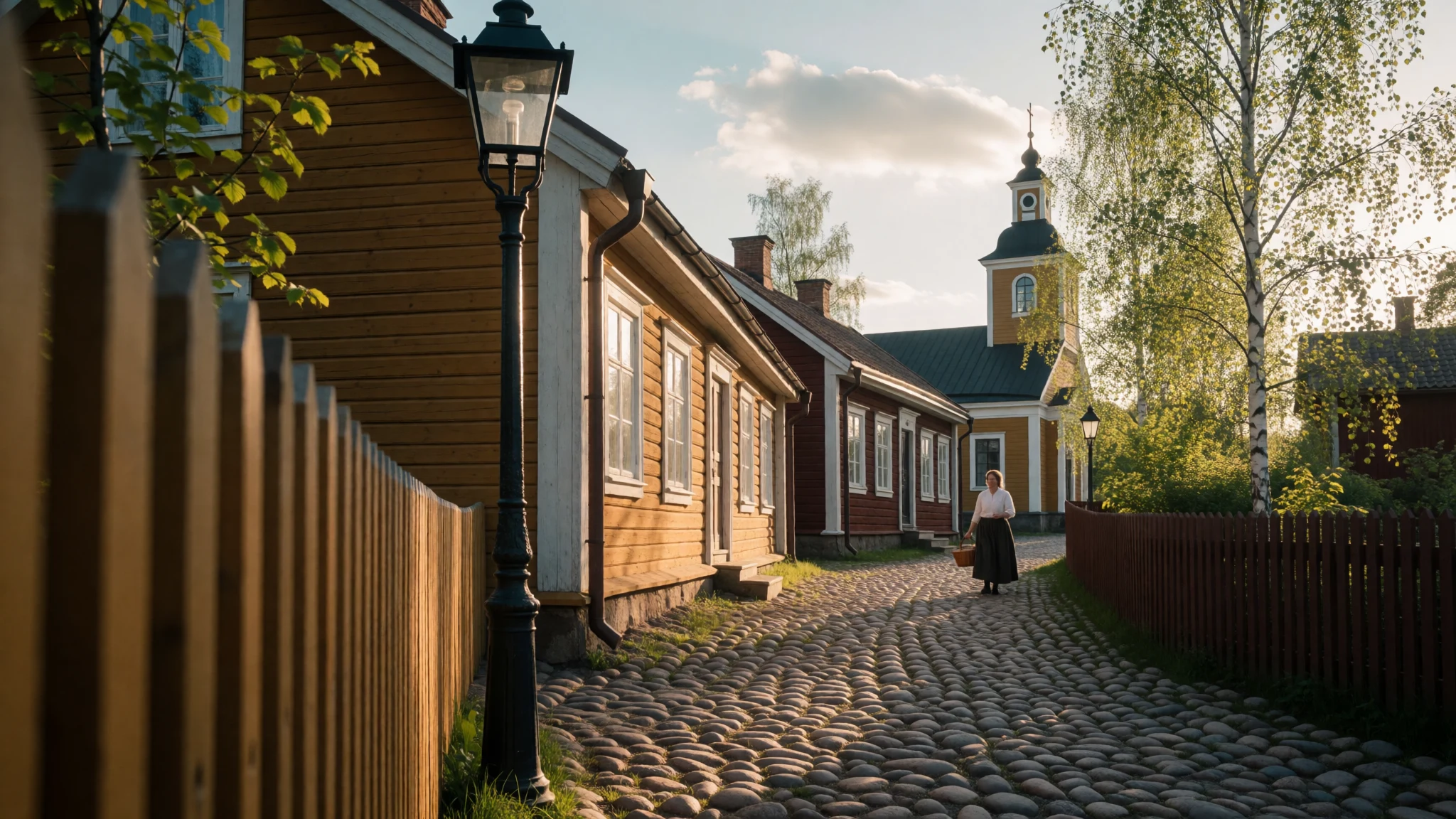
Rauma's Old Town is a living neighbourhood of low wooden houses and quiet lanes on Finland's west coast, easy to walk in an afternoon.
The place
Old Rauma (Finnish Vanha Rauma, Swedish Gamla Raumo) is the wooden heart of Rauma, a port town on Finland's south-western coast. The district is small enough to cross on foot in minutes, yet it holds around six hundred buildings, counting sheds and outhouses as well as proper homes, and about eight hundred people live there. Almost everything is a single storey, and several of the older houses have cellars beneath. The layout follows an old logic: dwellings face the main streets, while grain stores and sheds were built along narrow back alleys. Most buildings are privately owned homes, and shops, cafés and offices gather mainly along the two main streets and around the market square, so the quarter feels lived-in rather than staged. UNESCO inscribed Old Rauma in 1991, citing its wooden architecture and its preserved medieval street plan, under reference 582. Rauma is one of six medieval towns in Finland, alongside Naantali, Porvoo, Turku, Ulvila and Vyborg. Beyond the old quarter, the modern town grew outwards as shipping trade expanded, and the bus station sits right beside the old streets. Small islands lie off the coast, including one with a lighthouse and another with a former military area, and local boat times are worth checking before planning a day out. The scale is modest, and the pleasure lies in slow walking, taking in gates, yards and gable fronts street by street.
Its story
Rauma's history is a cycle of fire, rebuilding and seafaring. The town grew around a Franciscan monastery, and its Church of the Holy Cross was inaugurated in 1512 and still stands. A second medieval church, Holy Trinity, served the parish until it burned in 1640, and another blaze in 1682 destroyed much of what was left. That is why the houses seen today mostly date from the eighteenth century onwards, even though the street pattern still follows the medieval plan. Stone weathered better than wood, leaving the Old Town Hall, finished in 1776, as the sole other surviving ancient stone structure. During the eighteenth century the town spread beyond the old quarter, and busier ship trading pushed it towards modernisation. Seafaring shaped two very different households that are now museums. Kirsti was a seaman's house, lived in through the eighteenth and nineteenth centuries, and shows ordinary family life ashore. Marela belonged to a shipowner; its origins are eighteenth-century but it carries a nineteenth-century façade, and it records the time when the town's seafaring was at its height. Seen together, the two houses let a visitor compare the people who sailed the ships with the people who owned them. The result of all this rebuilding is an old quarter in which timber, ruins and a few surviving stone buildings sit close together, and where the plan of the lanes matters as much as any single building.
What to see
- The lanes of Old Rauma — Old Rauma
The old quarter itself is the main sight, best covered without a plan. Wander the two main streets, then slip into the back alleys where sheds and grain stores line the way. Look for ornamental gates, cellar hatches and neat yards. Because people live here, keep voices low and stay out of private courtyards.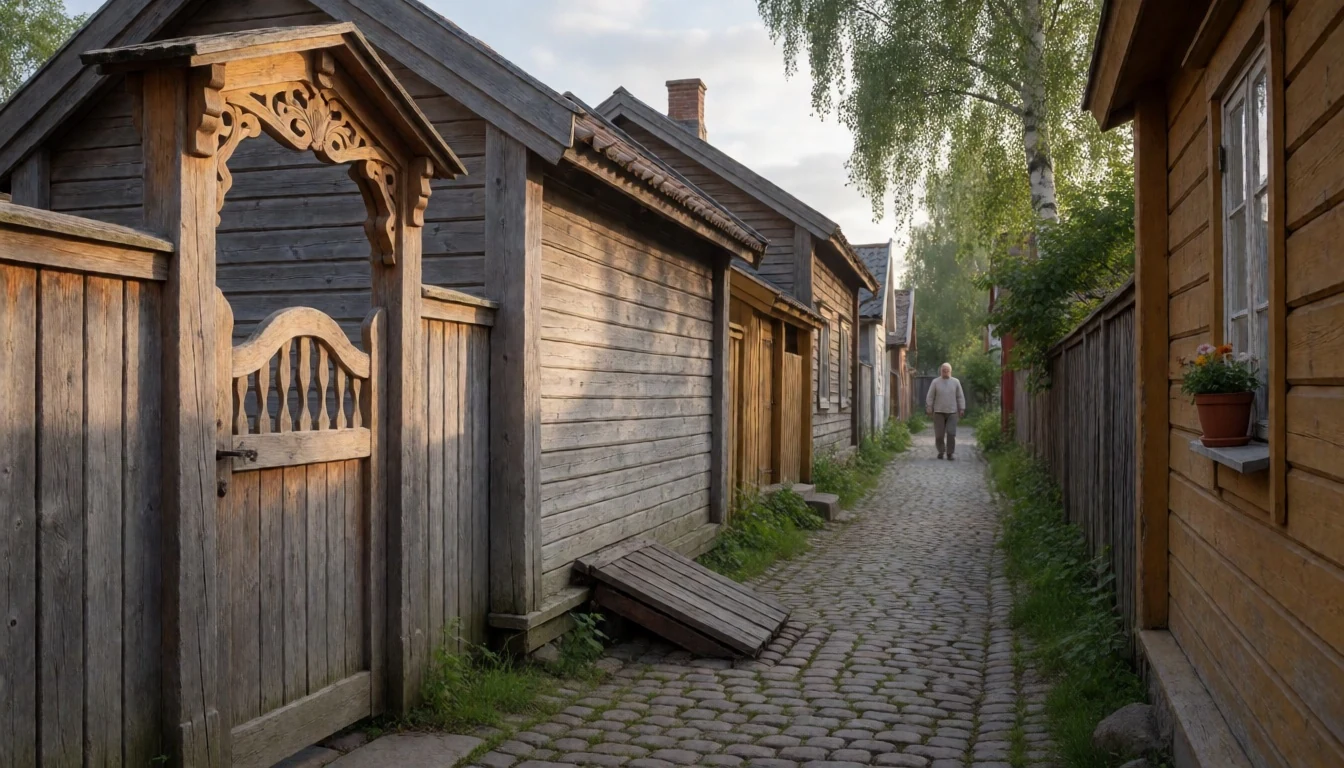
- Church of the Holy Cross — Old Rauma, near Isokirkkokatu
A former Franciscan monastery church, inaugurated in 1512 and now Lutheran, the Church of the Holy Cross holds medieval paintings on its walls and ceiling. It is among the main reasons to come to Old Rauma. Opening times vary with services and season, so check locally before walking over, and treat it as a working place of worship.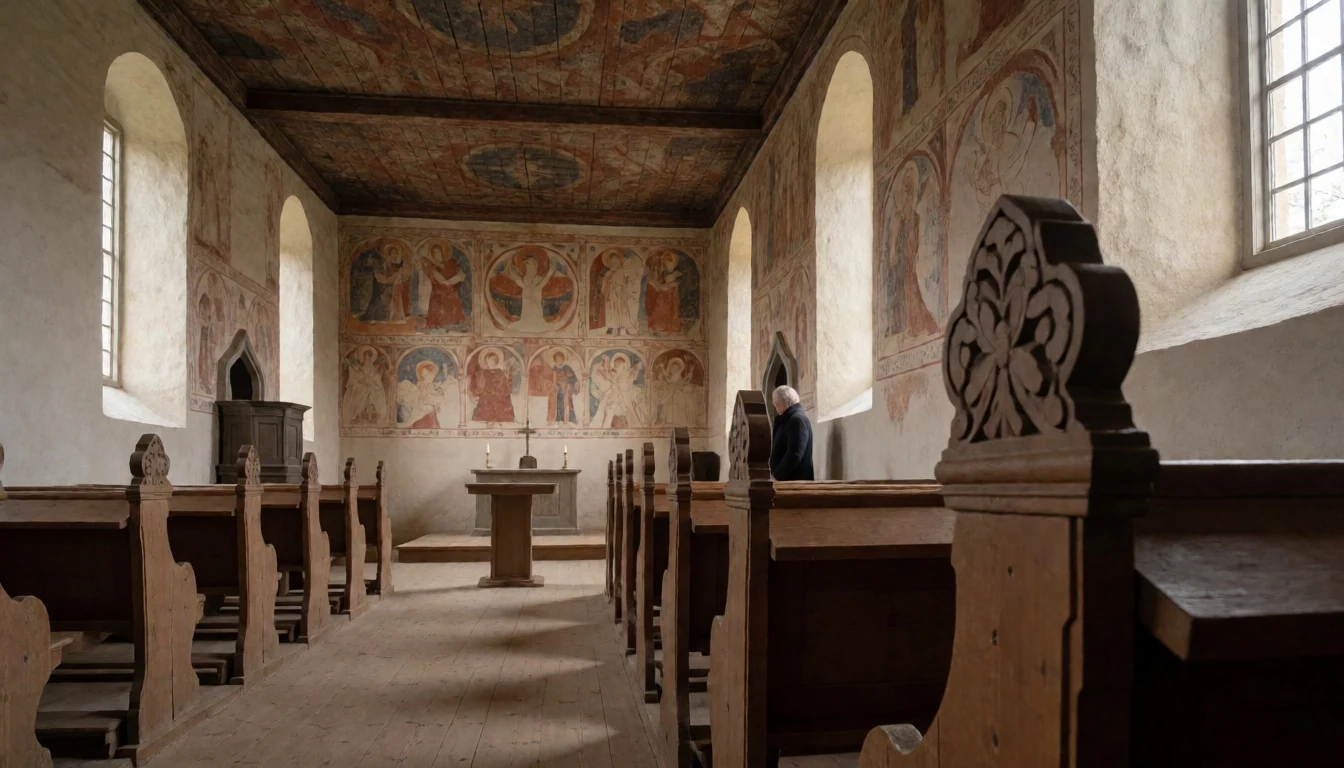
- Ruins of the Church of the Holy Trinity — Park at the edge of the old quarter
Little remains of the parish church of Holy Trinity, which was built in the fifteenth century and lost to the fire of 1640. The ruins now sit in a park, which makes a calm place to pause in the middle of a walk through the town. A packed lunch suits it well when the weather is kind.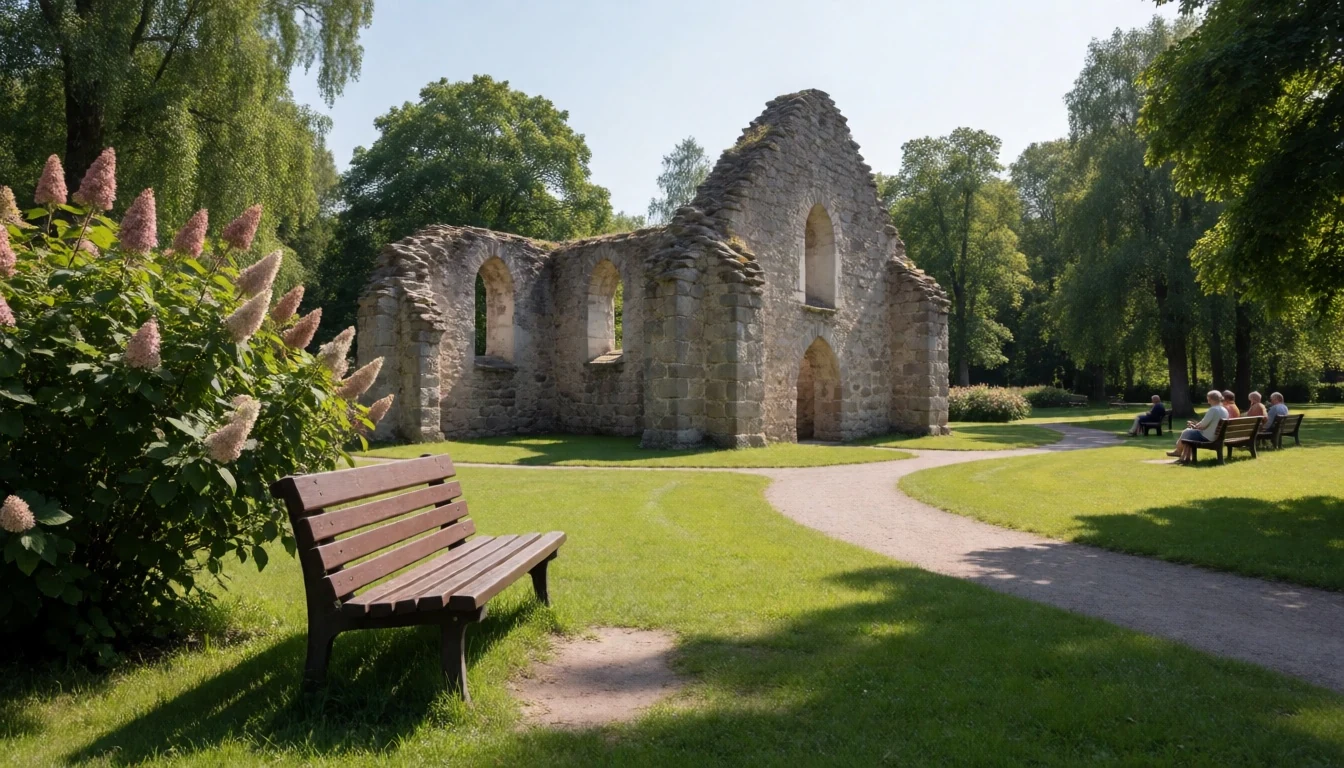
- Marela — Old Rauma
Marela is a shipowner's house with an eighteenth-century core and a nineteenth-century façade, now run as a museum. It shows how a prosperous seafaring family lived when the town's shipping was at its peak. Check the museum's official listing for opening days, which change by season, and expect a short visit rather than a half-day.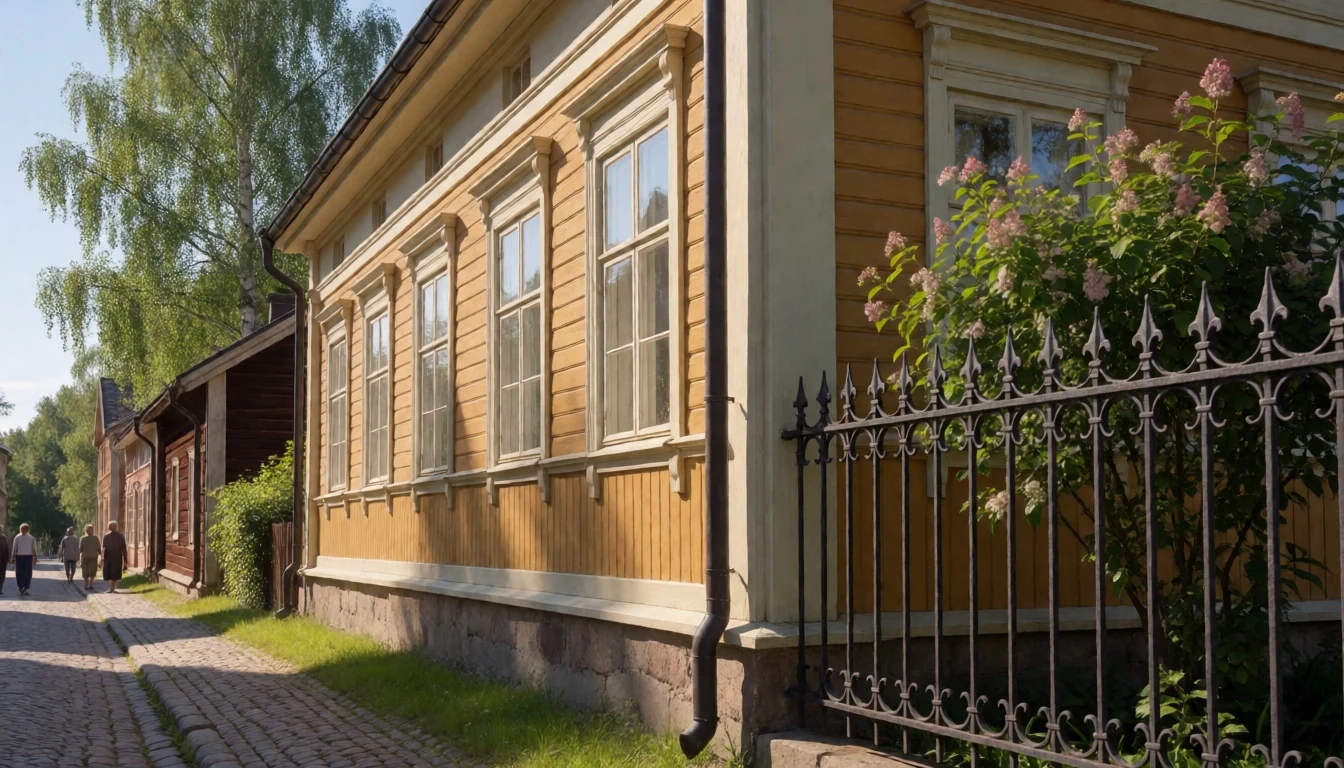
- Kirsti's house — Old Rauma
Kirsti is a seaman's house built in the eighteenth century, which presents family life as it was lived in the nineteenth and twentieth centuries. As a museum it gives a useful contrast to Marela: a modest home set against a shipowner's comfort. Plan the two together, as they stand only a short walk apart.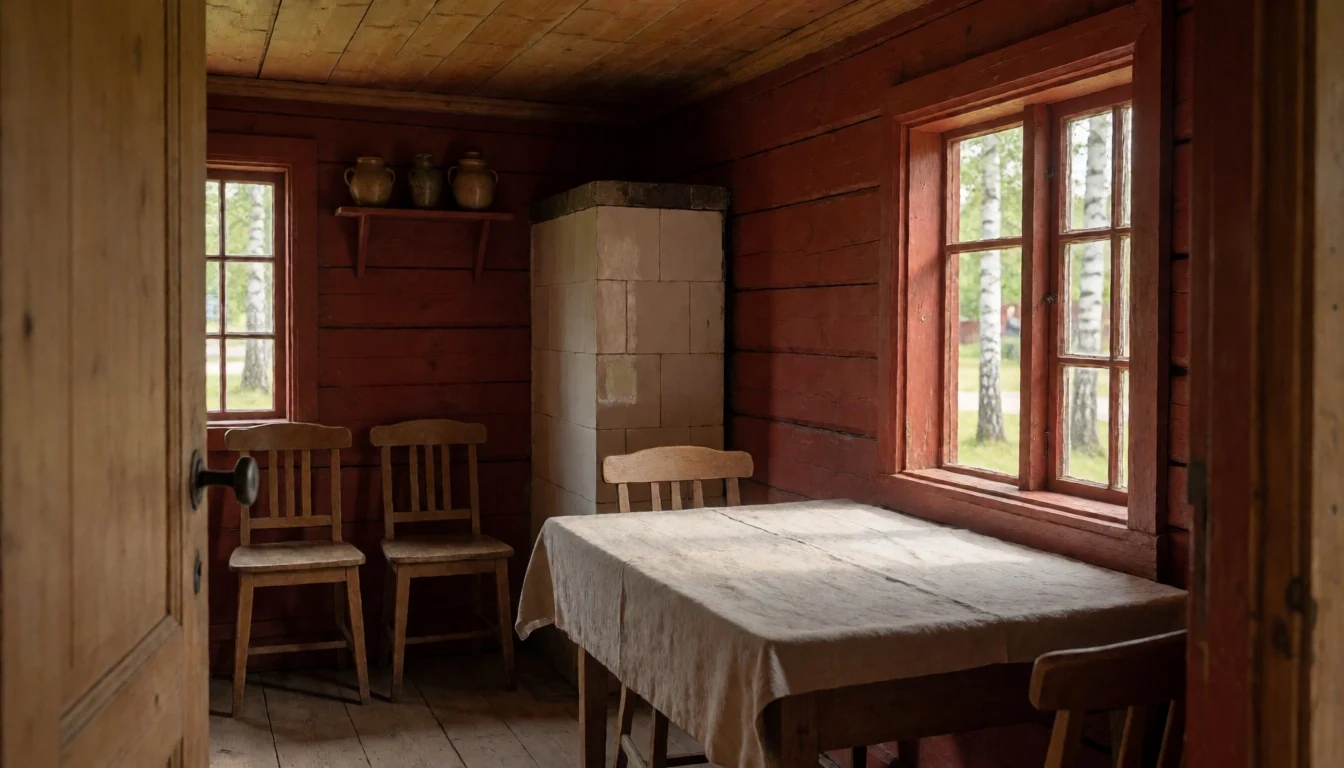
Culture
Rauma's culture blends the habits of a Finnish port town with the quiet pride of people who look after their own old streets. Residents live in the heritage houses, maintain them with traditional joinery and treat upkeep as a shared responsibility, which gives the quarter a domestic rather than museum feel. The town is known for a local dialect that can puzzle even fluent Finnish speakers, and for bobbin lace, a craft associated with Rauma and often seen in local shops and displays. Social manners are reserved: personal space, calm conversation and punctuality matter, and silence is rarely awkward. Queues at bus stops and café counters are orderly, and people wait their turn without comment. Faith is part of daily life through the Lutheran church, and the Church of the Holy Cross is both a heritage sight and a place of worship. Cafés, small shops and museums keep seasonal hours, which can be shorter outside summer, so the old streets are often very quiet in the evening. Visitors who treat the lanes as a neighbourhood rather than a stage find people helpful in a low-key way. Keep to the public streets, speak quietly, and ask before photographing residents, their windows or their yards.
What to wear
Rauma's traditional dress sits within the wider Finnish folk-costume tradition (kansallispuku), where regional outfits are made from wool and linen, trimmed with woven or embroidered detail, and worn for weddings, folk dancing and local or national celebrations. Local museums and craft societies are worth asking about Rauma's own version. Bobbin lace, long associated with the town, turns up as collars, trim and household decoration. Day to day, people in Rauma dress much as Finns do elsewhere: practical, layered and mostly in dark or neutral colours, with a good outdoor jacket, wool knitwear and sturdy shoes. Style is understated, and function usually wins over display. Visitors should dress for the weather before anything else. Summer evenings by the sea can turn cool, so a light jacket and a waterproof are useful, while winter calls for thermal layers, a warm hat, gloves and boots with good grip. The old lanes can be uneven underfoot and slippery when wet or icy, so closed, flat shoes are wiser than sandals or heels. There is no formal dress code in the town, but tidy, modest clothing suits the Church of the Holy Cross, and hats are normally taken off indoors.
What to eat
- Kebab plate — Turkish-style kebab and pizza restaurants in the centre and near the bus station
A kebab plate is a dependable meal in the town centre: grilled sliced meat with salad, sauce, and chips or rice. Turkish-style restaurants serve it for dining in or taking away, which suits a cold day or a late lunch after a long walk through the lanes.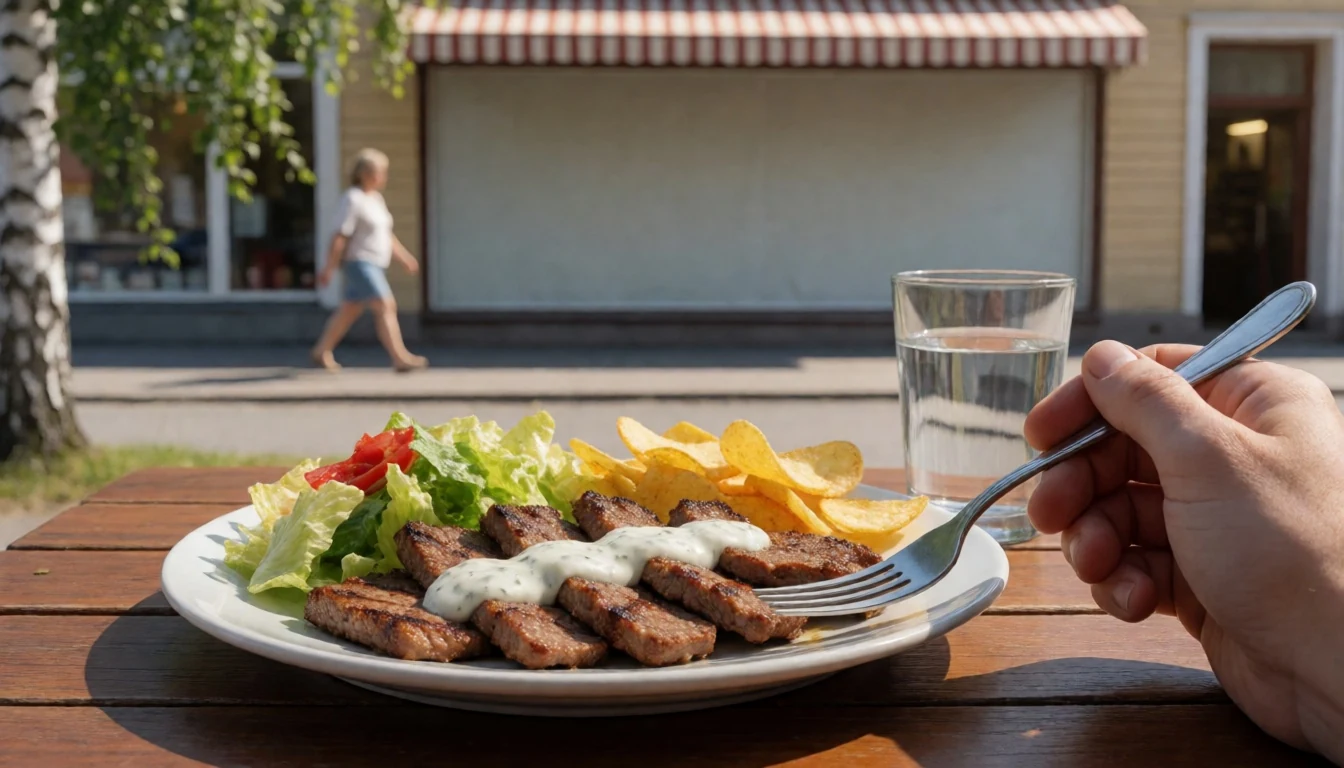
- Roll kebab — Kebab and pizza takeaways around the centre
A roll kebab wraps the same grilled filling in flatbread with salad and sauce, making an easy hand-held lunch for strolling. Several kebab and pizza places list rolls alongside plates, and many offer takeaway so it can be eaten on a bench in the park.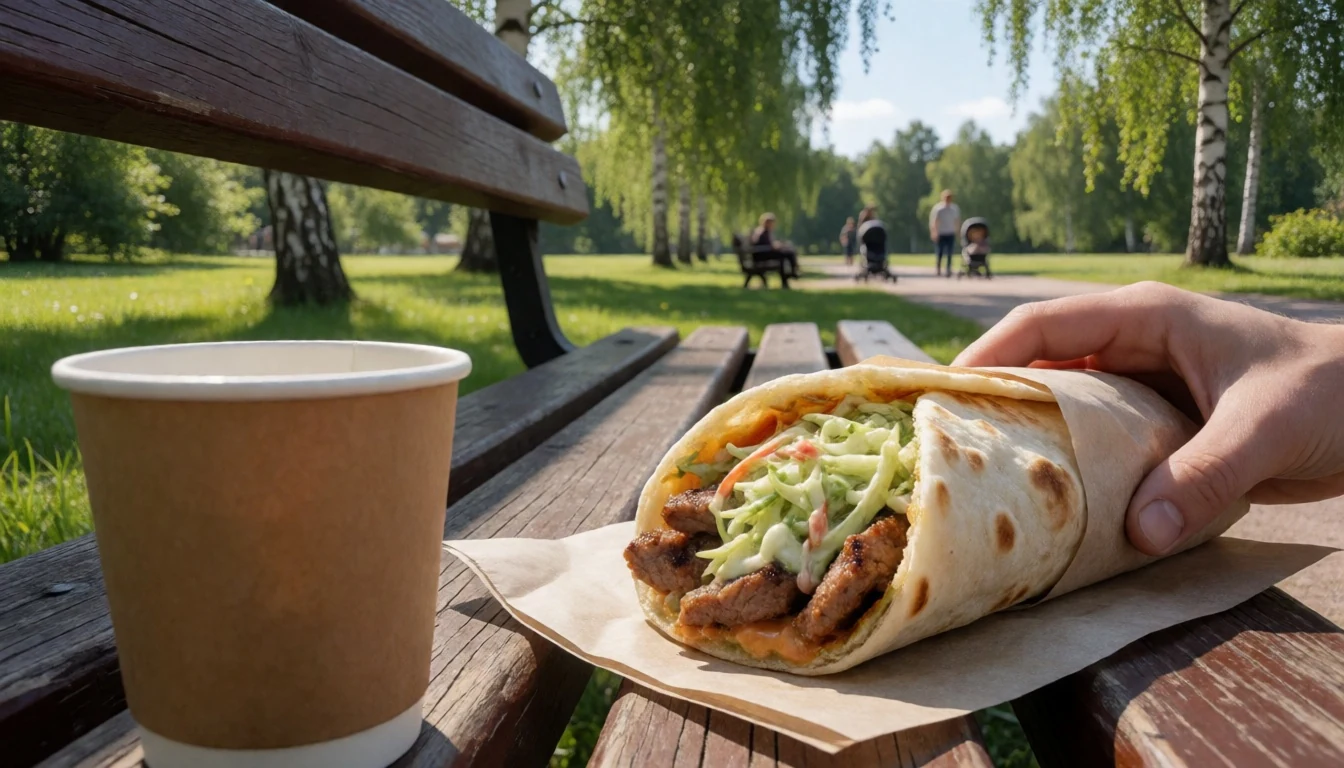
- Pizza — Pizzerias in Old Rauma and across the town centre
Pizza is sold almost everywhere in Rauma, from small pizzerias in Old Rauma to grill restaurants on the edges of the centre, with a wide choice of toppings. Expect a casual, filling meal rather than a regional speciality, with dine-in, takeaway and delivery all common. - Hot wings — Casual kebab and pizza restaurants in the centre
Hot wings appear on the menus of several Turkish-style kebab and pizza restaurants as a spicy side or a shared snack. Ordering a portion with a pizza is a casual choice for groups, and many places offer takeaway if the dining room is full. - Grill and Tex-Mex-style plates — Casual pizzeria-and-grill restaurants near Old Rauma
Some casual grill restaurants add burgers, chicken dishes, salads and Tex-Mex-style plates to the usual pizza and kebab menu. That breadth helps when a group cannot agree, and the salads give vegetarians and lighter eaters an option. Diners with dietary needs should check ingredients with staff.
Plan it
Best time. June to August for the mildest weather and longest daylight, when cafés and museums are most likely to be open; spring and autumn are quieter but cooler, and winter is cold and dark with limited opening.
How long. 1–2
Getting there. Helsinki Airport is the main arrival point from abroad, with Turku and Pori airports nearer. Most visitors come by coach, running every one to three hours except overnight, from Helsinki (about 3½ hours, mostly via Turku), Turku (about 1½ hours) and Tampere (about 2½ hours); the bus station is beside the old town. Passenger trains are due to return to Rauma, so check the current timetable; until then trains stop at nearby towns such as Pori, with coach connections onward. Timetables are on the Matkahuolto website.
Budget. mid
Tips
- Visit in the morning or on a weekday for quieter lanes; summer afternoons bring the most visitors.
- Check opening times for Marela, Kirsti's house and the Church of the Holy Cross on their official sites, as hours change by season.
- Wear shoes with grip, because the old streets can be uneven, wet or icy.
- Carry a bank card as the normal way to pay, with a little cash as a back-up.
- Most accommodation is mid-range and the only clear budget option is the camping ground, so book ahead for summer.
Etiquette
- Keep your voice down and stay out of private yards, as people live in the old houses.
- Ask before photographing residents or their homes.
- Dress tidily and behave quietly in the Church of the Holy Cross.
Nearby
Sources
- Wikidata Q828417 (CC0)
- Wikipedia: Old Rauma (rev 1366155675) (CC BY-SA 4.0)
- Wikivoyage: Rauma (rev 5424787) (CC BY-SA 4.0)
- Photo: Houses in Rauma, Finland (pjt56) (CC BY 3.0)
- Photo: Old Rauma (Mikkoau) (CC BY-SA 4.0)
- Photo: FI Rauma 0709 (98) (Diego Tirira) (CC BY-SA 2.0)
- Photo: Finnish wooden house building technology (Bougnatophile) (CC BY-SA 4.0)
- Photo: Isokirkkokatu talvella 1906 (Johan Ludvig Nordberg) (CC BY 4.0)
- Photo: Katunäkymä Anundilankadulle 1908 (Johan Ludvig Nordberg) (CC BY 4.0)
- Photo: Old Rauma on 10th July 2017 (Lauren Stevens) (CC BY-SA 4.0)
- Photo: Portti, Pappilankatu 14 (Jalmari Karhula) (CC BY 4.0)


