Ranikot Fort
Ranikot Fort, Pakistan
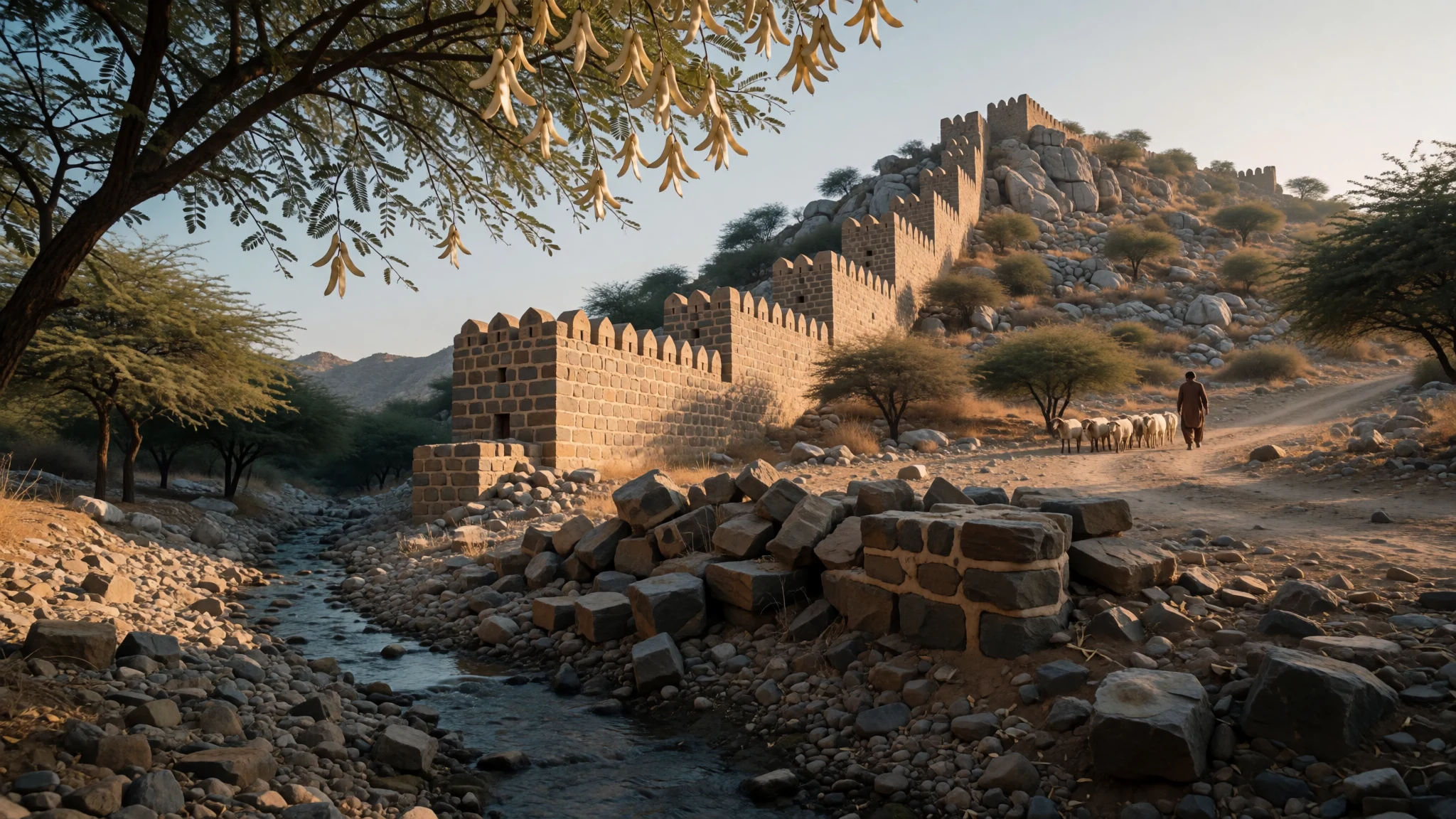
Ranikot Fort is a vast, half-ruined stone enclosure in the Sindh hills, where miles of rampart run through empty country.
The place
Ranikot Fort (Sindhi: رني ڪوٽ قلعو) stands in Jamshoro District, Sindh, Pakistan, on rough hill country inside Kirthar National Park. Its nickname, the Great Wall of Sindh, comes from ramparts that follow ridges and cross dry stream beds in one long loop. The comparison with China's wall is as much about masonry hugging the land as about length. Wikidata lists the site as both a fort and an archaeological site and gives its founding as 450 BCE, though the dating is still argued over.
The usual approach starts at Sann, a small town on the Indus Highway (N55) and a stop on the Kotri–Larkana railway. From there a rugged track of about 21 kilometres leads to the eastern entrance, known as Sann Gate. The fort lies about 90 kilometres north of Hyderabad, and Karachi to Sann is roughly an hour's drive, so a major road is never far away.
The setting is dry and stony, with scrub, rock ridges and almost no shade. That makes it feel remote, and it is unlike most of Sindh, where towns and farms cluster along the green belt of the Indus. Pakistan nominated the fort for UNESCO World Heritage status in 1993 and it remains on the tentative list. It is also protected as a historical site under the Antiquities Act of 1975. What visitors find is a place that is partly restored, partly collapsed and mostly silent, with long stretches where the only sounds are wind and the occasional passing bird.
Its story
Ranikot Fort has no agreed builder and no known founding purpose. For a long time it was credited to Sassanians, Scythians, Parthians or Bactrian Greeks, but those attributions rest on little. In March 2018 three inscriptions and markings turned up at the south-eastern corner. One, cut into a cliff, has nine symbols, and a Peshawar University specialist read it as belonging to the Gupta period, the fourth or fifth century AD. That sits uneasily beside the much earlier date in Wikidata, which is a reminder that the story is still being written.
The Sindh scholar Badar Abro spent years of fieldwork around the walls. He recorded prehistoric caves, iron arrowheads he links to the Scythian era, and coins from several periods, among them the Habbarid period of Sindh and the later Mughal one. Radiocarbon work has also been done on charcoal trapped in the mortar of a fallen pillar at Sann Gate.
Archaeologists generally place a first major phase of building in the seventeenth century. Several surviving structures were rebuilt by the Talpur dynasty in 1812. The Talpurs, the Amirs of Sindh, later used the fort as their last capital before the British brought the region under colonial rule. The walls therefore hold at least two clear chapters, an uncertain ancient one and a well-recorded nineteenth-century one, with a good deal of mystery between them.
What to see
- Sann Gate — Eastern side of the fort
Sann Gate is the eastern entrance and the point where the long approach track ends. Charcoal in the mortar of a collapsed pillar here was sampled for radiocarbon dating, so the gate matters to the argument over the fort's age. Look at how the stonework is laid and where it has fallen. - The great ramparts — Perimeter of the fort
The curtain walls are the reason for the Great Wall of Sindh nickname. They climb ridges and drop into gullies, and the best way to take them in is to walk a section and watch how the builders used the hills. Early morning light brings out the texture of the stone.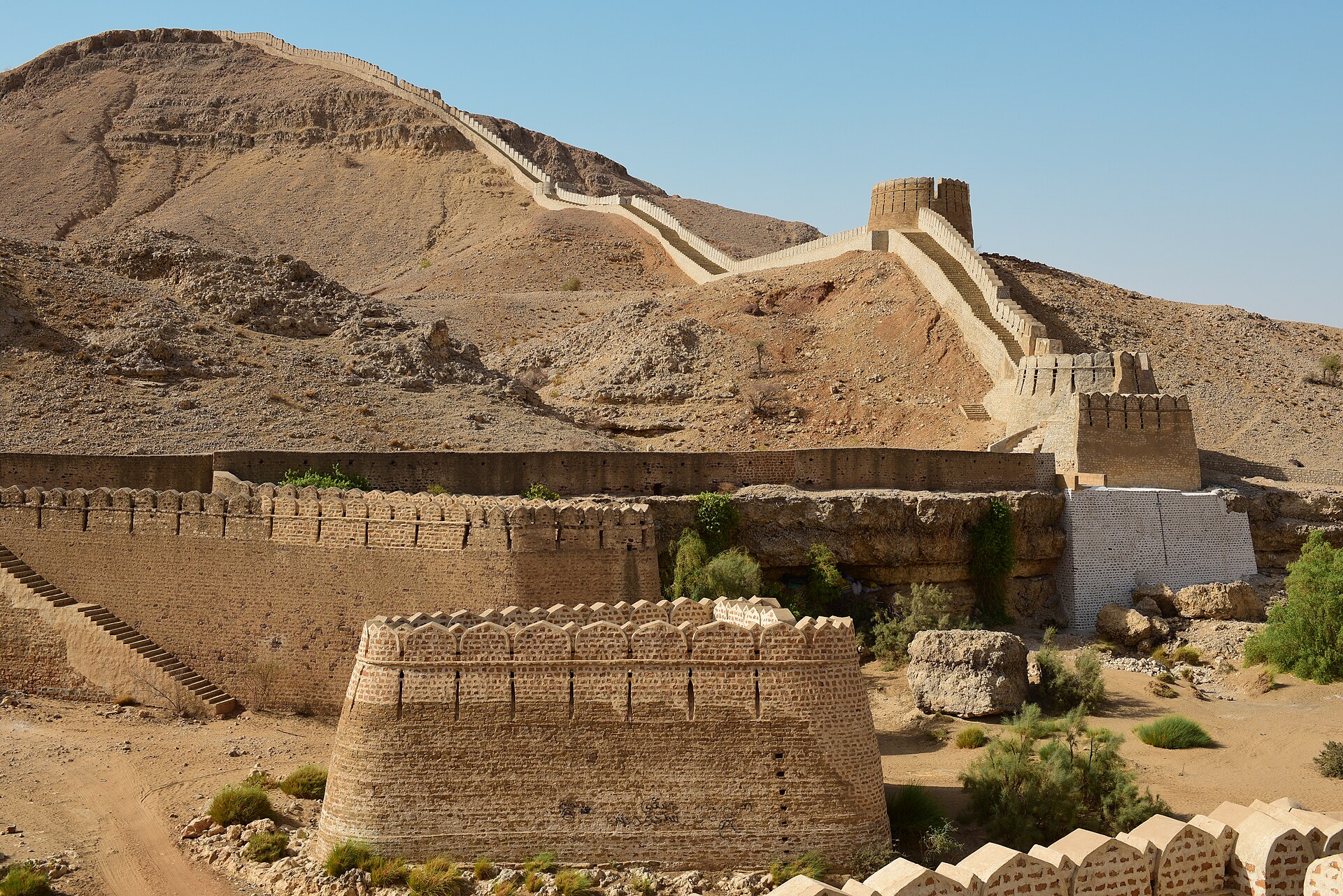
- Inner masonry and bastions — Interior of the fort
Inside the outer line, the walls show close-fitted stone blocks, rounded bastions and sections where repairs are easy to tell from original work. Spend time at a collapsed stretch, because the cross-section shows how the wall was built and why parts of it have survived so long.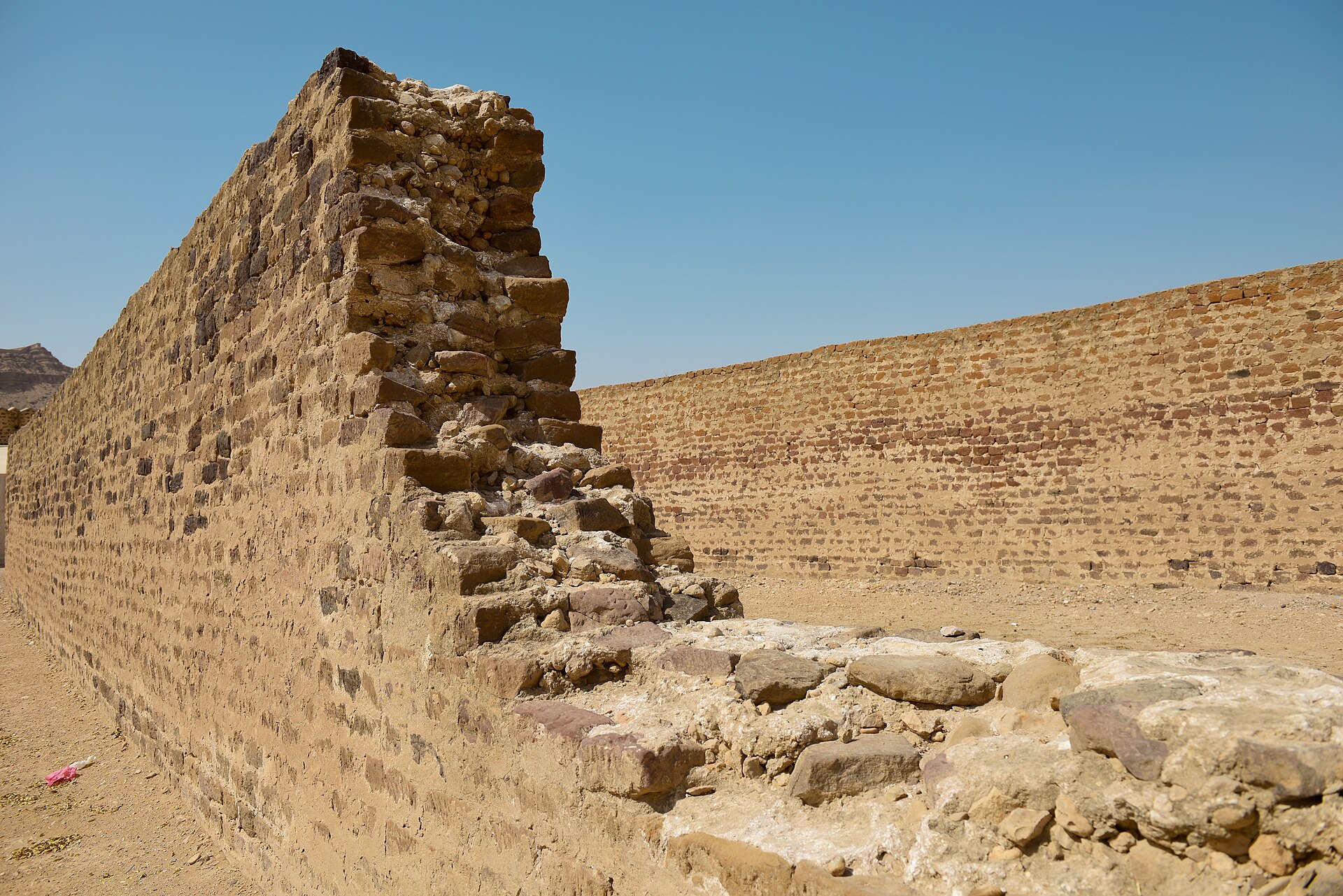
- Carved stonework — Wall faces near the main gates
Some wall faces carry worked decoration, a surprise in what is mainly a military structure. The carvings are weathered, so low, slanting light helps. They are a useful reminder that visitors are looking at a place shaped by several periods rather than a single build.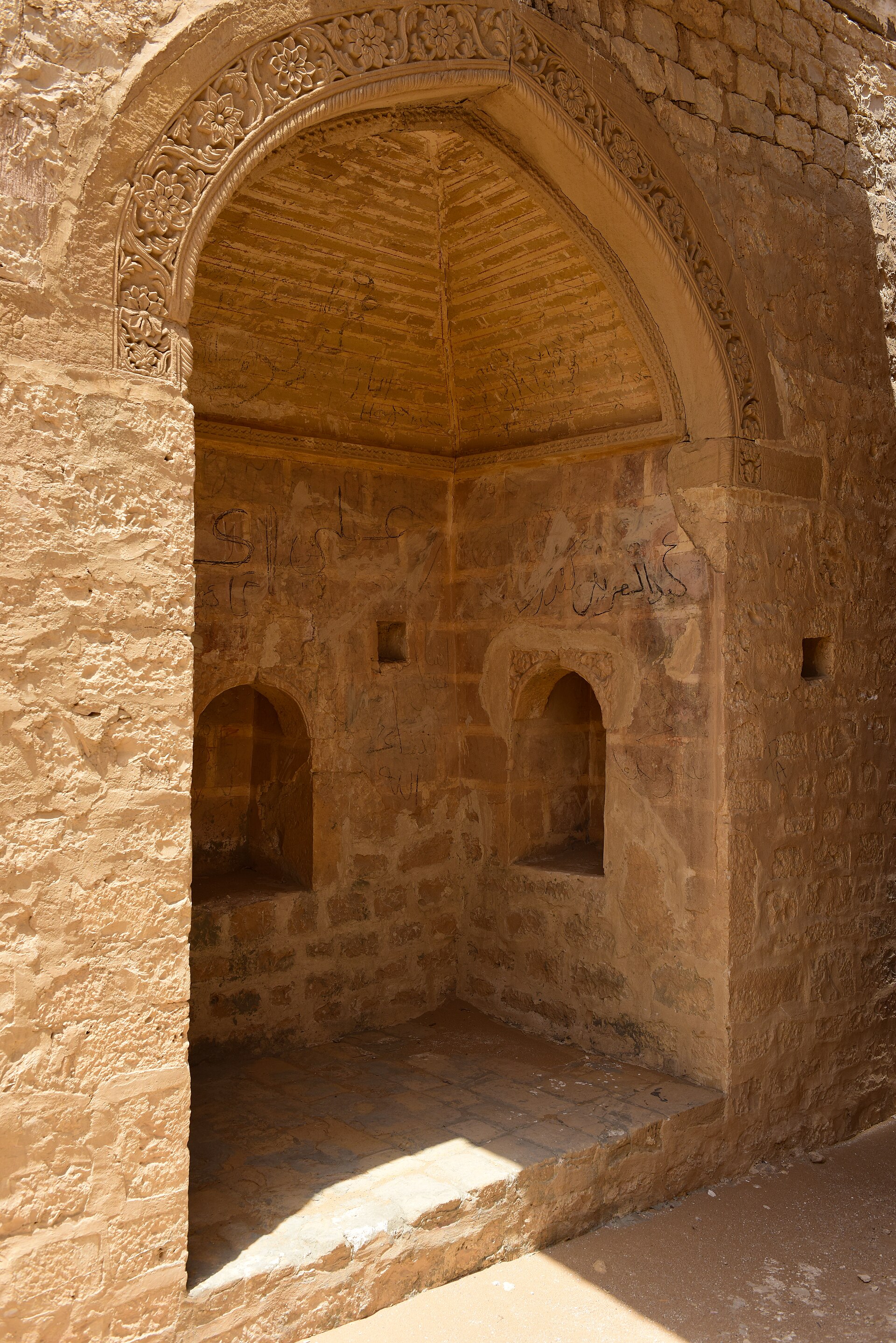
- South-eastern inscriptions — South-eastern corner of the fort
The cliff markings found at the south-eastern corner in 2018 are among the fort's most intriguing details. They are small, faint and easy to miss, so ask a local guide to point them out. Treat them gently, since they are central to current dating work.
Culture
Ranikot Fort belongs to Sindh, a province whose identity is tied to the Indus and to a very long human record. The region holds the ruins of Mohenjo-daro and the monuments at Makli, and it has a layered religious history in which Hindu influence and mythology are strong. Local culture is also shaped by Sufi devotion, poetry and music, and the hospitality of rural Sindhi families is something many travellers remember.
The fort itself is a quiet heritage site rather than a living shrine. Its meaning to local people is mixed: it is a source of pride, a landmark of the Talpur era, and an unsolved puzzle for historians. Villages around Sann carry on farming and herding life, and the fort sees far fewer visitors than Karachi's museums or Sindh's better-known ruins. Many who come are Pakistani families on day trips, students and photographers.
Because the origins are uncertain, guides and writers sometimes tell very different stories about who built it and when. It is worth listening to several versions and treating dates as provisional. Conservation is difficult here, with a large site, a harsh climate and limited funding, so what survives depends partly on the care of visitors. Do not climb on crumbling walls or take away any stones or pottery, and ask permission before photographing local women and families.
What to wear
Traditional dress in Sindh centres on cloth. The best-known textile is ajrak, a block-printed cotton shawl in deep indigo and madder red, worn by men as a shoulder cloth or turban and given as a mark of respect. Men also wear the Sindhi topi, a cap with a cut-out front and often mirror-work or embroidery. Women wear embroidered tunics and wide skirts, with heavy mirror-work and bright thread, plus long scarves, usually for weddings, festivals and village life. Rilli, the patchwork quilt, is a related craft more often seen on beds than bodies.
Everyday wear now is mostly shalwar kameez, loose trousers with a long shirt, in cotton for men and women, with a dupatta scarf for many women. Younger people in Karachi and Hyderabad wear jeans and shirts, but around Sann and the villages the shalwar kameez remains the norm. Ajrak and the topi appear at celebrations and on Sindhi Culture Day.
For a visit, dress for heat and rough ground. Loose, light cotton in pale colours with long sleeves and long trousers keeps the sun off and fits local modesty norms. Women visitors will be more comfortable with a long top and a scarf to hand. Wear sturdy closed shoes with good grip, because the ground is stony and uneven, and bring a hat, sunglasses and sun cream, as there is almost no shade inside the fort.
What to eat
- Sindhi biryani — Busy family eateries in Hyderabad and Karachi
Sindhi biryani is the region's signature rice dish, spiced, rich and often with potato and plum. It is the best-known local speciality and is worth trying where it was born rather than elsewhere in Pakistan. - Sai bhaji — Small home-style eateries in towns near the Indus
Sai bhaji is a green dish of spinach and other leaves cooked with lentils and spices. It is home-style Sindhi food and goes well with rice or flatbread, and is easier to find in homes and small local eateries than in menus aimed at tourists. - Fried and curried fish — Seafood restaurants and stalls in Karachi
Sindh's coast makes seafood widely available and popular. Fish is fried with a spiced coating or cooked in a tomato-based curry, and is best eaten close to the sea, a good first or last meal on a Karachi-based trip. - Dal pakwan — Breakfast stalls in Hyderabad
Dal pakwan is a Sindhi breakfast of crisp, flat fried bread served with a tangy lentil dish. It is filling and cheap, and suits an early start before the long drive towards the fort. - Paratha and chai — Roadside dhabas along the Indus Highway near Sann
On the Indus Highway, the dhabas, simple roadside eateries, serve flaky paratha, omelette, curries and strong milky tea. They are cheap, quick and a good place to stock up before the rough road from Sann.
Plan it
Best time. November to February, when days are cooler and walking the exposed ramparts is comfortable. Summers in Sindh are very hot and the fort has little shade, so avoid them.
How long. 1
Getting there. Fly to Jinnah International Airport in Karachi, then drive the Indus Highway (N55) to Sann, about an hour. Sann is also on the Kotri–Larkana rail line. From Sann, a rugged track of about 21 kilometres leads to Sann Gate, so hire a sturdy vehicle with a driver who knows the route.
Budget. mid
Tips
- Check current official travel advice and local security conditions before you go, as parts of northern Sindh have high levels of lawlessness
- Start early to beat the heat and allow time on the rough track
- Carry more water and snacks than seems necessary, as there is almost no shade or supply at the fort
- Carry cash, because card payments are unlikely outside Karachi and Hyderabad
- Check current access arrangements and any permissions with the Sindh authorities and Kirthar National Park, since no official website is listed here
Etiquette
- Do not climb unstable walls or remove stones, pottery or other objects
- Ask permission before photographing local people, especially women
- Dress modestly in loose, long-sleeved clothing, particularly in villages near Sann
Nearby
Sources
- Wikidata Q2131024 (CC0)
- Wikipedia: Ranikot Fort (rev 1381293792) (CC BY-SA 4.0)
- Wikivoyage: Sindh (rev 5422472) (CC BY-SA 4.0)
- Photo: Ranikot6.JPG, unknown author (Public domain)
- Photo: Ranikot Wall & Fort View, Adrian Leslie Lobo (CC BY-SA 4.0)
- Photo: Internal Wall Detailed Structure at Ranikot, Adrian Leslie Lobo (CC BY-SA 4.0)
- Photo: Architectural Carving Rani Kort, Adrian Leslie Lobo (CC BY-SA 4.0)
- Photo: Ranikot Fort - The Great Wall of Sindh, Adrian Leslie Lobo (CC BY 3.0)
- Photo: Ranikot Fort 3.JPG, Dr. Basir Ahmed (Public domain)
- Photo: Rani Kot2.jpg, Mazheraliansari (CC BY 3.0)
- Photo: Rani Kot4.jpg, Mazheraliansari (CC BY 3.0)


