Rangiroa
Rangiroa, France
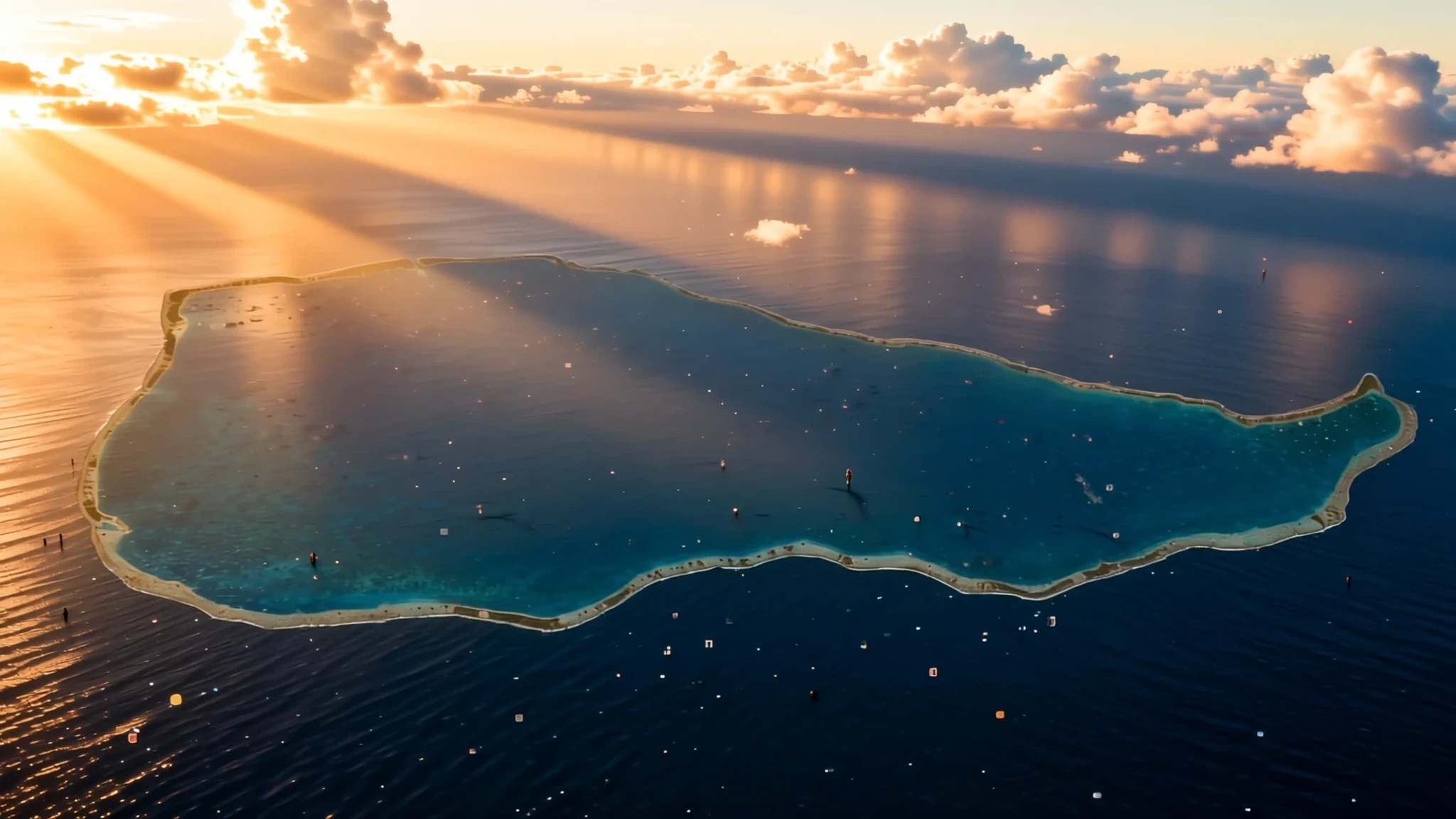
A ring of reef islets around a lagoon so wide it has its own horizon, Rangiroa is a place for shark and manta dives.
The place
Rangiroa is a low ring of coral in the Tuamotu Archipelago of French Polynesia, a long way from the high volcanic islands most visitors picture when they think of the South Pacific. The name is usually given as a Tuamotuan phrase meaning vast sky, and the description fits. The lagoon is wide enough to have a horizon of its own, and from the land there is little to break the view. The atoll's land is split into roughly 415 small islets and sandbars, called motus, strung along a reef broken by around a hundred passes. Most people live on the main motu, and the chief village, Avatoru, sits at the northwestern end of the ring.
Life here runs on the lagoon and the weather. Fishing and pearl farming matter more than tourism, and the shallow water can build sudden local storms when wind and tide push against the passes. The island is quiet by any standard. There is no nightlife to speak of, and people start the day early and go to bed soon after dark. Tourism grew after the airstrip opened, and today the economy leans on a couple of larger resorts, a scattering of family-run pensions and the diving that draws most visitors in the first place.
The sea life is the main event. The two main passes carry strong tidal flows, and that movement brings sharks, rays and dolphins close to the reef edge. The coral is less varied than on some Pacific reefs, so the appeal is large animals and moving water rather than gardens of colour. Expect a relaxed, slightly rough-edged island rather than a polished resort town.
Its story
People were living on Rangiroa by about the 10th century AD, according to the usual estimate, though early settlement left little written record. The first Europeans to describe the atoll were the Dutch navigators Jacob le Maire and Willem Schouten, who passed through during a Pacific voyage in 1615–1616. Their landing party went ashore and came back to the ship covered in black flies, so the Dutch named the atoll Vlieghen Eiland, the Island of Flies. Other charts have called it Nairsa or Dean's Island, so the atoll carried several names before settled usage.
In 1765 the British captain John Byron sailed past during his circumnavigation and named the atoll after the Prince of Wales. Charles Wilkes's expedition visited on 7 September 1839, adding the atoll to the charts that later guided trading ships.
Through the 1950s the economy was small and practical, built on fishing and copra, the dried coconut flesh pressed for oil. That changed with the airstrip, which opened in 1965. Air access made it possible to bring in visitors regularly, and underwater diving facilities and hotels followed. The shift was from copra and fish towards tourism, though the lagoon's passes and tides, which once made navigation dangerous, still shape daily life.
What to see
- Tiputa Pass — The main passes, reached by boat
Rangiroa's best-known drift site is Tiputa Pass, where the current runs in and out with every tide. Drift dives that ride the flow are the standard experience here. Reef sharks gather at the mouth of the pass, and manta rays and eagle rays drift through regularly, with hammerhead or tiger sharks possibly seen too. Dolphins often ride the bow waves on the boat trip out, and drift snorkelling suits anyone who prefers to stay near the surface.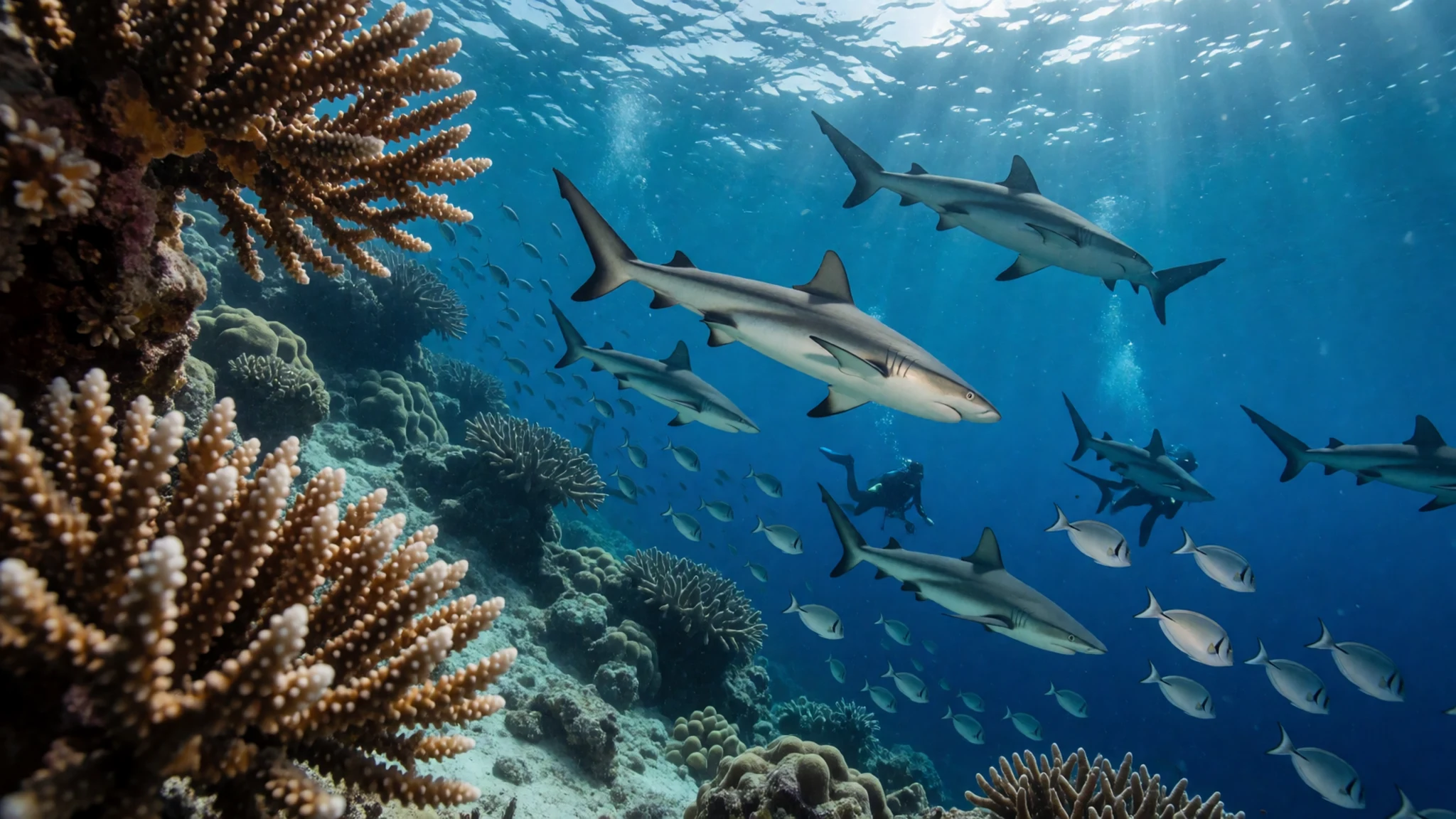
- Avatoru Pass — Near Avatoru, the chief village
Avatoru Pass, close to the chief village, is a dive site where silvertip sharks can be seen, and hammerheads turn up at times. As at Tiputa, the tide decides when it is best to go in. Dive operators plan their sites around the current, so the schedule on the day matters more than any fixed plan. Go with a guide, because the water in the passes can run strongly.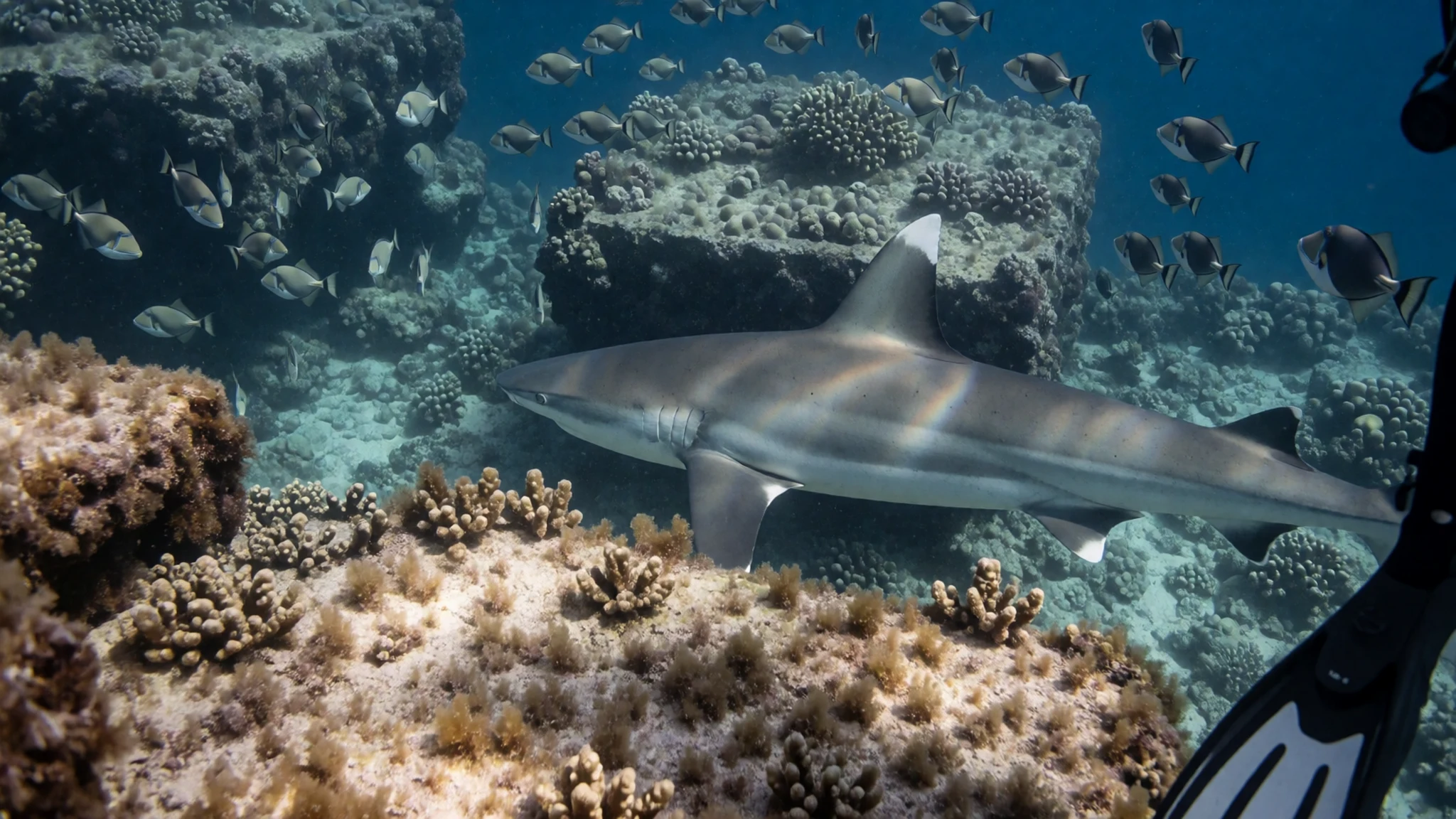
- The Blue Lagoon trip — Lagoon, reached by boat from the Kia Ora side
The boat trip to the Blue Lagoon is a longer outing, leaving from the Kia Ora resort side of the atoll. There is little coral to see, so the appeal is the wildlife. Blacktip reef sharks are plentiful, and one group of visitors counted dozens during a single visit. Most are small, and they can surprise swimmers who are not expecting them. It suits people who enjoy watching sharks up close.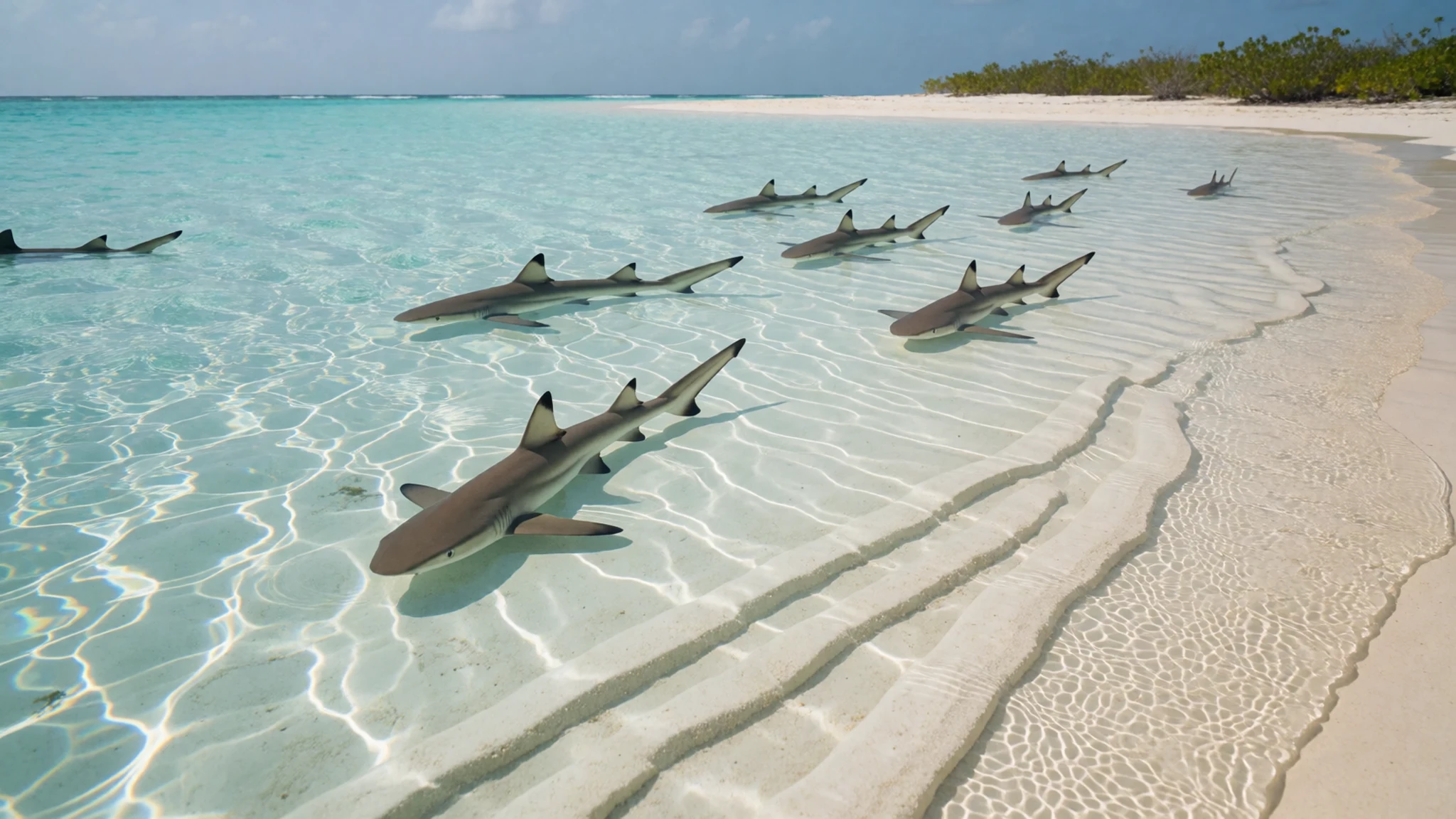
- The pearl farm — Lagoon pearl farm, guided tours during the week
The pearl farm in Rangiroa offers free guided tours on weekdays, explaining how cultured Tahitian pearls are made. The process involves inserting a mother-of-pearl bead and a piece of graft tissue into the oyster, and some seeded shells reject the bead. Black pearls come in a wide range of natural colours, from white through to dark grey. The on-site boutique, Gauguin's Pearl, sells finished pieces.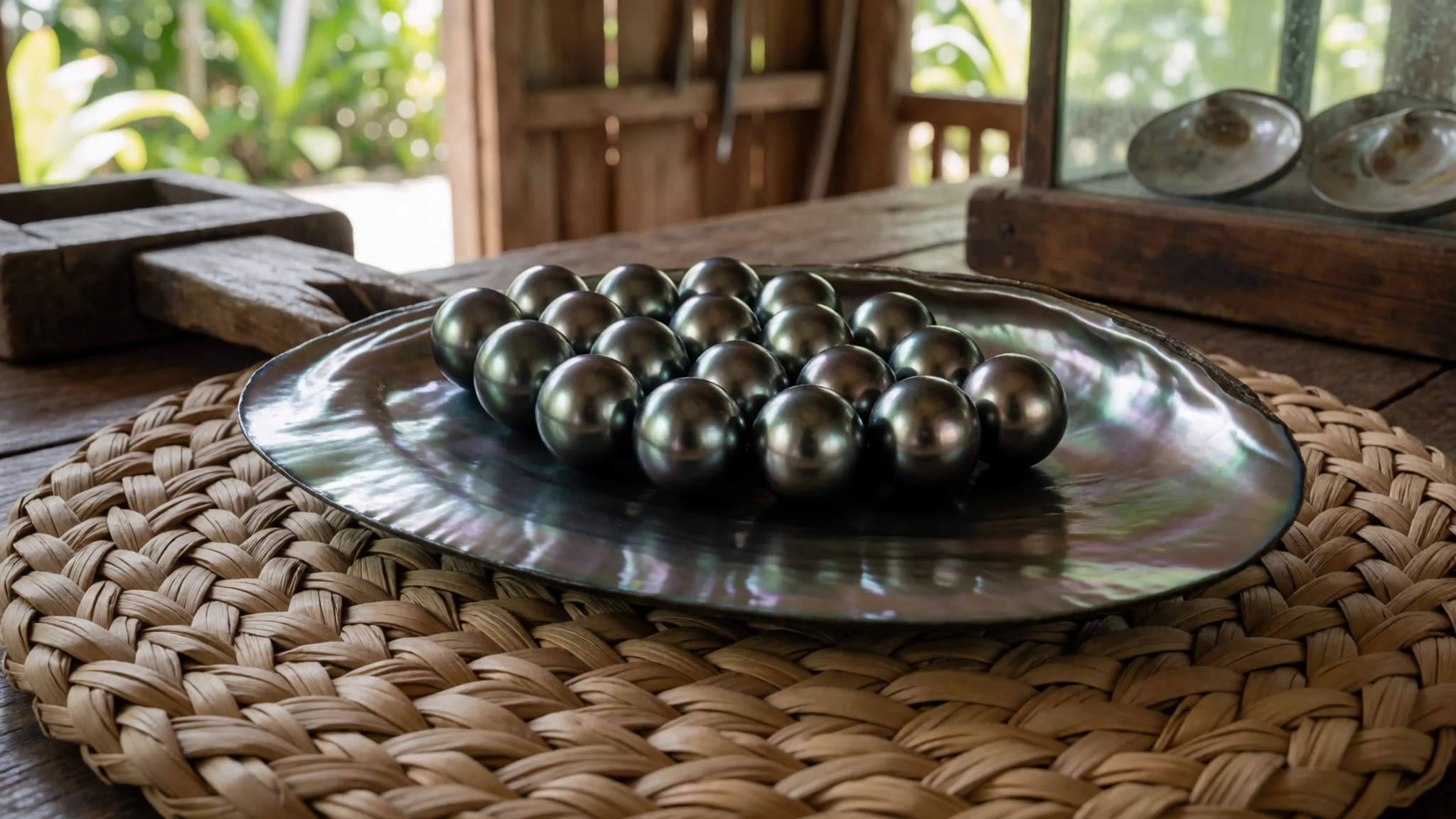
- Dive shops on the main motu — Main motu, Avatoru
Several dive operators are based on the main motu, near the airport and village, including TopDive, Six Passengers and Raie Manta Club. The Kia Ora resort has its own TopDive shop. Booking ahead is sensible in busy periods, when boats fill, and it is worth asking how many divers share each group before you sign up.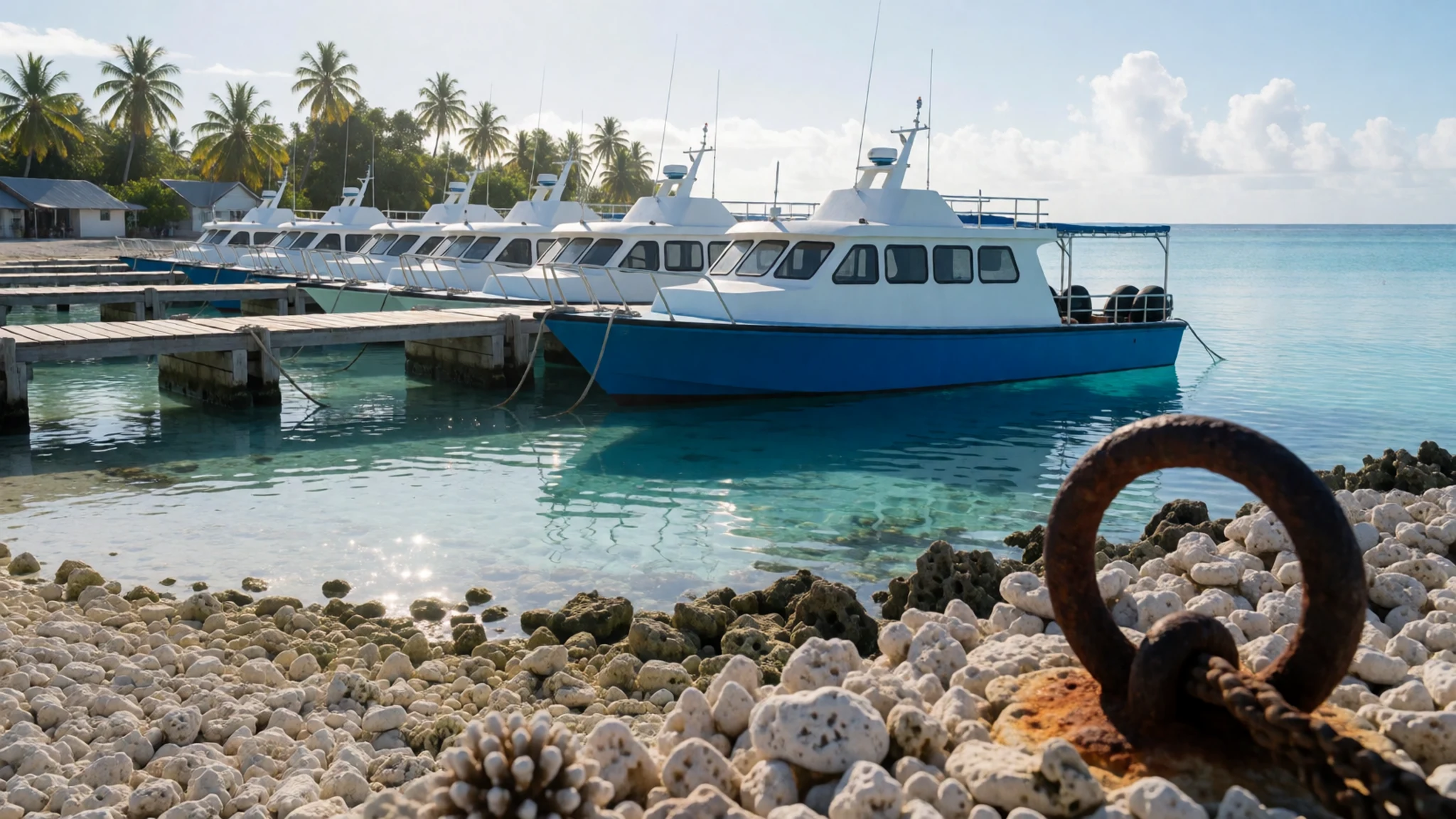
Culture
Rangiroa is a small community of about 2,700 people, and village life runs on family ties and the lagoon. Most residents are of Polynesian descent, French is the language of administration and schools, and local Polynesian languages are widely spoken at home. The church in the village marks the rhythm of the week, and Sunday tends to be quiet across the island. Fishing, pearl work and tourism all depend on the same water, so people often talk about the tides and the wind before they talk about plans. Hospitality is warm but unhurried, and a little delay is normal. The island has no nightlife and people go to bed early, so late noise carries. Dress modestly when walking through the village and ask before photographing people, especially at church or at family gatherings.
What to wear
Traditional dress on Rangiroa draws on the wider Tuamotu and Tahitian tradition: the pareu, a long wrap of printed cotton worn knotted at the waist or over the shoulders, and the flower crown, usually made from tiare blossom and worn for church, festivals and celebrations. Woven pandanus leaf is used for hats, mats and bags, and monoi, a scented coconut oil, is applied to skin and hair. Today most people dress simply: t-shirts, shorts and cotton dresses in daily life, with pareu and neat, modest clothing for church and official occasions. Working on the water, people wear sun shirts and reef shoes. For a visitor, lightweight cotton or quick-dry fabric suits the heat and humidity of the lagoon. A long-sleeved rash vest or UV shirt is useful on dive boats, and reef shoes help on coral and in the shallows. Carry a light cover-up for walking through the village, and sun protection for the hours on open water.
What to eat
- Poisson cru — Family kitchens at the pensions and simple eateries in Avatoru
On Rangiroa, poisson cru is the dish to try first: fresh raw fish cut into small cubes and soaked in lime juice, then folded through coconut milk with onion and tomato. It is usually made in family kitchens. It tastes best eaten soon after it is made, while the fish is still firm and cold.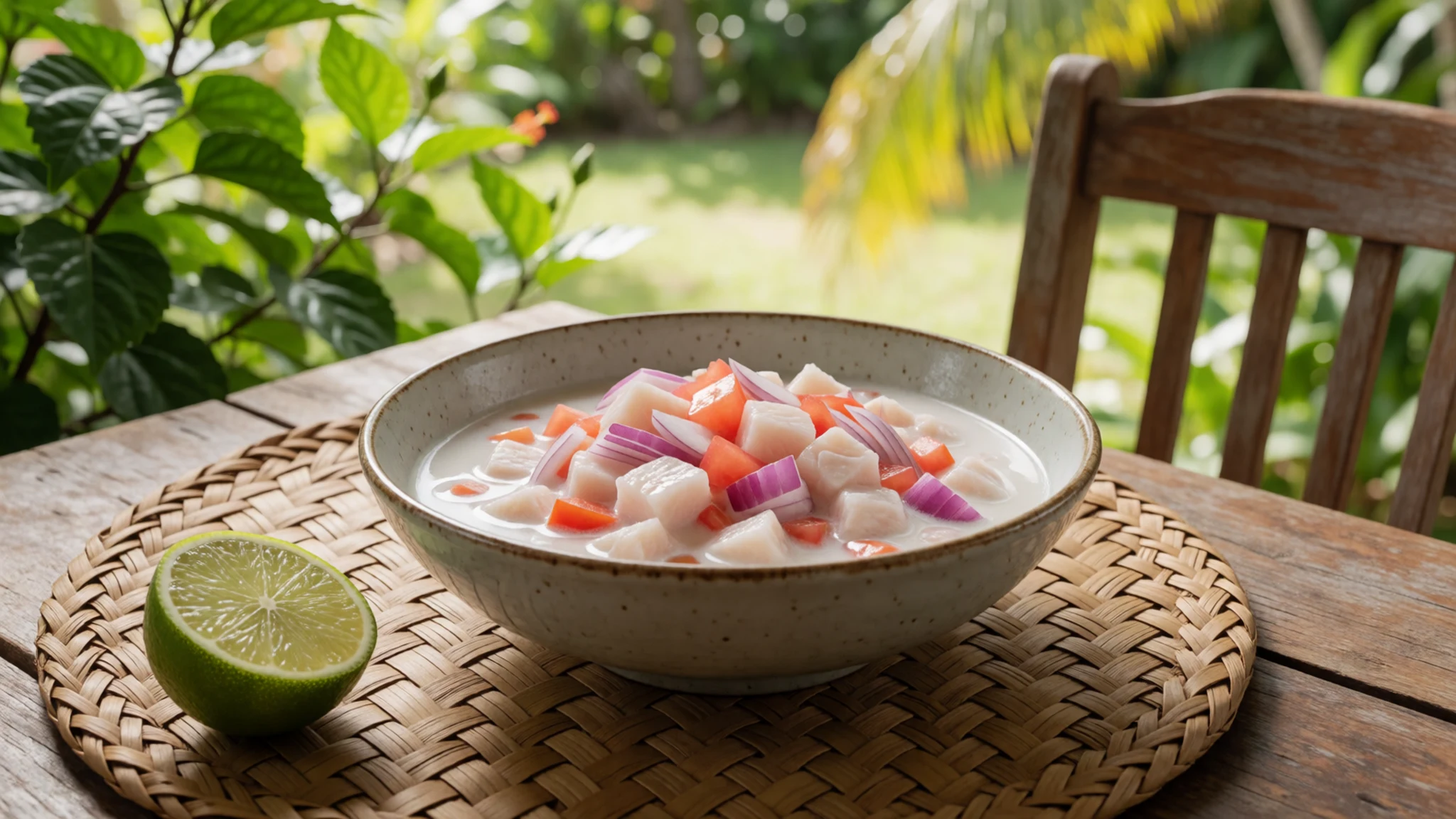
- Grilled reef fish — Simple grills at family pensions and the food truck Cafe Obelix
Rangiroa's simplest good meal is reef fish grilled over a charcoal or wood fire, usually caught on the lagoon that same day. It is often served with rice, salad or breadfruit, depending on the cook, with lime and a little chilli. Eaten with the fingers at a plain table, it is the meal that most closely reflects island cooking.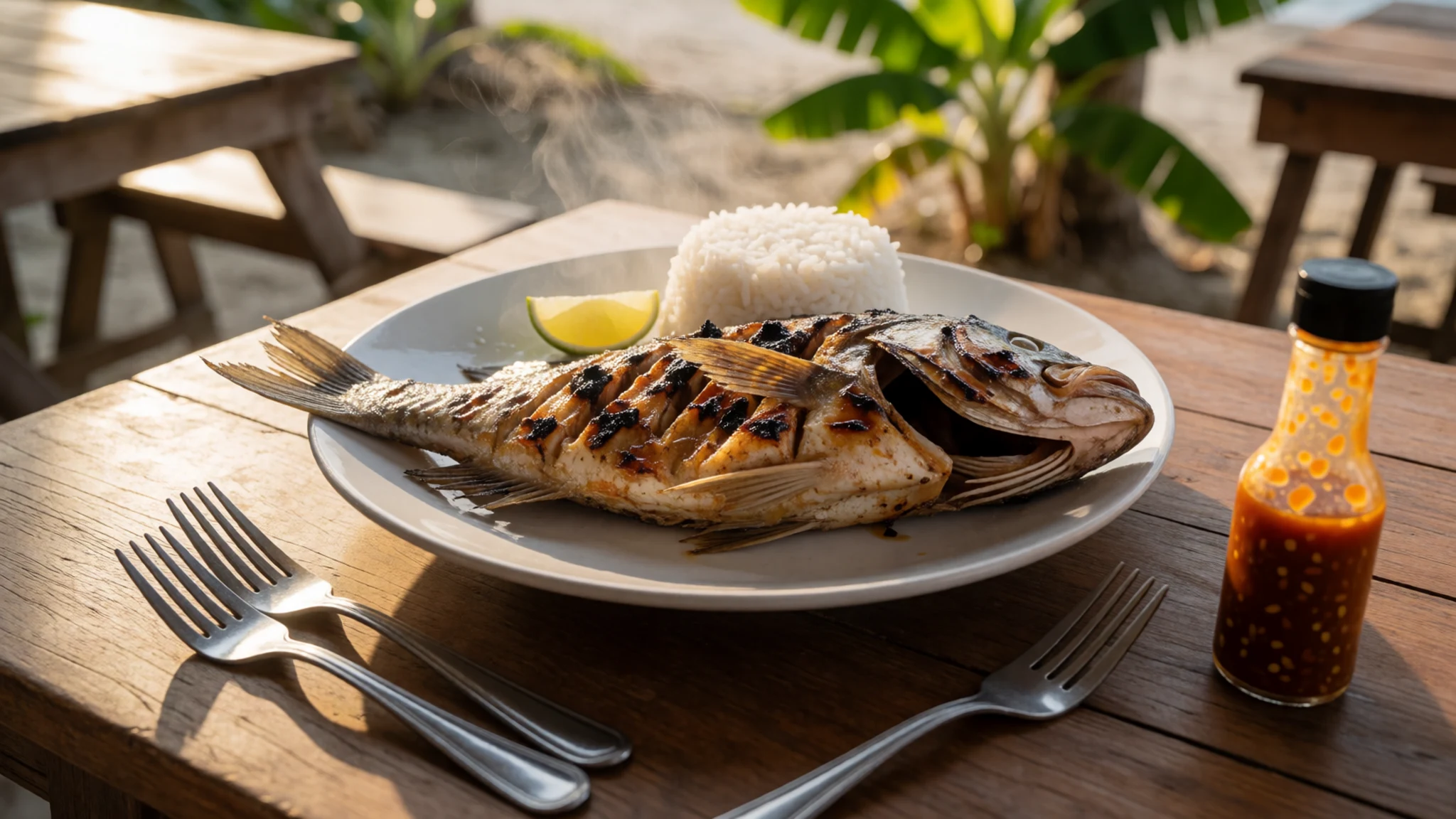
- Takeaway pizza and local plates — Snack Rio, near the airport
Snack Rio, near the airport, is a regular stop for takeaway pizza alongside local dishes. The food is simple and filling, and it suits a quick lunch between dives. Expect no fine dining here. The appeal is decent, affordable cooking within walking distance of the airstrip. - Coconut and fruit desserts — Pension dining tables, and evenings at the Te Mao lounge bar when it has a music night
Desserts on the atoll are usually simple: coconut in several forms, with sweetened grated flesh, coconut cream, and whatever tropical fruit is in season. Pensions often serve them after dinner, and they make a fitting end to a day on the water. Ask the owners what they have made that day.
Plan it
Best time. The dry season, roughly May to October, is generally the more comfortable time to visit, with calmer seas and less rain. The climate is warm and humid year-round, so the real choice is about rain and wind. Dive conditions shift with the tide more than the season, so plan days around the current.
How long. 3–4
Getting there. Air Tahiti flies to Rangiroa Airport from Papeete, Bora Bora and Fakarava. The airstrip sits on the main motu near Avatoru, so the last leg is short and the village and most pensions are close by.
Budget. high
Tips
- Book flights, boats and pensions early for busy periods, since there are only two larger resorts.
- Plan dive trips around the tide; the current through the passes decides the best time of day.
- Check card acceptance before arriving and carry some cash for small purchases.
- Start early, as the island keeps early hours and most eateries quieten after dark.
- Bring water and reef-safe sun cream, because the sun is strong on the lagoon.
Etiquette
- Ask before photographing people in the village, especially children and church congregations.
- Keep to local hours, since quiet evenings are normal here.
- Follow your guide's instructions on dives and do not touch or chase sharks or rays.
Nearby
Sources
- Wikidata Q757399 (CC0)
- Wikipedia: Rangiroa (rev 1364194301) (CC BY-SA 4.0)
- Wikivoyage: Rangiroa (rev 5330119) (CC BY-SA 4.0)
- NASA astronaut image of Rangiroa Atoll (photo 01) (Public domain)
- Map of the Tuamotus Islands (photo 02) (Public domain)
- Church Rangiroa French Polynesia (photo 03) (CC0 1.0)
- Rangiroa (île aux récifs) (photo 04) (CC BY-SA 2.0)
- Western part of the Rangiroa Atoll (photo 05) (CC BY-SA 2.5)
- Aircraft of Air Tahiti Nui with name Rangiroa (photo 06) (CC BY 2.5)
- Natural-colour image of the Tuamotu archipelago (photo 07) (Public domain)
- Ariataea - Rangiroa (photo 08) (CC BY 3.0)


