Ram Mandir
Ram Mandir, India
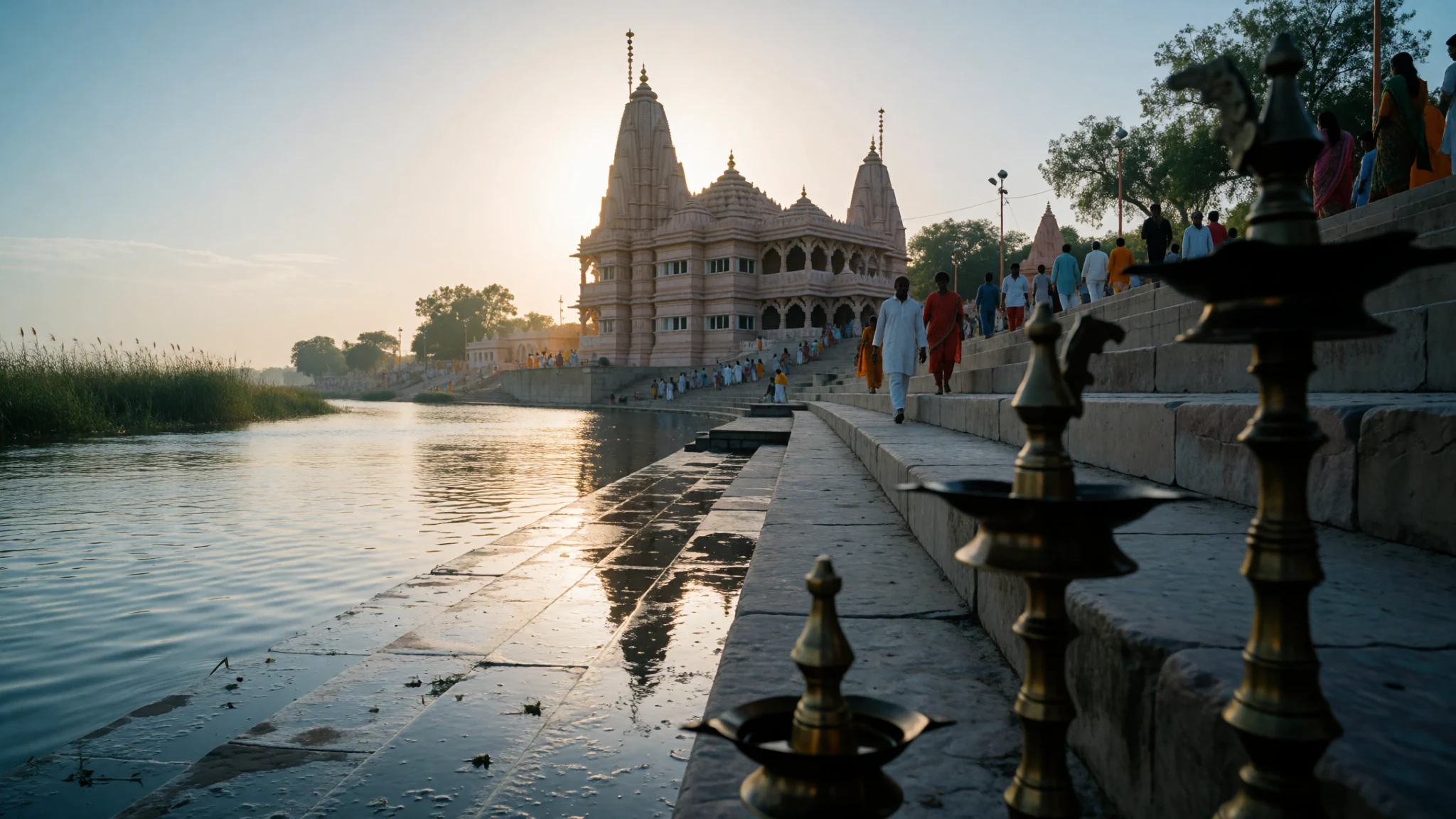
Ram Mandir in Ayodhya is a living pilgrimage temple on a riverside site, where devotion, recent history and a small old city meet.
The place
Ram Mandir is a Hindu temple complex in Ayodhya, a small city on the Sarayu river in Uttar Pradesh, northern India. It is dedicated to Rama, whom many Hindus revere as an incarnation of Vishnu, and it stands on ground that devotees identify as his birthplace, Ram Janmabhoomi. Wikidata gives 2020 as its founding year, the year construction formally began, and a trust called the Shri Ram Janmabhoomi Teerth Kshetra oversaw the building. This is a working place of worship, so a visit has a particular rhythm: security checks, long managed queues, bells, chanting, and then a short moment in front of the shrine.
Around the temple, Ayodhya is a pilgrim town rather than a sightseeing city. Ghats line the river, and the lanes are crowded with stalls selling marigold garlands, sweets, brass lamps and printed pictures of the deity. Older temples and monastic houses, many of them Vaishnava, sit within walking distance, and several offer simple lodging to pilgrims. Faizabad, the twin town next door, holds the railway station on the Lucknow side and a few Nawabi-era monuments.
The seasons shape everything. Summers are fierce, the monsoon is humid and wet, and winter mornings can be cold and foggy. Crowds swell on festival days, above all Ram Navami, Rama's birthday, and around Diwali, when the city is edged with lamps. The temple is also a politically charged place: the land was contested for well over a century, and that history is present in the signage, the security and in what local people choose to say or leave unsaid.
Its story
Ram Mandir has a short life as a finished building but a long and contested history as a site. Many Hindus hold that Rama was born here, and the spot was known as Ram Janmabhoomi long before the present temple. Around 1529 a commander serving the Mughal ruler Babur, Mir Baqi, built a mosque on the ground, the Babri Masjid. A Jesuit missionary's Latin account from 1767 records local belief that the mosque replaced an earlier Hindu shrine, which is the oldest written trace of the dispute that the brief cites.
Tension turned into recorded violence in 1853. A few years later, in 1859, the British administration put up a fence that split the compound, with Muslims using the inner court and Hindus the outer one. That arrangement held for decades until the night of 22–23 December 1949, when a group of Hindus placed images of Rama and Sita inside the fenced mosque and called their appearance miraculous.
From the 1980s, a campaign led by the Vishwa Hindu Parishad pressed Hindu claims to the site. In 1992 a crowd demolished the mosque, an act later described as illegal. In 2019 the Supreme Court of India gave the land to Hindus for a temple and allotted Muslims separate land at Dhannipur, also in Ayodhya, for a mosque, citing an Archaeological Survey of India report of an earlier non-Islamic structure beneath the mosque. Prime Minister Narendra Modi performed the ground-breaking ceremony in August 2020, and the trust built the temple that stands today.
What to see
- Ram Mandir — Ram Janmabhoomi, Ayodhya
The main temple is why nearly everyone comes. The approach runs through barriers and checkpoints, so the walk is long and the time before the shrine is brief. Devotion is the point rather than architecture-spotting, though the carved stone gateways, lit in the evening, reward a slow look. Check the trust's website for current entry arrangements.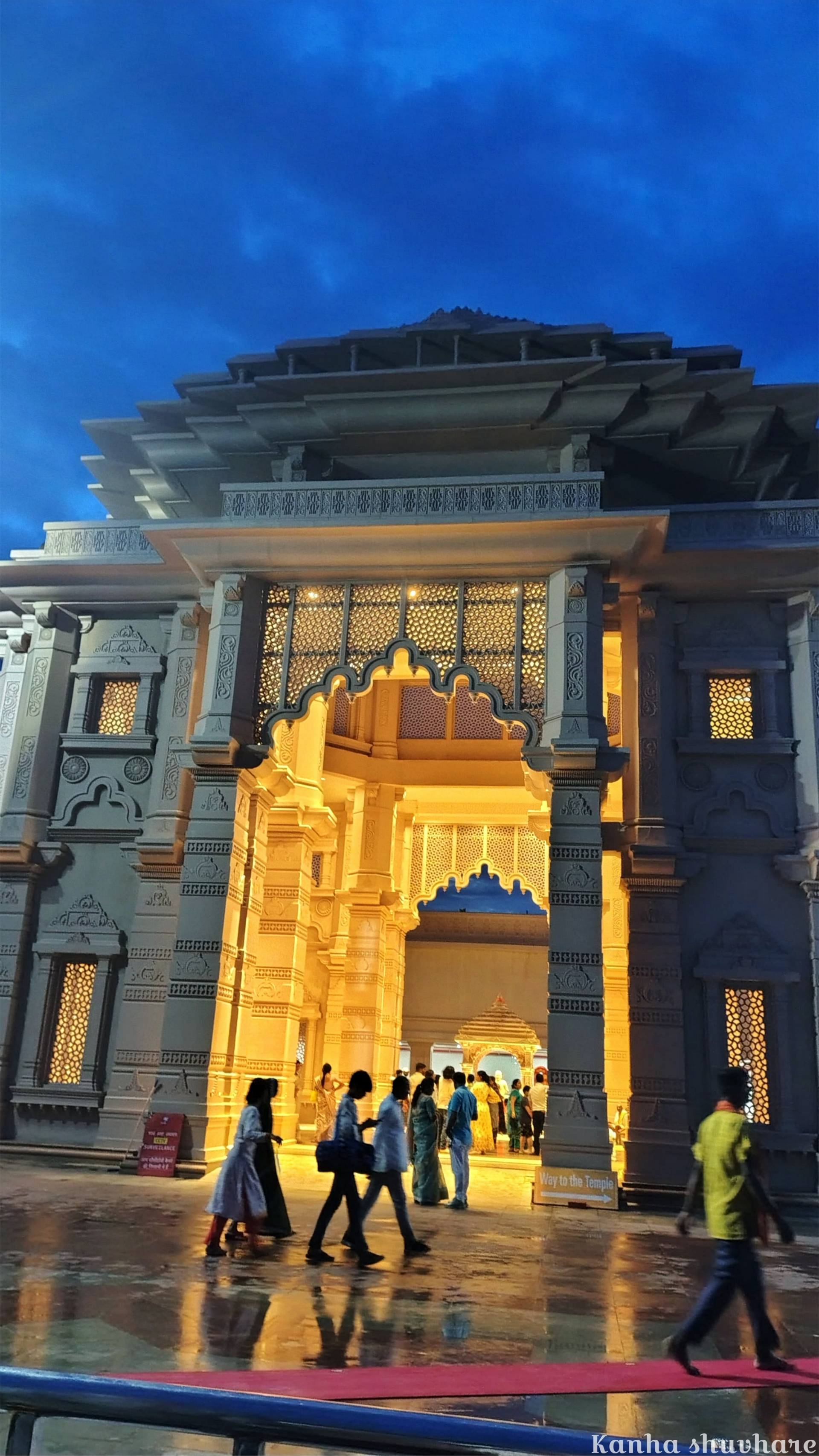
- Ram ki Paidi — Sarayu riverbank, Ayodhya
A run of steps and ghats along the Sarayu, a short distance from the temple. Pilgrims bathe, offer flowers and float small lamps. Early morning is the gentlest time, with mist on the water and priests setting up for the day. Evenings are busier and more theatrical. Wear shoes that cope with wet stone. - Mani Parbat — Southern Ayodhya
A raised mound crowded with small shrines, which began life as a Buddhist monastery before becoming a Hindu site. The climb is short, and the top terrace gives a wide view over Ayodhya's rooftops and spires. It makes a quiet pause between the busy ghats and the dense temple lanes nearer the main shrine. - Lakshman Ghat — Sarayu riverbank, Ayodhya
Local tradition marks this riverside spot as where Rama's brother Lakshmana ended his life, and accounts differ on why. It is calmer than the main bathing steps, with small shrines, boatmen and a good sense of the river's width. Worth an unhurried half hour, particularly towards sunset when the light softens. - Gulab Bari — Faizabad
A walled garden around the tomb of Shuja-ud-Daula, ruler of the Kingdom of Oudh, in the Faizabad half of the twin town. The mausoleum is the draw, with roses planted around it. It shows a Nawabi side of the region that pilgrim itineraries usually skip, and it tends to be quiet. - Memorial of Heo Hwang-ok — Ayodhya
A memorial to Heo Hwang-ok, a legendary Korean queen who, according to the Samguk yusa, came from a princely family at Ayuta, now identified with Ayodhya. It draws Korean visitors and gives the city a thread to East Asia that few first-time travellers expect to find here.
Culture
Ram Mandir sits at the centre of a living tradition of Rama worship, and that shapes how the whole city behaves. Rama is the hero of the Ramayana, honoured as an ideal son, king and husband, and his name is also a greeting: pilgrims call out "Jai Shri Ram" and "Sita Ram" in the lanes. Katha, the public retelling of the epic, and bhajans, devotional songs, are heard from temples and loudspeakers through the day. Ram Navami, his birthday, and Diwali, which marks his return to Ayodhya in the tradition, are the high points of the year.
The city is mostly vegetarian by habit. The brief records that meat sales have been banned within 15 km of the temple since February 2026, so eating out here means vegetarian food. Many Vaishnava monastic houses run community kitchens and offer simple stays to pilgrims, and offerings of flowers, sweets and lamps are part of daily life at every shrine.
The site is also deeply important to Muslims and Hindus in different ways, and the 1992 demolition and the 2019 verdict remain sensitive. Local people hold a range of views, and a visitor learns more by listening than by asking pointed questions. Photography and political talk are both treated with caution near the temple.
Etiquette: remove your shoes before entering temple grounds, dress modestly, follow the security staff's instructions about phones and bags, and avoid raising the political dispute with strangers.
What to wear
In the Awadh region around Ayodhya, traditional dress is simple cotton and silk. Men wear a dhoti or kurta-pyjama, often with a shawl, and women wear saris or salwar kameez with a dupatta. Banarasi silk from nearby Varanasi is saved for weddings and festivals, while Lucknow's chikankari, fine white-on-white embroidery, is worn for lighter occasions. Saffron and yellow are the colours of devotion, and many pilgrims put on fresh, clean clothes before darshan, the act of seeing the deity.
Day to day, the town dresses as most of small-town northern India does. Men wear shirts and trousers or kurtas, women wear salwar suits and saris, and younger people wear jeans and T-shirts, though shoulders and knees are generally covered. Pilgrim groups often match, with scarves or caps in a single colour, to keep together in the crowds.
Visitors should dress for both heat and a temple. Loose cotton or linen that covers shoulders and knees is the safest choice, and a light scarf or dupatta is useful for covering the head or shoulders if asked. Wear footwear that slips off easily, since shoes come off often and the stone can be hot in summer and cold on winter mornings. Carry socks for the walk to the shrine, and pack a light jacket for foggy December and January mornings. Avoid sleeveless tops, short shorts and clothing with slogans or religious imagery.
What to eat
- Laddoo and peda — Sweet shops in the lanes around the temple
Sweets are the staple offering in Ayodhya, and most pilgrims take a box home as prasad, blessed food. Laddoos and soft milk pedas are the usual choices, made fresh in small shops along the approach roads. Buy from busy counters where stock turns over quickly. - Kachori with aloo sabzi — Breakfast stalls near the ghats and railway stations
A deep-fried, lentil-stuffed puffed bread served with a spiced potato curry, eaten standing at the counter. It is the usual early meal before a temple queue. Stalls open early and sell out by mid-morning, so go before the day heats up. - Hot jalebi with milk — Morning sweet stalls in the old market
Crisp, syrupy spirals fried to order, often eaten with a glass of warm milk. It is a common breakfast pairing across northern India and a pleasant one on a cold winter morning. Choose a stall where the batter is being fried in front of you. - Vegetarian thali — Simple eateries near the temple and stations
A plate of dal, seasonal vegetables, rice, bread and pickle, refilled until you stop it. Since meat sales are restricted around the temple, this is the main sit-down meal. Quality varies, so pick places that are busy with local families. - Chai and lassi in clay cups — Roadside stalls along the riverfront and temple approaches
Sweet, milky tea and thick yoghurt lassi are served in disposable clay kulhads, which you break after use. They are good for a short rest between sights. The brief also notes that water, fruit juice and cold drinks are easy to find.
Plan it
Best time. October to March is the most comfortable, with mild to warm dry days, though winter mornings can be foggy and cold. April to June is very hot, and July to September is humid with monsoon rain. Ram Navami, usually in March or April, and Diwali bring the biggest crowds.
How long. 1–2
Getting there. Fly to Lucknow, about 130 km away, or check whether flights into Ayodhya's own airport suit your route. Trains reach Ayodhya Junction and Ayodhya Cantt from Delhi, Lucknow, Varanasi and Prayagraj; a Vande Bharat runs from Lucknow. Varanasi is about 200 km by road. From the station, local auto-rickshaws or e-rickshaws cover the last stretch to the temple lanes.
Budget. low
Tips
- Check the trust's official site, https://srjbtkshetra.org/, for current darshan arrangements, timings and any booking requirements before you travel
- Arrive early in the morning: queues are shorter, the air is cooler and the river is at its calmest
- Travel light, since security checks are thorough and some items may not be allowed inside
- Carry some cash for small stalls and shoe-keeping, and carry your own drinking water
- Avoid Ram Navami and Diwali unless you want the crowds as part of the experience
Etiquette
- Remove shoes before entering temple grounds and leave them at the designated keeping points
- Dress modestly, with shoulders and knees covered
- Be careful when photographing worshippers and avoid raising the site's political history with strangers
Nearby
Sources
- Wikidata Q96401169 (CC0)
- Wikipedia: Ram Mandir (rev 1384387417) (CC BY-SA 4.0)
- Wikivoyage: Ayodhya (rev 5398039) (CC BY-SA 4.0)
- Photo 01 (Arularasan. G) (CC BY-SA 4.0)
- Photo 02 (DTM) (CC BY-SA 4.0)
- Photo 03 (Gamerzer) (CC BY-SA 4.0)
- Photo 04 (Gamerzer) (CC BY-SA 4.0)
- Photo 05 (NordNordWest) (Public domain)
- Photo 06 (Rudra Pratap Sinha) (CC BY-SA 4.0)


