Ærø
Ærø, Denmark
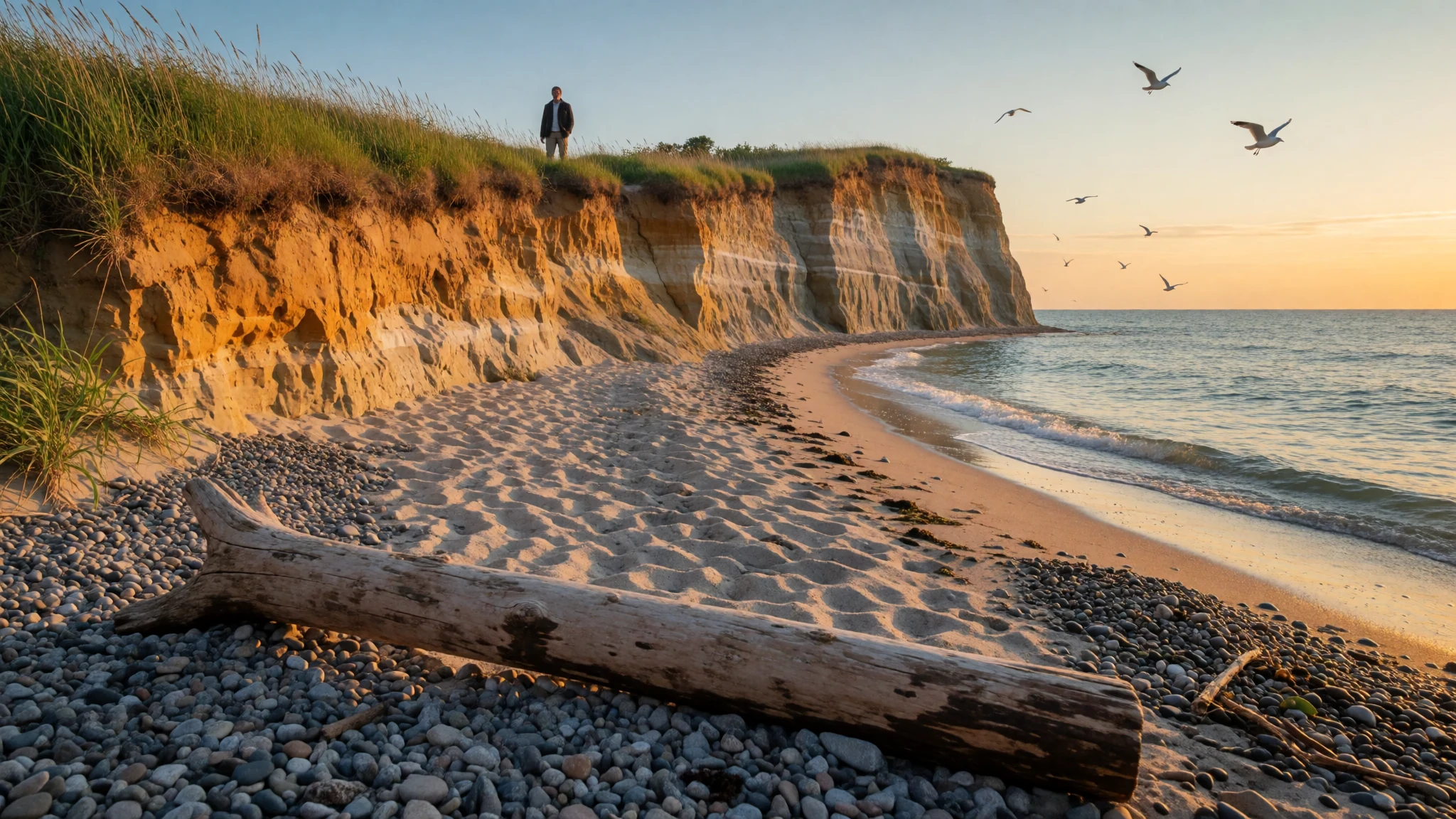
Ærø is a small, slow Baltic island of sailors' towns, old village lanes and quiet cycling roads, reached by ferry.
The place
Ærø is a Danish island in the Baltic Sea, part of the Southern Denmark Region, with a population of about 6,170. It runs roughly 20 km from north-west to south-east and is between 4 and 8 km wide, so a cyclist can cross its length in an easy morning and still have the afternoon for a swim or a café stop. The ground is gently rolling farmland, and the main drama is on the west coast, where clay cliffs about 33 metres high line the shore at Voderup Klint for several kilometres.
Three small towns share most of the people. Ærøskøbing, on the side facing the mainland ferries, was the old chief town and still has the narrow lanes and low eighteenth-century houses that fill the postcards. Marstal, in the south-east, is the biggest town and the island's shopping centre; it is nicknamed the skipper village because generations of sailors and ship captains came from it. Søby, in the north-west, is the smallest of the three and works mainly as a ferry port. Fourteen villages and scattered farms fill in the rest of the map.
Light traffic is the island's main practical virtue. Roads are quiet, distances are short and the pace is slow, which suits walkers and cyclists. The flip side is that Ærø is small: a rainy, windy day outside summer can feel long, and many visitors come only for warm-weather weekends. Shops and eateries are modest in number, so it pays to plan meals rather than count on finding something open everywhere.
Its story
Ærø has been lived in for a very long time. Excavations show settlement from before 8000 BC, and the burial mounds, passage graves and dolmens scattered across the island record more than 10,000 years of human activity. The passage grave at Kragnæs is one of these monuments that can still be visited.
The more recent story is a tangle of borders. From the 14th century until 1864 Ærø belonged to the Duchy of Schleswig, and for much of that time it was divided into separate enclaves held by different dukes, then joined, then divided again. Because the island sat outside the kingdom's tariff wall, smuggling became a living for many islanders. In 1750 the pieces were finally brought together as one administrative district. Schleswig itself is now split between Denmark and Germany, and Ærø sits within Denmark.
Fire is the other marker in the record. In 1629 Ærøskøbing burned in a great blaze, and no later disaster on the island matched it, which is one reason the houses visitors admire today are of a later date.
Between 1622 and 1633 the Duke of Ærø was Christian, a cousin of King Christian IV, who lived at Gråsten manor with his partner Cathrine Griebels. After his death a banner was found there, stitched from nine pieces of cloth in three colours: a body colour, sea green and golden yellow. That banner became the model for the island flag, which now flies all over Ærø.
What to see
- Ærøskøbing — West of the island, main ferry arrival
The old chief town and the main ferry arrival point, Ærøskøbing is best seen on foot. Its narrow lanes and low eighteenth-century houses are small in scale, so a slow wander covers it quickly, ideally early or late in the day when day-trippers have thinned out. Look at the doorways and rooflines as much as the streets. - Marstal Søfartsmuseum — Marstal, south-east
The maritime museum in Marstal tells the story of the skipper village through the sailors and ships that shaped it. A large volunteer community helps keep it going, which gives it a local, hands-on feel. Check the museum's official site for opening times before going, and pair the visit with a walk round the harbour.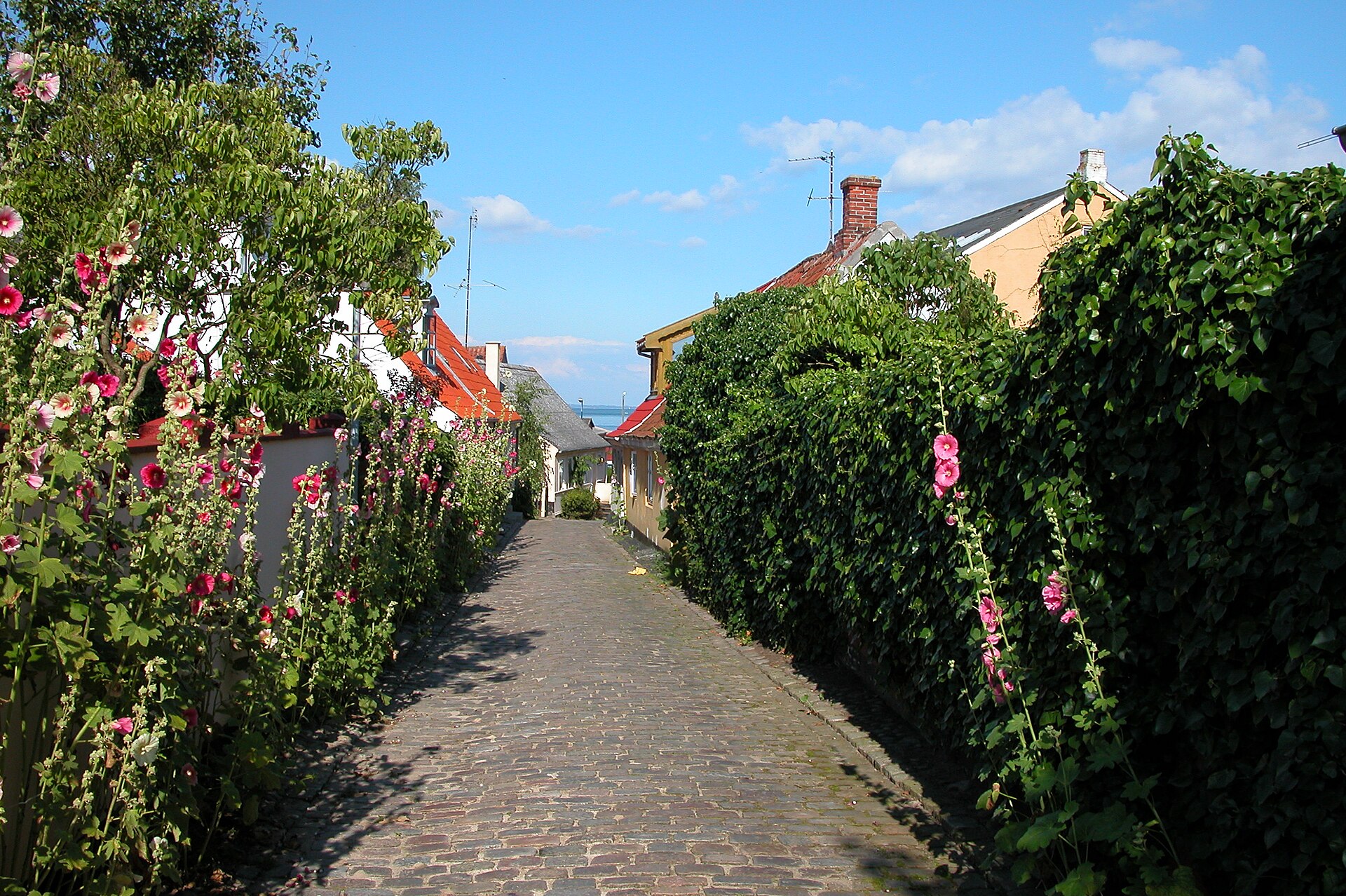
- Voderup Klint — West coast
On the west coast, Voderup Klint is a stretch of cliff about 33 metres high that runs for several kilometres. It is the island's one real piece of drama, best walked along the top or the shore on a clear day, with the Baltic open beyond. Wind can be strong, so keep back from the edge.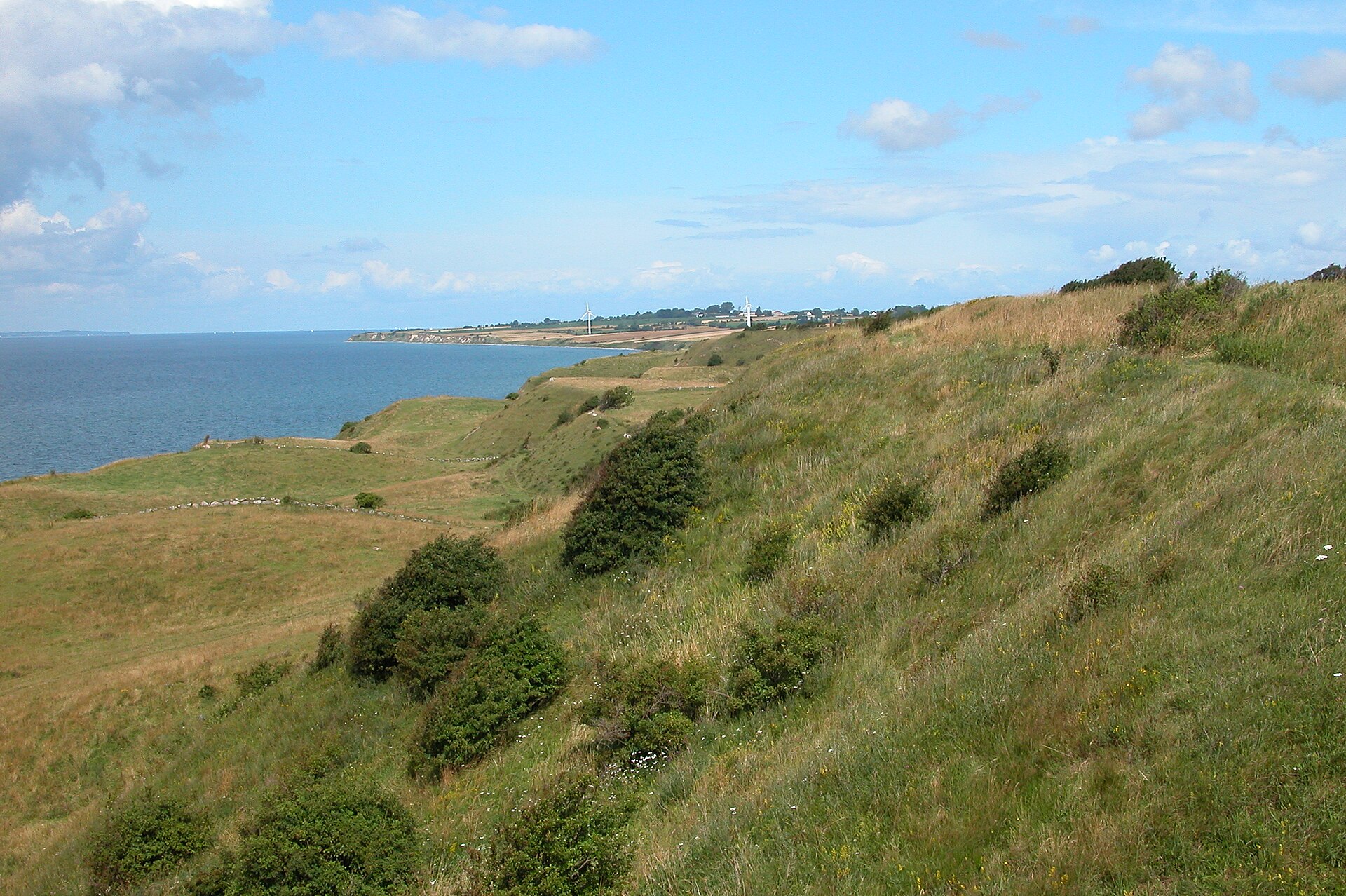
- Skjoldnæs Lighthouse — North-western tip
At the north-western tip of the island, Skjoldnæs Lighthouse marks the point where Ærø meets open water. It makes a good goal for a cycle ride along the quiet roads, with a satisfying sense of reaching the end of the island. Bring a windproof layer, as the point is exposed even in summer. - Kragnæs passage grave — South-east, not far from Marstal
The Kragnæs passage grave is one of the burial monuments that show how long people have lived on Ærø. It is a quiet stop on a cycle route rather than a major attraction, so go for the sense of time and the countryside around it, not for facilities. - Beach huts at Eriks Hale Strand — South-east coast near Marstal
On the south-eastern shore near Marstal, the row of colourful beach huts at Eriks Hale Strand is the island's classic seaside picture. It suits a summer swim, a picnic or a bracing walk in cooler months. Baltic water stays fresh, so expect a quick dip rather than a long soak.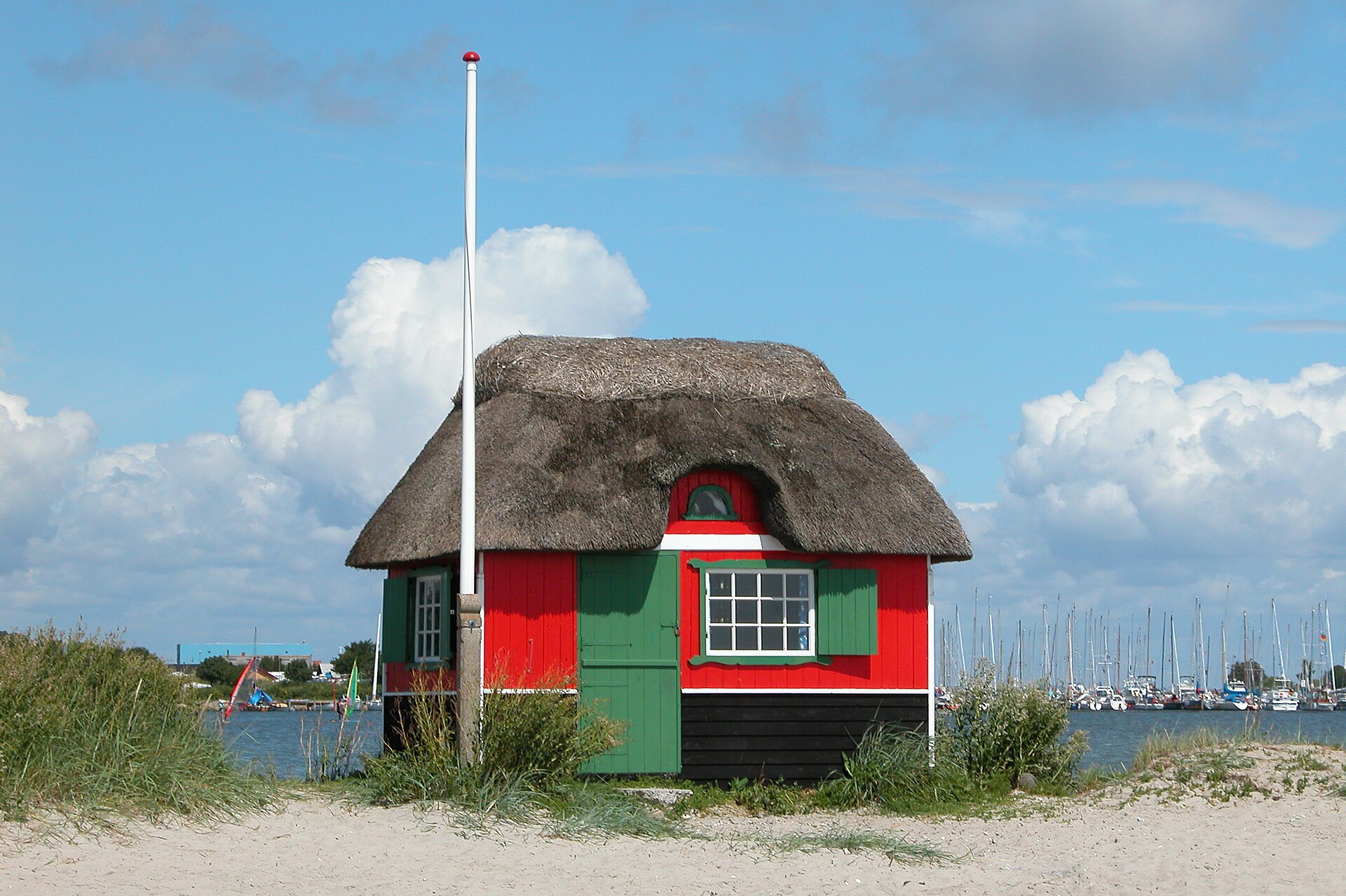
Culture
Ærø has a culture shaped by the sea, by shifting borders and by a strong sense of being an island. Marstal earned its nickname, the skipper village, because so many local men went to sea as sailors and captains, and that seafaring pride still shows in the town's maritime museum, which a large volunteer community helps to run. Community effort is a recurring theme on an island small enough that many people know each other.
The island's past as a patchwork of duchy enclaves outside the kingdom's tariff wall left a streak of independence and a smuggling tradition that features in its history. The flag, built from the colours of a banner found after a duke's death, flies from houses, boats and shop fronts, and islanders use it as a badge of belonging. Readers of a Danish newspaper once voted Ærø the country's third most wonderful island, a ranking worth knowing about but not one to bring up as a boast.
Daily rhythm is calm. Cycling is the normal way to get about, conversation is low-key, and the pace suits people who like to potter. Be careful with the name when asking the way: Aero on its own may send you towards an airport, so say Aero island.
The lanes of Ærøskøbing are lined with people's homes, so keep your voice down, do not step into front gardens for photographs, and give way to cyclists on the narrow streets.
What to wear
Ærø's clothing story is mostly a practical one. Danish regional folk dress, made from wool and linen with embroidered or woven details, is the traditional costume of the wider country and appears at festivals and heritage events. The sources used for this reading do not describe a distinct Ærø costume, so it is safest to treat folk dress as an occasional, ceremonial matter rather than something seen on the street. The nearest thing to an island emblem in cloth is the flag, whose design comes from an old banner made of nine pieces of cloth.
Day to day, islanders dress for weather and bicycles: trousers or jeans, knitwear, windproof jackets and sturdy trainers or boots. Marstal's seafaring heritage means waterproofs and wool jumpers look entirely at home. In summer, shorts, light shirts and swimwear take over around the beaches.
Visitors should pack layers whatever the month, because Baltic wind can turn a warm afternoon cool quickly. A waterproof shell, a warm mid-layer, a sun hat and sunscreen cover most conditions. Comfortable shoes with good grip suit the cobbled lanes of Ærøskøbing and the clifftop paths at Voderup Klint. Village churches such as Bregninge are ordinary places of worship, so tidy, covered clothing and no swimwear are enough there.
What to eat
- Ærøpandekager — Island cafés, especially in Ærøskøbing and Marstal
Very thick pancakes, and the dish most often named as a local speciality. They are closer to a baked, filling treat than a thin crêpe, so share one after a long cycle. Ask at village cafés whether they are on the menu that day. - Smørrebrød — Lunch cafés in the main towns
The Danish open sandwich: rye bread with toppings such as fish, egg or cold meats. It is an easy, filling lunch on a cycling day and fits the island's relaxed pace. Ask what is freshest and what comes from nearby. - Baltic herring — Harbour-side eateries in Marstal and Søby
Herring, pickled or smoked, is a staple of Danish coastal eating and suits a harbour town with sailors' roots. Try it on rye bread with onion or egg. Choices vary by season and eatery, so ask what is on offer. - Island wine — Ærø Vin, north-west of the island
Ærø Vin is listed as a place to drink on the island's north-west side. It makes a pleasant stop on a ride towards Skjoldnæs. Check the producer's official channels for opening and tasting arrangements before setting out. - Coffee and cake — MARSTANG café, Marstal
MARSTANG café in Marstal is a listed spot for a break between the harbour and the museum. A coffee with something sweet is the sensible reward after wind and pedalling. Opening times change, so check before relying on it.
Plan it
Best time. Late May to September, when days are long, the Baltic is swimmable and cycling is pleasant; winters are cold, windy and very quiet, and many visitors find outside summer too slow for a short stay.
How long. 2–3
Getting there. Reach the Danish mainland by air or rail, then take a ferry. Three routes serve the island, all run by Ærøfærgerne: Svendborg to Ærøskøbing, Faaborg to Søby, and Fynshav to Søby. Sailings per day vary by route and day of the week, so check the operator's official timetable.
Budget. mid
Tips
- Check the ferry timetable before you plan the day, and ask whether your crossing needs booking if you bring a car or bicycle.
- Bring or hire a bicycle; the island is compact, the roads are quiet and cycling is the easiest way to see it.
- Pack a windproof layer even in summer, as the coast and Skjoldnæs are exposed.
- Plan meals ahead, since eateries are few and opening times can be limited.
- When asking directions, say Aero island rather than Aero.
Etiquette
- Treat Ærøskøbing's lanes as residential streets: keep noise low and stay out of private gardens.
- Give way to cyclists and keep to the cycle routes where they exist.
- Keep back from the edge at Voderup Klint and take litter with you.
Nearby
Sources
- Wikidata Q27150 (CC0)
- Wikipedia: Ærø (rev 1377915004) (CC BY-SA 4.0)
- Wikivoyage: Ærø (rev 5358484) (CC BY-SA 4.0)
- Photo: Arroe by Blaeu 1665 (cropped), Joan Blaeu (Public domain)
- Photo: Marstal Ærø (CC BY 3.0)
- Photo: Aero 110802 Panorama 1, Aconcagua (CC BY 3.0)
- Photo: Bregninge Kirke, Erik Christensen (CC BY 3.0)
- Photo: Marstal badehus, Erik Christensen (CC BY 3.0)
- Photo: Ommel Strandbyen Havn (CC BY 3.0)
- Photo: Voderup klint Ærø (CC BY 3.0)
- Photo: M/F Marstal, Erik Christensen (CC0 1.0)


