Qeshm
Qeshm, Iran
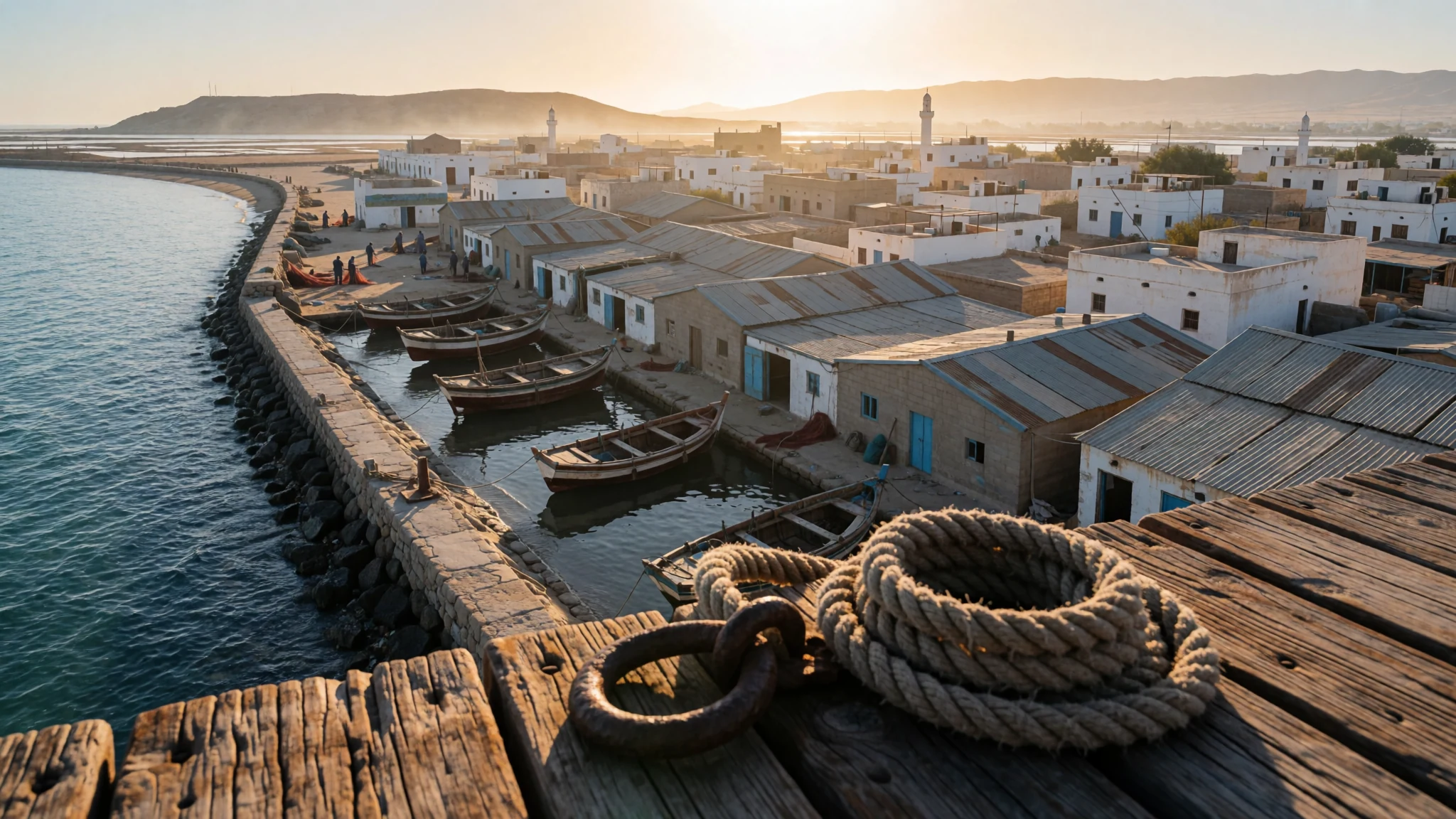
A low-key Persian Gulf island of mangroves, desert coast and bazaar streets, best visited in the mild winter months from December to February.
The place
Qeshm is a coastal city on Qeshm Island in Hormozgan province, southern Iran, and it serves as the capital of both the county and the central district that share its name. The city's recorded population is 40,678, so it is small enough to cross on foot or by taxi in a single morning. The land is low here. The city sits about 34 metres above sea level, and from most streets the Persian Gulf is never far away.
The island's scenery mixes salt flats, mangrove creeks, date palms and rocky hills. The coastline changes character quickly from one bay to the next, which is why a slow drive around the island tends to reward more than a single walk. Qeshm also operates as a free trade zone, so shops, offices and shipping agents line the centre alongside older houses and mosques. The city feels more like a working port than a resort, and tourism is growing mainly in the cooler months.
Heat sets the rhythm of daily life. Summers are long, hot and humid, so shopping, errands and visits to the coast move to early morning and evening. Persian is the everyday language, and Arabic is widely understood in trade. Accommodation is most easily found in the town itself, so it is sensible to book ahead for winter weekends.
Its story
Qeshm's position at the mouth of the Persian Gulf has made it a point on sea routes for centuries. Ships carrying goods between the Iranian plateau, Arabia, the Indian subcontinent and East Africa passed close to its shores, and its harbours served as stopping points and shelters. European trading companies and naval powers competed for influence in the Gulf from the early modern period, and islands like Qeshm were part of that contest. Local communities built their lives around fishing, pearling in earlier generations, date cultivation and trade with the mainland and across the water.
The modern story is shaped by the decision to make the island a free zone. That status brought commerce, transit and new residents, and it changed the city's streets and skyline. Energy and industrial work offshore also tie the island to the wider Gulf economy, which is why the coast often carries the traffic of tankers and supply vessels. Environmental concerns, including the protection of mangrove areas and coral reefs, have grown alongside development. The island's geology has also drawn scientific interest. Tourism has expanded as roads, flights and ferries have improved, though it remains a smaller part of the economy than trade.
What to see
- The city seen from above — The town and harbour
From the air, the city of Qeshm reads clearly as a coastal town: low buildings packed close together, a grid of streets running down to the harbour, and palm-lined edges where built-up areas give way to open ground. The view shows the island's shape better than any map, with the sea on several sides and the land rising only slightly inland. Seeing it from above helps visitors plan routes by the water.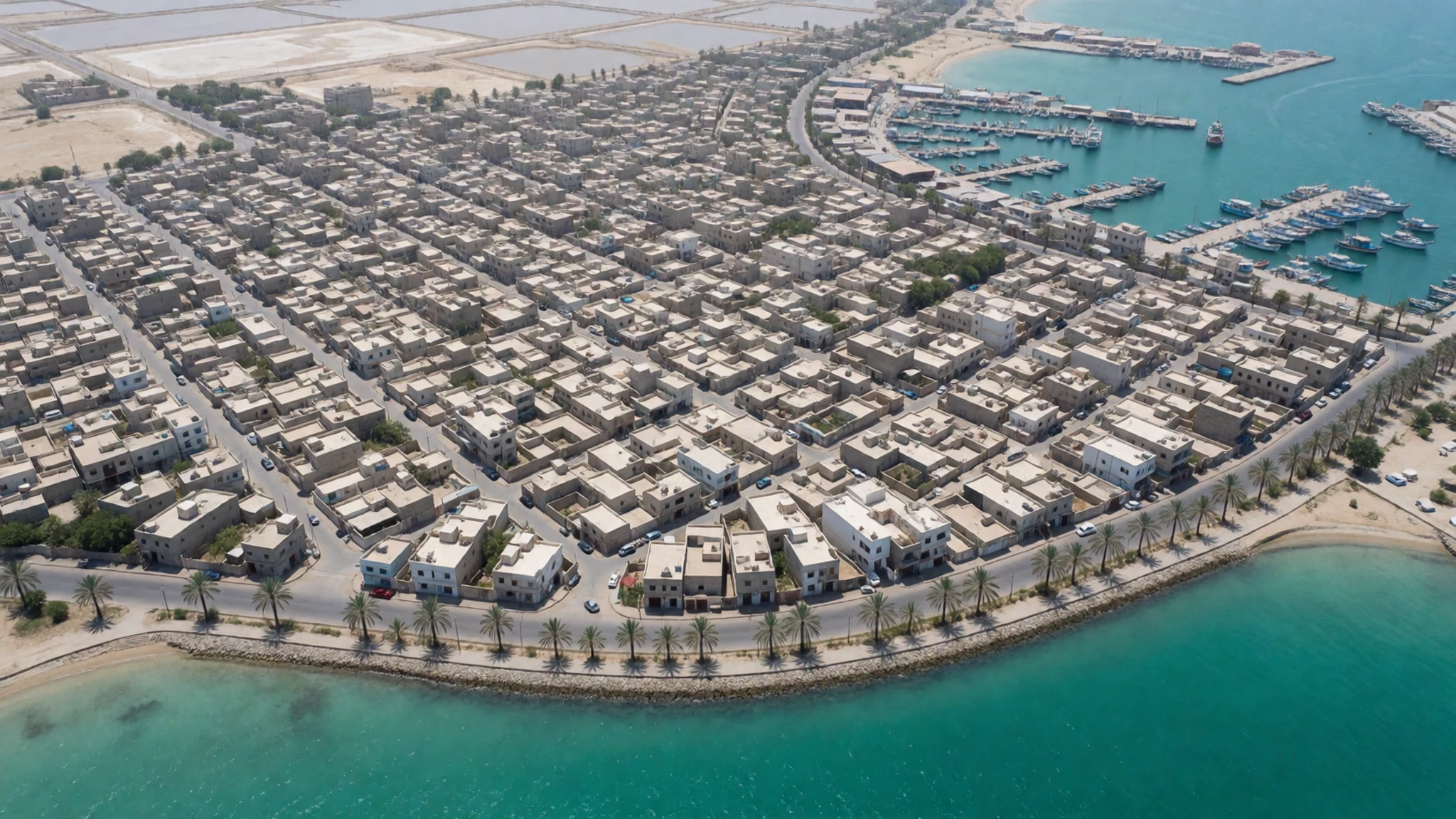
- The main boulevard — The town centre
The wide main street of the city carries much of the daily traffic, with shopfronts, banks and small cafés lining both sides. In the evening it fills with families walking and shopping, and it is the easiest place to get a sense of local life. Pavements are generally usable, though crossings can be busy, so take care at junctions.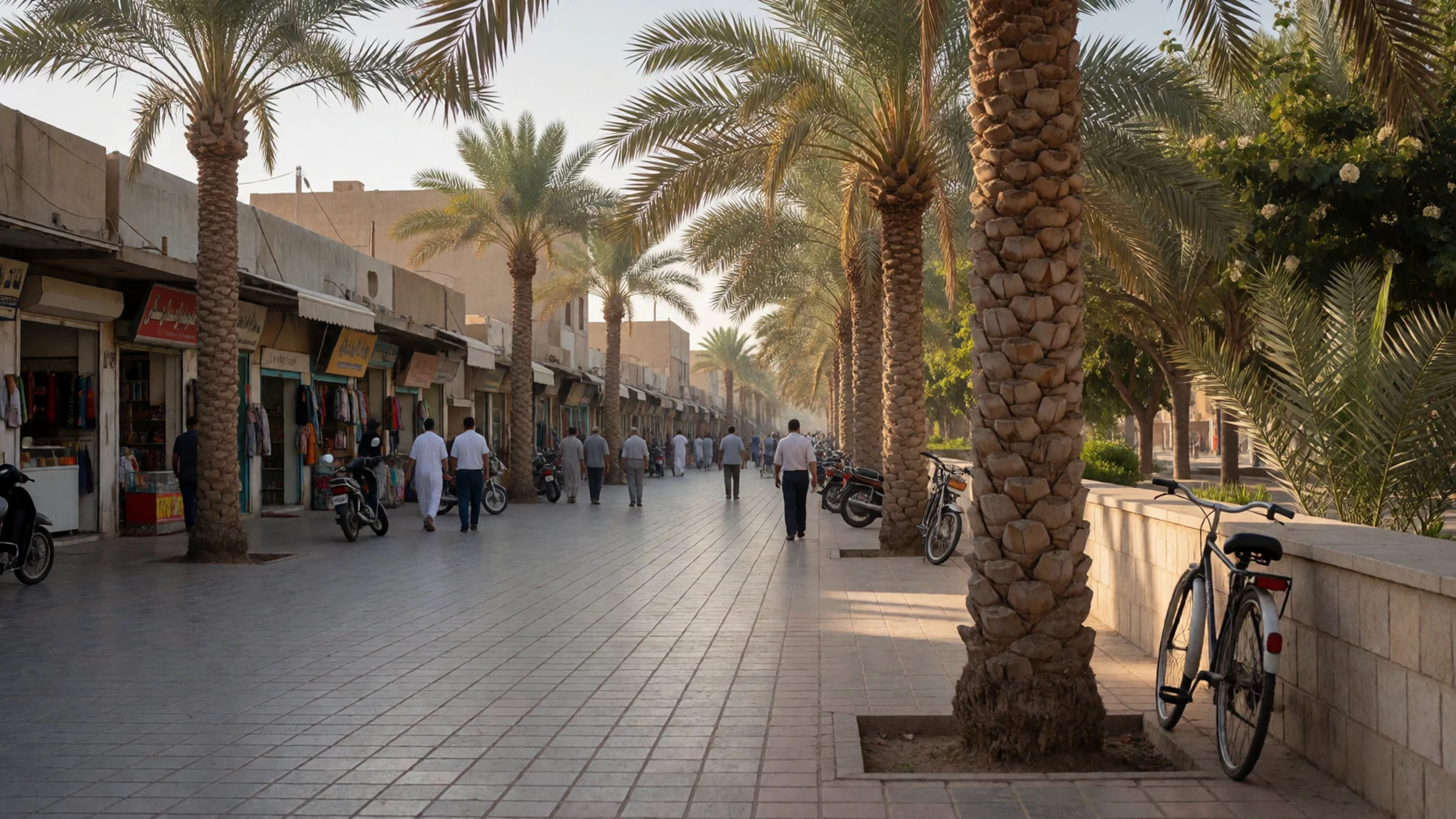
- A city mosque — The old town and residential streets
Mosques are part of the everyday fabric of the town, and the city's principal mosque serves local worshippers rather than tourists. The building is simple in its lines and plain in its finish, with a prayer hall that is open outside set prayer times. Visits are best made quietly and modestly, and women should bring a scarf. Check locally before entering during prayers.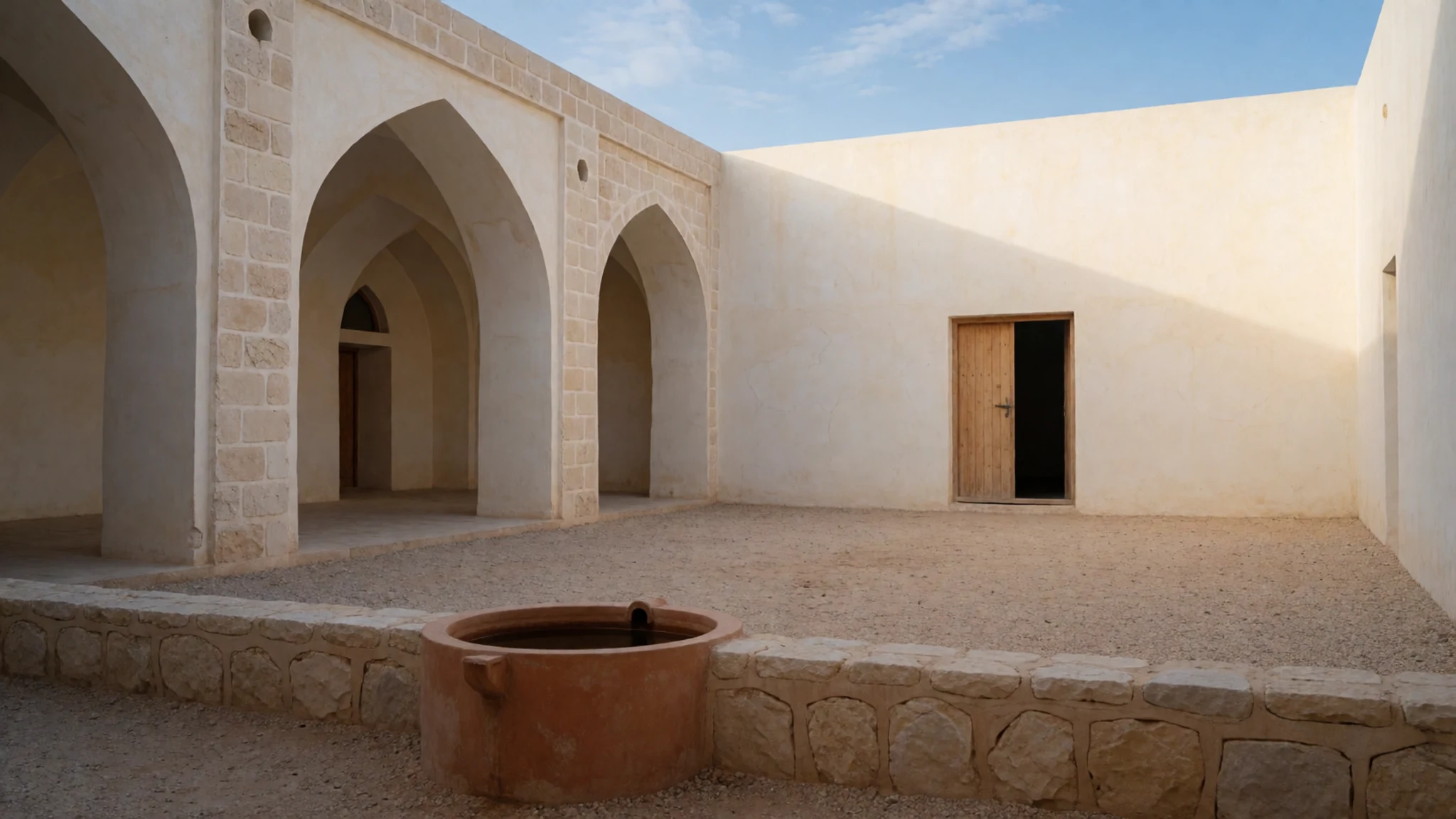
- City Centre shopping — The town centre
The city's modern shopping centre brings together clothing, electronics, household goods and a cinema under one roof. It is air-conditioned, which makes it a welcome break in the afternoon heat. Prices and opening times vary between shops, so check current details on arrival rather than relying on older guides.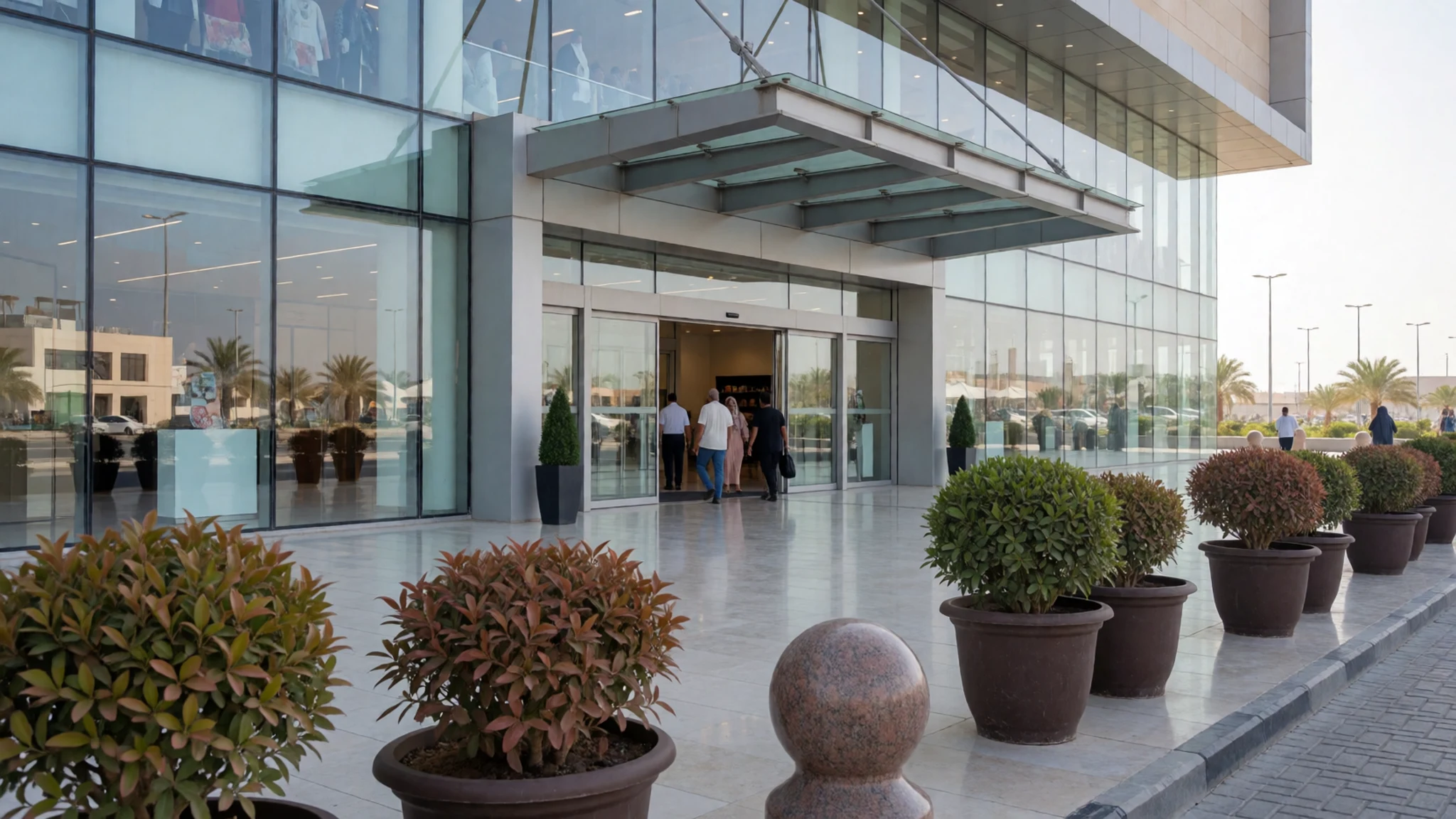
- Coastal drive and sea views — The coastal roads around the island
The roads that follow the coast offer some of the island's most varied scenery, from open shoreline and small fishing harbours to stretches of mangrove and desert edge. Stopping at quiet bays in the early morning or late afternoon makes the most of the light and the cooler air. Fuel and food stops can be sparse outside town, so plan ahead.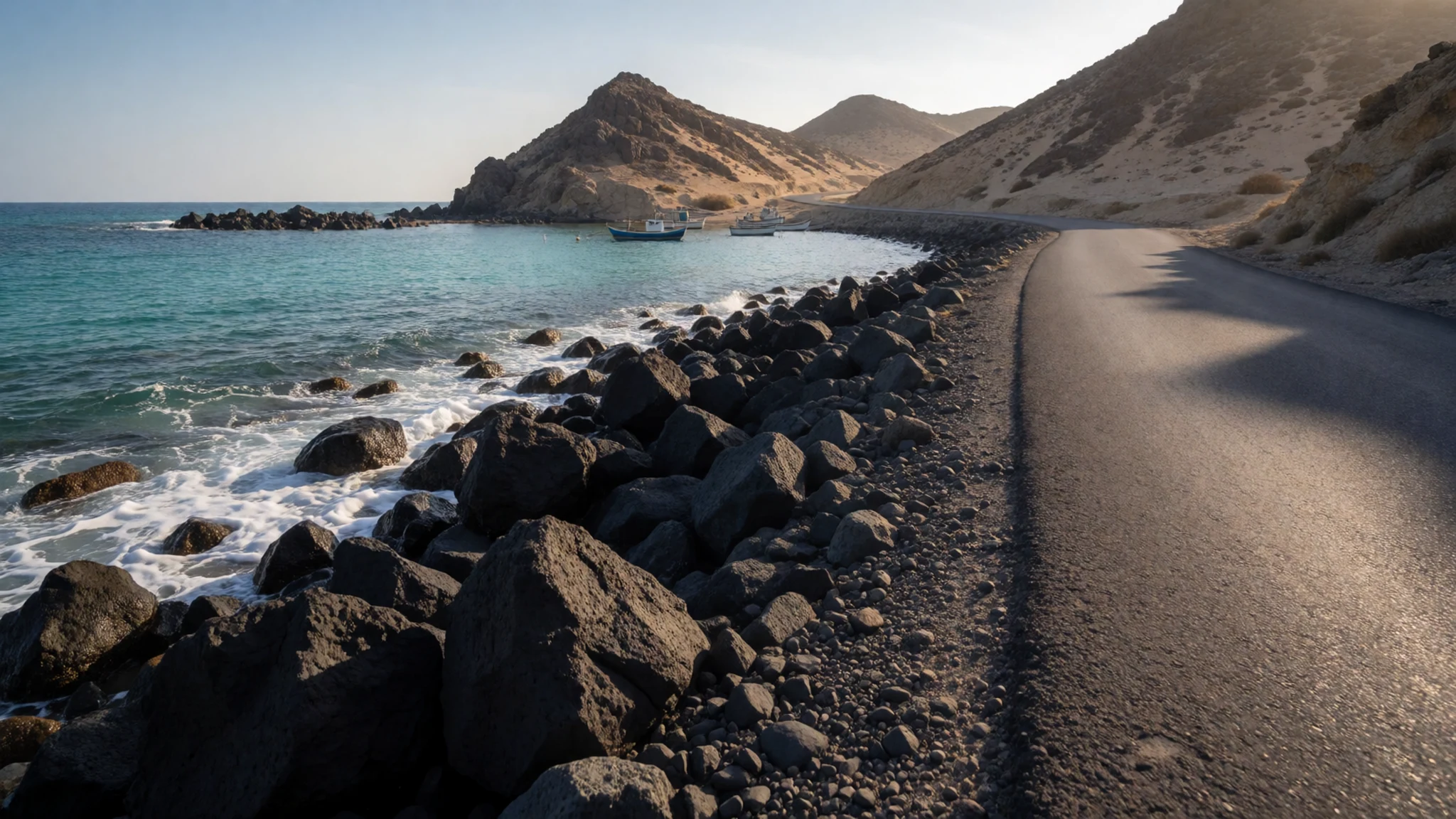
Culture
Qeshm is a conservative port city where daily life follows Islamic norms and close family ties. Public displays of affection are best avoided, and voices are usually kept moderate in mosques and residential streets. Greetings between men often begin with a handshake, but many women prefer a hand over the heart or a verbal greeting, so it is wise to let them lead. Hospitality is strong, and a cup of tea or a snack offered to a guest is a gesture of welcome. Declining politely is acceptable, though accepting once is appreciated. Friday is the weekly holy day, and shops and offices may be quieter around midday. Photographing people, especially women and families, should always be preceded by asking permission, and port or military installations should not be photographed at all. When entering a mosque, take off your shoes at the door, dress modestly and ask before photographing anyone inside.
What to wear
Traditional dress in Hormozgan and the Persian Gulf islands reflects the warm, humid climate and the region's long trade links. Women have worn loose, full-length dresses and headscarves, often in cotton or lightweight silk, sometimes with embroidery at the neckline and sleeves. Men traditionally wore loose trousers and long shirts, with light head coverings suited to strong sun. Printed cotton and brocade reached the coast through trade. Today most people in Qeshm wear everyday clothes similar to those in other Iranian cities: long tunics or coats over trousers, with headscarves for women, though younger residents often choose brighter colours. Visitors should dress modestly in public, with long sleeves and trousers or a long skirt for both men and women, a loose scarf to cover the hair, and clothing that does not cling. Cotton or linen keeps the heat more manageable. Sturdy closed shoes suit sand, coral rubble and mangrove boardwalks, and a light layer helps in air-conditioned shops and offices.
What to eat
- Grilled fish from the seafront — The seafront at dusk, in simple fish restaurants
Fresh fish grilled over charcoal is one of the simplest and most satisfying meals on the island. It is usually served with flatbread, raw onion, herbs and a squeeze of lime. Ask what came in that morning, since the catch changes with the season.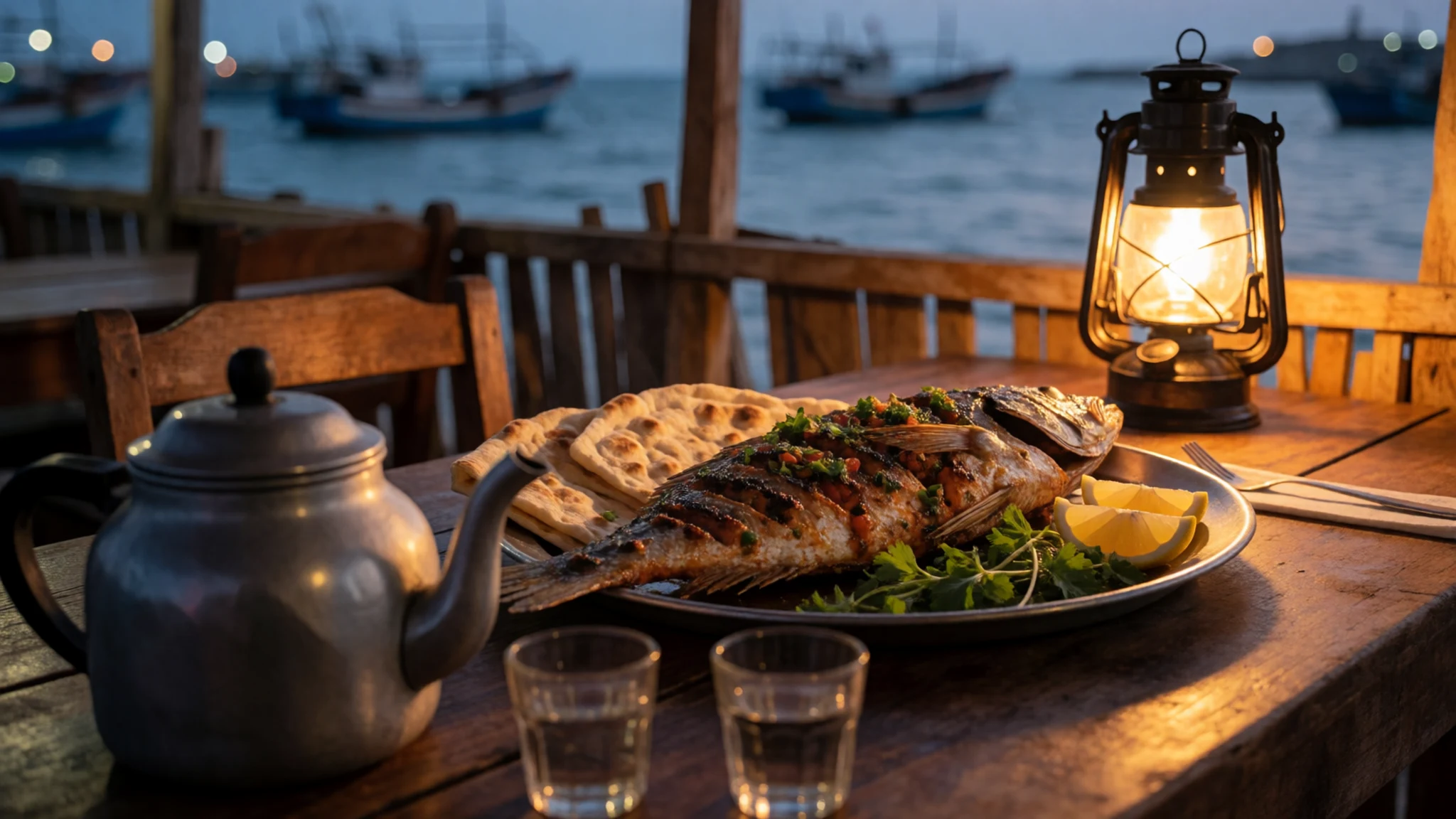
- Chelow kebab — Casual kebab houses in the town centre
Chelow kebab pairs saffron-scented white rice with grilled lamb or chicken, with a raw egg yolk and sumac often offered on the side. It is a staple of Iranian home cooking and of most casual eateries. Portions are generous, so sharing is common.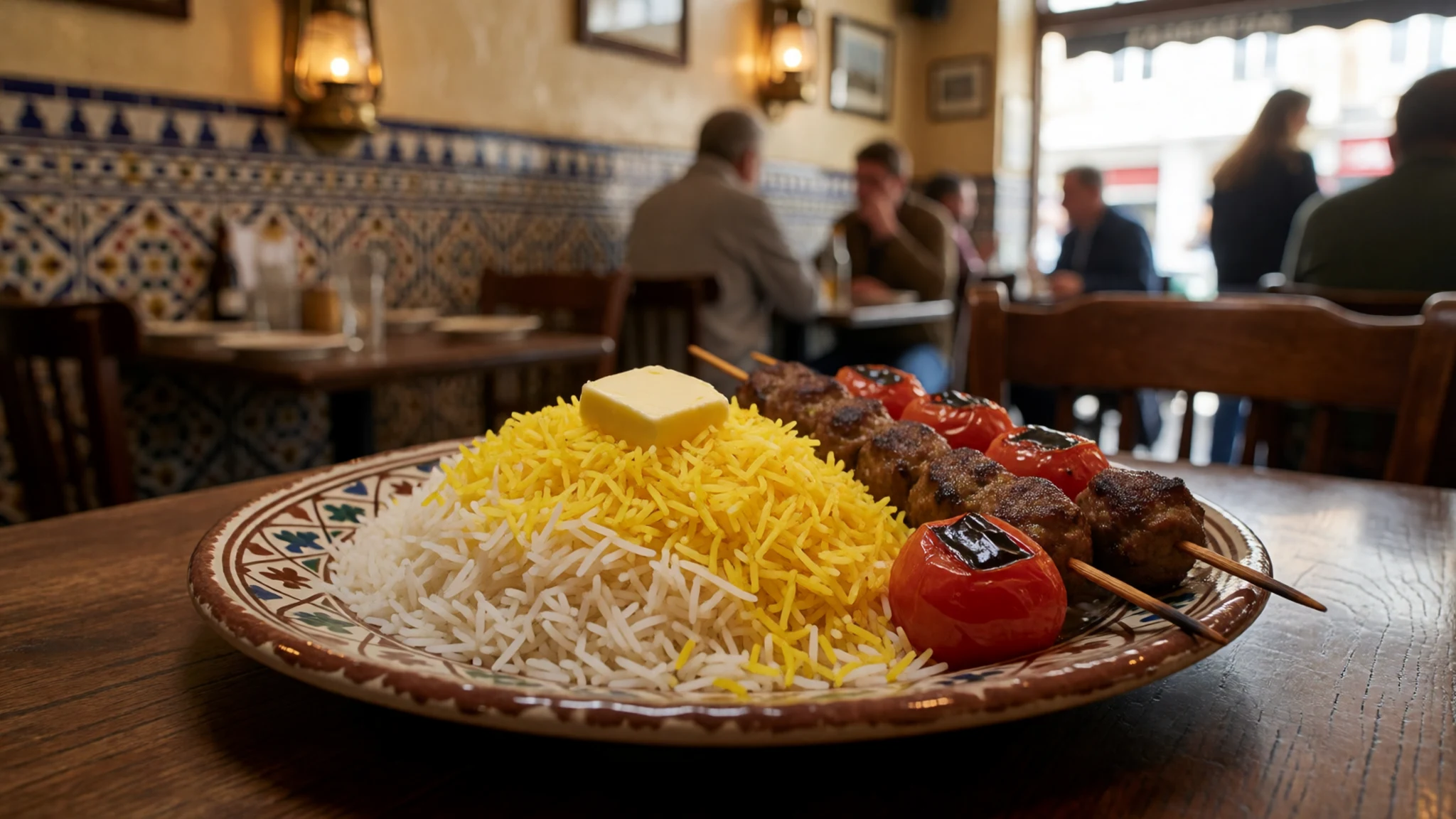
- Khoresh stews — Family eateries in the old town and residential streets
Khoresh are slow-cooked stews of meat, vegetables and dried fruit, often finished with herbs and served over rice. Coastal versions may include local fish or seafood in place of meat. They are usually eaten at lunch, when families gather. - Fresh dates and fruit — The morning market and fruit stalls near the centre
Dates are central to the island's history and diet, and they are sold fresh in season as well as dried. Fruit stalls also offer melons, pomegranates and citrus, which are welcome in the heat. Buying small amounts from several stalls lets you compare quality. - Doogh and tea — Teahouses and tea stalls along the main streets
Doogh is a chilled yoghurt drink, lightly salted and sometimes flavoured with mint, and it is refreshing after a hot walk. Black tea, served in small glasses, is the everyday drink of the island and is offered almost everywhere. Both are cheap and easy to find.
Plan it
Best time. December to February, when temperatures are mild and the sea breeze is pleasant; summer is very hot and humid, which makes daytime sightseeing hard.
How long. 2–3
Getting there. Qeshm International Airport (QSM) is the nearest airport for the island; check current onward options, which include road and ferry transfers from the mainland, as schedules change.
Budget. mid
Tips
- Book flights and onward transfers early for winter visits
- Plan outdoor sightseeing for early morning and late afternoon
- Carry bottled water, sun protection and a hat
- Bring cash for small shops and eateries, and confirm card acceptance first
- Check local ferry and road schedules on the day of travel
Etiquette
- Remove shoes before entering a mosque
- Ask permission before photographing people
- Dress modestly in public and keep voices moderate near prayer times
Nearby
Sources
- Wikidata Q888344 (CC0)
- Wikipedia: Qeshm, Hormozgan (CC BY-SA 4.0)
- Wikivoyage: Hormozgān (CC BY-SA 4.0)
- City of Qeshm on Qeshm Island (Mojtaba Nozarnejad, via Wikimedia Commons) (CC BY 4.0)
- Street in Qeshm (Kasir, via Wikimedia Commons) (CC BY-SA 4.0)
- Mosque in Qeshm (Kasir, via Wikimedia Commons) (CC BY-SA 4.0)
- Qeshm City Center 1 (Kasir, via Wikimedia Commons) (CC BY-SA 4.0)
- Qeshm City Center 2 (Kasir, via Wikimedia Commons) (CC BY-SA 4.0)
- City Cinema Qeshm 2 (Kasir, via Wikimedia Commons) (CC BY-SA 4.0)
- 941115-IGC-Qeshm IMG 1498 (Safa.daneshvar, via Wikimedia Commons) (CC0 1.0)
- 941115-IGC-Qeshm IMG 1502 (Safa.daneshvar, via Wikimedia Commons) (CC0 1.0)


