Pyramids of Güímar
Pyramids of Güímar, Spain
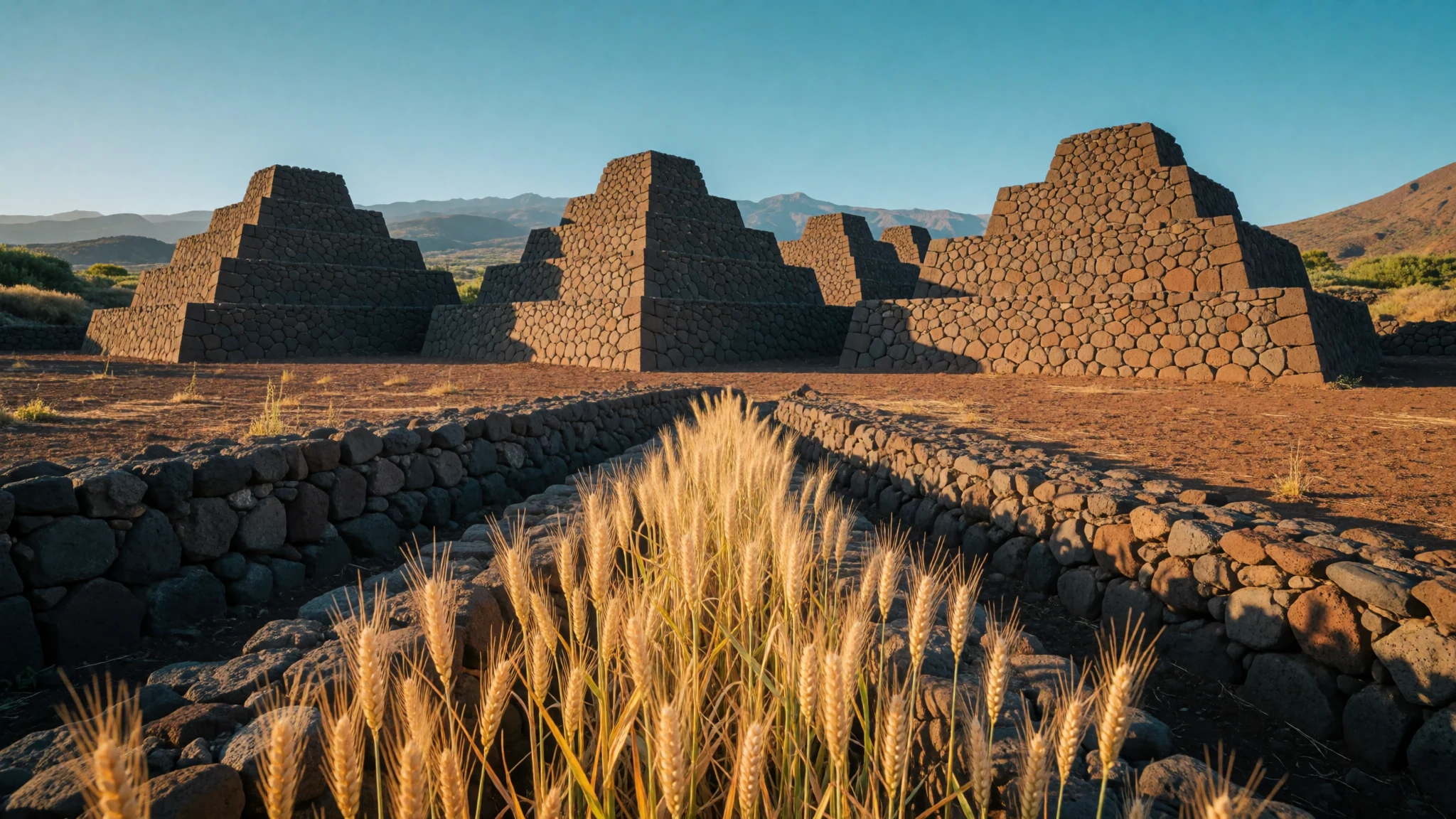
Discover the mysterious terraced lava-stone structures of the Pyramids of Güímar on the sunny eastern coast of Tenerife.
The place
The Pyramids of Güímar rise on the eastern coast of the island of Tenerife in the Canary Islands, forming a distinctive cluster of rectangular, terraced structures built entirely from dark lava stone without the use of mortar. Situated within the district of Chacona, part of the municipality and valley of Güímar, these remarkable dry-stone monuments stand as high as twelve metres against the dry valley backdrop. Originally, nine of these peculiar stepped structures stood across the local terrain, though only six survive today in the designated park area.
Geography and climate shape every visit to the valley of Güímar. The wider municipality borders the steep slopes of the Teide National Park and La Orotava to the west, Arafo to the north, and Fasnia to the south, containing a resident population of twenty thousand people. The local climate is hot and semi-arid, featuring extremely dry months through the middle of the year and very limited rainfall at other times. Temperatures fluctuate from mild winter conditions to very warm summer afternoons when the steppe climate is tempered only by a gentle breeze blowing off the Atlantic Ocean. While this ocean air makes the heat manageable, the overhead sun remains fierce, meaning visitors must take proper precautions against the glare while exploring the open landscape of volcanic stone and surrounding ravines.
Its story
The story of the Pyramids of Güímar is rooted in the early history of the Canary Islands and the traditional life of the indigenous Guanche people, who inhabited the valley as part of an autonomous tribal territory before the European conquest. For centuries, the aborigines relied on goat and sheep pastoralism, small-scale farming, forestry, and fishing across the rugged terrain, eventually making their homes in natural rock shelters and caves when European settlers took control of the fertile lower lands.
Following the conquest, the local economy underwent profound transformations with the establishment of modern settlements in the valley. Early colonists introduced sugarcane cultivation supported by local mills, followed in later eras by extensive vineyards and the production of honey. The landscape changed further during agricultural expansion phases, when landowners cleared fields and piled cleared volcanic rocks into neat terraced mounds at the edges of their plots. While adventurous theories once linked these structures to ancient transatlantic civilisations, historical research and archaeological excavations eventually connected the construction of the Güímar pyramids to intensive agricultural practices and commercial exploitation during the modern era, revealing them to be fascinating agricultural artefacts rather than ancient monuments.
What to see
- Ethnographic Park — Chacona district
Explore the primary archaeological site of the Pyramids of Güímar, where six remaining lava-stone stepped pyramids stand preserved within landscaped grounds. The park highlights the historical research and theories popularised by adventurer Thor Heyerdahl, who dedicated years to studying the mysterious alignment and architectural methods of these unique Canarian structures. - Badlands of Guimar — Güímar valley
Wander through a protected natural reserve encompassing striking volcanic cones and extensive basaltic lava flows across a rugged landscape. Formed during relatively recent geological activity, the barren terrain features fascinating geological formations and deep erosion channels that showcase the raw volcanic origins of the Canary Islands. - Church of Santo Domingo — Historic town centre
Visit a historic Catholic church in the heart of the town, originally established during the colonial era and later rebuilt following a destructive fire. The building anchors the historic centre of Güímar, offering travellers a quiet architectural landmark amidst traditional streets and local civic plazas. - Finca Canarias Aloe Vera — Güímar valley lowlands
Tour an extensive ecological farm dedicated to cultivating thousands of healthy aloe vera plants in the favourable Canarian climate. Visitors can learn about organic cultivation methods and browse a dedicated farm shop offering natural skin care products crafted directly from locally harvested succulent leaves. - Barranco de Badajoz — Inland ravine area
Hike through a dramatic ravine steeped in indigenous history and local folklore, where archaeological evidence reveals ancient Guanche habitation and burial sites. The rugged gorge is also famous across Tenerife for generations of local legends describing mysterious nocturnal phenomena and unexplained sensory experiences reported by late-evening travellers.
Culture
The cultural identity of the Pyramids of Güímar and the surrounding valley is shaped by a deep blend of indigenous Guanche heritage and centuries of rural Canarian traditions. Traditional community life in Güímar revolves around agricultural festivals, local saints' days, and family-run enterprises that preserve historic crafts, folk music, and agricultural know-how passed down through generations. Islanders take great pride in their unique dialect of Spanish, their agricultural roots in wine and honey production, and the preservation of historic sites across the municipality. Visitors will find local residents welcoming and proud to share stories about the valley's volcanic landscape and rural heritage. Always respect private agricultural property boundaries and closed farm gates when exploring rural footpaths outside the designated park areas.
What to wear
Traditional dress in Güímar and across Tenerife reflects practical rural attire suited to agricultural labour and changing mountain elevations, featuring sturdy woollen waistcoats, embroidered linen shirts, and wide-brimmed straw hats traditionally worn by farmers and festival dancers during patronal celebrations. Today, locals in Güímar dress in comfortable, modern European casual wear suited to the warm coastal climate, including lightweight cotton shirts, denim, and sensible walking shoes for the uneven terrain. For visitors exploring the Pyramids of Güímar and surrounding volcanic trails, practical outdoor clothing is essential. Pack breathable layers for breezy coastal walks, sturdy footwear with good grip for rocky paths, a wide-brimmed hat, and reliable sun protection to guard against the intense island sunshine.
What to eat
- Restaurante Alex — Puertito de Güímar sea front
Enjoy honest, unpretentious Canarian seafood dishes prepared with fresh daily catches at a fair price, located right along the coastal waterfront. - Bodega Cha Juana — Outskirts of Güímar
Sample traditional local food and hearty regional cooking served in a relaxed, family-run atmosphere on the outskirts of the town. - La Charcada — Beach front at Puertito de Güímar
Dine outdoors with uninterrupted views over the Atlantic Ocean while tasting authentic regional recipes and fresh local specialities. - Cueva del Mar — Coastal zone near Güímar
Savour freshly prepared Canarian seafood dishes accompanied by panoramic views looking out across the open ocean waters. - Tasca Rincón de Tara — Historic centre of Güímar
Discover upscale culinary creations and gourmet interpretations of traditional island ingredients served in an intimate setting.
Plan it
Best time. Spring (March to May) and autumn (September to November) offer warm, pleasant weather ideal for walking without the intense heat of the mid-summer months.
How long. 2–3
Getting there. Fly into Tenerife South or Tenerife North airport, take regional bus connections toward Santa Cruz and transfer to local routes serving Güímar.
Budget. mid
Tips
- Wear sturdy walking shoes suitable for rough volcanic gravel and stone surfaces.
- Apply high-factor sun cream and wear a hat, as shade is scarce around the pyramids.
- Check local restaurant opening hours in advance, as dining spots in the historic centre often close early or stay shut on certain days.
- Combine your visit to the pyramids with a trip to the nearby coastal taverns of Puertito de Güímar.
Etiquette
- Respect local agricultural gates and refrain from climbing on private boundary walls.
- Support local family-run eateries and guachinches when dining out in the valley.
Nearby
Sources
- Wikidata Q619588 (CC0)
- Wikipedia (CC BY-SA 4.0)
- Wikivoyage (CC BY-SA 4.0)