Putra Mosque
Putra Mosque, Malaysia
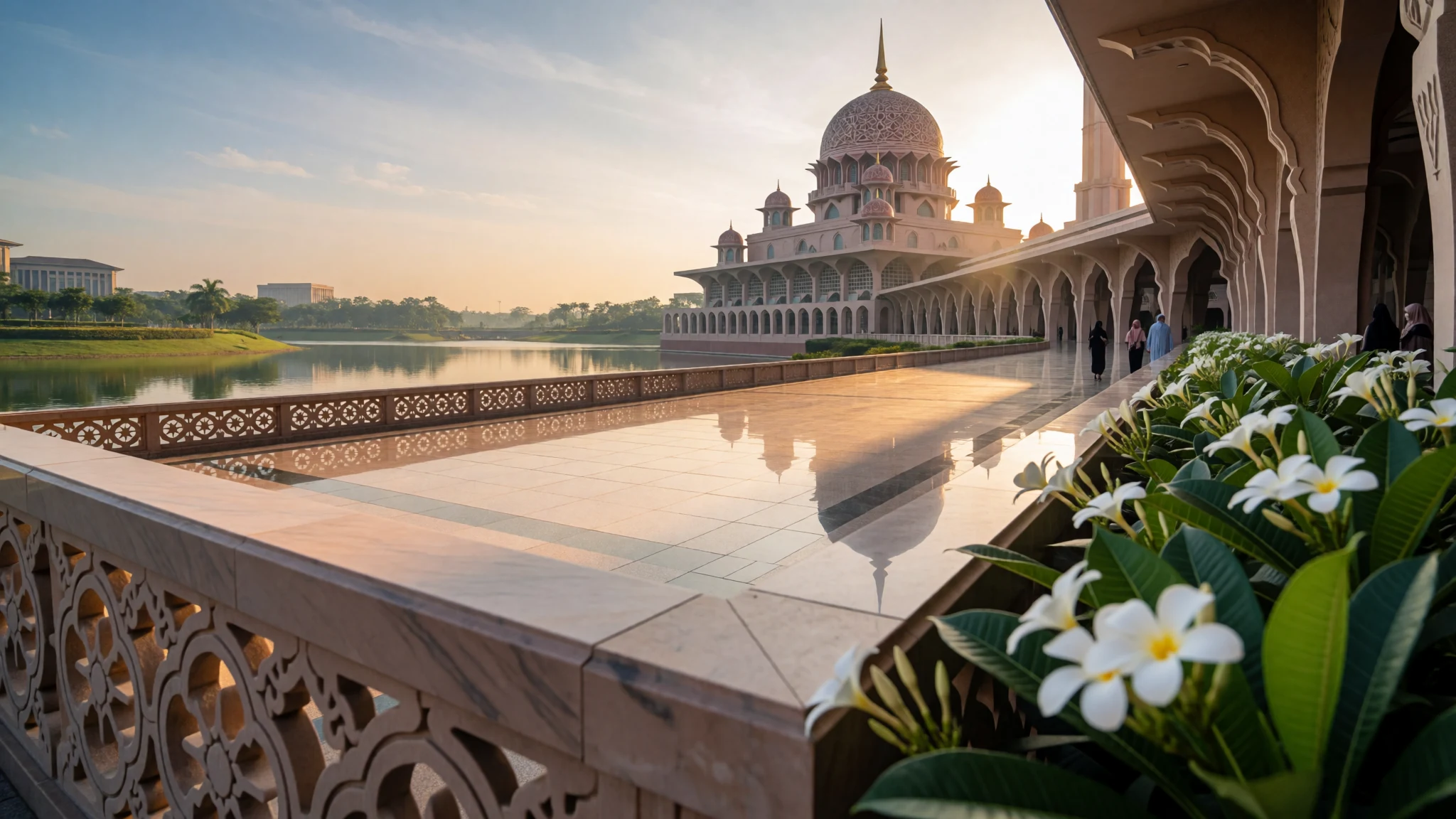
Putra Mosque rises gracefully over Putrajaya Lake, its pink granite dome and soaring minaret reflecting modern Islamic architecture in central Malaysia.
The place
Putra Mosque stands beside the tranquil waters of Putrajaya Lake, anchored at the southern end of Putra Square in Malaysia's administrative capital. Built using rose-tinted granite, the complex features a distinctive pink dome that rises above the surrounding water, giving the structure an impression of floating on the artificial lake. The design draws heavy inspiration from Middle Eastern and traditional Islamic architectural styles, blending regional craftsmanship with contemporary engineering.
The layout of the sanctuary comprises three main functional areas: the expansive main prayer hall, an open-air courtyard known as the Sahn, and various educational facilities with function rooms. The surrounding grounds are crafted to manage warm tropical weather, using wide colonnades, marble walkways, and shaded arcades to encourage cooling breezes across the complex. Water plays a central structural role, with the mosque bordered on three sides by the lake, creating striking visual reflections across the surface during different hours of the day.
Inside, the prayer hall relies on soaring carved pillars and decorative geometric glasswork that channels natural daylight into the inner sanctuary. The open courtyard provides a gathering space for worshippers before prayer services, lined with decorative arcades that mirror the detailing of the main structure. Visitors approaching from Putra Square experience a clear architectural transition from the wide civic space into the peaceful interior of the religious sanctuary.
Its story
Putra Mosque was established as a core landmark for Putrajaya, the planned administrative centre created to ease urban pressure on nearby Kuala Lumpur. Construction began in 1997 as part of an ambitious national infrastructure project aimed at centralising government functions within a modern, purpose-built territory. The master plan for the town integrated wide boulevards, government complexes, expansive green parks, and artificial water features, positioning the new central place of worship as a primary visual focal point.
Work on the monument concluded in 1999, marking the formal opening of the sanctuary for community religious life. Prime Minister Mahathir Mohamad attended early Friday prayers at the site shortly after completion, signalling the mosque's role as a national symbol of faith and civic identity. The choice of pink granite imported for the exterior cladding gave the building its distinctive colouration, distinguishing it from older religious structures across the country.
The architectural project reflected Malaysia's broader growth during the late twentieth century, combining modern structural techniques with historic Islamic geometric motifs. Rather than relying solely on local timber traditions, the designers incorporated elements inspired by Persian and Arab architecture, such as the tall slender minaret and intricate stained-glass windows. Today, the mosque functions both as an active place of daily worship for local residents and civil servants and as a focal point for national state occasions in the administrative centre.
What to see
- Pink Granite Dome
Putra Mosque features a striking main dome built from rose-hued granite tiles, crowned with an ornamental spire. The pink dome provides the primary visual signature of the sanctuary, standing out against the surrounding water and skyline. Inside, intricate Arabic calligraphy and geometric patterns decorate the interior ceiling of the main dome structure.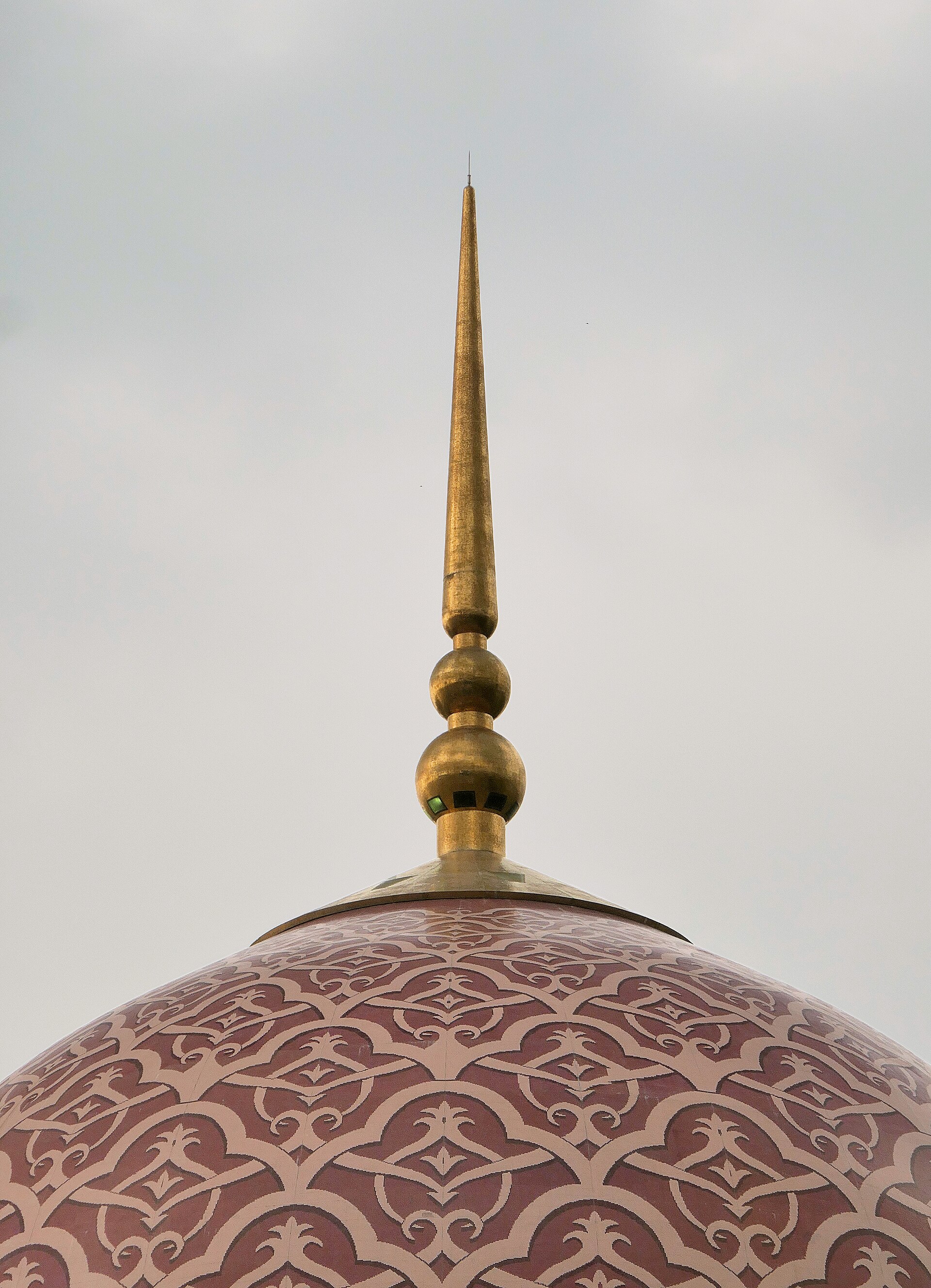
- Main Prayer Hall
Putra Mosque houses a vast main prayer hall anchored by twelve massive columns supporting the central dome. Sunlight filters through stained-glass panels along the upper walls, casting coloured light across the woven carpet floor. The sanctuary provides a vast, columned space designed for thousands of worshippers during congregation.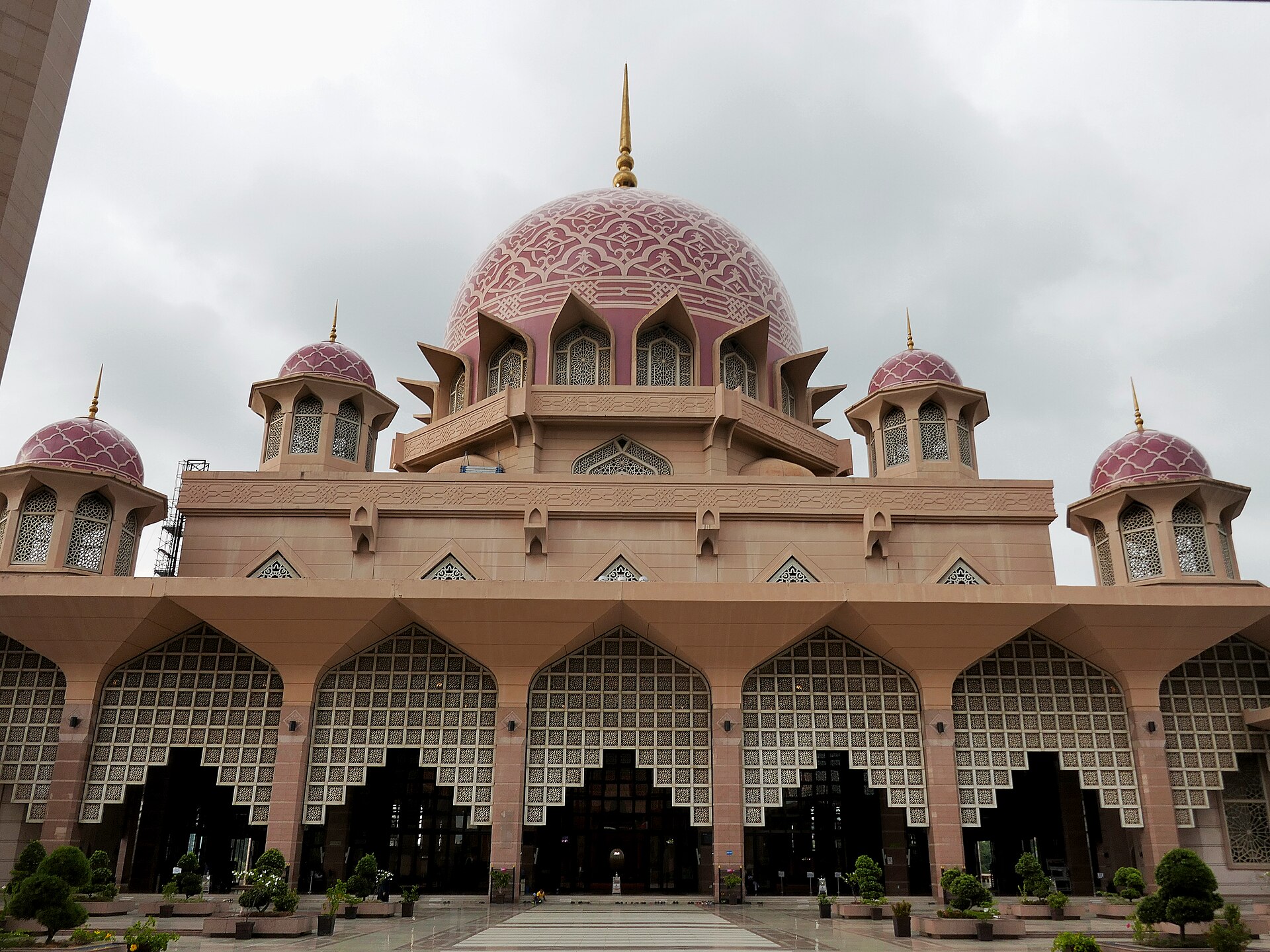
- The Sahn Courtyard
Putra Mosque includes an expansive open-air courtyard, or Sahn, situated directly before the main prayer hall entrance. Enclosed by decorative marble arcades and water features, the courtyard offers a quiet transition area where visitors walk across polished stone floors while taking in views of the minaret and lake shore. - The Minaret
Putra Mosque boasts a tall, slender minaret inspired by the design of the Sheikh Omar Mosque in Baghdad. Rising high above the lake, the multi-tiered tower features delicate Islamic lattice carving and geometric tilework, serving as an iconic landmark visible from across Putra Square and the surrounding administrative district. - Putra Square
Putra Mosque opens onto Putra Square, a broad circular civic plaza used for official ceremonies and public gatherings. Lined with national flags and landscaped gardens, the square offers panoramic viewpoints of the mosque's full lakefront façade, the nearby Perdana Putra government complex, and the surrounding water channels.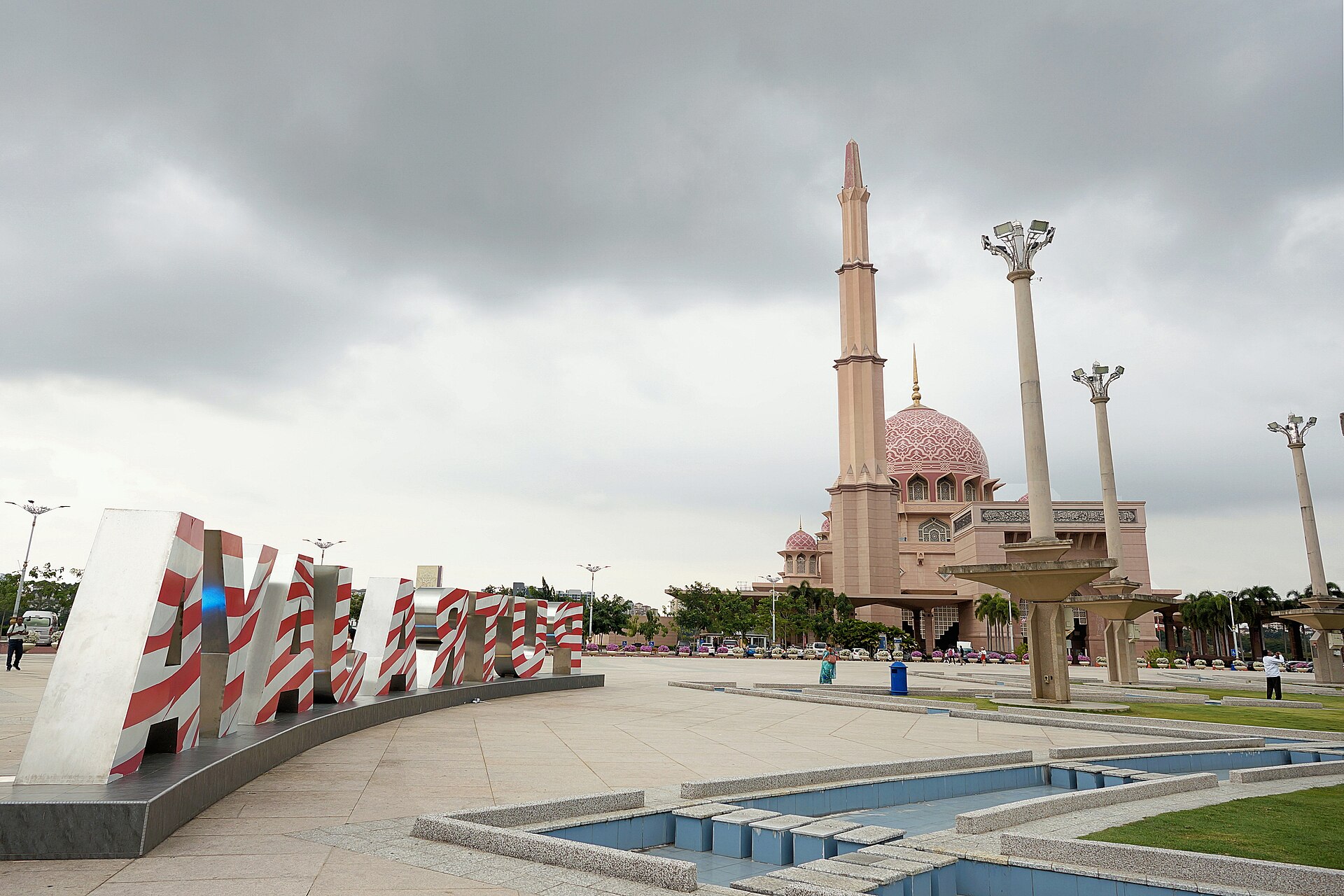
Culture
Putra Mosque reflects the rich multicultural fabric of Malaysia, where Islamic heritage intersects with a diverse society composed of Malay, Chinese, Indian, and international communities. As an active house of worship, the sanctuary maintains a serene atmosphere focused on daily prayer schedules and religious observances. While the surrounding capital region of Kuala Lumpur is largely cosmopolitan and easygoing, spiritual sites uphold traditional standards of decorum, quiet respect, and modest personal presentation.
During non-prayer hours, the mosque welcomingly receives international visitors who wish to observe the architecture and learn about Islamic customs. Local staff and volunteers provide robes for those who need appropriate cover before stepping into the sacred precinct. Dining habits across the country also reflect traditional customs, such as using the right hand when eating without cutlery, as the left hand is reserved for personal hygiene. Non-Muslim visitors are welcome across the courtyard spaces, provided they respect ongoing prayer sessions and keep noise levels low. Always remove your shoes before stepping beyond the marked entryway of the prayer hall and put on the provided robe if your clothing does not cover your shoulders and knees.
What to wear
Putra Mosque demands thoughtful attire that balances Malaysia's hot, humid climate with Islamic modesty standards. Traditional Malay dress includes the baju kurung for women—a loose, full-length tunic paired with a long skirt—and the baju melayu for men, which consists of a long-sleeved shirt and trousers, often wrapped at the waist with a woven songket sarong made from silk or cotton with metallic threads. These garments are widely worn during Friday prayers, festive celebrations, and official visits to government centres.
In daily urban life around Putrajaya and nearby Kuala Lumpur, residents typically wear light modern clothing such as linen trousers, cotton shirts, and casual dresses suited to tropical temperatures. However, when visiting religious monuments, strict dress guidelines apply to all entry points. Visitors should wear lightweight, loose-fitting clothes that cover shoulders, arms, and legs down to the ankles. Breathable fabrics like cotton or bamboo help manage the heat. Footwear must be easily removable, such as slip-on shoes or sandals, as shoes are taken off at the courtyard threshold; long robes and headscarves are provided free of charge at the visitor desk for those needing full coverage.
What to eat
- Roti Canai — Kedai mamak eateries across Chow Kit and central city streets
A flaky, golden flatbread served warm alongside dhal or aromatic mutton curry. Found at 24-hour kedai mamak eateries across Chow Kit and central city streets, this staple provides a quick, satisfying bite at any time of day. - Nasi Lemak — Morning breakfast stalls and roadside coffee shops
Fragrant rice cooked in coconut milk and pandan leaf, served with spicy sambal, roasted peanuts, crispy anchovies, and a boiled egg. Available at morning breakfast stalls and roadside coffee shops throughout the capital. - Char Kway Teow — Evening street food markets along Jalan Alor in the Golden Triangle
Flat rice noodles stir-fried over high heat with prawns, cockles, bean sprouts, Chinese sausage, and soy sauce. Best sampled at busy evening street food markets along Jalan Alor in the Golden Triangle. - Laksa — Open-air food courts and neighbourhood coffee stalls in Pudu
A rich, spicy noodle soup featuring either a creamy coconut curry broth or a tangy tamarind fish base topped with fresh herbs. Commonly found at open-air food courts and neighbourhood coffee stalls in Pudu.
Plan it
Best time. May to July and December to February offer slightly drier weather, though Putrajaya remains warm and tropical year-round with frequent afternoon rainfall.
How long. 1–2
Getting there. Fly into Kuala Lumpur International Airport (KLIA), then take the KLIA Transit express train to Putrajaya & Cyberjaya station, followed by a short taxi or local bus ride to Putra Square.
Budget. mid
Tips
- Visit early in the morning to enjoy cooler temperatures and smaller tourist crowds around the square.
- Check visiting hours for non-Muslims in advance, as access inside the prayer hall is restricted during congregational prayer times.
- Carry a light umbrella or raincoat for sudden tropical downpours in the afternoon.
- Bring cash for small local bus fares and street food vendors near the lake.
Etiquette
- Remove shoes at the entrance gate before walking onto the marble courtyard.
- Dress modestly with covered shoulders and knees, or borrow a visitor robe at the entrance desk.
- Maintain a low speaking voice inside the prayer hall and avoid walking in front of people engaged in prayer.
Nearby
Sources
- Wikidata Q2344561 (CC0)
- Wikipedia (rev 1366885070) (CC BY-SA 4.0)
- Wikivoyage (rev 5407656) (CC BY-SA 4.0)
- Photo photos/01-putra-mosque-being-reflected-in-the-lake-crop.jpg (CC BY-SA 4.0)
- Photo photos/02-masjid-putra-putrajaya-malaysia.jpg (CC BY 4.0)
- Photo photos/03-putra-mosque-architecture.jpg (CC BY-SA 4.0)
- Photo photos/04-masjid-putra-main-prayer-hall.jpg (CC BY-SA 4.0)
- Photo photos/05-putra-mosque-spire.jpg (CC BY-SA 4.0)
- Photo photos/06-masjid-putra-putra-jaya-kl-malaysia-photo-bart-sakwerda.jpg (CC BY-SA 4.0)
- Photo photos/07-dataran-putra-square-dan-masjid-putra.jpg (CC BY-SA 4.0)
- Photo photos/08-imgp1908-2.jpg (CC BY-SA 4.0)


