Pushkar
Pushkar, India
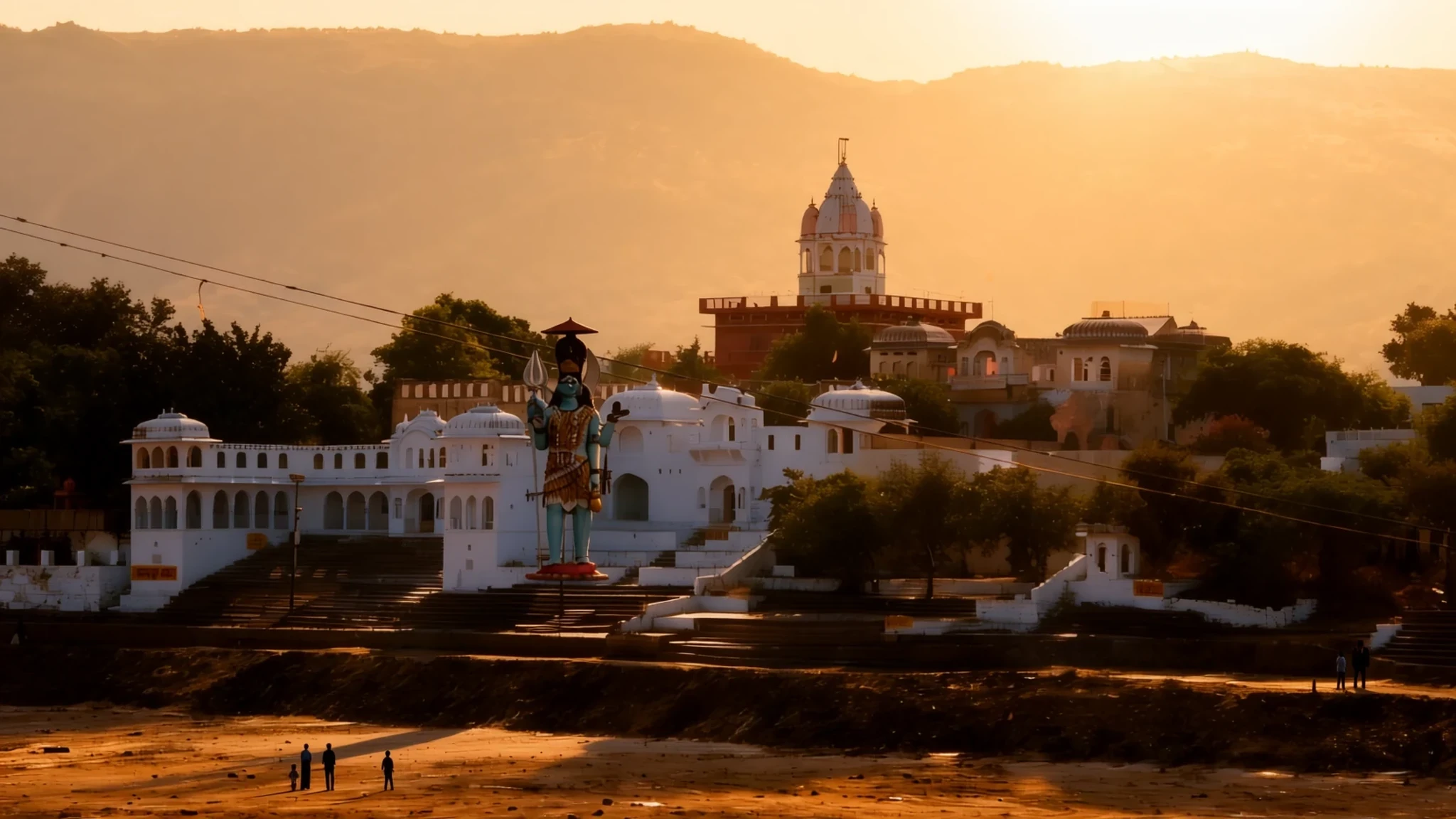
Pushkar is a small lakeside town in Rajasthan, where pilgrims bathe in a sacred lake and visit one of India's few Brahma temples.
The place
Pushkar sits on the shore of a semi-circular lake in the Ajmer district of Rajasthan, about ten kilometres northwest of Ajmer. Hills rise on three sides of the town, and the ridge known as Nag Pahar, or Snake Mountain, forms a natural boundary between Pushkar and Ajmer. At around 510 metres above sea level, the town sits high enough that the air feels fresher than on the plains, though summer afternoons remain hot. The population is a little over twenty thousand, so the centre can be covered on foot in an afternoon. Most visitors spend their days moving between the lake, the temples on the lower slopes and the narrow market lanes that run down towards the water.
The lake is the reason the town exists as a pilgrimage place. Hindu tradition treats it as the most sacred of the pilgrimage sites, and a visit is considered incomplete without a dip in its water. Stone steps called ghats descend on nearly every side, and small temples painted blue stand along the shore. Early in the morning the ghats fill with people bathing, washing clothes and leaving flowers, and the scene is far calmer than the midday crowds suggest. Later in the day the atmosphere shifts towards the bazaar, where stalls sell silver, bangles, cotton textiles and prayer beads.
Pushkar is compact enough to see in two or three days, but it rewards slow walking. Lakeside paths are best in the cool of the morning, and the climb to the hilltop temples is easier before the sun is high. The town is a working religious centre first and a holiday resort second, which keeps its character intact.
Its story
Pushkar lies close to some of the oldest geological structures in India, the Aravalli hills, and the ground around it has yielded traces of settlement that reach back to ancient times. Microliths found near the villages of Khera and Kaderi suggest that early people used the area. Excavations nearby have produced red ware and painted grey ware, which confirm an ancient presence. Brahmi script inscriptions, thought to predate the reign of the emperor Ashoka, have come from the village of Badli. Objects resembling the artefacts of Mohenjo-daro have also been found in the hills, although scholars doubt they belonged to the same culture and may have been carried there later.
Pushkar is named in the Ramayana, the Mahabharata and the Puranas, which tie the town to the sacred geography of Hinduism. Many texts from the first millennium mention it, but these works are religious rather than historical. They show what the place meant to devotees, not what happened there. The earliest historical records that name Pushkar and nearby Ajmer come from Islamic chronicles describing raids and conquests across the north-west of the subcontinent.
Records connected with the conquest of Muhammad of Ghor in 1192 CE mention the region after his defeat of Prithviraj Chauhan. Afterwards the area passed to Qutb-ud-din Aibak. The Chahamanas of Ranastambhapura took it back in 1287, but the Delhi Sultanate regained control in 1301, and it stayed under Muslim rule for many centuries. Through these changes the lake and its temples remained at the heart of local life, which is one reason the pilgrimage tradition survived.
What to see
- Pushkar Lake — Town centre, around the ghats
The lake is the town's defining feature and its most sacred site. Legend holds that it was created when a lotus fell from the hand of Brahma, and the name Pushkar comes from the Sanskrit word for lotus. Pilgrims come to bathe on the ghats, and the early morning is the best time to watch the ritual without the crowds. Sit on the steps for a while rather than rushing through, and do not step into the water in shoes.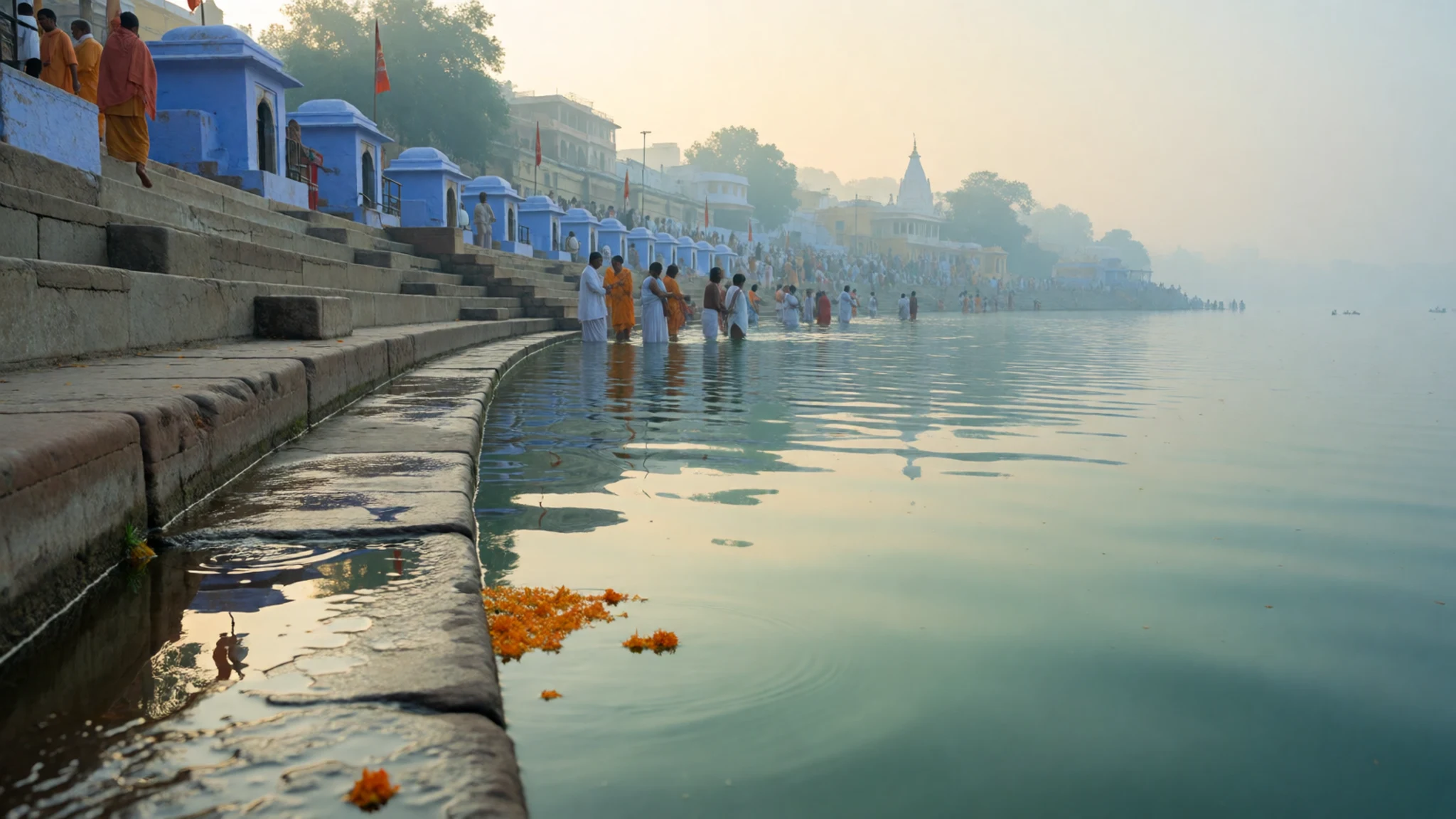
- Brahma Temple — Town centre, a short walk from the lake
Jagatpita Brahma Mandir is one of very few temples in the world dedicated to Brahma, the creator in the Hindu trinity. A life-size image of the god stands inside. The temple's rarity is the reason so many pilgrims make the journey, and the sense of history in its courtyard is strong. Photography rules can change, so ask the attendants before taking pictures inside.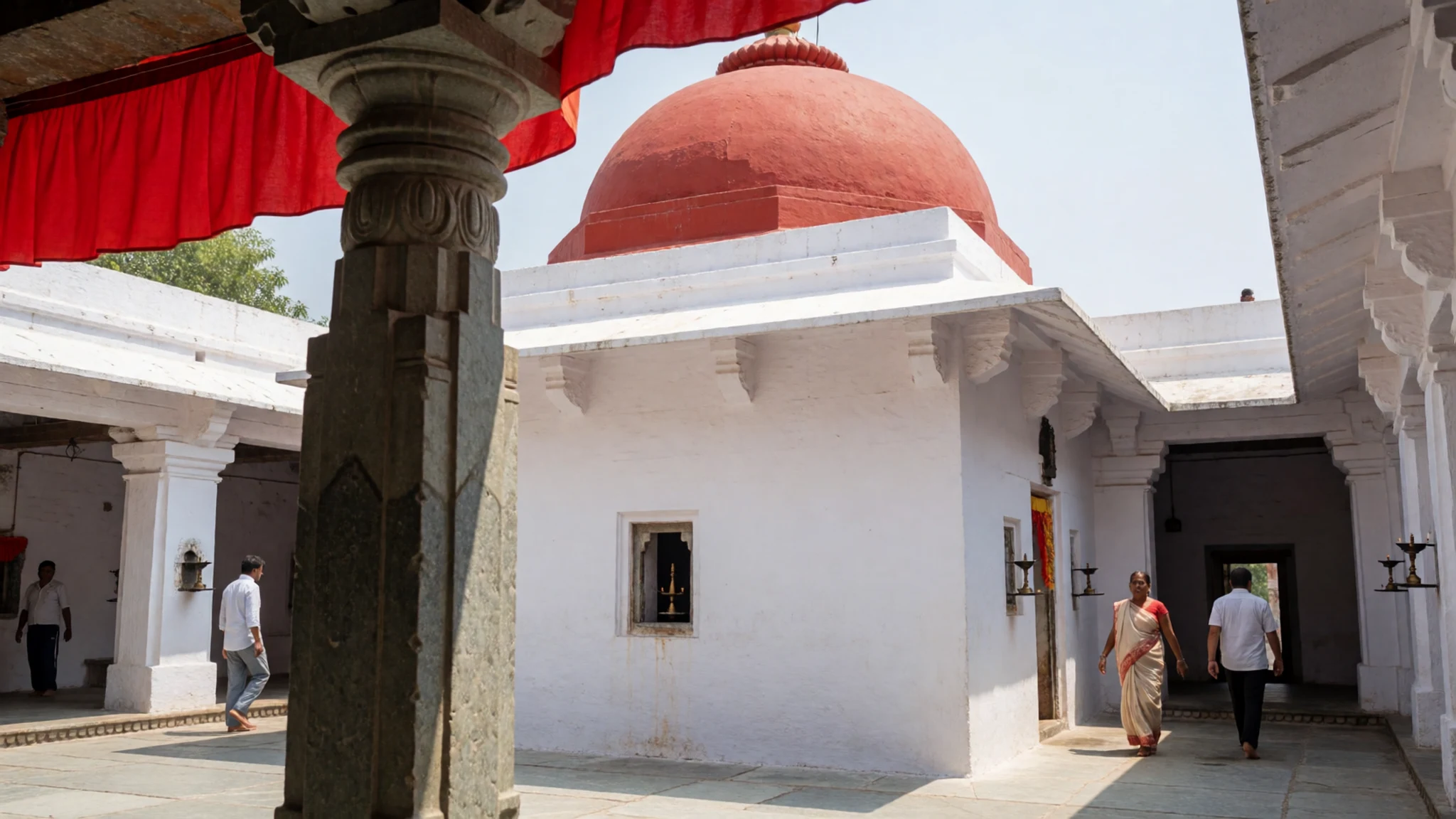
- Varaha Temple — Lakeside, next to the ghats
Dedicated to Vishnu in his boar incarnation, Varaha is the oldest temple in Pushkar, and its age gives the lakeside a distinct texture. Its shrine is smaller and quieter than the Brahma temple, so it suits a slow visit. Worshippers often come in the morning, and the temple is a good place to see local devotion at close range.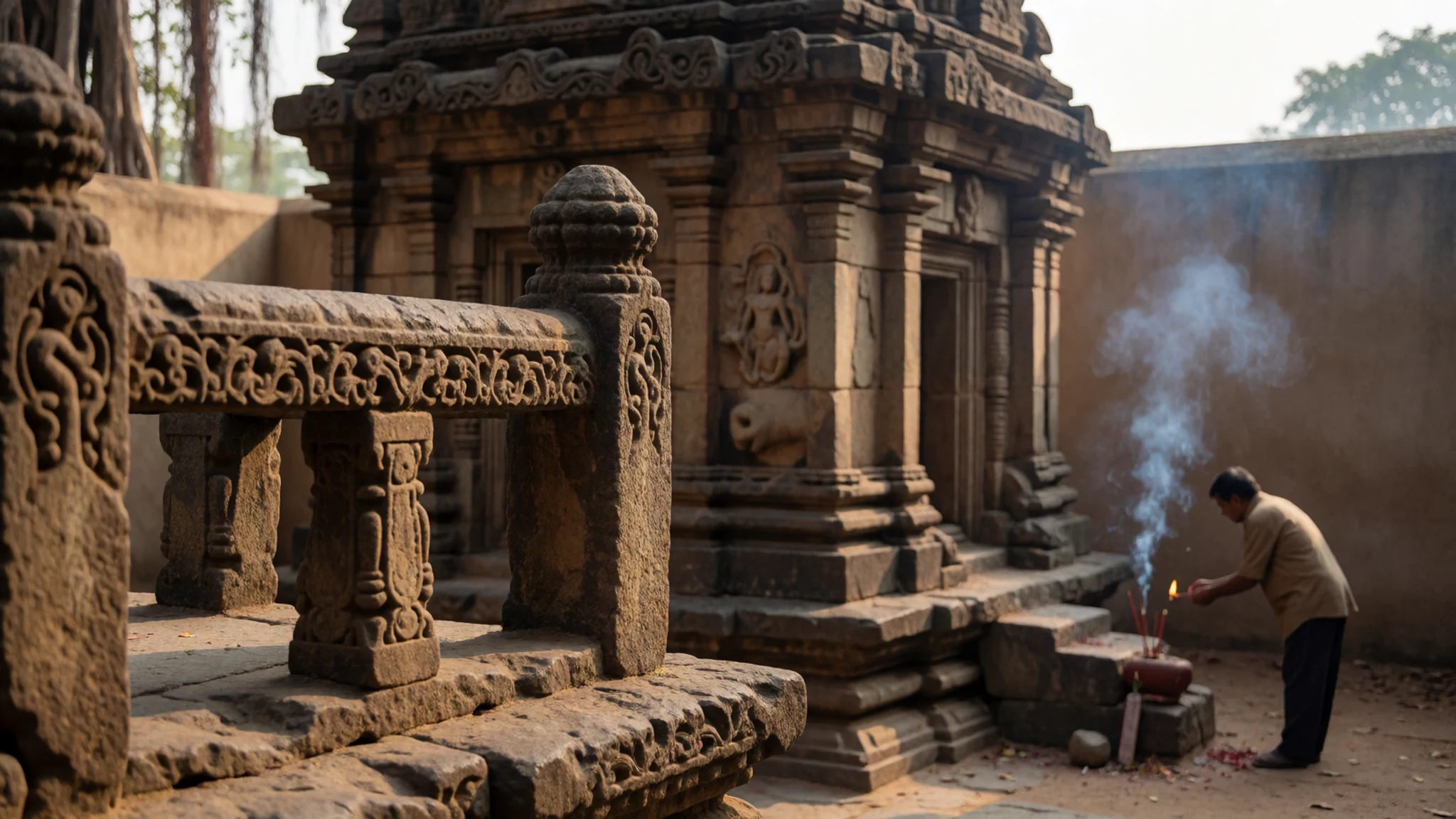
- Rangji Temple — Inside the town, near the lake
This Vishnu temple is built in South Indian style, which sets it apart from the north Indian temples nearby. Its priests are Iyengars from Tamil Nadu, and the rituals and architecture reflect that southern tradition. The contrast with the surrounding town makes it worth a visit, and the carved gateways and towers are a pleasure to study in the late afternoon light.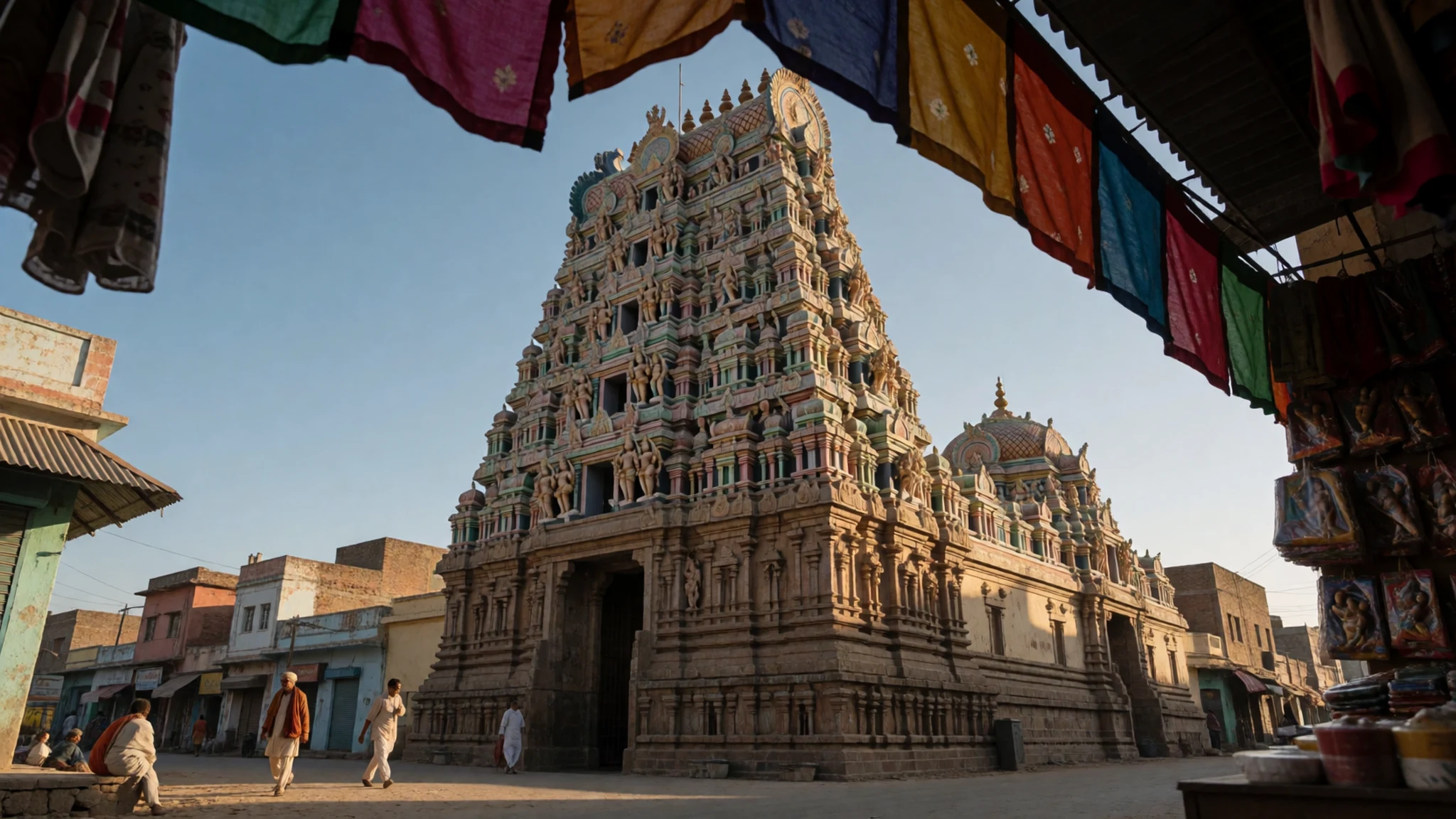
- Savitri Temple — Hill above the town, west of the lake
Dedicated to Savitri, wife of Brahma, this temple ranks as the second most important in Pushkar. Reaching it means a climb of 650 steps up the hill, so take water and go early in the day. The view from the top takes in the whole town, the lake and the surrounding ridges, and it is the clearest way to understand how Pushkar is laid out.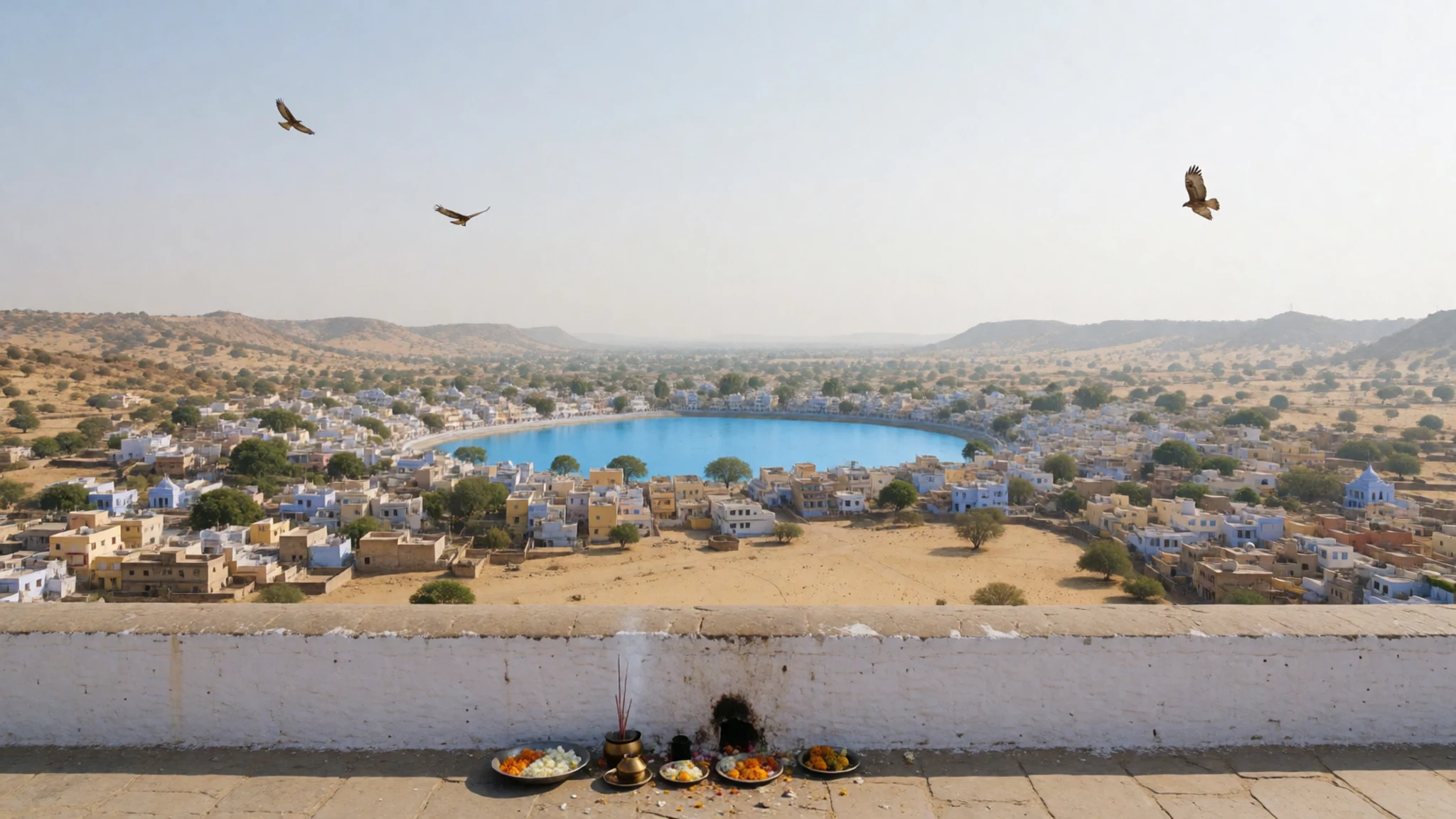
Culture
Pushkar is a working pilgrimage town, and its rhythm follows the religious calendar more than the tourist one. The lake is treated as sacred, so bathing, offerings of flowers and quiet prayer happen on the ghats from early morning. The Brahma temple holds a life-size image of the god, and the town's identity rests on the rarity of such a shrine.
The annual fair is when the town changes most. For five days, villagers from the surrounding countryside gather for trade, festivities and one of the country's great cattle markets. Thousands of camels arrive to be sold. Before sale, animals are washed, decorated and sometimes shorn into patterns, and the bazaar fills with music and stalls. For local families it is a busy working week rather than a stage set, so the best approach is to watch with patience and stay out of the way of traders and herders.
Pushkar also has a significant Sikh presence, with gurdwaras dedicated to Guru Nanak and Guru Gobind Singh. Locals and pilgrims of many faiths share the ghats. Beggars sometimes approach visitors with flowers and then ask for payment for a blessing, and a polite refusal is usually enough. Remove your shoes before entering any temple, and ask before photographing anyone at prayer or bathing in the lake.
What to wear
Pushkar's traditional dress belongs to the wider Rajasthani style, and it is most visible at weddings, festivals and the autumn fair. Women traditionally wear the ghagra, a full pleated skirt, with a fitted choli blouse and a long odhni scarf. Odhnis often come in bandhani tie-dye, where cloth is bound with thread and dyed in tiny knots, or in block prints and mirror-work embroidery. Men wear a kurta with a dhoti or churidar trousers, and a folded turban called a safa is common among older men and at celebrations. Footwear is often the mojari, a soft leather slipper with a turned-up toe. Cotton, silk and wool all have a place, and the richest pieces carry zari gold thread.
In everyday life the town looks more mixed. Many local women wear the salwar kameez, and younger people often wear jeans with a kurta or a T-shirt. Men usually wear trousers and shirts, keeping the turban for weddings. The fair brings out the most colour, when herders and visitors arrive in embroidered clothes and the camels are decorated.
A visitor should choose light, loose cotton or linen that covers the shoulders and knees, especially for temple visits. A shawl or scarf is useful for covering the head or shoulders inside shrines. Closed shoes that are easy to slip off suit the temples, because the ghat steps are stone and worn smooth. For the climb to the Savitri temple, shoes with grip matter more. Flip-flops are fine along the lakeside but poor on the hill paths, and a hat helps in the midday sun.
What to eat
- Dal bati churma — Rajasthani thali restaurants and home-style eateries in the bazaar
The classic Rajasthani dish is made of baked wheat dumplings soaked in ghee, served with a thick lentil dal and a sweet, crumbled churma made from wheat and sugar. It is rich and filling, so one plate often suffices. Look for it on Rajasthani thali menus and in simple home-style eateries near the market.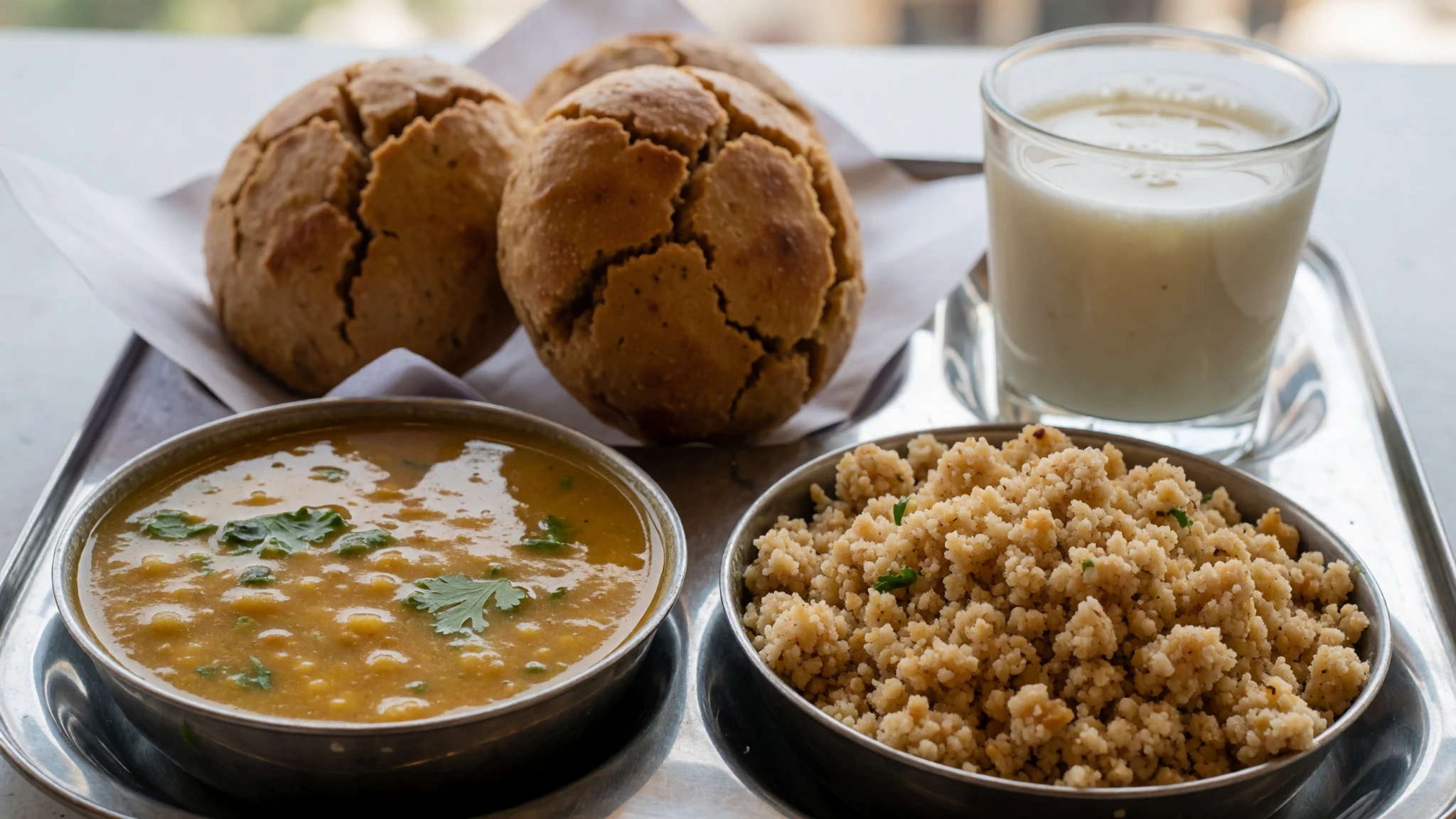
- Ker sangri — Dhaba-style eateries on the lanes that lead off the main bazaar
This dish combines dried desert beans and berries with spices, cooked slowly into a tangy, savoury vegetable. Ker and sangri are foraged from the arid scrub of Rajasthan, which gives the dish its distinct character. It is usually served with flatbread and is a good test of local cooking.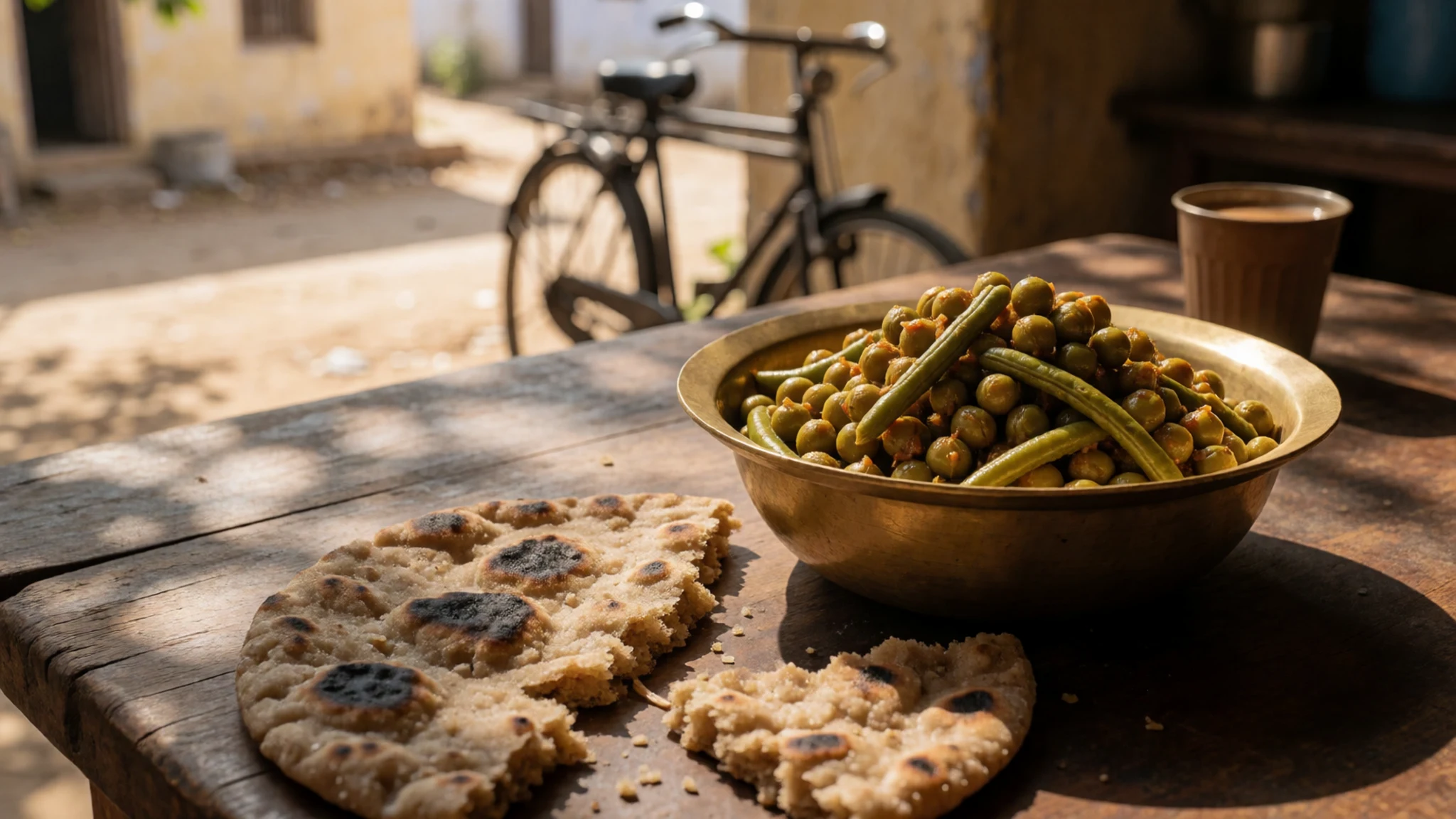
- Malpua — Sweet shops on the lakeside market street
Malpua is a sweet pancake made from flour, milk and sugar, fried until crisp at the edges and soaked in syrup. It is often served with rabri, a thickened, sweetened milk. Sweet shops near the lakeside market make it fresh, and it is a pleasant treat after a long walk around the ghats.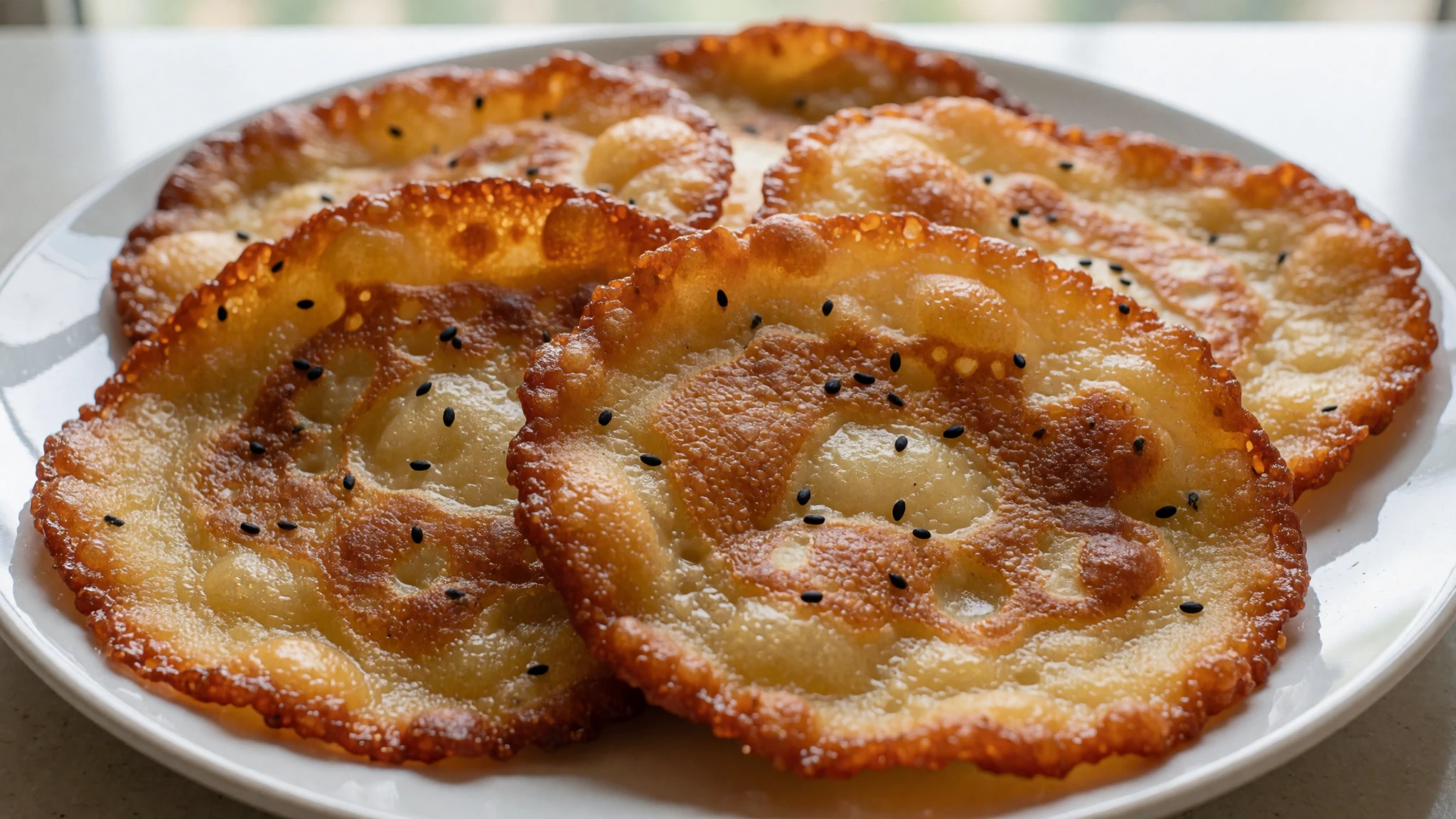
- Kachori — Early-morning snack stalls near the main market
Kachori is a deep-fried pastry filled with spiced lentils or peas, with a crisp shell and a hot, tangy filling. It makes a quick breakfast or snack and is often served with a potato curry. Early-morning stalls near the market are the best place to find it at its freshest. - Wholefood cafe bowls — Rooftop and balcony cafés overlooking the main market
Several cafés in Pushkar serve vegan and wholefood dishes built on quinoa, sprouts, tofu and fresh bread, with good coffee alongside. Some have rooftop or balcony seating above the bazaar, which makes a restful break from the midday heat. Menus are often small, so ordering a simple bowl and a filter coffee is a reliable choice.
Plan it
Best time. December to February is the most comfortable window, while the autumn fair falls in October or November, when days are still hot. The monsoon from June to September turns the surrounding hills green, but the humidity is high and some paths get slippery. Summers are hot, and the midday sun is hardest to bear in May and June, the hottest months.
How long. 2–3
Getting there. The nearest airport is in Jaipur, about three hours by road. The most practical rail link is Ajmer, about ten kilometres away, which has good connections across India. From Ajmer station, a taxi takes about half an hour, or a bus from Ajmer bus station reaches Pushkar for a small fare.
Budget. low
Tips
- Book trains to Ajmer early, especially for fair week
- Visit the ghats in the early morning before the bathing crowds and the heat build
- Carry cash for small shops, temples and the bus
- Bring a refillable water bottle, particularly for the hill climb
- Book accommodation well ahead for the autumn fair, as rooms fill quickly
Etiquette
- Remove shoes before entering any temple and at the ghat shrines
- Ask before photographing people at prayer or bathing in the lake
- Decline flower sellers politely if you do not want a paid blessing
Nearby
Sources
- Wikidata Q749170 (CC0)
- Wikipedia: Pushkar (rev 1381620412) (CC BY-SA 4.0)
- Wikivoyage: Pushkar (rev 5407842) (CC BY-SA 4.0)
- Photo: Pushkar panoramic view (Vyacheslav Argenberg) (CC BY 4.0)
- Photo: Pushkar (Bernard Gagnon) (CC BY 3.0)
- Photo: Hills around Pushkar in monsoon (4ocima) (CC BY 2.5)
- Photo: Faces and colours at Pushkar Fair (Tracy Hunter) (CC BY 2.5)
- Photo: Pushkar Gurdwara (Tracy Hunter) (CC BY 2.5)
- Photo: Ghats at Pushkar lake (zedzap) (CC BY 2.5)
- Photo: Brahma temple Pushkar (LRBurdak) (CC BY 3.0)
- Photo: Ajmer-Pushkar (Singh92karan) (CC BY 3.0)


