Pune
Pune, India
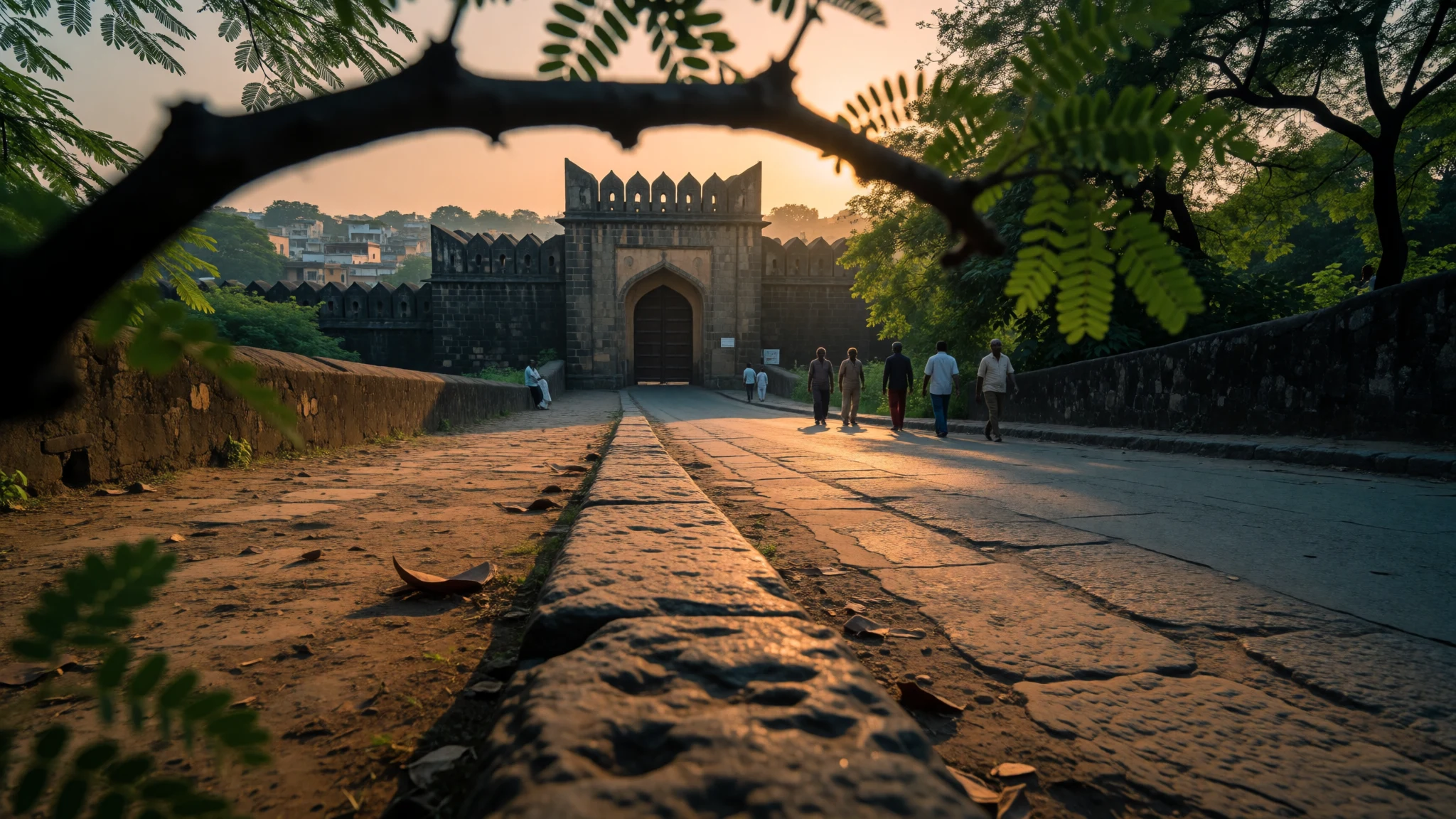
Pune pairs Maratha-era forts, rock-cut temples and a famous Ganesh festival with a student-heavy, café-filled city, cooler and calmer than Mumbai.
The place
Pune sits on the Deccan Plateau in western Maharashtra, about 561 m above sea level, which is why it feels a little drier and cooler than Mumbai, a few hours to the west. Around 6.2 million people live in the city, and the wider metropolitan region is larger still. It is a working city before it is a tourist one. Software parks, car and machinery plants, and a long list of colleges and universities set the daily rhythm, and the nickname "Oxford of the East" comes from that student population. The old core is a tight web of peths, market quarters whose lanes are packed with wadas (courtyard mansions), small temples and sweet shops. Newer Pune sprawls outwards into suburbs such as Baner, Wakad and Hinjewadi, where glass offices and apartment towers stand beside the highway. Older English writing calls the city Poona, and the official change of spelling came in 1978. Marathi is the local language, though Hindi and English cover most conversations. Traffic is heavy, two-wheelers fill every gap, and the cafés, book shops and music venues are fed by a young crowd. For visitors it works as a slower, more local alternative to Mumbai, and as a base for the hill stations of the Western Ghats.
Its story
Pune's written history starts well before 1436, the founding date in the city's facts. Copper-plate grants from the ninth century name a farming settlement called Punnaka under Rashtrakuta rulers, and the rock-cut Pataleshwar temple belongs to that early age. Control later passed to the Yadavas of Devagiri and then to a succession of Deccan sultanates. In 1599 the Ahmadnagar sultans granted the Pune estate to Maloji Bhosale, and it descended to his son Shahaji. A general from the rival Adil Shahi court wrecked the town in 1636. Shahaji recovered the estate and settled his wife Jijabai and their young son Shivaji here. The Lal Mahal was completed for them in 1640. Shivaji spent his boyhood there and went on to found the Maratha state, and Jijabai is credited with the Kasba Ganapati temple. In the eighteenth century Pune became the seat of the Peshwas, the hereditary prime ministers who ran the Maratha confederacy from here, and Shaniwar Wada was their fort-palace. That era closed when the British East India Company seized the city during the Third Anglo-Maratha War. Pune gained municipal status in 1858, the year Crown rule began. The British added cantonment layouts and bungalows, which still shape the leafier parts of the city.
What to see
- Shaniwar Wada — Old city, Kasba Peth
Pune's Peshwa-era fort-palace is the first stop for most visitors. The huge gateway is the best-preserved part, and inside much is open ground and foundations rather than rooms. It gets crowded at weekends, so go early and read up on the Peshwas beforehand. Check the official site for current timings.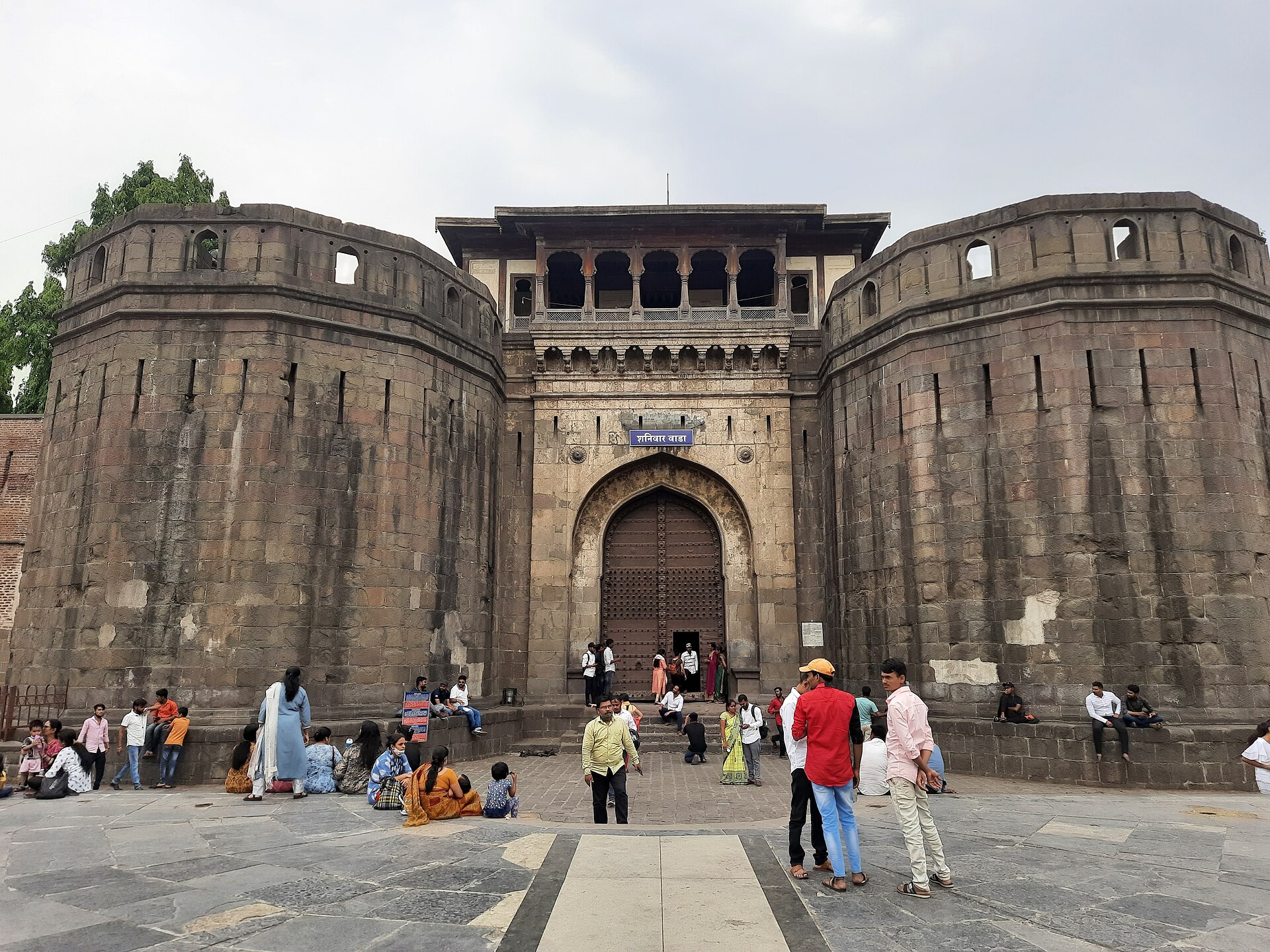
- Pataleshwar Caves — Shivajinagar
A small rock-cut Shiva temple carved from a single basalt outcrop, tucked below street level in the middle of Pune's busy shopping district. The round Nandi pavilion and plain, heavy pillars give it a calm that the traffic outside does not. It takes under an hour, so pair it with a walk along the nearby road. - Aga Khan Palace — Yerawada, north-east Pune
A graceful arched building in a large garden, linked with the independence movement and Mahatma Gandhi's detention during the freedom struggle. Part of it now serves as a memorial and museum. Pune is hot by midday, so visit in the morning and allow time to sit in the grounds. - Dagadusheth Halwai Ganpati Temple — Budhwar Peth
Pune's best-known Ganesh shrine is a small, richly decorated temple in the old city, and the focus of the city's festival crowds. It is lit up at night and busy at any hour. Queues stretch out during Ganeshotsav, so choose a quieter week if the festival is not your reason for coming.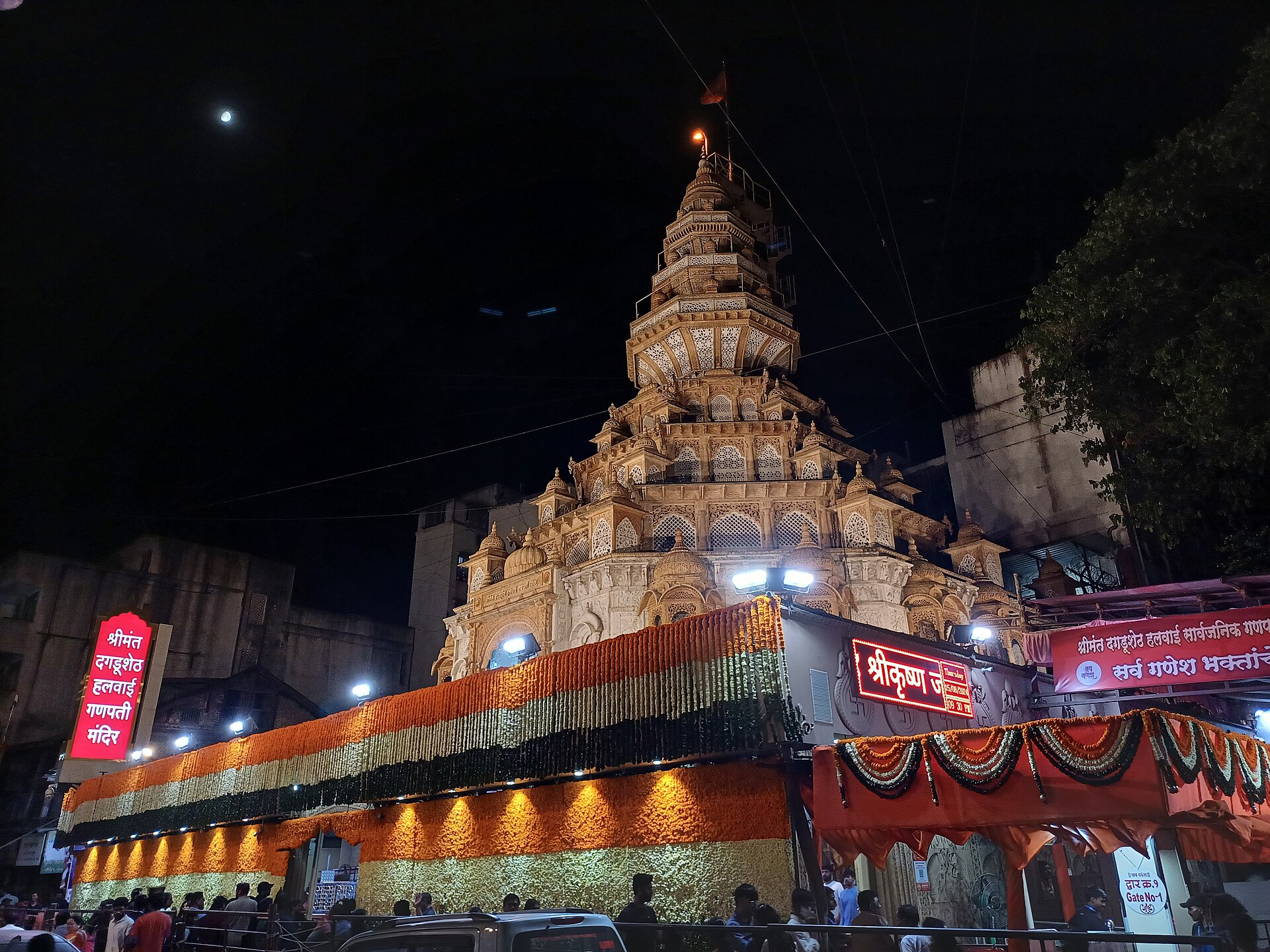
- Shinde Chhatri — Wanowrie
A memorial to the Maratha general Mahadaji Shinde (Scindia), set in the Wanowrie area on the south-east side of Pune. The carved hall and shrine are quiet compared with the city's main attractions, and the walk there shows the leafier, cantonment-era part of town.
Culture
Pune calls itself the cultural capital of Maharashtra, and the claim rests on daily habits more than monuments. Marathi theatre, classical music concerts, a Marathi film industry and a deep reading culture all thrive here, helped by the many students and teachers. Public life revolves around Ganeshotsav, the ten-day Ganesh festival, usually around September. Neighbourhood committees, called mandals, build elaborate images of the elephant-headed god, and the processions, drumming and lighting turn the old city into a slow-moving crowd. Lokmanya Bal Gangadhar Tilak turned the festival into a public event, and the city's pride in that history is real. Other occasions include the Pune Festival, which runs alongside Ganeshotsav, and the overnight Chatushrungi Fair at Navratri. The old city's wadas, with their inner courtyards and carved wooden beams, record an earlier way of living, though many have been pulled down for modern buildings. Punekars have a reputation for being direct, a little dry, and fiercely loyal to their own neighbourhoods and traditions. A siesta culture once ran through the old peths, and some small shops still close in the afternoon. Remove your shoes before entering any temple or shrine, leave them where others do, and ask before photographing worshippers or the idols.
What to wear
Traditional Maharashtrian dress in Pune centres on the sari. The nauvari is a long sari draped between the legs, worn at weddings and festivals, and Paithani silk with woven peacock and lotus borders is the prized fabric. Men wear the kurta with a dhoti, topped with the Puneri pagdi, a flat turban, or a white Gandhi cap, mainly at festivals and formal occasions. Daily wear is far more ordinary. Office workers and students in this city wear jeans, shirts, cotton kurtas and sneakers, and many women wear salwar suits or a simple sari at work. Dress is relaxed compared with smaller towns, and the café and college areas are casual and youthful. A visitor should plan for a warm climate with strong sun. Light cotton or linen in long sleeves and loose trousers works best, and a scarf or shawl is useful for temples, where shoulders and knees should be covered. Choose comfortable shoes that slip off easily, since you will take them off often, and sturdy ones for the uneven stone at forts and caves. In the rainy season carry a light waterproof, because the pavements flood and become slippery. Evenings can be cool in winter, so bring a thin layer.
What to eat
- Misal pav — Old misal houses in the Peth areas, around Tulsi Baug
Pune's signature breakfast is sprouted-bean curry topped with crisp farsan, onion and a ladle of fiery red gravy, served with soft bread rolls. It can be very hot, so ask for it mild. Dedicated misal houses cluster in the peths. - Bakarwadi — Sweet and snack shops across the peths and main roads
Crisp, spiral-shaped fried snacks filled with a spiced mix of coconut, sesame and gram flour. They are sweet, sour and hot together, and they travel well, which makes them Pune's favourite gift to take home. - Puran poli — Traditional sweet shops, mostly around festival season
A soft flatbread stuffed with sweet lentil and jaggery filling, finished with ghee. It is a festival dish, made at home for Holi and Gudi Padwa, and available in the weeks around those dates at sweet shops and caterers. - Modak — Sweet shops and festival stalls near the old city mandals
A dumpling of rice flour filled with coconut and jaggery, offered to Ganesh and eaten throughout Ganeshotsav. The steamed version is the classic, and a fried one is also common. Sweet shops stock them heavily during the festival. - Mastani — Dairy and juice bars around Fergusson College Road and the old city
A thick milkshake topped with ice cream, nuts and fruit, named after a Peshwa-era figure. It is heavy and sweet, a good way to end a hot afternoon of walking, and sold at dairy parlours and juice bars all over town.
Plan it
Best time. October to February is the most comfortable stretch, with dry, sunny days and cool evenings. March to May is hot and dry, so keep sightseeing to the morning. The monsoon from June to September turns the surrounding hills green but brings heavy rain; Ganeshotsav falls near its end, around September.
How long. 2–3
Getting there. Pune has its own airport with domestic flights, and many visitors also fly into Mumbai and travel by road or rail. Trains run from Mumbai, Ahmedabad, Kolkata and Chennai to Pune Junction, so check the Indian Railways website before you go because timings change. By road, a national highway and an expressway link Pune to Mumbai and to Bengaluru. From the station or airport, use app cabs or auto-rickshaws for the last leg.
Budget. mid
Tips
- Start at Shaniwar Wada or the Pataleshwar Caves in the early morning, before the heat and traffic build.
- Avoid the old city by car during Ganeshotsav, when roads close and the crowds are very dense. Walk or use a two-wheeler taxi.
- Carry some cash for small eateries and temple offerings, though cards and UPI are widely accepted in newer areas.
- Drink bottled or filtered water, and ask for misal to be made mild if you are not used to chilli.
- Check opening times and ticket details on the official city site, https://www.pmc.gov.in, or at each monument.
Etiquette
- Take your shoes off before entering temples and leave them at the shoe stand.
- Dress modestly at shrines, covering shoulders and knees.
- Ask before photographing people, especially worshippers and festival crowds.
Nearby
Sources
- Wikidata Q1538 (CC0)
- Wikipedia: Pune (rev 1384262496) (CC BY-SA 4.0)
- Wikivoyage: Pune (rev 5403812) (CC BY-SA 4.0)
- Shaniwar Wada Main Gate, Pravega (CC0 1.0)
- Pune West skyline, Ujjawal.Gayakwad (CC BY-SA 4.0)
- Dagadusheth Halwai Ganpati Temple illuminated, DesiBoy101 (CC BY 4.0)
- Shanivar Wada, Rohan Sandeep Pawar (CC BY-SA 4.0)
- Sudan Block, PRONDA (CC BY-SA 4.0)
- SPPU Main Building, DesiBoy101 (CC BY-SA 4.0)
- Phoenix Marketcity Complex, DesiBoy101 (CC BY 4.0)
- Cyber city Pune, vm2827 (CC BY-SA 2.0)


