Puerto Montt
Puerto Montt, Chile
Puerto Montt is a working Patagonian port where fish stalls, ferries and a German settler past open the road to Chiloé and the fjords.
The place
Puerto Montt sits at the northern end of the Reloncaví Sound in southern Chile. It is the capital of the Los Lagos Region and a working port rather than a resort. Some 170,000 people live in the city itself, and the centre stands only 14 m above sea level, though streets climb steeply from the water in places. Behind the city the land rises towards volcanoes and lake country; in front, the sound opens onto islands and the inland sea of Chiloé.
The city's value to travellers is largely positional. Roads, buses and ferries fan out from here: north to the lakeside towns around Llanquihue, east into Andean valleys, and south and west to the Chiloé archipelago and the fjord route towards Chaitén. Many people pass through in an afternoon, which is a pity, because the waterfront and the fishing community of Angelmó repay a slower look.
The local economy rests on fishing, salmon farming, forestry, cattle and farming on the surrounding islands. Salmon brought rapid growth, then a crisis in the late 2000s that hit jobs hard, and the city still has a boom-and-bust edge. Newcomers from all over Chile have settled here for work in recent decades, so the place feels more provincial Chilean than German, although shingled wooden houses and cake shops hint at the settler past.
The weather is the honest caveat. Rain falls in every month, cloud often hangs low over the sound, and the best views come in sudden clear spells. Frost is rare and the air is cool rather than hot, even in summer.
Its story
Puerto Montt began as Melipulli, a Mapudungun name meaning four hills, on a coast then covered in dense forest. The Chilean government wanted a port that gave access to Lake Llanquihue from the open sea, and it paired that aim with a policy of bringing in German settlers, whose arrival from 1848 reshaped the region. A German naturalist and cartographer, Bernardo Philippi, led the first survey; after his death the work passed to Vicente Pérez Rosales, who hired woodsmen from nearby communities to fell the trees and burn off the cleared ground.
The city was founded in 1853 and named after Manuel Montt, the president who backed the immigration scheme. Timber, especially larch, drove the early economy, alongside small distilleries, breweries and shops selling goods shipped from Germany and from the Chilean coast further north.
A rail link to Santiago opened in 1912 and turned the town into the main entry point for Chilean Patagonia. Growth was rapid through the middle of the twentieth century, and then in 1960 the Valdivia earthquake struck. It wrecked much of the city, bringing down the port, the railway station and many homes. Rebuilding gave Puerto Montt its present, rather modern and practical look, with few old buildings left from the colonial and settler decades.
Salmon farming later made the city rich and then left it exposed, a recent chapter that locals still talk about when they discuss work and prices.
What to see
- Angelmó — South-west waterfront
Angelmó is the fishing community just south-west of the bus station, and the most characteristic corner of Puerto Montt. Boats work from the shore, the covered market sells seafood and smoked fish, and stalls sell wool and Mapuche crafts. Go in the morning, when the catch is freshest and the lanes are busy.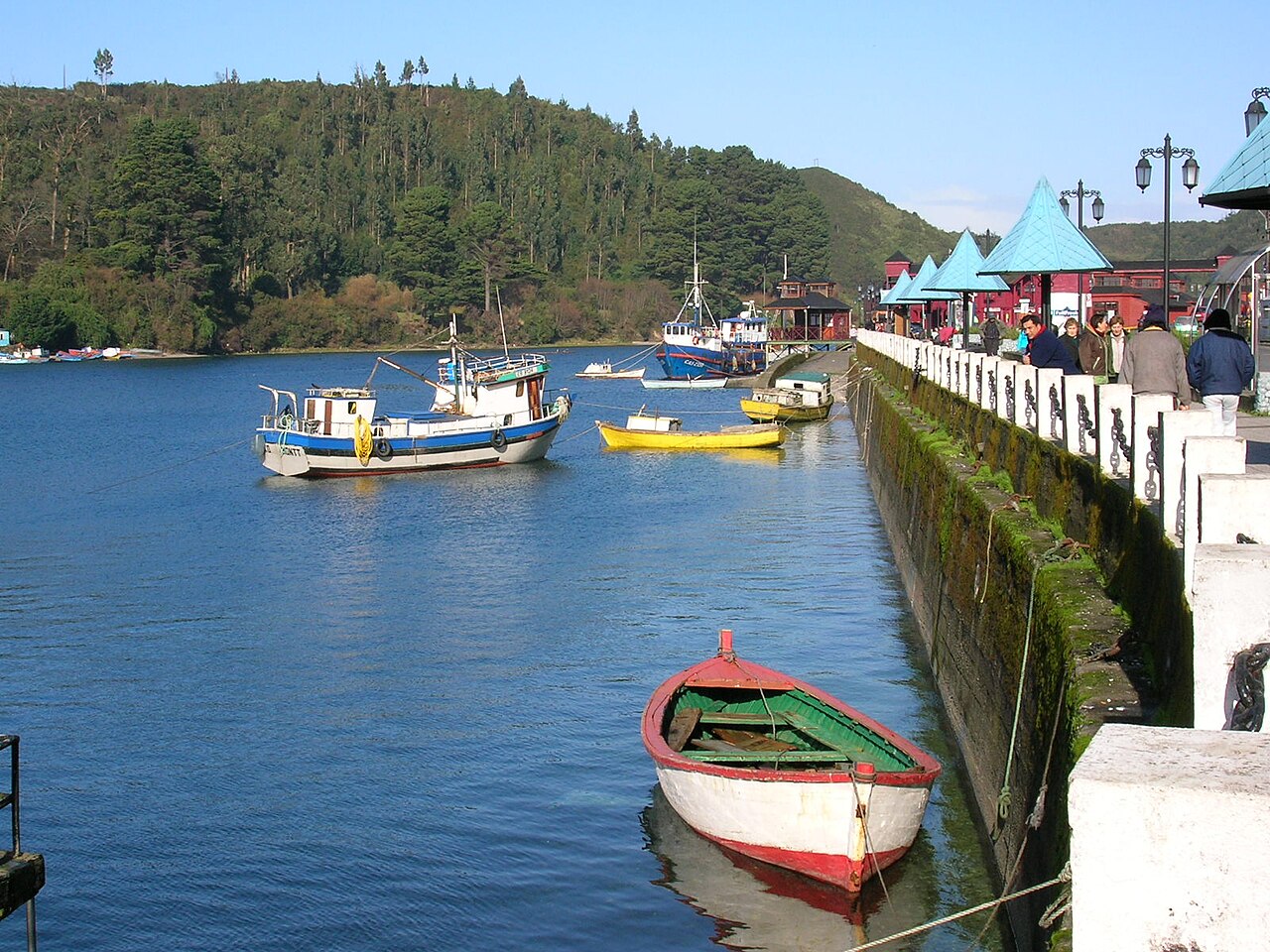
- Waterfront walk and the sculpture — Costanera
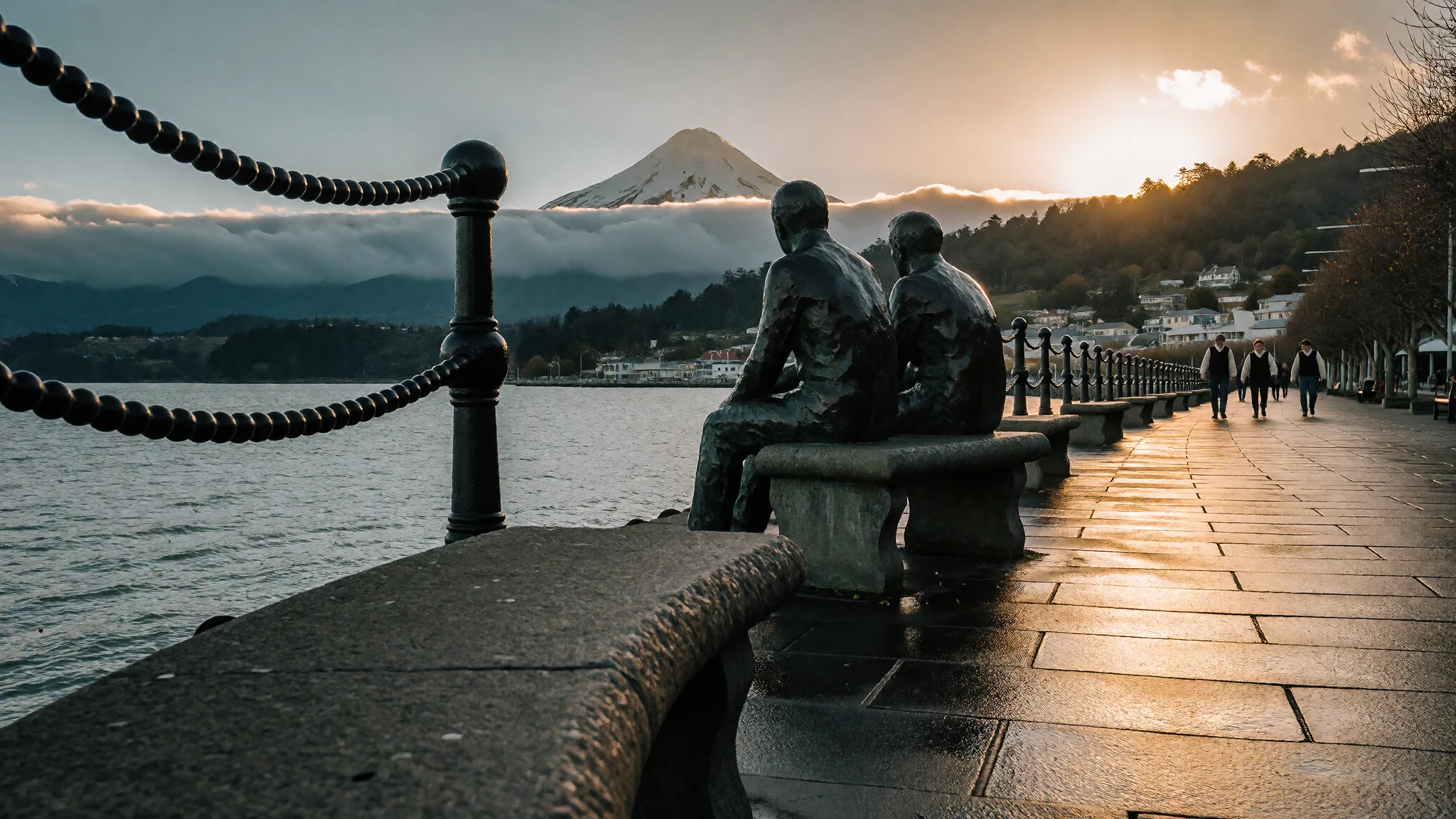
A promenade runs along the shore near the bus station, with benches, kiosks, artisan stalls and public sculpture, including Robinson Barría's Sentados frente al mar. It is an easy, flat way to get a first feel for the sound, and a good place to wait out a ferry or bus connection.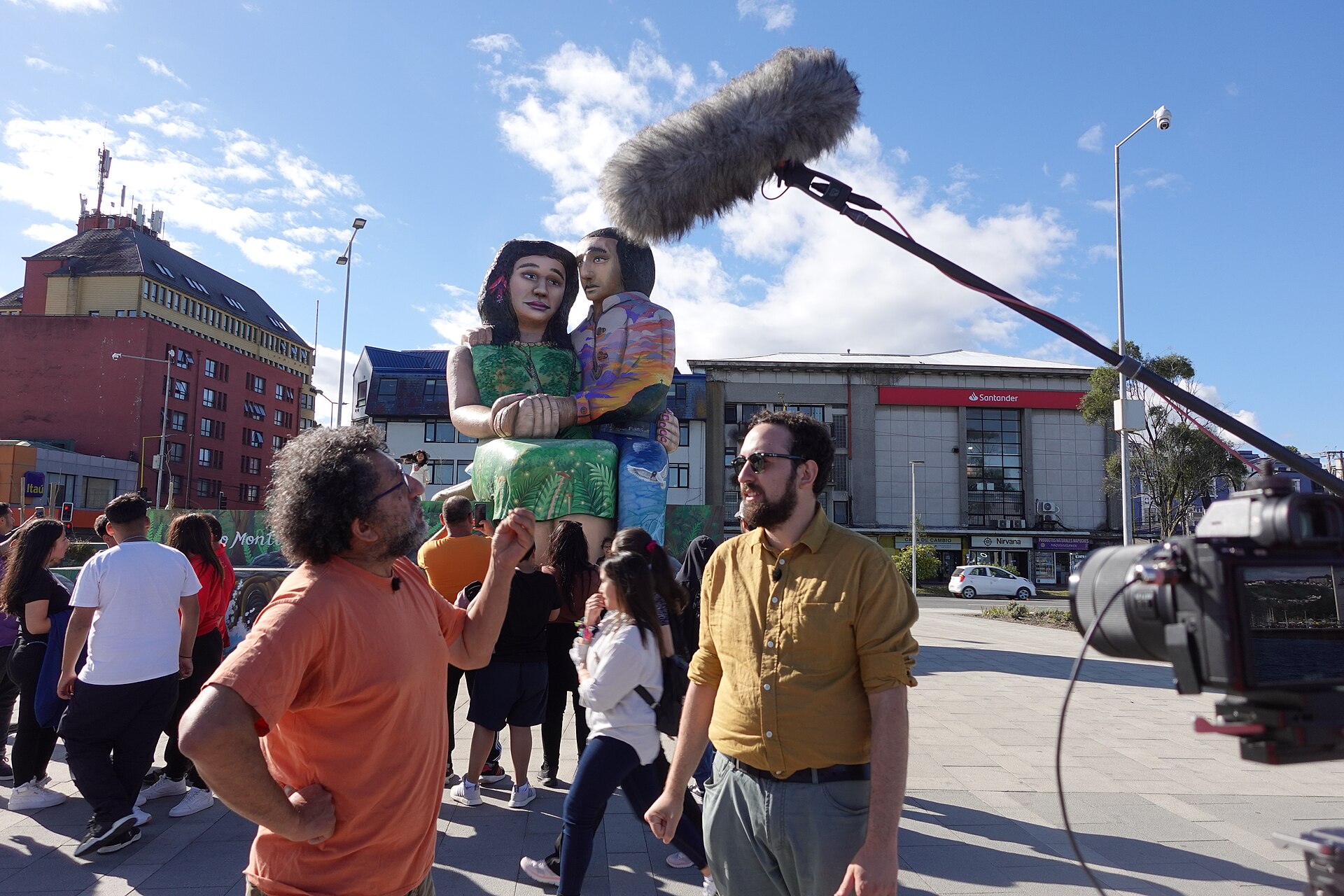
- Pelluco — Eastern shore
Pelluco is the seaside district east of the centre, with a dark-sand beach, cafés and grill restaurants. Swimming is a chilly business, so most visitors come for the sunset views across the sound. The hills nearby give wide outlooks over the water on clear evenings.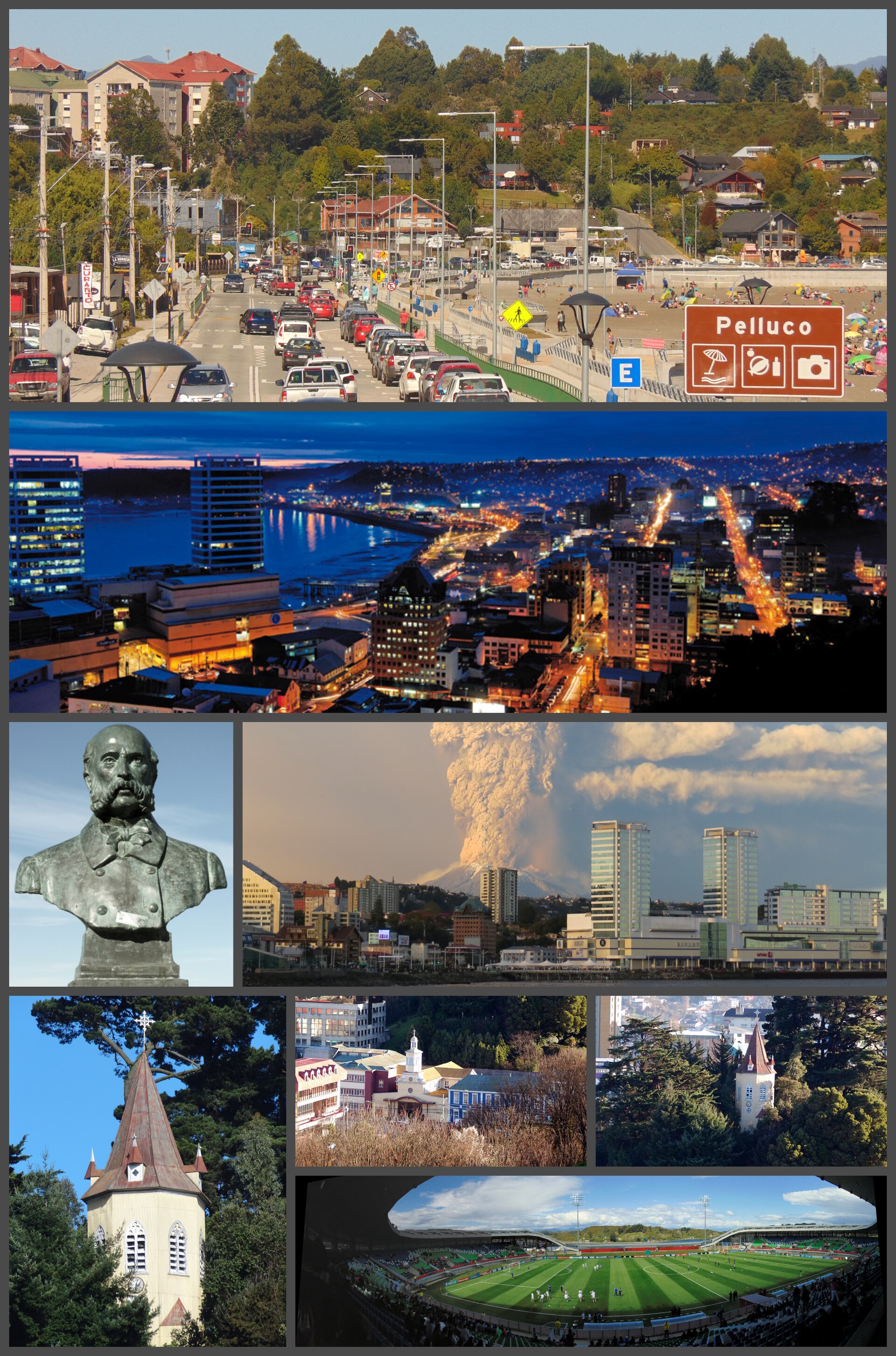
- Alerce Andino National Park — Inland, east of the city
Alerce Andino protects remnant temperate rainforest, including stands of alerce, a slow-growing conifer. Chile has felled or replaced much of its native forest, so such places matter. Trails are damp and muddy, and the park is easiest with a car or a tour. Check the official park pages for access and rules. - Chinquihue and the western shore — West of the centre
The road west of Angelmó follows the shore past fishing and salmon-farm country towards Chinquihue, where the city's football stadium stands. It is a quiet outing for those who want to see how the working coast looks beyond the market, and a reminder that Puerto Montt is mostly an industrial and residential port.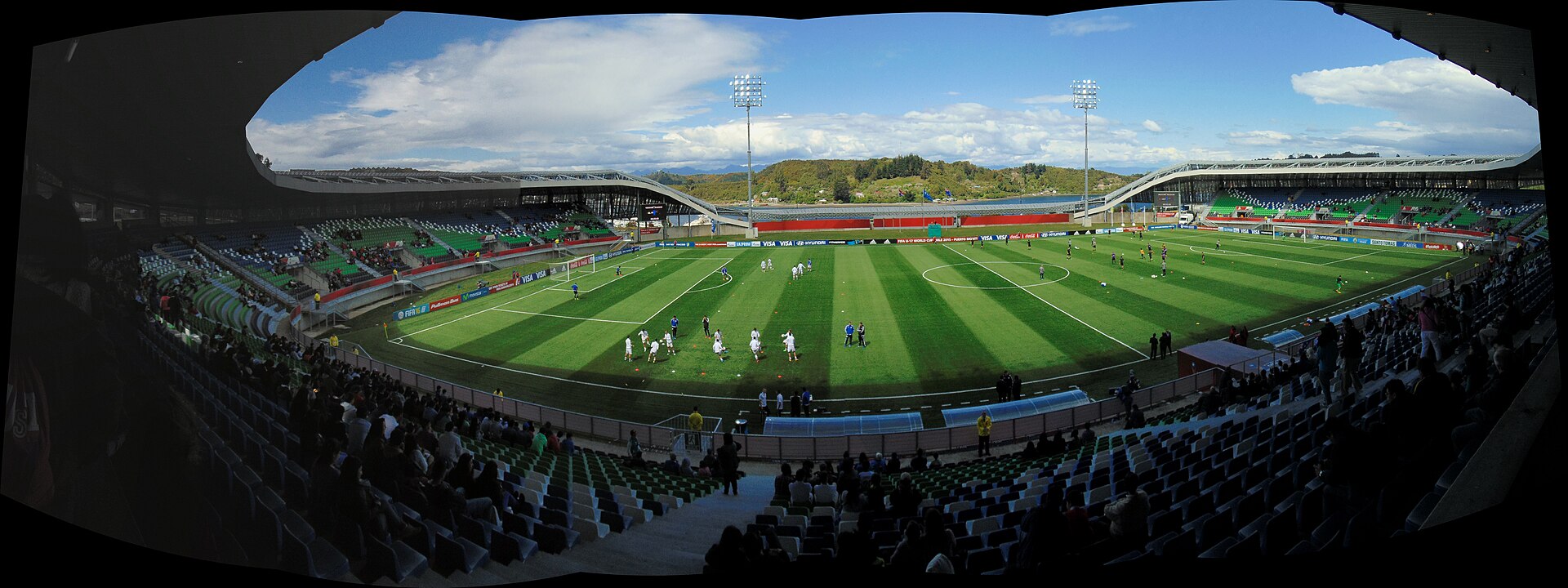
Culture
Puerto Montt's culture is a layered mix. The Mapuche name for the site, Meli Pulli, still turns up in local lore and craftwork, the German settlers left their mark in architecture, baking and family names, and waves of workers from across Chile have added regional accents and tastes. Chiloé, just across the water, influences much of what is eaten, built and believed in the city.
The city is not a museum piece. Daily life centres on the sea: boats leave before dawn, fish are gutted on the quayside, and weekend crowds fill the market lanes in Angelmó. Craft stalls sell knitted wool, carved wood, jams and liqueurs, and the people behind the counter are often happy to explain what they make. Football matters here too, and a local stadium has even hosted youth international matches.
Memory of the 1960 earthquake and of the salmon crisis shapes how people talk about work, safety and the future, usually with a dry, practical humour rather than complaint. Southern Chileans tend to be reserved at first and warm once a conversation starts, so a greeting and a few words of Spanish go a long way.
Sundays are quieter, with families gathering over long lunches, and some smaller shops close early. Wet weather is accepted as normal, so plans are rarely cancelled by drizzle.
When photographing the fishers, stallholders and market workers in Angelmó, ask before pointing a camera at anyone, and buy something small if you linger at a stall.
What to wear
Puerto Montt's traditional dress comes from two main strands. Mapuche textiles are woven from sheep's wool on upright looms, producing ponchos, blankets and belts in strong geometric patterns, and women have traditionally worn heavy silver jewellery on festive and ceremonial occasions. Chiloé's knitters add thick, oily-wool jumpers, socks and hats made for wet weather. Further north, the huaso horseman's outfit, with its short woollen cloak and flat-brimmed hat, appears at rural fiestas and national celebrations rather than on city streets.
Day to day, people in Puerto Montt dress for rain. Waterproof jackets, wool or fleece layers, jeans and sturdy boots are the norm, and rubber boots are common among those who work at the quay or the market. Smart-casual clothes appear for offices, church and evenings out, but showy dress is rare, and nobody notices a visitor in outdoor gear.
For a visit, pack layers and a proper rain shell, since showers can come at any season and the wind on the water is sharp even when the sun is out. Footwear should grip on wet pavement, cobbled lanes and muddy forest paths. A warm hat and gloves help on ferry decks and in winter. Churches and homes expect ordinary modest clothing, with no beachwear off the sand, and a light scarf or wool jumper from the Angelmó stalls is both a useful buy and a fair souvenir.
What to eat
- Curanto — Angelmó restaurants and Chiloé-style eateries
Curanto is the dish of Chiloé, built from shellfish, meat and potato cooked together in layers, traditionally in a pit and now often in a pot. It arrives as a heaped, steaming plate with broth on the side, and one portion suits two people. - Fresh shellfish and fish — The seafood market and eateries at Angelmó
Angelmó's covered market and neighbouring eateries serve whatever the boats have landed, from mussels and clams to local fish, boiled, fried or in soups. Choose a busy counter, and ask what came in that morning. - Grilled salmon — Waterfront restaurants and market eateries
Salmon farming built part of the city, and the fish appears everywhere, usually grilled or baked and served with potatoes or salad. It is a simple, reliable order, and the local sauces and herbs give it a southern Chilean character. - Grilled beef — Parrilla grill restaurants in Pelluco and the east of the city
Cattle country lies inland, and grill restaurants cook beef over embers while diners watch. Cuts come with salad, potatoes and local wine, and meals run long and unhurried, particularly at weekends when families fill the tables. - Kuchen — Cafés in the centre and neighbouring lakeside towns
Kuchen is the German settlers' lasting gift to the table: a fruit tart or cake made with local berries, apple or custard. Take a slice with tea or coffee in a café on a wet afternoon, when it feels especially well earned. - Jams, chocolates and liqueurs — Artisan stalls at Angelmó and along the waterfront
Small producers sell berry jams, chocolates, biscuits and fruit liqueurs from market stalls. They make easy gifts to carry home, and many stallholders are happy to offer a taste before you buy.
Plan it
Best time. December to March is the most reliable stretch, when rainfall eases and days are long and mild, though the climate is wet oceanic and showers can arrive in any month. Winter is cool, grey and wet but frosts are rare, and ferry services thin out.
How long. 2–3
Getting there. Fly to El Tepual airport near the city, or take a long-distance bus from Santiago to Puerto Montt's bus station on the waterfront. From the station, Angelmó and the centre are reachable on foot or by a short taxi ride. Ferries and bus-and-boat routes run south to Chaitén, and the Chiloé crossing leaves from a port outside town.
Budget. mid
Tips
- Pack a waterproof shell and layers; rain is possible in every month
- Book Chaitén ferries or bimodal bus tickets ahead in summer, and check schedules, because winter sailings are far fewer
- Visit Angelmó in the morning, when the catch is freshest and stalls are busiest
- Carry some cash for market stalls and small eateries, and use cards elsewhere
- Check the city website, puertomontt.cl, for events and local notices
Etiquette
- Greet stallholders before asking prices or taking photographs
- Ask before photographing people at work on the quay or in the market
- Do not leave rubbish on beaches or park trails
Nearby
Sources
- Wikidata Q36214 (CC0)
- Wikipedia: Puerto Montt (rev 1377111683) (CC BY-SA 4.0)
- Wikivoyage: Puerto Montt (rev 5241165) (CC BY-SA 4.0)
- Photo: Montaje de Puerto Montt, Wikiedro (CC BY-SA 4.0)
- Photo: Vista de Angelmó, María Luisa Garrido (Public domain)
- Photo: Chinquihue Stadium, Ivotoledo45 (CC BY-SA 4.0)
- Photo: Puerto Montt, Jörg Sancho Pernas (CC BY 3.0)
- Photo: Sentados frente al mar, Espaciosculturaleschile (CC BY 4.0)
- Photo: Puerto Montt market, Ljuba brank (CC BY-SA 4.0)
- Photo: Fish market in Puerto Montt, Ljuba brank (CC BY-SA 4.0)
- Photo: Puerto Montt market, Ljuba brank (CC BY-SA 4.0)


