Pretoria
Pretoria, South Africa
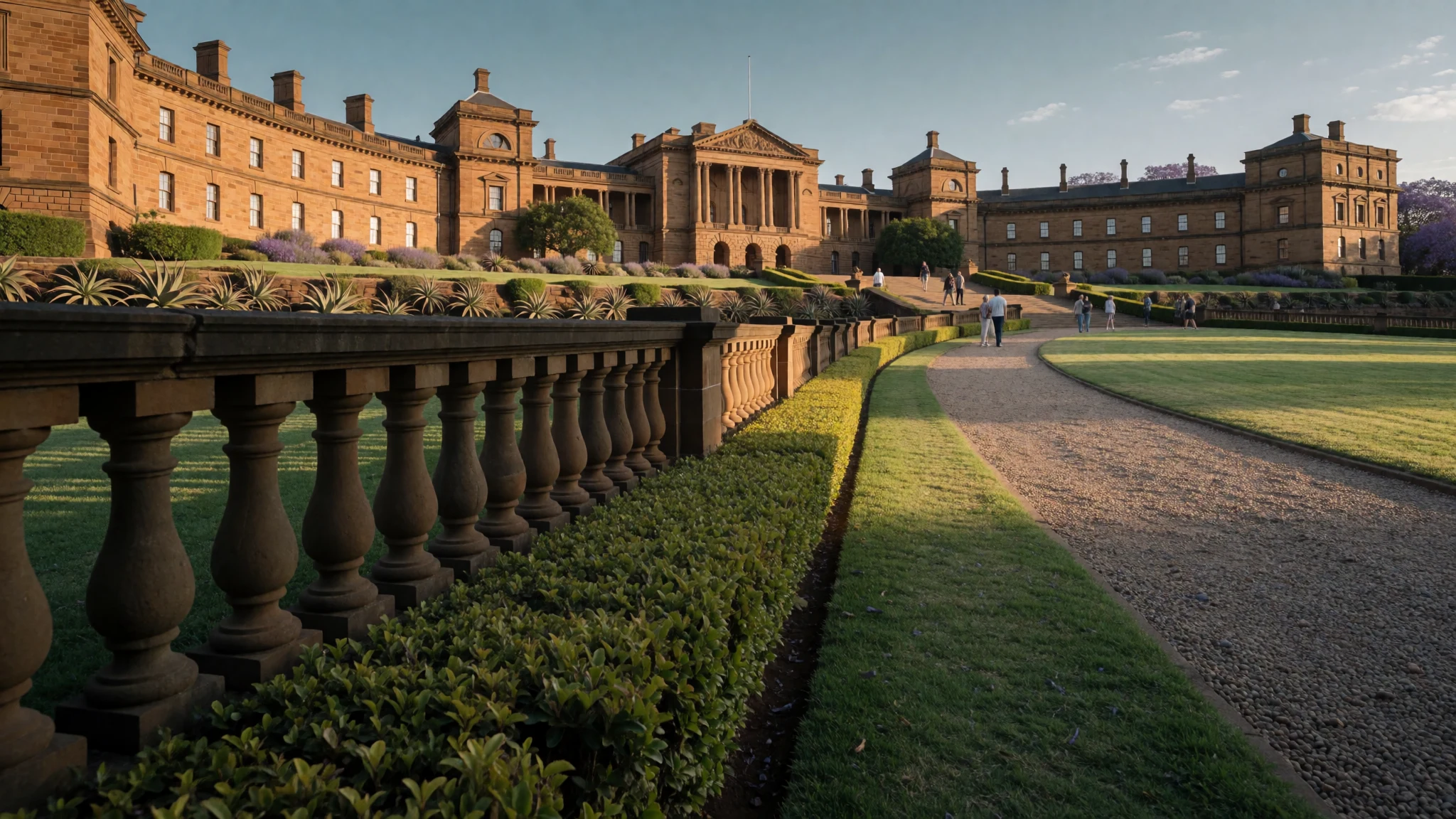
Pretoria is South Africa's jacaranda-lined executive capital, where government sandstone, Boer-era history and a busy diplomatic and university life sit under high, sunny Highveld skies.
The place
Pretoria is South Africa's executive capital, the seat of the presidency and the national government departments, and the city where foreign embassies are based. About 740,000 people live in the city proper, which sits at 1,339 m on the Highveld. That height means strong sun, dry winters and cool nights outside summer. The Apies River runs through the centre, and the city spreads west into the foothills of the Magaliesberg, where streets give way to rocky, bush-covered ridges. Politically it forms the core of the City of Tshwane Metropolitan Municipality, a merger of several former towns including Centurion, Cullinan, Hammanskraal and Soshanguve, which is why road signs and news bulletins often say Tshwane rather than Pretoria. The city has long been known as the academic capital. The University of Pretoria, UNISA and the Tshwane University of Technology are all here, along with the CSIR and other research bodies. As a result the suburbs fill with students, and cafés and bookshops cluster around the campuses. Pretoria was also one of the host cities of the 2010 FIFA World Cup. Compared with neighbouring Johannesburg, a short drive away, Pretoria feels calmer and more formal. Its centre has sandstone government buildings, wide avenues and a lot of civil servants in suits at lunchtime. It is a city for pottering between monuments, gardens and university quarters rather than ticking off one big attraction. Summer brings afternoon thunderstorms; winter is dry, sunny and crisp.
Its story
Pretoria was founded in 1855 by Marthinus Pretorius, a Voortrekker leader, who named the town after his father, Andries Pretorius. He chose a site beside the Apies River, whose Afrikaans name means Monkeys River, intending it to serve as the capital of the South African Republic. His father was a hero to the Voortrekkers for his victory over Dingane's Zulu forces at Blood River in 1838, and he had also negotiated the Sand River Convention in 1852, under which Britain recognised Transvaal independence. The town became the republic's formal capital in 1860, and its founding is often read as the closing chapter of the Great Trek. That story belongs to only one set of people, however. African communities, including Tswana and Ndebele groups, lived in the region long before the Voortrekkers arrived, and the modern name Tshwane reflects that older layer. Pretoria then found itself at the centre of the conflicts between Boer republics and the British Empire. Republican forces besieged the city in December 1880 and again in March 1881 during the First Boer War. The peace that ended that war was signed in the city on 3 August 1881, as the Pretoria Convention. The Second Boer War went the other way: it ended the Transvaal Republic and began a period of British dominance across southern Africa. Later chapters, from union to apartheid to the democratic era, have left the city with monuments that many South Africans still read very differently from one another.
What to see
- The Union Buildings — Arcadia, on Meintjies Kop above the city
The Union Buildings house the offices of the South African presidency. Sir Herbert Baker designed them in 1908, and the curved sandstone wings and terraced gardens look out over the city. Entry to the building itself is closed for security reasons, so most visitors come for the grounds and the view. - Church Square and the Palace of Justice — Central Pretoria
Church Square is the old heart of the republic's capital, ringed by grand colonial-era buildings. The Palace of Justice on its southern side is the most photographed. The area is busy with commuters and street traders on weekdays, so a morning visit, followed by a slow walk around the facades, works best.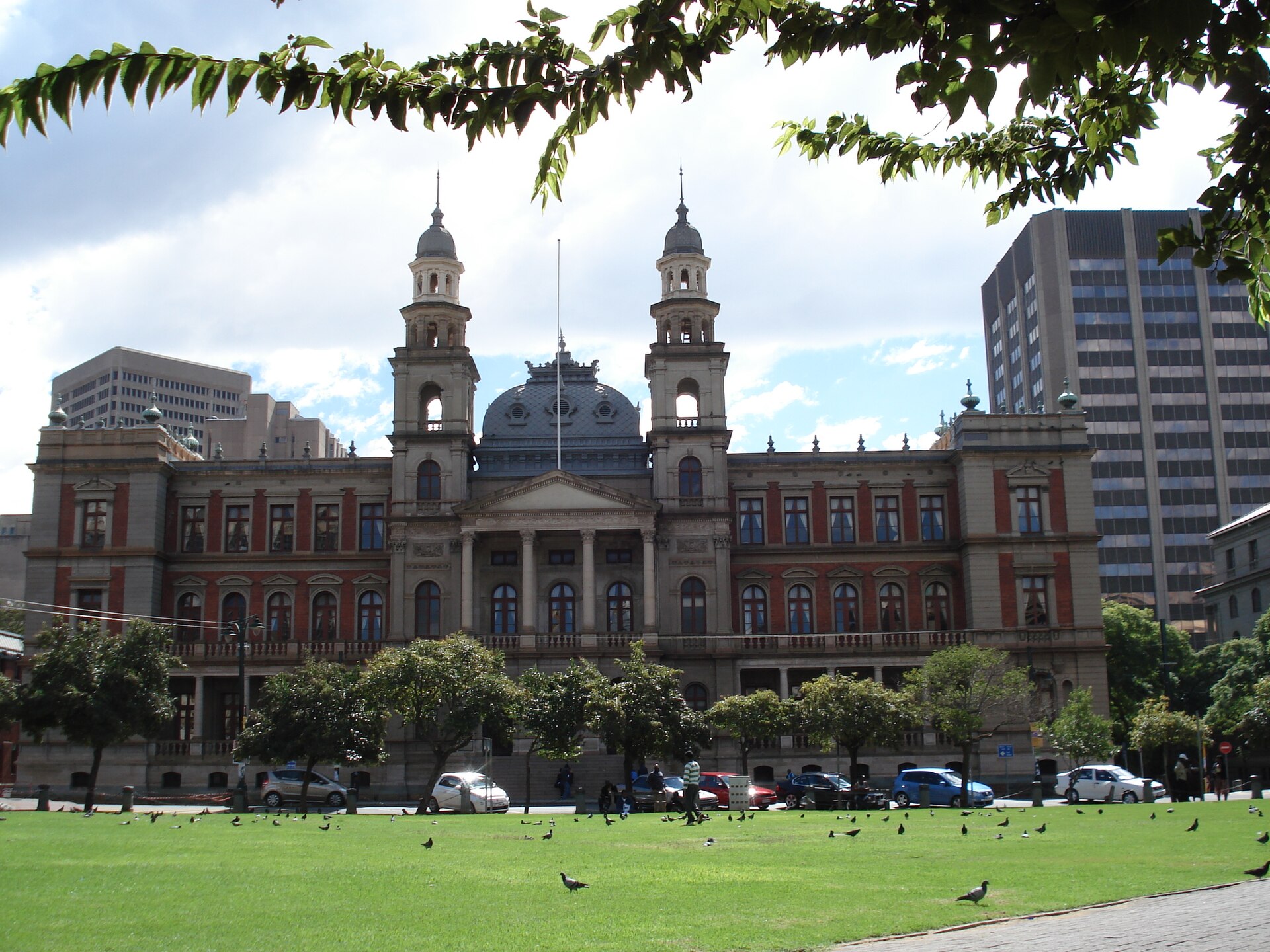
- Voortrekker Monument — Hill south of the centre
The Voortrekker Monument is a massive granite structure on a hill, built to honour the Great Trek. It is a significant and contested symbol of Afrikaner history. Reading the interior carvings and heading up to the roof for views over the city and the ridges beyond makes for a thoughtful, if complicated, visit.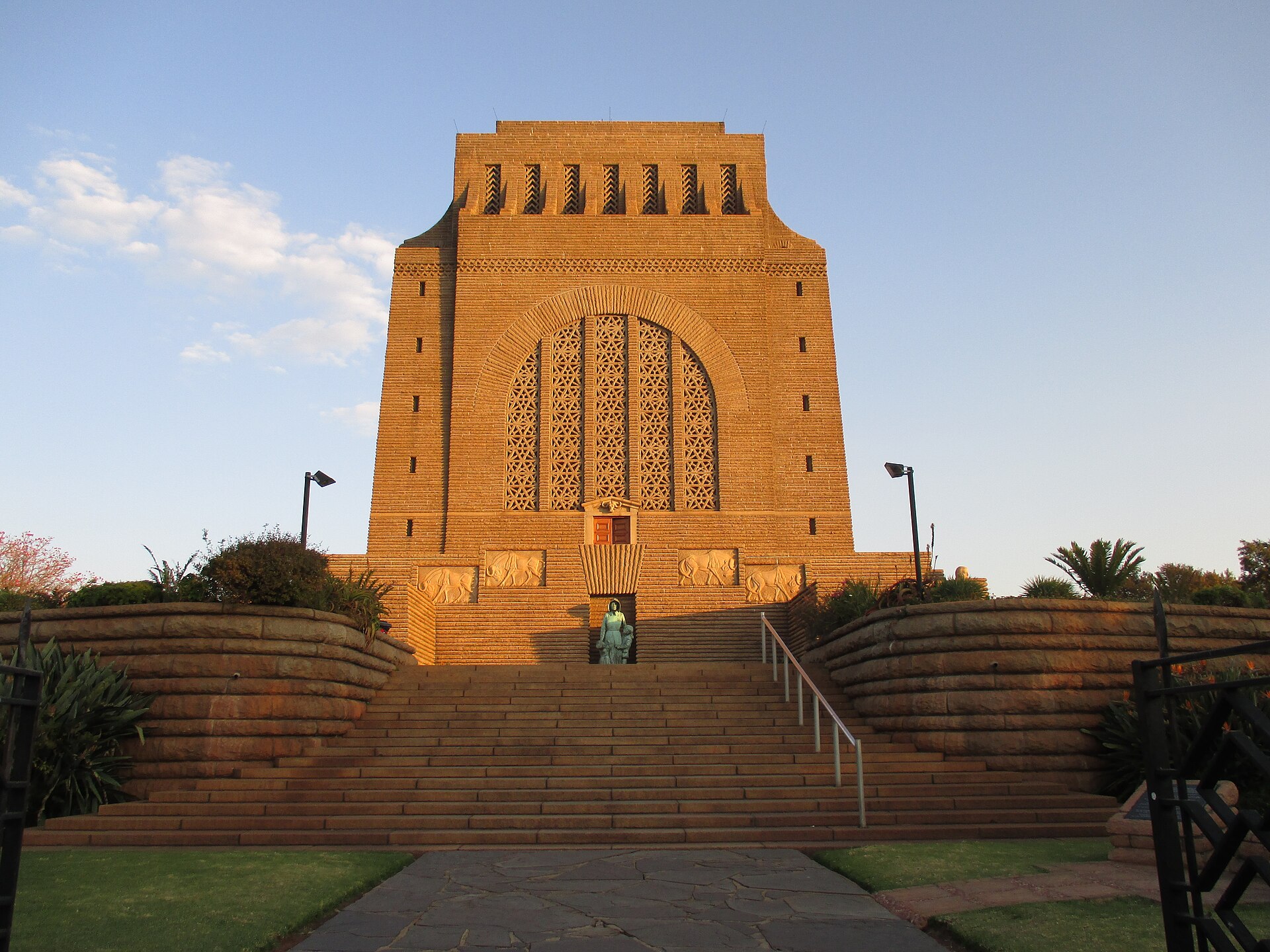
- The Wonderboom — Northern suburbs, at the foot of the ridge
The Wonderboom is a wild fig tree thought to be over 1000 years old and now a national monument. It stands about 25 m tall, with a main trunk 5.5 m across, and its branches spread into a shady canopy. It is a quick, pleasant stop with a small park and picnic spots. - Pretoria Botanical Gardens — Eastern suburbs
The Pretoria Botanical Gardens cover 76 hectares in the eastern suburbs and offer a green escape from the city. Highveld grassland and rocky ridges are planted with local species, and paths wind past ponds and picnic lawns. Birds are plentiful, and the cooler mornings are the most comfortable time to walk.
Culture
Pretoria is a city of many languages and accents. Afrikaans and English dominate in older suburbs and government offices, while Sepedi, Setswana, Zulu and other languages are heard in the townships and on the minibus taxi ranks that serve the wider Tshwane area. The Voortrekker heritage, the African communities who lived here before, and the modern diplomatic and civil-service world all overlap, and conversations about names, monuments and history can be lively. The city's sense of itself is academic and official: university terms set the rhythm of cafés and bookshops, and embassy receptions, parliamentary seasons and public holidays shape the weekdays. Radio gives a good taste of the place. Jacaranda FM broadcasts in English and Afrikaans across Gauteng and neighbouring provinces, and Tuks FM, run by the University of Pretoria, was among the first community stations in the country to hold an FM licence. Sport is a shared passion, and rugby, cricket and football all fill pubs and braai gardens at weekends. The braai, or barbecue, is close to a social institution: invitations are casual, food is shared, and conversation can last all afternoon. September and October bring the jacaranda blossom, when residents pause to admire the purple-lined streets. Visitors should greet people with a handshake and a friendly hello before asking for anything, and ask permission before photographing people or security staff around the government buildings.
What to wear
Pretoria's traditional dress reflects its mixed history. Older Afrikaans heritage includes the kappie, a long-brimmed cotton bonnet, and long cotton dresses that are still worn for heritage events and re-enactments. Many Tswana, Sotho, Zulu and Xhosa communities in the region wear shweshwe, a printed cotton fabric, often in indigo and other bold patterns, sewn into dresses and skirts for weddings, church services and festivals. Ndebele communities near Pretoria are known for brightly coloured beadwork, worn as aprons, necklaces and blankets on ceremonial occasions, and echoed in the geometric patterns painted on their houses. Day to day, people dress practically. Civil servants and diplomats wear suits and smart business clothes, students wear jeans and trainers, and rugby and football shirts appear at weekends. Smart casual is the norm for restaurants and most social occasions. A visitor should plan around the climate. At 1,339 m the sun is strong, so a hat, sunglasses and sunscreen matter, and winter mornings and evenings are cool enough for a jumper or light jacket. Summer storms are common in the afternoon, so a thin rain jacket helps. Comfortable closed shoes are best for the botanical gardens, hills and monument steps. Cover shoulders and knees when visiting churches or attending weddings and funerals, and dress a little more formally for government or embassy appointments.
What to eat
- Braai with boerewors — Weekend braai gardens, local pubs and township eateries
A braai is a wood or charcoal barbecue, and boerewors is the coiled, spiced beef sausage at its centre. It is served with bread rolls or pap. Order it at a braai garden or an invitation-only family gathering; locals treat it as social time, not just lunch. - Pap and chakalaka — Township eateries and market food stalls
Pap is a stiff maize porridge, eaten across the region with grilled meat or stew. Chakalaka is the spicy vegetable relish served beside it, often made with peppers, carrots and beans. Look for it in township eateries and at market food stalls, where portions are generous. - Bobotie — Traditional Afrikaans restaurants and home-style cafés
Bobotie is a baked dish of lightly spiced minced meat with an egg custard topping, usually served with yellow rice and chutney. It reflects the Cape Malay influence on South African cooking. Home-style cafés and traditional Afrikaans restaurants are the best places to find it. - Biltong — Butcheries, farm shops and roadside stalls
Biltong is air-dried, spiced cured meat, typically beef or game, sliced thin and eaten as a snack. It is sold at butcheries, farm shops and roadside stalls. It makes an easy, portable souvenir; the taste varies between sellers, so sample before buying in bulk. - Koeksisters and melktert — Bakeries, church fêtes and farmers' markets
Koeksisters are plaited doughnuts soaked in syrup, while melktert is a creamy milk tart dusted with cinnamon. Both are classic Afrikaans sweets and appear at bakeries, church fêtes and farmers' markets. They go well with strong tea or coffee after a walk.
Plan it
Best time. April–May for dry, mild days and clear skies, and September–October for spring weather and the jacaranda blossom. Summer (roughly November–March) brings heat and frequent afternoon thunderstorms; winter days are sunny but mornings and nights can be cold.
How long. 2–3
Getting there. Fly into O.R. Tambo International Airport (JNB) in Johannesburg, then take an airport shuttle, taxi or hire car along the R21 (Albertina Sisulu Highway) to Pretoria. Check the Gautrain site for rail options. Long-distance buses and national highways also link Pretoria with other South African cities.
Budget. mid
Tips
- Book airport shuttles or ride-hailing in advance, and check which national roads have tolls before driving
- Visit gardens and monuments in the morning, as afternoon storms are common in summer
- Carry a card and a little cash for markets, parking attendants and small eateries
- Drink plenty of water and use sunscreen, as the Highveld sun is strong at this altitude
- Keep valuables out of sight, and take local advice about walking in the centre after dark
Etiquette
- Greet people before asking questions or making requests
- Ask before photographing people, police or security staff, especially around government buildings
- Be sensitive when discussing history and monuments, which different communities see very differently
Nearby
Sources
- Wikidata Q3926 (CC0)
- Wikipedia: Pretoria (rev 1384444377) (CC BY-SA 4.0)
- Wikivoyage: Pretoria (rev 5414980) (CC BY-SA 4.0)
- Photo: Pretoria CBD as seen from Muckleneuk Hill (Petrus Potgieter) (Public domain)
- Photo: Pretoria viewed from the Voortrekker Monument (LiebeB) (CC BY-SA 4.0)
- Photo: University of South Africa Pretoria (UNISA) at sunrise (Paul Saad) (CC BY-SA 4.0)
- Photo: Facade of the Voortrekker Monument (User:Katangais) (CC BY 3.0)
- Photo: Palace of Justice, Church Square, Pretoria (Cvanrooyen) (CC BY 3.0)
- Photo: Old Arts Building, University of Pretoria Museums (Sian Tiley-Nel) (CC BY-SA 4.0)
- Photo: The Magaliesberg (StormSignal) (CC BY-SA 2.0)
- Photo: Magaliesberg Range (Androstachys) (Public domain)


