Prayagraj
Prayagraj, India
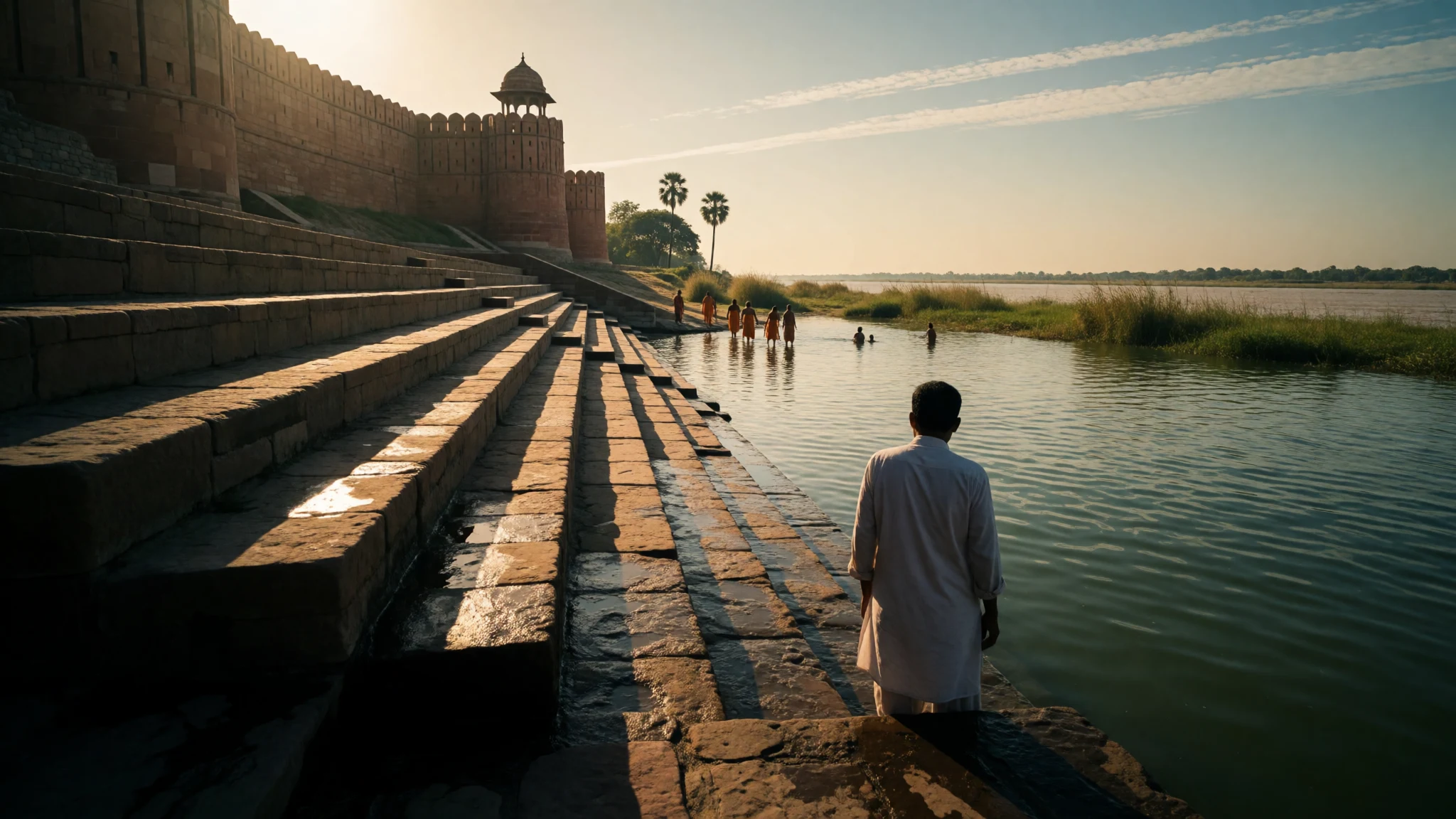
Prayagraj is where the Ganges and Yamuna meet: a pilgrimage city of fort walls, colonial gardens and a High Court that still sits.
The place
Prayagraj sits in the south-east of Uttar Pradesh, about 98 metres above sea level, on flat ground where the Ganges and Yamuna come together. Many people still say Allahabad, the name used for centuries before the official change, and signs, train tickets and older residents mix the two freely. The population is about 5.95 million, and the city feels like several towns stitched together. Near the rivers stand the fort and the seasonal pilgrim camps. To the north, the Civil Lines area has wide roads, old bungalows and a park laid out in the British period. Beyond it lie tighter neighbourhoods of markets and lanes, where finding the way is hard even in daylight. The Allahabad High Court makes Prayagraj the judicial capital of Uttar Pradesh, so lawyers in black and white are as common a sight as pilgrims in saffron and plain cotton. Hindi is the everyday language, with Urdu and English heard in offices, shops and courts. The mood is that of a working provincial city rather than a polished tourist town. There are few ticketed attractions and a great deal of ordinary life, but there is also a strong sense of purpose around the water. Most visitors come for the Triveni Sangam, the three-river confluence, where the mythical Sarasvati is said to join the two real rivers unseen. Evenings are quiet and the city sleeps early. Power cuts happen. May and June are fiercely hot, while winter mornings bring cool air and river mist.
Its story
Prayagraj's story is largely the story of a river junction treated as sacred for a very long time. The earliest known mention of Prayaga as a pilgrimage place appears in a supplement to the Rigveda, and the idea was never dropped. Buddhist texts refer to it as well. In one discourse the Buddha is recorded as saying that bathing at Prayaga cannot wash away cruelty or wrongdoing, and that purity must come from the heart and from conduct. The Mahabharata takes a similar line. It presents a bath here during the month of Magha as atonement, but insists the journey must be joined to an honest life of truth, charity, self-control and patience. Later Puranas add legends, including that Brahma attended a sacrifice here, and they call the confluence Tirtha Raj, the king of pilgrimage sites. In the late Vedic period the area is linked with Kosambi, a capital developed by the Kuru rulers of Hastinapura. The Chinese pilgrims Faxian and Xuanzang, travelling in the fifth and seventh centuries, both described a thriving city. The Mughal emperor Akbar began building a fort at the junction in 1583. Under the British the city became the capital of the United Provinces, which left behind a High Court, a cathedral and public gardens. Today the two names, Allahabad and Prayagraj, sit side by side, each recalling a different layer of the same place.
What to see
- Triveni Sangam — Riverfront below the fort
The confluence is the reason Prayagraj matters. Boats carry visitors and pilgrims out to the point where the Ganges and Yamuna meet, and the two waters run side by side for a while before blending. Go early, when bathers, priests and boatmen are busy, and agree on the boat fare before boarding. - Allahabad Fort — Riverbank, east of the city
Akbar's fort stands on the bank at the junction of the rivers, and much of its original form has been lost to later changes. Sandstone ramparts and gateways still make an impression from the water. An Ashoka pillar stands inside. Access to parts of the complex is restricted, so check the official site before travelling.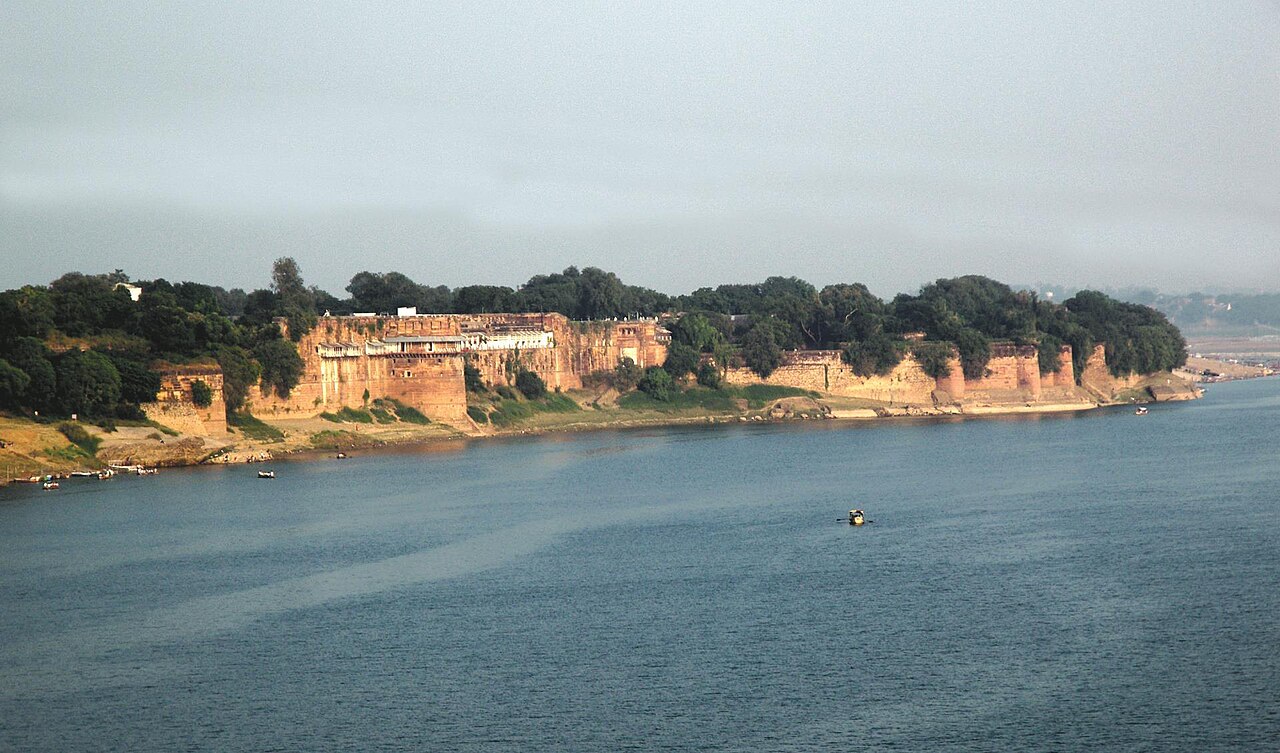
- Company Bagh — Civil Lines
This large public park dates from the British period and was named after Prince Alfred, who visited in 1870. It holds the Victoria Memorial canopy, which once sheltered a marble statue of the queen, and the Thornhill Mayne Memorial. Families walk here in the cooler evening hours. - Allahabad High Court — Civil Lines
The court is the highest judicial body in Uttar Pradesh and gives the city its official standing as the state's judicial capital. Most visitors admire it from the road: a big institutional building surrounded by clerks, lawyers and tea stalls, which shows how important the legal profession is to everyday life here. - Khusro Bagh — Near the railway station
A walled garden holding three sandstone mausoleums from the Mughal period, one of them belonging to Nisar Begum. It is quieter than the riverfront and a good place for a slow half-hour among old trees and carved stone. Mornings are best, before the heat and the traffic build.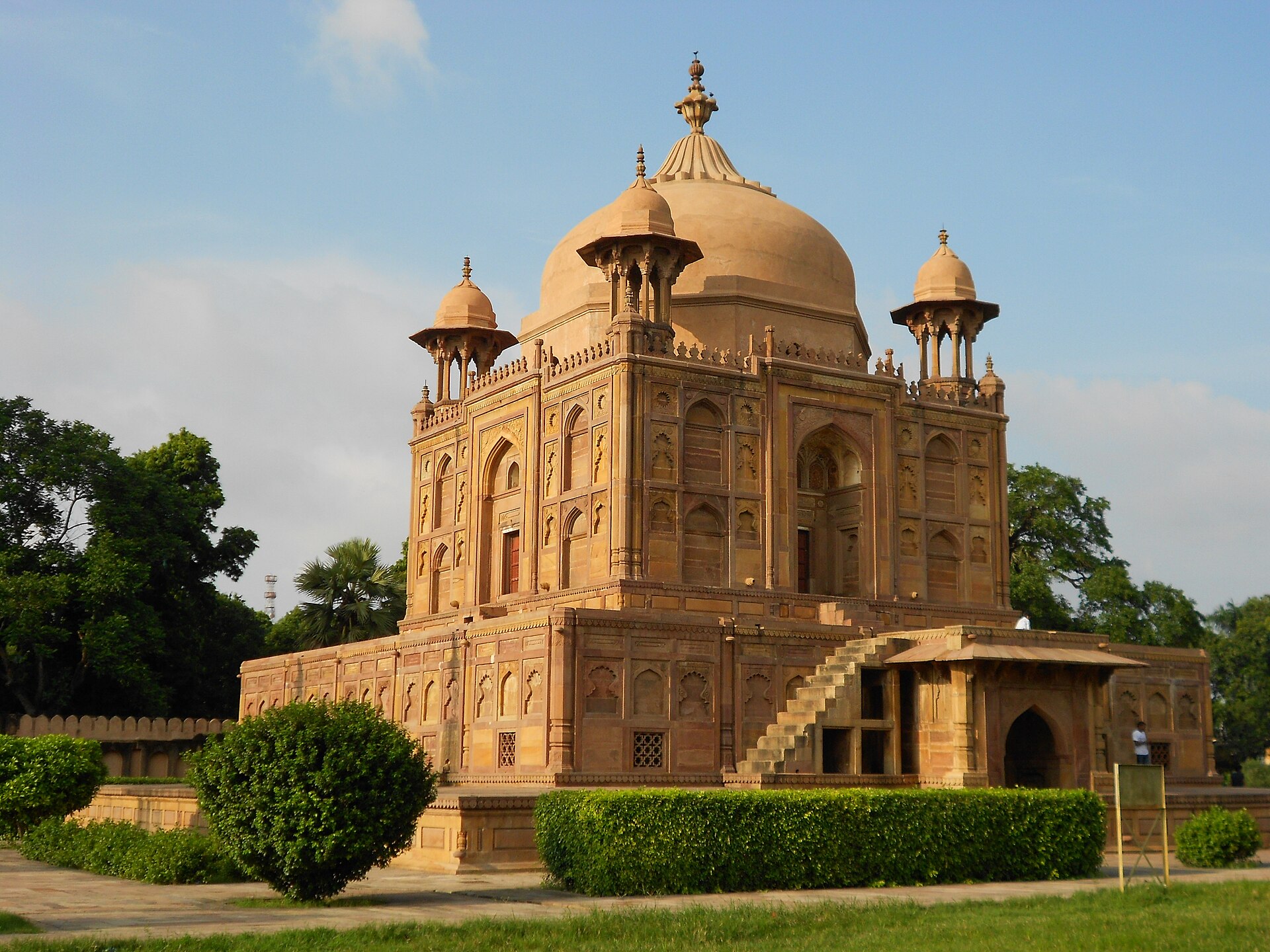
Culture
Prayagraj lives by the calendar of Hindu pilgrimage, and the river sets the rhythm. Bathing at the Sangam during Magha is a long-standing practice, and the Kumbh Mela is the largest gathering the city is known for. Diwali, Holi, Eid al-Fitr and Vijayadasami are widely celebrated as well, and Hindu and Muslim neighbourhoods share the same streets and bazaars. Prayagraj is often called the literary capital of Uttar Pradesh. It has a long tradition of poets, writers and publishers, and old bookshops and tea stalls near the university still host animated arguments. Chinese travellers wrote about the city many centuries ago, and it still draws visitors from Asia. Daily worship is mostly informal: a priest under a parasol on the bank, a family offering marigolds and floating small lamps at dusk, a man sitting in silence with his feet in the water. None of this is staged for visitors, and it is more rewarding when watched quietly and from a respectful distance. Honesty about crowds matters here too: in major bathing periods the riverbank is dense, movement is slow, and patience is required. Ask before photographing anyone who is bathing or praying at the Sangam, and keep clear of offerings, ritual spaces and lines of devotees.
What to wear
In Prayagraj, traditional women's dress is the sari, in cotton for daily wear and silk for weddings and festivals, often with silk from nearby weaving towns. The shalwar kameez, a tunic over loose trousers, is common and increasingly the choice of younger women. Men have long worn the dhoti and kurta, which now appears mostly at festivals and ceremonies, while the formal sherwani, a long fitted coat worn over chooridar trousers, is reserved for weddings and celebrations. Everyday dress today is practical: Western shirts and trousers for men, jeans, kurtas and salwar suits for women, and black-and-white court dress for the many lawyers. Pilgrims at the riverbank wear simple cotton, often in white or saffron, and many bathe in their clothes. Visitors should dress for heat and for sacred ground. Loose long-sleeved cotton, trousers or long skirts and a light scarf for covering the head or shoulders work well for the riverfront and mausoleums, with a shawl or jacket for winter mornings. Choose sandals or shoes that slip off easily, since footwear comes off at shrines, and expect sand, mud and uneven steps by the water. Avoid anything sleeveless or short near worship.
What to eat
- Samosa — Traditional snack shops in the old bazaars and Civil Lines
Prayagraj's samosas are crisp, thick-skinned and fried in ghee in the old traditional sweet-and-snack shops. Eat them hot, with chutney, as a morning or mid-afternoon snack. The older bazaar districts and the streets around Civil Lines are good places to look. - Dal moth — Namkeen counters at long-established sweet shops
A crunchy, spiced mix of fried lentils, often sold by weight in paper cones or bags. It travels well, so many people buy it as a gift to take home. Look for savoury-snack counters attached to long-established sweet shops. - Khatte chana — Street stalls near markets and the university
Tangy chickpeas, spiced and sharp with lemon or tamarind, served as a quick snack or a light lunch. They are an easy vegetarian option and sit well alongside fried snacks. Street stalls near markets and the university area serve them. - Chole bhature — Sweet shops with savoury menus in Civil Lines
Spiced chickpea curry with puffed, deep-fried bread. It is filling, so it works as a late breakfast or lunch rather than an evening meal. Sweet shops with a savoury menu often serve it, and a portion usually satisfies one person. - Lassi with rabri — Lassi counters in the main market streets
A thick, cold lassi topped with rabri, a sweet reduced-milk cream, is a good way to cool off in the heat. Kulfi and burfi toppings are also found. Lassi counters in the busy market streets draw queues on hot afternoons. - Kulfi — Evening kulfi sellers around the main markets
Dense, slow-frozen milk ice, flavoured with cardamom, pistachio or saffron. It is a pleasant ending to an evening walk, once the day's heat has eased. Look for kulfi sellers near the main markets and in the evening around popular crossings.
Plan it
Best time. October–November and February–March, when days are warm rather than fierce and the river is pleasant to be beside. December and January bring cool mornings and mist, and the Magha bathing period is cold and crowded. April to June is very hot, and the monsoon months are humid with a swollen river.
How long. 2
Getting there. The simplest route from abroad is a flight to New Delhi followed by a train to Prayagraj, which is on the main lines between Delhi, Kolkata (Howrah) and Mumbai. Several trains run overnight and arrive in the early morning, so check current timetables. The last leg is by auto-rickshaw, taxi or app-based cab.
Budget. low
Tips
- Visit the Sangam at dawn, when the light is soft and the heat is low
- Carry a torch, since power cuts are frequent and lanes are hard to navigate after dark
- Carry cash for boats, snack stalls and small shops, and keep bottled water with you
- Book trains in advance, and avoid arriving late at night, as the city is very quiet then
- Check the official site at https://prayagraj.nic.in/ for festival dates, crowd arrangements and fort access
Etiquette
- Remove shoes before entering shrines and temples
- Ask before photographing people who are bathing or praying
- Dress modestly with shoulders and knees covered near the river and religious sites
Nearby
Sources
- Wikidata Q162442 (CC0)
- Wikipedia: Prayagraj (rev 1383600411) (CC BY-SA 4.0)
- Wikivoyage: Prayagraj (rev 5414933) (CC BY-SA 4.0)
- Photo: Allahabad Montage II (Dananuj) (CC BY 3.0)
- Photo: Emblem of Prayagraj Municipal Corporation (UnknownBharatiya87) (CC BY-SA 4.0)
- Photo: Ashoka Pillar in Allahabad (Aj.abhishek1998) (CC BY-SA 4.0)
- Photo: Gupta Empire at peak (Oxiyam.Primal) (CC0 1.0)
- Photo: Indian woman floating lamps on the Ganges (Garudam) (CC0 1.0)
- Photo: Garuda emblem (Garudam) (CC0 1.0)
- Photo: Allahabad Fort (Vyomtripathi) (CC BY-SA 4.0)
- Photo: Tomb of Nisar Begum at Khusro Bagh (सत्यम् मिश्र) (CC BY-SA 4.0)


