Portsmouth
Portsmouth, United Kingdom
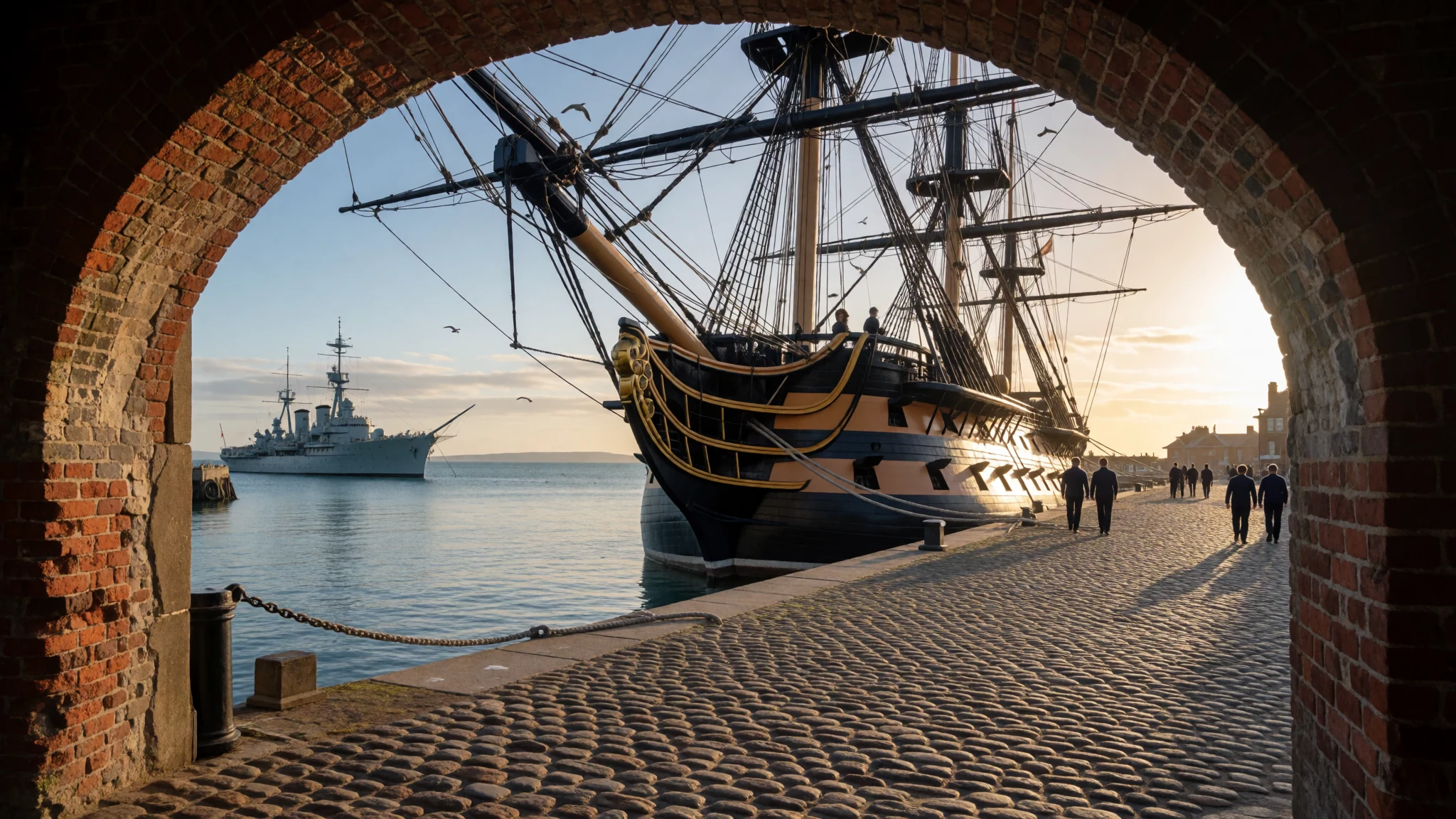
Portsmouth packs Tudor and Nelson-era warships, a working naval harbour and a breezy Victorian seaside into one compact island city.
The place
Portsmouth sits mostly on Portsea Island, a flat, low island pressed against the Hampshire coast and divided from the mainland by a narrow channel. That makes it the only English city not built mainly on the mainland. Roughly a quarter of a million people live here, packed tightly: terraced streets, naval housing, tower blocks and Victorian villas share a small footprint. The city is a working naval base as well as a visitor destination, so grey warships slide past ferry queues and pleasure boats at the harbour mouth. Three areas shape a visit. Old Portsmouth, in the south-west corner, has the cathedral, cobbled lanes and pubs by the water. The harbour side holds the Historic Dockyard, the Gunwharf Quays shopping and eating complex and the Spinnaker Tower. Southsea, to the south-east, is the seaside end, with a shingle beach, a long promenade, a castle, gardens and a lively high street of independent cafés and bars. London is a little over an hour and a half away by rail and Southampton about an hour, so Portsmouth works as a day trip or as a base for the Isle of Wight ferries. The weather comes straight off the Solent: breezy, changeable and often brighter than inland. Beach days are for summer, while the museums suit wet afternoons. Crowds thicken in school holidays at the Dockyard, and Southsea is busiest on warm weekends.
Its story
Portsmouth's story begins with water. Romans fortified the northern shore of the harbour, at the place now called Portchester, and the Old English name Portesmuða joins words for a haven and a river mouth. A chronicle entry tells of a warrior called Port landing here, and Winston Churchill repeated the tale of a pirate founder, though it reads more like legend than record. Danish raiders worked this coast repeatedly, landing near the harbour and plundering the countryside, and that exposure to attack set the area's character. The town itself was founded by an Anglo-Norman merchant, Jean de Gisors, in the south-west of the island, in what is now Old Portsmouth. He had a chapel built to Thomas Becket, which grew into a parish church, and a royal charter soon confirmed the settlement as a town. From there the harbour's value to the Crown kept growing. A royal dockyard and navy base developed over the centuries, and the city became shorthand for the fleet. The Great Stone Dock, begun in the late seventeenth century and rebuilt later, is still used for ships today. The naval base's Block Mills turned out pulley blocks for the Royal Navy on what is described as the first mass production line. Henry VIII's coastal forts, Nelson's flagship Victory and the Tudor warship Mary Rose all belong to the same thread: a city shaped by defence, shipbuilding and the sea.
What to see
- Portsmouth Historic Dockyard — Harbour side
The Historic Dockyard sits inside an active Royal Navy base and gathers several historic ships in one place, among them HMS Victory and HMS Warrior. Allow a full day, check the official site for ticket options, and expect school-holiday crowds around the Victory's decks and steep ladders.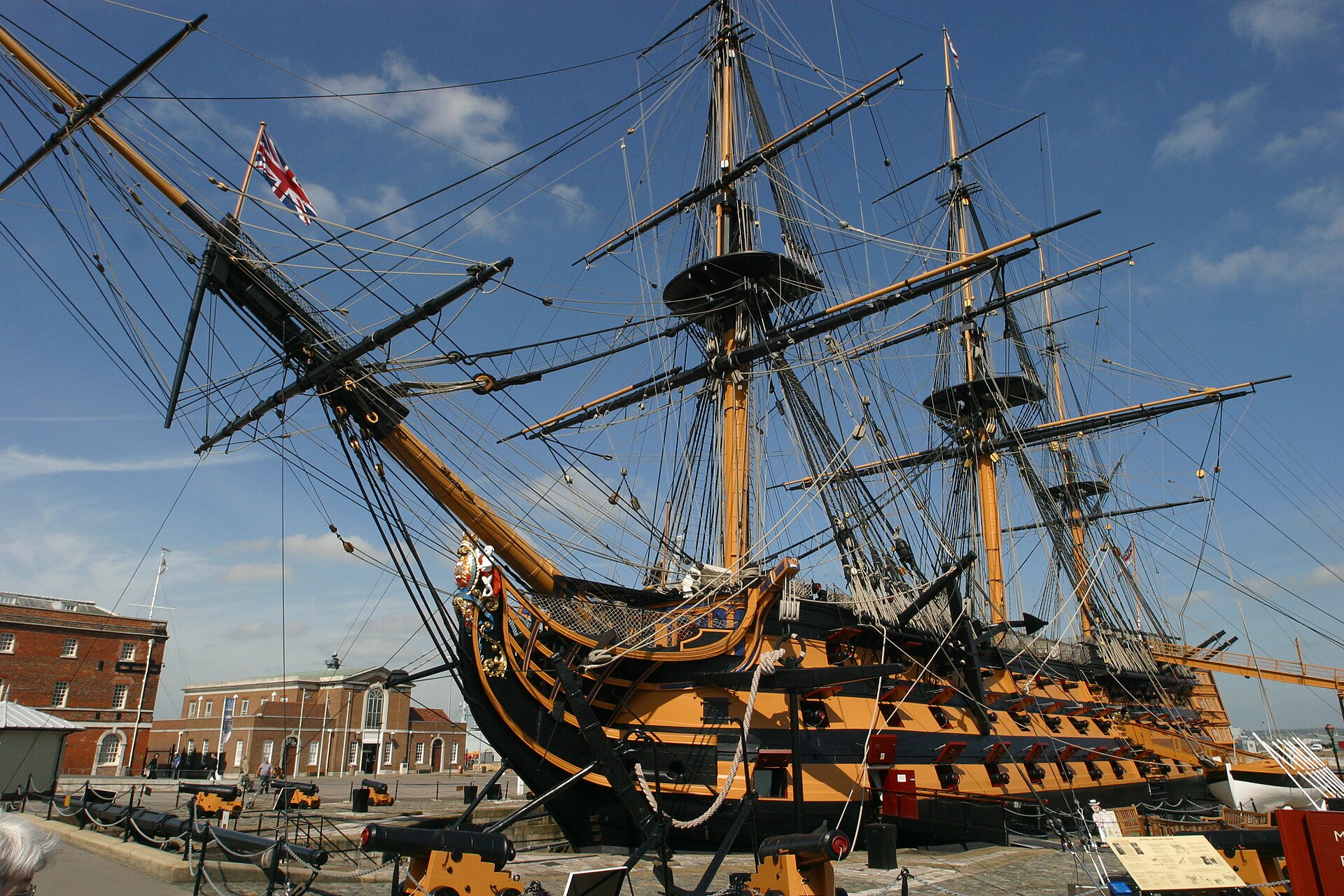
- Mary Rose Museum — Historic Dockyard
The museum holds the surviving hull of Henry VIII's flagship, which sank in the Solent and spent centuries on the seabed before being raised in the twentieth century. Galleries show the sailors' belongings alongside the ship. Quiet, dim and very good on everyday Tudor life.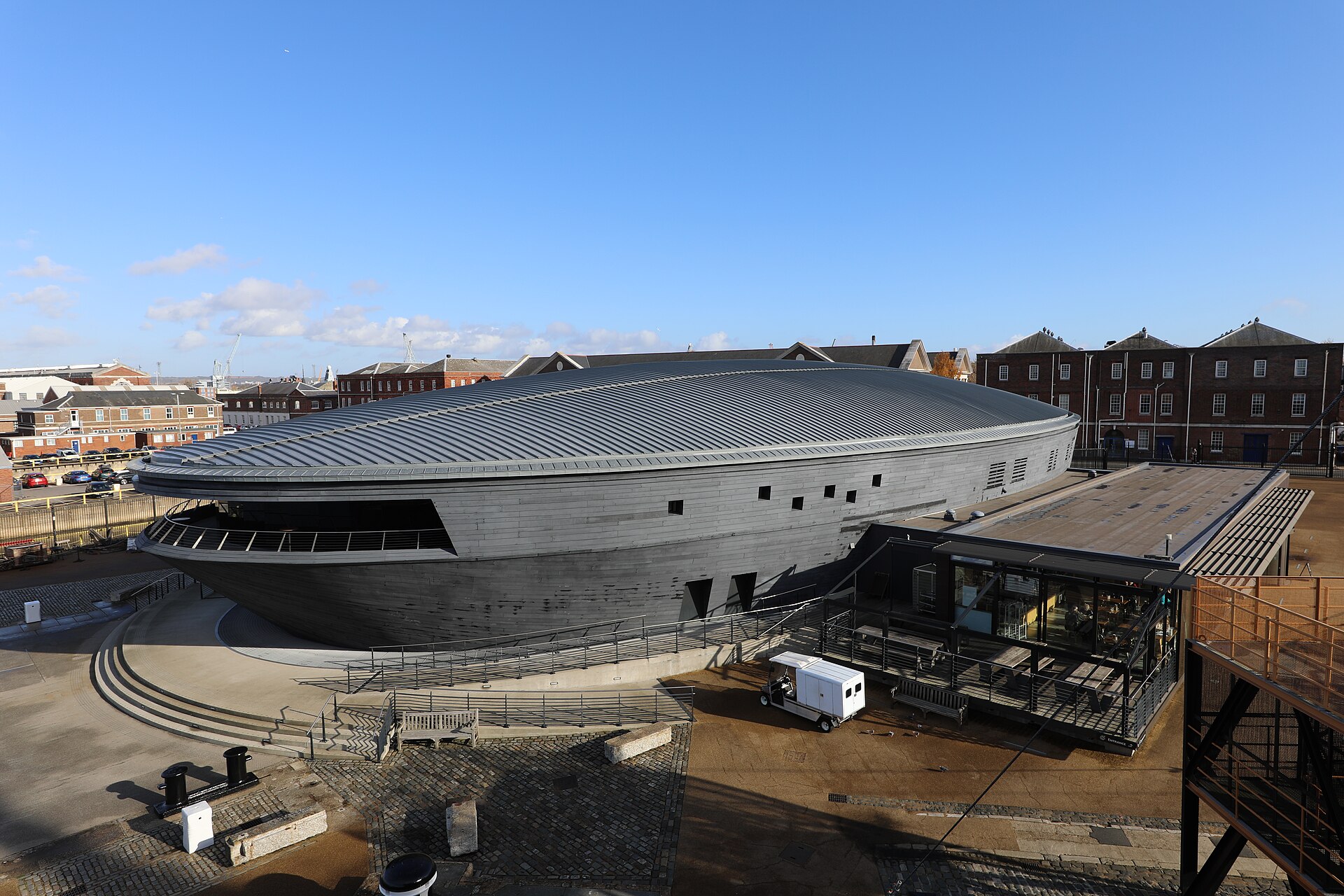
- Spinnaker Tower — Gunwharf Quays
This sail-shaped tower rises high above Gunwharf Quays and the harbour mouth. Viewing decks give a clear read of the whole island, from Old Portsmouth and the Solent ferries to the Isle of Wight on bright days. Pick a clear morning, since low cloud wastes the trip.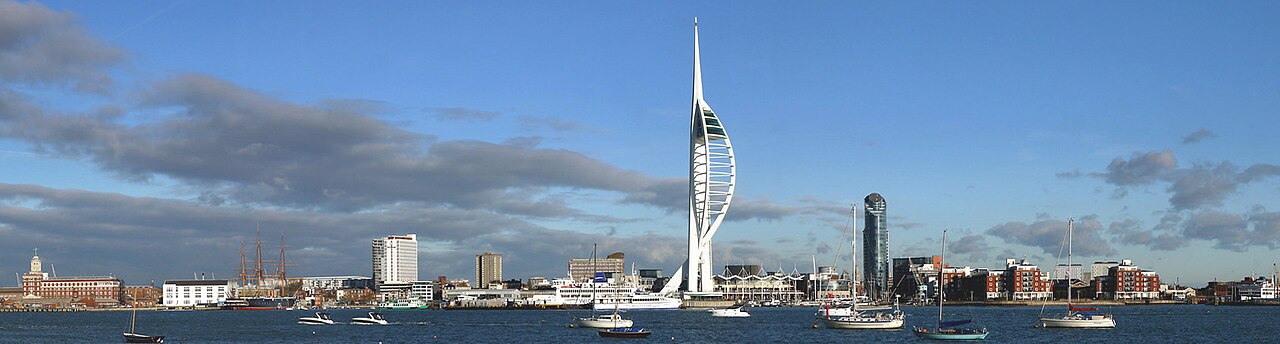
- Southsea Castle and seafront — Southsea
Henry VIII built Southsea Castle as part of his chain of coastal defences against invasion. It stands on a promenade backed by lawns and gardens, with a shingle beach below and a steady stream of ferries and warships passing offshore. Good for a long, windy walk.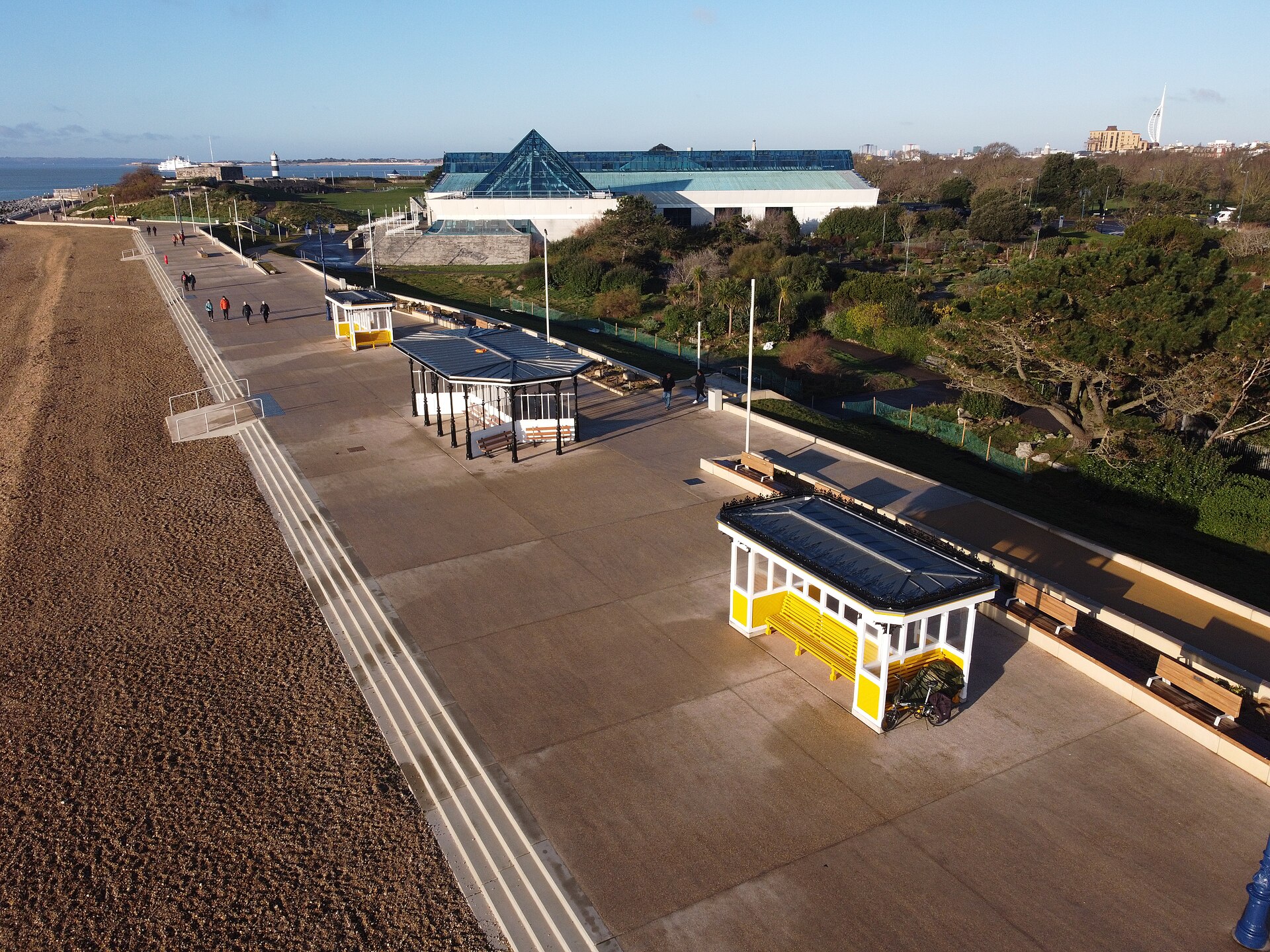
- Portsmouth Cathedral — Old Portsmouth
The cathedral in Old Portsmouth began as the chapel to Thomas Becket and mixes Romanesque and later styles. It is a calm stop after the busier Dockyard, with Old Portsmouth's cobbled lanes, harbour-view pubs and sea walls a few minutes away on foot.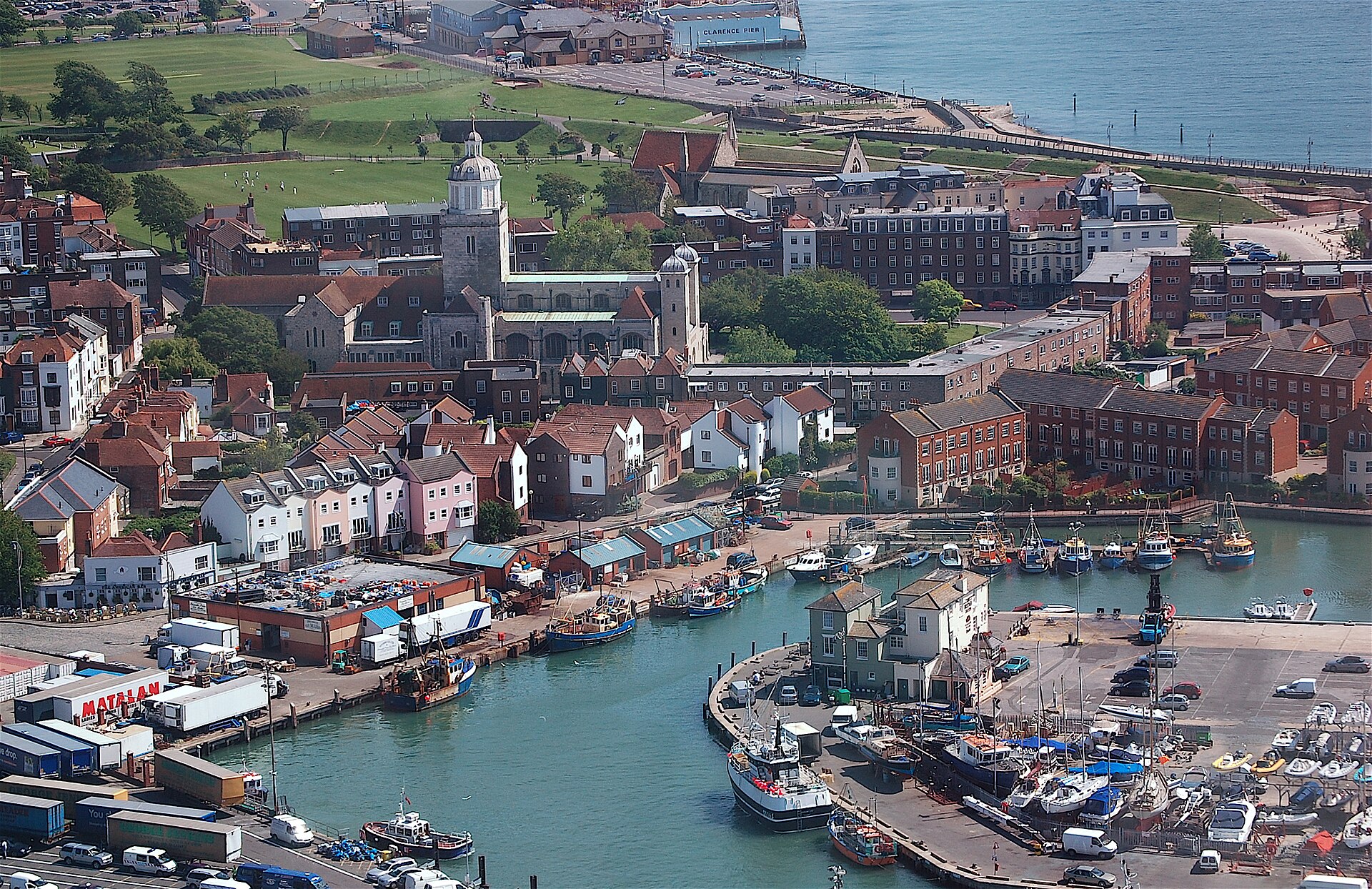
Culture
Portsmouth's culture is naval first and seaside second, with a strong streak of amateur and professional performance. The Royal Navy shapes the calendar, the street names and the talk in pubs, and many families have worked in the dockyard or served afloat for generations. The theatres reflect the city's Victorian past: the Kings Theatre in Southsea, designed by Frank Matcham, hosts amateur musicals and touring shows, while the New Theatre Royal near the centre concentrates on drama. The Groundlings Theatre, in the old Beneficial School in Portsea, dates from the eighteenth century. For music, the Guildhall takes the big concerts, including a series by the Bournemouth Symphony Orchestra, and the Wedgewood Rooms is the place for gigs by newer bands. The city also has a quirky footnote in the Portsmouth Sinfonia, a late twentieth-century orchestra that welcomed players with no training or on instruments new to them. Football matters too: matchdays at Fratton Park fill the surrounding streets with blue shirts and loud singing. Humour is dry, people are chatty in pubs and queues, and the city is relaxed about visitors. Because the Dockyard sits inside a working naval base, follow staff directions near warships and do not photograph naval personnel or secure areas without permission.
What to wear
Portsmouth has no regional costume of the kind found in many countries. Its nearest thing to a traditional dress is the naval uniform: dark blue wool, white caps in summer and ceremonial kit on parade days, still seen on the streets near the base and at commemorations. Sailors' striped tops and navy jackets also left a mark on British seaside style, and Southsea's old-fashioned promenade suits that look well. Day to day, most people wear practical casual clothes: jeans, trainers, waterproof jackets and hoodies, with football shirts on matchdays. Southsea's cafés and bars lean arty and relaxed, while evenings out at Gunwharf Quays or in Old Portsmouth call for smart casual at most. Visitors should dress for wind and changeable weather rather than for formality. Pack layers, a windproof or waterproof jacket in any month, and comfortable shoes with grip, because warship decks are steep and sometimes wet, Old Portsmouth has cobbles, and the beach is shingle. Sun hats and sunglasses help in summer on the open seafront. No place here demands special modesty, though a cathedral visit is better with covered shoulders and a quiet manner. Bring a light scarf or extra jumper if planning a harbour boat trip, since it feels colder on the water.
What to eat
- Fish and chips — Chip shops in Southsea, Old Portsmouth and the harbour area
The seaside classic, best eaten from paper on the Southsea front or beside the water in Old Portsmouth. Look for chip shops with a queue of locals and fish fried to order. Seagulls are bold here, so keep hold of your portion. - Tea and home-made cake — Tea rooms near the Southsea seafront and gardens
A park or seafront tea room is a pleasant way to spend a grey afternoon. Home-made cakes, a pot of tea and a light lunch suit the slower pace of Southsea, especially after a long windy walk along the promenade. - Full English breakfast — Local cafés in North End and around the city centre
Bacon, sausage, eggs, beans, tomato and toast, served all morning in neighbourhood cafés. Portsmouth's workers' cafés do it generously and cheaply, and it sets visitors up for a day on their feet at the Dockyard. - Modern European dinner — Restaurants in Old Portsmouth
Old Portsmouth has a handful of restaurants serving modern European cooking with good service, usually pricier than the cafés. Book ahead on weekends and enjoy a table near the harbour for a more relaxed evening meal. - Sunday roast — Pubs in Old Portsmouth, Southsea and Fratton
Roast meat with potatoes, vegetables, Yorkshire pudding and gravy is a British weekend ritual and a good use of Portsmouth's many pubs. Arrive early, since popular places fill up and sell out of the best cuts.
Plan it
Best time. May to September for the best chance of dry, mild weather, seafront walks and long evenings; July and August are busiest and school holidays crowd the Dockyard. Spring and early autumn are quieter, and winter suits museums but brings wind and rain off the Solent.
How long. 2–3
Getting there. Direct trains run from London Waterloo in a little over an hour and a half, and from Gatwick Airport in roughly an hour and a quarter. Southampton is about an hour by train. Portsmouth Harbour station serves the Dockyard, Gunwharf Quays, the Spinnaker Tower and Isle of Wight ferries; Portsmouth & Southsea station is closer to the centre and seafront.
Budget. mid
Tips
- Start at the Dockyard early and check the official site for ticket options and opening times before you go
- Wear windproof layers and sturdy shoes, as the seafront and ship decks are exposed and uneven
- Pick the right station: Portsmouth Harbour for the waterfront and ferries, Portsmouth & Southsea for the centre
- Book restaurants in Old Portsmouth ahead on weekends, and carry a card as well as a little cash for beach kiosks
Etiquette
- Follow staff instructions near warships and do not photograph naval personnel or restricted areas without permission
- Keep noise down in the cathedral and on Old Portsmouth's residential lanes
- Take litter home or use bins on Southsea beach and watch food around gulls
Nearby
Sources
- Wikidata Q72259 (CC0)
- Wikipedia: Portsmouth (CC BY-SA 4.0)
- Wikivoyage: Portsmouth (CC BY-SA 4.0)
- Photo: Portsmouth from Portsdown Hill (en:User:AlanFord) (Public domain)
- Photo: Portsmouth Waterfront (Phuket Paul) (CC0 1.0)
- Photo: Portsmouth Guildhall (Mike Faherty) (CC BY-SA 2.0)
- Photo: Southsea Beach New Sea Defences (Tim Sheerman-Chase) (CC BY 2.5)
- Photo: HMS Victory (David Hewitt) (CC BY 3.0)
- Photo: Mary Rose Museum exterior (Geni) (CC BY-SA 4.0)
- Photo: Old Portsmouth (eNil) (CC BY 2.5)
- Photo: Gunwharf Quays, Canalside (Wintonian) (CC BY-SA 4.0)


