Porto
Porto, Portugal
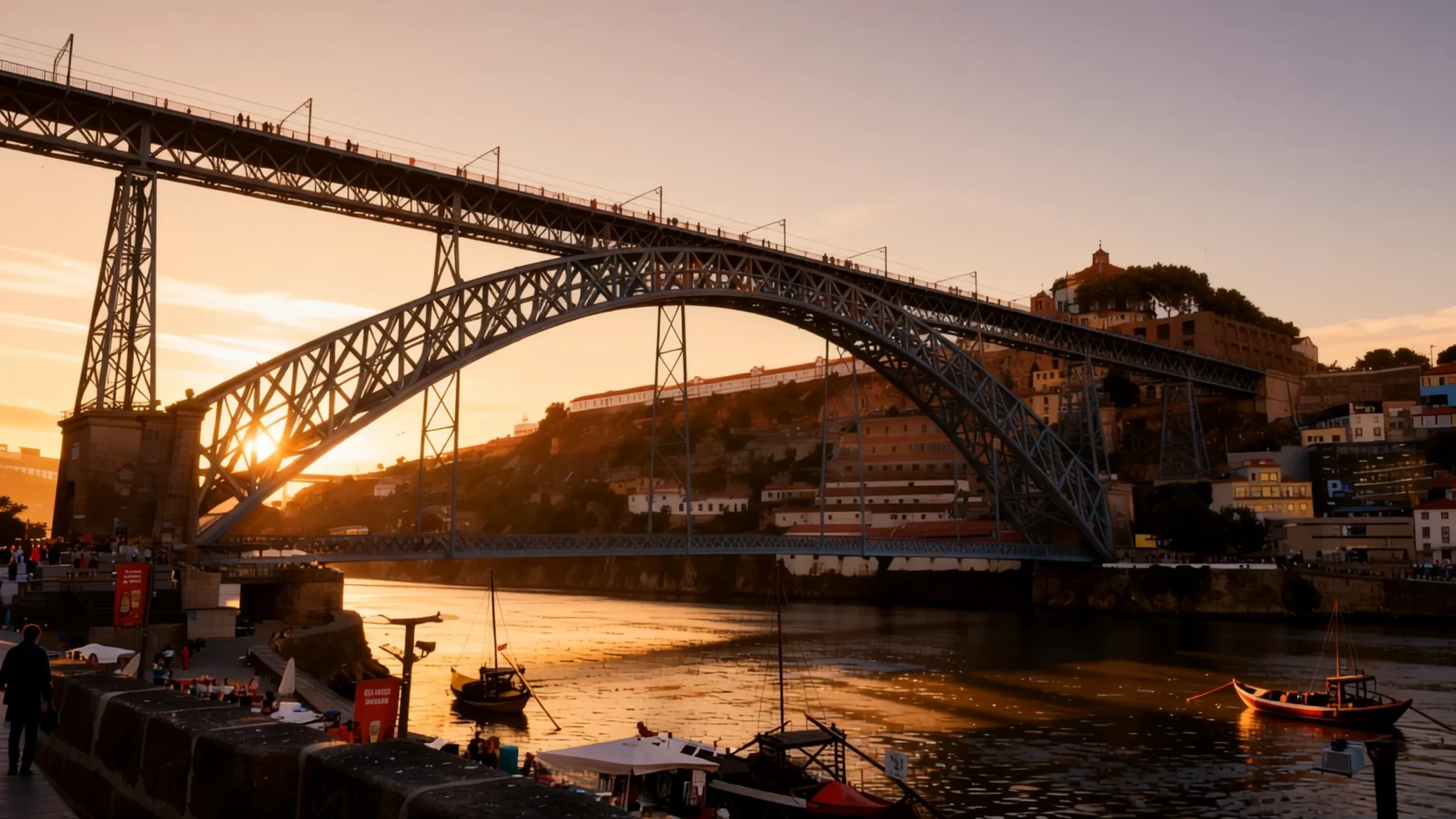
Steep tiled streets slope down to the Douro River, where ancient wine cellars meet contemporary culture and dramatic bridges.
The place
Porto clings to the rocky granite bluffs above the Douro River as it flows toward the Atlantic Ocean in northern Portugal. The municipal core lies on the river's northern bank at an elevation of 104 metres, overlooking Vila Nova de Gaia on the opposite shore where historic port wine lodges line the waterfront. Six monumental bridges span the gorge, linking the two banks across water that has driven the region's commerce for two millennia.
The city's historic centre is a dense tapestry of narrow medieval alleys, tall granite houses clad in hand-painted azulejo tiles, and grand neoclassical squares. Terraced streets drop steeply from hilltop churches down to the Ribeira quay, creating a vertical cityscape where stone staircases double as residential thoroughfares. High above the river, the towering bell tower of Clérigos Church dominates the skyline, serving as a landmark visible across the urban landscape.
Beyond its medieval core, Porto stretches westward toward the coast, where grand avenues lined with palm trees lead to sandy ocean beaches and modern maritime parks. The local climate balances Atlantic maritime dampness with warm Mediterranean sunlight. Wet winters yield to hot, dry summers, when afternoons often reach 33 to 35 degrees, though sea breezes offer some relief. Despite modern expansion, the city retains a compact human scale, defined by neighbourhoods where neighbours chat across narrow iron balconies and traditional grocers trade alongside design studios.
Its story
Long before written records, coastal tribes built fortifications along the heights guarding the Douro River estuary. By classical antiquity, the settlement became a strategic outpost known as Portus Cale, serving as an important trading hub that anchored maritime traffic along the Atlantic coast. The dual settlement of riverside port and hilltop fortress eventually gave its very name to the nation of Portugal.
During the early Middle Ages, control of the settlement shifted through periods of Suebian, Visigothic, and Islamic rule. Christian forces re-established control over the riverbank fortress in the eighth century, establishing a fortified frontier town that gradually grew into a major shipping and shipbuilding centre. Local residents earned a permanent nickname when they supplied their finest meat to outbound seafaring fleets, reserving only tripe for themselves.
Commerce flourished through trade agreements with northern Europe, establishing centuries of wine export to British ports. Wealth from global maritime routes financed elaborate Baroque embellishments, transforming austere medieval stone churches into gilded sanctuaries. The nineteenth century brought industrial growth, monumental bridge construction, and civic expansion that established elegant boulevards and trading halls. Today, Porto preserves this multi-layered architectural heritage, where Romanesque foundations, medieval alleys, and modern cultural centers exist side-by-side along the river gorge.
What to see
- Palácio da Bolsa — Ribeira
Built on the former grounds of a Franciscan monastery, this nineteenth-century stock exchange palace showcases opulent civic architecture. Inside, grand staircases lead to the famed Arabian Room, decorated in intricate Moorish revival style with gilded plasterwork and stained glass. Guided tours lead visitors through formal courtrooms and former trading chambers.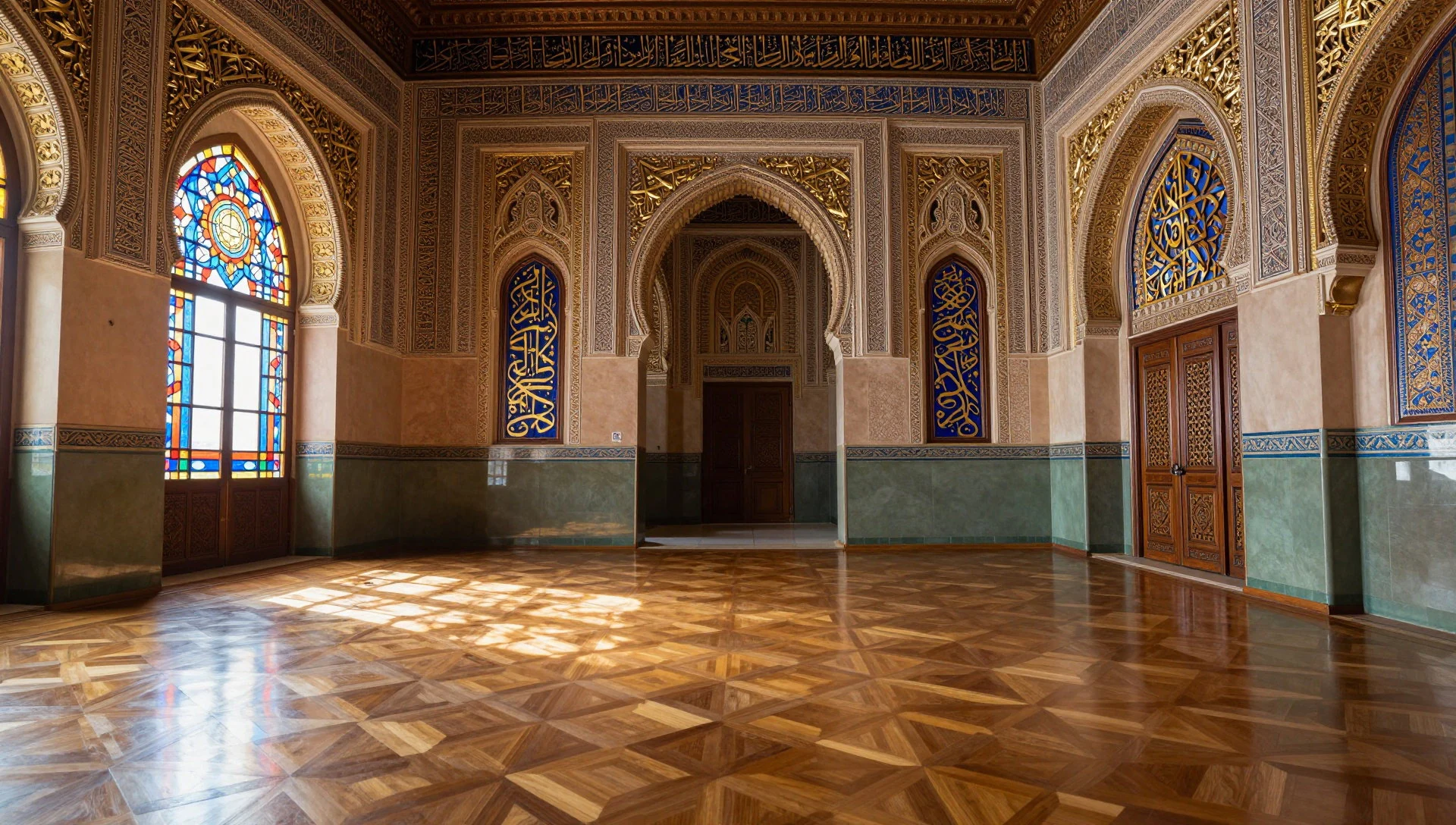
- Sé do Porto — Batalha
Perched on a high granite outcrop overlooking the city, Porto’s cathedral presents a fortress-like Romanesque exterior flanked by twin towers. Later additions brought Baroque decorations, silver altars, and a serene Gothic cloister lined with vivid blue-and-white azulejo tiles depicting religious scenes and historic events.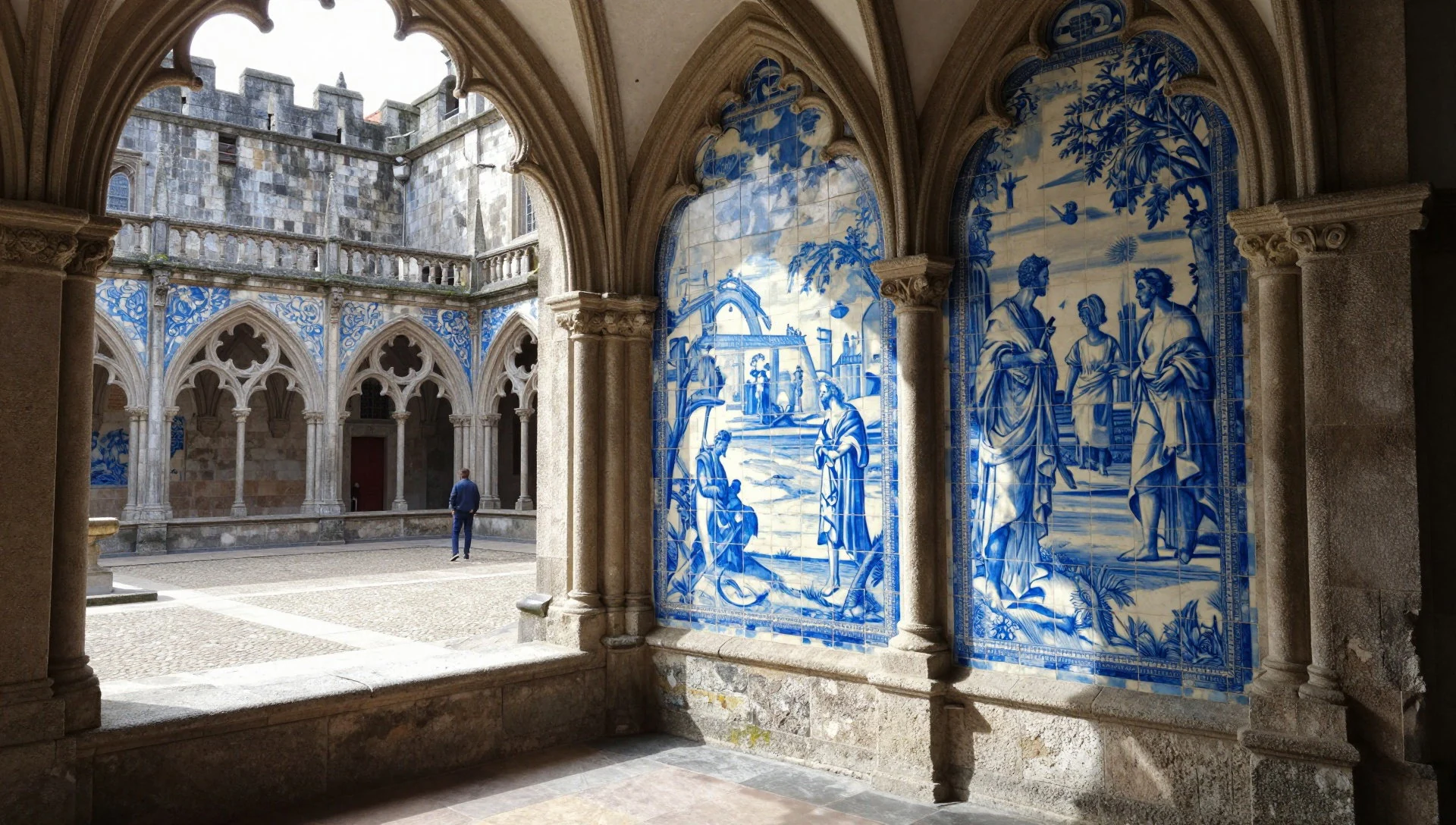
- Igreja e Torre dos Clérigos — Baixa
This Baroque church complex features a striking oval nave and a famous granite bell tower that rises above the city skyline. Climbing the steep internal staircase rewards visitors with panoramic views across red-tiled roofs, the Douro River, and distant ocean horizons.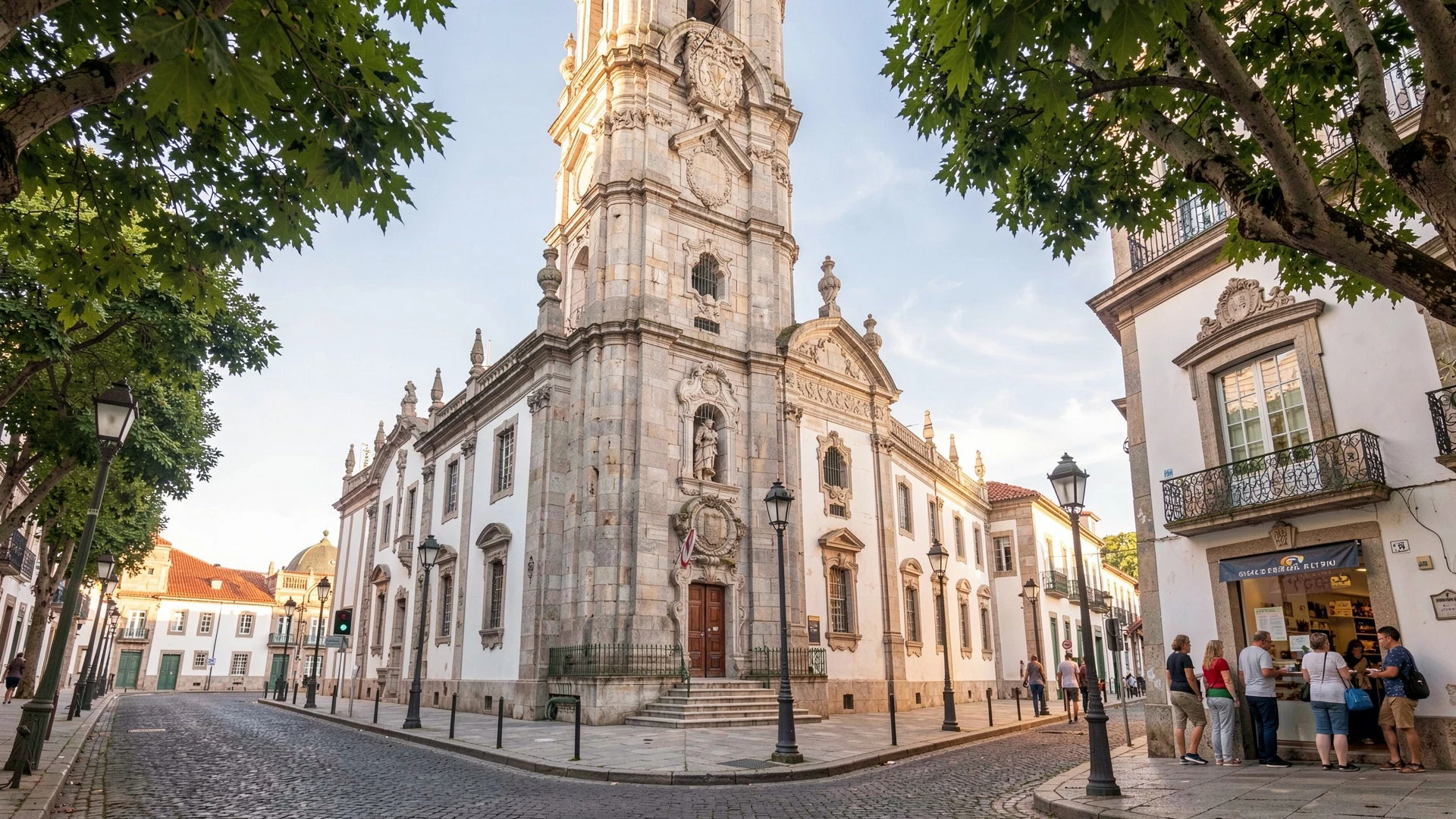
- Livraria Lello — Baixa
Renowned for its elaborate Neo-Gothic facade and sculpted interior, this historic bookstore features a striking crimson staircase beneath a stained-glass skylight. Carved wooden bookshelves stretch to the ceiling, attracting book lovers and architecture enthusiasts alike. Tickets must be reserved online prior to entry.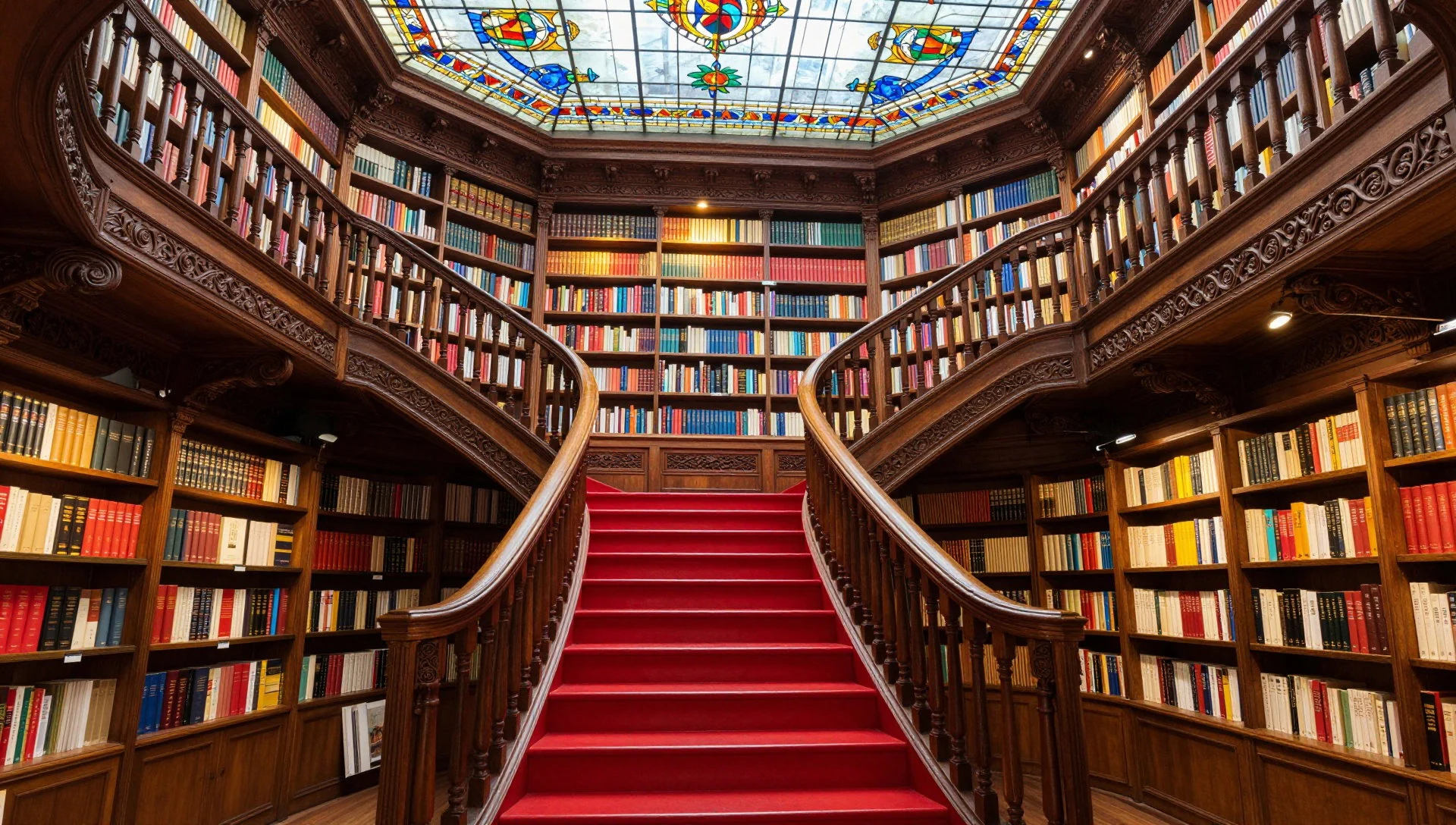
- Igreja do Carmo and Igreja dos Carmelitas — Baixa
These twin churches stand side-by-side, separated only by a metre-wide residential house built to satisfy ancient religious rules. The exterior side wall of Igreja do Carmo features a spectacular vast tile panel rendered in cobalt blue and white porcelain tiles.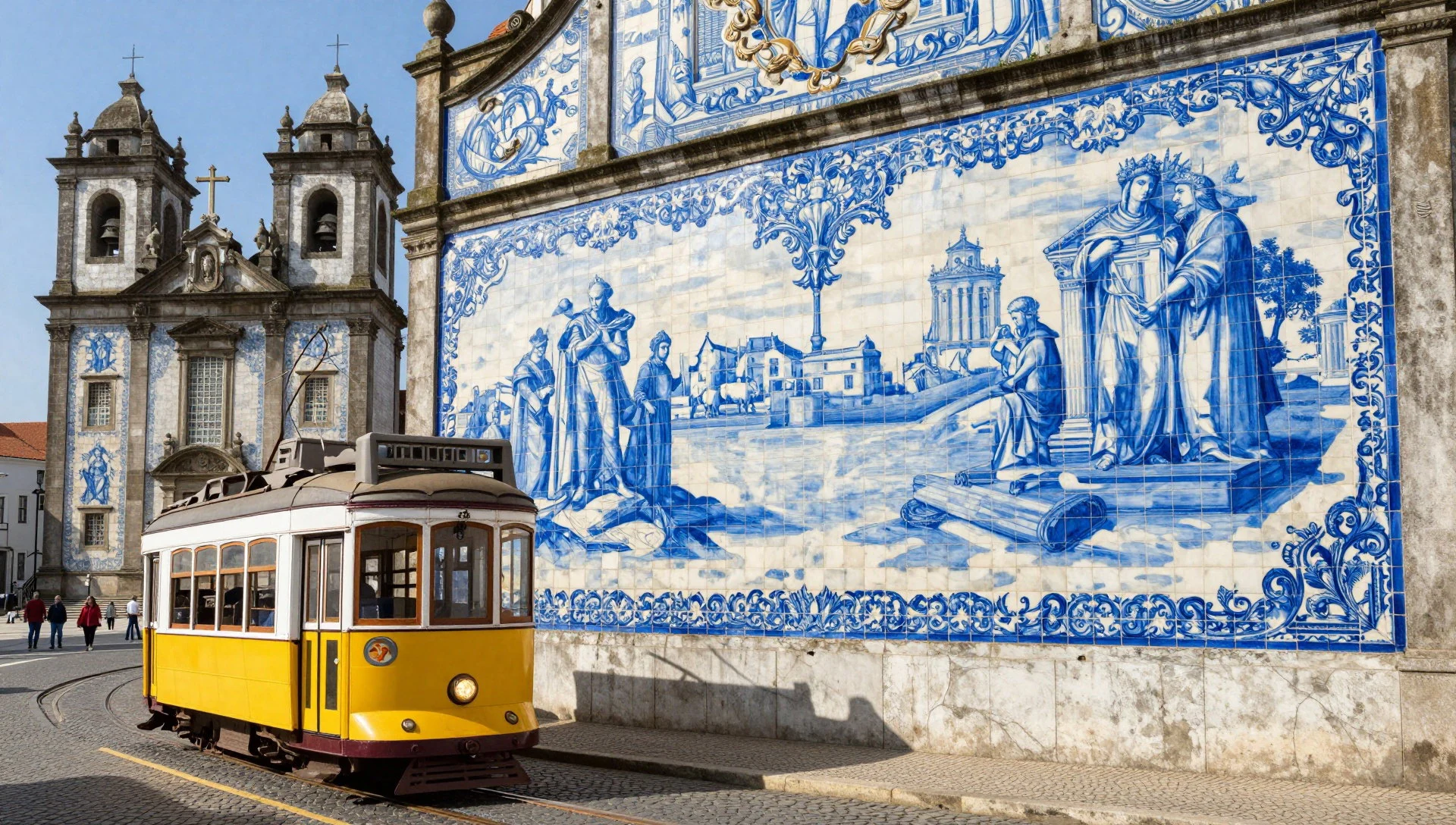
Culture
Porto’s cultural identity is forged by its maritime past, strong working-class heritage, and artistic independence. Residents take pride in their distinct northern character, characterized by unvarnished warmth, frank conversation, and deep civic devotion. Creative life thrives across both historic and modern spaces, from independent art galleries along Rua de Miguel Bombarda to major international performance venues like Casa da Música.
The city’s cinematic tradition runs deep, having hosted early Portuguese film screenings and pioneering movie production studios in the early twentieth century. Annual film festivals bring global filmmakers to local screens, keeping the city's cinematic heritage vibrant. Traditional crafts also endure, particularly the hand-painted ceramic azulejos that transform public walls into open-air historical galleries. Daily life unfolds outdoors in public squares, traditional markets, and neighborhood taverns, where lively political debates accompany midday meals.
When entering small local shops or neighborhood taverns, always greet the staff with a polite bom dia or boa tarde before asking questions or making requests.
What to wear
Traditional northern Portuguese dress reflects rural agricultural traditions and coastal fishing culture. Women historically wore vibrant embroidered skirts, linen blouses, colourful woven shawls, and gold filigree jewellery crafted into hearts and flowers during folk festivals. Men dressed in sturdy woollen trousers, white shirts, broad-brimmed felt hats, and cloth sashes wrapped around the waist.
In daily life today, Porto residents dress with smart, casual restraint. Practical streetwear dominates, featuring tailored denim, light jackets, trench coats, and versatile leather shoes suited to urban walking. Young locals lean toward relaxed contemporary European styles, incorporating earth tones, canvas trainers, and layered knits suited to changing coastal weather.
For visitors, comfortable footwear with solid grip is essential to navigate steep granite cobbles and slick stone stairways without slipping. Layering is key: morning coastal fog and Atlantic winds often give way to warm afternoon sunshine. Pack a lightweight windbreaker or waterproof jacket, breathable cottons for summer afternoons, and modest clothing covering shoulders and knees if planning to visit active places of worship.
What to eat
- Francesinha — Traditional taverns and historic cafes in Baixa
Porto’s signature sandwich stacks cured ham, fresh sausage, and steak between thick slices of bread, covered in melted cheese and a hot beer-and-tomato sauce. It is typically served with french fries and a fried egg.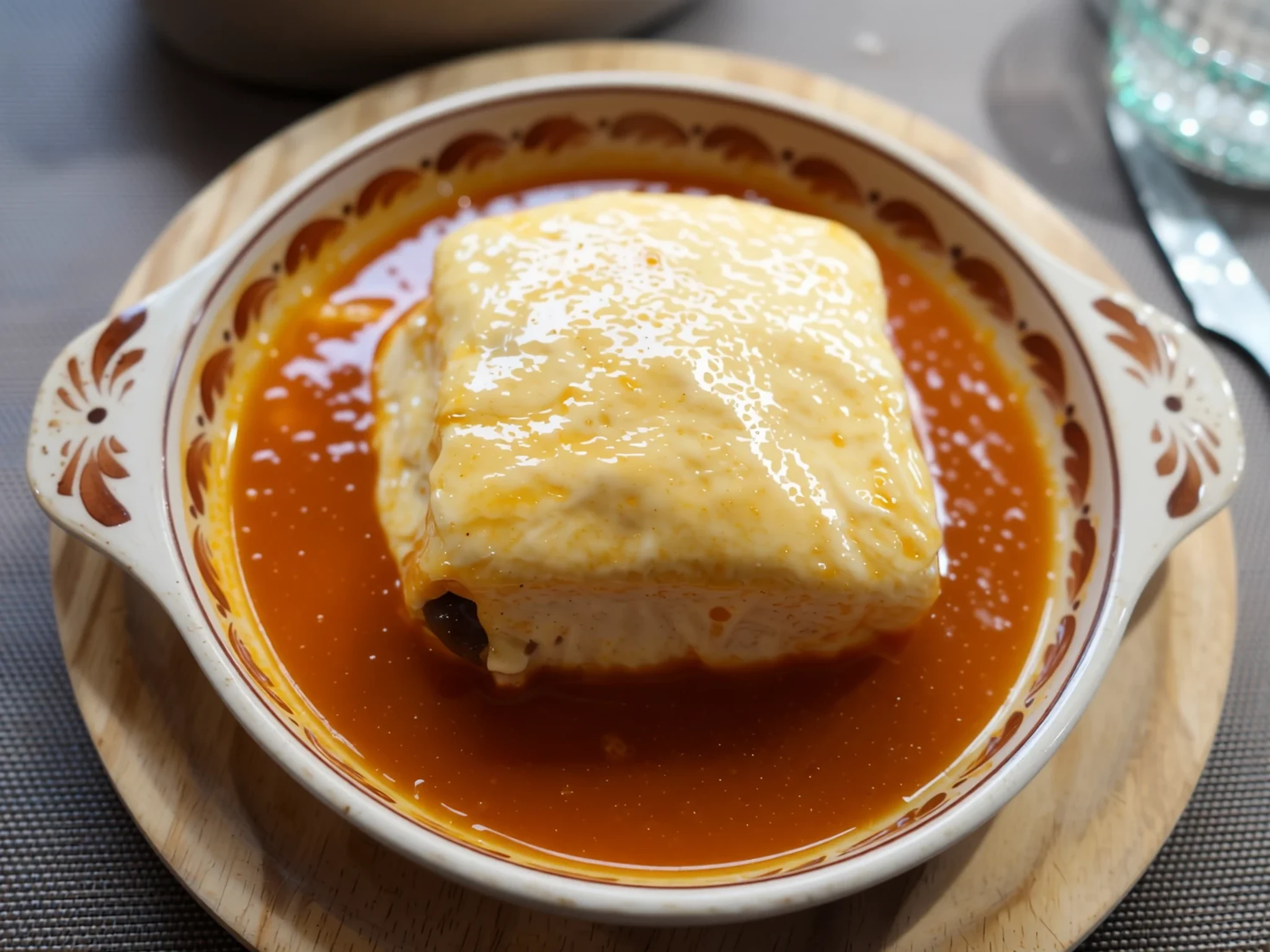
- Tripas à Moda do Porto — Traditional eateries around the Ribeira waterfront
This hearty medieval stew features slow-cooked tripe, white beans, smoked sausages, pig's trotters, and aromatic spices. The beloved local specialty gave residents their historic nickname and remains a staple of traditional Sunday family lunches.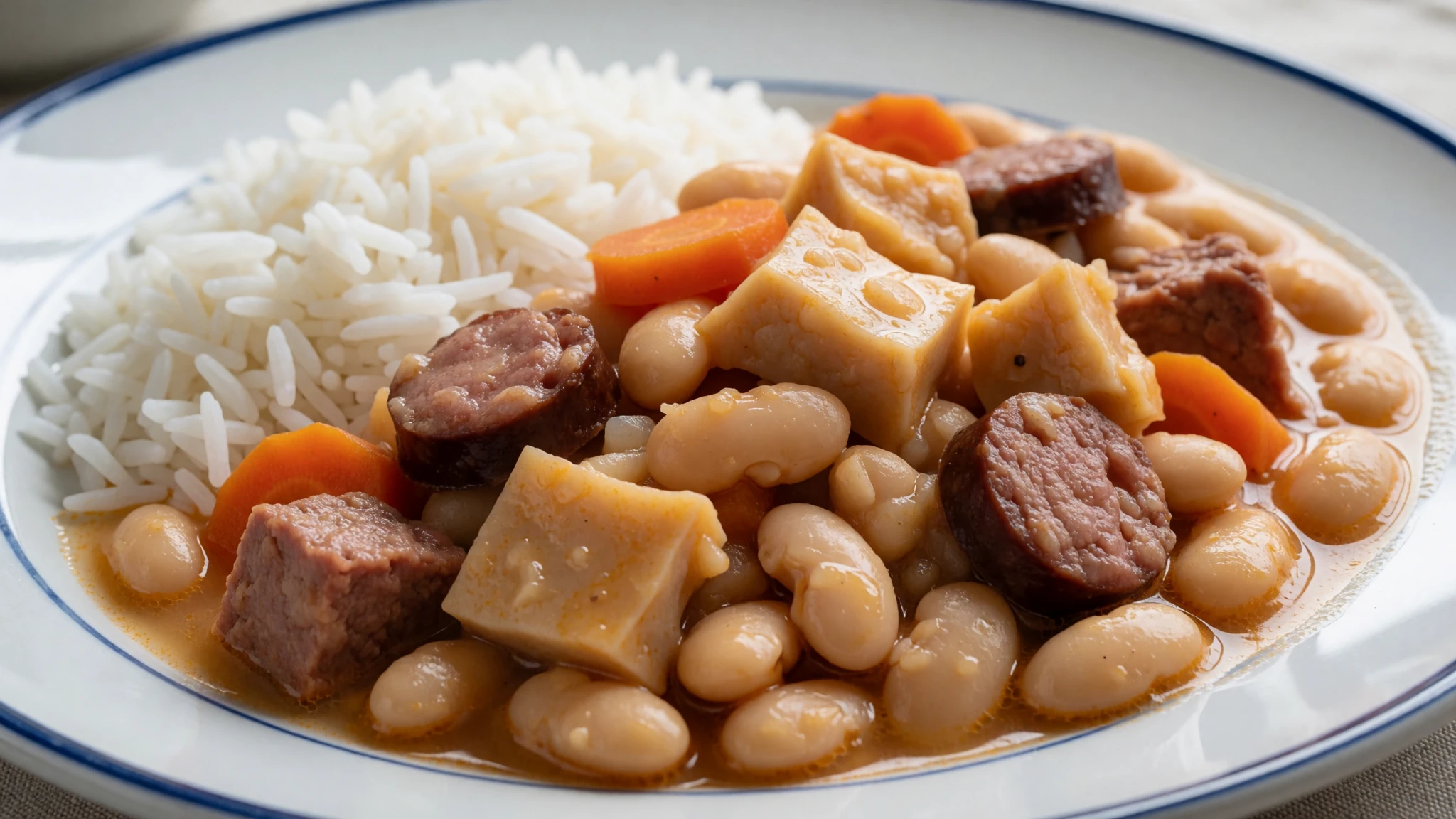
- Bacalhau à Gomes de Sá — Neighborhood taverns across Miragaia
A classic northern dish of flaked salted cod baked with sliced potatoes, caramelized onions, hard-boiled eggs, and black olives. Drizzled generously with local olive oil, it offers a comforting taste of maritime culinary heritage. - Pastéis de Nata — Corner bakeries and pastry shops in Bolhão
Crisp, flaky pastry shells filled with rich egg custard, baked at high heat until caramelized on top. Enjoy them warm from the oven, dusted lightly with ground cinnamon and powdered sugar alongside a strong espresso. - Port Wine — Historic wine lodges in Vila Nova de Gaia
Fortified wine produced in the nearby Douro Valley and aged along the riverfront. Varieties range from ruby and tawny to white and vintage, enjoyed as an aperitif or digestif accompanied by local sheep's cheese and roasted nuts.
Plan it
Best time. May, June and September offer warm weather, fewer crowds, and pleasant walking conditions; July and August bring peak heat and can bring heatwaves, while winter months are wet and cool.
How long. 3–4
Getting there. Francisco Sá Carneiro Airport connects directly to the city center via metro; regular trains run from Lisbon to Porto-Campanhã station.
Budget. mid
Tips
- Book tickets for Livraria Lello online well in advance to secure entry
- Wear sturdy walking shoes with soft soles for grip on steep, slippery cobblestones
- Purchase a reloadable travel card for easy travel on metros, buses, and trams
- Visit popular monuments early in the morning to beat long queues and tour groups
Etiquette
- Keep your voice low on public transport and inside quiet places of worship
- Wait to be seated in formal restaurants rather than choosing your own table
- Greet shopkeepers and waiting staff with bom dia before asking questions
Nearby
Sources
- Wikidata Q36433 (CC0)
- Wikipedia (rev 1382229701) (CC BY-SA 4.0)
- Wikivoyage (rev 5407379) (CC BY-SA 4.0)
- Photo photos/01-o-porto-visto-da-ponte-dom-luis-i.jpg (CC BY 3.0)
- Photo photos/02-puente-don-luis-i-oporto-portugal-2012-05-09-dd-13.jpg (CC BY 3.0)
- Photo photos/03-casa-da-m-sica-porto-portugal.jpg (CC BY-SA 2.0)
- Photo photos/04-torre-de-los-cl-rigos-oporto-portugal-2012-05-09-dd-04.jpg (CC BY 3.0)
- Photo photos/05-iglesia-de-san-ildefonso-oporto-portugal-2012-05-09-dd-01.jpg (CC BY 3.0)
- Photo photos/06-ayuntamiento-de-oporto-portugal-2012-05-09-dd-03.jpg (CC BY 3.0)
- Photo photos/07-palacio-da-bolsa-in-porto-2.jpg (CC BY-SA 4.0)
- Photo photos/08-igreja-dos-carmelitas-descalcos-and-igreja-do-carmo-in-porto.jpg (CC BY-SA 4.0)


