Plovdiv
Plovdiv, Bulgaria
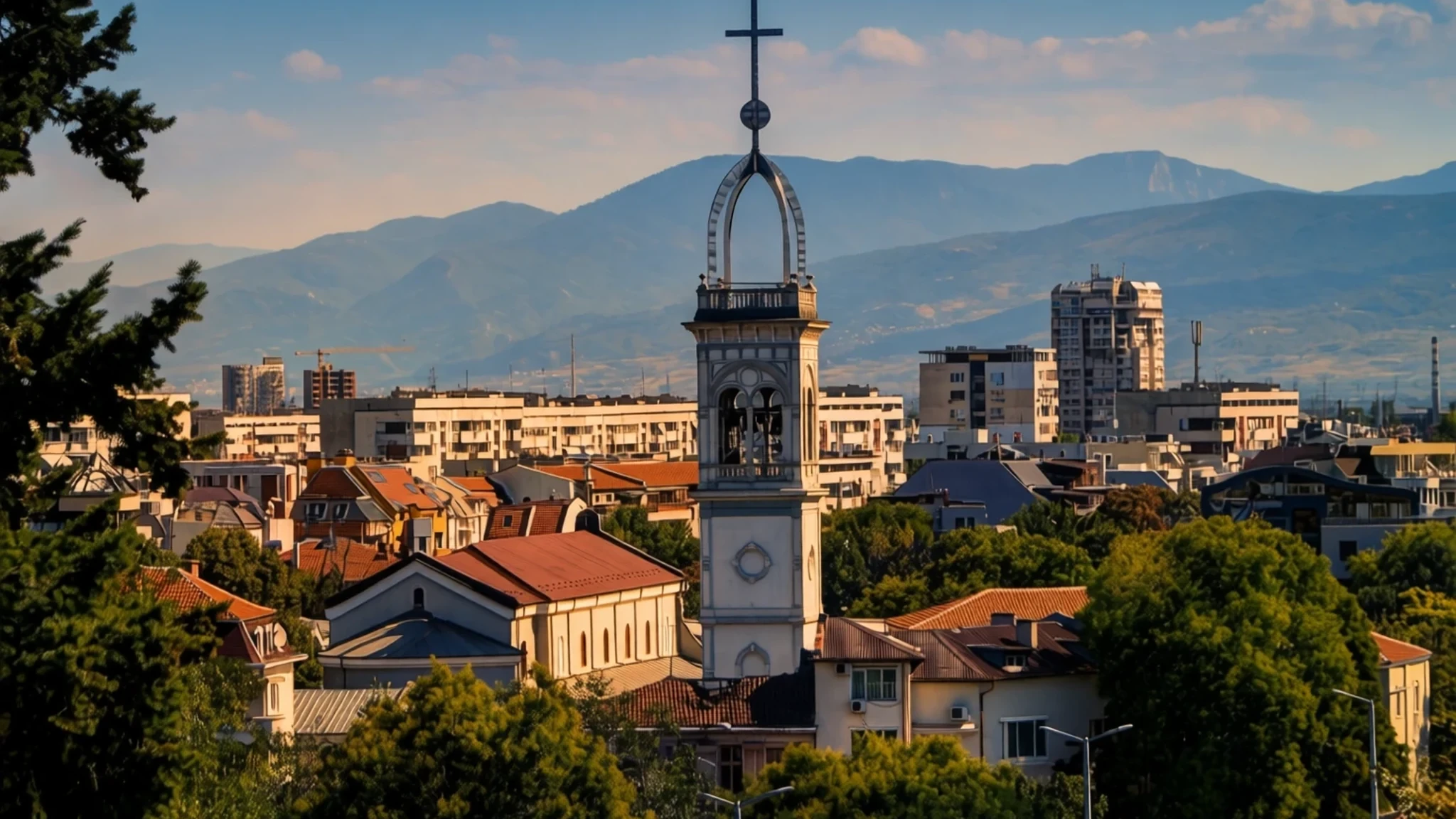
A city of seven hills and layered history, where Roman stone, Ottoman mosques and Bulgarian Revival houses sit within a short walk.
The place
Plovdiv is the second-largest city in Bulgaria, on both banks of the Maritsa River in a fertile part of the south of the country, about 144 km (93 miles) south-east of Sofia. It is built across seven syenite hills, some around 250 metres high, which is why locals often call it the City of the Seven Hills. The city sits at about 172 metres above sea level and has a population of roughly 330,000. The wider metropolitan area holds around 540,000 people.
Wikipedia describes Plovdiv as Europe's oldest continually inhabited city, with people living on the site since around 6000 BC. That claim is worth holding lightly, but the layers of settlement are real and you can see them in the stonework. Today Plovdiv is an economic, transport and educational hub. It was the European Capital of Culture in 2019 and joined UNESCO's Global Network of Learning Cities in 2016.
The heart of the visit is the Old Town, compact enough to cover on foot. Cars are kept off the main central street, so you can move between Roman remains, Ottoman-era mosques and houses in the Bulgarian Revival style, many of which now shelter museums, guesthouses and cafés. Climb one of the hills and the roofs spread out below, with the Maritsa winding through the lowlands. The city feels lived in rather than staged. Students, market traders and stray cats share the pavements with visitors.
Its story
The records of this area reach back more than eight thousand years, and the ground under the city holds deep layers of occupation, roughly twelve metres thick in places. The earliest traces of people here date to the 6th millennium BC, when Neolithic communities buried their dead in mounds such as Yasa Tepe, which lie in districts like Philipovo. Archaeologists have also found pottery and everyday tools on Nebet Tepe, the hill at the heart of the early town, from the Chalcolithic period. By the end of the fourth millennium BC a settlement was established there and had been lived in ever since.
Thracian groups followed, and by the first millennium BC the site had grown into a town. It was a fort of the Bessi, a local Thracian tribe, before the wider region fell under Persian control in 516 BC under Darius the Great. Persian authority came and went. Mardonius reasserted it in 492 BC, and the town stayed nominally tied to Persia until 479 BC. Later it passed into the Odrysian kingdom, a union of Thracian tribes that lasted from 460 BC until 46 AD.
The Roman centuries left the city's most visible monuments, including the theatre uncovered in the 1970s during construction work and the mosaics of the Bishop's Basilica. Ottoman rule added mosques and a clock tower, and later merchants' houses in the Bulgarian Revival style came to line the Old Town. The city's layers of building tell a story of many powers, each leaving a new surface on the old one.
What to see
- Roman Theatre — Pedestrian zone, Old Town
Uncovered in the 1970s during a construction project, the Roman Theatre sits inside the pedestrian zone, so you can reach it without dodging traffic. Its stone seating curves down toward the stage. Merchants usually set up nearby with paintings, prints and small crafts, so expect to browse on the way out. Go early or late in the day if you want room to look around.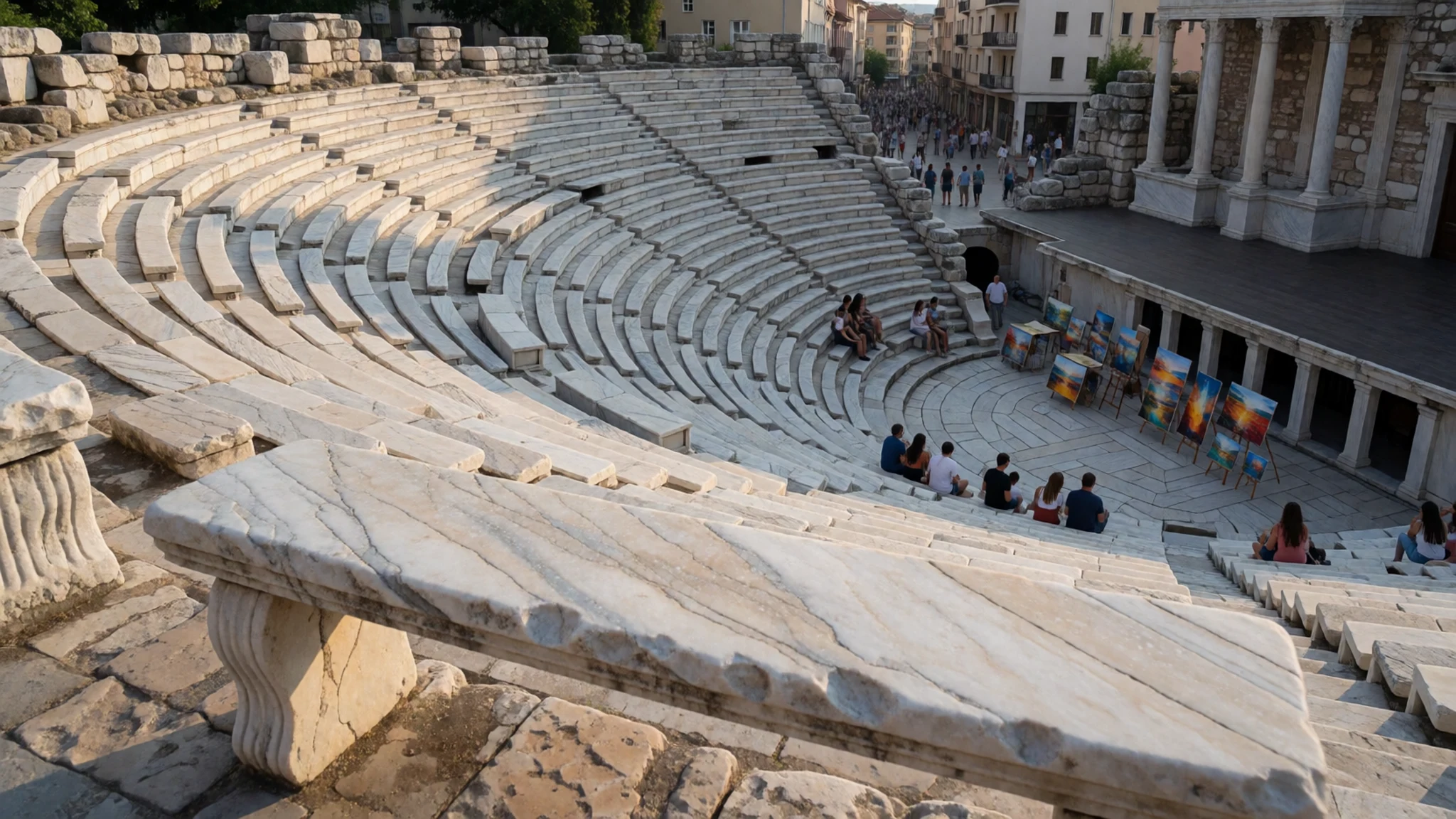
- Dzhumaya Mosque — Old Town
Also known as the Cuma Mosque, this Ottoman-era place of worship stands in the Old Town and is still in use. Its white walls and stone forecourt make a calm contrast with the busy streets nearby. Dress modestly, cover your shoulders, and follow the lead of worshippers about where to remove your shoes. Visits are most comfortable outside prayer times.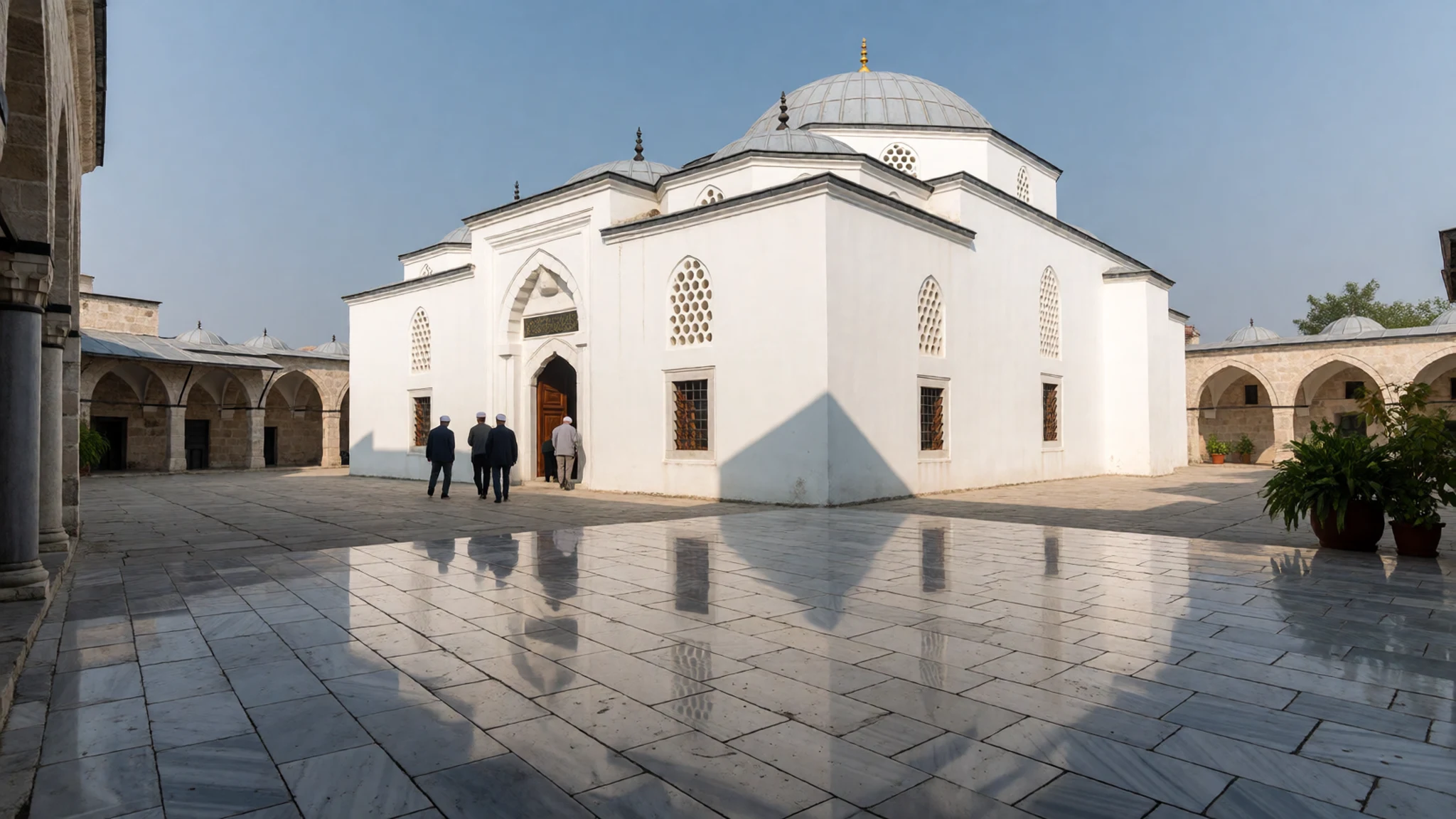
- Ottoman Clock Tower — Old Town
The Ottoman Clock Tower is one of the few reminders in the Old Town of the Ottoman period, and it marks a useful point for orienting yourself on foot. It is a short walk from the mosques and the Roman remains, so it works well as a landmark when you are finding your way between sights. Give it a few minutes for a photograph before you move on.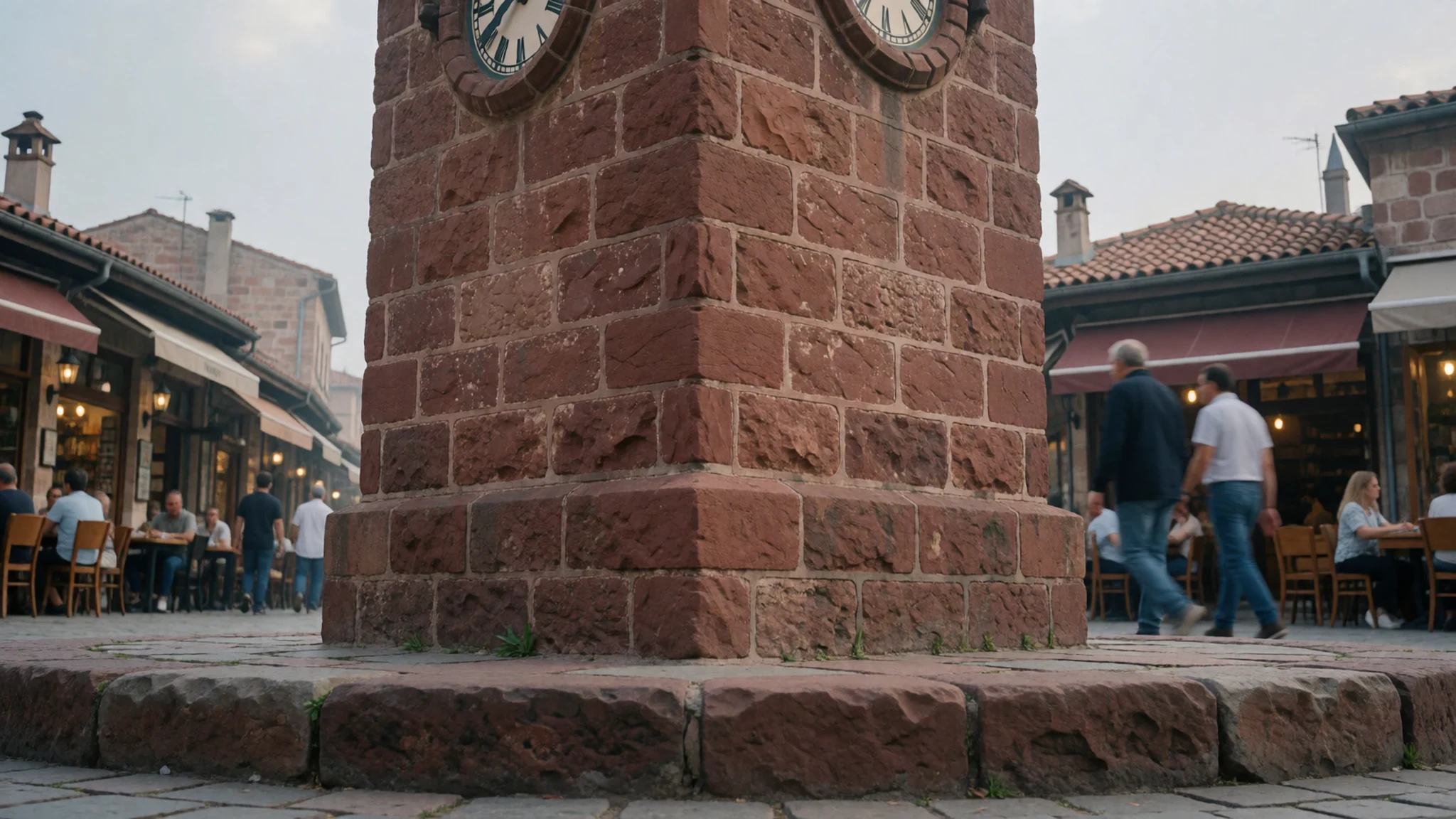
- Bishop's Basilica of Philippopolis — Old Town, near the Roman Theatre
This early Christian site holds some of the city's richest Roman mosaics, dating from late antiquity. The floors are the reason to come rather than the building above them, so take your time and look down. The site is quiet compared with the central streets, and it suits a slower morning. Keep a hand on children near the open excavation areas.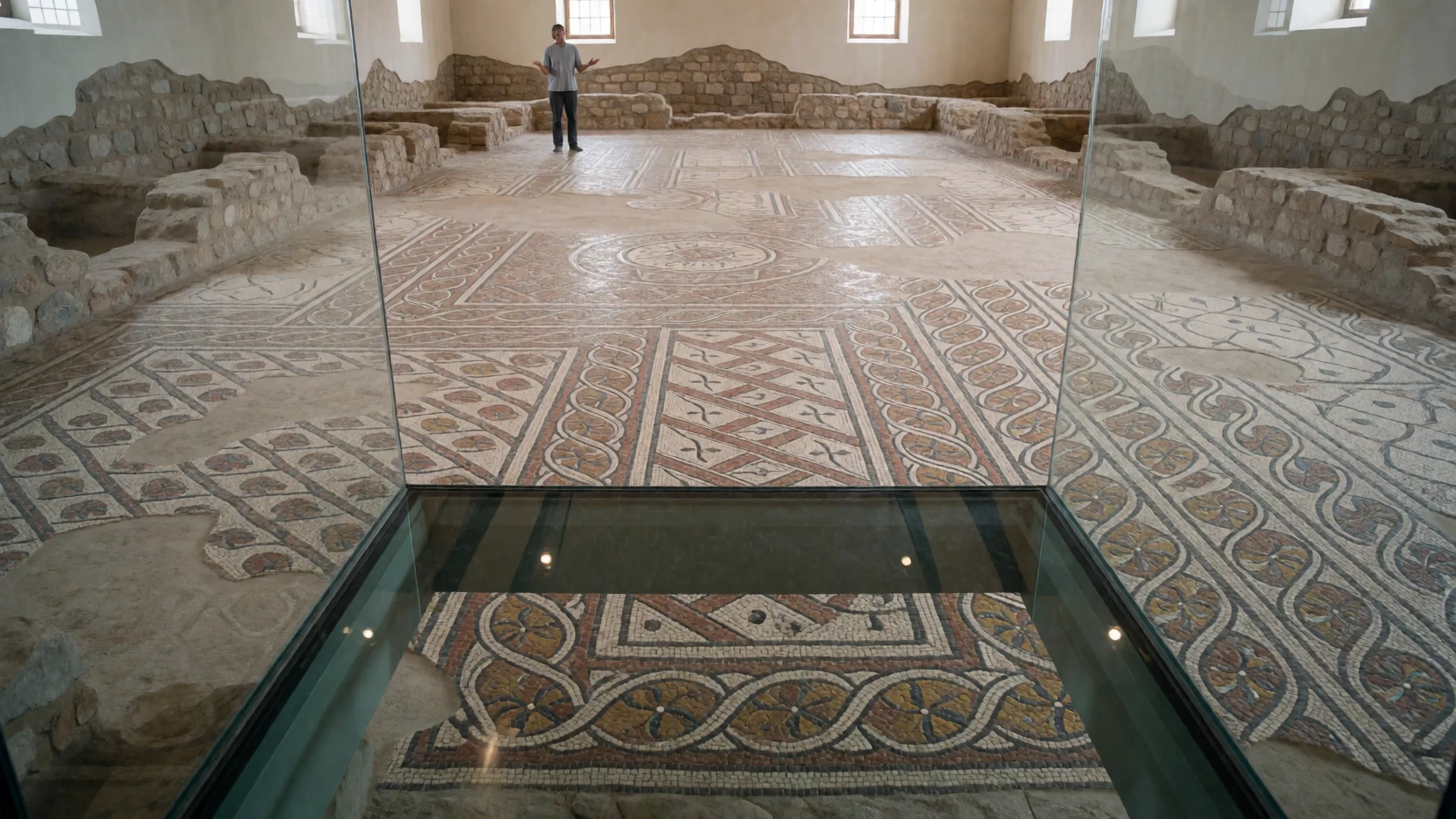
- Nebet Tepe — Hill above the Old Town
Nebet Tepe is the hill where the earliest settlement at Plovdiv was found, with pottery and tools from the Chalcolithic period. It is one of the best places in the city to understand the long occupation, because the ground itself tells the story. The climb is steep, so wear grippy shoes. The views over the rooftops toward the river are worth the effort.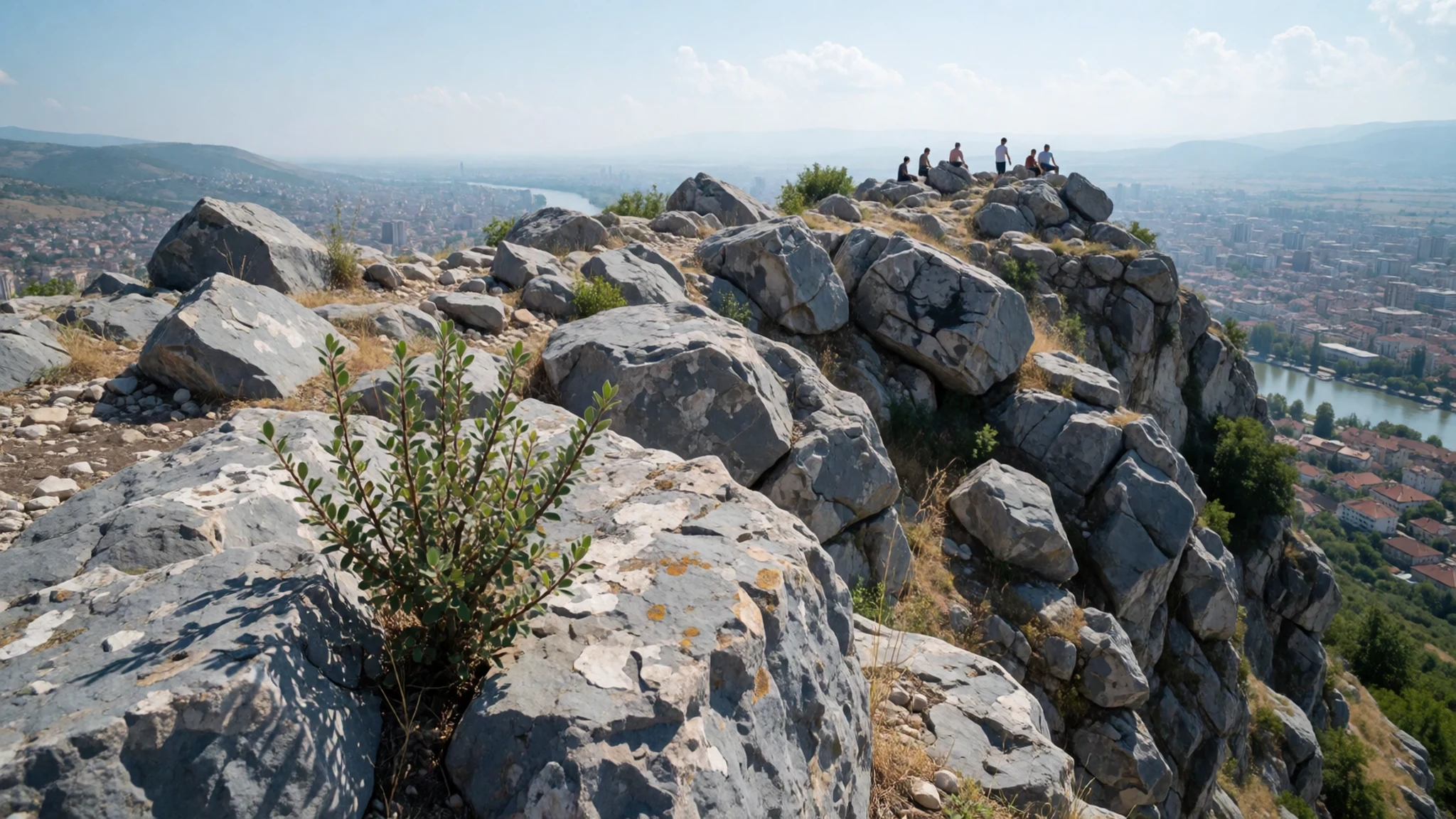
- St Marina Church — Central Plovdiv
St Marina is known for its unique wooden tower, which sets it apart from the stone churches of the city. It is a short walk from the central streets and is a good stop if you want to see a church that is not on the usual tour route. Cover your shoulders when you go in and keep your voice low during services.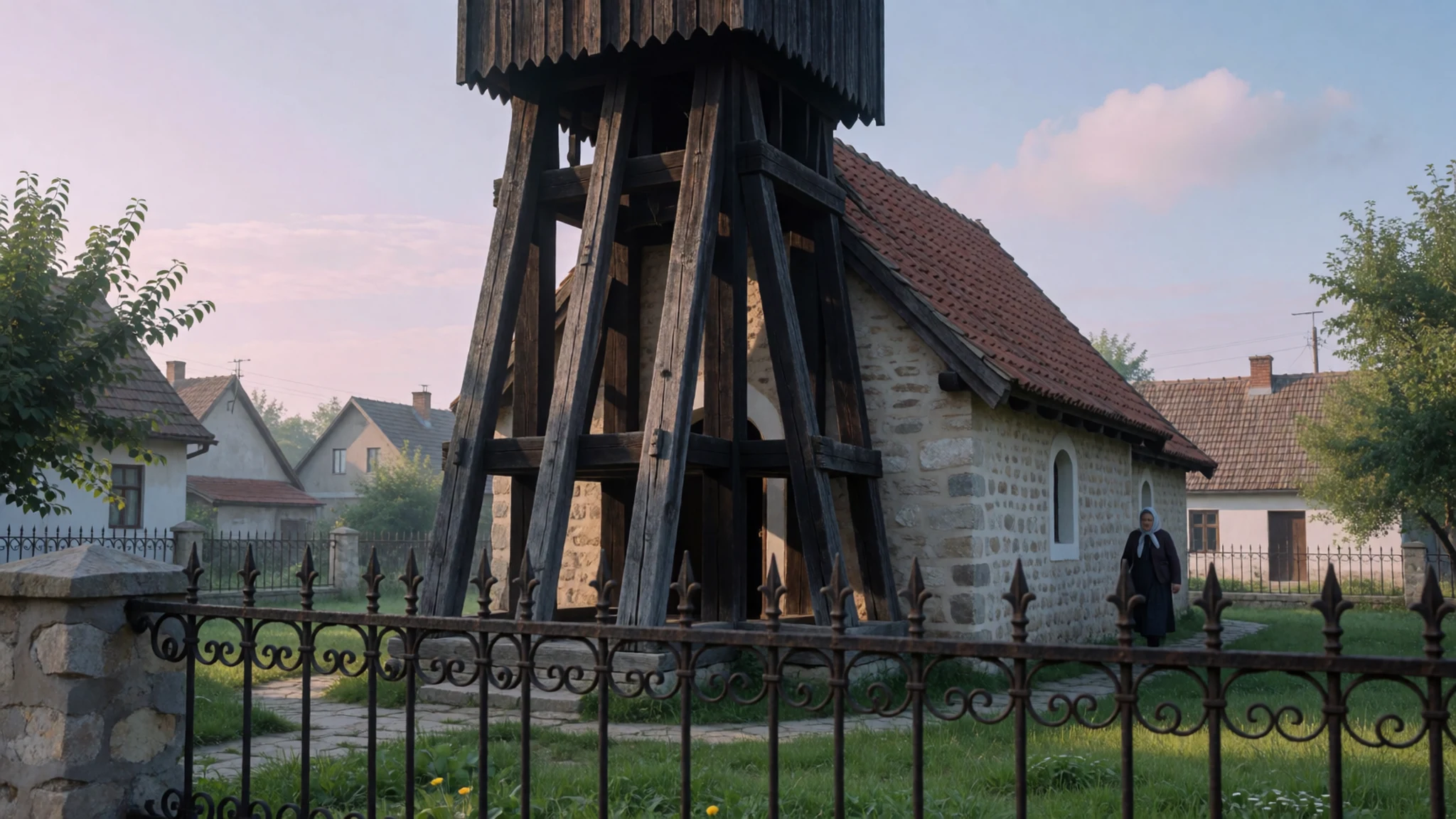
Culture
Plovdiv takes its performing arts seriously. The Drama Theatre traces its roots to the first professional theatre company in Bulgaria, founded in 1881, and the Puppet Theatre, opened in 1948, remains one of the country's leading puppet companies. The opera company dates from 1953. The Philharmonic, founded in 1945, has welcomed soloists including Dmitri Shostakovich and Sviatoslav Richter. Folk music runs deep too. The Trakiya Folklore Ensemble, formed in 1974, has toured widely, and the Detska Kitka children's choir is among the best-known youth choirs in the country.
Daily life mixes Orthodox churches, the Old Town's mosques and the Revival houses that now shelter museums and restaurants. The Old Town is a living neighbourhood, so the streets are lined with flats, courtyards and workshops as well as tourist cafés, and it is worth lingering over a coffee rather than rushing from sight to sight. Locals tend to keep their voices low in churches and during performances.
When you enter a church or mosque, cover your shoulders and knees, and at the mosque follow the example of the people around you on removing your shoes, and ask before photographing anyone at a folk performance or in a workshop.
What to wear
Traditional Bulgarian dress varied from village to village. The costumes of the Plovdiv region were typically built from hand-spun wool and linen, with woven aprons, embroidered sleeves and sashes worked in red and dark thread. Women's dress was often layered, and the most elaborate pieces were kept for weddings and feast days. Today these costumes live mostly on stage with folk ensembles such as the Trakiya company, and in local museums and at festivals, rather than on the street.
In everyday life, people in Plovdiv dress much like people across Europe: jeans, trainers, light jackets and knitwear in cooler months. Evenings out in the Old Town's restaurants are a little smarter, but nobody expects formal wear. Stylish sandals and sneakers are common, and the city's young crowd often wears simple, dark colours.
For a visit, pack flat, grippy shoes, because the Old Town is paved with cobblestones and the streets climb the hills. In hot weather, light cotton and a sun hat help, and carry a scarf or light layer to cover your shoulders in churches and the mosque. Shorts are fine on the streets, but long trousers or a skirt below the knee are the safer choice inside religious buildings.
What to eat
- Banitsa — Bakeries in the central streets, morning
A flaky pastry layered with white cheese, sold hot in the morning and a common breakfast across the country. Look for it at bakeries in the central streets early in the day, when the trays are freshest. It is cheap, filling and ideal for eating while you walk.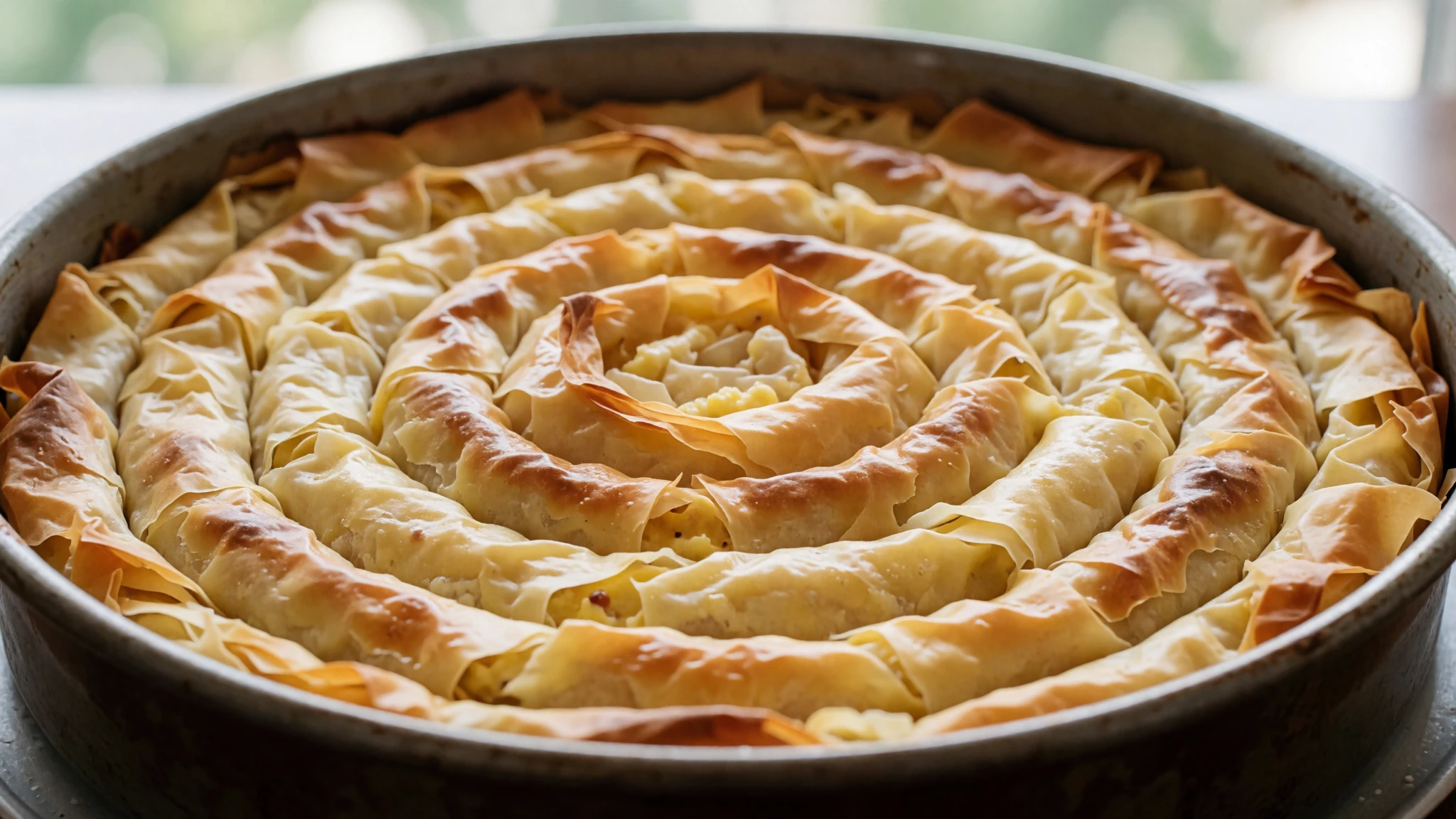
- Shopska salad — Folk-style snack bars near the centre
Chopped tomato, cucumber and pepper topped with a generous layer of grated white cheese. It is the default starter in Bulgaria and appears on almost every menu. Order it at a folk-style snack bar near the centre, where vegetarian and local dishes are a strength.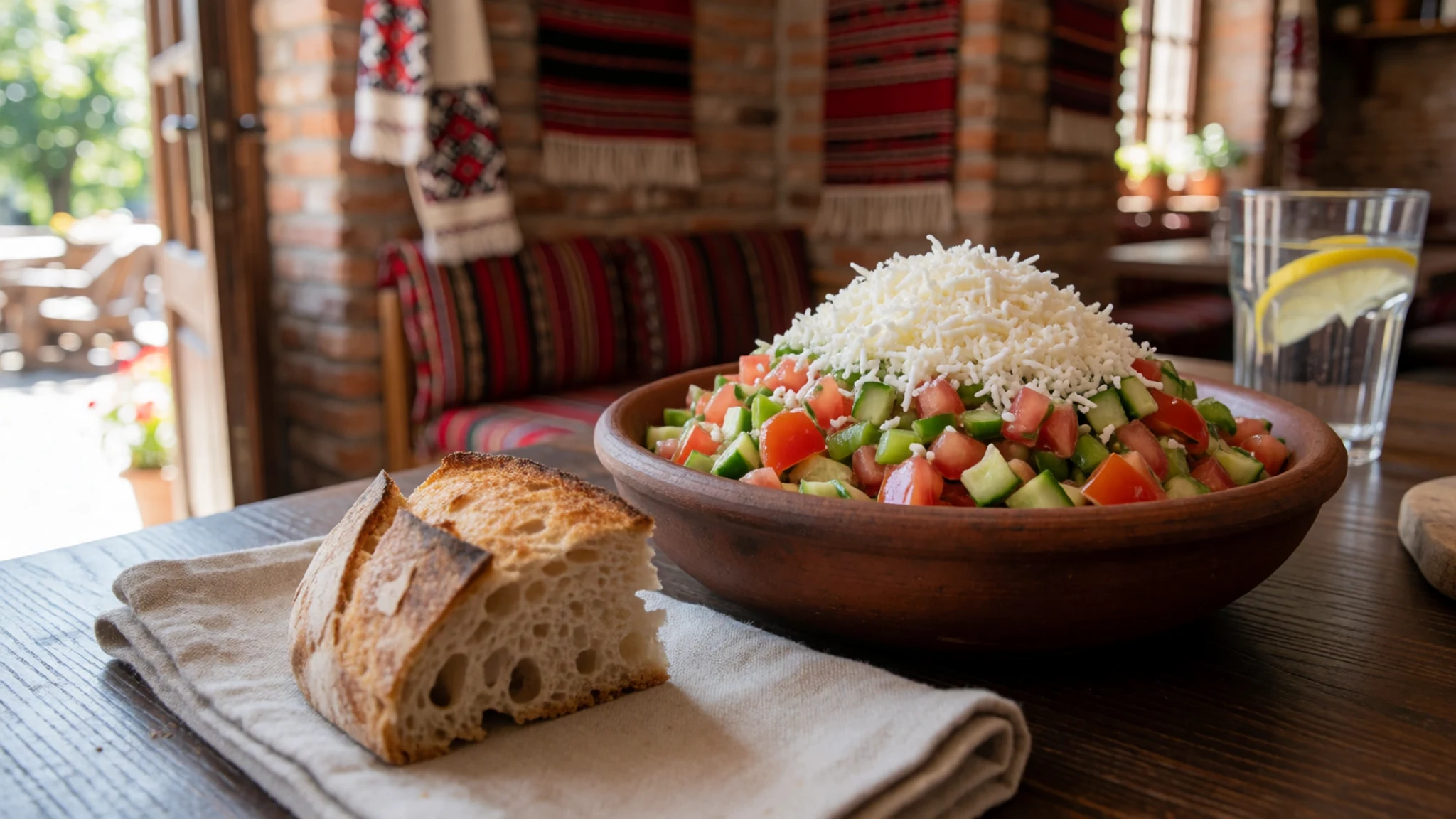
- Kebapche — Grill houses in the Old Town and side streets
Grilled sausages of minced meat, served with raw onion, bread and often a little chilli. Grill houses in the Old Town and the side streets behind it do them quickly and well. They make a good lunch when you want something hot and filling without sitting down for long.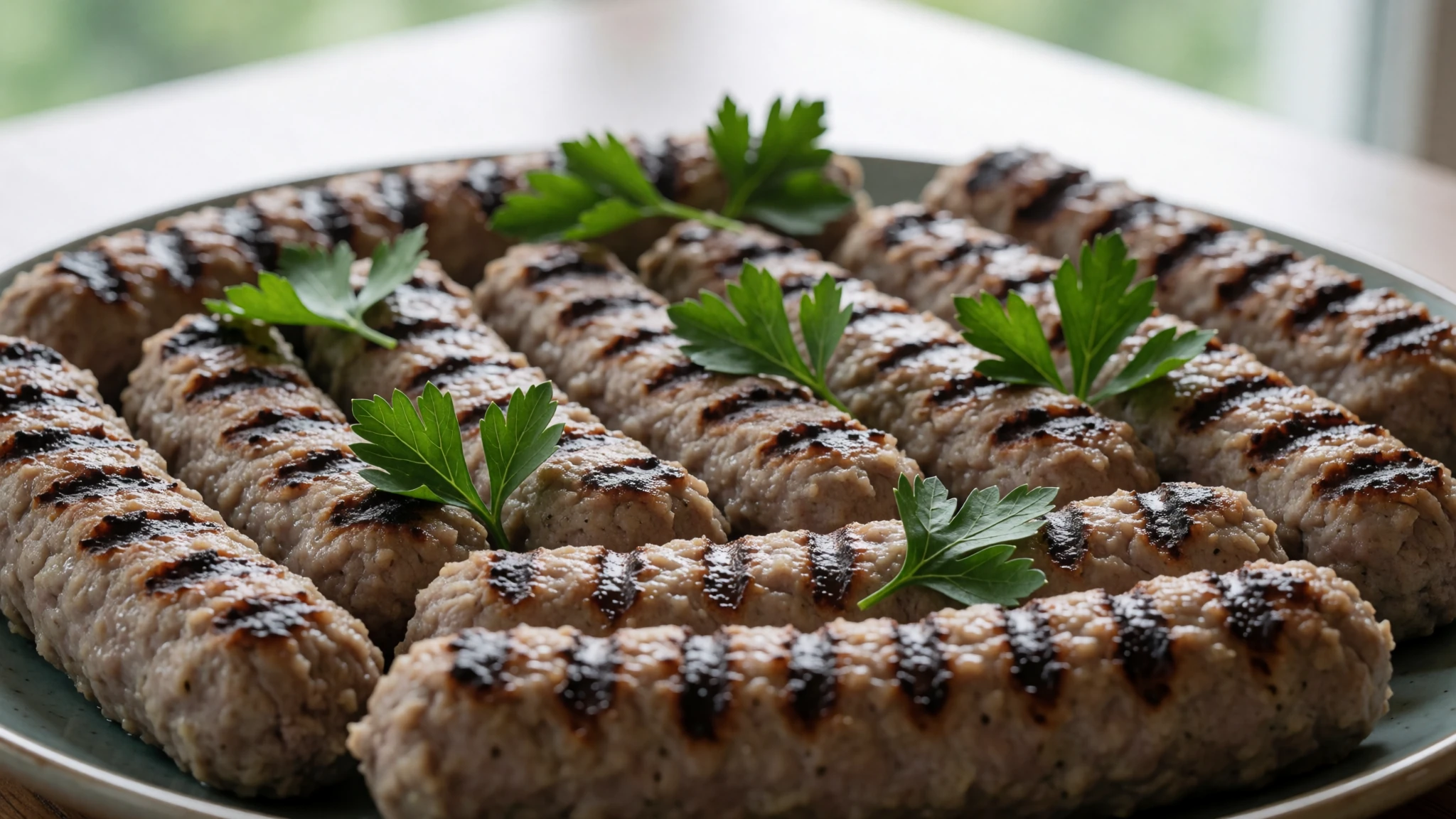
- Grilled river fish — Riverside restaurants along the Maritsa
Fish from the Maritsa, cooked simply over charcoal and served with lemon and bread. The restaurants along the riverbank in the lower part of the city are known for good fish cuisine and a friendly welcome. Go for a long lunch, and book ahead at weekends. - Tarator — Traditional eateries in the centre
A chilled yoghurt soup with cucumber, garlic, dill and walnuts, most welcome on a warm afternoon. Ask for it at any traditional eatery in the centre. It is light, refreshing and a good counterpoint to the grilled dishes.
Plan it
Best time. March, April and November are the most comfortable months, with highs of about 27 to 31 °C and less rain than the wetter late spring, which makes the hills easier to climb and the Old Town pleasant to walk. July and August bring highs above 39 °C, and the heat lasts from May to September, so plan the hill walks for early mornings.
How long. 2–3
Getting there. Fly into Plovdiv's airport and take the bus to the central bus station Yug, which runs after every flight. By train, the main railway station is a 10–15 minute walk south of the centre; around 15 trains a day run to and from Sofia, taking roughly two to four hours. By road, the A1 motorway connects Plovdiv with Sofia to the west.
Budget. low
Tips
- Walk the Old Town early, before merchants and tour groups fill the pedestrian zone.
- Book Sofia trains ahead at weekends and holidays, and allow for a change on the slower services.
- Carry some cash for bakeries, small eateries and market stalls, as cards may not work at the smaller places.
- Wear flat, grippy shoes; the cobbles and hills are steep.
- Arrive at the folk snack bars before the midday queue forms.
- Take a taxi from the centre to far districts rather than walking uphill in the heat.
Etiquette
- Cover shoulders and knees in churches and the mosque.
- Ask before photographing people in costume or at folk performances.
- Keep the pedestrian streets clear for the people who live and work there.
Nearby
Sources
- Wikidata Q459 (CC0)
- Wikipedia (rev 1382362017) (CC BY-SA 4.0)
- Wikivoyage (rev 5405921) (CC BY-SA 4.0)
- Plovdiv view, Ilia Markov (CC BY-SA 2.0)
- Panoramic view of Plovdiv, Municipality of Plovdiv (CC BY-SA 4.0)
- Roman Theatre Plovdiv, MrPanyGoff (CC BY 3.0)
- Cuma Mosque Plovdiv, Ggia (CC BY-SA 4.0)
- Nebet hill 2 Plovdiv, VladislavNedelev (CC BY 3.0)
- Plovdiv Old Town, Jocelyn Erskine-Kellie (CC BY-SA 2.0)
- Holy Mother of God Church Plovdiv, Gitanes232 (CC BY-SA 4.0)
- Eirene mansion Plovdiv, rivigan (CC BY-SA 2.0)


