Leaning Tower of Pisa
Leaning Tower of Pisa, Italy
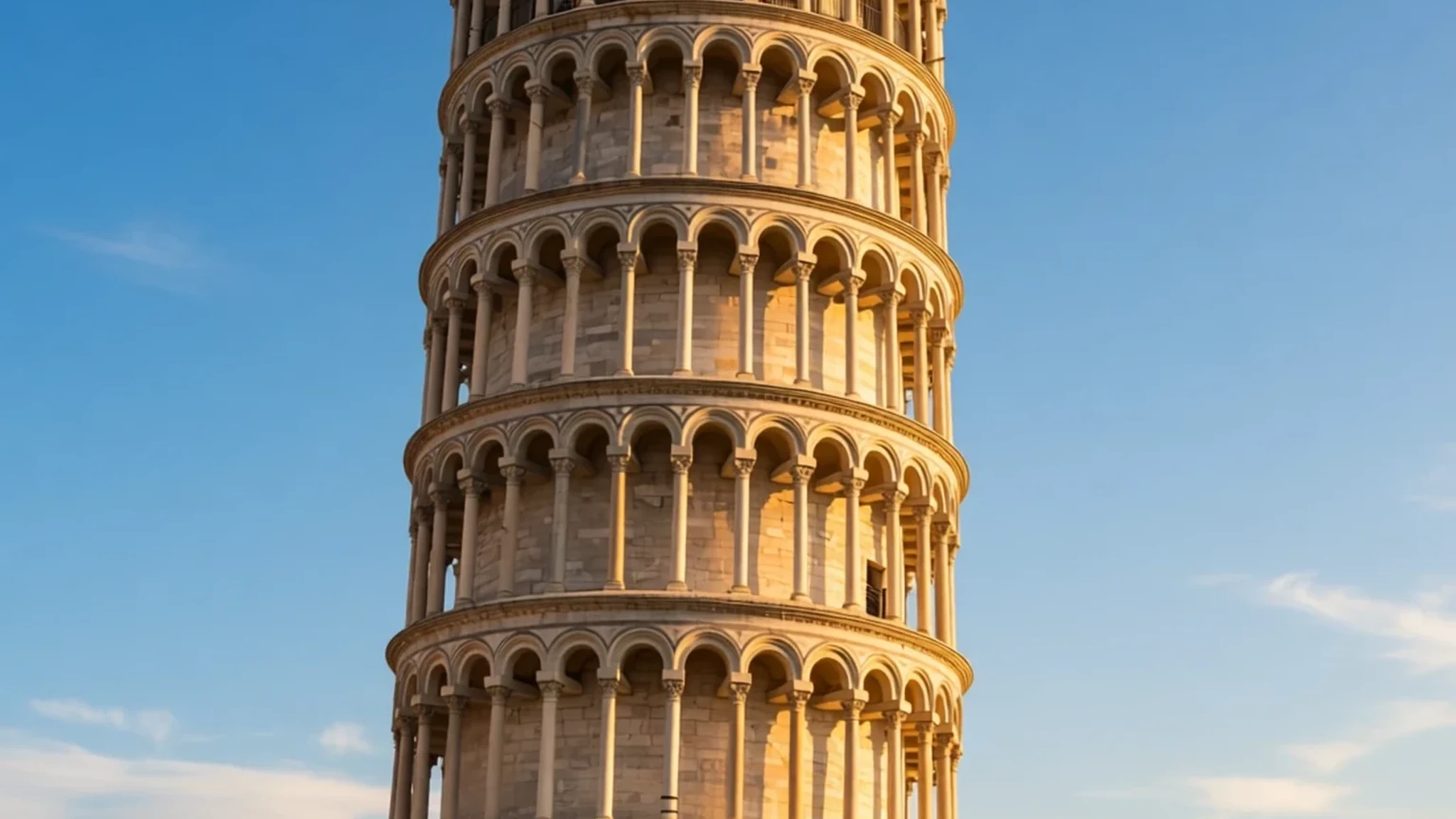
Visit the Leaning Tower of Pisa to witness one of humanity's most famous architectural miscalculations transformed into an enduring global icon.
The place
The Leaning Tower of Pisa serves as the freestanding bell tower for the city's magnificent cathedral in Tuscany. Situated in the celebrated Piazza del Duomo, alongside the grand cathedral and the circular baptistry, this architectural marvel is instantly recognised by its striking tilt. The unintended lean developed due to unstable subsoil that failed to adequately support the masonry during early construction phases. Over successive centuries, this structural flaw transformed the campanile into one of the most visited cultural landmarks on Earth, drawing millions of curious travellers annually. Beyond the famous tilted monument, Pisa maintains a youthful and vibrant atmosphere driven by its historic university. Students animate the central lanes after dark, filling local wine bars, trattorias, and alleyways with energetic conversation, transforming the historic town into a lively community where academic heritage blends seamlessly with everyday Italian life.
Its story
The Leaning Tower of Pisa carries a rich legacy of scientific lore and dramatic wartime preservation. Legend holds that between the late sixteenth century, the brilliant astronomer Galileo Galilei dropped differently weighted cannonballs from the upper galleries to demonstrate that objects fall at the same speed regardless of mass. Although documented by a pupil decades later, this famous experiment forever links the leaning campanile with the origins of modern physics. Centuries later, during the turbulent final months of the Second World War, the tower narrowly escaped destruction when an Allied reconnaissance sergeant refused to order an artillery strike, choosing instead to spare the breathtaking Romanesque structures from being reduced to rubble. Through the decades, engineers launched numerous stabilization projects to arrest the worsening tilt. Major remedial interventions successfully secured the monument, safeguarding the tilted tower for future generations to admire.
What to see
- Torre Pendente — Piazza del Duomo
The Leaning Tower of Pisa stands as the monumental freestanding bell tower of the cathedral complex. Begun in the twelfth century, the cylindrical structure immediately began its famous tilt due to soft alluvial ground, creating a unique architectural landmark that continues to captivate visitors from around the world today.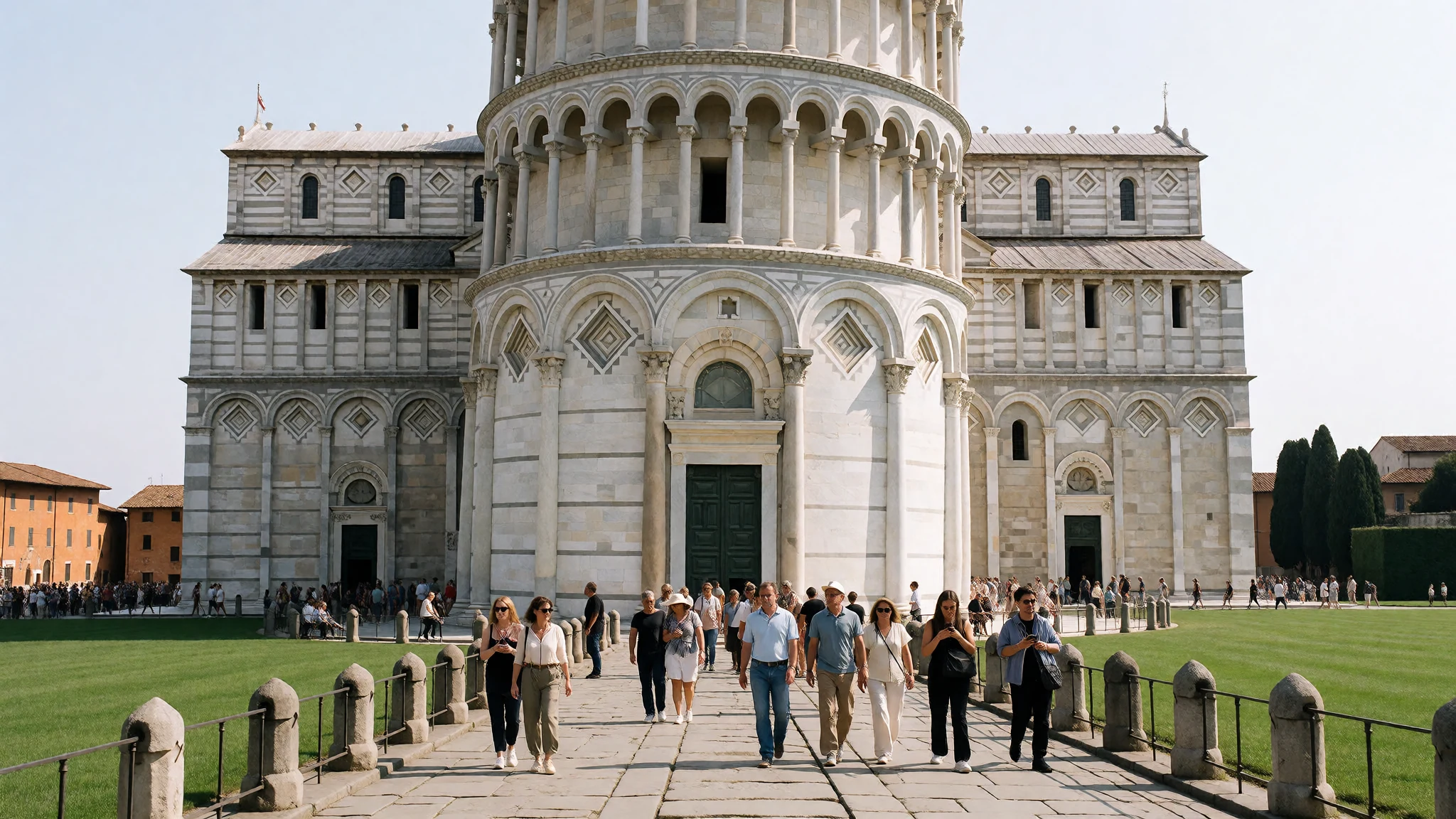
- Duomo di Pisa — Piazza del Duomo
The Pisa Cathedral is a magnificent Romanesque masterpiece featuring ornate bronze doors, exquisite marble striping, and a dramatic interior housing masterworks by renowned sculptors and painters. Its vast nave and soaring cupola showcase the supreme artistic ambition of the medieval maritime republic.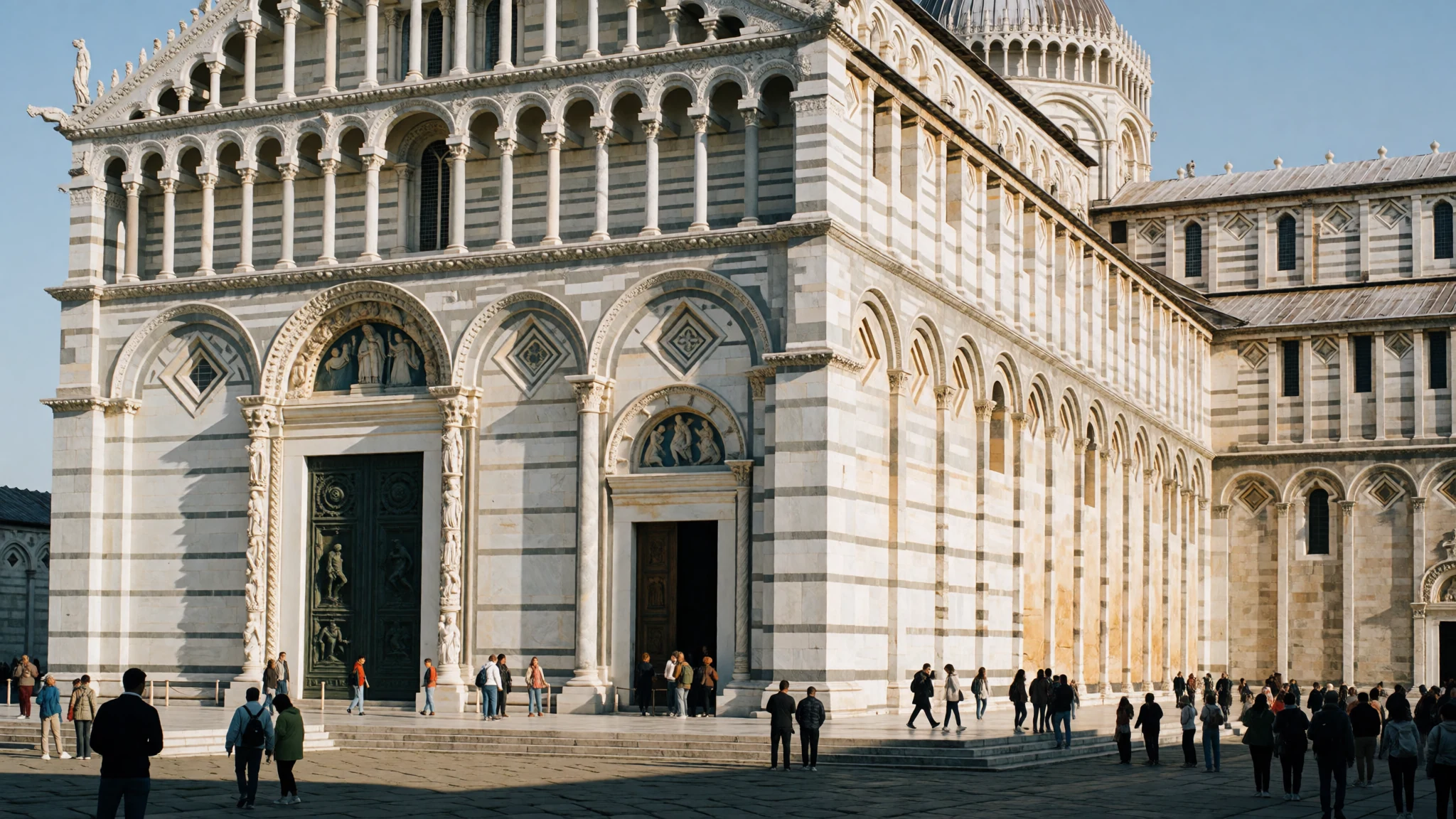
- Battistero di San Giovanni — Piazza del Duomo
The grand Pisa Baptistry is a monumental circular structure combining Romanesque and Gothic styles with intricate exterior sculptures and an exceptional interior acoustic dome. Climbing to its upper tier offers striking elevated perspectives across the entire cathedral square.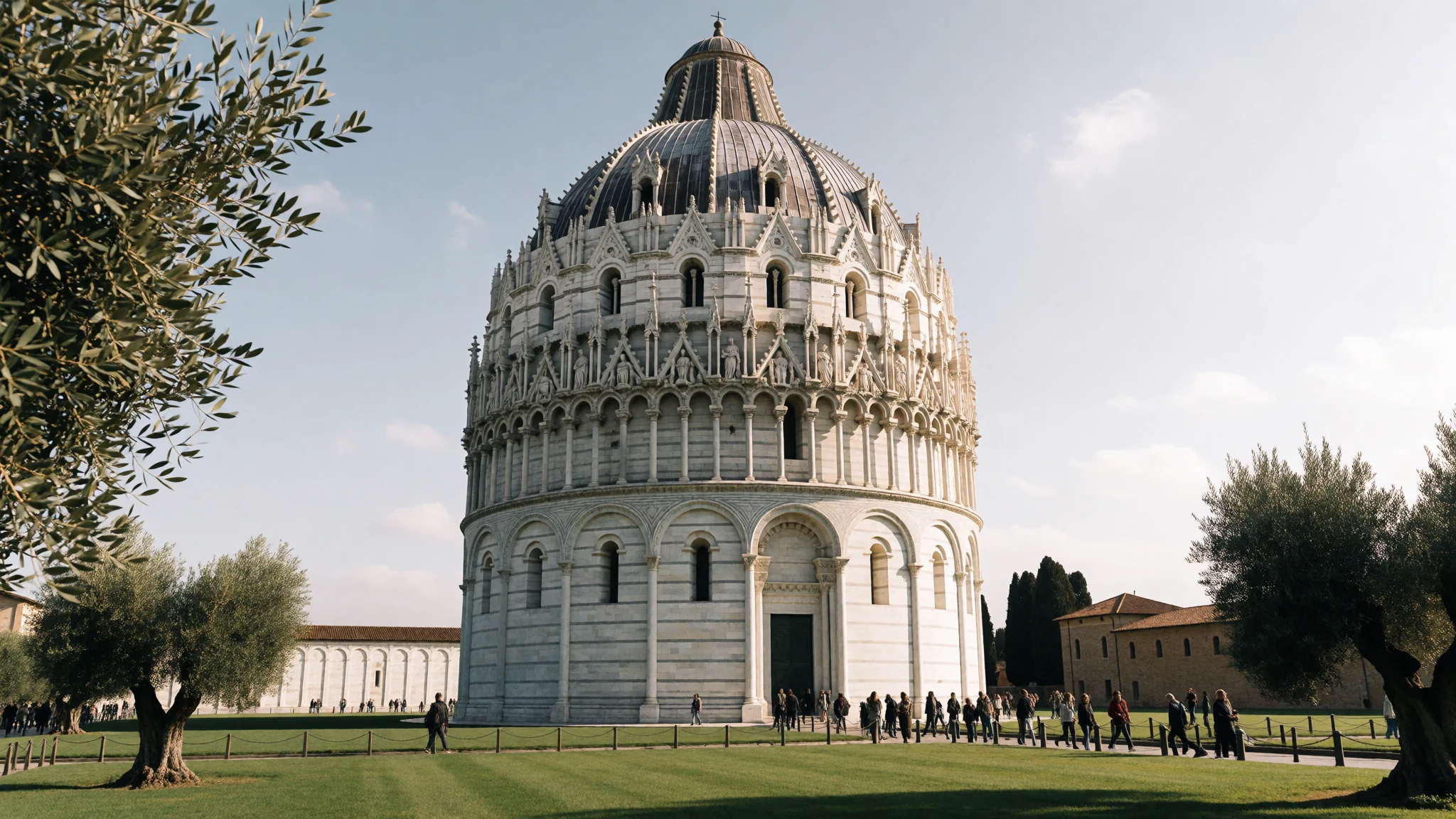
- Camposanto Monumentale — Piazza del Duomo
The monumental cemetery of Pisa is enclosed by an austere marble cloistered wall containing an extraordinary collection of ancient Roman sarcophagi and fragile medieval frescoes. This contemplative space preserves centuries of sacred art and commemorative history away from the lively piazza.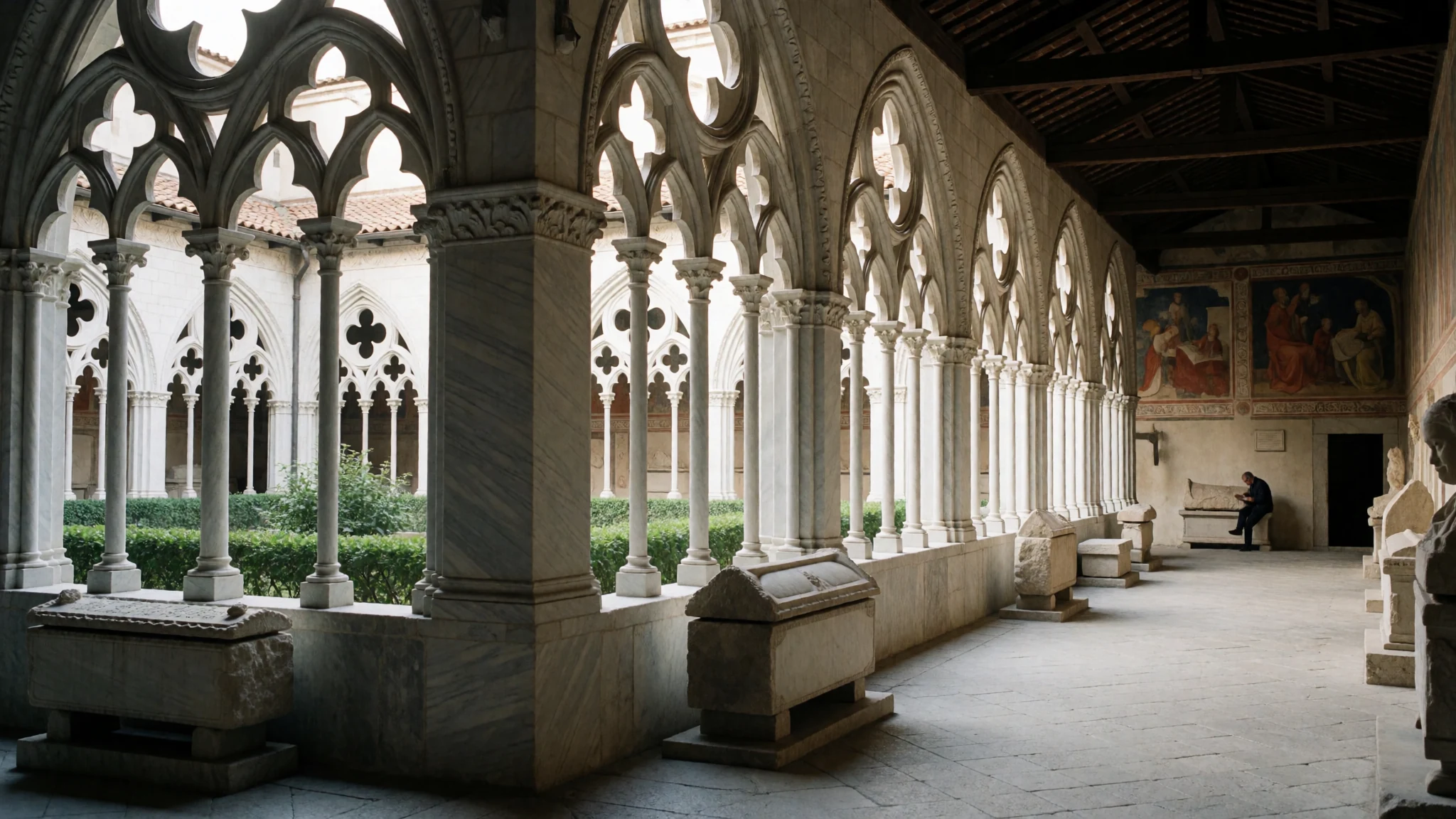
- Museo dell'Opera del Duomo — Piazza del Duomo
The cathedral museum houses centuries of sacred treasury items, precious liturgical vestments, and original sculptures removed from the cathedral and baptistry for conservation. Notable exhibits include rare medieval bronzes and intricate ecclesiastical carvings crafted by master artisans.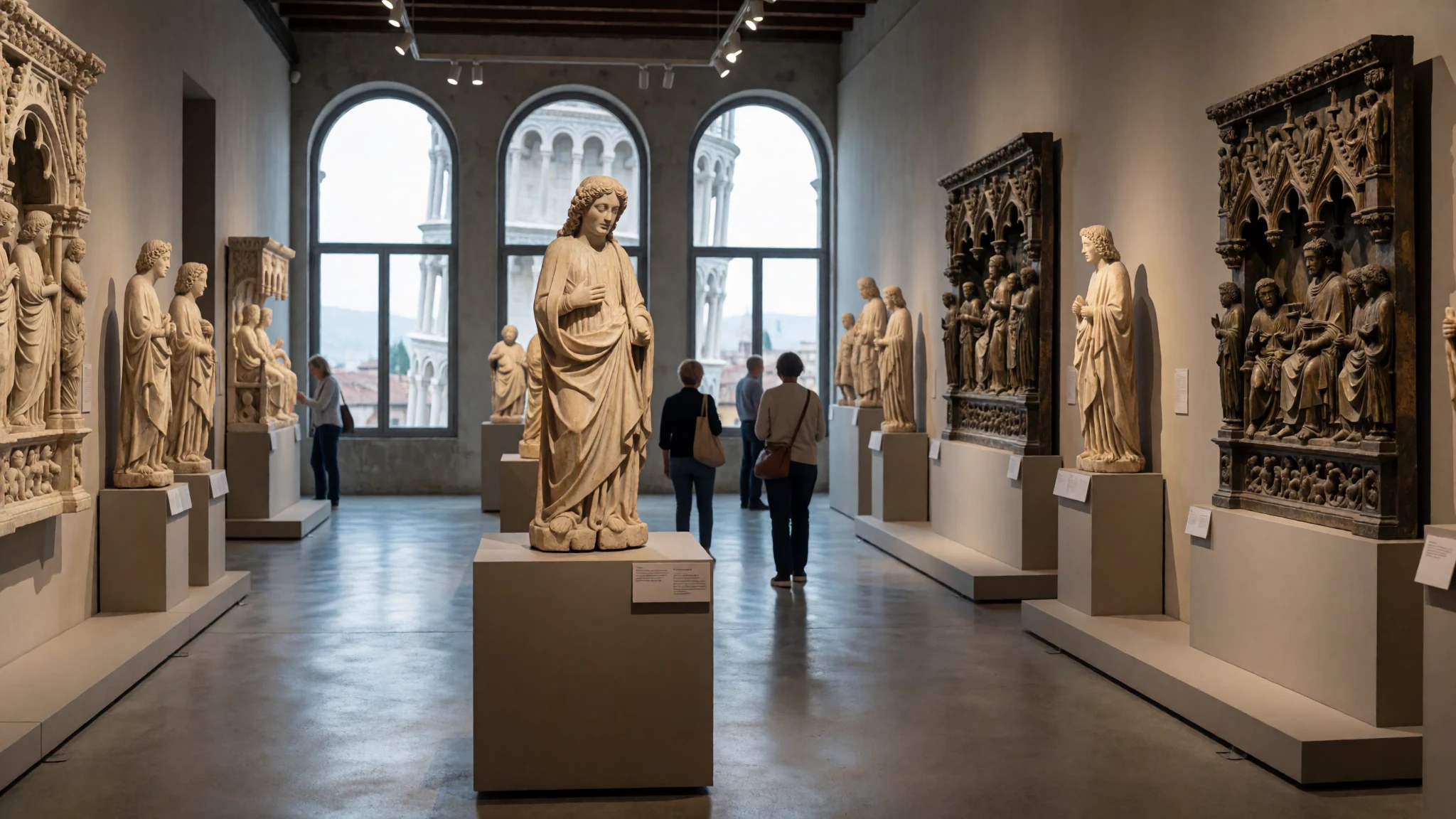
Culture
Pisa maintains a proud Tuscan identity deeply rooted in its historic maritime traditions, university scholarship, and communal civic life. While international tourism centres heavily around the famous cathedral square, daily life in the city moves to a relaxed Italian rhythm shaped by local markets, neighbourhood trattorias, and student gatherings. Traditional celebrations and neighbourhood festivals occasionally animate the medieval lanes, reflecting a strong sense of local pride that extends far beyond the iconic leaning tower. Visitors will find that locals appreciate polite greetings in Italian, such as a simple buongiorno or buonasera, before launching into English inquiries. When entering the cathedral or baptistry in Pisa, modest attire covering shoulders and knees is strictly required, and visitors must speak in hushed tones out of respect for sacred spaces.
What to wear
Fashion in Pisa reflects practical, elegant Italian style blended with the casual, energetic wardrobe choices of a large student population. Local residents generally favour smart-casual attire, opting for tailored trousers, comfortable leather loafers, crisp shirts, and classic wool coats or lightweight jackets depending on the season. Traditional regional garments are rarely worn for daily activities, reserved instead for historic pageants and cultural festivals. For visitors exploring Pisa, comfortable walking shoes are essential because the historic centre and cathedral square feature uneven flagstone paving and slick marble surfaces. Travellers should pack versatile layers, a light jacket for breezy evenings near the river, and conservative clothing options if planning to tour the interior of the cathedral and surrounding religious sanctuaries.
What to eat
- Pizzeria Le Mura — Near the ancient city walls
Enjoy exceptionally delicious pizza with thick, crispy crusts and generous toppings served fresh from the oven, providing a hearty and satisfying meal for hungry travellers exploring the historic perimeter of Pisa. - Al Bagno di Nerone — Near the Roman baths archaeological site
Savour fabulous traditional cecina, a delicate chickpea flour pancake baked until golden and crisp, served alongside classic pizzas in a relaxed neighborhood spot popular with local residents. - Mr. Sgabeo — Central Pisa streets
Sample fantastic stuffed sgabeo flatbreads filled with premium artisanal ingredients, offering a unique and exceptionally tasty local street food experience in the heart of the city. - L'Ostellino — Near Piazza dei Cavalieri
Indulge in authentic, freshly prepared gourmet sandwiches packed with high-quality Tuscan cheeses and cured meats, accompanied by fast service and welcoming hospitality near the historic centre. - Il Montino — Historic city centre lanes
Taste wonderful pizza by the slice and excellent regional focaccine at this beloved neighbourhood bakery, perfect for a quick, authentic bite to eat while wandering through town.
Plan it
Best time. April to May and September to October offer pleasant weather and manageable crowds, while summer brings higher temperatures and peak tourist numbers.
How long. 1–2
Getting there. Fly into Pisa International Airport, then take the Pisamover automated tram directly to Pisa Centrale railway station in about five minutes.
Budget. mid
Tips
- Book tickets for the leaning tower well in advance online
- Arrive early in the morning to experience the cathedral square before heavy tour groups arrive
- Wear comfortable footwear with good grip for walking on slick marble and uneven pavement
- Keep cash handy for small cafes, bakeries, and neighbourhood market stalls
- Validate regional train tickets before boarding at station platforms
Etiquette
- Cover shoulders and knees when entering the cathedral and baptistry
- Maintain a respectful, quiet demeanour inside religious monuments
- Ask permission before photographing local residents in residential quarters
Nearby
Sources
- Wikidata Q39054 (CC0)
- Wikipedia (CC BY-SA 4.0)
- Wikivoyage (CC BY-SA 4.0)