Pingyao
Pingyao, People's Republic of China
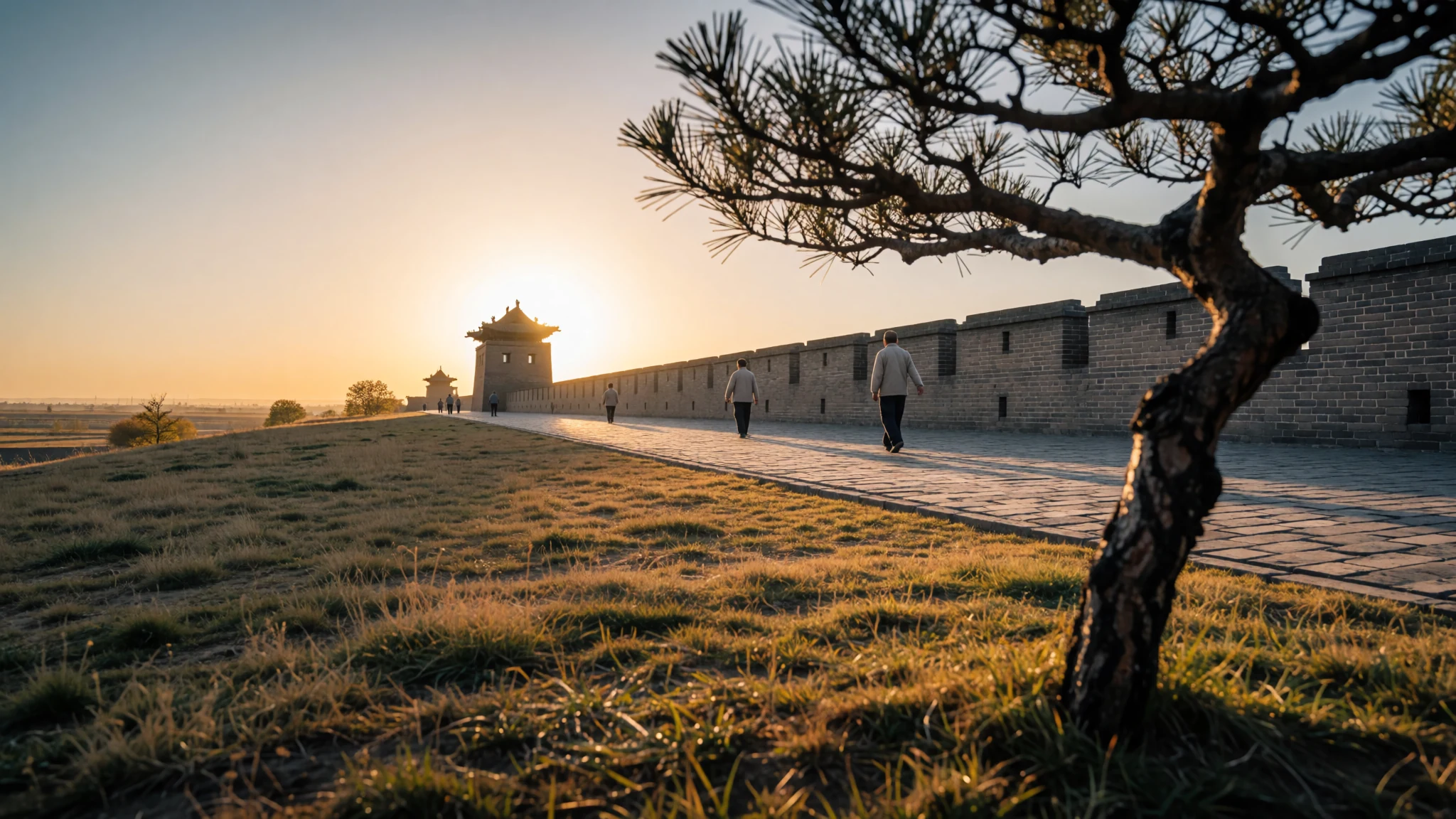
A walled Ming and Qing market town in Shanxi, where the street plan, courtyard houses and old banking history survive largely intact.
The place
Pingyao is a walled town in central Shanxi, in north China, officially known as Pingyao Ancient City. Its appeal lies in how much of the old fabric has lasted. The street plan, the courtyard houses, the shopfronts and the temples are mostly original buildings rather than reconstructions, which is unusual for a Chinese town of its kind. The walls enclose a compact area that can be crossed on foot in a morning, yet most visitors spend two or three days in the lanes and side streets.
Inside the walls, a web of alleys leads off the main commercial street, Ming-Qing Street, which runs through the centre. Many shopfronts stand in buildings from the Ming and Qing periods. Some now sell souvenirs and snacks, but the layout of the old trades is still easy to read. Outside the walls, the modern county has grown with new housing, hotels and the railway station, so the contrast between old and new is part of the visit.
The old town forms the township of Gutao within Pingyao County, in Jinzhong prefecture. The population is about 50,000. Day crowds thin out in the late afternoon, and the streets feel noticeably calmer after dusk, when many of the tour groups have left for the evening.
Its story
Pingyao had a settlement by the reign of King Xuan of Zhou, who ruled from about 827 to 782 BC, when earthen ramparts were raised around the site. Through the Spring and Autumn period the area belonged to the state of Jin, and later to Zhao during the Warring States period. Under the Qin it was called Pingtao, and in the Han dynasty it served as the seat of Zhongdu County.
The town's real rise came with money rather than walls. From the 16th century Pingyao was the regional financial centre, and by the late 19th century it held that role for the whole Qing Empire. More than 20 financial institutions operated inside the walls, a large share of the country's total at the time. The most important of them, Rishengchang, is recorded as the first and largest of these firms and at one point handled much of the silver trade under the late Qing. The firm failed in 1914, in the years after the Xinhai Revolution, and the decline of the banks left the town's buildings largely unchanged.
Restoration work on the walls and houses has been carried out in phases since the 15th century. The most recent round began in 1979. Pingyao was named one of China's Historical and Cultural Cities in 1986. A section of the southern wall collapsed in 2004, prompting further repairs. In 2015 the old town was granted national 5A-class status as a tourist attraction, a designation that brought more visitors and more pressure on the fabric.
What to see
- City Walls — Old town perimeter
The walls are the easiest way to understand the layout of Pingyao. A walkway runs along the top in sections, giving views over grey roofs and the town's inner lanes. The present wall stands on the ground of an earlier wall, built of tamped earth some 2700 years ago, that lay a little to the northeast. Allow an hour or so for a circuit and check opening arrangements with the ticket office.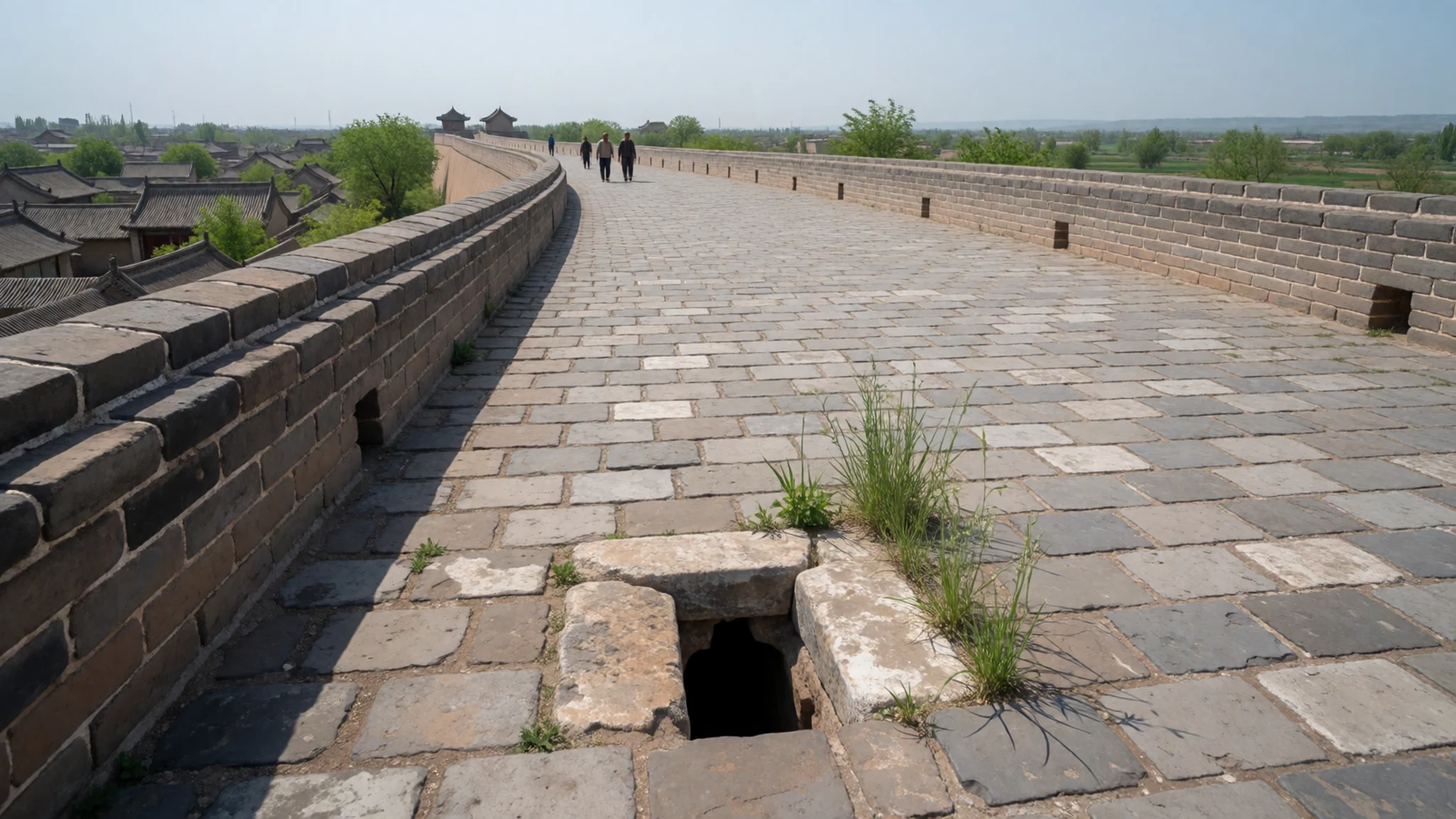
- Rishengchang Exchange House — Central old town
This former exchange house is the clearest link between the town and its banking past. Shanxi merchants built trade networks across China and beyond in the Ming and Qing periods, and Pingyao sat at the heart of that system. The building's rooms and displays explain how bills and silver moved between branches, which makes the commercial story easier to follow.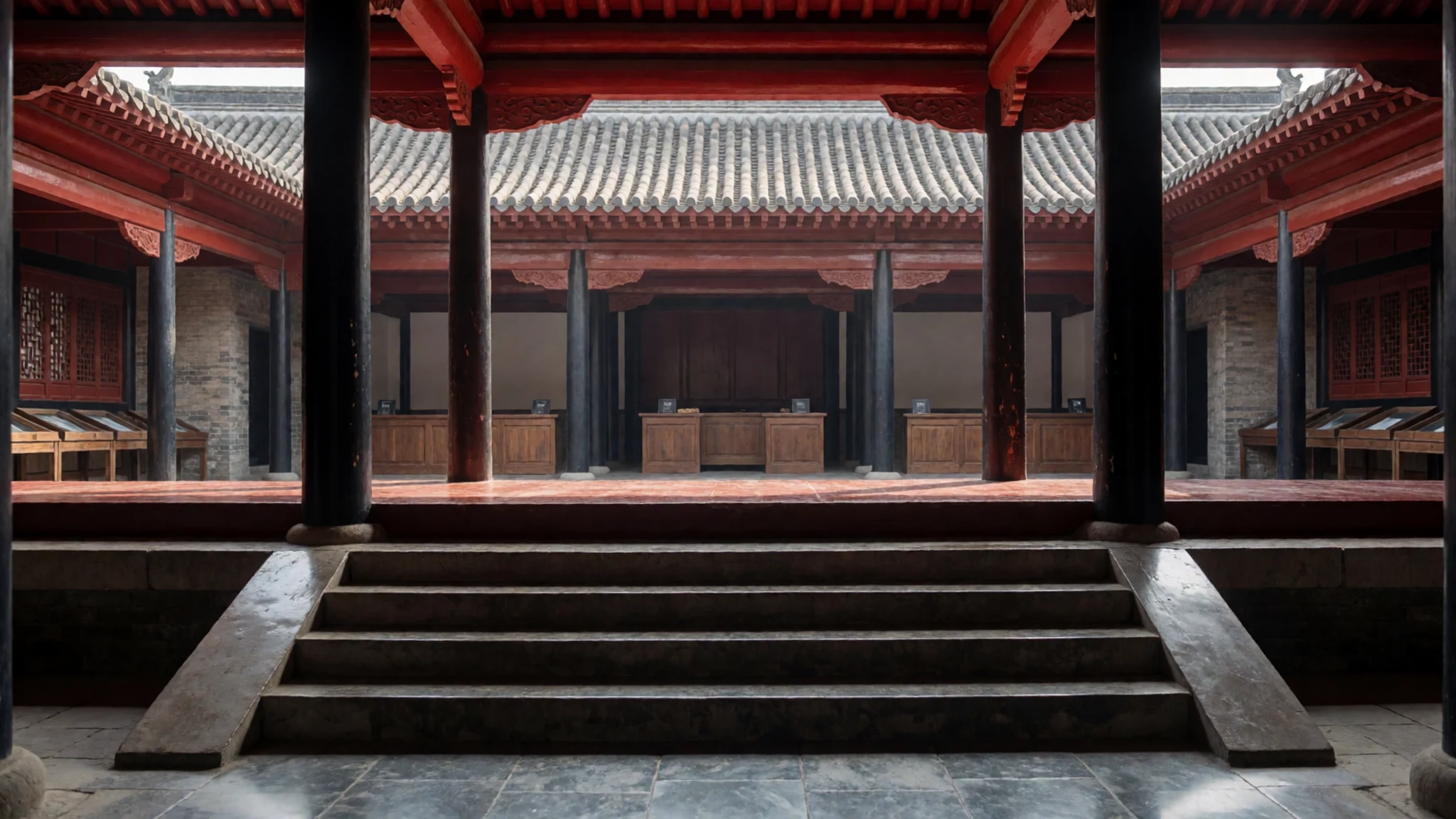
- Pingyao County Yamen Museum — Central old town
The yamen was the county government office, and Pingyao held that role since the Qin dynasty. This complex preserves the offices, courtrooms and residential quarters of the magistrate's staff. Its halls show how civil administration and justice were arranged in a Chinese county seat, and the museum rooms add context to the buildings around them.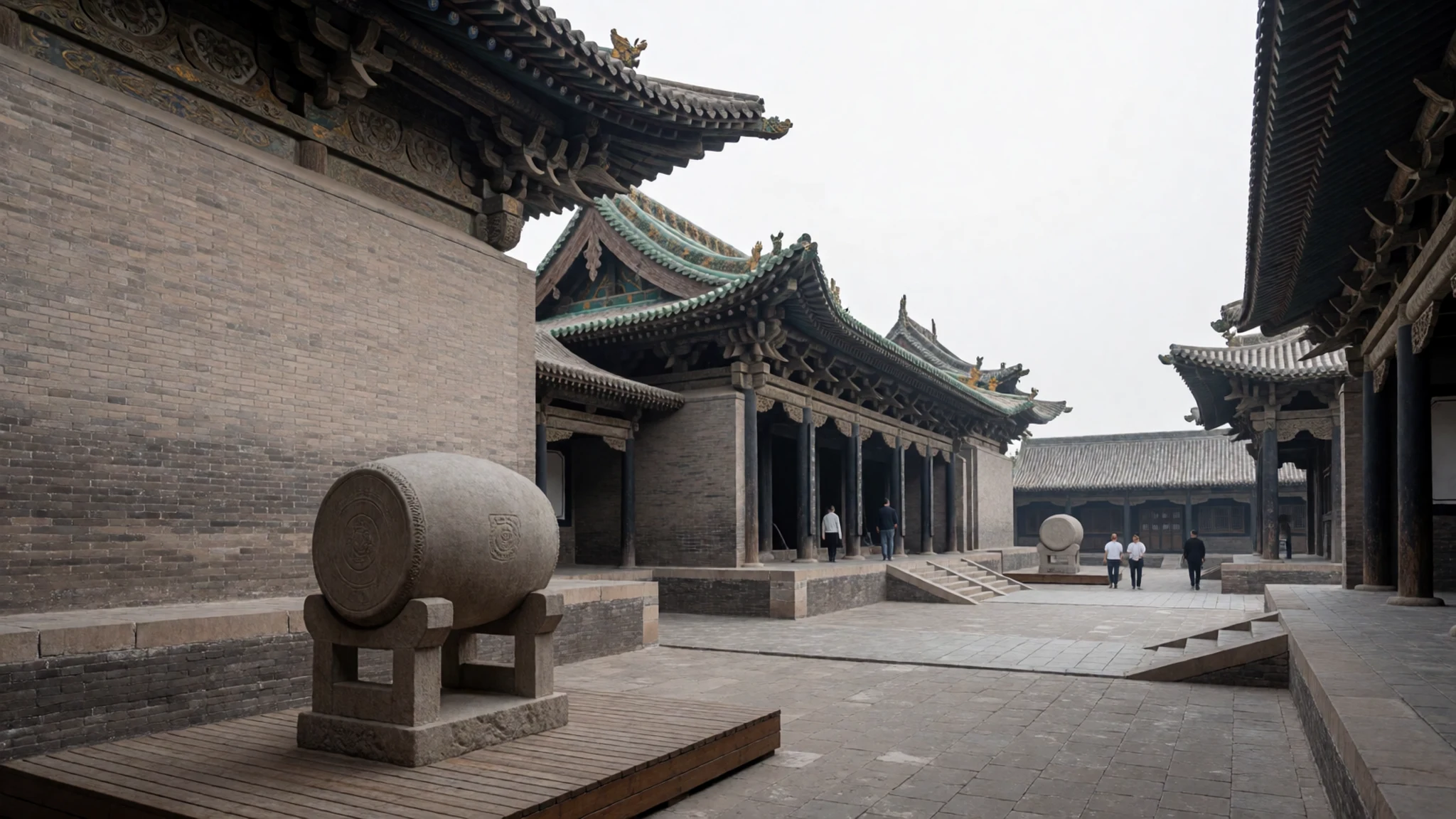
- Temple of the City God — Central old town
This temple balanced the yamen across the town. Where the county office handled the affairs of the living, the temple was dedicated to the spiritual world. Its courtyards and halls, with their figures and altars, reflect that division. Visits are quiet and brief, and the temple is a good place to slow down between busier streets.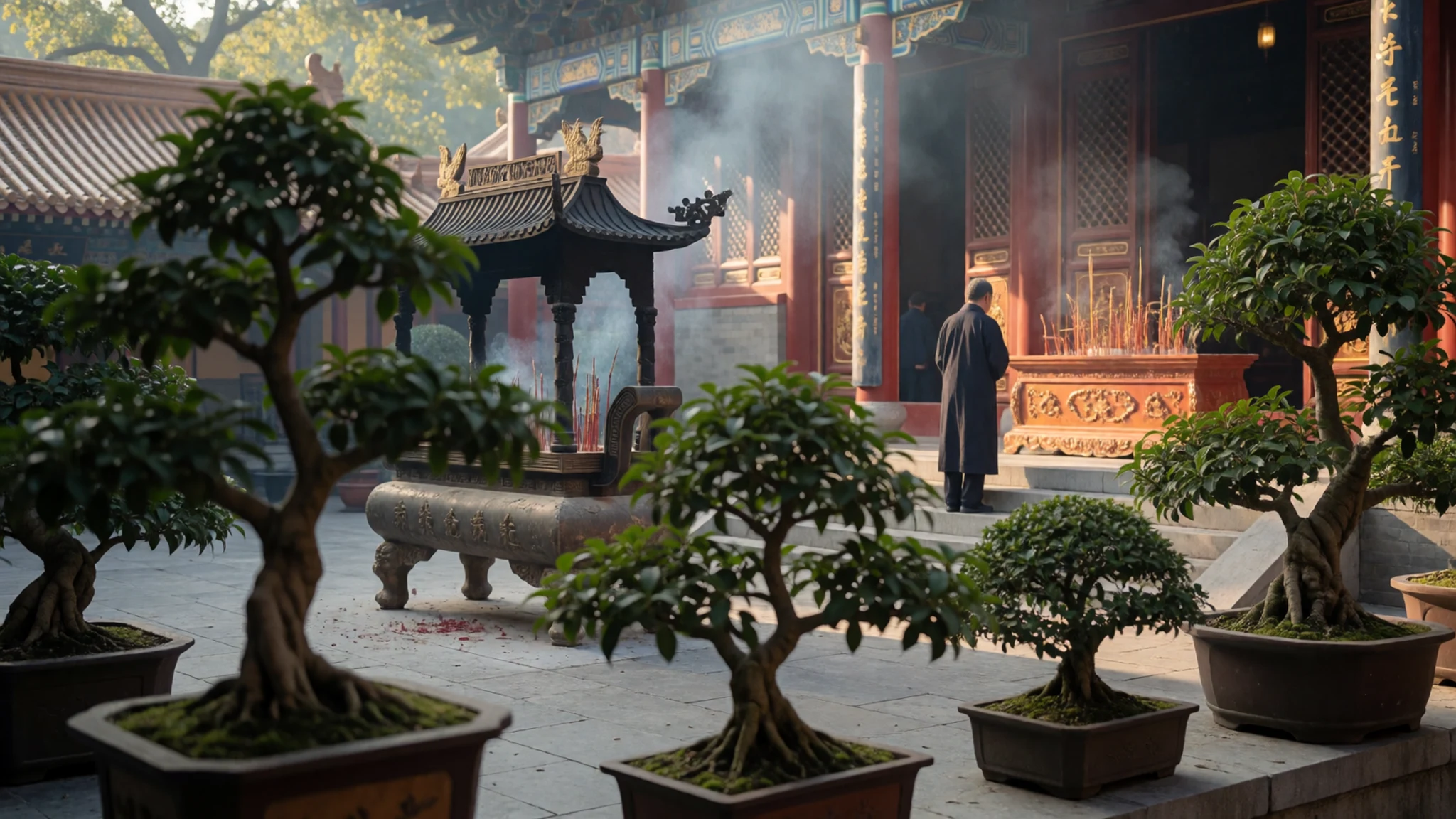
- Ming-Qing Street
This street has been the main commercial avenue of the town for centuries, and hundreds of shops still line it, most built in the Ming and Qing periods. It is the busiest part of the old town by day, with stalls, teahouses and craft shops. Go early in the morning if you want the lanes to yourself, and expect the street to be crowded by midday.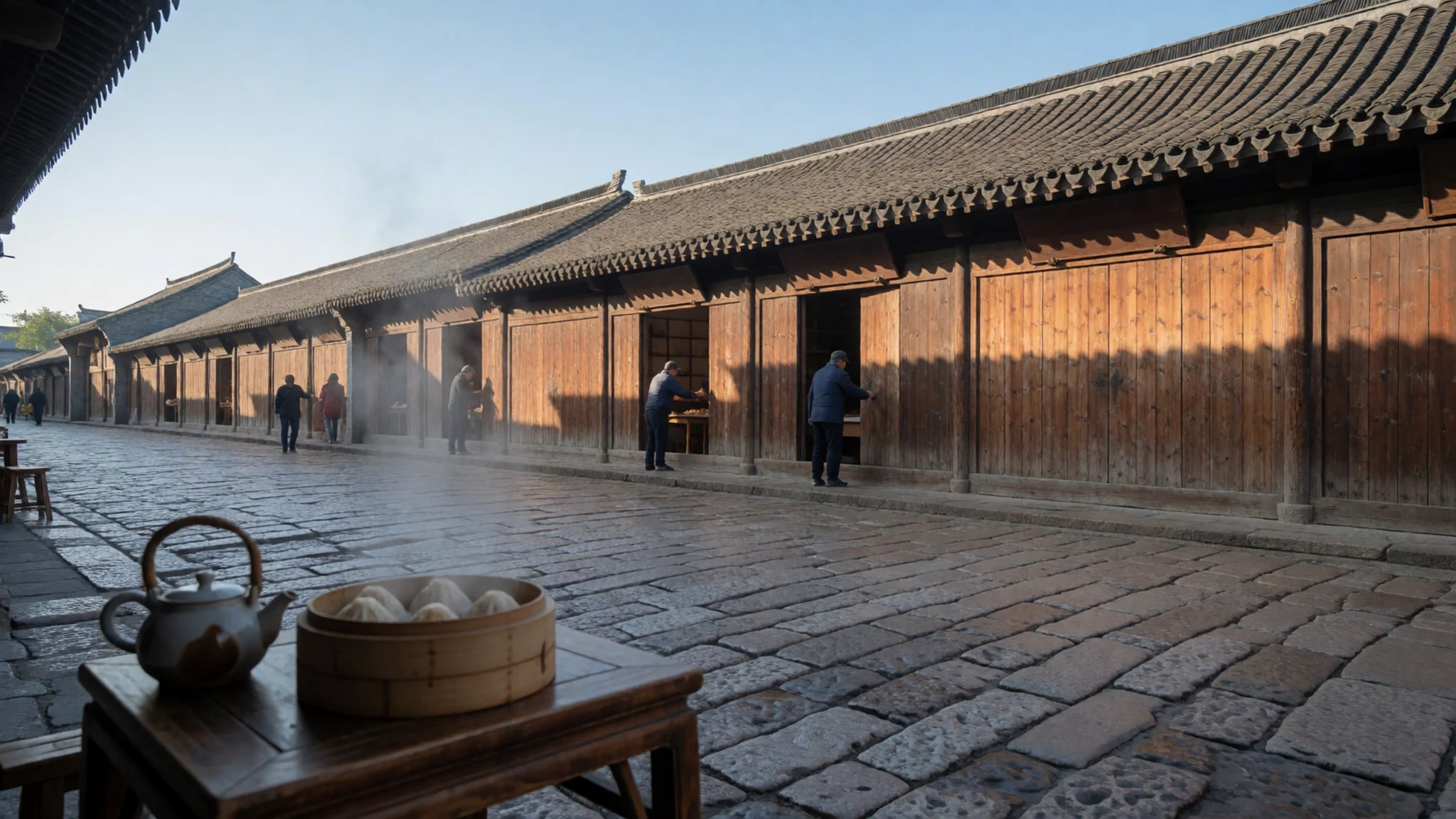
Culture
Pingyao is home to a lacquer craft of its own, tuiguang lacquerware, a name that roughly means push-light lacquer. The gloss is not produced by varnish alone. Instead, the surface is repeatedly burnished by hand with the palm until it shines. Each piece starts with a wooden frame, over which a base of ash mixed with animal-hide glue is laid. Five to eight applications of untreated lacquer, drawn from the tree's sap, are then built up on top. Grounds are traditionally black, cinnabar red, apricot yellow or purple-green. Craftspeople decorate pieces with gold-line painting, lacquer relief, carved fill and inlay of mother-of-pearl. The craft is grouped with the lacquer traditions of Fuzhou, Yangzhou and Chengdu, and local accounts link it to the Tang dynasty, reaching its height of trade during the Ming and Qing periods alongside the Shanxi merchants. Many shops selling lacquer also demonstrate the burnishing, so the craft is easy to see. Ask before photographing shopkeepers, craftspeople or residents in their doorways, and keep to the lanes rather than walking into private courtyards.
What to wear
Pingyao's traditional dress followed the wider Han Chinese fashions of the Ming and Qing periods, when the merchant families who ran the town's banks wore robes and jackets of silk and cotton. Cloth and colour signalled rank, occupation and season, with plain dark tones common for trade and richer silks reserved for ceremony. Today, most residents wear ordinary modern clothes, with padded jackets and knitwear in the cold months and light cotton in summer. Older women in the outlying villages still wear traditional cotton jackets on some occasions. For a visit, dress for the climate and the ground. The old town has uneven stone lanes, so flat, closed shoes with good grip are essential. Summers are hot, humid and rainy, so pack a sun hat, light clothes and a rain jacket. Winters are cold, so bring a warm coat, gloves and a scarf. Temples call for modest clothing, meaning shoulders and knees covered, and a hat and scarf will also help on the city wall, which is exposed to wind.
What to eat
- Pingyao beef — Eateries outside the city walls
The town's signature dish is Pingyao beef, which has a strong, cured taste somewhat like corned beef. It is often sliced thin and served cold or stewed. Prices in the most touristy restaurants can be far higher than the dish suggests, so check the menu and ask about any chef's specialty before ordering.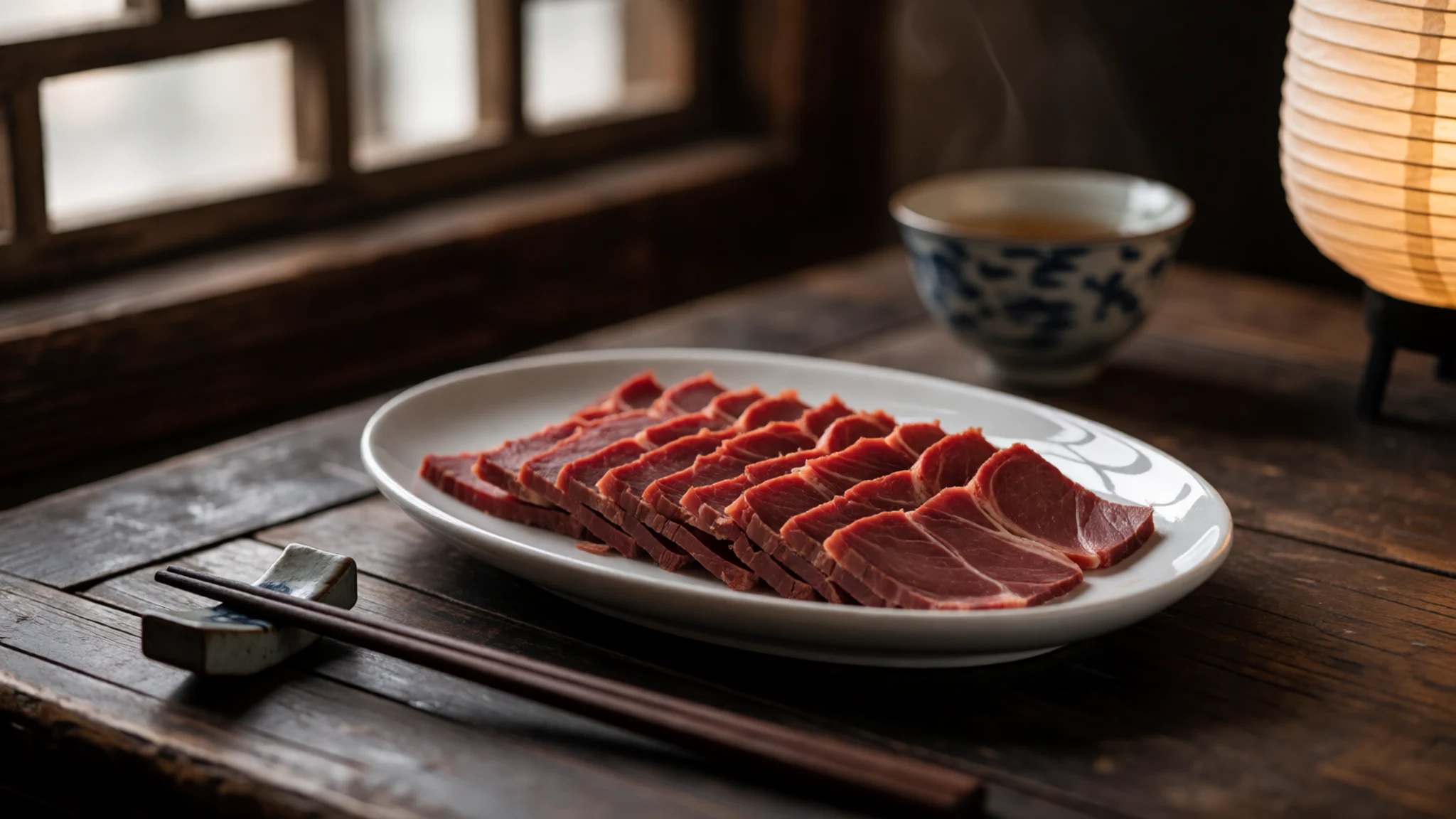
- Beef sandwich (huoshao) — Breakfast stalls near the gates
A breakfast favourite is the beef huoshao, a bread roll filled with sliced beef. Stalls near the old gates serve it fast and cheap in the morning, before the tour groups arrive. It is a simple way to try the local beef without committing to a full restaurant meal.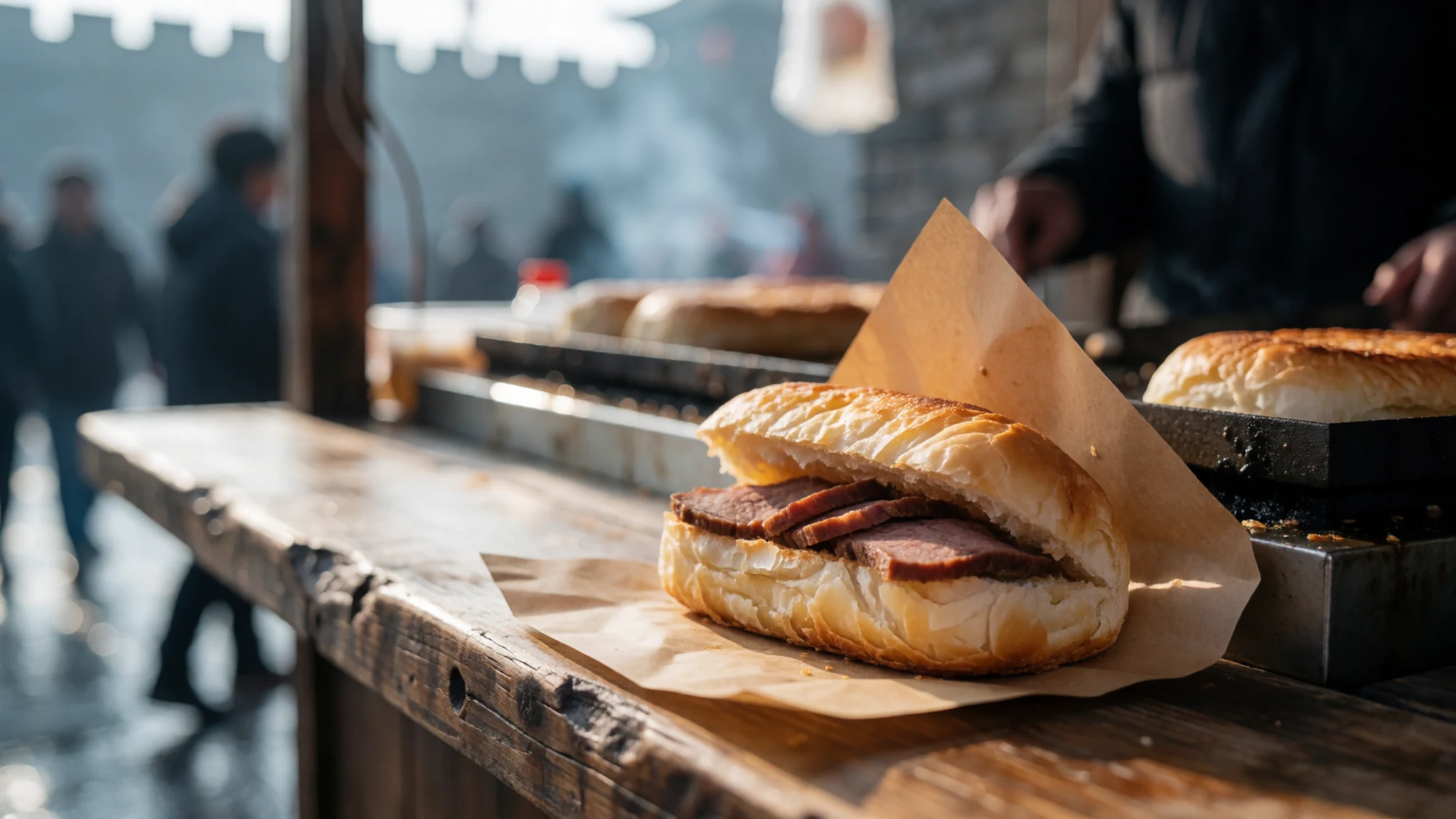
- Hand-cut noodles — Neighbourhood noodle shops outside the walls
Wheat noodles cut by hand are a staple across Shanxi and appear in soups and stir-fries. They are typically served with a rich broth, vegetables and sometimes mutton or pork. Local noodle shops tend to be simple, with a short menu and quick service, and they are often the best value meal in the area. - Shanxi aged vinegar dishes — Family-run eateries and food shops
Shanxi is famous for its aged black vinegar, and it flavours many local dishes, from dumplings to cold salads. Ask for dishes with the vinegar listed on the menu. Sour and savoury flavours are common here, and the vinegar is also sold in bottles that make a good gift. - Street snacks and tea — Side lanes and the area outside the walls
Evenings bring grilled skewers, sweet pastries and other street snacks, along with tea served in small cups. Walk the side lanes beyond the main street for the best range, and pay attention to prices as you go. Tea houses offer a quiet place to rest between visits.
Plan it
Best time. April to May and September to October suit a visit best. Spring and autumn are warm by day, with highs near 35 C in late spring and early autumn, though the clear days suit walking the walls. Summers are hot, humid and rainy, with July the wettest month, and winters are cold, which makes the open walls less pleasant.
How long. 2–3
Getting there. Taiyuan is the nearest major city and airport, about 90 km away, and the last leg is covered by bus, train, taxi or a hotel pick-up. Most trains to Pingyao stop at Taiyuan, which is about 45 minutes away. From Beijing the journey takes 4–5 hours by D-train via Taiyuan. From Xi'an it is about 3 hours by D-train. The newer station, Pingyao Gucheng, lies west of town, with a bus into the centre.
Budget. low
Tips
- Book trains early in travel seasons, as seats between Taiyuan and Pingyao can be scarce
- Arrive in the old town before 9 am to walk the lanes before the day crowds
- Agree a taxi fare before getting in, since some drivers resist using the meter
- Carry cash for small eateries and shops, and check card acceptance before ordering
- Stay inside the walls for the evening, when the streets are calmer
- Carry water and a hat when walking the city wall in summer
Etiquette
- Ask before photographing people, especially in doorways and courtyards
- Keep to the lanes and avoid walking into private homes
- Check the menu prices before ordering specialties
Nearby
Sources
- Wikidata Q500061 (CC0)
- Wikipedia: Pingyao (rev 1381442448) (CC BY-SA 4.0)
- Wikivoyage: Pingyao (rev 5376053) (CC BY-SA 4.0)
- Pingyao 40, Nicor (CC BY 3.0)
- Pingyao Shilou 2013, Zhangzhugang (CC BY-SA 1.0)
- Pingyao Confucian Temple, Jan Bockaert (CC BY-SA 2.0)
- Pingyao Lei Lütai Jiuju, Zhangzhugang (CC BY-SA 1.0)
- Pingyao 625, 林高志 (CC BY-SA 4.0)
- The Wall of Ping Yao city, Peellden (Public domain)
- Pingyao 593, 林高志 (CC BY-SA 4.0)
- Pingyao ancient city aerial pano 2019, Chensiyuan (CC BY-SA 4.0)


