Pierrefonds Castle
Pierrefonds Castle, France
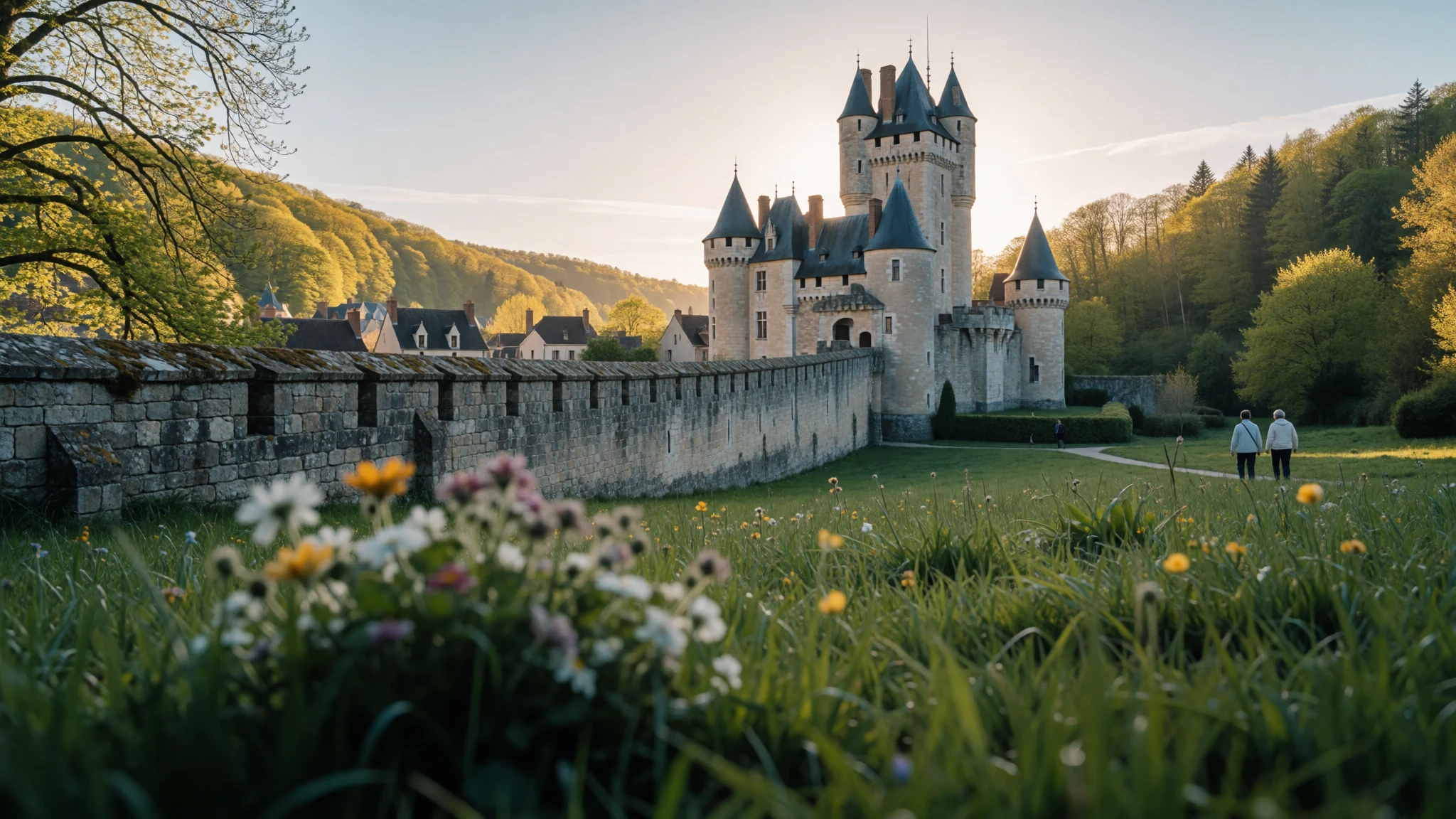
Pierrefonds Castle is a fairy-tale medieval fortress, rebuilt by a Gothic Revival architect, a short trip from Paris on the edge of a forest.
The place
Pierrefonds Castle stands in the Oise department of Hauts-de-France, in northern France, on the south-eastern edge of the Compiègne forest. It lies northeast of Paris, between the towns of Villers-Cotterêts and Compiègne, with the village of Pierrefonds gathered at its foot. From the approach road the whole silhouette shows at once: round towers capped with conical roofs, a long curtain wall, and battlements above the trees. That profile is why most people come, and it carries a small surprise. The building reads like a textbook of medieval defence, with a central keep, towers and fighting galleries, yet much of what stands today is a nineteenth-century reconstruction rather than untouched stone from the Middle Ages. Visitors who know this tend to enjoy it more, treating the castle as two periods layered together: a late medieval fortress and an architect's confident idea of what such a fortress should look like. Inside, the rooms are large, the masonry is crisp and the painted decoration is vivid rather than faded. Outside, the forest gives a calm green frame, and the village below has cafés and bakeries for a slow lunch. It is an easy day out from Paris, which also means weekends and school holidays bring coach parties and cars parked along the lanes. Weekday mornings in spring or early autumn are quieter, and the light on the pale stone is kindest then. Cloud and drizzle are common in this part of France, but the castle looks good in moody weather too.
Its story
Pierrefonds Castle has had three lives: medieval fortress, ruin, and imperial fantasy. A castle stood on the site in the twelfth century, but the one people recognise began in 1393, when Louis of Orléans, brother of King Charles VI, had it rebuilt. Charles had turned the county of Valois into a duchy in 1392 and given it to Louis, and the new castle announced that rank in stone. The court architect was Jean le Noir, and Louis lived until 1407. In 1617, in the unsettled early years of Louis XIII's reign, the owner joined a party of discontented nobles, and troops sent by Cardinal Richelieu besieged and took the castle. Demolition began but was abandoned as too large a job, so the outer works were razed while the towers and walls were holed and unroofed rather than flattened. It then stood as a ruin for two centuries. Napoleon I bought it in 1810 for under 3,000 francs, and in the nineteenth century the broken walls became a fashionable romantic sight. Louis-Philippe held a wedding banquet there in 1832, and Corot painted it repeatedly. The ruin was listed as a historic monument in 1848. Napoleon III visited in 1850 and in 1857 asked Eugène Viollet-le-Duc to restore it. The brief grew into a plan for a full imperial residence, with a budget of 5 million francs. Viollet-le-Duc died in 1879, and work stopped in 1885 with the interiors unfinished. What he left is as much invention as repair.
What to see
- The approach and outer walls — Base of the castle, Pierrefonds village
Pierrefonds Castle is best met from the road below, where the towers, curtain wall and battlements line up like a model. Walk a slow arc around the base before going in. The scale becomes clear, and so does the gap between the old stone and the neat nineteenth-century repairs.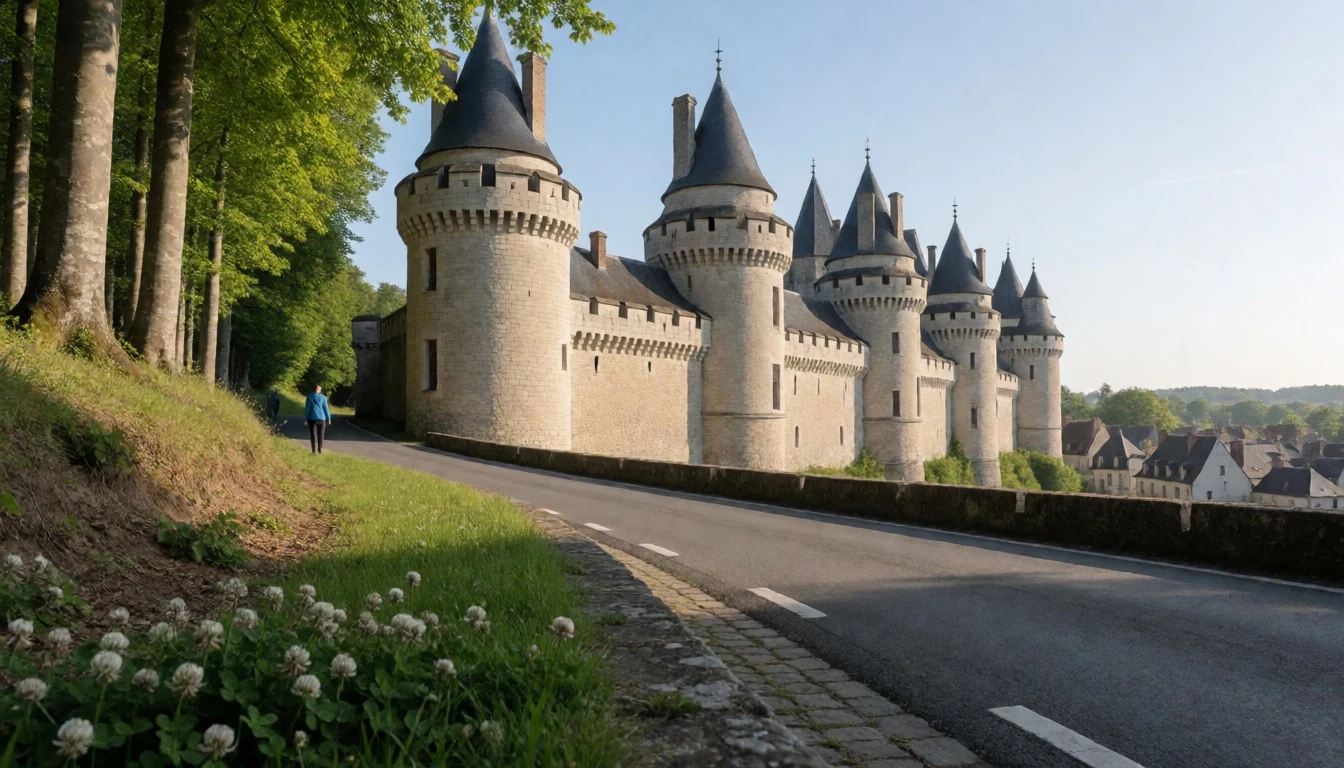
- The inner courtyard — Central courtyard
Once through the gate, the courtyard shows the castle's plan: ranges of living quarters around an open space, the keep on one side, and staircases and turrets rising in every direction. It is the best spot for photographs of the full interior elevation, especially on bright mornings.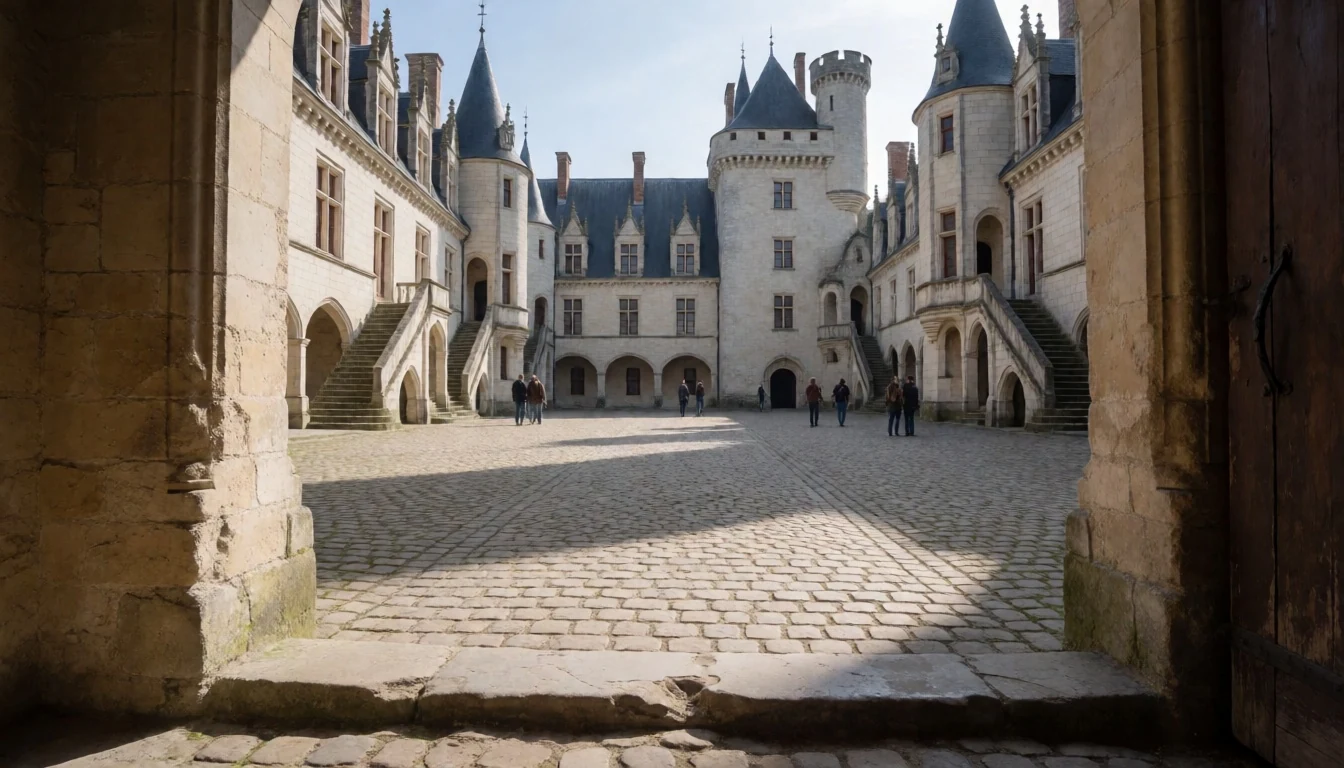
- The keep and fighting galleries — Keep and ramparts
The keep and the wall-walks show what the castle was built to do. Narrow stairs climb to galleries with views over the forest and village, and the thick walls and small openings explain how a garrison would have defended the place. Expect tight spaces and some queuing on busy days.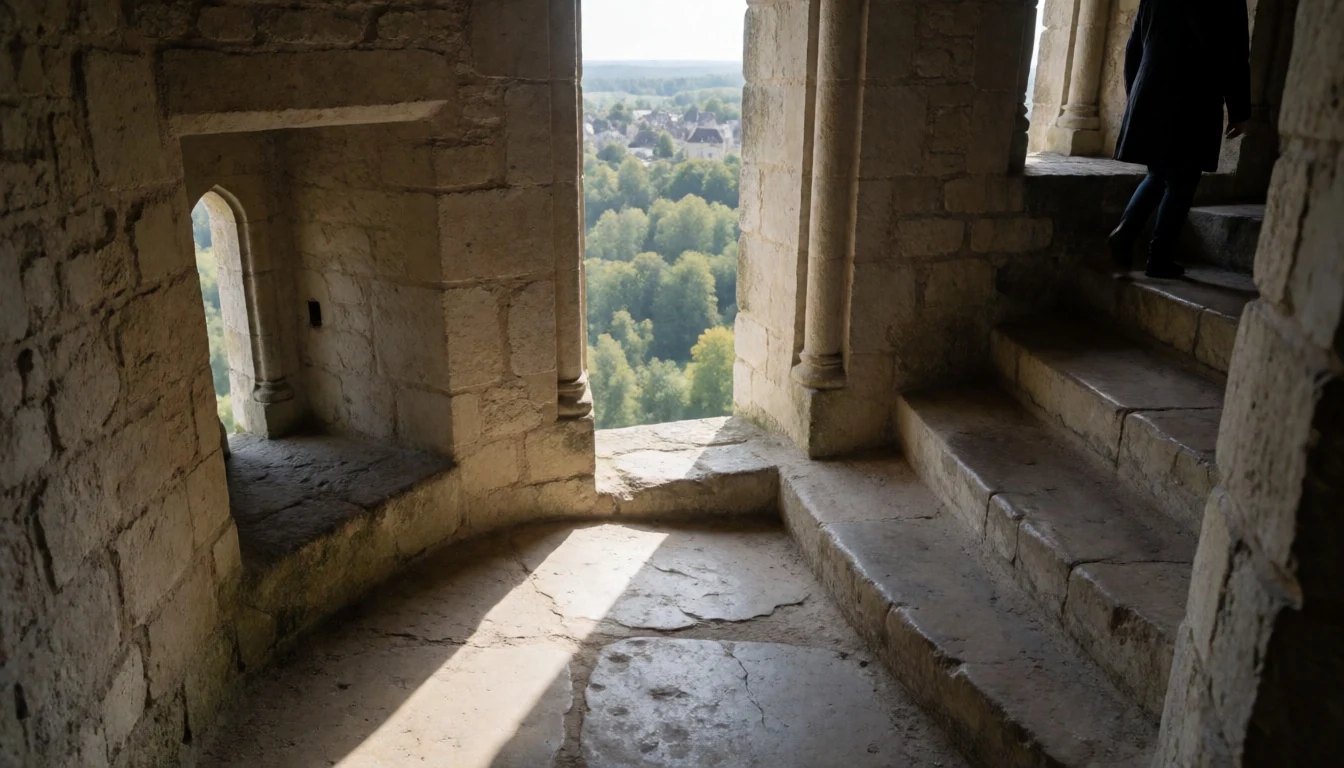
- Viollet-le-Duc's painted interiors — Residential wing
The restored rooms are where the architect's imagination shows most. Painted walls, carved fireplaces and large halls were designed for an imperial household that never moved in. They are more invention than record, which makes them fascinating as a nineteenth-century picture of the Middle Ages. Some rooms were left bare.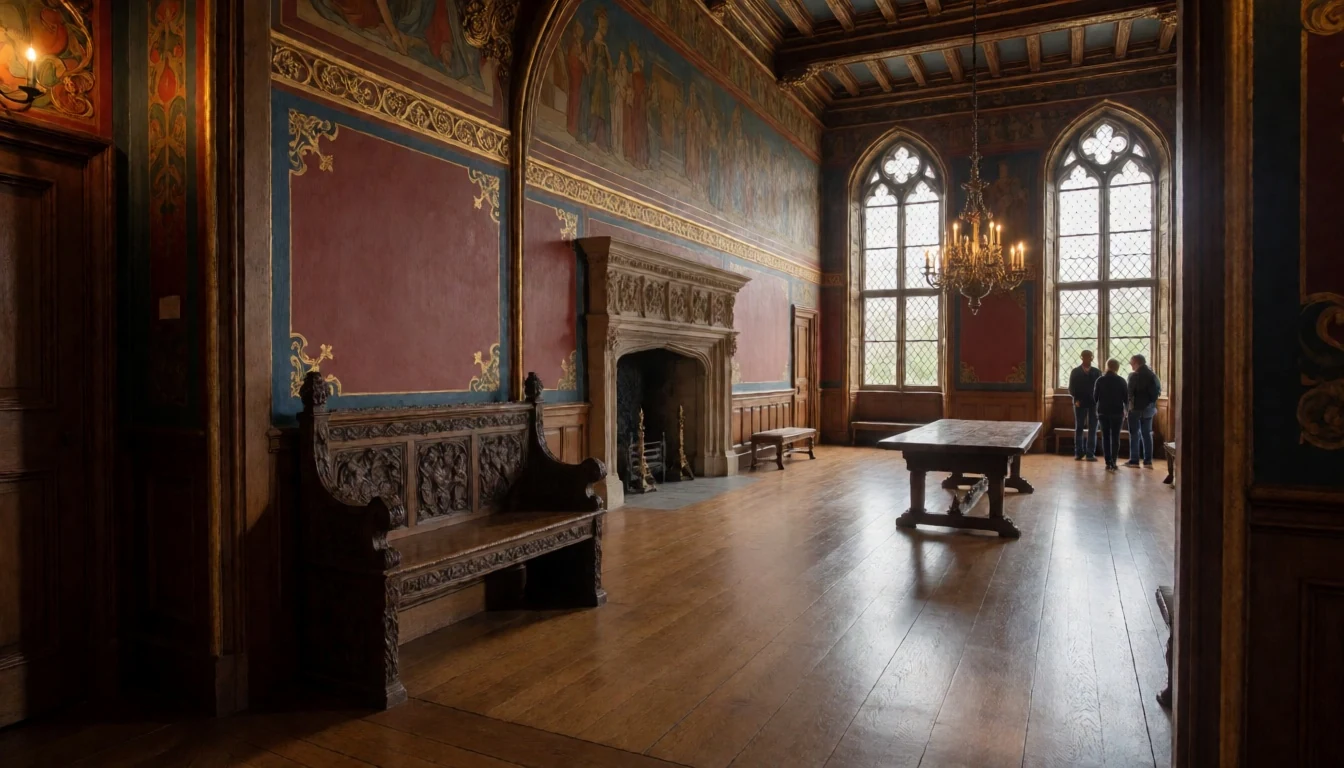
- The village and lake — Pierrefonds village
Below the castle, Pierrefonds village has a small centre of cafés, bakeries and shops, and a lake a short walk away. It suits a gentle half-day after the visit. The viewpoints along the shore give a different, calmer angle on the towers, with the water doubling them on still days.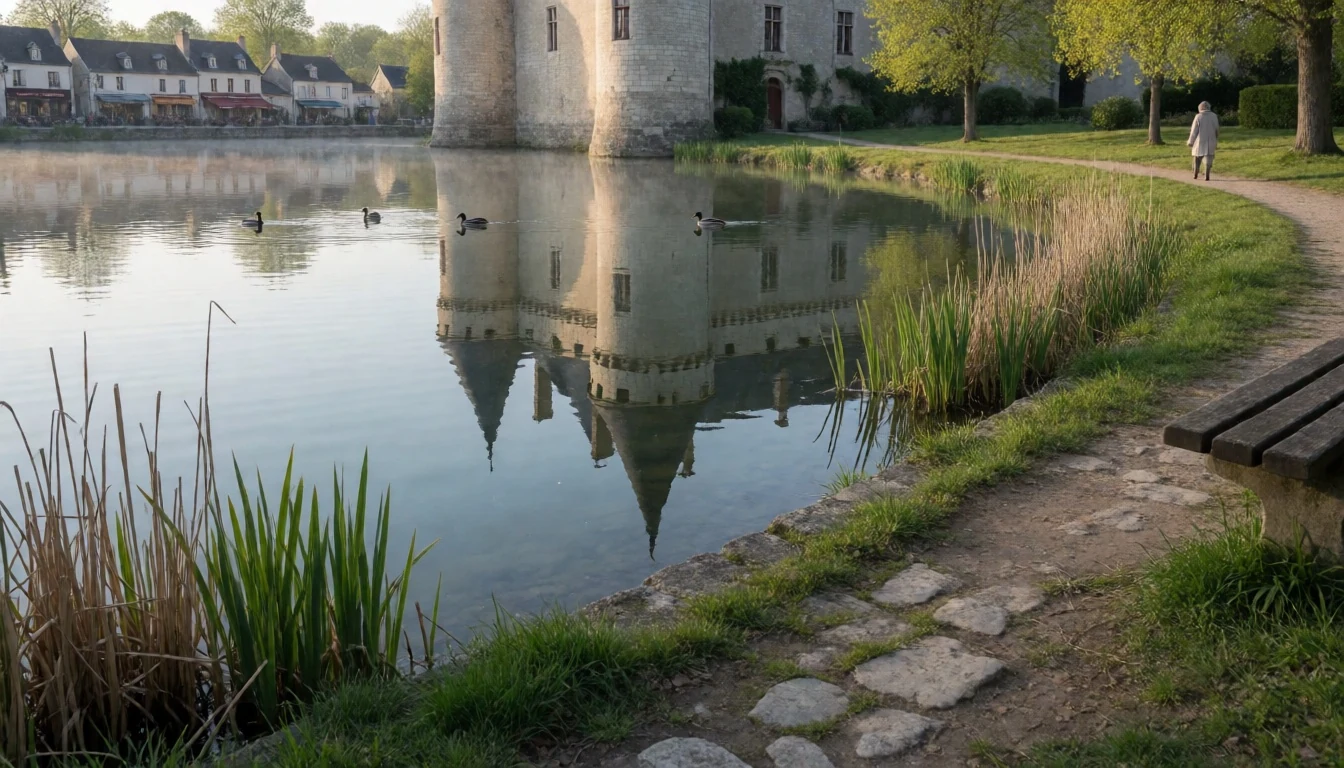
- Forest of Compiègne paths — Compiègne forest edge
The woodland beside the castle has marked walking routes, and the castle appears and disappears between the trees. A short loop is enough to feel the setting that made this a defensive site and later a romantic one. Wear shoes that cope with mud after rain.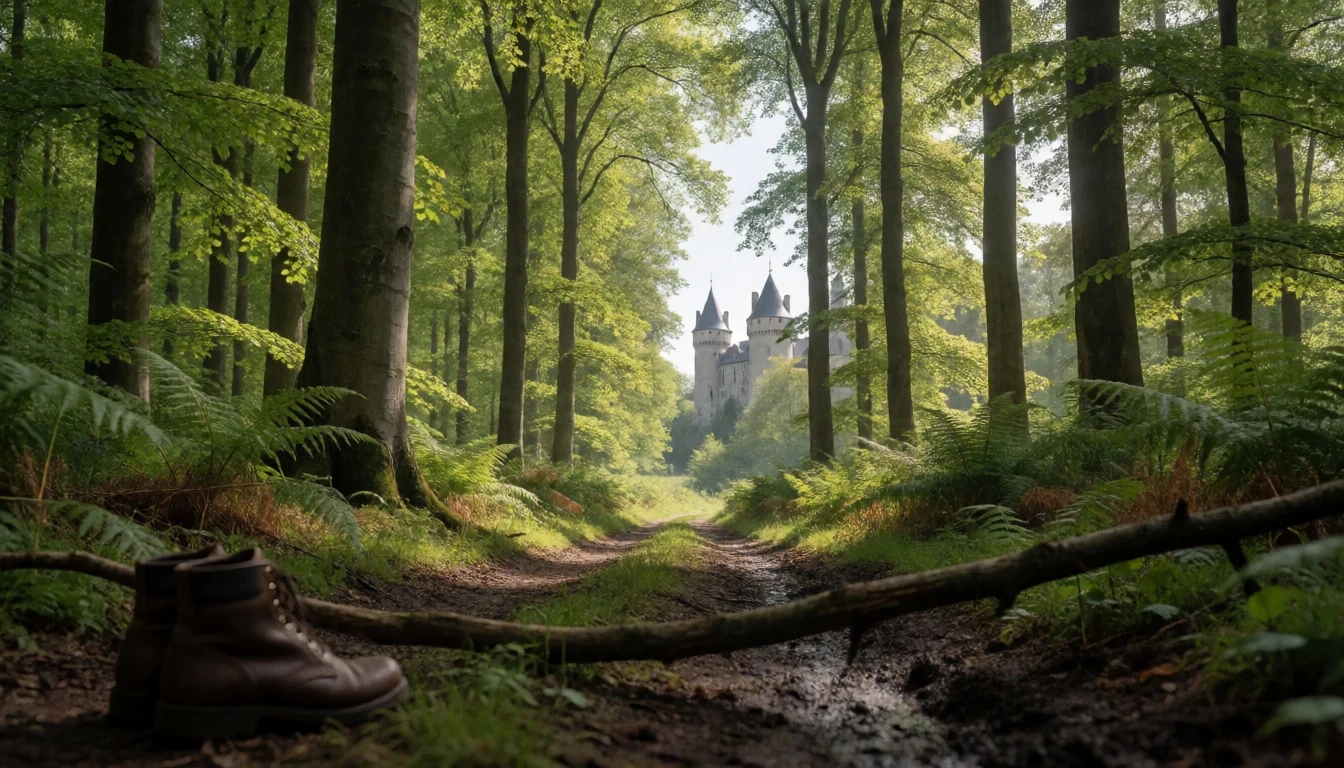
Culture
Pierrefonds Castle is a monument to how nineteenth-century France imagined its medieval past. Viollet-le-Duc, the architect Napoleon III chose, belonged to a movement that revived Gothic design and treated old buildings as lessons in how to build well. His approach at Pierrefonds was bold: he restored, but he also invented, and the painted interiors reflect his ideas rather than surviving evidence. That fact has fuelled long debate among historians and conservators about where repair ends and creation begins, and it is a fair question to carry through the rooms. The result is a castle that tells you as much about the 1800s as about the 1390s. It has also become a familiar film and television backdrop, and its silhouette is instantly recognisable to people who have never visited. Locally, it is a source of pride and a steady engine for the village economy, with weekend visitors from Paris and school groups through the warmer months. The castle has been protected as a historic monument since 1848, and it is managed today by the national monuments service, so rules on access, photography and bags follow the site's official guidance. Check the official website before you go for current opening arrangements. Keep your voice low in the narrow staircases and galleries, and give way on the stairs to people coming the other way, as they are tight and the stone is worn.
What to wear
Pierrefonds Castle sits in a part of France with no single surviving folk costume, so the most useful dress history here is courtly. In the years when Louis of Orléans rebuilt the castle, a noble household would have worn fitted wool and silk, with velvet, fur trim and long hanging sleeves, in dyed colours that signalled wealth. The nineteenth-century restoration brings another layer: the Second Empire court favoured wide crinoline skirts, silk and lace, and dark tailored coats for men. Today people in the village and nearby towns dress much as people do across northern France: practical, neat and layered, in dark jackets, jeans, scarves and comfortable shoes, with something smarter for Sunday lunch. Visitors from Paris often arrive in casual outdoor clothes. For a visit, plan around weather and terrain. The courtyard is cobbled, the staircases are narrow and stone, and the ramparts can be breezy, so wear shoes with grip and a layer that you can add or remove. A light waterproof is wise in any season, and warm clothes are needed in the cooler months because the interiors can feel cold. There is no strict dress code, but if you also visit a village church, cover bare shoulders and remove hats as a courtesy.
What to eat
- Ficelle picarde — Crêperies and village cafés in Pierrefonds and nearby Compiègne
A rolled savoury pancake wrapped around ham and mushrooms, then baked under a creamy sauce. It is a classic of Picardy and the wider Hauts-de-France region, and a filling lunch after a morning on the castle stairs.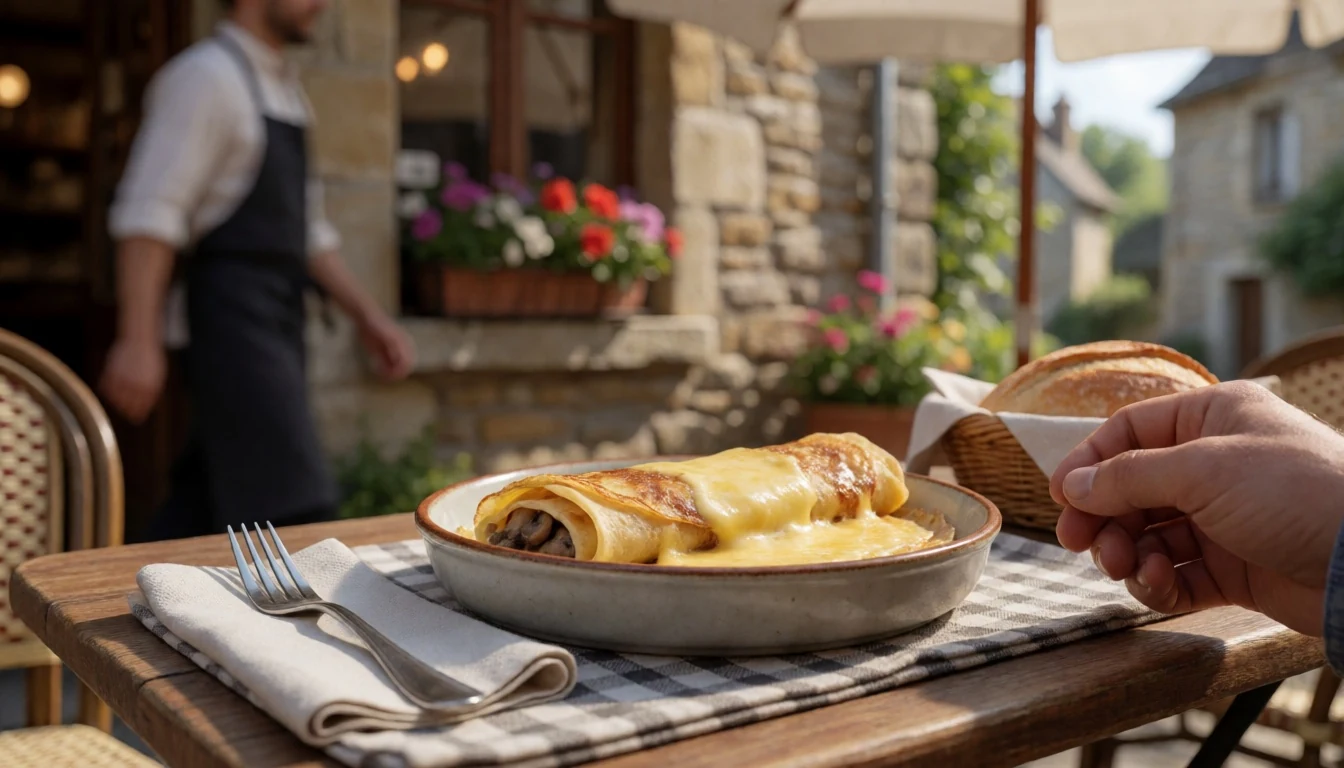
- Flamiche aux poireaux — Bakeries and market stalls in the surrounding towns
A leek tart with a soft, creamy filling in a short pastry case, sometimes made with the strong regional cheese maroilles. It is simple, warming food that suits cool, damp days in this region.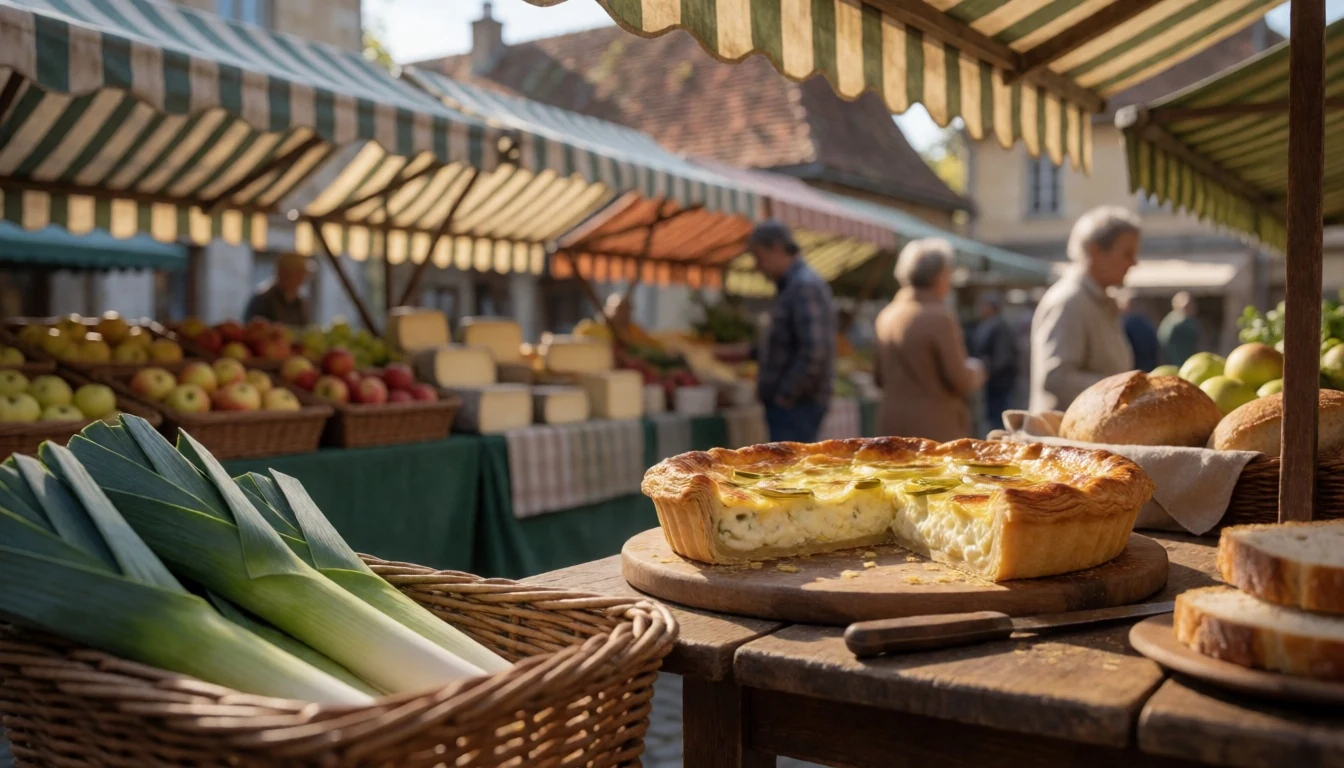
- Crème Chantilly — Village cafés and pâtisseries
Lightly sweetened whipped cream, named after the nearby town of Chantilly. It tops tarts, strawberries and hot chocolate, and a bowl of it with fruit is an easy dessert after a walk. - Haricots de Soissons — Traditional restaurants and brasseries in the Oise and Aisne area
Large white beans from the Soissons area, served in slow-cooked dishes with pork or as a side. They are mild, creamy and hearty, and tend to appear on menus from autumn into winter. - Forest game and mushrooms — Country restaurants around the forest edge
The woods around Compiègne inspire autumn menus of venison, wild boar and wild mushrooms, usually in a rich sauce with potatoes. Availability depends on season, so ask what is on that day.
Plan it
Best time. April–June and September–October bring mild weather and green or golden woodland. July and August are the busiest months for visitors, while winter is cold and damp and daylight is short. Rain can fall in any season, so bring a waterproof.
How long. 1
Getting there. Fly to Paris Charles de Gaulle, then take a train to Compiègne and finish by local bus or taxi to Pierrefonds, which is a short ride. By car from Paris it is a straightforward drive. Check current timetables and bus links before travelling.
Budget. mid
Tips
- Go on a weekday morning to avoid coaches and family crowds
- Check the official website (http://pierrefonds.monuments-nationaux.fr/) for opening times, tickets and any guided visits
- Wear shoes with grip for cobbles and narrow stone stairs
- Bring a layer, as the interiors can be cool even in summer
- Carry a card and a little cash for village cafés and bakeries
Etiquette
- Keep to marked routes and do not climb on walls or ruined stonework
- Follow the site's guidance on photography and bags
- Give way on narrow staircases
Nearby
Sources
- Wikidata Q376699 (CC0)
- Wikipedia: Château de Pierrefonds (rev 1369265901) (CC BY-SA 4.0)
- Wikivoyage: Pierrefonds (CC BY-SA 4.0)
- Photo 01: Le Château de Pierrefonds (Crazyswan85) (CC BY-SA 4.0)
- Photo 02: Description du château de Pierrefonds, Figure 00 (Viollet-le-Duc) (Public domain)
- Photo 03: Château de Pierrefonds, April 2012 (Diliff) (CC BY 3.0)
- Photo 04: Description du château de Pierrefonds, Figure 01 (Viollet-le-Duc) (Public domain)
- Photo 05: Description du château de Pierrefonds, Figure 03 (Viollet-le-Duc) (Public domain)
- Photo 06: Château de Pierrefonds (Eric Pouhier) (CC BY 3.0)
- Photo 07: Pierrefonds1.jpg (CC BY 3.0)
- Photo 08: 1895 Dictionary – Castle (Public domain)


