Phu Quoc
Phu Quoc, Vietnam
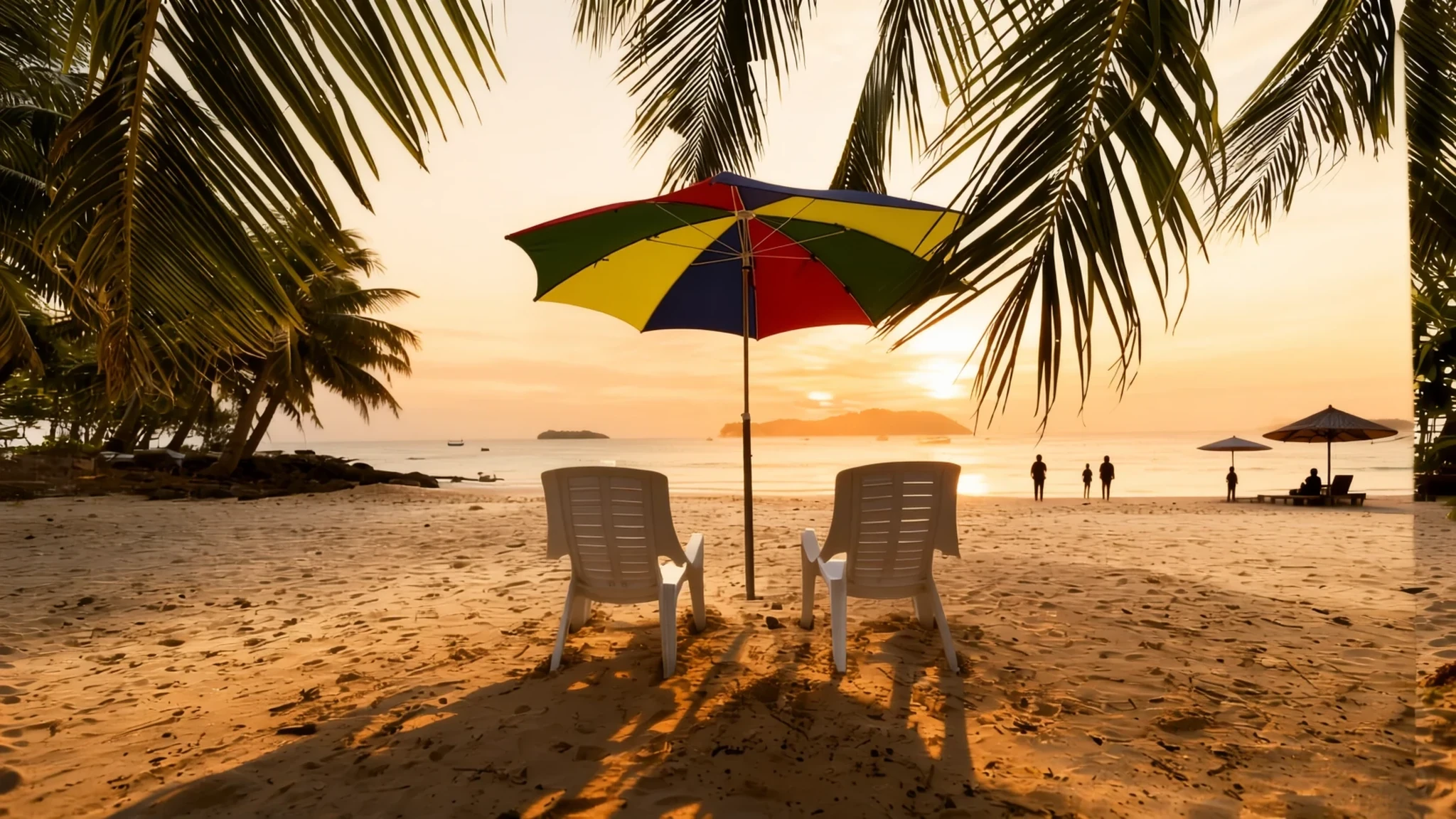
Long quiet beaches, forested hills and a growing resort coast make Phú Quốc an easy island to love, best visited December to March.
The place
Phú Quốc is the largest island in Vietnam, a special zone within An Giang province that lies in the Gulf of Thailand, off the south-western coast of the mainland. The island covers about 575 square kilometres and has roughly 179,000 permanent residents. Dương Đông, on the west coast, is the administrative centre and largest town, while An Thới sits at the southern tip. The special zone also takes in 21 smaller islets.
Fishing and farming have long been the main livelihoods, but tourism is now the engine of the economy. In recent years the west coast has filled with resorts, several five-star hotels and new restaurants, and the road into town can switch from forest to building site within a few kilometres. Most visitors arrive through Phú Quốc International Airport, which links the island to mainland cities and to a number of international destinations.
The landscape is varied for a small island: long sandy beaches on the west and south coasts, forested hills in the interior, rivers and waterfalls that run strongly in the wet season, and rocky headlands at the edges. Sunsets are a nightly event on the western shore. Getting around usually means a scooter, a hired car or a ride-hailing app. In 2025 the island was reorganised as one of Vietnam's newly established special administrative zones, which gives its government a distinct status within the country.
Its story
Phú Quốc's recorded past begins with Cambodian royal documents from 1615, but historians have found little evidence that the Khmer kingdom kept a lasting presence on the island or ran it as a state. Around 1680 the island belonged to the Principality of Hà Tiên, a maritime domain founded by Mạc Cửu, a Chinese merchant and explorer who had settled under the patronage of the Cambodian king.
Mạc Cửu later transferred his loyalty to the Nguyễn lords and accepted the authority of the Vietnamese ruler, receiving a noble title in return. After his death in 1736, his son Mạc Thiên Tứ took over and presided over what is often called the golden age of Hà Tiên. A Cambodian attempt to win the town back failed, and from then on Cambodia did not try again, so Hà Tiên and the islands around it stayed effectively independent.
The principality's ambitions reached into the wider region. Mạc Thiên Tứ backed a claim to the Siamese throne that failed, and Siamese troops later wrecked Hà Tiên. Mạc Thiên Tứ fled to Trấn Giang, the modern Cần Thơ, where the Nguyễn lords gave him shelter. Traces of these overlapping allegiances can still be found in the island's temples and in its museums.
What to see
- Sao Beach — South-east coast, near An Thới
Sao Beach has pale sand, clear shallows and a restaurant and café set just back from the water, which makes it a good place to spend a whole day. Go early for quieter water, since the afternoons fill up with day trippers. The beach suits a slow morning with a book, a swim and a plate of grilled fish before the heat builds.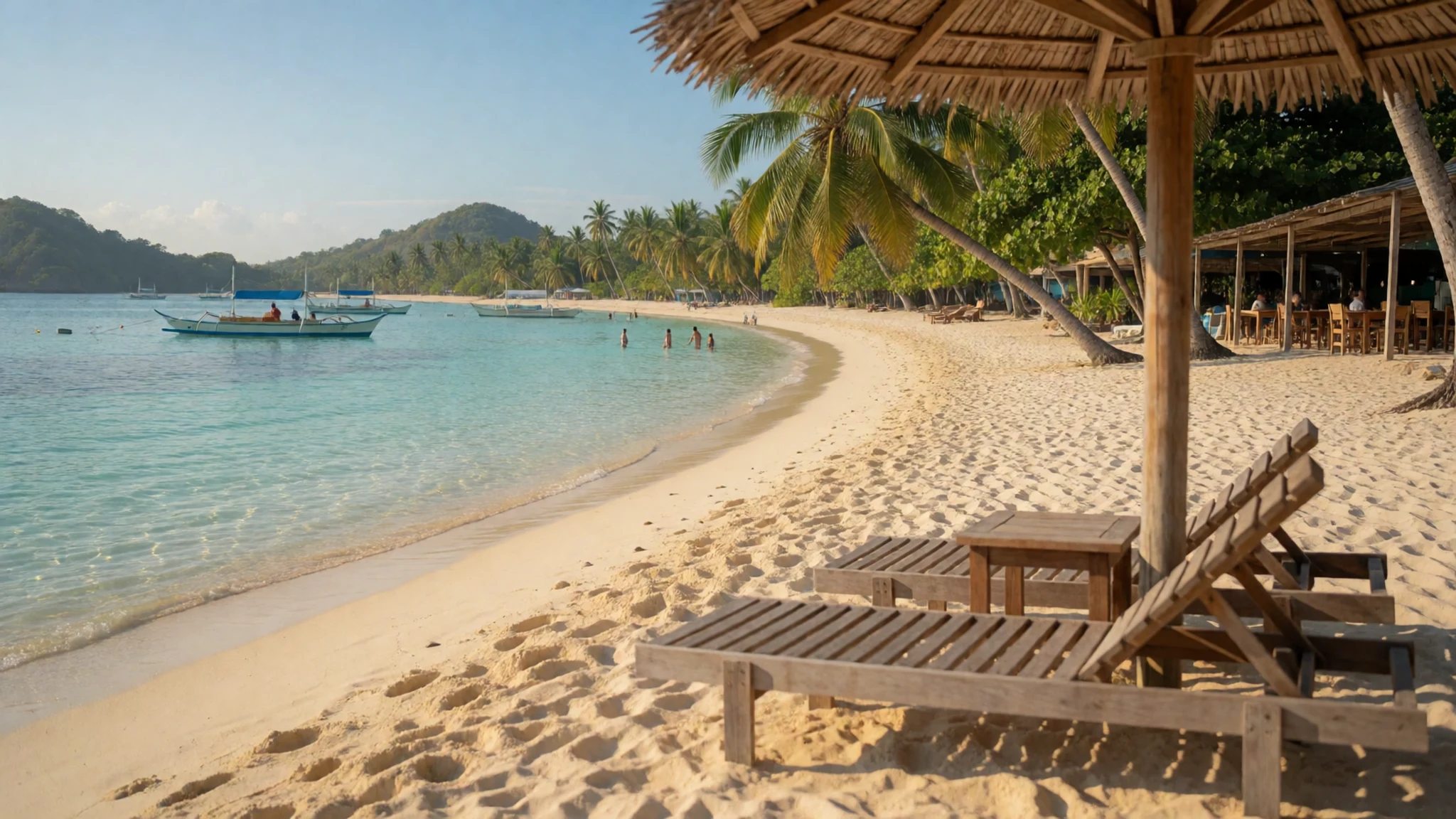
- Ong Lang Beach — North-west coast
Ong Lang Beach is a good place to watch the sun go down. Resorts manage and clean much of the sand, but a stretch stays open for anyone to spread a towel. The northern end is partly rocky, so bring water shoes if you plan to explore it. Arrive by mid-afternoon if you want a spot close to the water as the light fades.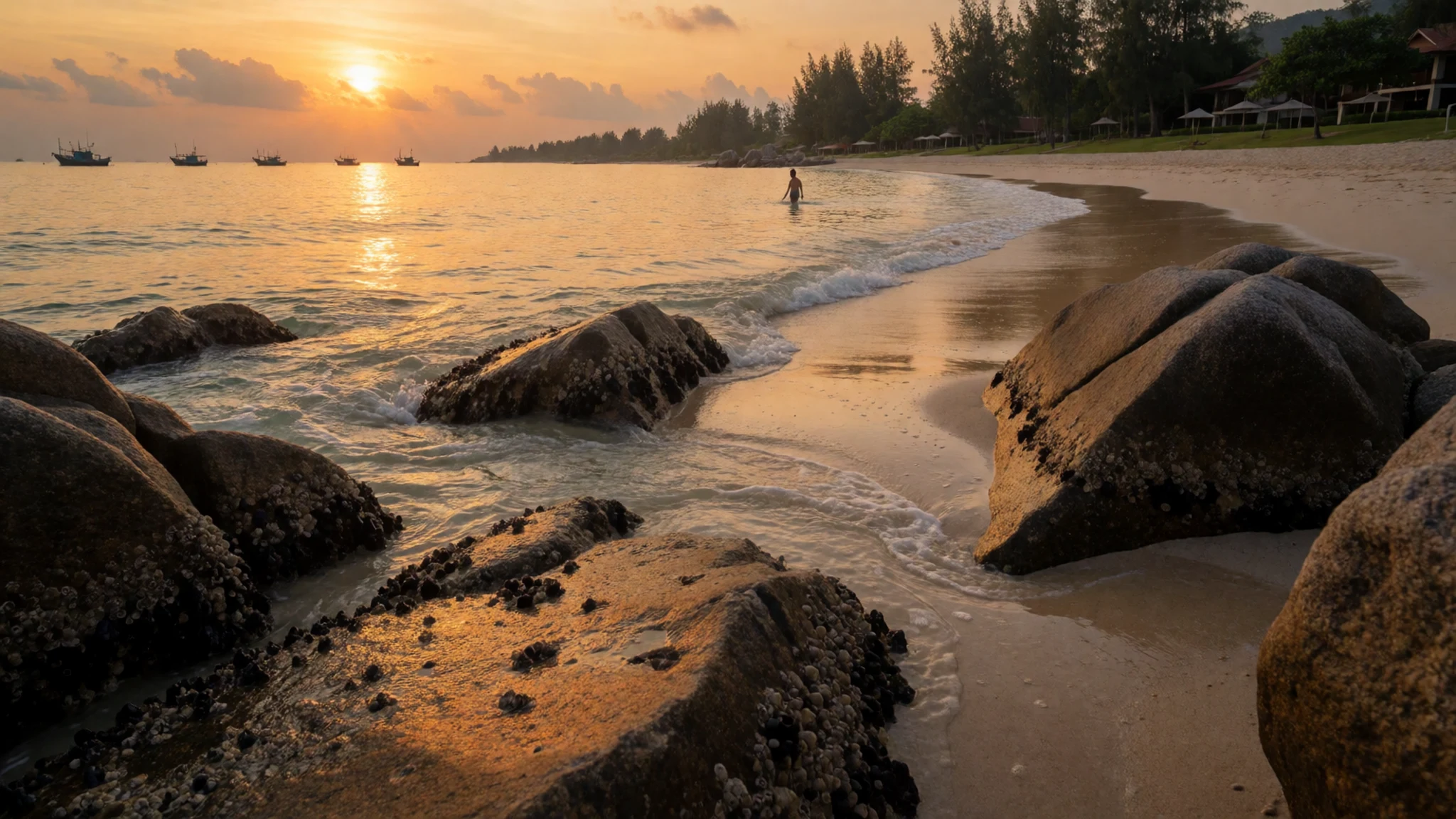
- Suoi Tranh Waterfalls — Interior, central-east of the island
Suối Tranh is at its best after rain, when the falls carry real volume. In the dry months, from about December to March, the water thins to a trickle, but the bare rock the river has carved is worth seeing and the forest sounds carry well. Wear shoes with grip, because the paths and rocks get slippery.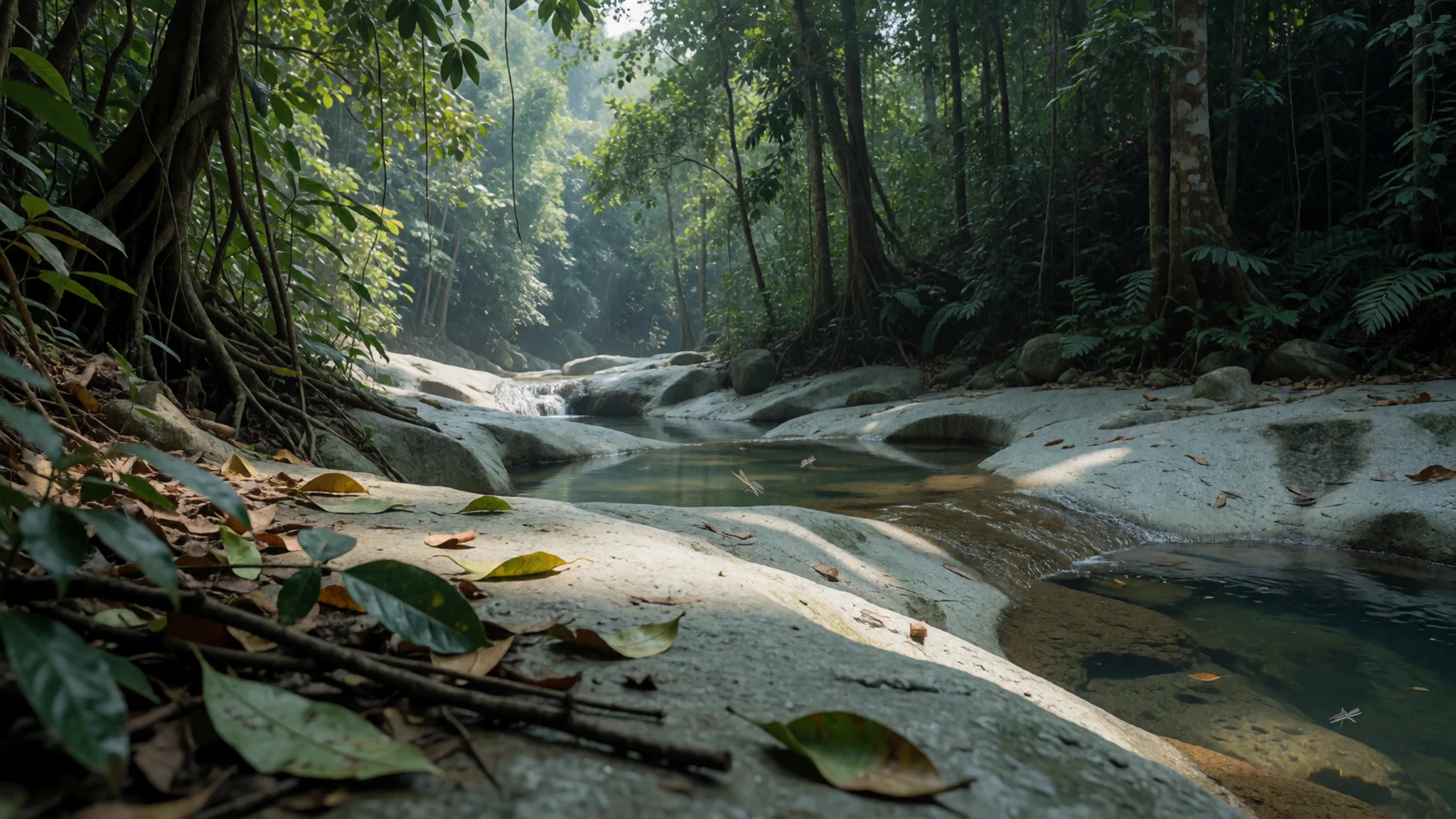
- Phu Quoc Prison History Museum — Near An Thới, at the southern end
The prison museum was built by the French and later held prisoners of war during the Vietnam War. Its displays are about the people kept here, and the site is compact, so it suits a short visit. Treat it as a serious visit and keep your voice down.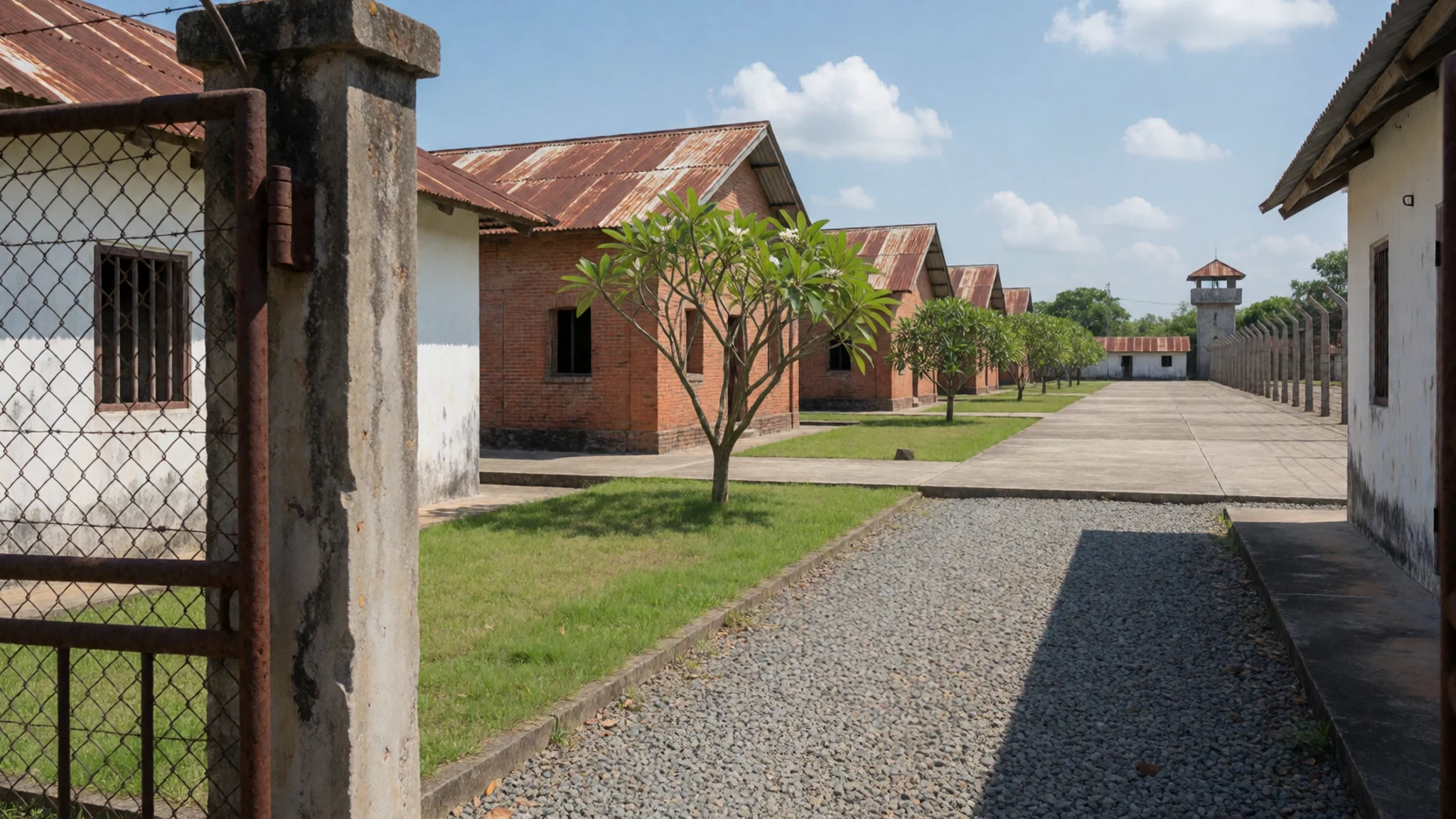
- Sunworld Hon Thom Water Park — Hòn Thơm, off the southern coast
Sunworld Hòn Thơm is a modern water park, opened in 2019, with large slides, swimming pools and restaurants. The beach beside it offers snorkelling and scuba diving, so it can be combined with time in the water. It works well for a hot afternoon with children, though it is a full day out if you add the beach.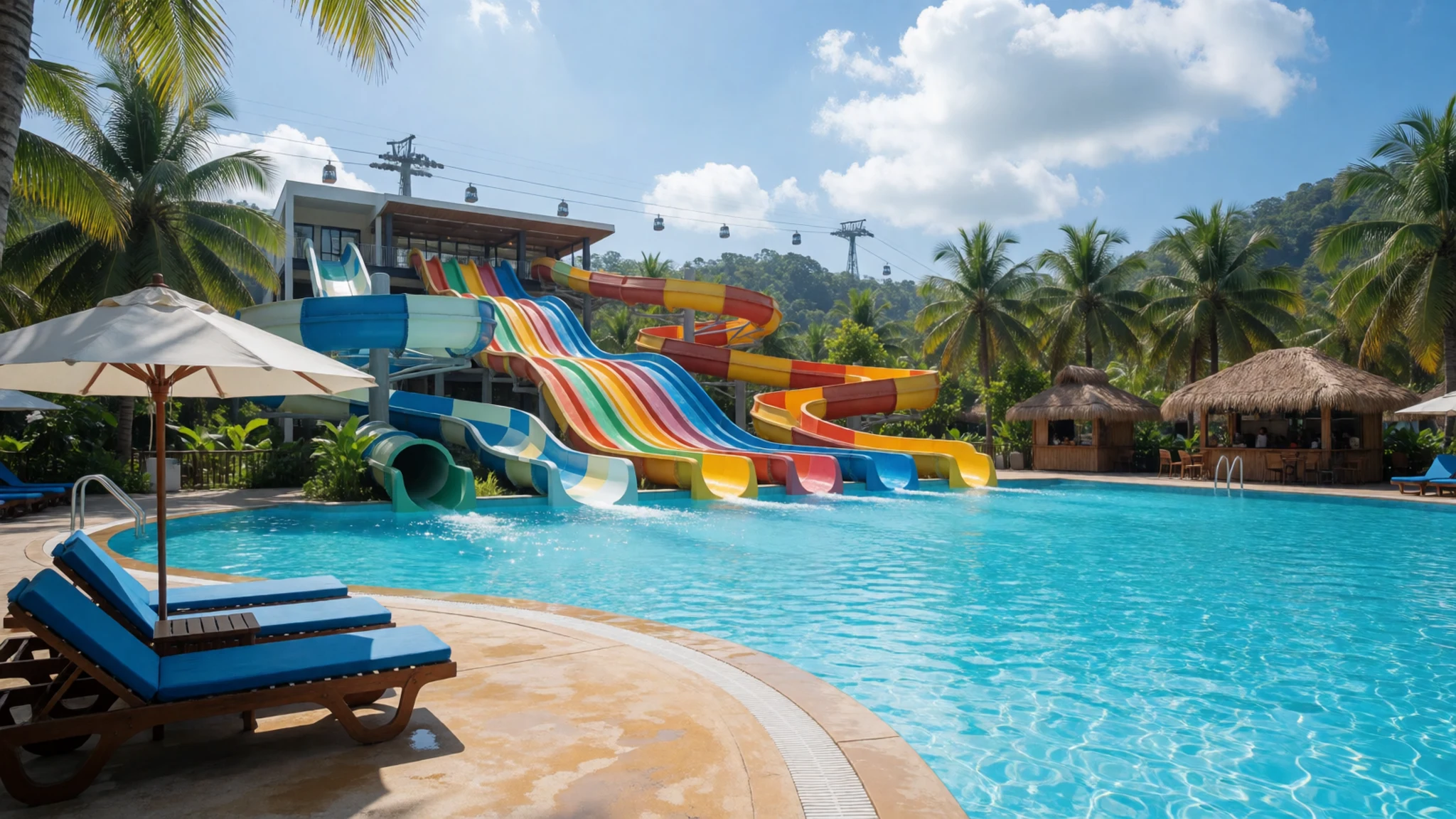
Culture
Phú Quốc mixes Vietnamese community life, fishing traditions and a fast-growing resort economy, and the way visitors behave in each setting matters. Temples such as the communal temple at Dinh Cậu are active places of worship, where locals bring offerings and burn incense, so people should keep voices low and step back from anyone praying. Fishing villages are working places rather than photo sets, and families there are often busy with boats, nets and drying fish. The prison museum is a memorial to people held during the war years, and many visitors come quietly to read the displays. Haggling is normal at markets for small items, while resort prices are fixed. Tipping is not expected in local eateries and is a welcome gesture in resort restaurants. When in doubt, follow what local people do around you, and remove your shoes before entering any pagoda's inner hall.
What to wear
Phú Quốc shares the dress traditions of southern Vietnam, where clothing has long been shaped by heat, water and farm or fishing work. The classic everyday outfit is the áo bà ba, a loose cotton tunic and trousers in plain colours, still worn by older rural people and by many fishing families. For weddings, festivals and formal occasions, the long áo dài, usually in silk and slit at the sides over matching trousers, is the garment most people recognise, and schoolgirls and office staff across the country still wear it on certain days. The conical nón lá, a leaf hat, shades the head in the fields and at sea.
Today most people on the island dress for ease: T-shirts, shorts, sandals and motorbike helmets, with smart clothes kept for weddings, funerals and family events. Visitors should pack light, breathable fabrics, a sun hat and high-factor sun cream, since the heat and humidity are strong on most days. Cover shoulders and knees when entering a temple or pagoda, and bring a light layer for air-conditioned restaurants. Swimwear belongs on the beach and at pools rather than in towns. Sturdy sandals or trainers help on the rougher paths to waterfalls and headlands, and a light waterproof is worth carrying in the wet season.
What to eat
- Fresh grilled seafood — The night market in Dương Đông
Seafood is the island's draw, and the night market is where most people go. From early evening, small stalls set out tables along the street. Pick a fish, prawns, squid or crab from the ice trays, and the cook grills it over charcoal with garlic, chilli and lime.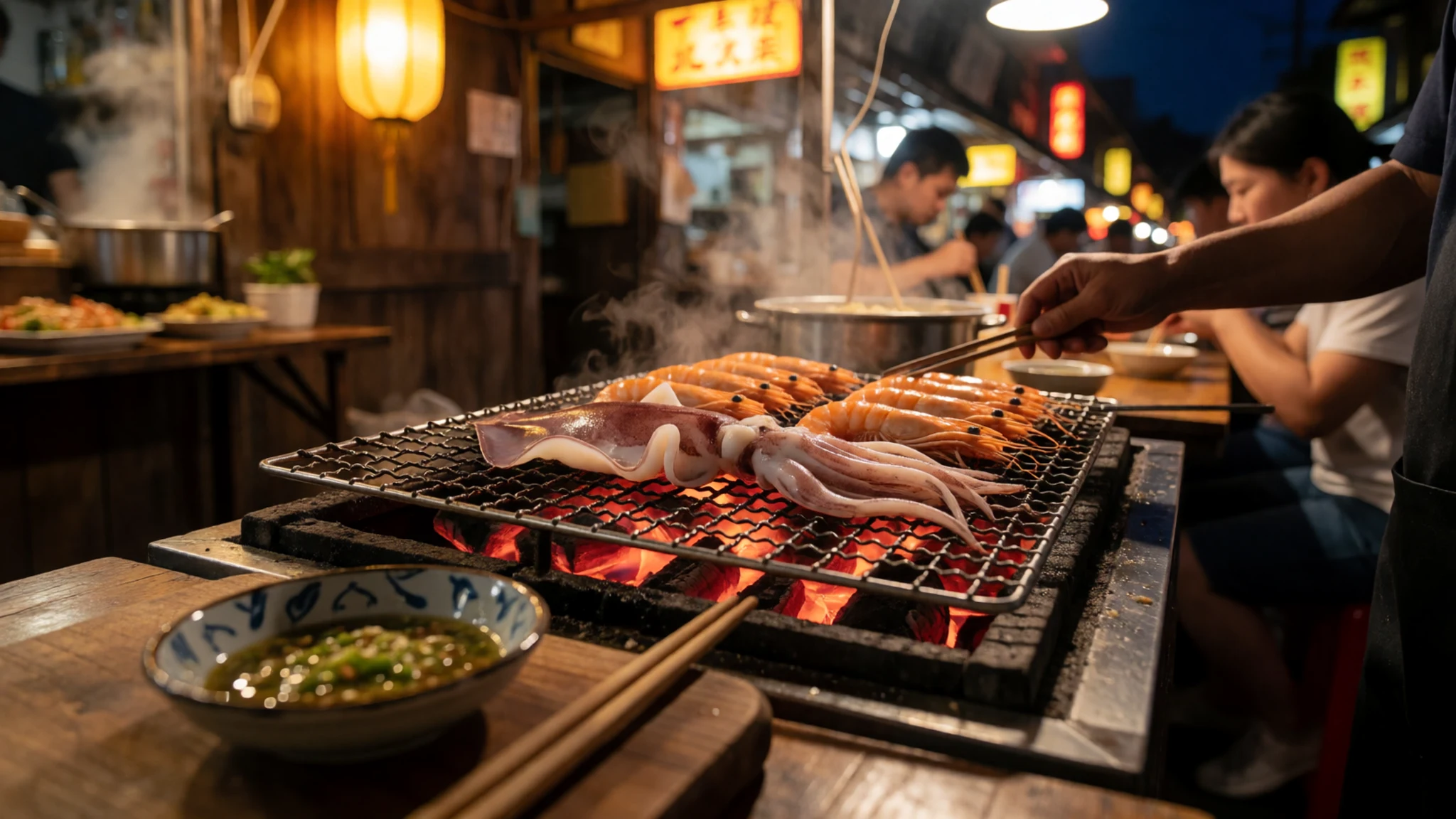
- Phu Quoc fish sauce — Market stalls in Dương Đông
Fish sauce, nước mắm, seasons most meals. It is made by salting small fish and leaving them to ferment in barrels, and the amber liquid is drawn off. Buy a bottle from a market stall in Dương Đông and ask to smell it first.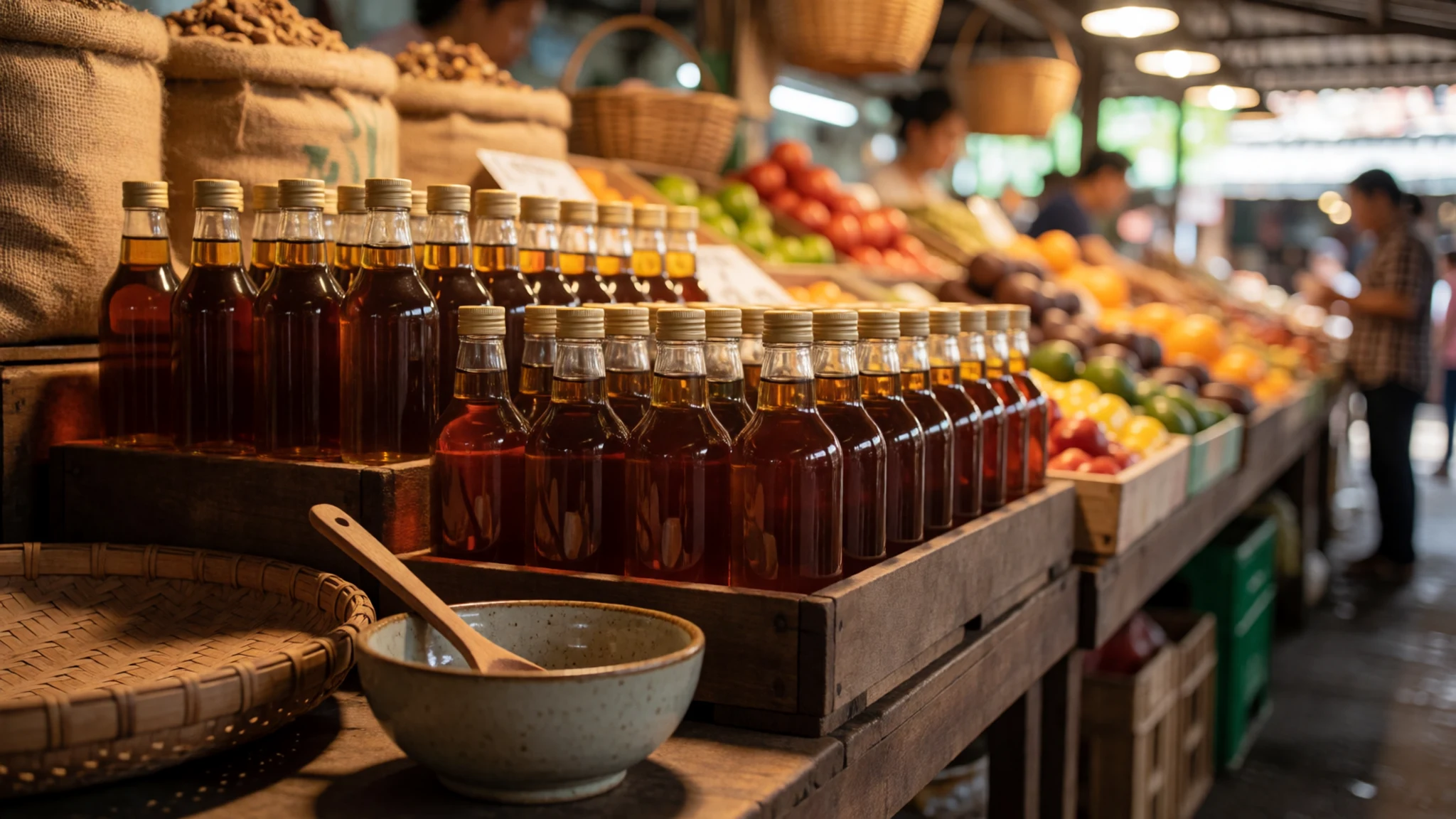
- Rice dishes and noodle soups — Morning stalls around the Dương Đông market
Breakfast and lunch show the island's everyday cooking. Rice plates come with grilled pork or fish, pickled vegetables and a small bowl of broth. Noodle soups are sold from stalls that open early and often close by midday, so go in the morning. - Curries and Indian food — Eateries on the main west-coast road
Curries and Indian food are easy to find on the island, and a few eateries serve them alongside Western dishes. Quality varies from place to place, so it is wise to start with a mild dish. It makes a welcome change after several days of seafood. - Beachfront seafood — Beachfront restaurants along the west coast
Beachfront restaurants serve fresh seafood cooked to order, often with a sea view and a cold drink in hand. Choose a place with a grill visible from the sand, and ask what came off the boats that morning. Expect to wait a little longer on busy evenings.
Plan it
Best time. Aim for December to March, when rain is least frequent and the sea is usually calm. The rest of the year is wetter, with heavy downpours from about April, and the hottest weeks, in April and May, coincide with the start of the rains.
How long. 3–4
Getting there. Fly into Phú Quốc International Airport, the island's main gateway and the hub for flights from mainland Vietnam and some international cities. From there, taxis and ride-hailing cars run to the west coast, and many larger hotels offer airport pick-ups.
Budget. mid
Tips
- Book beach resorts and tour boats ahead for the December to March peak
- Start beach and boat days early, before the midday heat
- Carry cash in dong for markets and small eateries, as cards are not accepted everywhere
- Drink bottled water and bring sun cream, since the sun is strong even on cloudy days
- Check conditions before a boat trip, because the sea changes quickly in the wet season
Etiquette
- Dress modestly when entering a pagoda or temple, covering shoulders and knees
- Ask before photographing people, especially fishing families and market traders
- Keep your voice low at the prison museum and other memorial sites
Nearby
Sources
- Wikidata Q146695 (CC0)
- Wikipedia, Phú Quốc (rev 1377392805) (CC BY-SA 4.0)
- Wikivoyage, Phu Quoc (rev 5386021) (CC BY-SA 4.0)
- Photo: Sao Beach - Phu Quoc, tuonglamphotos (CC BY-SA 4.0)
- Photo: Hon Thom cable car above An Thoi, Klientos (CC BY-SA 4.0)
- Photo: Phu Quoc prison, Bùi Thụy Đào Nguyên (CC BY 3.0)
- Photo: Dinh Cậu, Phu Quoc, Hoangvantoanajc (CC BY 3.0)
- Photo: Vinpearl Safari entrance, Khoitran1957 (CC BY-SA 4.0)
- Photo: Traditional clothing of Vietnam, Phương Huy (CC BY-SA 4.0)
- Photo: Grand World Phú Quốc, 松岡明芳 (CC BY-SA 4.0)
- Photo: Dương Đông town market, Bùi Thụy Đào Nguyên (CC BY 3.0)


