Phong Nha-Kẻ Bàng National Park
Phong Nha-Kẻ Bàng National Park, Vietnam
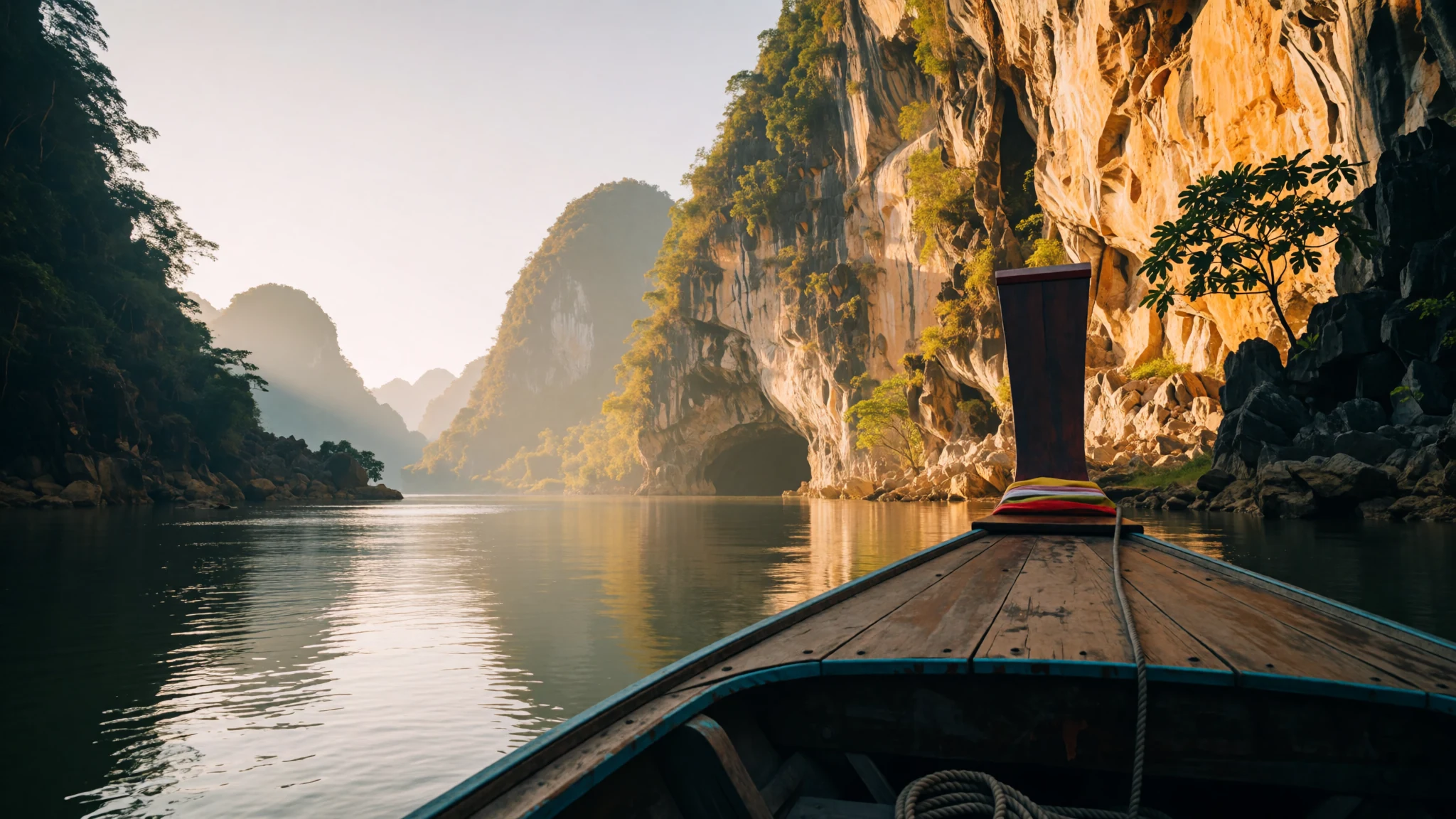
Phong Nha-Kẻ Bàng is a national park where a river valley, forest and some of the world's most extensive cave systems come together in one memorable trip.
The place
Phong Nha-Kẻ Bàng National Park occupies a stretch of Quảng Bình Province on Vietnam's North Central Coast, roughly 500 km south of Hanoi, and its western edge runs up to the Laos border. The landscape is a plateau of limestone, cut by rivers and clothed in forest, where water has worn the rock over a very long time into towers, sinkholes and passages. The park takes its name from Phong Nha Cave and the Kẻ Bàng forest. Its caves are the main draw: the park contains around 300 recorded caves and grottoes, and a 2009 survey mapped about 126 km of passages, with large sections still unexplored. The Son River threads through the valley, and boat trips along it are as much a part of a visit as the caves themselves. Phong Nha village, the main base for visitors, has grown into a cluster of guesthouses, cafés and tour offices, so most trips start there. The park was established in 2001 and is a UNESCO World Heritage Site. The weather shapes everything. Heavy rain can raise the river quickly, closing boat trips and trails, and the heat and humidity make midday walks hard work. Treat the park as a place for early starts and flexible plans.
Its story
People lived in the caves here long before Vietnam absorbed the area during its southward expansion. Champa inscriptions on stone steles and in Buddhist altars inside the cave date from the 9th century, which is the earliest record of human presence. The cave first appears in writing in 1550, in the works of the scholar Dương Văn An, and nine urns in the Citadel of the Nguyễn dynasty at Huế are decorated with it. In 1824 King Minh Mạng conferred a divine title on the cave, Diệu ứng chi thần (妙應之神), and later Nguyễn kings added another. Serious modern interest began in the late nineteenth century, when the French priest Léopold Cadière explored the cave, came across Champa lettering and declared it the finest cave in Indochina. An English expedition in July 1924 compared it favourably with famous caves in France and Spain. In 1935 a local man found a dry cave about a kilometre from the main entrance, later known as Tiên Sơn. It has no underground river, which is why it became known as the Dry Cave. The French colonial tourism bureau in Huế promoted Phong Nha in a 1937 brochure, and the area was studied on and off until the 2009 survey by British and Vietnamese explorers reopened it to the world.
What to see
- Phong Nha Cave — Phong Nha village area, reached by boat
Phong Nha Cave gives the park its name and is reached by boat along the river, with limestone cliffs rising on either side. The passages inside hold rock formations and lit chambers, and the boat ride itself is much of the appeal. Midday and weekend trips tend to be busier, so an early start helps. Check the official site for current fees. Wear shoes with grip.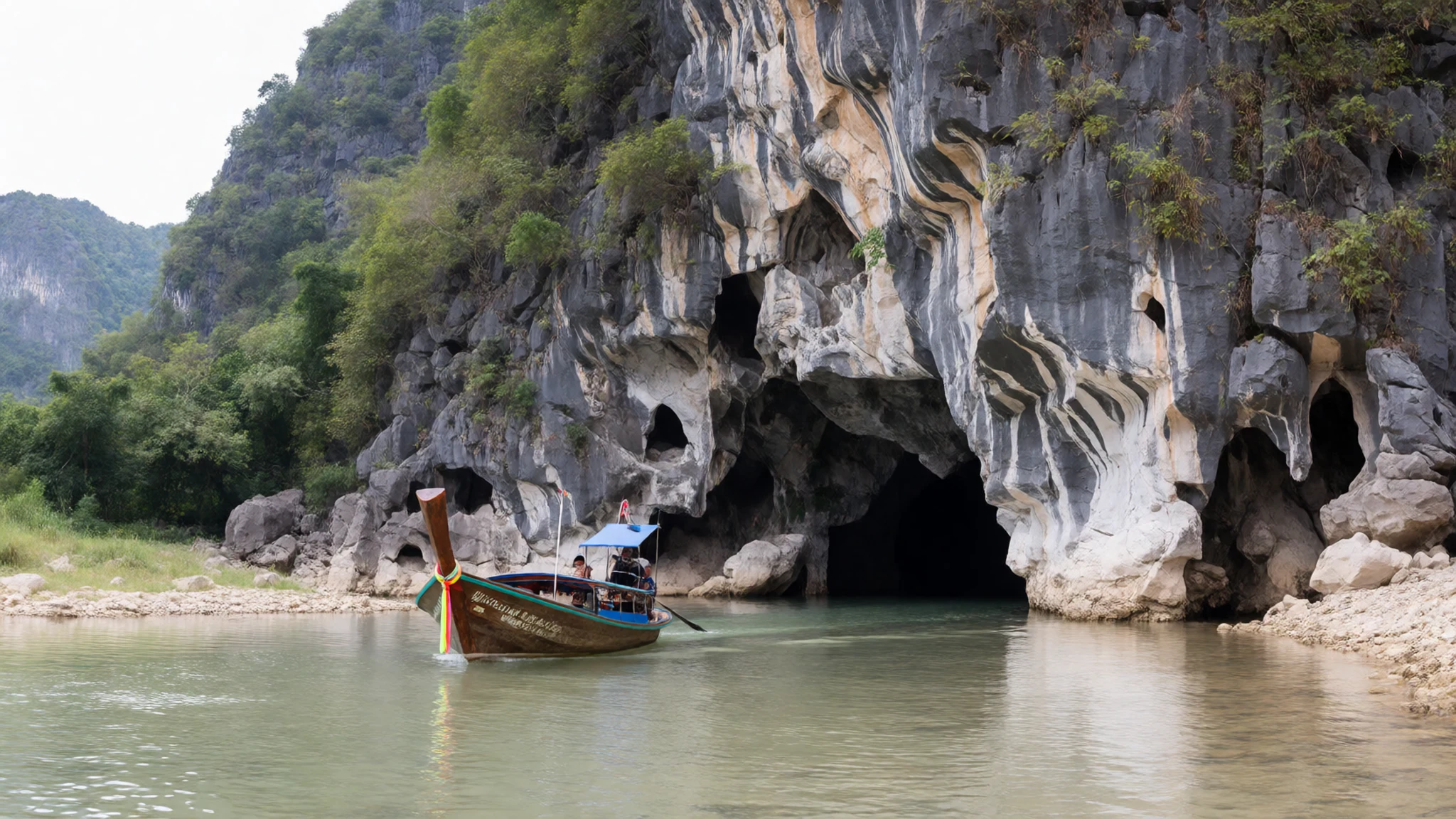
- Tiên Sơn (Dry Cave) — about a kilometre from the Phong Nha entrance
Tiên Sơn, known as the Dry Cave, sits about a kilometre from the Phong Nha entrance, reached by a short walk up from the valley floor. It has no underground river, so its first chambers are dry and walkable, with formations that give it a fairy-tale feel; beyond a 10 m drop, the rough rest is for experienced expedition parties only. The climb is steep in places, so carry water. An early start helps with heat and crowds.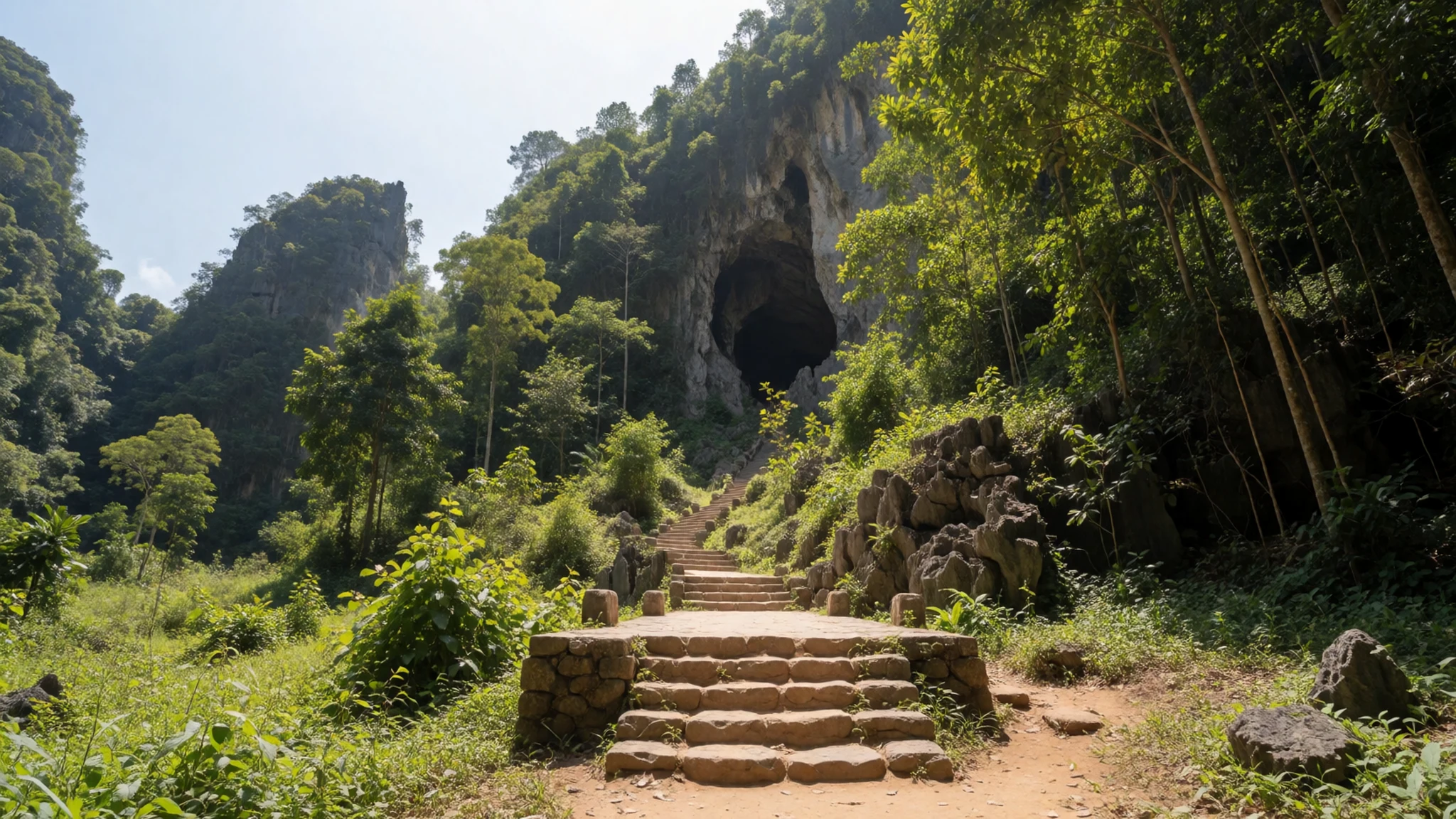
- Nước Mooc Spring Eco Trail — outskirts of Phong Nha village
The Nước Mooc Spring Eco Trail follows the river upstream from the village, crossing on bamboo footbridges where the rapids run fast. It suits a gentle forest walk rather than a cave, and the water is good for a dip where it is safe. Transport can be arranged from Phong Nha village. Buy your ticket at the hut by the road.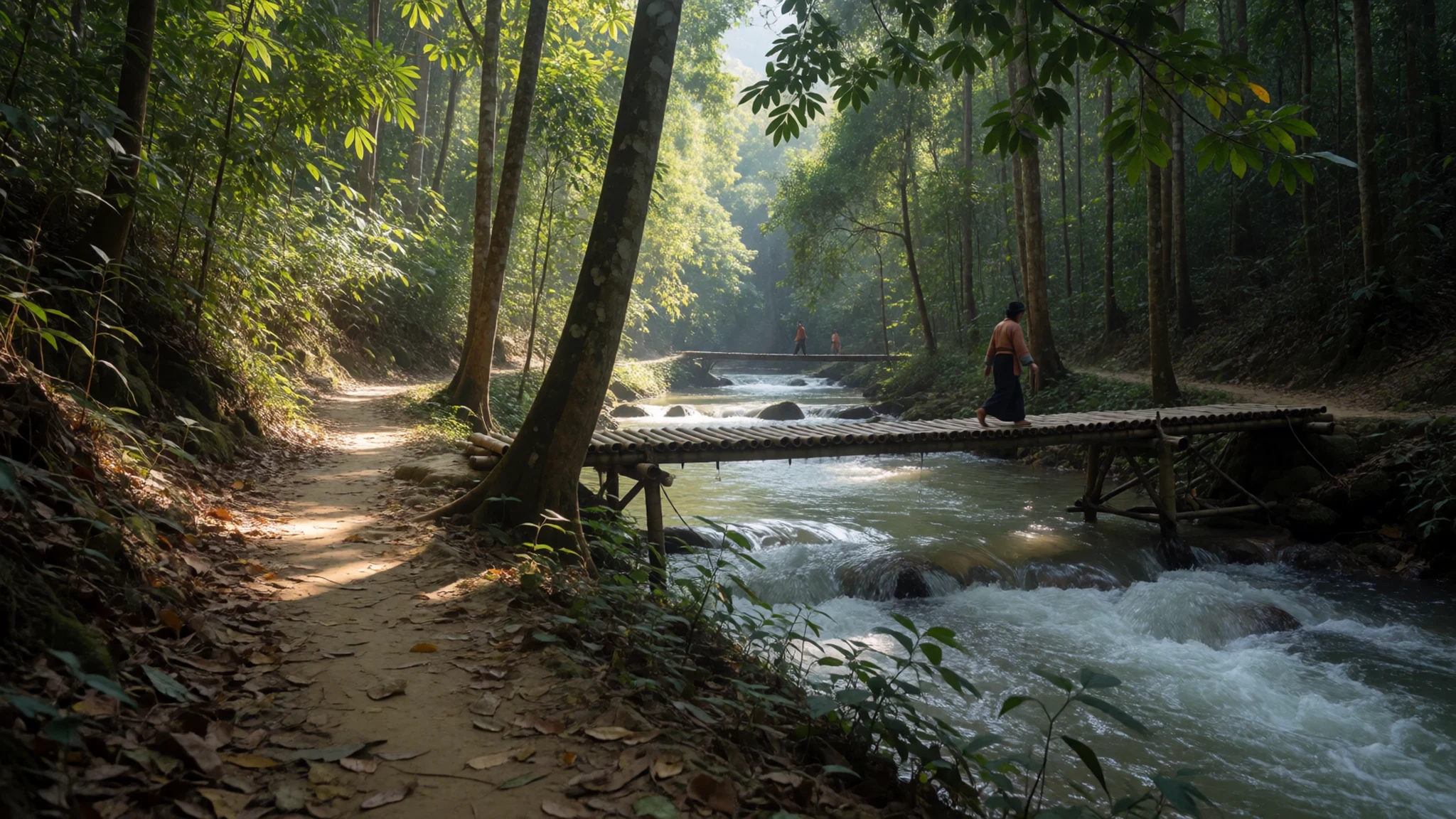
- Thiên Đường (Paradise Cave) — off the main road, reached by car, motorbike or bus
Thiên Đường, or Paradise Cave, lies off the main road and is easy to reach. A sealed road leaves the highway, so you can reach it by car, motorbike or bus. The entrance is a flight of steps, and inside is a long gallery of rock formations lit for walking. It suits anyone wanting a substantial cave without a full expedition.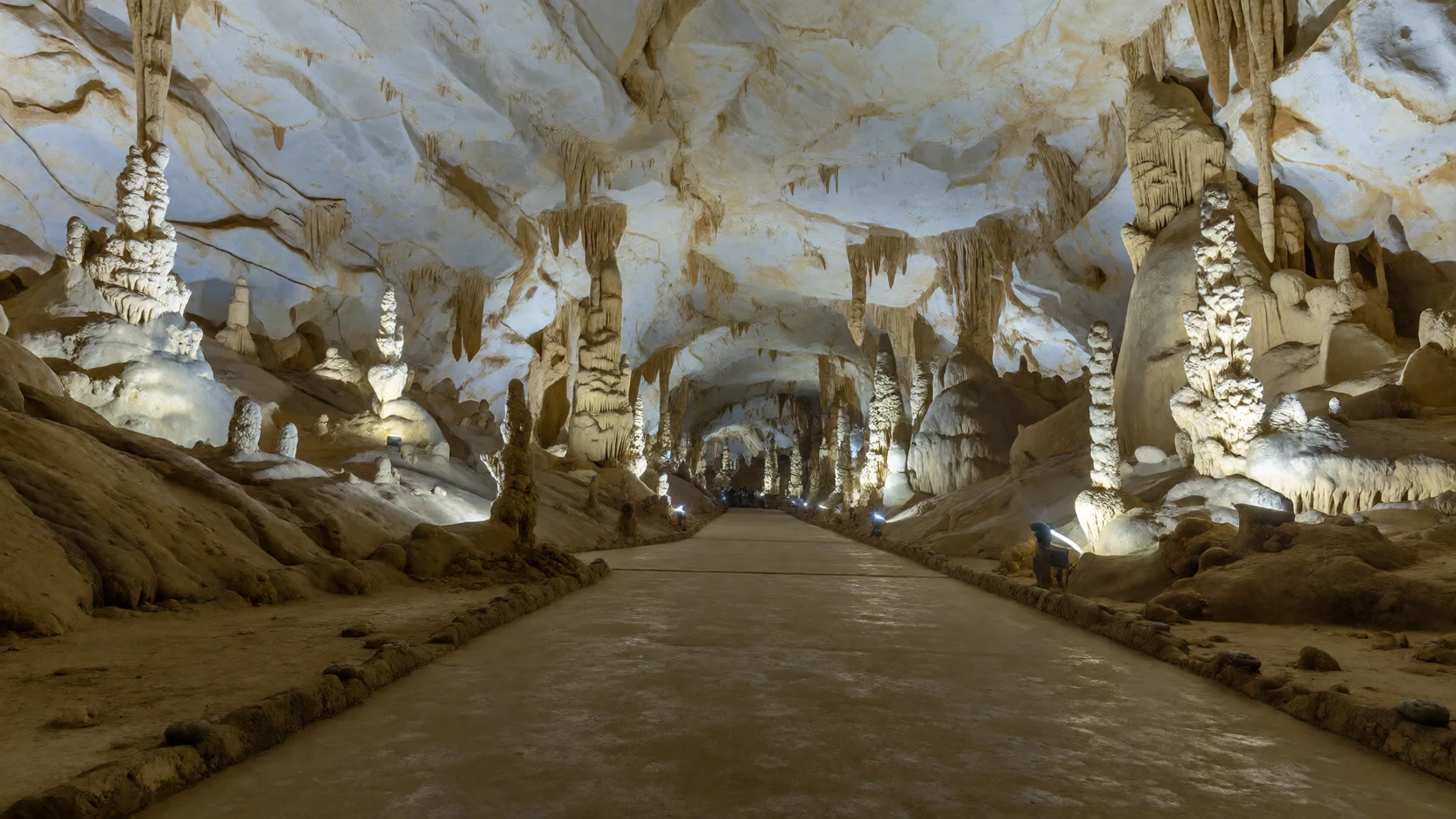
- Hang Tối (Hang Toi) — among the nearby caves, reached by river
Hang Tối is the rougher option among the nearby caves, reached by kayak across the river. Electric lighting is absent and tour groups are small, so you move with headlamps and a guide. The route involves wading and scrambling, so it suits people comfortable on wet rock. Book through a park tour or reputable operator, and bring a dry bag for your phone.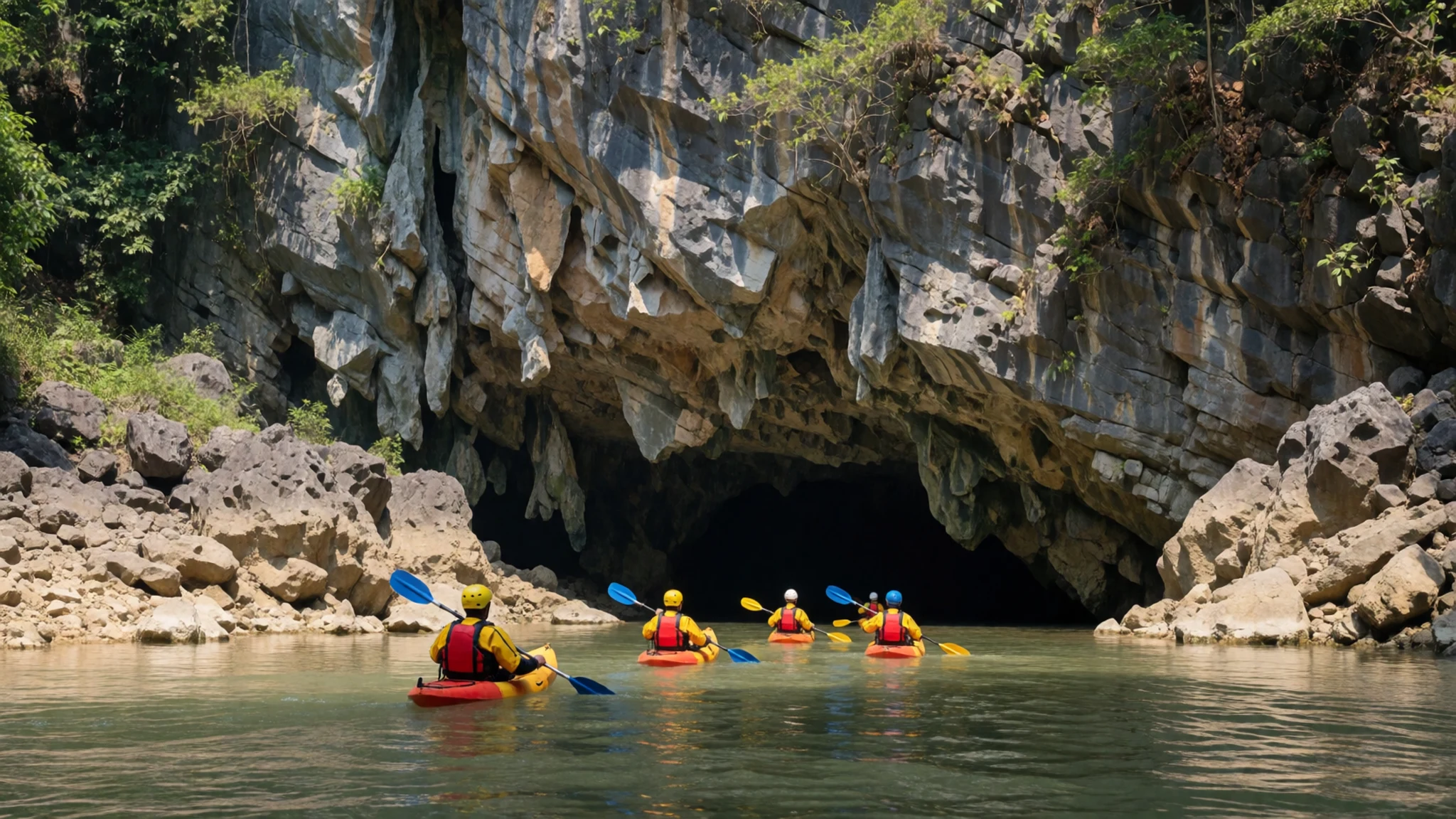
Culture
Phong Nha-Kẻ Bàng is a protected landscape where caves and rivers sit alongside working farms and villages. Quảng Bình Province was hit hard in the war, and families in the area still live with the effects of bombing and mines. Phong Nha village has built much of its life around visitors for a generation, which gives it a friendly, practical character. Guesthouse staff, boat drivers and café owners are usually glad to talk about the area, and a few words of Vietnamese are always appreciated. Ancestor altars are common in homes, and small roadside shrines deserve quiet respect. Photographing the caves is fine, but ask before photographing people at work, children or the inside of a family home. Bargain politely with boat drivers, and keep voices low on the river and in the village after dark. Stay on marked paths and leave any metal object you find alone, since unexploded ordnance can still be found in parts of the park.
What to wear
Dress in Phong Nha-Kẻ Bàng is shaped by heat, humidity, mosquitoes and wet limestone underfoot. Vietnam's traditional costume is the áo dài, a long tunic slit to the waist and worn over trousers, usually in silk or cotton, and it is still chosen for weddings, festivals and formal photographs. Ethnic communities in the wider Annamite uplands have their own woven cotton and hemp textiles, decorated with embroidery and used mainly for ceremonies. In everyday life, most people in the village and fields wear loose cotton shirts, shorts or trousers and rubber sandals, while motorbike riders add long sleeves, gloves and helmets against the sun. Office workers and town residents dress much as they do elsewhere in Vietnam, with neat shirts and blouses. Visitors should pack quick-drying clothes, long sleeves and trousers for evenings and mosquitoes, a wide-brimmed hat and a light waterproof. Footwear matters more than style: caves, stream beds and muddy trails call for shoes with grip, and sandals are fine only for the village. At temples and ancestral halls, cover shoulders and knees, and remove a hat when you go inside.
What to eat
- Spit-roast pork with noodles — a plain eatery in the village centre
Spit-roast pork, sliced over rice or noodles, is the kind of plain, filling dish that local eateries do well. Look for a place where the meat turns on a rotisserie at the front. Order it with a bowl of broth and some fresh herbs.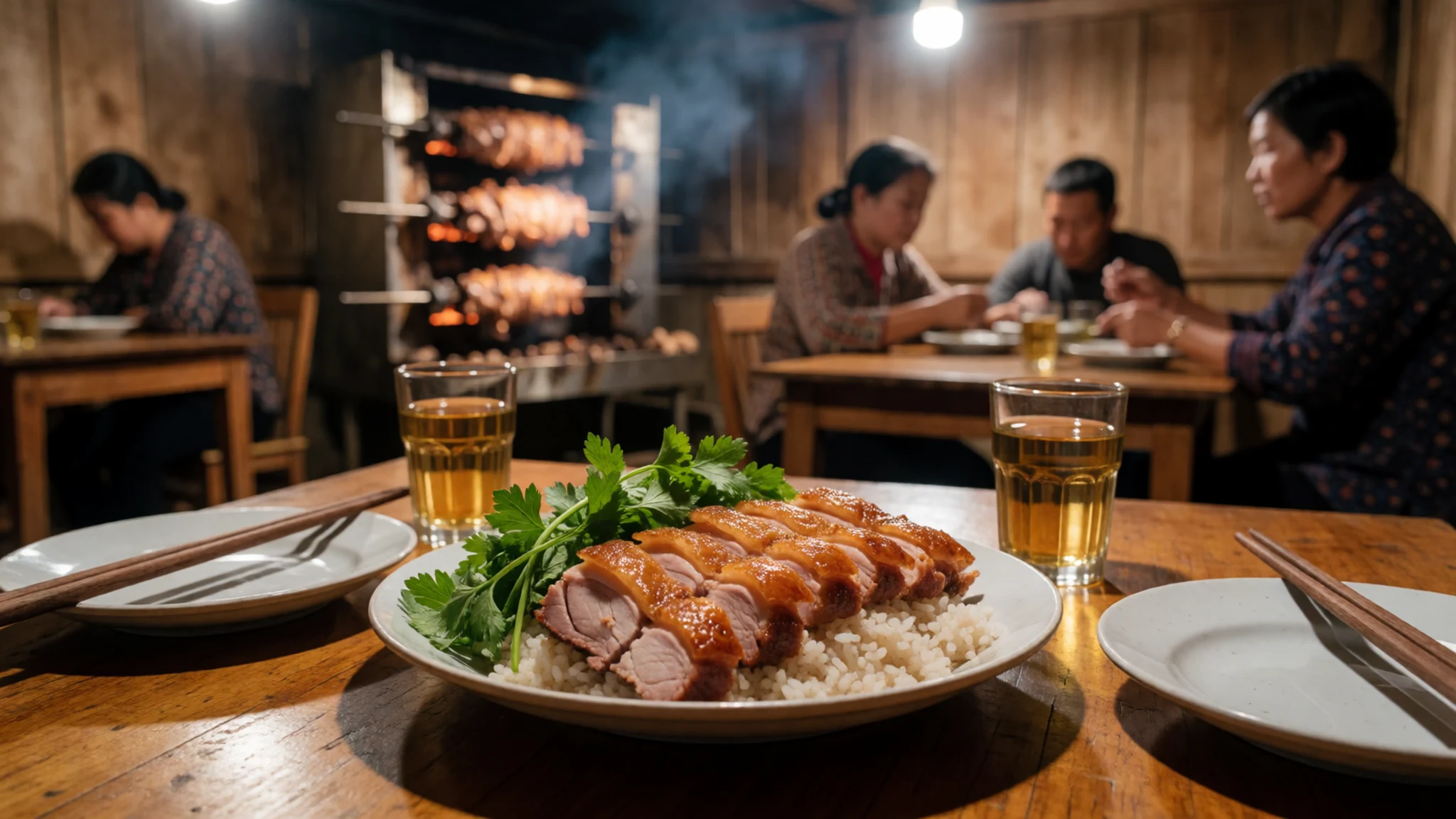
- Wood-fired pizza — cafés and bars along the main road in Phong Nha village
Phong Nha village has several wood-fired pizza kitchens, a legacy of its backpacker trade. The bases are thin and crisp, and the toppings stay simple. It is a good lunch after a morning on the river, and many places also serve sandwiches and cold drinks.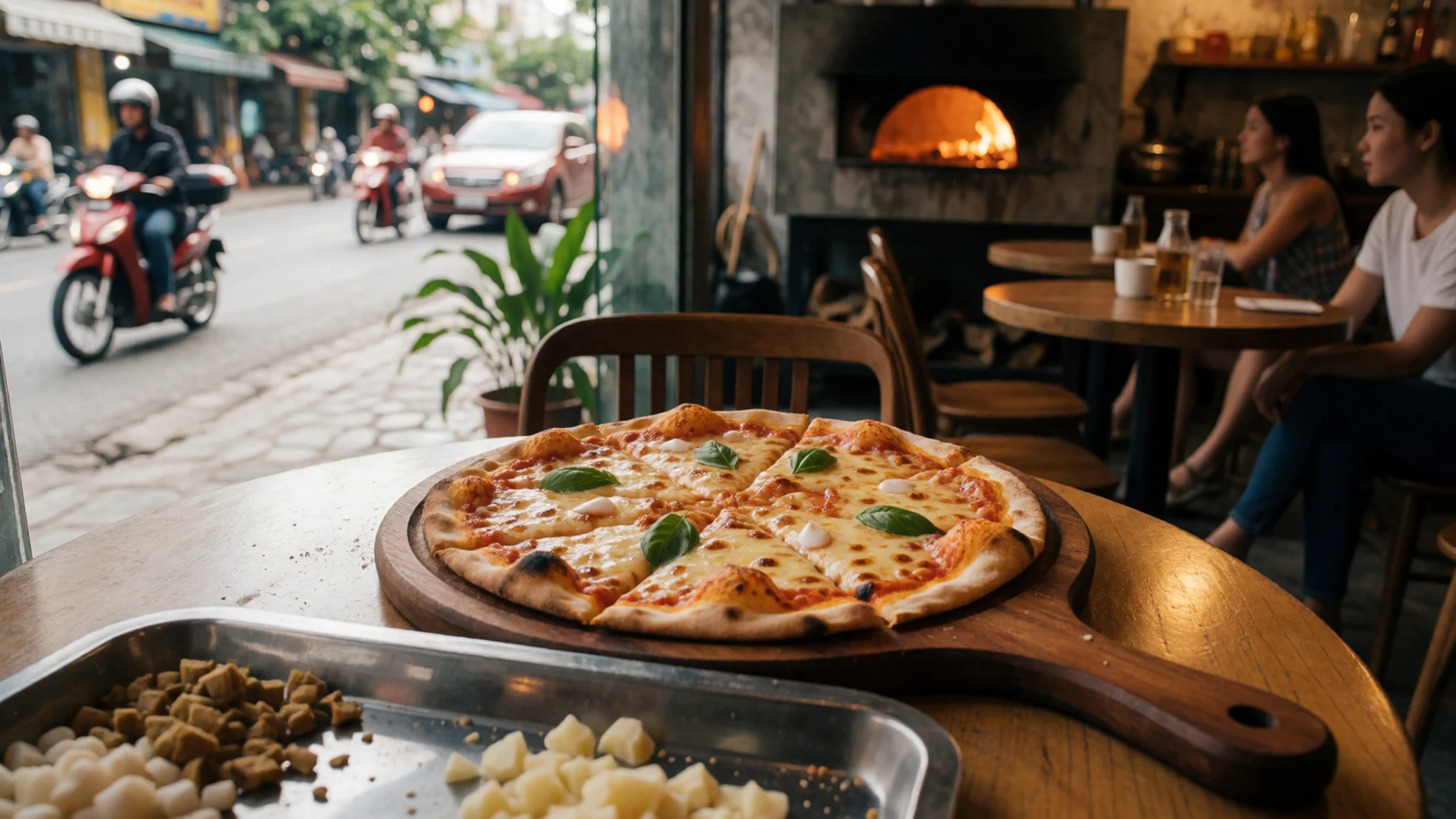
- Home-style Vietnamese cooking — a family kitchen on the village road or a morning market in town
Family kitchens serve rice with stir-fried greens, grilled or braised fish and a clear soup, often as a shared spread. Dishes change with the market, so ask what is fresh. It is the most honest meal you will find, and a good way to see how local people actually eat. - Vietnamese iced coffee — any café near the guesthouses
Vietnamese coffee is dark and strong, poured over ice and sweetened with condensed milk. Served cold and slow-dripped, it is the easiest way to cool down between caves. Many cafés also offer fresh juice and tea, and the sweetness can surprise first-time drinkers. - Evening drinks at a bar — a bar on the village's main street
The village has several bars that stay open late, with cocktails, beer and a relaxed atmosphere that suits swapping stories after a long day. Live music is sometimes on offer. Walk back with a torch, as the lanes are dark.
Plan it
Best time. The drier months, roughly January to April, are the usual choice, with the least rain and fewest river closures, while May to July are the hottest. Autumn brings heavy rain, rising water and closures on some trails and river routes, so check conditions before booking.
How long. 2–3
Getting there. Fly into Dong Hoi, which has Vietnam Airlines flights from Hanoi and Ho Chi Minh City, or take a train to Dong Hoi station, a few hours from Huế. The last leg is a local bus from Dong Hoi to Phong Nha village, leaving about hourly from several stops; look for blue signs marking the route. A taxi or motorbike with driver is the alternative.
Budget. mid
Tips
- Book boat trips and cave tours ahead in busy months
- Start early, when the air is cooler and the caves and trails are quieter
- Carry cash for boats, small eateries and entrance tickets
- Drink plenty of water and bring mosquito repellent, which you can also buy in the village
- Avoid driving at night on the roads to and around the park; a driver can be arranged locally
Etiquette
- Stay on marked paths and leave any metal object or ordnance you find alone
- Ask before photographing people, especially in villages and homes
- Keep noise down on the river and in the village after dark
Nearby
Sources
- Wikidata Q23513 (CC0)
- Wikipedia: Phong Nha–Kẻ Bàng National Park (rev 1362893598) (CC BY-SA 4.0)
- Wikivoyage: Phong Nha-Ke Bang (rev 5256323) (CC BY-SA 4.0)
- Photo 01-phongnhatourism.jpg (Public domain)
- Photo 02-phongnhakebang6.jpg (Public domain)
- Photo 03-phong-nha-ke-bang-cave3.jpg (CC BY 3.0)
- Photo 04-phongnhacave-quangbinh-vietnam.jpg (CC BY 3.0)
- Photo 05-phongnhakebang15.jpg (Public domain)
- Photo 06-phongnhakebang8.jpg (Public domain)
- Photo 07-phongnhakebang1.jpg (Public domain)
- Photo 08-phong-nha-cave-entrance.jpg (CC BY 3.0)


