Phewa Lake
Phewa Lake, Nepal
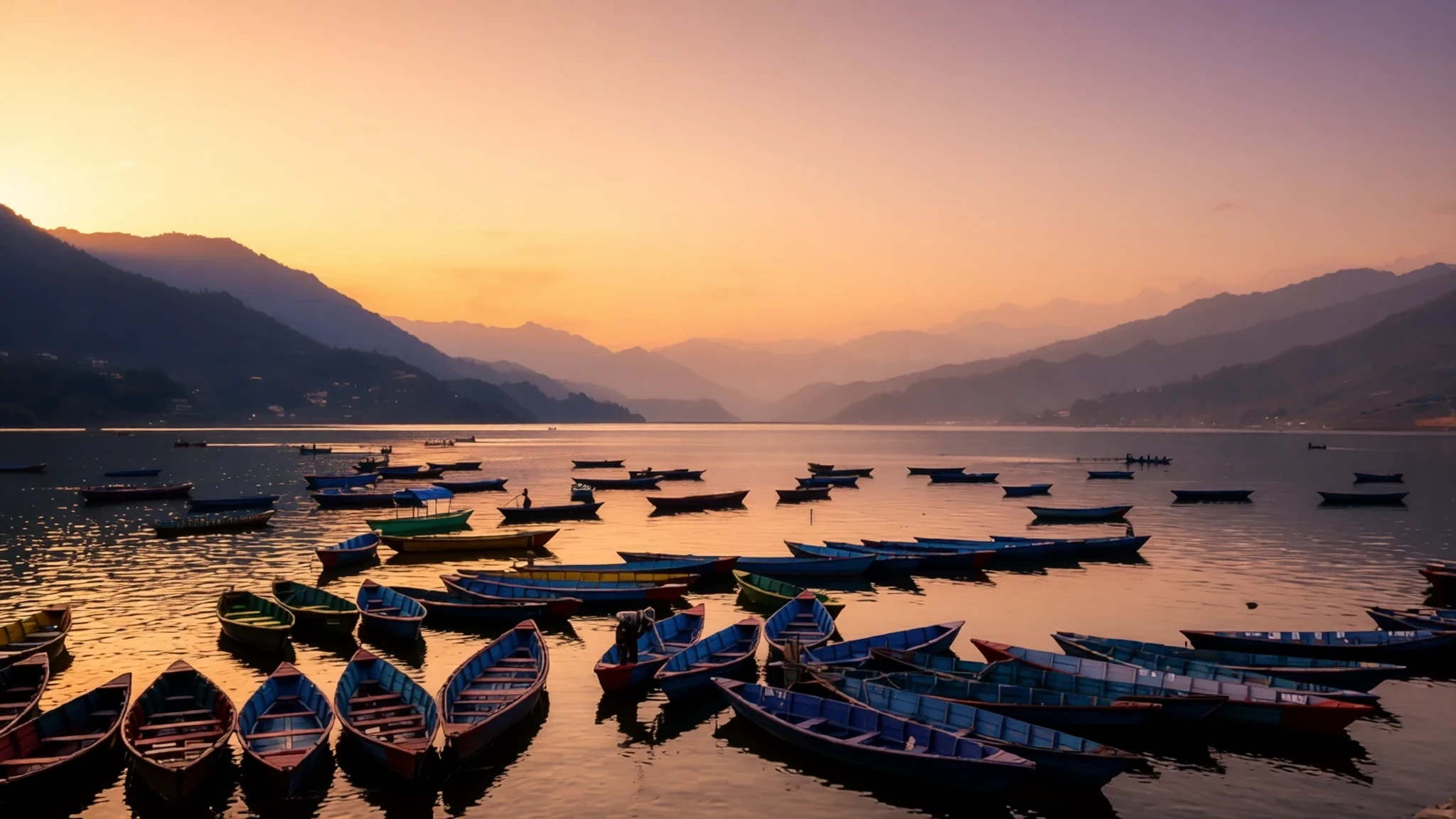
Phewa Lake is Nepal's most visited lake, with the Annapurna peaks reflected in its water a short walk from Pokhara's lakeside.
The place
Phewa Lake lies in the south of the Pokhara Valley, in Kaski District, with its shores running along the edge of Pokhara city and reaching towards the villages of Sarangkot and Kaskikot. The lake sits at about 742 m above sea level, which is modest for a place so close to the high Himalaya, and it covers roughly 5.7 square kilometres. The average depth is about 8.6 m, while the deepest point reaches 24 m, so the water looks bright green-blue near the shore and much darker out in the middle.
Nepali speakers call it Fewa Tal, and the name Baidam Tal appears in older references. Its best-known feature is the reflection. On calm mornings the surface holds Mount Machhapuchhre and other peaks of the Annapurna and Dhaulagiri ranges, which lie only about 28 km away in a straight line. Haze and cloud can hide the summits later in the day, so the early light is the safer bet for a clear view.
A small island in the lake holds the Tal Barahi Temple, reached by boat. The city centre at Chipledhunga is about 4 km away. Most visitors stay along the lakeside strip rather than on the water itself, but the lake is the reason the valley draws so many people.
Its story
Phewa Lake has shaped Pokhara's character more than any single monument. The town grew along the water's edge, and the guest houses, cafés and shops of the lakeside strip followed the view of the mountains across the lake. Trekkers heading into the Annapurna area have long used Pokhara as their base, so the shore is a mix of departure point, rest stop and holiday ground all at once.
The lake's name has shifted over time. Earlier references use Baidam Tal, while the Nepali script name, फेवा ताल, sits alongside Phewa Tal and Fewa Lake on signs and in print. These names are a reminder that the lake belonged to local life long before it became the centrepiece of visitor itineraries.
Today the rhythm of the day follows the water. Early mornings bring the calmest surface and the best chance of seeing the peaks. By afternoon the breeze picks up, boats gather near the shore, and cafés fill with people sharing maps and trekking news. Evenings are quieter, with lights along the shoreline and the soft sound of water against the steps.
Much of what people remember about the lake is reflection: the mountains in the water, the temple island that seems to float, and the way the town changes colour from hour to hour. Locals and visitors alike come back to the shore, often after days in the hills, and the lake usually sets the mood of the homecoming.
What to see
- Tal Barahi Temple — Phewa Lake, Pokhara
Tal Barahi Temple stands on a small island in the middle of Phewa Lake, and it is the lake's best-known building. Boats leave from the lakeside, and the crossing is short, though the reflections make it feel longer. The temple is dedicated to Barahi, a fierce form of the goddess Durga, and worship continues through the day. Dress modestly and agree on the boat fare before you set off.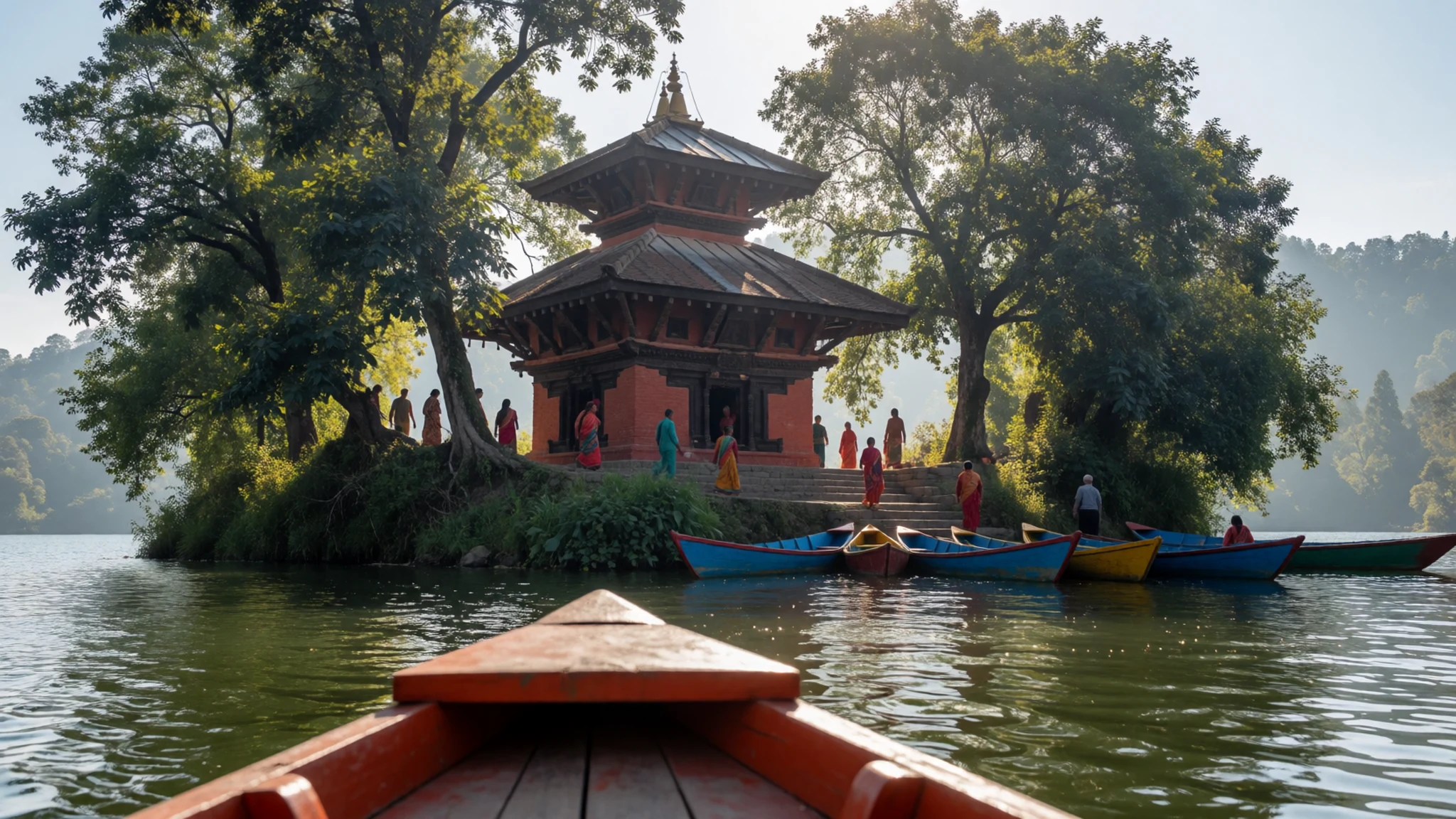
- Lakeside strip — Western shore, Pokhara
Lakeside is the busy strip of guest houses, restaurants, bookshops and outfitters along the northern shore of the lake. It is the easiest place to base yourself, with the water a few steps away. Expect crowds in the afternoon and music from the cafés into the evening. Quieter streets lie just behind the main road if you want a calmer walk.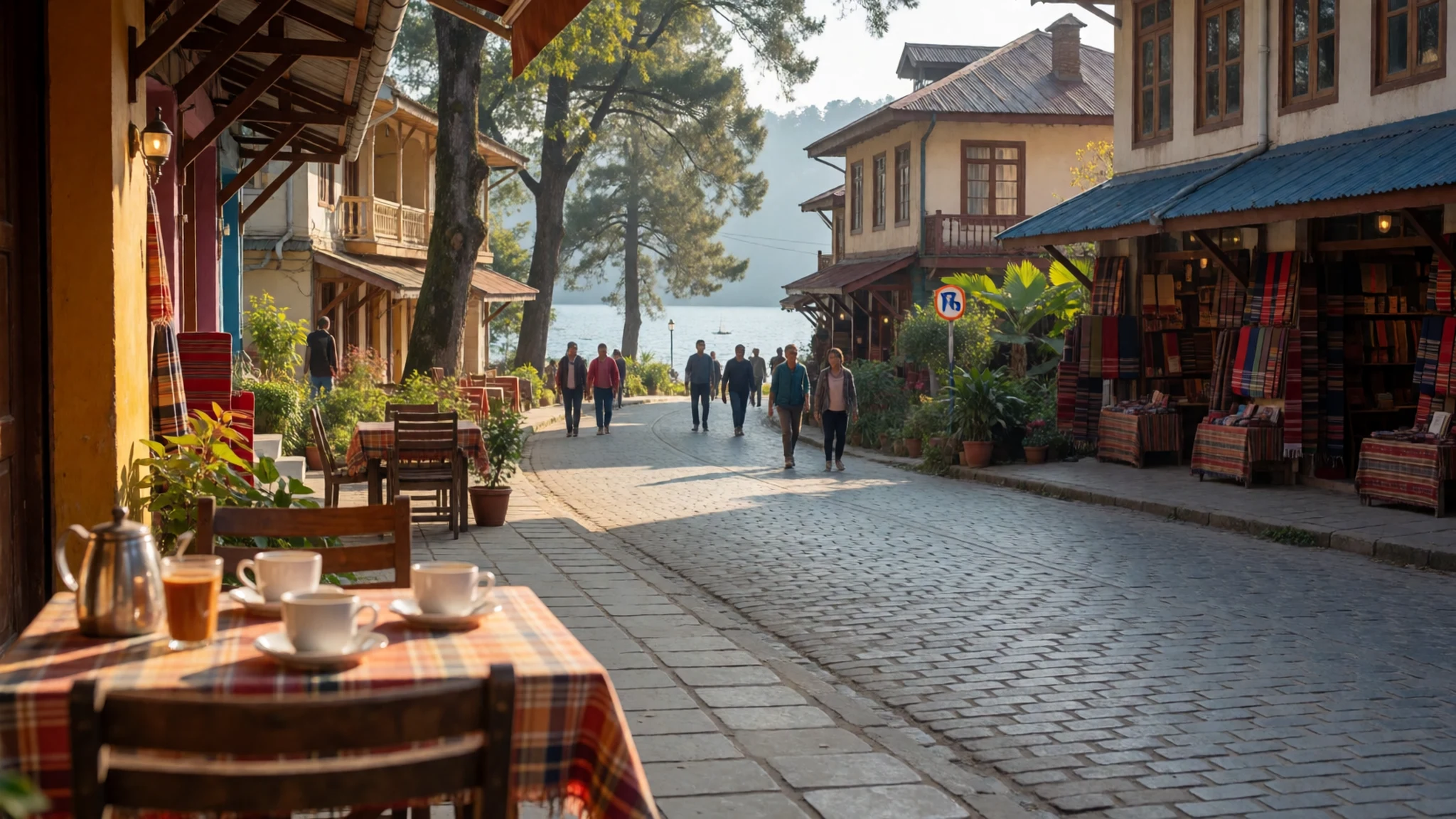
- Sarangkot viewpoint — Hill village above the lake
Sarangkot is a hill village above the lake, and it is the classic spot to watch the sun rise over the Annapurna range. The road climbs steeply, so a taxi or an early start makes sense. Paragliders often launch from the slopes in good weather. Cloud can roll in quickly, so arrive before dawn if the sunrise matters, and expect simple tea shops at the top.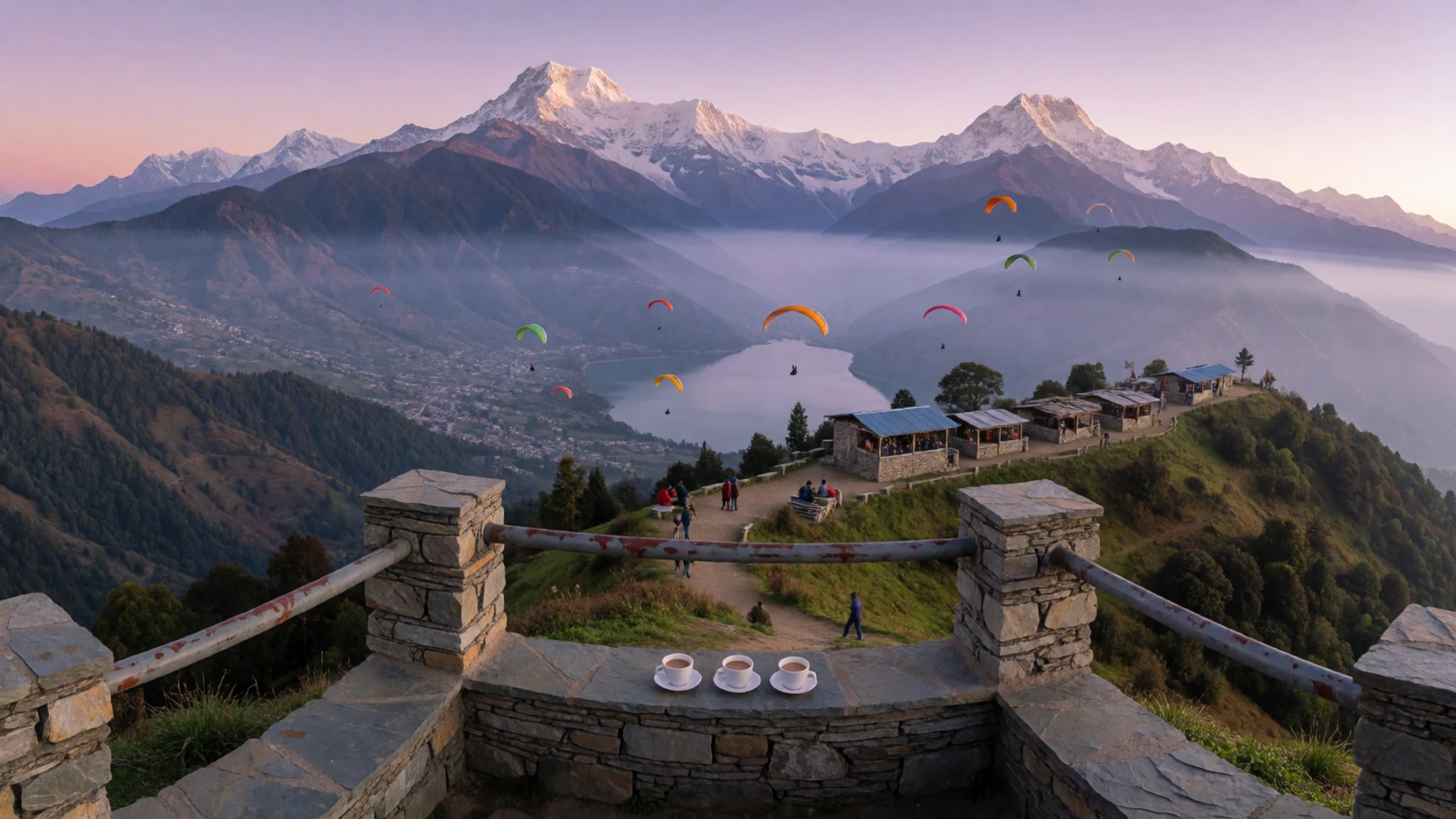
- Davis Falls — Southern edge of Pokhara
Davis Falls, known locally as Patale Chhango, is a waterfall that drops into a narrow gorge on the southern edge of the city. The path down is steep and can be slippery after rain, so sturdy shoes are worth the effort. The spray is strong near the base, and the sound fills the gorge. Allow an hour or so for the walk down and back, and keep an eye on your footing near the edge.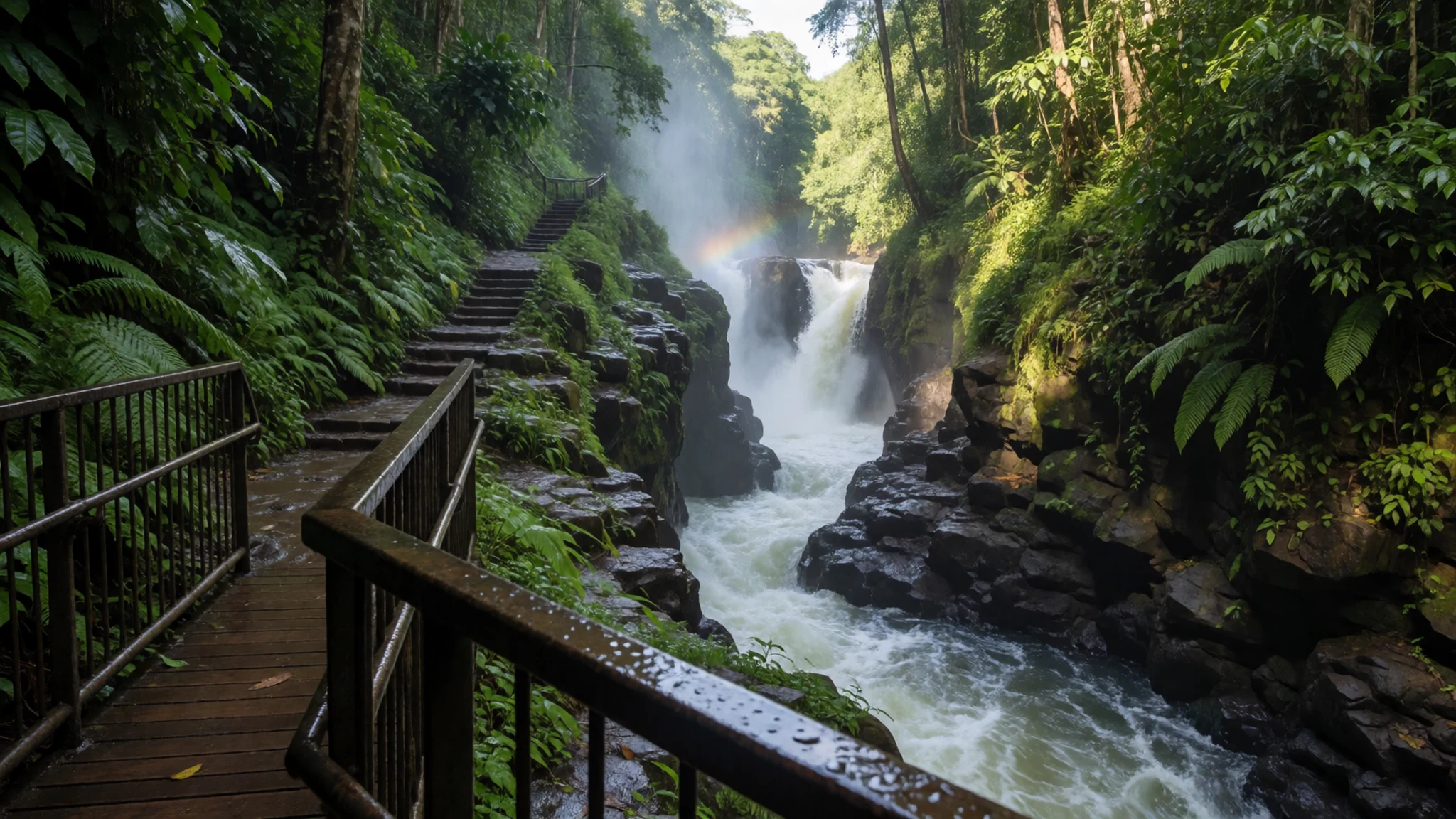
- Gupteshwor Mahadev Cave — Near Davis Falls, Pokhara
Gupteshwor Mahadev Cave is a Hindu shrine set inside a limestone cave close to Davis Falls. Visitors walk through a narrow passage to reach the inner chamber, where a lingam is worshipped. The air is cool and damp, so bring a light layer. Remove your shoes where asked, keep voices low, and avoid photographing worshippers without asking first.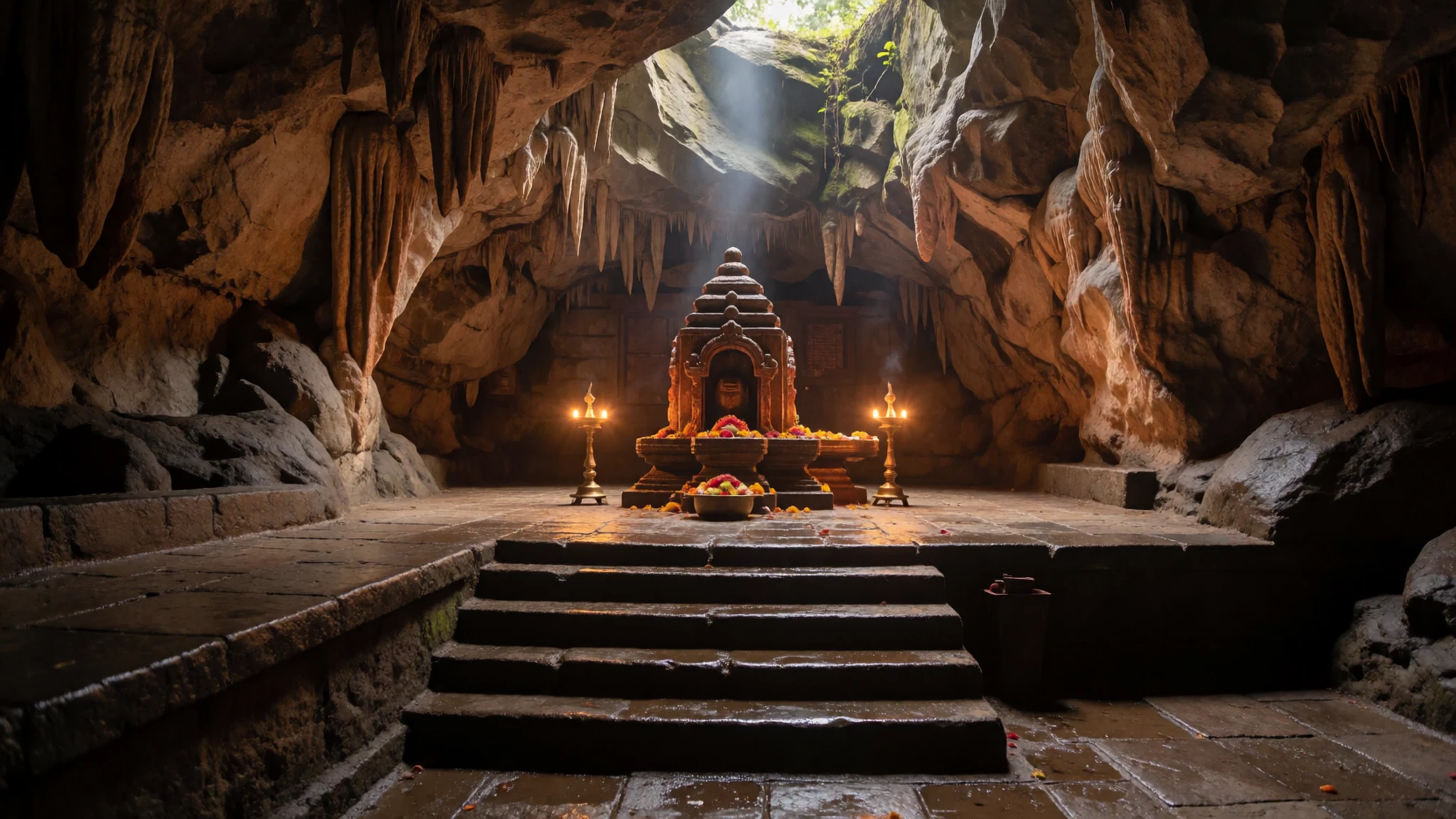
Culture
Pokhara and the lake sit in a country where Hindu and Buddhist practice share everyday life, so the first courtesy is the greeting. Namaste, with palms together and fingers up, works as both hello and goodbye. Use Namaskar with an older person or someone of higher standing, and avoid repeating the greeting to the same person more than once a day. A simple dhanyabaad for thank you goes a long way. Respect for elders matters, so let older people go first and do not interrupt them.
Physical gestures carry meaning. Feet are considered dirty, so do not point the soles at people or religious images, and do not step over someone sitting or lying on the ground. The left hand is treated as unclean, so give and take things with the right hand and avoid touching anyone with the left. Many guest houses have a bidet spray beside the toilet for this reason, and that is normal rather than odd.
Buddhist shrines, stupas, prayer walls and monasteries are walked clockwise, and visitors should follow the same direction. Remove shoes before entering a home or a shrine with a step up, and ask before photographing people, especially during prayer. Keep voices down near temples and boats are best booked calmly without shouting across the water. At the stupas and prayer walls, walk clockwise and leave your shoes where others leave theirs.
What to wear
Traditional dress around Pokhara follows the wider Nepali pattern. Men often wear the daura suruwal, a long shirt with fitted trousers, sometimes with a topi, the Nepali cap that is commonly made from woven or embroidered cloth. Women wear the kurta suruwal or a sari, and in the hills, a wrap and blouse in wool or cotton is common. Dhaka, a woven cotton with geometric patterns, is the textile most associated with the topi and with festival wear, while pashmina and other woollens reflect the hill trade. These garments are worn for festivals, weddings and ceremonies more than for everyday errands.
What people wear now is a mix. On the lakeside and in town, jeans, trainers, hoodies and shirts are everywhere, and many people wear western clothes at work and kurtas for religious events. Young people often wear a mix of both, and a topi may appear on a formal occasion.
For a visitor, pack layers that suit the lake's changing weather. Light cotton works for the daytime, and a warm jacket is useful for early mornings on Sarangkot and for cool evenings. Cover shoulders and knees when you enter temples and the cave shrine, and carry a scarf that can be wrapped quickly. Sturdy shoes or closed sandals with good grip suit the steep paths to Davis Falls and the hill village.
What to eat
- Daal-bhaat-tarkaari — Family-run eateries and teahouses near the lake and the back streets of Pokhara
Daal bhaat tarkaari is the everyday Nepali meal of spiced lentils poured over rice, with seasonal vegetables and a fiery pickle on the side. It is eaten with the right hand and served in the morning and evening in most homes and teahouses. Ask for it at a family-run eatery near the lake, where the dishes change with the market.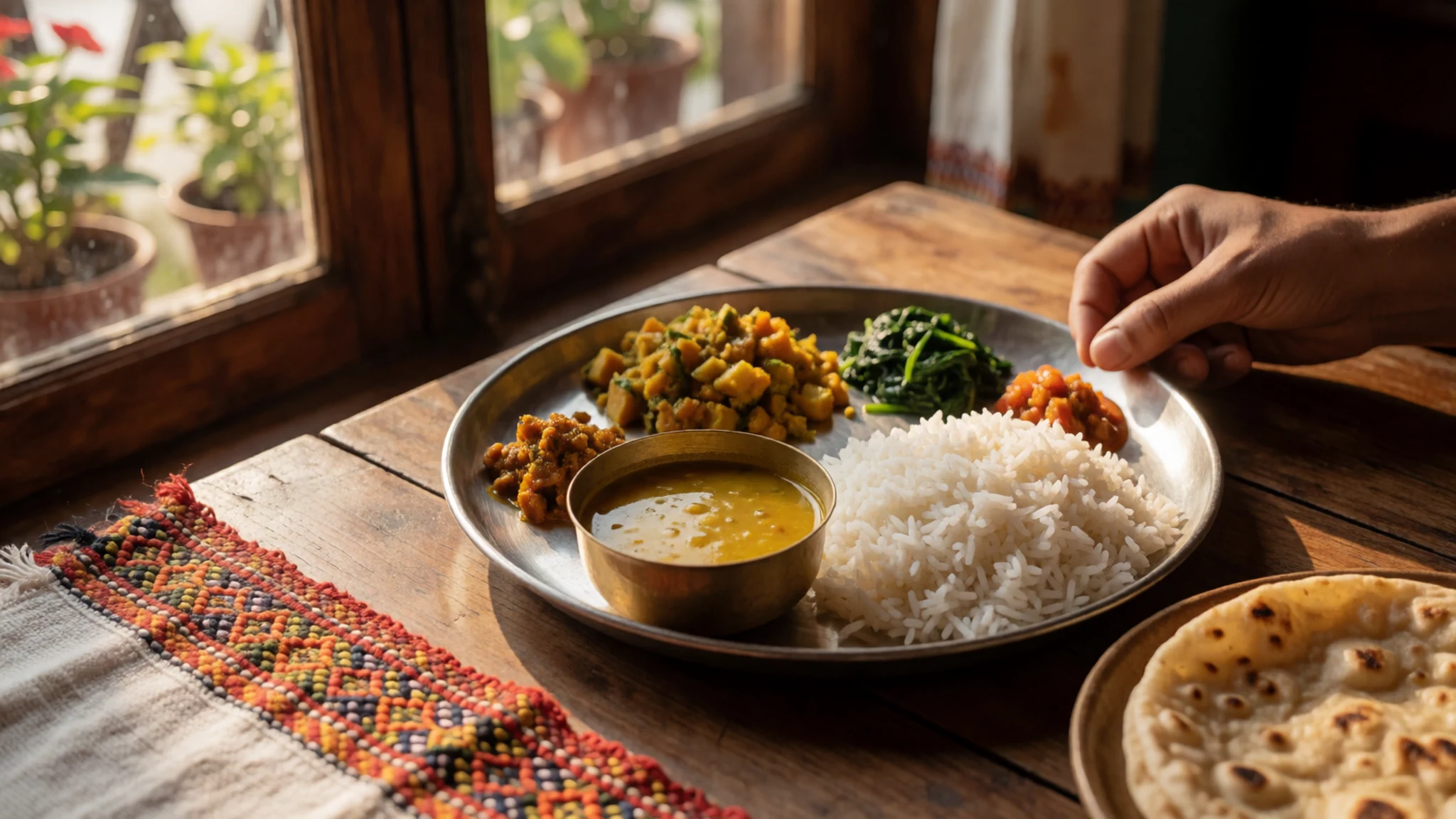
- Lake fish — Lakeside restaurants on the western shore
Freshwater fish from the lake turns up on many lakeside menus, usually grilled or fried with garlic, ginger and chilli. Ask what was caught that day, since supply changes with the weather. Pair it with rice or a simple salad, and enjoy the view while the fish is cooked.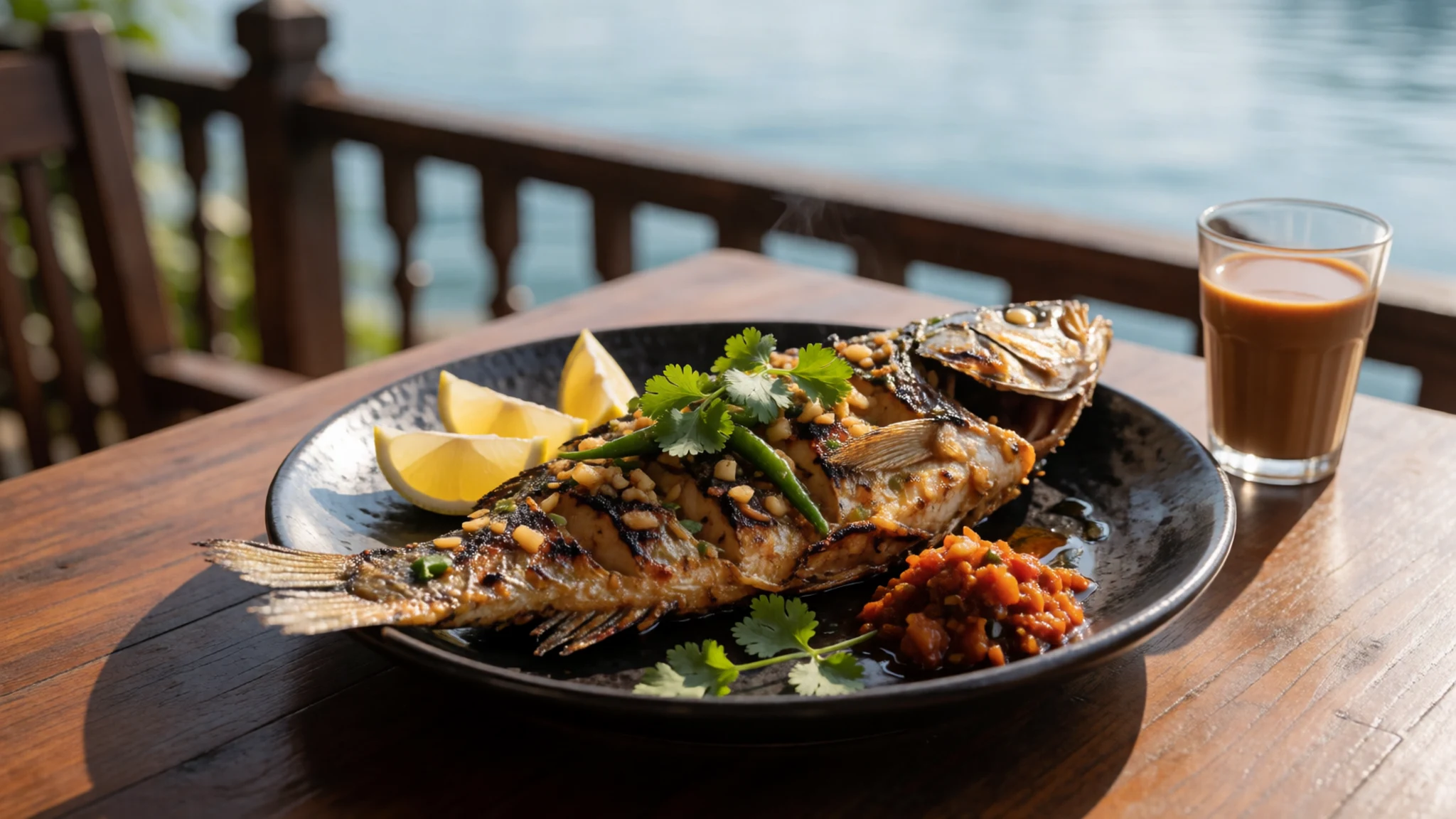
- Momo — Small momo shops and street stalls in Pokhara's old bazaar
Momo are steamed or fried dumplings filled with buffalo meat, chicken, vegetables or paneer, served with a tomato-based chilli sauce. They are the snack most people reach for, and they are sold from small dedicated shops. Order a plate at a dedicated shop, which tends to be quicker than a large restaurant.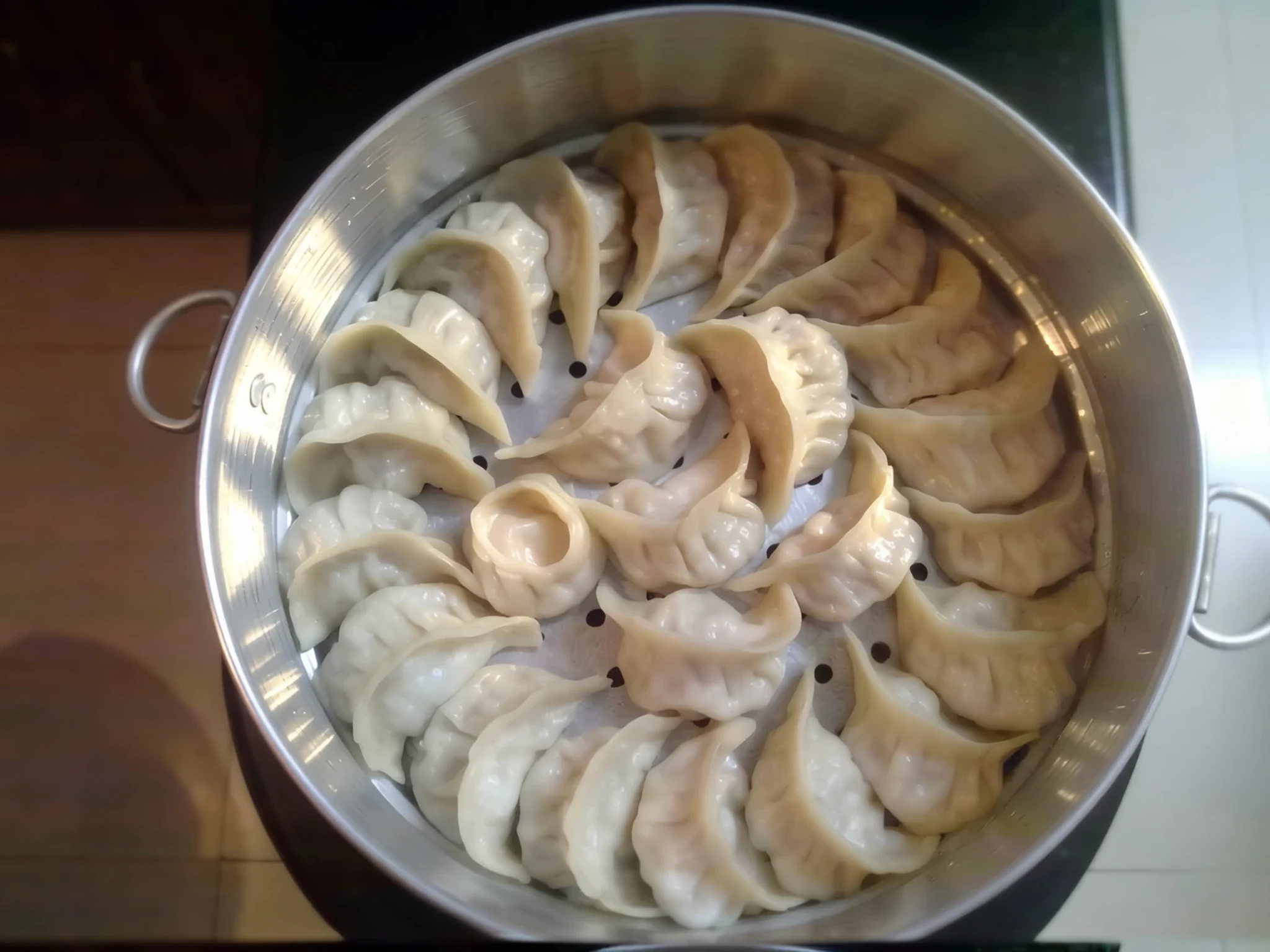
- Sukkha roti and aata — Teahouses and lodges on the trekking routes out of Pokhara
Sukkha roti are thin whole-wheat breads, dry and sturdy, eaten with dal or pickle and a practical food on the trekking trails. Aata is a cornmeal or flour mush, a filling staple in the hills where rice may be scarce. Both are simple, filling and easy to pack. - Milk tea and kha-jaa — Tea stalls and corners near the bus park
Milk tea, made with milk and plenty of sugar, is the usual pick-me-up at any stall or teahouse. Pair it with kha-jaa, lightly heated and partly popped corn, which means eat and run. It is quick, filling enough for a short walk, and the sort of snack bought from a basket by the bus park.
Plan it
Best time. Autumn and spring give the clearest skies and the best chance of seeing the mountains reflected in the lake. The monsoon months bring heavy cloud and rain, which can hide the peaks for days.
How long. 2–3
Getting there. Fly into Pokhara from Kathmandu, a flight of about half an hour, or take a long road journey. From the airport, a taxi reaches the lakeside in a short drive.
Budget. low
Tips
- Go to the lake at dawn for the calmest water and the clearest peaks
- Carry cash for boats, tea stalls and small shops, since cards are not accepted everywhere
- Pack water and sun protection, because the sun is strong on the water at midday
- Check the official site for current trekking permit and checkpoint rules before setting out
- Allow a full day for Sarangkot and the caves, as the uphill walks take longer than they look
Etiquette
- Ask before photographing people, especially at temples
- Walk around temples and stupas clockwise
- Remove shoes where there is a step up and slippers are waiting
- Give and take things with your right hand
Nearby
Sources
- Wikidata Q1192928 (CC0)
- Wikipedia: Phewa Lake (rev 1379562241) (CC BY-SA 4.0)
- Wikivoyage: Nepal (rev 5399421) (CC BY-SA 4.0)
- Annapurna Range and the Phewa Lake, Saroj Pandey (CC BY 3.0)
- Phewa lake, Pokhara, Jmhullot (CC BY 3.0)
- Aerial view of Fewa Lake and lake Side Street, Pokhara, Saddam19 (CC BY-SA 4.0)
- Sun Set over Phewa Lake, Sanu N (CC BY-SA 4.0)
- Pokhara and Phewa Lake, Wolfgang Beyer (CC BY 3.0)
- Phewa Lake 3, Pokhara, Nepal, Vyacheslav Argenberg (CC BY 4.0)
- Phewa lake 2, Sanu N (CC BY-SA 4.0)
- Phewa Lake - night, gorkhe1980 (CC0 1.0)


