Petronas Towers
Petronas Towers, Malaysia
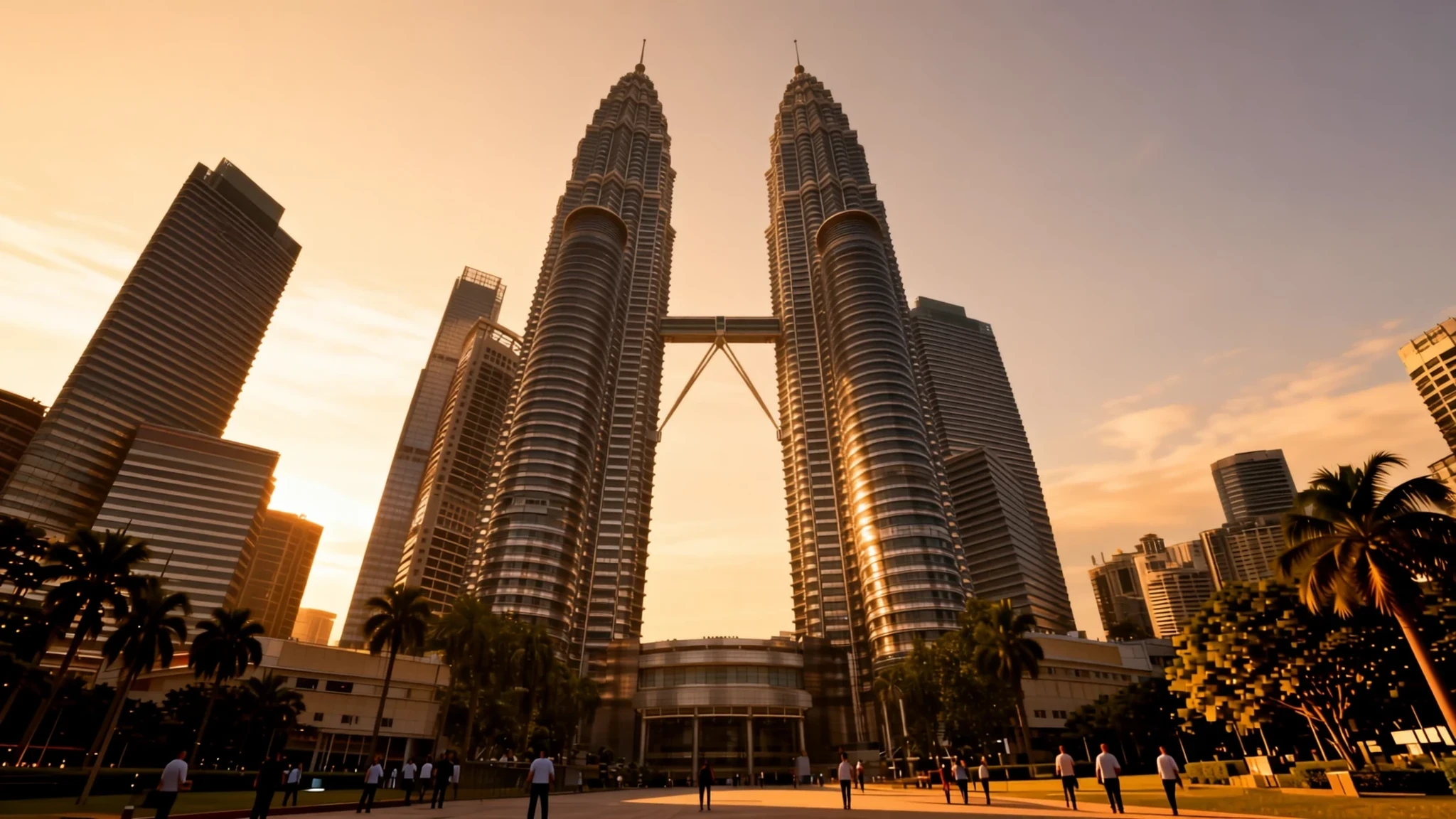
Go for the towers at dusk, when the steel and glass catch the light and the city below starts to glow.
The place
The Petronas Towers stand in the heart of Kuala Lumpur, a pair of steel-and-glass skyscrapers that rise to roughly 452 metres. Their full Malay name is Menara Berkembar Petronas, but most people in the city simply call them the KLCC Twin Towers, after the Kuala Lumpur City Centre complex that surrounds them. Each tower has 88 storeys. For several years in the early 2000s they were the tallest buildings anywhere, until a tower in Taipei took the title, and they remain the tallest pair of twin towers in the world. For a long time they were also Malaysia's tallest buildings, until a newer skyscraper overtook them. The district around them is busy with offices, shopping malls and hotels, and the towers can be seen from almost every corner of the city. KL Tower and the newer Merdeka 118 are the other landmarks people compare them with. Kuala Lumpur is a mixed city: a majority of residents are Malaysian Chinese, with Malays, Malaysian Indians and Eurasians also well represented, and a large foreign community from South Asia, Southeast Asia, the West and the Middle East. For a visitor, the towers are the easiest landmark to find, and the best pictures usually come from the park at their base.
Its story
The Petronas Towers took shape from a structural idea. Their frame uses a tube-within-a-tube arrangement, devised by the Bangladeshi-American engineer Fazlur Rahman Khan, and the same logic has since been applied to many very tall buildings. Most of the mass is reinforced concrete, while the outer skin is steel and glass arranged in patterns that echo Islamic art, a nod to Malaysia's Muslim majority. The floor plan is drawn from an Islamic geometric star, with rounded sections added so that the offices fit around it, and those curves recall the base of the Qutb Minar in Delhi. The architect, César Pelli, an Argentine-American, chose a deliberately postmodern style, aiming for an emblem that would look forward rather than back. Planning ran for a long time before anything was built, and engineers tested the design against wind and structural loads through simulations. Construction began in 1993 on the site of the former Selangor Turf Club. Excavation meant hauling hundreds of truckloads of earth away each night to dig roughly 30 m down. The superstructure followed, and building the towers took several years. Visitors who know the towers only from photographs often forget how much of the work happened underground.
What to see
- The towers themselves — KLCC, city centre
The twin towers are the reason most people come, and the best way to appreciate them is to stand back. Look up from the base to see the stainless steel bands and the tapering crowns, then walk around the complex to see how the two towers mirror each other. The glass reflects the sky and the nearby park, so the view changes with the weather and the time of day. At night the facades are lit, which is when the design reads most clearly.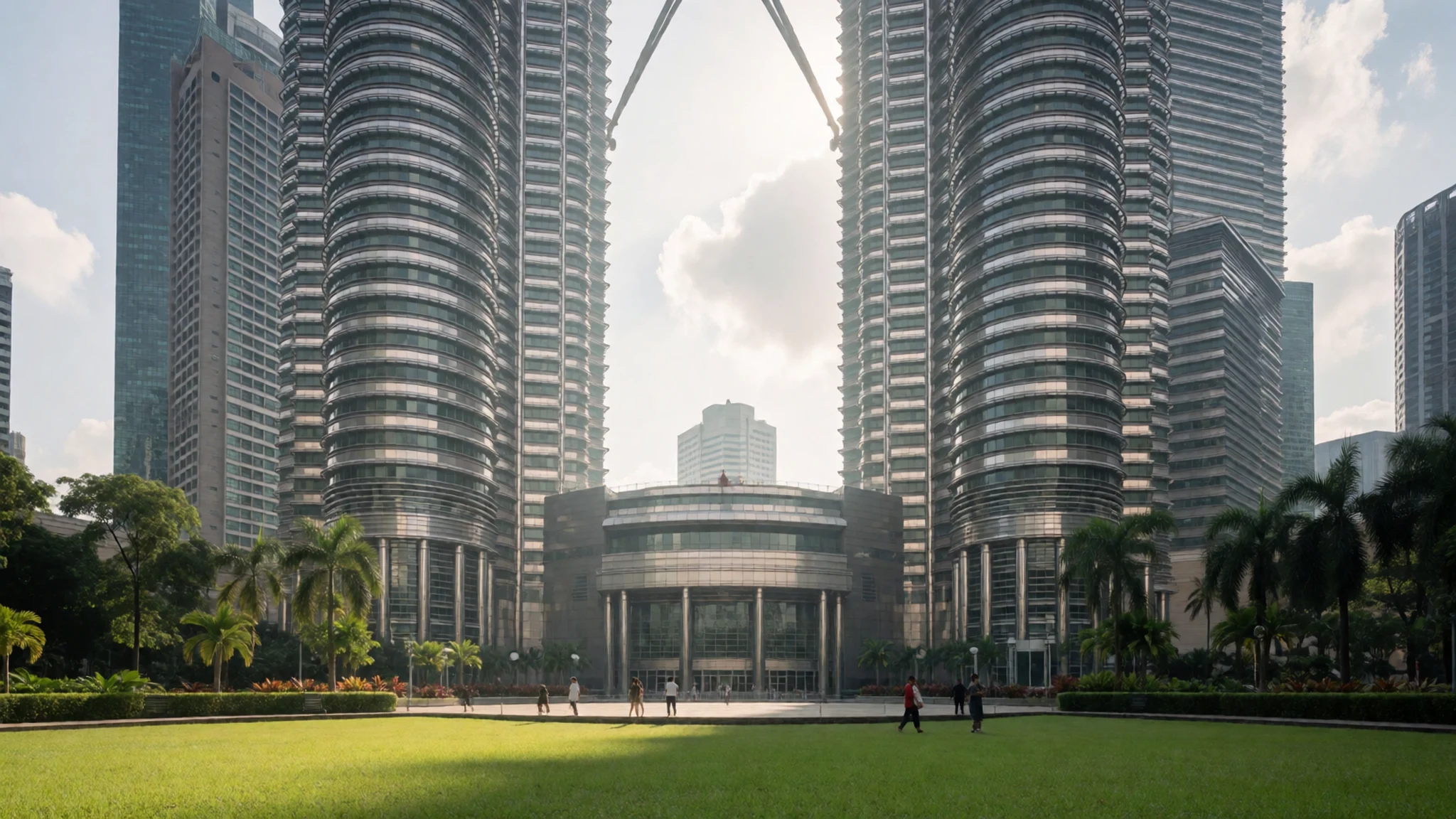
- KLCC Park — Base of the towers, KLCC
The park at the foot of the towers is the most comfortable place to take in the view. It is a green space with paths, lawns and fountains, and it gets busy in the early evening when locals come out to walk and picnic. Arrive before sunset for the best light on the towers, and keep an eye on the afternoon showers, which can arrive quickly.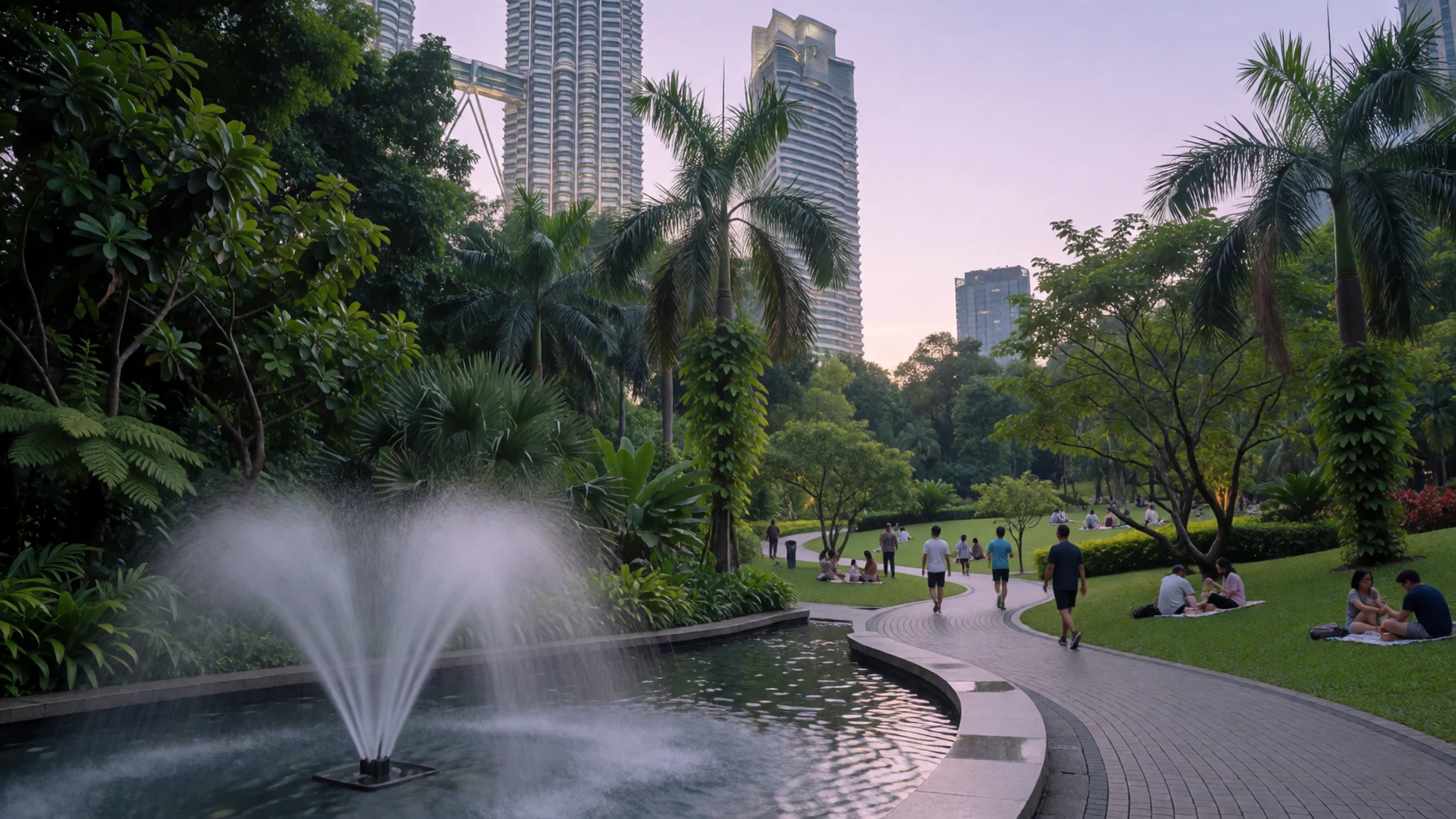
- Suria KLCC — Inside the KLCC complex
Suria KLCC is the shopping centre built into the towers' base, and it is a handy place to shelter from the heat or rain. Its atrium is airy and busy, and it hosts large seasonal decorations, especially around Chinese New Year and Hari Raya. Shops and food courts here are geared to visitors, so prices tend to be higher than in the older markets. Check the centre's own listings for opening times.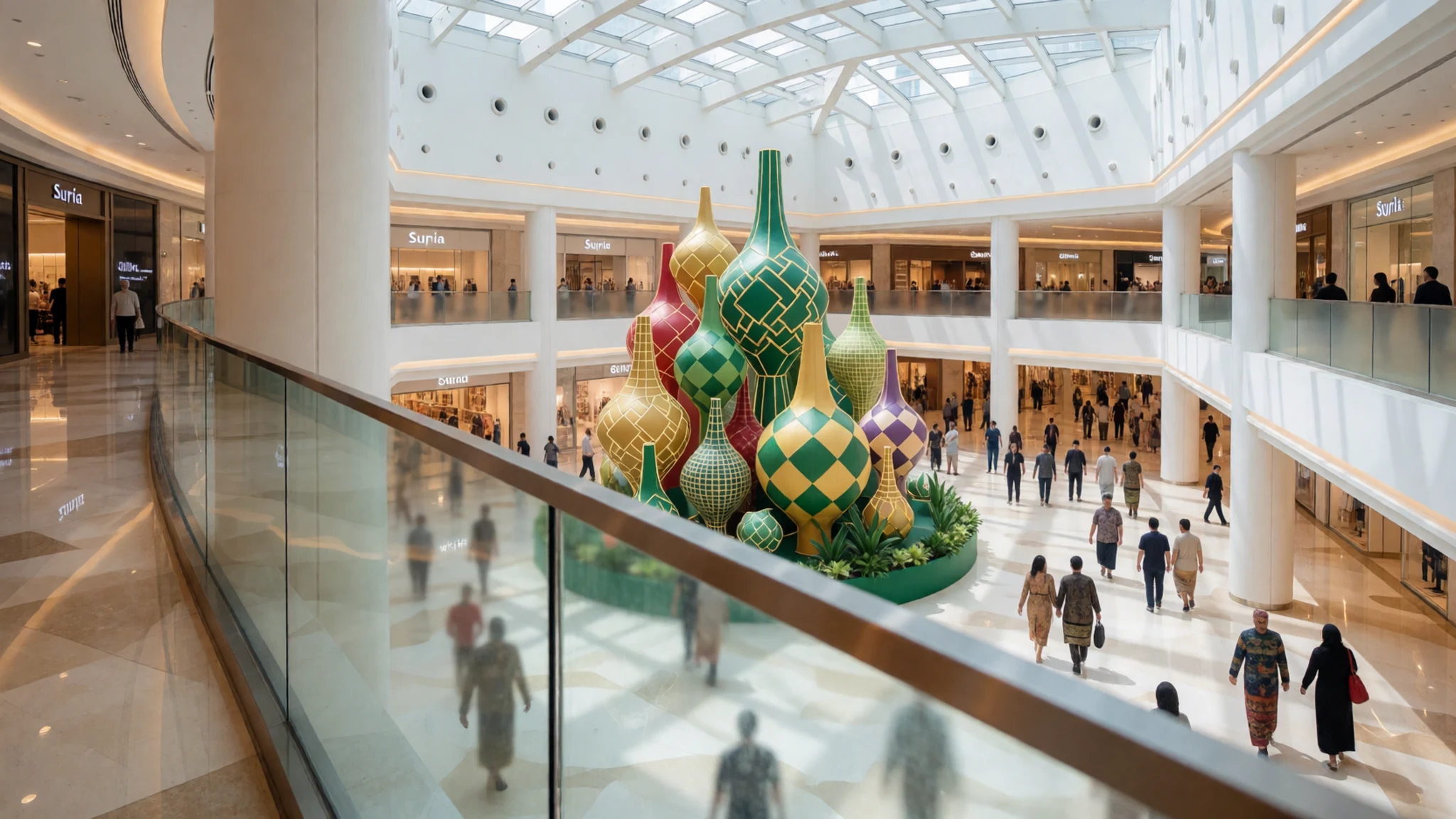
- Merdeka 118 — Central Kuala Lumpur
Merdeka 118 is the newer supertall skyscraper that now competes with the Petronas Towers for attention on the skyline. It is a good comparison point for seeing how the city's skyline has changed. Look for it from elevated spots around the centre, and treat it as a second landmark rather than a replacement for the twin towers.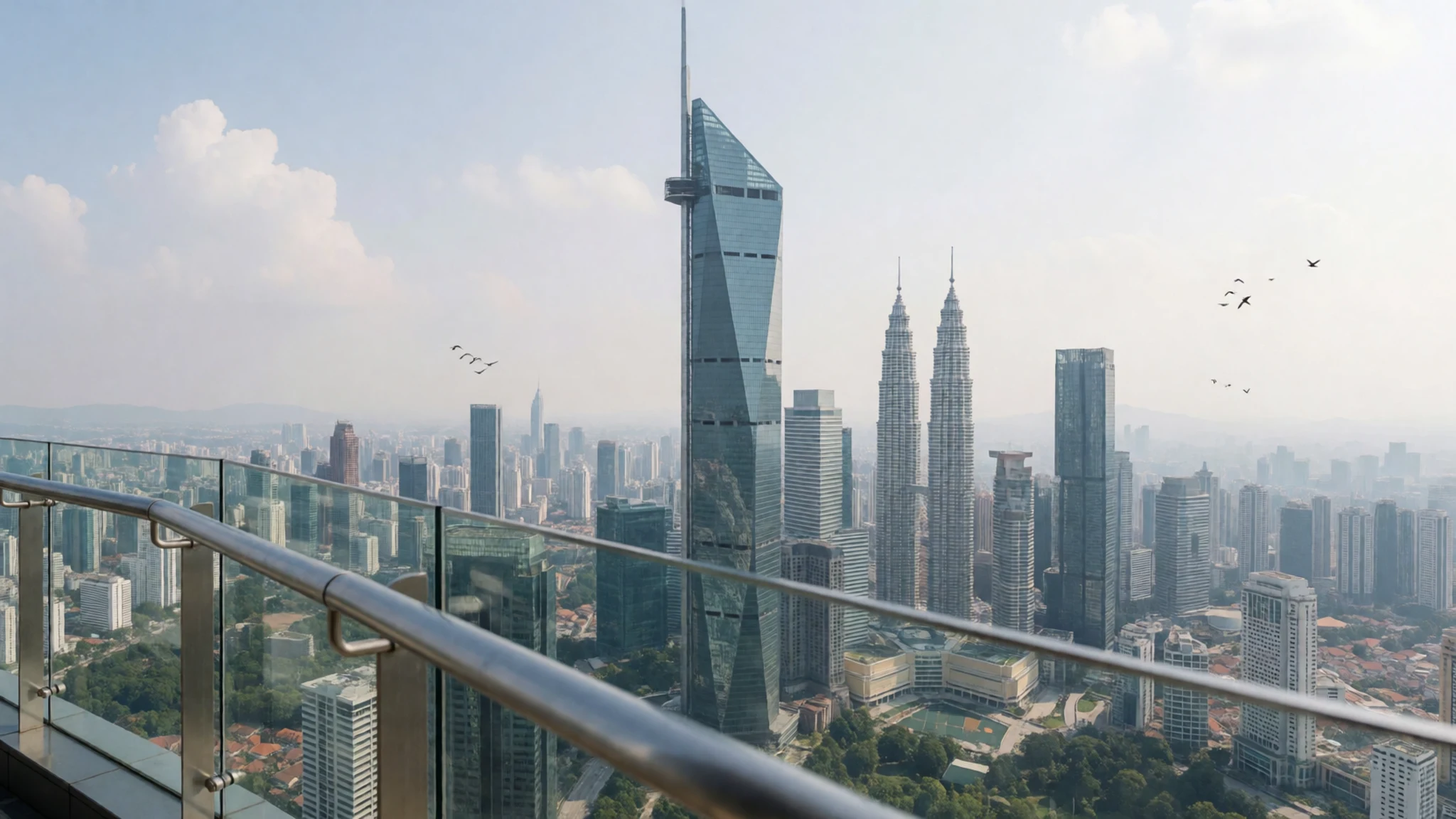
- KL Tower — Bukit Nanas, central Kuala Lumpur
KL Tower, known locally as Menara KL, is the older landmark that many visitors compare with the twin towers. It sits on a hill across the city, and its tall, slender form looks unlike the Petronas design. Going up for a view gives you a different perspective on the city, with the Petronas Towers visible in the distance. Check the official site for current visiting arrangements before you go.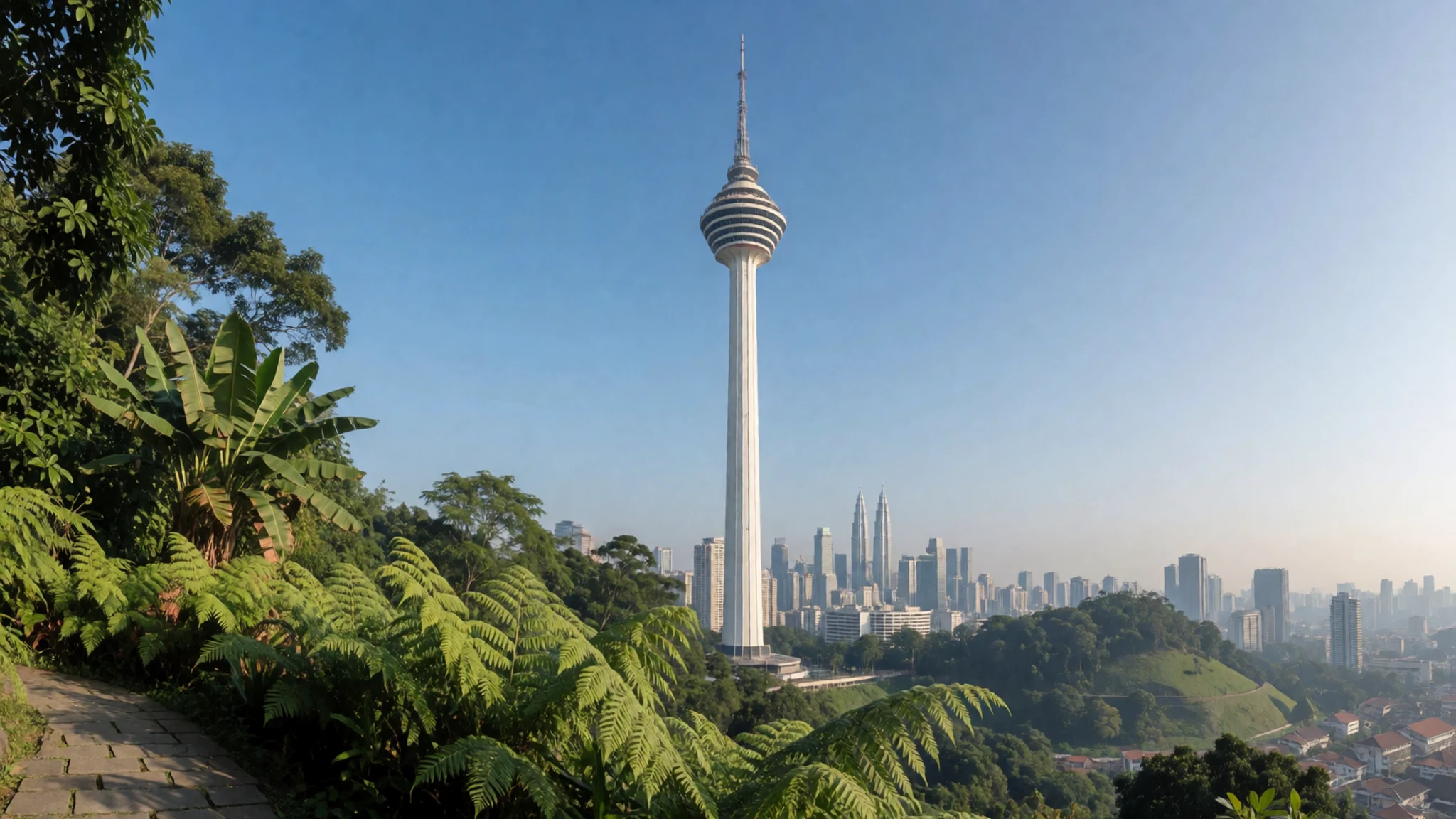
Culture
Kuala Lumpur is relatively liberal by Malaysian standards, so revealing clothes seldom cause real trouble, though dressing a little more modestly helps you blend in. Many mosques and temples ask visitors to cover up, and officials and staff tend to be more helpful when you have made an effort with your dress. Most mosques require shoes to be removed at the entrance, and you will often see racks or shelves where they are left. Malay, Chinese (especially Cantonese), Tamil and English are the four main languages you will hear, and a few words of any of them go a long way with locals. Alcohol is legal for non-Muslims, but public drunkenness is not tolerated, and it can bring trouble quickly. When eating with your hands, which many people do at casual eateries, use your right hand only, because the left hand is reserved for dirty tasks. Take your shoes off before entering any mosque, and keep your left hand away from the food when you eat with your fingers.
What to wear
Kuala Lumpur reflects several traditions at once, so traditional dress varies with community. Malay men often wear the baju Melayu, a loose tunic and trousers, sometimes with a songket cloth at the waist, a woven fabric shot through with metallic thread. Malay women wear the baju kurung, a long tunic over a long skirt, often in batik, the wax-resist printed cotton that is a distinctive regional textile. Chinese Malaysian women may wear the cheongsam, the close-fitting high-collared dress, and Indian Malaysian women wear the sari. Day to day, most people in the city dress in Western clothes, especially in offices and malls, while many Malay women wear the tudung headscarf and some wear baju kurung for work or festivals. For a visitor, light, breathable cotton or linen suits the heat and humidity well. Cover shoulders and knees when you visit mosques and temples, and pack a scarf for head covering if you plan to enter a mosque. Choose closed shoes that are easy to slip off, because you will remove them often.
What to eat
- Nasi lemak — Morning stalls and kedai kopi across the city
Nasi lemak is coconut-milk rice, usually served with anchovies, peanuts, cucumber, boiled egg and sambal, a chilli paste. It is Malaysia's everyday breakfast and it is cheap almost everywhere. Ask for the version with fried chicken or rendang if you want something heartier.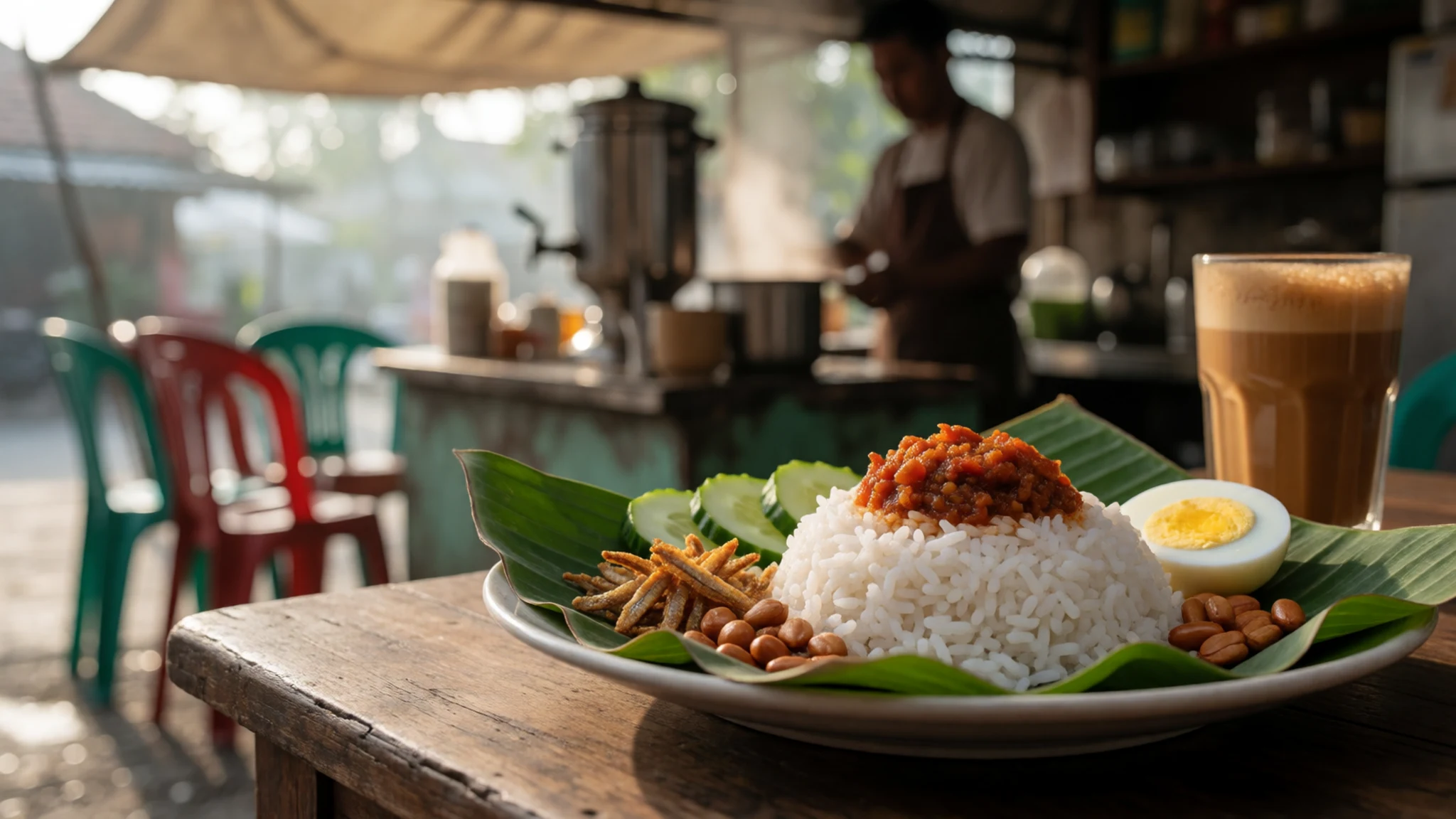
- Roti canai — Any kedai mamak, the 24-hour curry houses in the centre
Roti canai is a flaky, pan-fried flatbread served with dhal or curry for dipping. It is made fresh to order, so you will see the dough stretched and folded in front of you. It is a classic late-night and breakfast order at Indian Muslim eateries.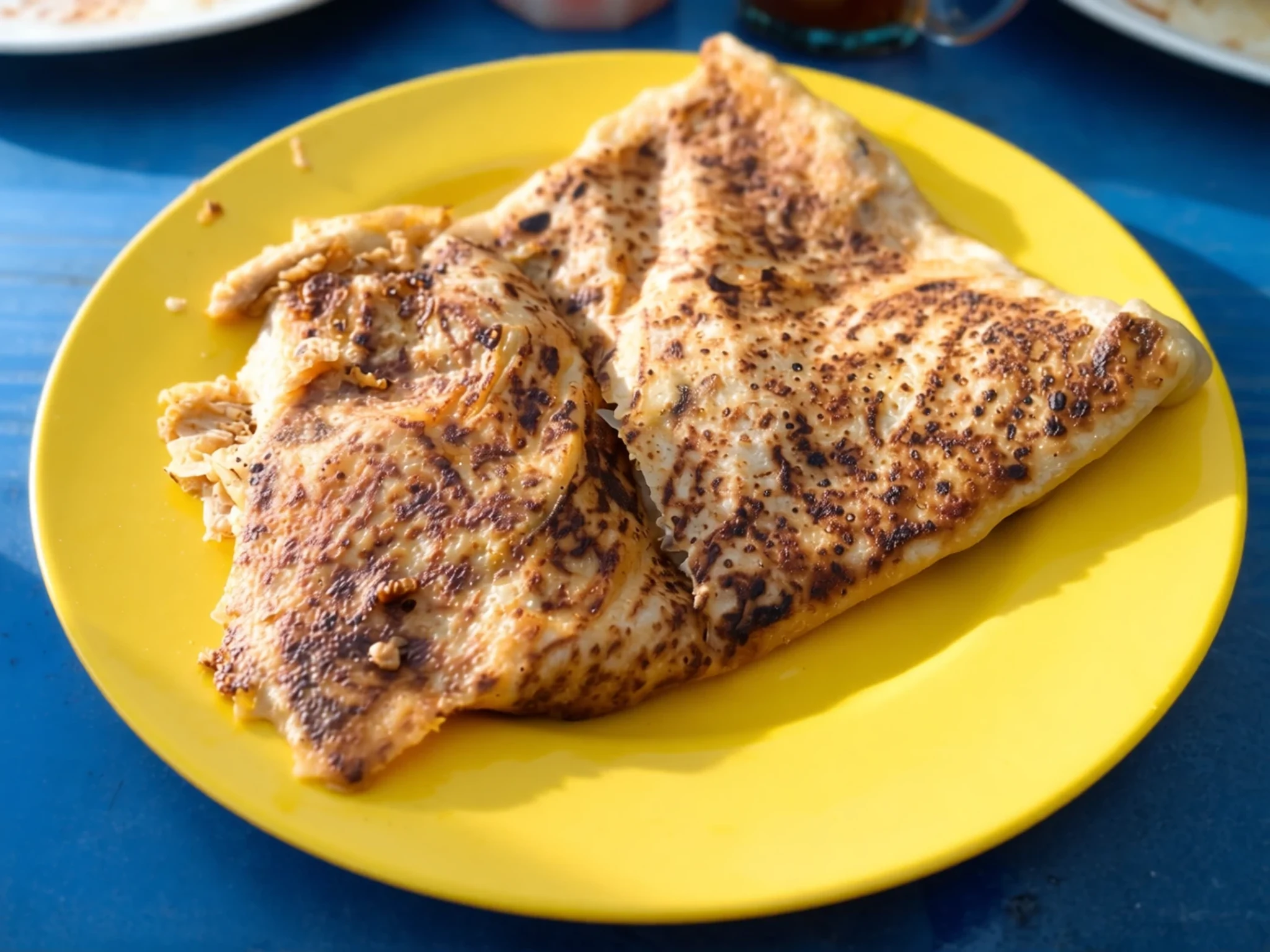
- Teh tarik — Mamak eateries and coffee shops
Teh tarik is strong milky tea, pulled back and forth between two cups to create a frothy top. The pouring is part of the show, and it is the usual drink to order with roti. Ask for it less sweet if you prefer.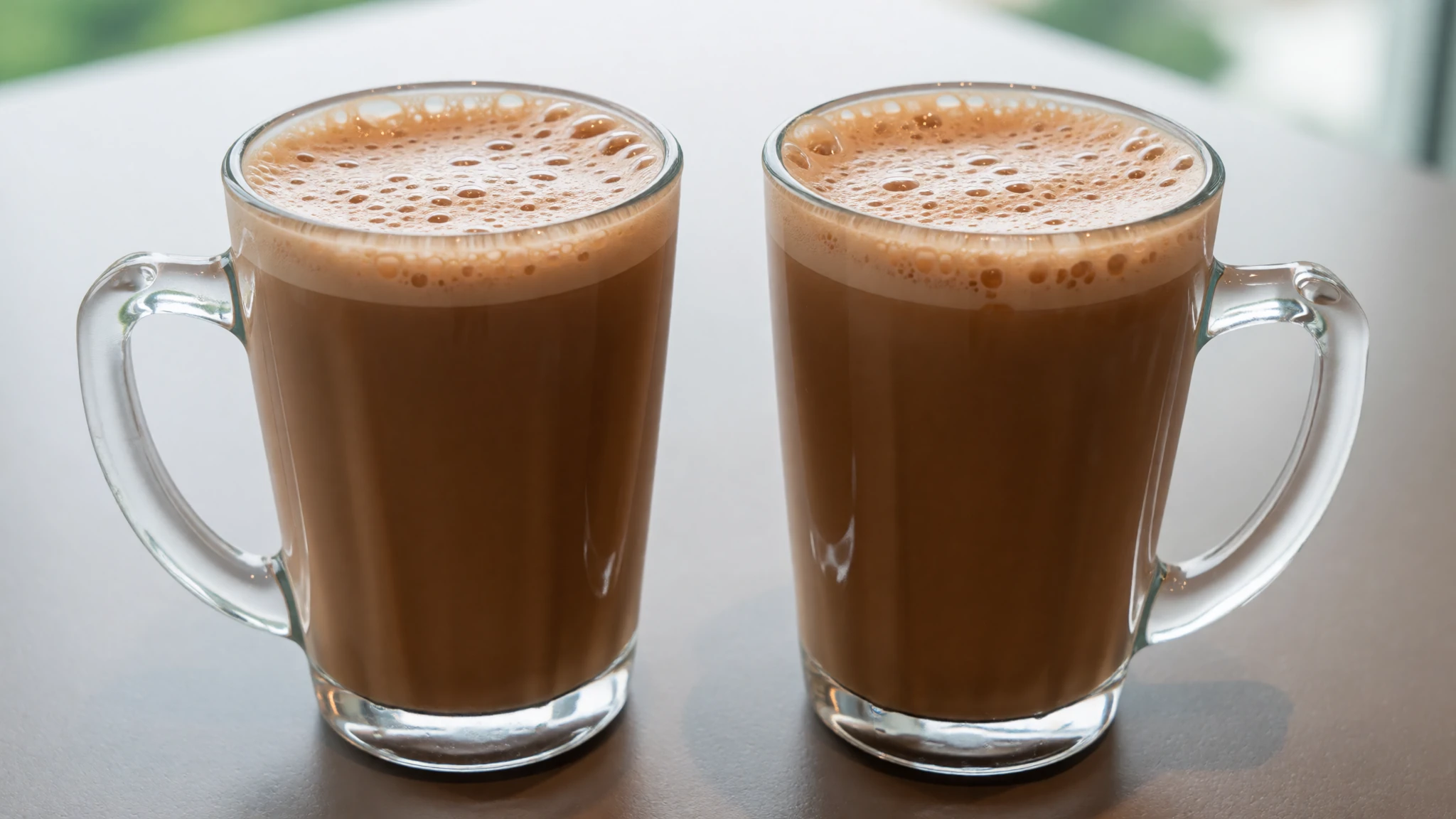
- Satay — Evening hawker stalls, Jalan Alor
Satay is skewered and grilled meat, usually chicken or beef, brushed with a sweet-savoury marinade and served with a peanut dipping sauce. It is often sold from carts in the evening. Eat it with rice cakes and sliced cucumber, which are standard accompaniments. - Char kway teow — Chinatown streets such as Jalan Petaling
Char kway teow is wide rice noodles stir-fried over high heat with prawns, egg, bean sprouts and chives. The best versions have a smoky edge from the wok. It is a Penang dish that is common across the city, and it is often cooked fresh at night.
Plan it
Best time. Kuala Lumpur is hot and humid all year, with short, heavy afternoon showers that can arrive without much warning. Early mornings and the early evening are the most comfortable times for walking and photographing the towers, and the towers look their best once the lights come on.
How long. 1–2
Getting there. Kuala Lumpur International Airport is the main airport for long-haul flights, and Subang Airport handles regional flights. From the airport, a train or taxi is the usual way into the city centre, and the KLCC area is served by the city's rail network, although the system takes some time to understand.
Budget. mid
Tips
- Check the official site for current ticketing and opening times before you travel, since timed tickets may be needed for the viewing deck
- Go in the early evening, when you can see the towers by daylight and then at night
- Carry some cash for the hawker stalls and small markets, and use cards in the malls
- Drink plenty of water, because the heat and humidity are constant even on cloudy days
Etiquette
- Dress modestly when visiting mosques and temples, and remove your shoes at the entrance
- Use your right hand when eating with your fingers
Nearby
Sources
- Wikidata Q83063 (CC0)
- Wikipedia, Petronas Towers (rev 1379472416) (CC BY-SA 4.0)
- Wikivoyage, Kuala Lumpur (rev 5407656) (CC BY-SA 4.0)
- Kuala Lumpur, AwOiSoAk KaOsIoWa (CC BY 3.0)
- Petronas Towers in December 2019, James Kerwin from Tbilisi (CC BY 2.5)
- The Petronas Towers at night, Someformofhuman (CC BY-SA 1.0)
- Inside View of Petronas, Mithun89 (CC BY-SA 4.0)
- Suria KLCC atrium, Bjørn Christian Tørrissen (CC BY 3.0)
- KLCC Park and Suria KLCC, Marcin Konsek (CC BY-SA 4.0)
- Chinese New Year decoration at Suria KLCC, Haiqal08 (CC BY-SA 4.0)
- The Tallest Giant Ketupat Decoration for Raya at Suria KLCC, Haiqal08 (CC BY-SA 4.0)


