Perito Moreno Glacier
Perito Moreno Glacier, Argentina
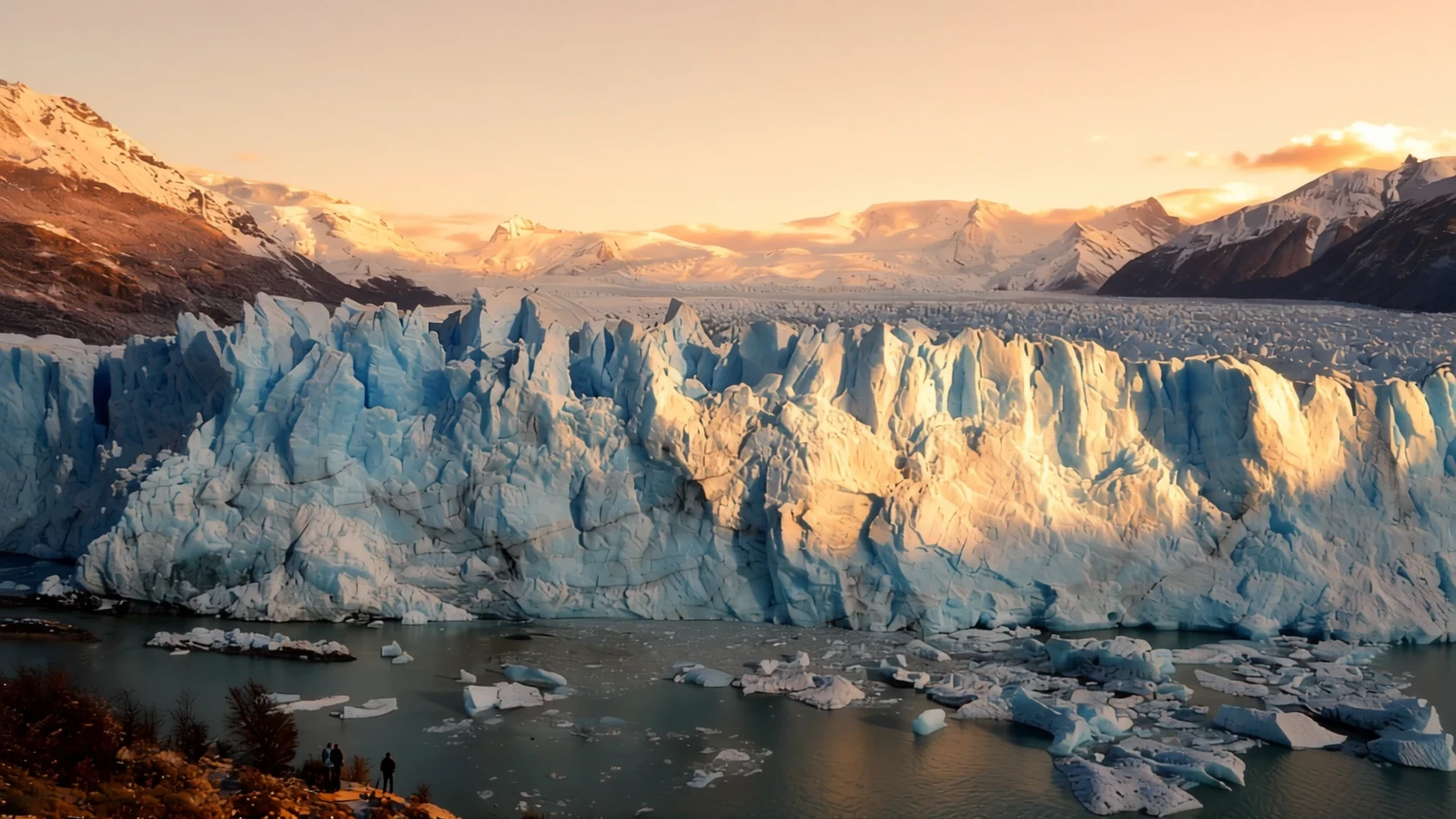
Witness the thunderous collapse of colossal ice walls at one of the world's most dynamic glaciers.
The place
The Perito Moreno Glacier is a massive ice formation located in Los Glaciares National Park in southwest Santa Cruz Province. It originates in the high mountain system shared with Chile, where a small part of its source lies. This enormous river of ice is fed by the Southern Patagonian Ice Field, which forms part of the Andes mountain system and stands as a major freshwater reserve. Visitors approaching the area find themselves surrounded by the wild landscapes of the Patagonian region, bordered by lush woods, deep blue lakes, and rugged terrain. The surrounding national park protects a vast ecological zone characterised by dramatic weather, native beech forests, and striking geological formations carved by ancient ice movements. Travellers journeying through this remote southern landscape encounter crisp mountain air and panoramic vistas of towering peaks stretching across the horizon. The park offers extensive wooden boardwalks positioned directly opposite the towering vertical ice wall, allowing visitors to watch massive blocks shear off and crash into the water below with a sound resembling rolling thunder. The sheer scale of the glistening blue ice facade leaves a lasting impression on anyone willing to make the long journey to the edge of the world.
Its story
The history of the Perito Moreno Glacier is woven through maritime exploration, boundary treaties, and scientific surveys of the remote southern wilderness. In eighteen seventy-nine, a naval commander sailing for the Chilean Navy became the first non-indigenous person to sight the frozen river, naming it after a hydrographic director. Not long afterward, a geologist attached to an official boundary commission studied the ice and chose to honour a Prussian statesman with the title. During this era, sovereignty over the region remained contested as neighbouring nations negotiated their exact borders along the Andean cordillera. An eighteen-eighty-one treaty helped define these territorial limits along the mountain range, placing the glacier firmly within eastern watersheds that empty into Argentine lakes. Near the turn of the century, an Argentine naval lieutenant conducted extensive archaeological and topographical surveys of the territory, ultimately renaming the geological wonder in homage to a renowned nineteenth-century explorer who had mapped the region and defended national territorial claims. The remote origin of the ice field remained a subject of international discussion until a late twentieth-century agreement established a precise boundary line across the source, leaving the vast majority of the glacier within Argentine territory while preserving shared stewardship of the surrounding Andean heights.
What to see
- Los Glaciares Boardwalks — Los Glaciares National Park
The wooden walkways facing the Perito Moreno Glacier provide multiple viewing tiers. Visitors can spend hours listening to the groaning ice and watching house-sized blocks shatter into the lake below. These paths are designed for all fitness levels and offer unmatched photographic angles of the vertical ice wall.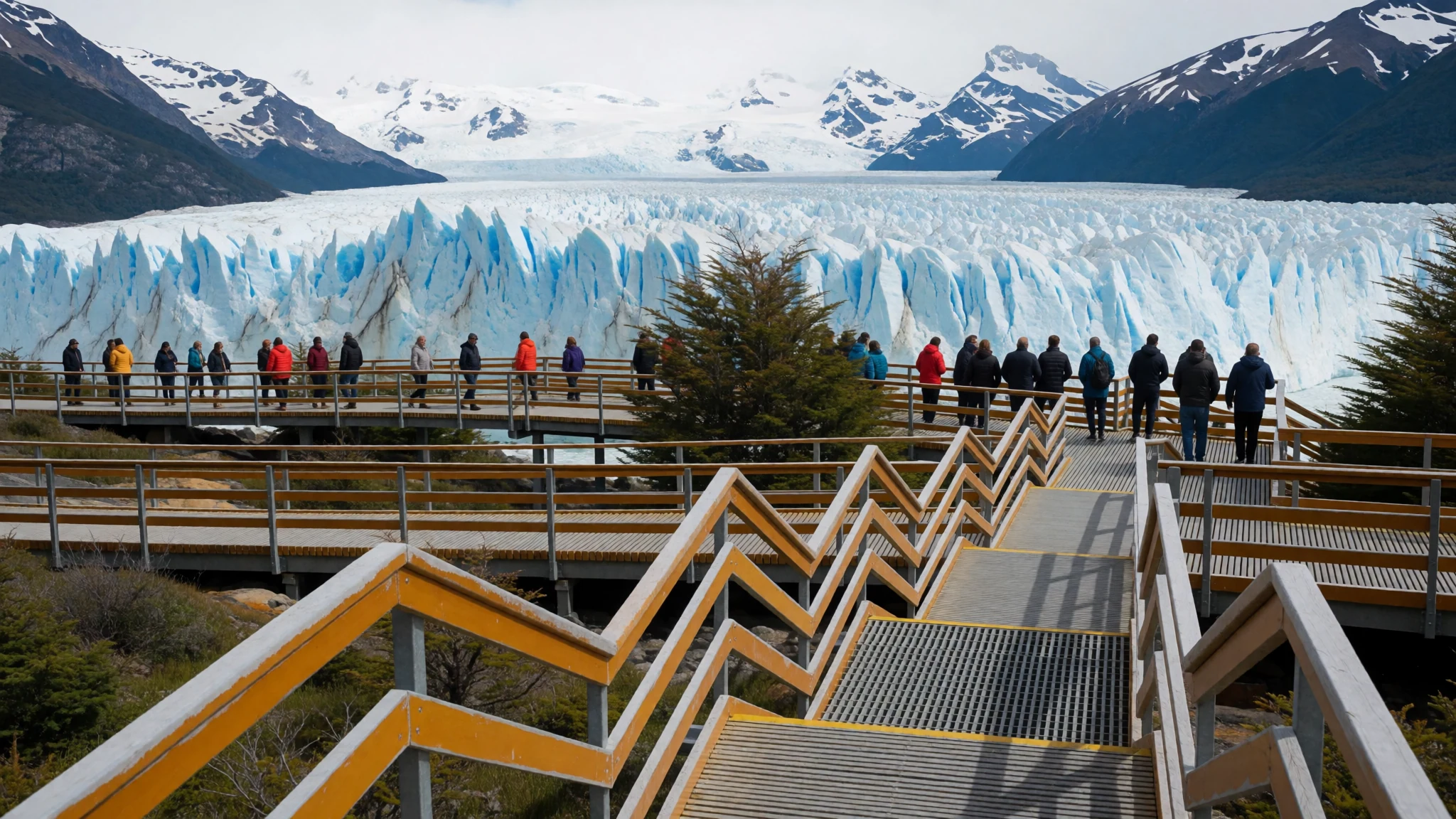
- Pinguinera Cabo Dos Bahias — Patagonian Coast
Located north of Comodoro Rivadavia, this coastal reserve provides a quieter alternative to busier mainland colonies. Travellers can walk along designated paths while Magellanic penguins waddle past burrows and tend to their chicks along the rocky shore, offering an intimate wildlife encounter without the usual crowds.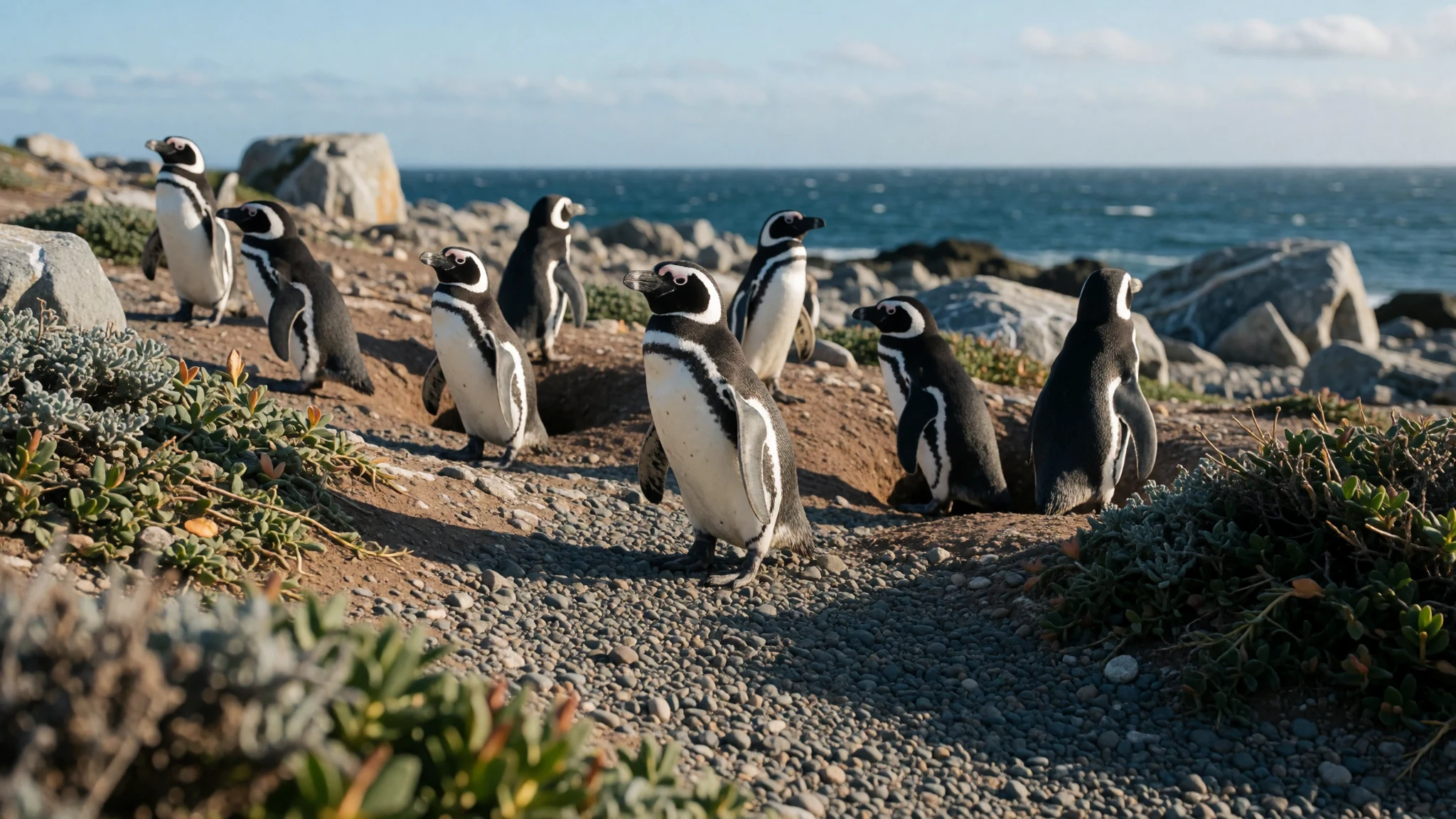
- Jaramillo Petrified Forest — Santa Cruz Province
The Jaramillo Petrified Forest preserves ancient tree trunks spanning several metres in diameter that turned to stone millions of years ago. Walking among the scattered fossilised logs reveals a stark desert landscape where prehistoric flora lies exposed beneath the wide Patagonian sky.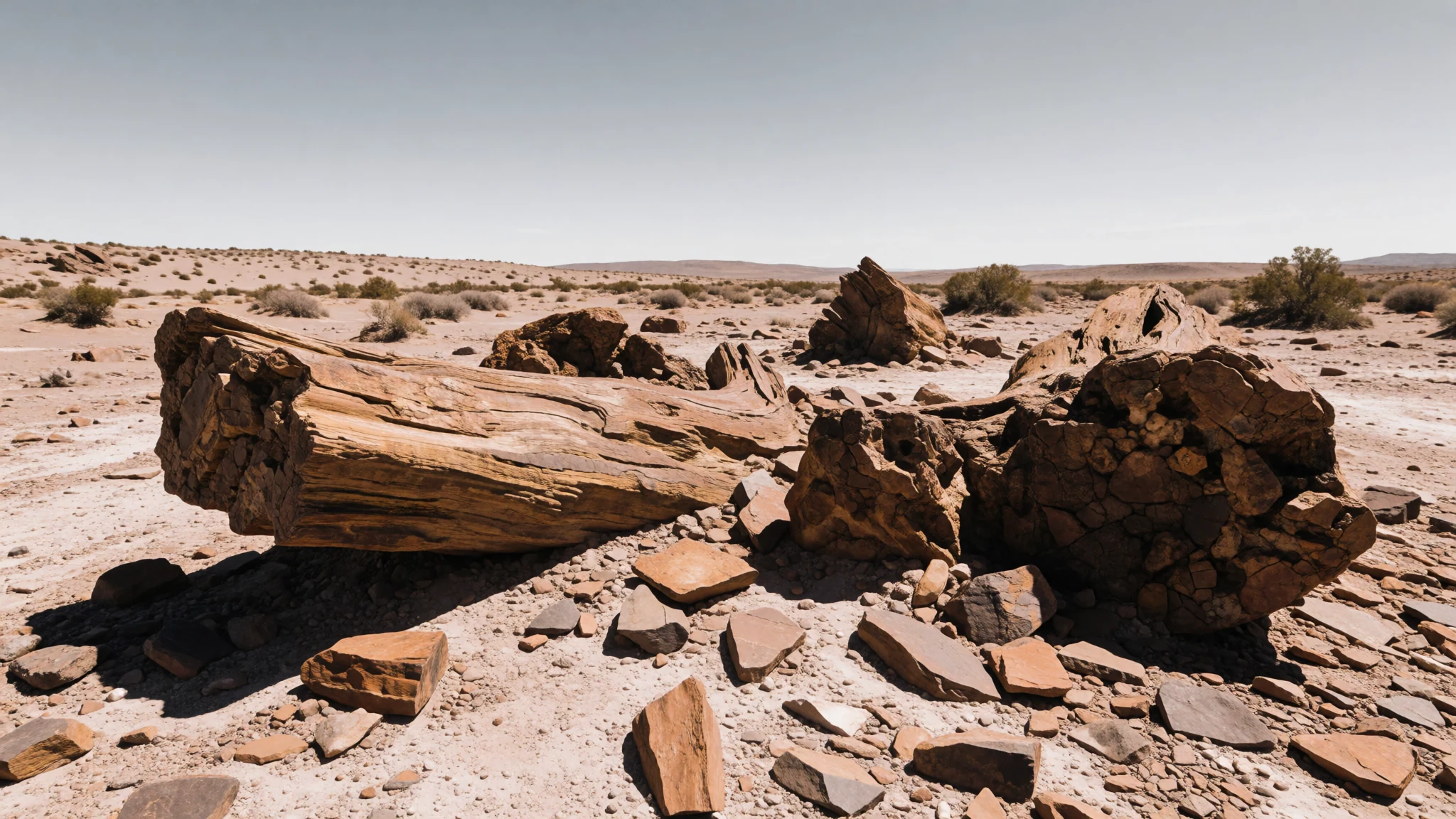
- Aerial Glacier Panorama — Patagonian Andes
Viewing the expansive ice sheets from the window of a small aircraft or a surrounding mountain vantage point reveals the true scale of the ice field feeding the Perito Moreno Glacier. The flight path unveils endless white wilderness stretching across the spine of the Andes.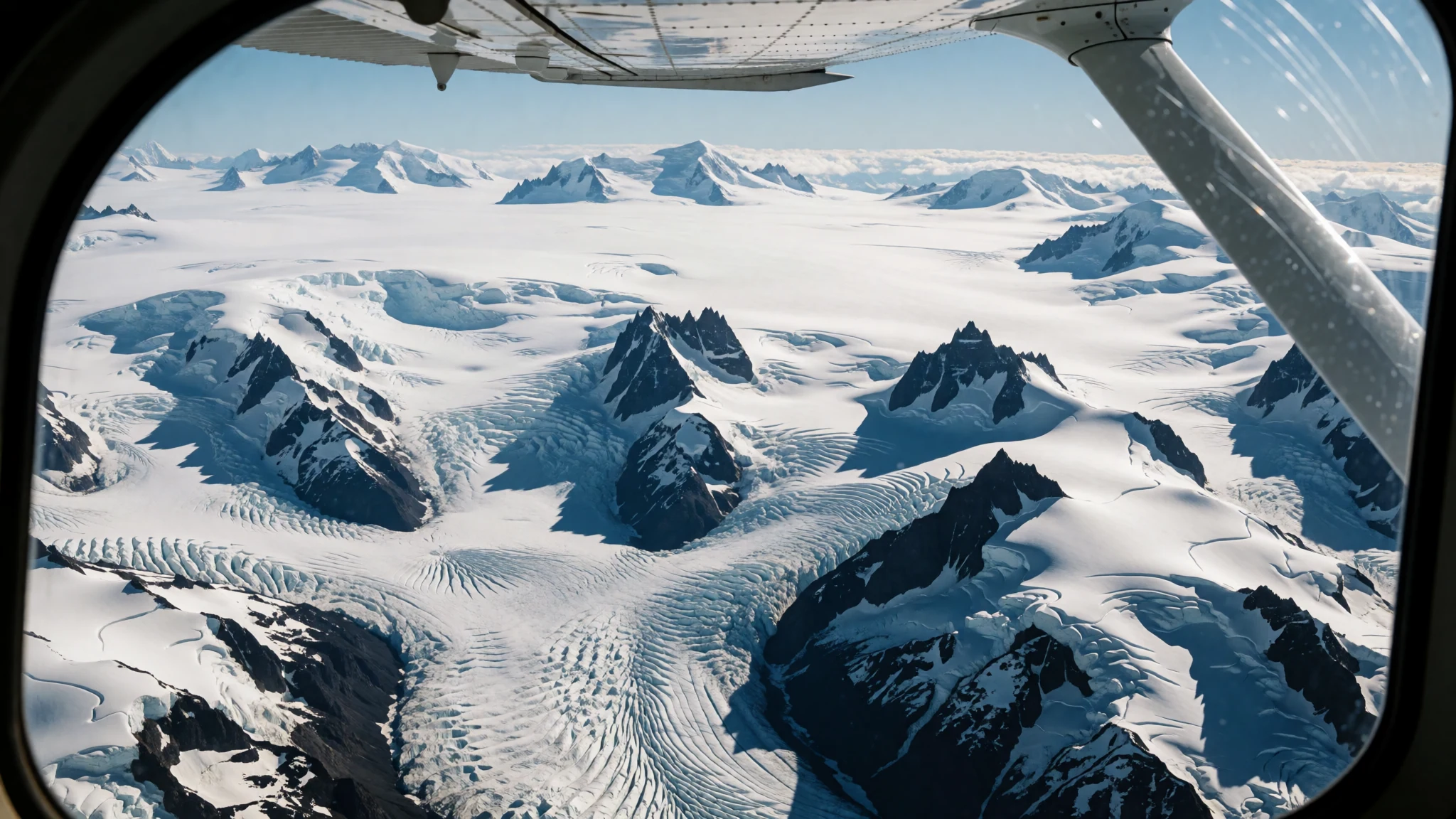
Culture
The culture around the Perito Moreno Glacier is deeply rooted in the rugged traditions of Patagonian estancias and frontier life. Local communities pride themselves on hospitality, often gathering around traditional asado grills to share stories of endurance in a challenging climate. Gaucho heritage remains visible across the rural province, where horsemanship and wool-spinning crafts are passed down through generations. Visitors interacting with local residents will find a quiet warmth and a strong respect for the natural environment that dominates daily life in the southern wilderness. Travellers should always pack out every scrap of litter and respect fragile protected ecosystems within the national park.
What to wear
The fashion and attire around the Perito Moreno Glacier reflect the demanding and unpredictable weather of the southern Andes. Traditional wear draws from gaucho heritage, featuring heavy wool ponchos, wide-brimmed hats, sturdy leather boots, and neckerchiefs designed to ward off fierce winds and biting cold. Modern residents and workers across the region dress for practicality, relying on durable outdoor layers, fleece jackets, and windproof trousers. Visitors exploring the national park must dress in technical layers, regardless of the calendar month. Essential items include a reliable waterproof and windproof outer shell, thermal base layers, sturdy trekking boots with good grip for walking near icy environments, wool beanies, and UV-blocking sunglasses to protect against glare reflecting off the vast ice fields.
What to eat
- Patagonian Cordero al Palo — Regional Asador restaurants
Local lamb is slow-roasted over an open wood fire on iron crosses, absorbing aromatic smoke from native scrubland herbs. The meat becomes remarkably tender with a distinctive savoury flavour unique to the southern pastures, best enjoyed fresh at a traditional rural parrilla.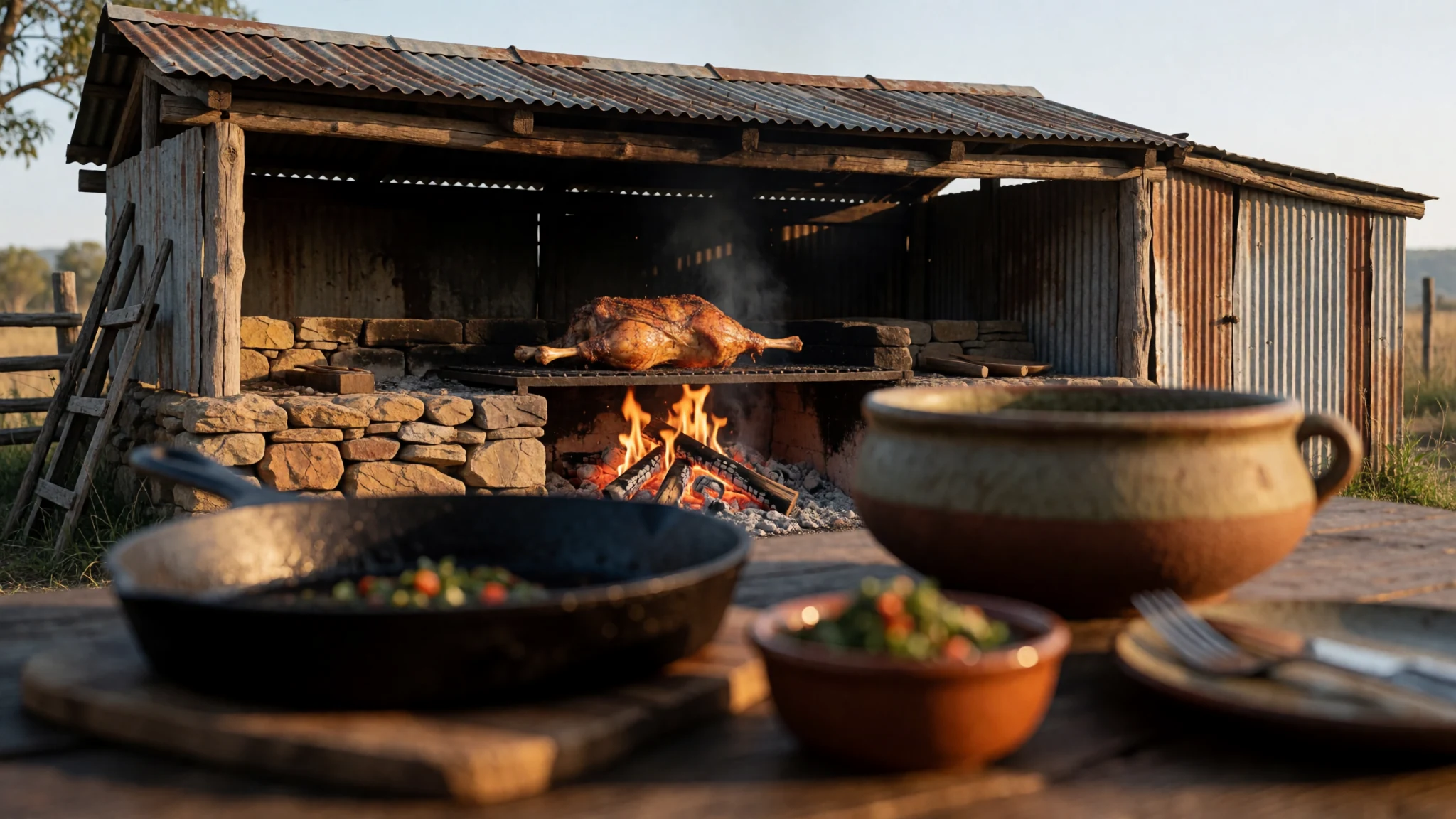
- Argentine Beef Parrillada — Local steak houses
Beef holds a legendary status throughout the country, cooked slowly over hot coals in a traditional parrilla. Cuts like bife de chorizo are seasoned simply with salt and served chimichurri, offering a rich and succulent meal after a day exploring the mountains.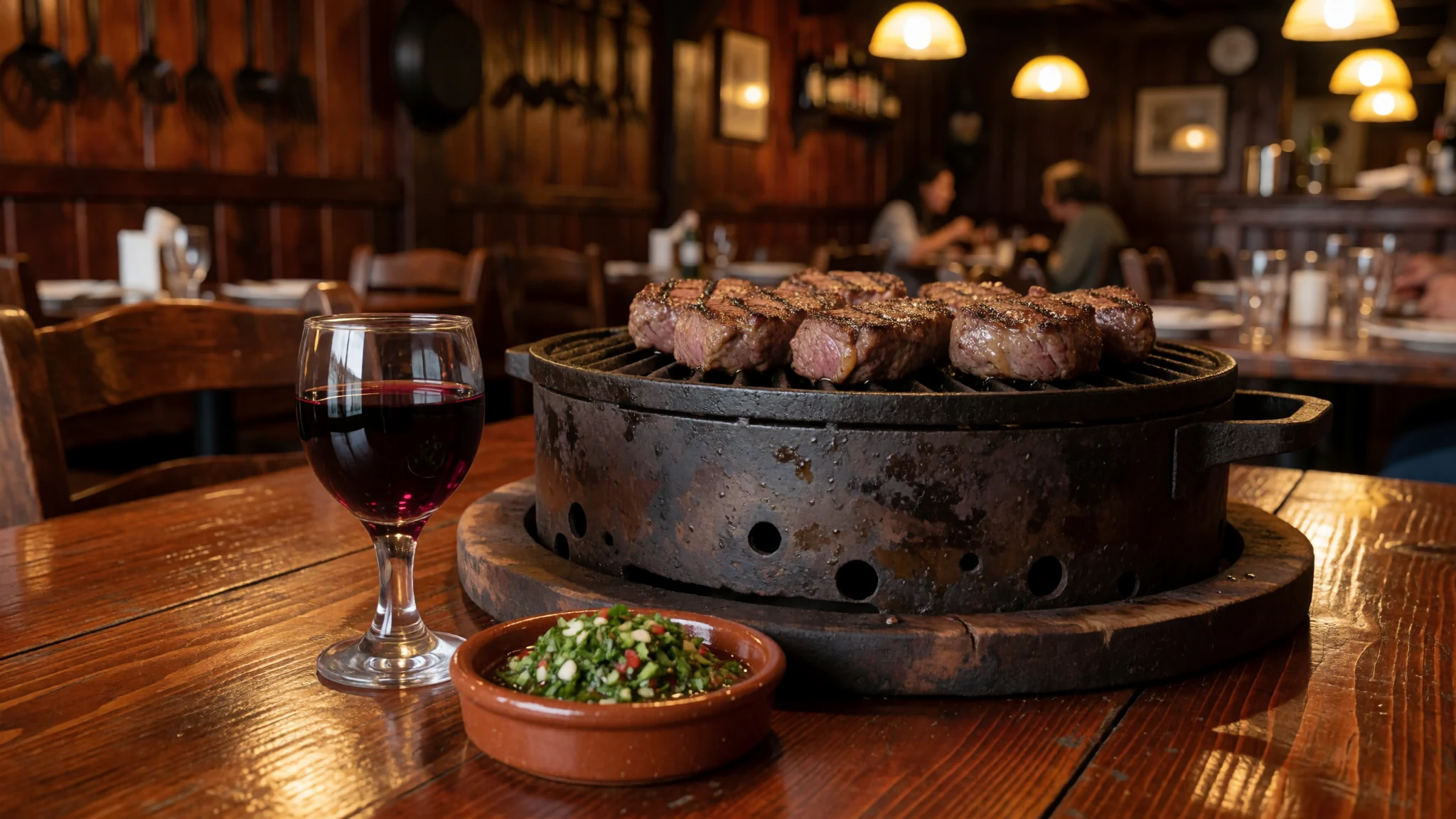
- Dulce de Leche Pastries — Local bakeries and cafes
Sweet caramel paste made by simmering milk and sugar fills flaky breakfast pastries known as facturas or sandwiches between crumbly biscuits called alfajores. These sugary treats provide an immediate energy boost during chilly afternoons spent outdoors. - Mate Herbal Tea — Any local cafe or roadside stop
This traditional bitter infusion is prepared in a hollow gourd and sipped through a metal straw called a bombilla. Locals often sweeten the bitter brew or add citrus rinds, sharing the gourd in social circles to stave off the southern chill.
Plan it
Best time. December to February brings the warmest weather and longer daylight hours, while March and April offer quieter trails and autumn colours.
How long. 2–3
Getting there. Fly into El Calafate airport, then rent a car or take a daily excursion bus along the scenic paved road to the national park entrance.
Budget. mid
Tips
- Book glacier trekking excursions months in advance as slots fill up quickly.
- Arrive at the park early in the morning to avoid midday tour bus crowds.
- Dress in windproof layers because mountain weather changes without warning.
- Carry cash for park entrance fees and minor roadside purchases.
Etiquette
- Stay strictly behind the wooden boardwalk barriers to protect the fragile terrain.
- Do not leave any plastic waste or food wrappers behind in the national park.
Nearby
Sources
- Wikidata Q367943 (CC0)
- Wikipedia (rev 1362423498) (CC BY-SA 4.0)
- Wikivoyage (rev 5339979) (CC BY-SA 4.0)