Perhentian Islands
Perhentian Islands, Malaysia
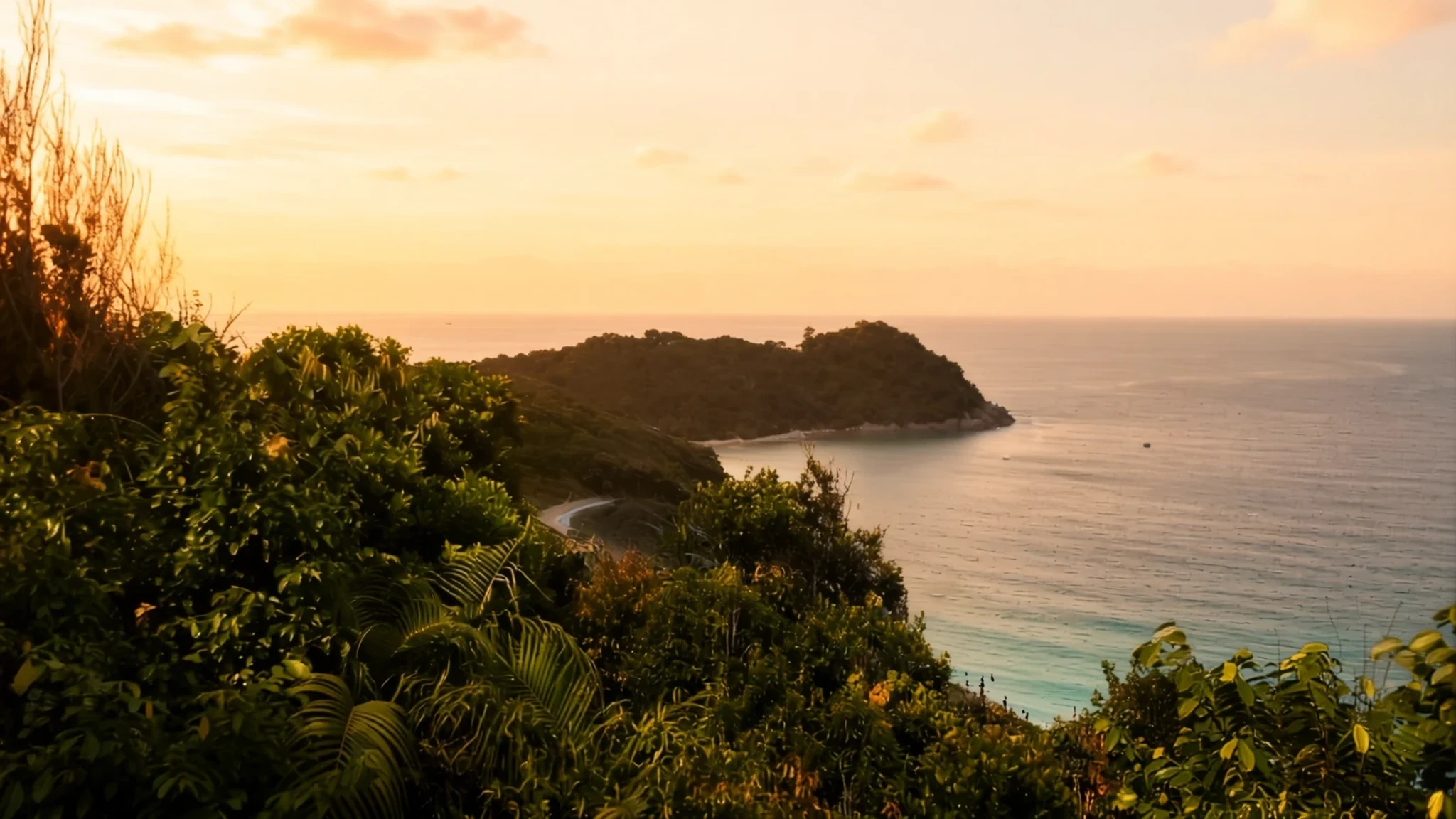
Clear water, white sand and reef life close to shore make the Perhentian Islands a classic Malaysian beach break, best enjoyed in the drier months.
The place
The Perhentian Islands are a small group off the coast of Besut District in Terengganu, on Malaysia's east coast. Two islands do most of the work: Perhentian Besar, the larger one, and Perhentian Kecil, the lesser. A few tiny uninhabited islets, including Susu Dara, Serengeh and Rawa, sit off Kecil and are reached by boat. Locals speak Kelantanese Malay, and many people in tourism also use English.
Almost everything here runs on the sea. Tourism has become the main source of income, and most visitors come for the water: swimming, snorkelling and scuba diving over coral reefs. The shoreline is fringed with white coral sand, and the water is clear enough that reef fish and turtles are often visible from the surface. Behind the beaches, jungle-covered hills rise steeply, and the forest holds monitor lizards, geckos and venomous spiders, which are worth respecting rather than chasing.
The climate is tropical. Daytime highs sit around 30 °C in the wettest months of November and December and climb to about 34 °C in April and May, humidity is high, and short, heavy thunderstorms arrive with little warning. The sea is calmest when the weather is settled, which is also when diving is most rewarding.
Plan for a slower pace than a city break. Days tend to revolve around dive schedules, the next swim and the boat that brings in supplies.
Its story
The name Perhentian comes from the Malay word for a stopping point, and it describes the islands' role well. For centuries they sat on the sea routes linking the Malay Peninsula with Bangkok and the Gulf of Thailand, where traders paused for water, shelter and a change of wind. Ships passing this coast used the islands as a waypoint rather than a destination.
Through much of that history, only a handful of fishing families lived on the islands, working the reefs and the shallow water close to shore. Their settlements were modest, and the land was too steep and thin for large-scale farming. Outsiders mostly knew the group as a landmark at sea. Nineteenth and twentieth century charts sometimes labelled it the Station Islands, an English rendering of the same idea of a halt on a journey.
The islands entered a darker chapter during the 1970s, when refugees fleeing Vietnam arrived by boat and some came ashore here. Their landings are part of the islands' record, alongside the traders and fishers.
Tourism came later and now drives most of the local economy. The reefs that first drew divers and snorkellers also became the reason for conservation. The waters were eventually designated a marine park, with fishing restricted in the shallows around the islands. Those rules have been hard to enforce completely, and the balance between visitors and the reef remains an open question.
What to see
- Coral Bay, Perhentian Kecil — Perhentian Kecil
Coral Bay on Kecil is where most people go for sunset, with a curve of shallow water and a row of eateries along the sand. A new jetty has spoiled much of the view, so the sky is the main draw now. Arrive early for a seat near the water's edge, and take a walk along the sand while the light fades.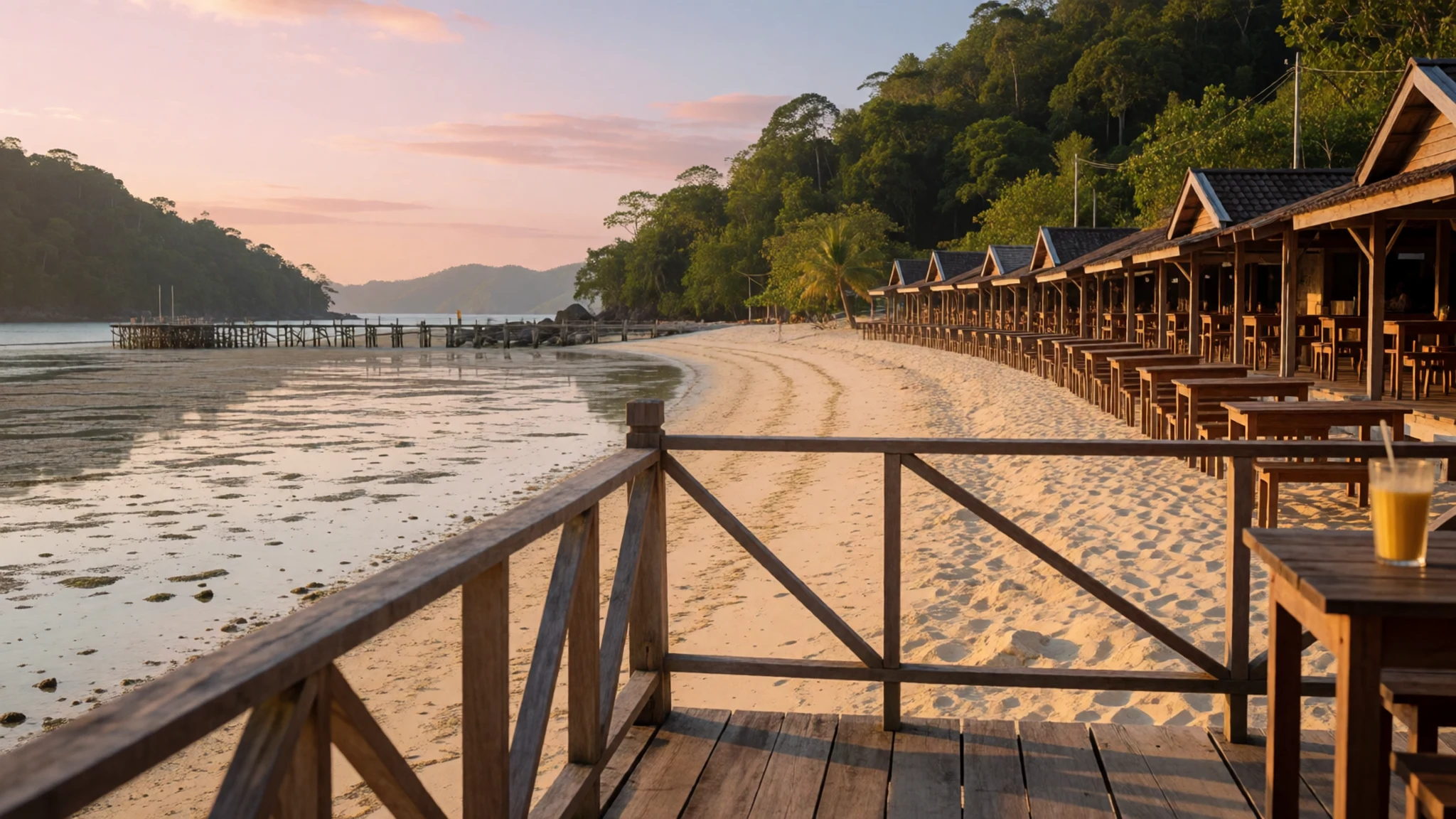
- Long Beach, Perhentian Kecil — Perhentian Kecil
Long Beach on Perhentian Kecil is the main strip of sand for most visitors, lined with dive shops, cafés and simple places to stay. The atmosphere is relaxed, and dive operators run boats from the shore. Water is often calm and shallow near the beach, which suits swimmers. At busy times it can feel crowded, so arrive early for a shaded spot under the trees.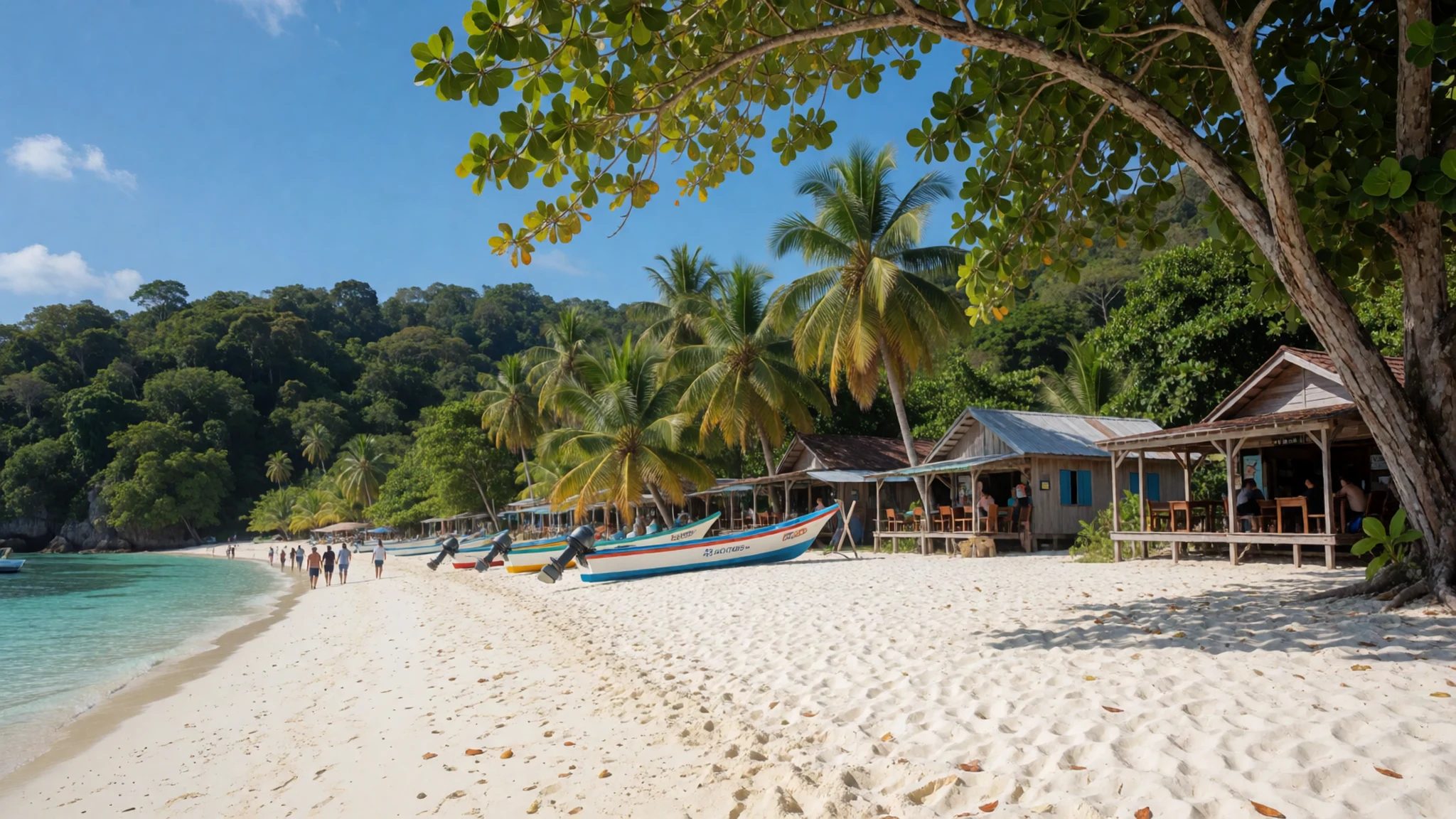
- West beaches of Perhentian Besar — Perhentian Besar
On the larger island, Perhentian Besar, the best and cleanest beaches sit on the west side. The sand is white, the water clear and turquoise, and the hills behind are thick with jungle. It is the stretch to choose for a quieter swim and good afternoon light. On calm days, reef fish and sea turtles can be seen close to shore.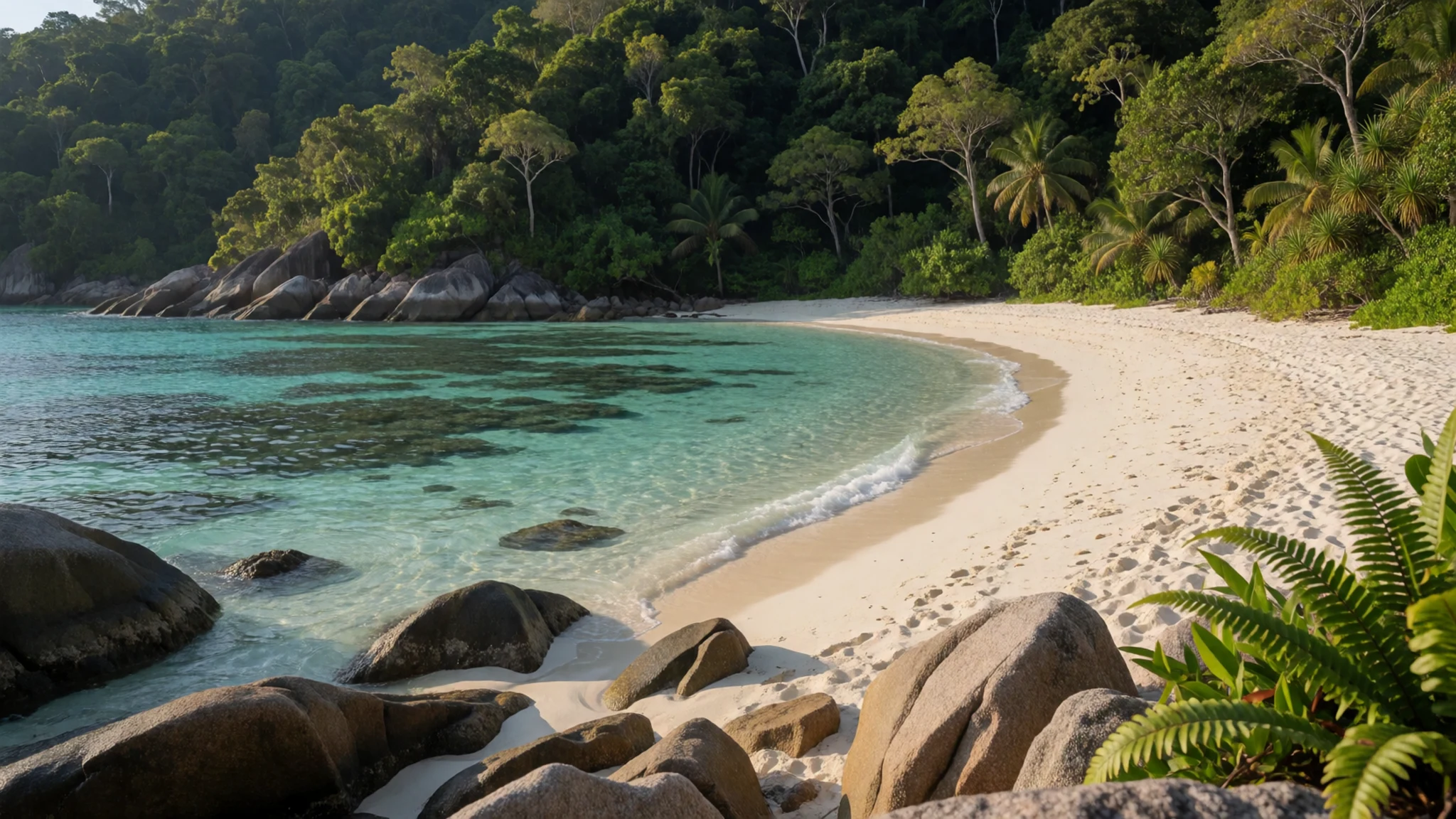
- Dive shops on both islands — Both islands
Diving is the main reason many people visit, and the dive shops on both islands range from long-running outfits to small, intimate operations. Panorama Divers and Turtle Bay Divers are established names, with staff speaking several languages. Panorama runs dives through the morning and early afternoon, and mid-size groups keep things relaxed. Book ahead in peak season.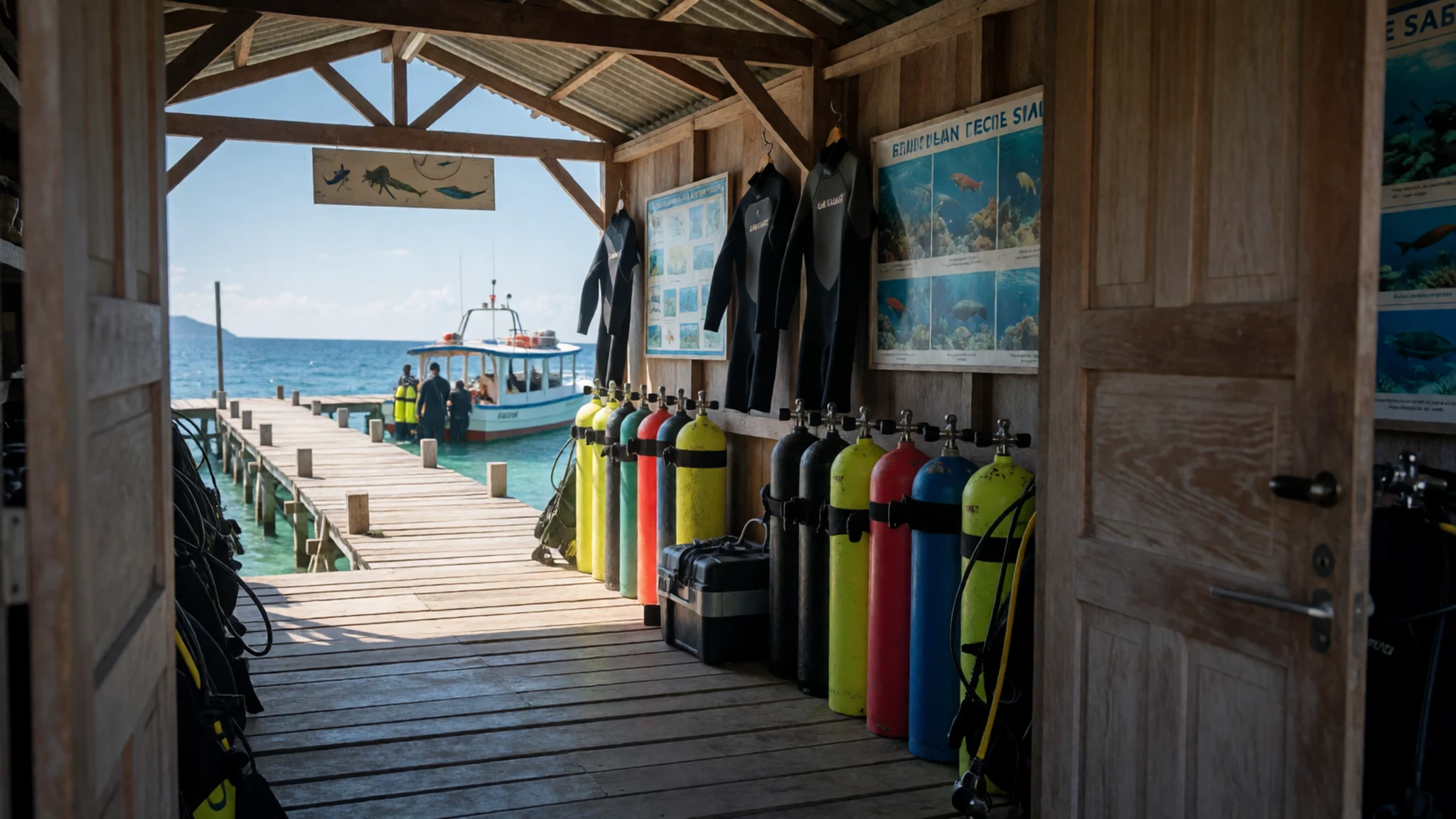
- Susu Dara and the uninhabited islets — Off Perhentian Kecil
Off Perhentian Kecil lie small uninhabited islets, among them Susu Dara, Serengeh and Rawa. Nothing is built on them, so they are visited by boat for swimming and snorkelling rather than for facilities. Bring water and shade, because there is little or none on the islets themselves. Ask the boat operator about wind and swell before setting off, since conditions can change through the day.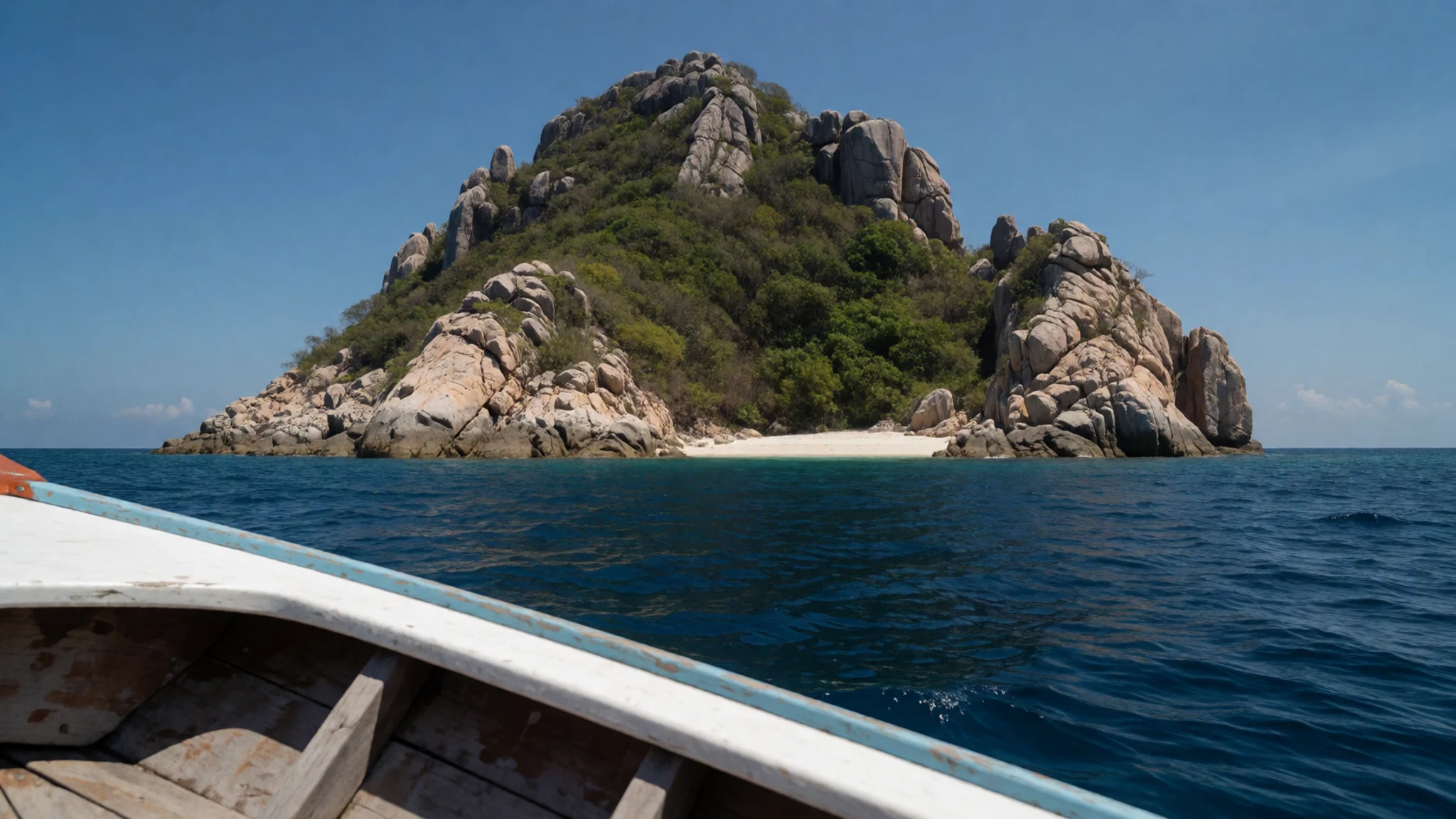
Culture
The Perhentian Islands rely on a fragile reef, and how visitors treat the sea and shore matters more here than in many places. Local life centres on fishing families and the Malay language, while the economy has shifted towards visitors and diving. Litter is a visible problem. Refuse barges moored in the coves sometimes lose their cargo, which washes up on the beaches, and it is not always cleared quickly.
When the boat reaches the jetty at Kuala Besut, a marine park fee is collected, and the money is meant to fund conservation work. Even so, many people worry that the coral near shore is declining as tourism grows. Some snorkel operators have been careless, tossing food-filled plastic bags into the water to attract fish, which adds thousands of bags to the sea each season.
Take your rubbish back on the boat, never feed the fish, and keep plastic out of the sea.
What to wear
The Perhentian Islands sit in a Malay part of Malaysia, where traditional dress is most visible in mainland towns rather than on the beaches. The classic outfit for women is the baju kurung, a loose long tunic worn over a matching skirt, and men often pair a long-sleeved shirt with trousers or a sarong. Sarongs in batik and songket are common east-coast textiles: batik is printed in bright patterns, while songket is woven with metallic thread and kept for ceremonies. Both are worn at weddings and festivals more than on a boat trip.
Day to day, people here wear T-shirts, shorts and flip-flops, with sarongs worn over swimwear or as a wrap on the beach. The fishing village and the resorts are relaxed, but covering shoulders and knees when walking through the village is a sign of respect.
For a visitor, the heat and humidity call for light cotton or quick-dry fabric. Pack a long-sleeved rash vest or sun shirt for snorkelling and diving, a sarong for covering up, and sturdy sandals or water shoes for rocky paths and wet jetties. Swimwear is fine on the beach, though a cover-up is better once you leave the sand.
What to eat
- Malay fried rice — The simple cafés of Coral Bay, Perhentian Kecil
Fried rice with vegetables and egg, often served in the Malay style with a side of kerabu salad, is the everyday dish of the islands. It is cheap, filling and cooked fast, which suits a day of diving. Ask for the version with local flavouring if you want something closer to village cooking.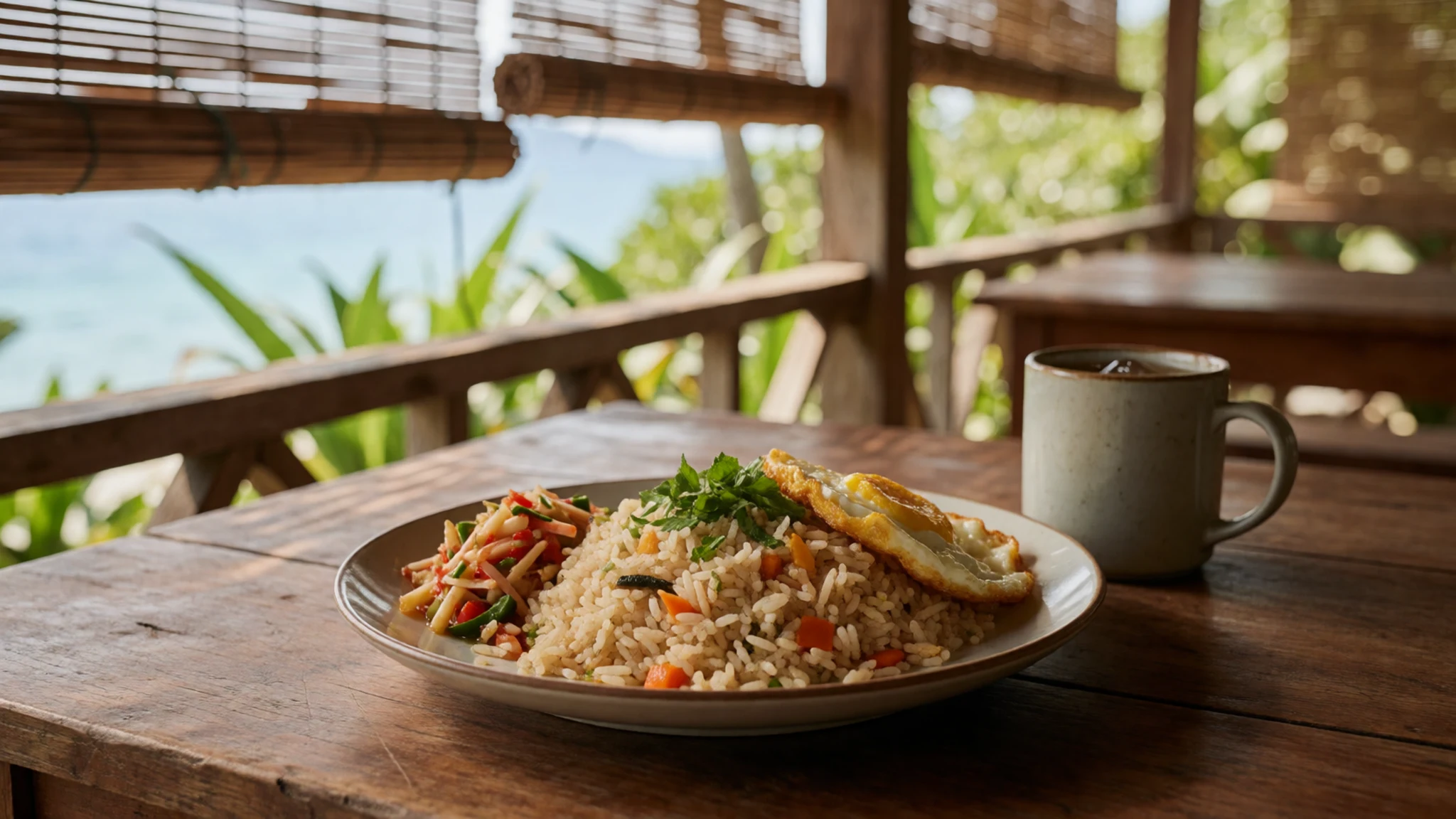
- Evening barbecue — A beachfront restaurant on Perhentian Kecil
Beachside barbecues serve grilled seafood, chicken and kebabs, usually as an all-you-can-eat spread with live music on some nights. It is the easiest way to sample a range of local catches in one sitting. Arrive early, as the tables fill up quickly during the high season.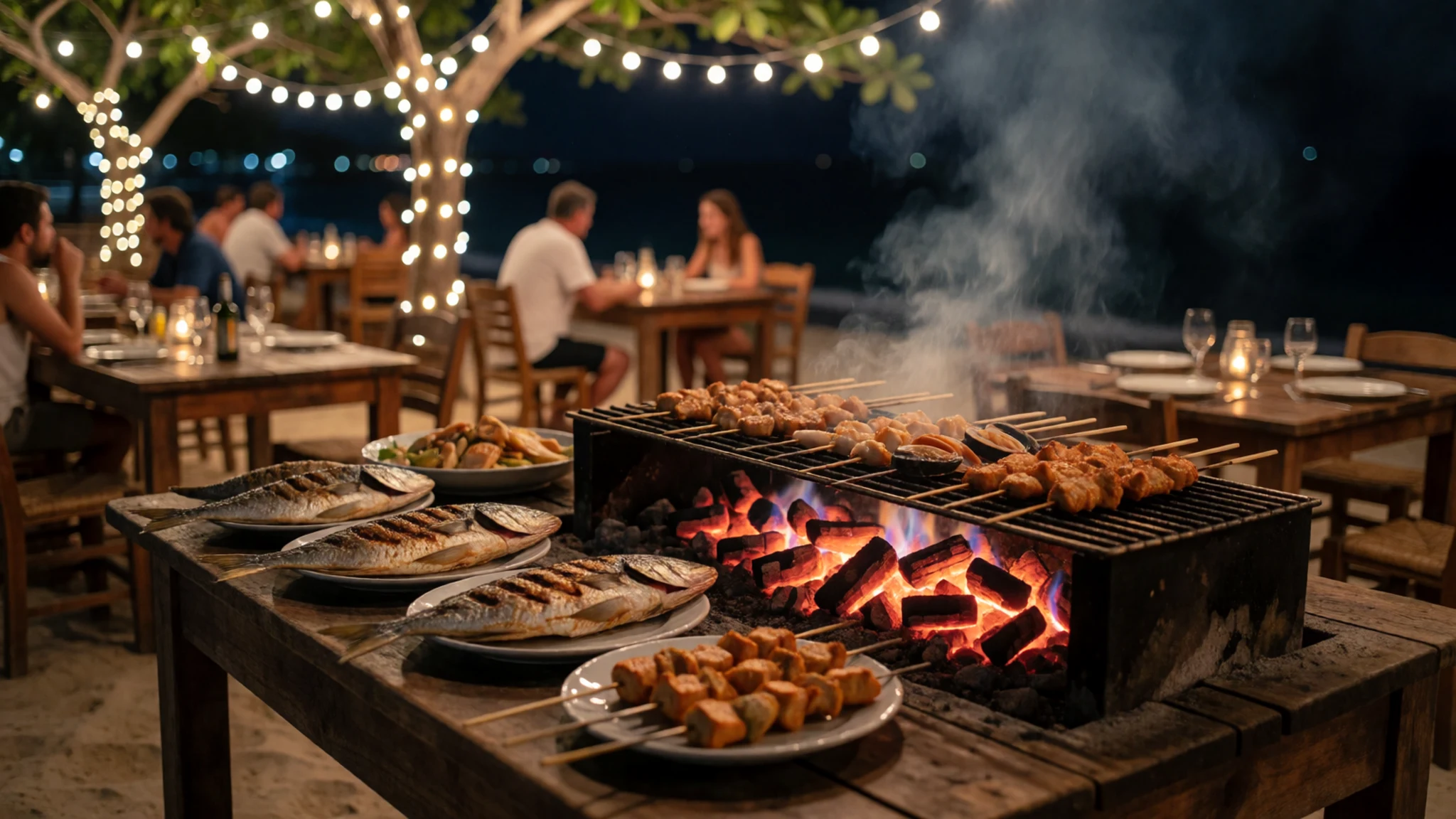
- Kerabu — Local cafés and stalls serving Malay home cooking
Kerabu is a Malay salad of finely sliced herbs, vegetables and sometimes shredded meat or fish, dressed with lime and chilli. It is light and fresh, a good counterpoint to fried dishes after a hot afternoon on the water. Look for it on the menus of the simple local cafés. - Fried noodles with egg — Any simple café along Coral Bay
Stir-fried noodles with vegetables and egg are a reliable choice at the budget eateries that line the sand. They come with a range of styles, including Chinese and Malay versions. Portions are generous, and they make a good lunch between snorkel sessions. - Fresh grilled fish — The restaurants along Long Beach, Perhentian Kecil
Fish caught in the surrounding waters is often grilled with garlic, chilli or lime, depending on the cook. Freshness varies, so ask what came in that morning. Eat it with rice and a cold drink on the beach for a simple, classic island meal.
Plan it
Best time. February to October brings calmer seas and better conditions for diving, when the water is at its most settled. November to January is the heavy monsoon season, when most resorts and ferries close and only a daily boat serves the fishing village on Kecil.
How long. 3–4
Getting there. The most common route is a speedboat from Kuala Besut. The nearest airports are Kota Bharu and Kuala Terengganu, both with near-hourly links to Kuala Lumpur and occasional flights to other Malaysian cities; the final leg is by boat.
Budget. mid
Tips
- Book dive trips and boat transfers ahead in peak season
- Arrive early at Coral Bay for a seat at sunset
- Carry some cash, as small eateries and stalls may not take cards
- Bring a refillable bottle and reef-safe sunscreen
- Expect short, heavy thunderstorms and keep electronics dry
Etiquette
- Carry your rubbish off the boat rather than leaving it on the beach
- Do not touch or stand on the coral when snorkelling
- Ask before photographing people in the fishing village
Nearby
Sources
- Wikidata Q2070782 (CC0)
- Wikipedia: Perhentian Islands (rev 1364107037) (CC BY-SA 4.0)
- Wikivoyage: Perhentian Islands (rev 5338104) (CC BY-SA 4.0)
- Vyacheslav Argenberg, Perhentian Besar West beach 2 (CC BY 4.0)
- Lijun, Pulau Perhentian (CC BY 3.0)
- Vyacheslav Argenberg, Perhentian Besar Marine National Park Boat (CC BY 4.0)
- Fizysam, Afternoon scenery of Perhentian Island (Big) (CC BY-SA 4.0)
- Angelo DeSantis, An old one for me (CC BY 2.5)
- pitti, Beach Perhentian (CC BY-SA 2.5)
- yeowatzup, Blue Ring Angelfish, Pulau Perhentian (CC BY 2.5)
- Rickard Zerpe, Brown-Banded Pipefish (CC BY-SA 2.0)


