Peggy's Cove
Peggy's Cove, Canada
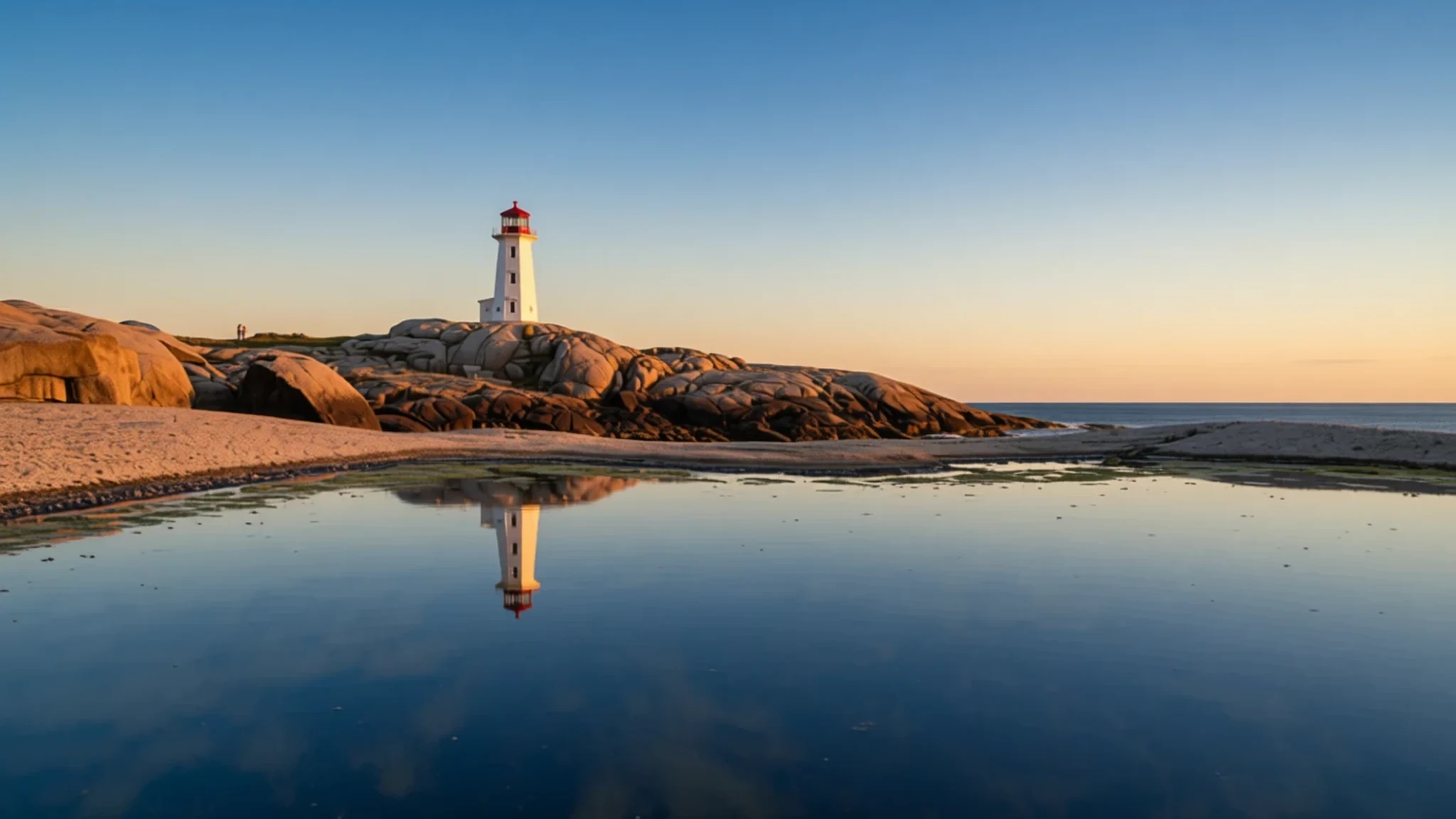
A tiny fishing village on Nova Scotia's Atlantic coast, built on bare granite and watched over by a lighthouse that appears in countless photographs.
The place
Peggy's Cove is a small fishing community on the eastern shore of St. Margarets Bay, within the Halifax Regional Municipality of Nova Scotia, Canada. It sits about 10 metres above sea level on a landscape of smooth, pale granite that the ice shaped over a very long time, with the open Atlantic beyond. The cove is a sheltered inlet, and the village clusters around it on rock rather than soil. Its landmark is the lighthouse, established in 1868 on a bare outcrop above the waves, and it is the reason most visitors come. Halifax lies roughly 43 kilometres to the north-east, which makes the village an easy day trip, although the road feels far removed from the city once you arrive. Residents still fish for lobster from boats moored in the cove. The coastline is steep and exposed, and in rough weather spray can reach the paths. Tourism overtook fishing as the main source of income after the Second World War, yet the village has kept a rustic look. Strict land-use rules limit new building, and restrictions on who may live there year-round stop property values from climbing beyond the reach of local families. Midday crowds are common in summer, and the quieter hours tend to be early or late.
Its story
Peggy's Cove takes its name from the wider bay it sits on, probably Saint Margaret's Bay, where Peggy is a common nickname for Margaret. Before the village had its present name, the cove appeared in 1766 as Eastern Point Harbour or Peggs Harbour. Much folklore has grown up to explain the name. One popular legend tells of a shipwreck near the offshore rock called Halibut Rock, from which a single young survivor reached the shore. A local artist and resident, William E. deGarthe, described her as a young woman, while others say she was a small girl too young to recall her own name. The family who took her in called her Peggy. She later married a man from the cove and became known as Peggy of the Cove, and visitors from around the bay began calling the place after her nickname. Historians treat the story with caution, but it has stuck. Settled in 1811, the community took shape after the province handed out land to six households of German ancestry. Fishing was the mainstay of their economy, though they farmed where the soil allowed and pastured cattle on the surrounding land. At its busiest the community had a schoolhouse, a church, a general store, a lobster cannery and boats of every size crowded into the cove. Artists and photographers began to arrive, and better roads brought more visitors. In 1937, a simple shack in the village was turned into the first public gallery for art, and it also housed a tea room and a gift shop. Later storms, including the hurricanes of the early 2000s, damaged the breakwater, roads and homes, and washed away one of the cove's wooden fish sheds. Today the village is smaller, but it remains an active fishing community and a favourite destination.
What to see
- Peggy's Cove Lighthouse
The lighthouse is the village's defining sight, a squat white tower on a rounded outcrop of granite. It has been guiding ships since 1868, and its position makes it one of the most photographed lighthouses in Canada, as local tourism material proudly claims. Early morning and late evening give the best light and fewer people. Keep to the marked paths around the base, because the rock beyond them is slippery and the drop to the water is steep.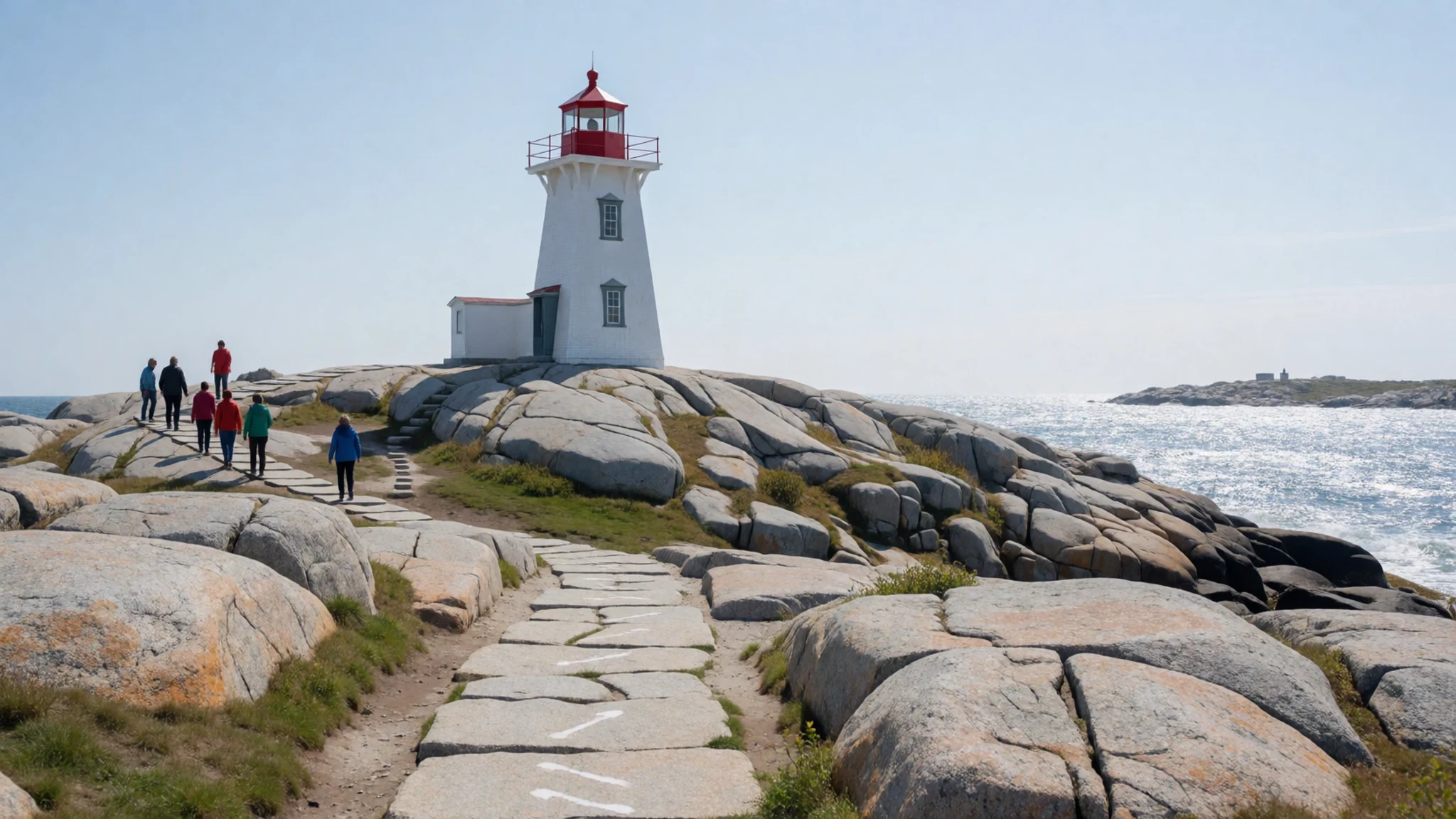
- The harbour and fishing cove
The cove itself is the working heart of the village, with wooden boats, lobster traps and fish sheds set against the rock. Walking the paths around the harbour gives you a sense of how the community has lived from the sea for generations. The breakwater has been damaged by storms in the past, so stay behind any barriers and treat the edges with respect, especially when waves are running high.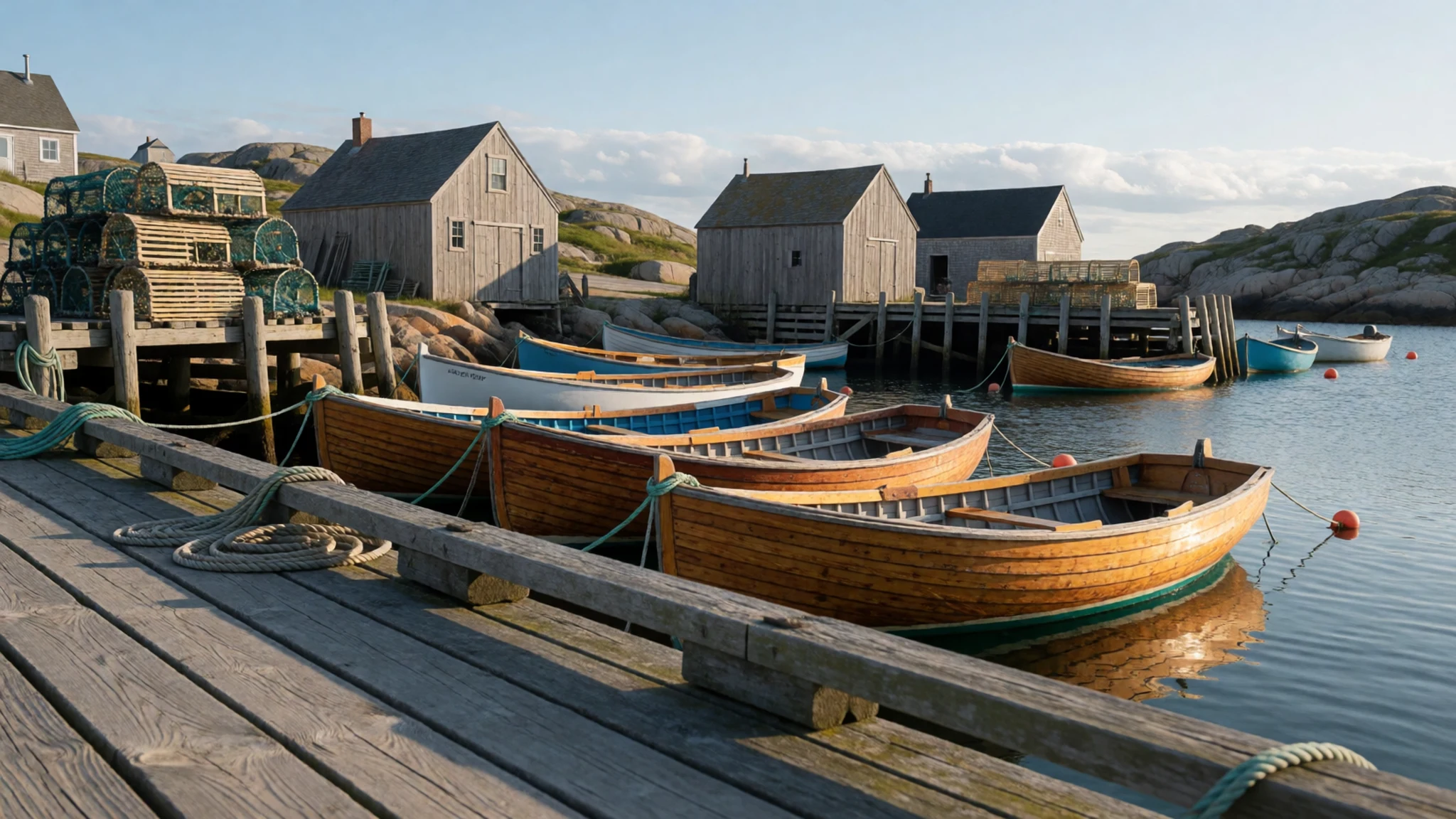
- Bayswater Beach Provincial Park
A few kilometres from the village, this park has a large white-sand beach, a picnic area with views of the open ocean, barbecue grills, change rooms and toilets. Lifeguards supervise swimming in July and August, and the sand is a welcome change from the rock. Water in this part of the Atlantic stays cold even in summer, so a short paddle is often enough for most visitors.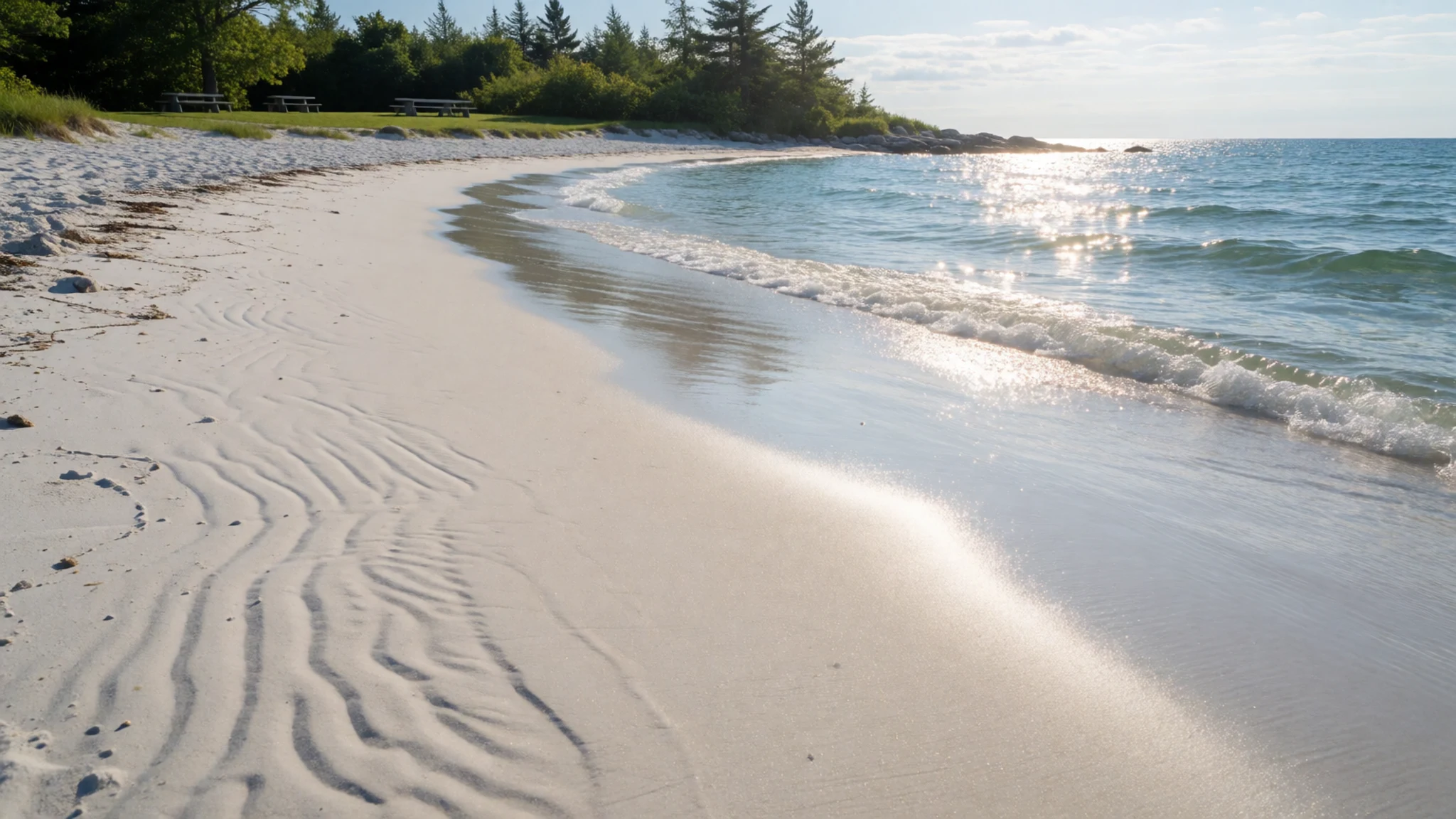
- The Swissair memorials
Two memorials commemorate the victims of the Swissair crash that came down in the ocean just off the coast in 1998, with all passengers and crew lost. One stands at Whalesback, a short distance north of the village, and the other at Bayswater near the beach park. They are quiet, reflective places, and visitors should treat them with the seriousness they deserve.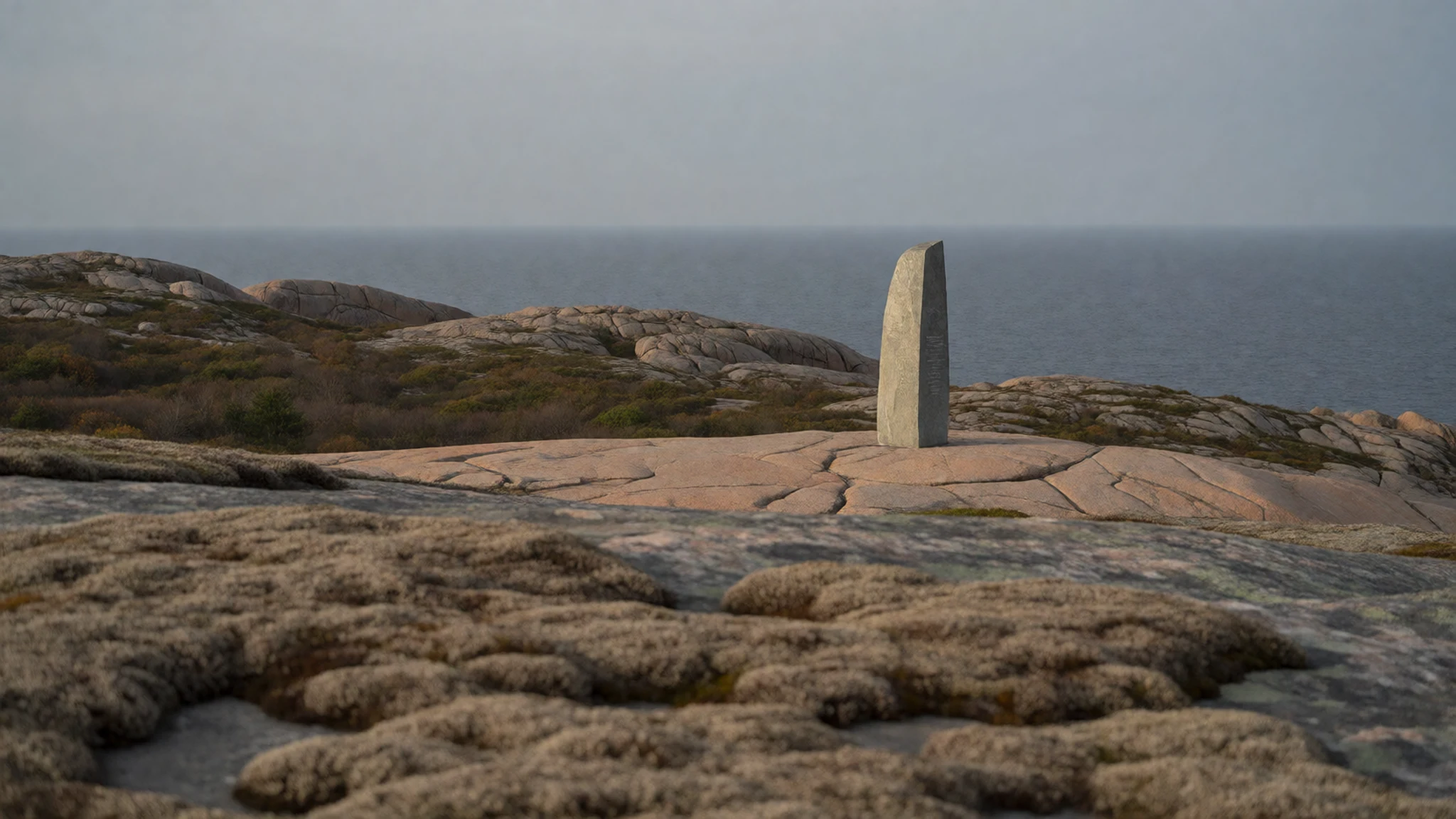
Culture
Peggy's Cove is a working fishing community first and a tourist stop second, and locals still go about their routines around the boats, traps and sheds. Land-use rules protect the village's modest look, which means there is little new development, and many houses are private homes rather than shops or cafés. The village church, St. John's Anglican, is a municipally designated heritage site and is still used for worship, so keep voices low when you walk past it. Lobster boats move in and out of the cove throughout the day, so give fishermen space on the wharf and do not wander into working areas. Visitors have long enjoyed photographing the lighthouse and the rocks, and most people are happy to be included in the frame, though it is courteous to ask before photographing someone close up. The cove has a serious safety record on its exposed rock, and the signs are not exaggerated. Stay well back from the edge, and never step onto the wet black rocks that the waves reach, however calm the sea looks.
What to wear
Peggy's Cove has no formal dress code, but its fishing heritage shows in what people wear. Traditional working clothing on the Nova Scotia coast was built for wind, spray and cold water. Heavy oilskin or waxed-cotton jackets and sou'westers, the wide-brimmed waterproof hats that give the local restaurant its name, were the standard gear for men at sea. Hand-knitted wool sweaters, often in undyed cream or navy, kept fishermen warm when wet, since wool retains warmth even when damp. Those knitting traditions survive in shops and craft stalls around the Maritimes, and some visitors buy a wool sweater as a souvenir. Today the village dresses much as coastal communities do elsewhere, with rubber boots, waterproof jackets and practical layers for the working day, and visitors seen in town tend to wear the same. For your own visit, dress in layers that can handle sudden wind and drizzle, because the weather on the coast can turn within an hour. Choose shoes with real grip, such as rubber-soled trainers or walking boots, since granite is slick when wet and the paths can be steep. Leave the heels and smooth-soled shoes at home, and bring a warm hat even in summer.
What to eat
- Seafood chowder — harbour-side restaurants in the village, such as Sou'wester
A creamy chowder built on local fish and shellfish is the dish most often recommended in the village. It is usually served hot in a bowl with bread, which makes it a good lunch on a cool, windy day. Look for it on the menu of the harbour-side restaurant Sou'wester, which also serves plenty of fish and seafood. Ask whether the chowder is made that day, since the best bowls are often the freshest.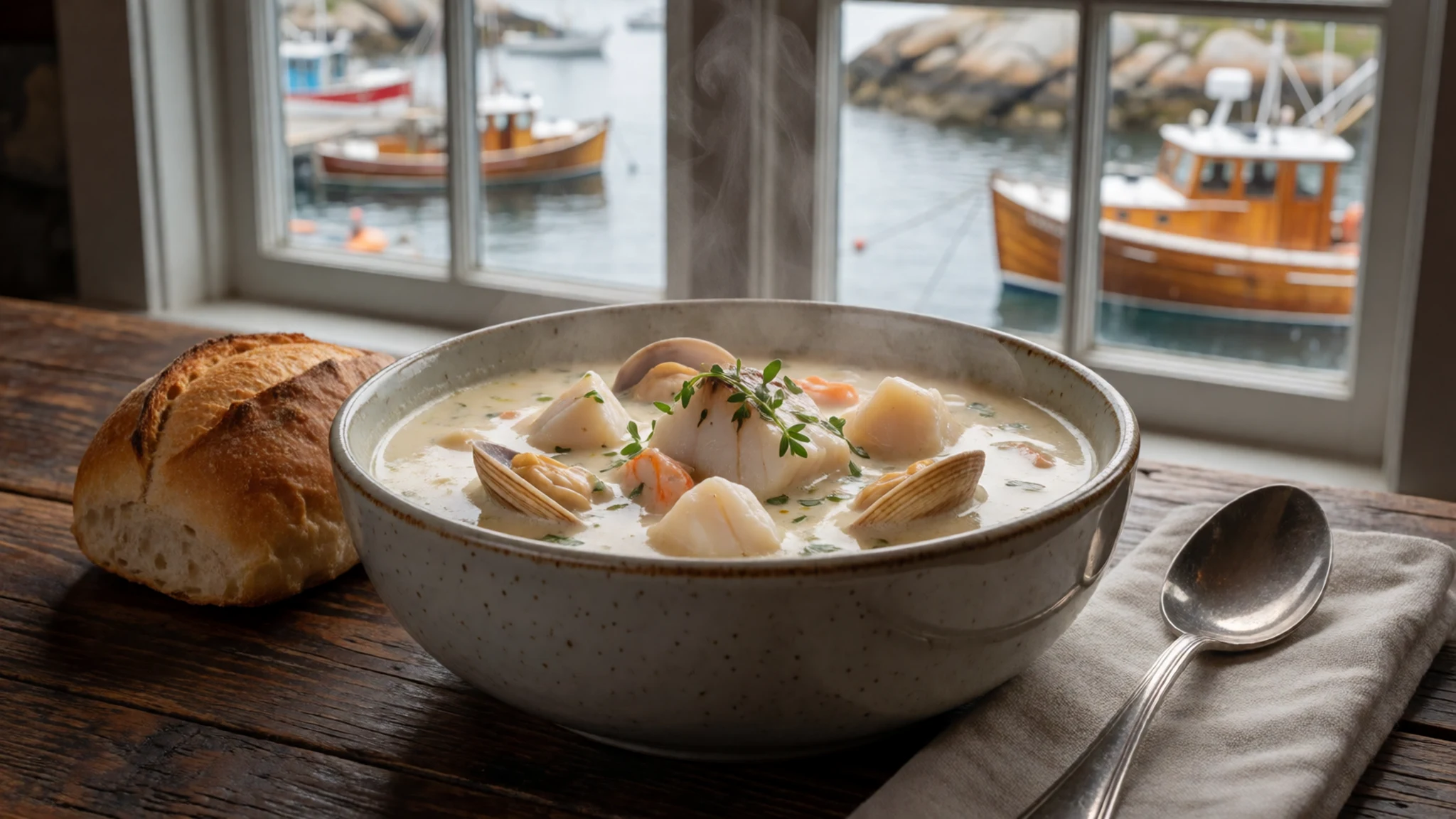
- Lobster — waterfront restaurants and the boat cruises that run from the cove
Nova Scotia lobster is a regional speciality, and the village's boats still take it from the cove. Some restaurants serve whole lobsters, while others offer lobster rolls in a bun with a little mayonnaise. Lobster dinner cruises from the cove are another way to eat it while watching the coast go by. Prices vary with the season, so check menus before ordering.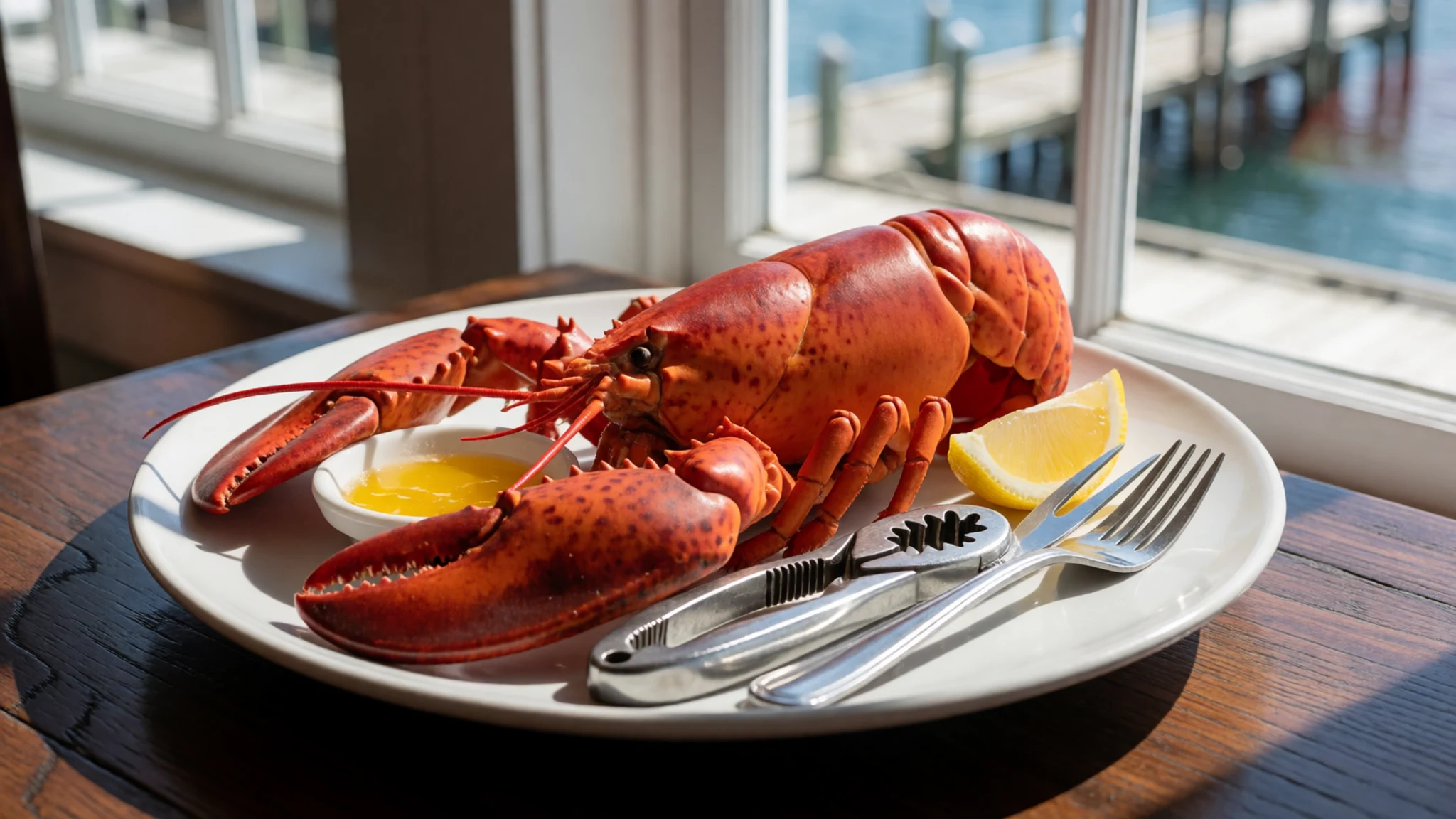
- Pub-style fish and chips — village pubs and the waterfront pub-style restaurants
Battered fish with chips is the classic pub meal here, and the menus at the bigger pubs lean heavily on seafood. The fish is usually haddock or cod, served with tartar sauce and malt vinegar. It is a filling option after a long walk on the rocks. Some pubs also offer local craft beer alongside it. - Hot dogs from a village stand — takeaway stands near the lighthouse road, such as Peggys Dogs
A simple hot dog from a takeaway stand makes a quick snack between photo stops. It suits the crowds in summer, when sit-down restaurants fill quickly. The stands are most useful at midday, when tour groups arrive and the queues at the sit-down places grow long.
Plan it
Best time. Late May to June and September to October suit most visitors, since the crowds are thinner and the weather is calmer than in midsummer. Summer is busy and warm, while October to December are the wettest months, bringing fog and damp to the coast. Autumn often gives clear, cool days with good light for photographs. Winter is cold and windy, and some services close.
How long. 1–2
Getting there. There is no public transport to the village. Halifax Stanfield International Airport is the nearest major airport, and from the city you can rent a car, book a taxi, or join a bus tour, which is the most common option. The drive from Halifax takes about 45 minutes by road, and the single access road into the village runs off the main highway to the south-west of the city.
Budget. mid
Tips
- Arrive at sunrise or in the early morning to find the lighthouse with few people around
- Plan a visit in late spring or early autumn to avoid the busiest summer weeks
- Bring a windproof layer and grippy shoes, even on a sunny day
- Carry water and snacks, because there are limited food stops beyond the village
- If you travel on a bus tour, check the return time before you set off to avoid being stranded
Etiquette
- Keep well back from the rock edges and stay off wet, black rocks
- Ask before photographing residents or working fishermen up close
- Keep noise low near the church and around the working cove
Nearby
Sources
- Wikidata Q1021695 (CC0)
- Wikipedia, Peggys Cove, Nova Scotia (rev 1382848655) (CC BY-SA 4.0)
- Wikivoyage, Peggy's Cove (rev 5414084) (CC BY-SA 4.0)
- Photo: Harbour of Peggys Cove, Nova Scotia (Aconcagua) (CC BY 3.0)
- Photo: Peggy's Cove Lighthouse, NS (Shawn M. Kent) (CC BY 1.0)
- Photo: Peggys Cove from Flight 111 Memorial (Josephbrophy) (Public domain)
- Photo: Swissair 111 Memorial in Indian Harbour (Public domain)
- Photo: 1998-07-18 Peggy's Cove Hafen1 (Eduard47) (CC BY-SA 4.0)
- Photo: 1998-07-18 Peggy's Cove Hafen2 (Eduard47) (CC BY-SA 4.0)
- Photo: Peggy's Cove, Nova Scotia, Canada (308) (Public domain)
- Photo: Peggy's Cove, Nova Scotia, Canada (326) (Public domain)


