Palais des Papes
Palais des Papes, France
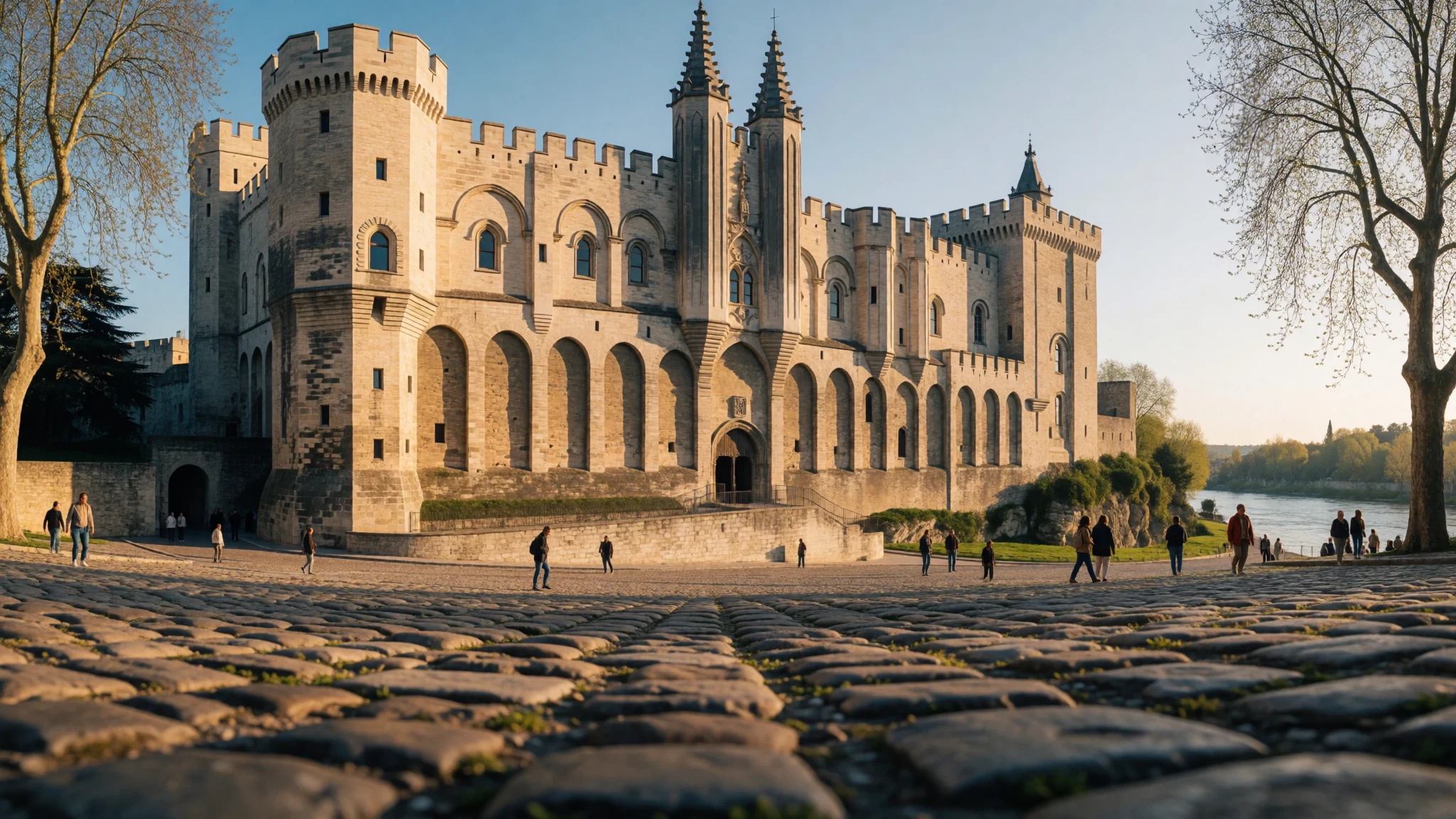
The Palais des Papes in Avignon is a Gothic fortress-palace where popes lived, governed and held conclaves for much of the 14th century.
The place
The Palais des Papes crowns a rocky outcrop at the northern edge of Avignon, in southern France, with the river Rhône running below. The rock mattered long before any pope arrived, because it gave the local bishops a defensible, river-facing site. Seen from the square, the palace looks like a fortress: tall pale walls, few openings, square towers. That severity is deliberate, since the building was a home, a government office and a stronghold at once. It is really two palaces joined together. The older, plainer wing was built for Benedict XII, and the newer wing, added under Clement VI, was designed to impress and is more decorative. Between them lie courtyards, chapels, great halls and private rooms where popes lived and where six conclaves elected new popes. Today the building is both a palace and an art museum, and most visitors to Avignon plan their day around it. The surrounding old town is walled and compact, so the palace sits within easy walking distance of the ruined bridge, several small museums and plenty of café terraces. The square in front is the natural meeting point and fills up by late morning, particularly in summer, when the pale stone throws the heat back at everyone waiting in the queue. For tickets, opening hours and guided-tour options, check the official site at https://www.palais-des-papes.com.
Its story
The Palais des Papes exists because a pope decided not to live in Rome. In 1309 Clement V, a Gascon who had been elected a few years earlier and had no wish to deal with the turmoil of the Italian capital, moved the papal court to Avignon. He stayed as a guest in a Dominican monastery, and his successor John XXII built up a splendid household, but there was still no purpose-built papal residence. The hill already held the old palace of the bishops of Avignon, and that became the starting point for everything that followed. Serious rebuilding began under Benedict XII, who reigned from 1334 to 1342, and later popes carried the work on until 1364. The architect Pierre Poisson of Mirepoix designed the older wing at Benedict's request, and the newer wing followed in a second phase. The bill was huge, and the papal treasury felt it for years. For much of the 14th century, Avignon was a seat of Western Christianity. Conclaves held inside the palace chose Benedict XII, Clement VI, Innocent VI, Urban V and Gregory XI, and a later one chose Benedict XIII. The story also has an awkward chapter, when the papacy was divided, with one pope in Rome and another in Avignon, each claiming legitimacy. That split gives the palace much of its odd historical weight.
What to see
- Cour d'honneur — Inside the Palais des Papes
The Cour d'honneur is the main courtyard, where the palace's two wings meet and the scale of the place becomes clear. Tall stone façades rise on every side, and in summer the space doubles as an open-air stage for the city's theatre festival. Go early or late for kinder light and thinner crowds, as the stone holds heat by midday.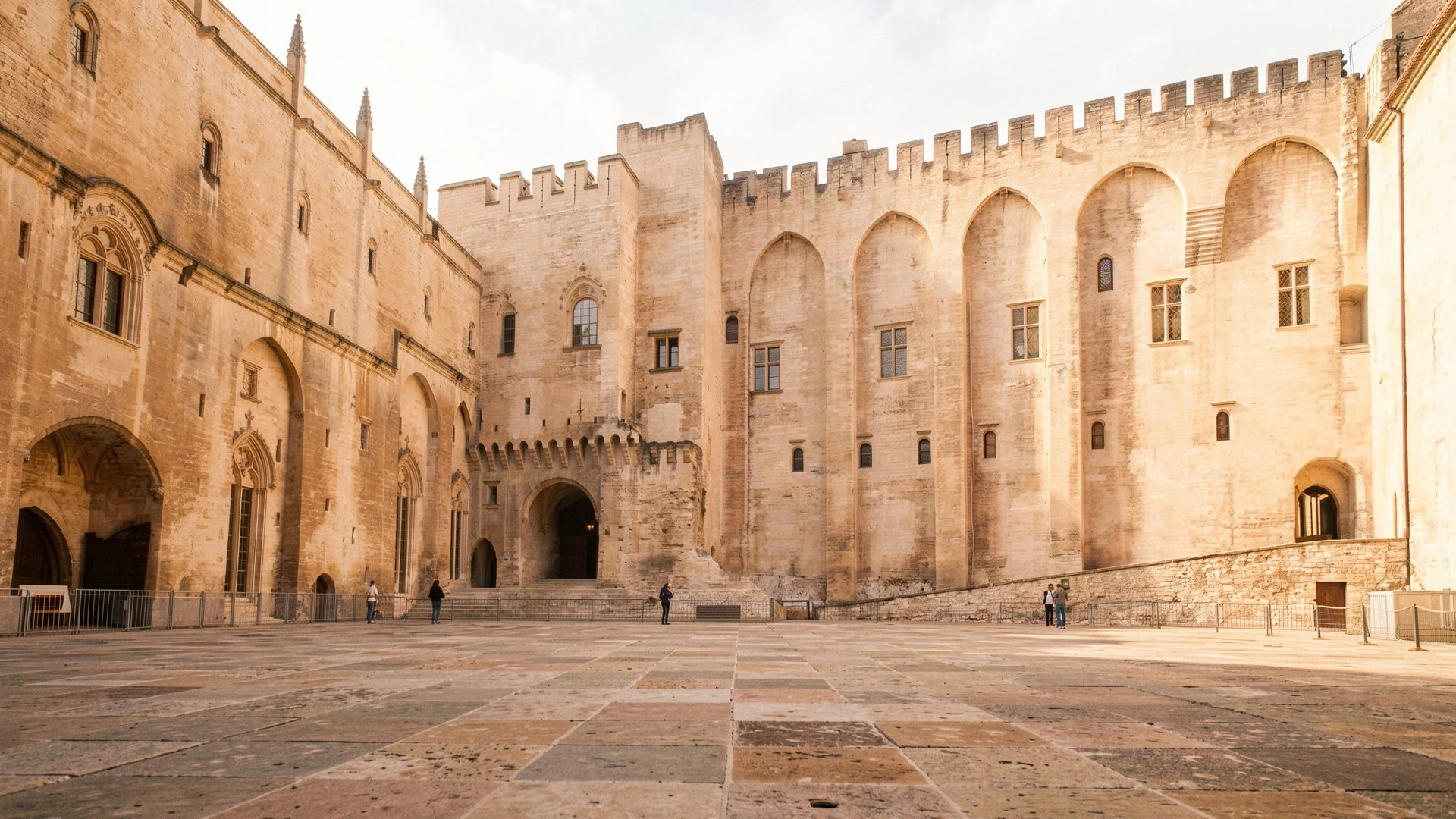
- Chambre du cerf — Inside the Palais des Papes
The Chambre du cerf is a private room whose walls are painted with hunting, fishing and garden scenes, a lighter, more worldly side of papal life than the chapels suggest. The pictures are full of trees, dogs and figures at leisure. Allow time to stand still and look closely, because the details are small and the light inside is low.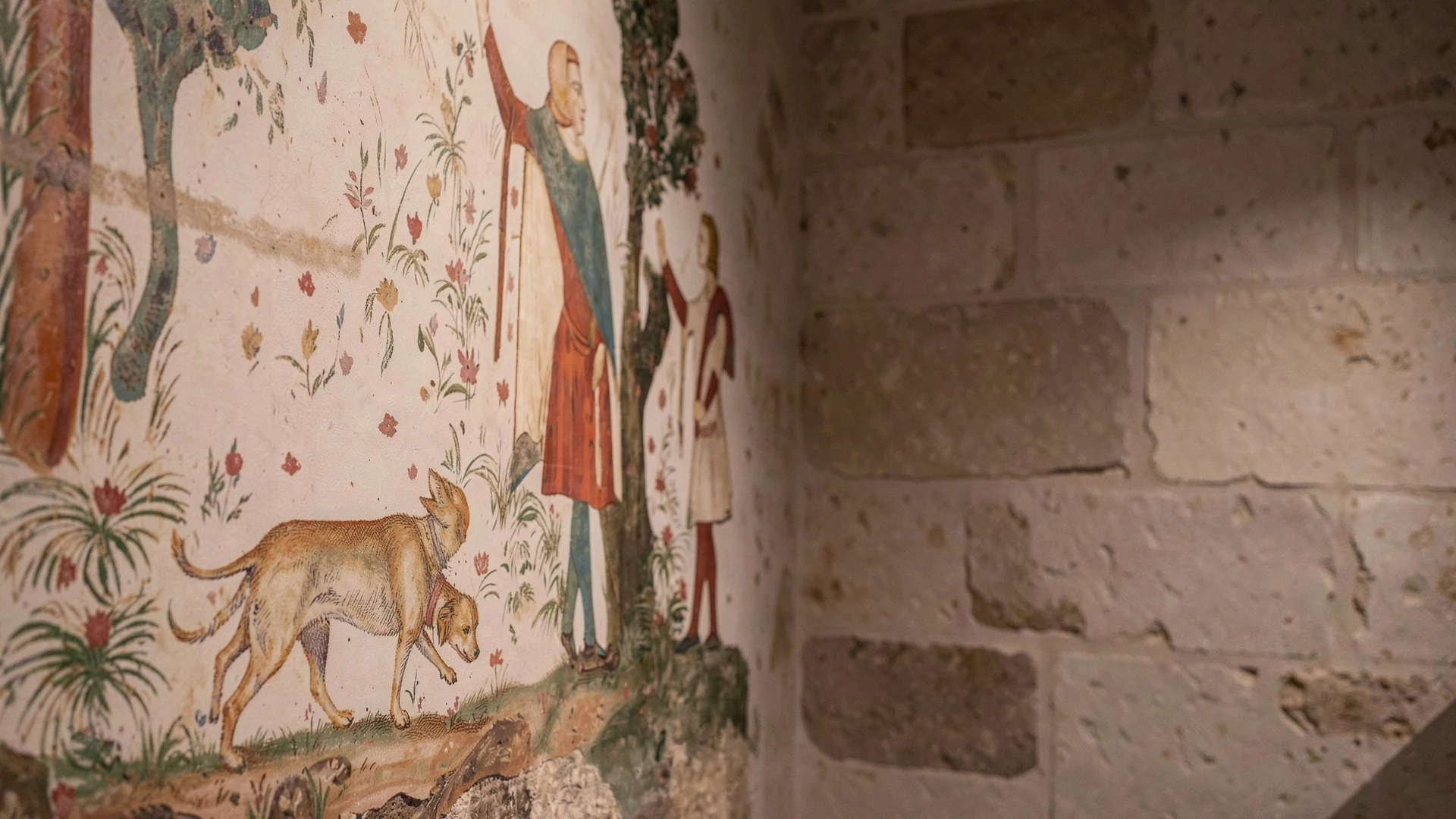
- Chapelle Saint-Martial — Saint-Jean tower, Palais des Papes
The Chapel of Saint Martial, in the Saint-Jean tower, is covered in painted scenes from the saint's life, with figures spread across the vaulted ceiling. The colours are far richer than the plain exterior prepares anyone for. The chapel is small and groups queue, so a few quiet moments with your head tipped back are worth waiting for.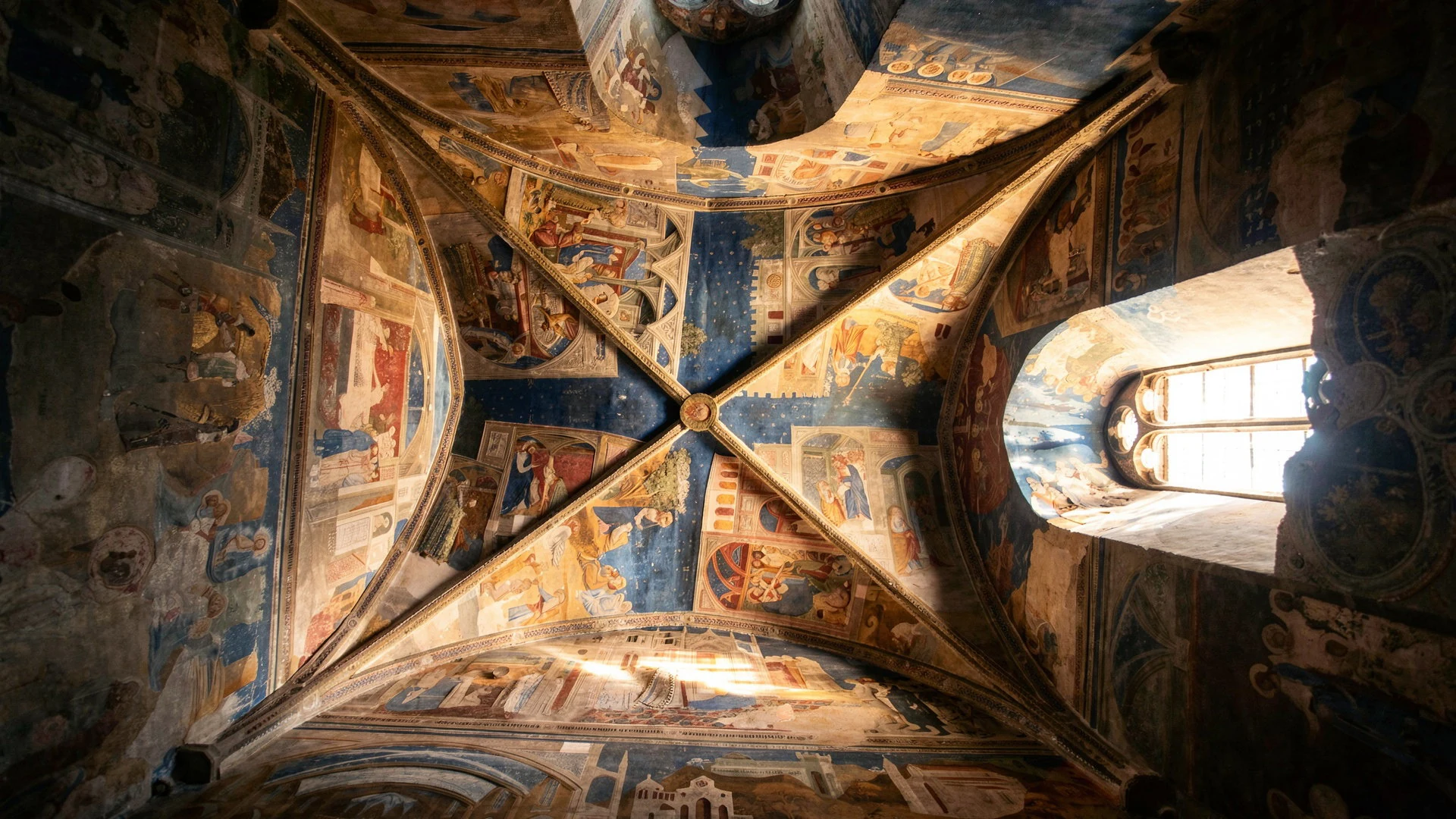
- Pont Saint-Bénezet — Riverside, below the palace rock
Pont Saint-Bénezet is the ruined medieval bridge a short walk from the palace, known across France from the song about dancing on it. Only part of it still reaches into the Rhône. It was built before the popes arrived, perhaps partly so the local bishop could cross the river. The riverside walk gives a good view back towards the palace.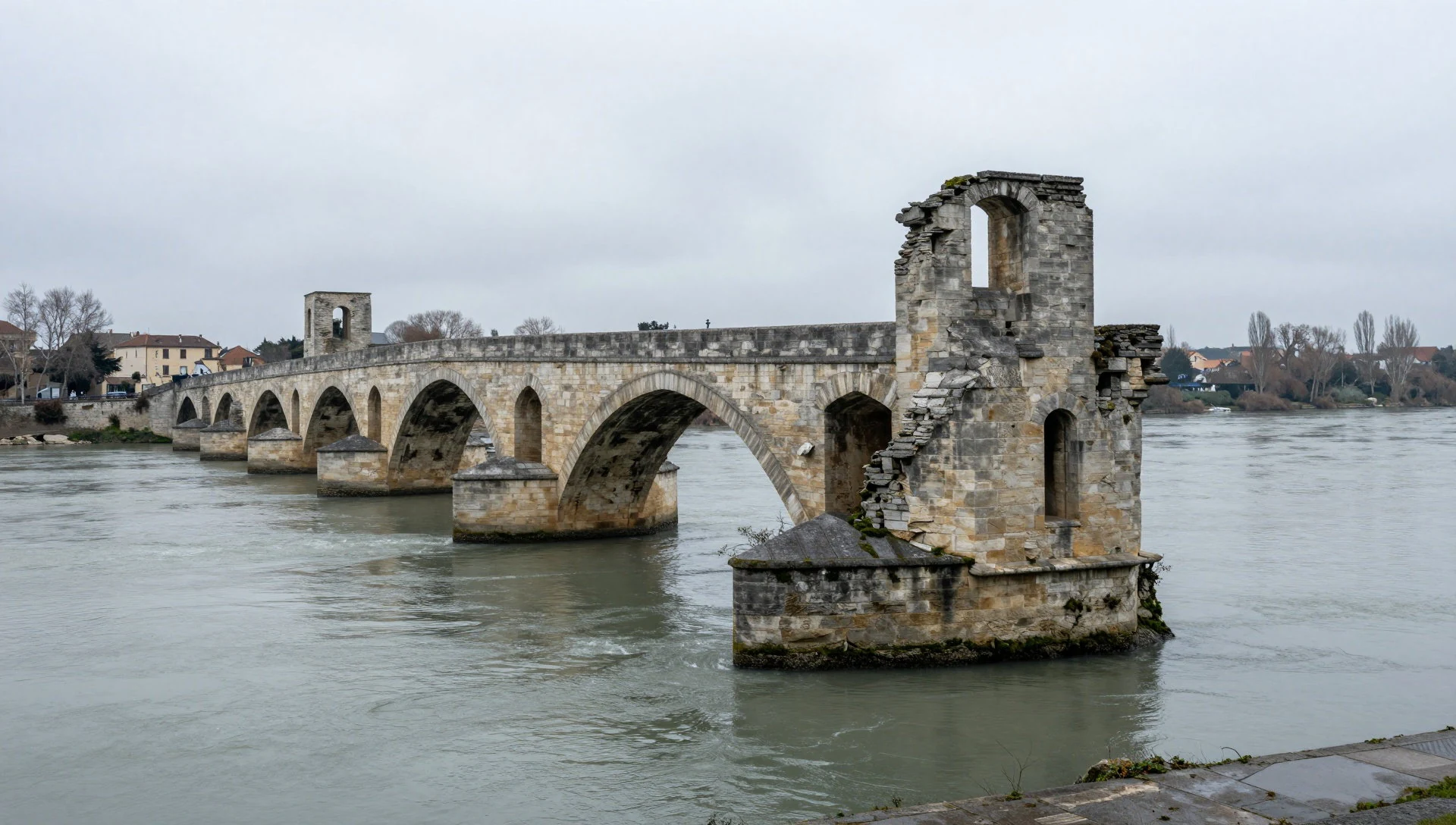
- Musée du Petit Palais — Place du Palais, next to the Palais des Papes
The Musée du Petit Palais occupies the former Archbishops' Palace right beside the papal palace. Its collection of medieval and early Renaissance paintings by Italian and French artists includes major works on loan from the Louvre in Paris. It suits a quieter hour after the big palace, keeping the same period in view from a different angle.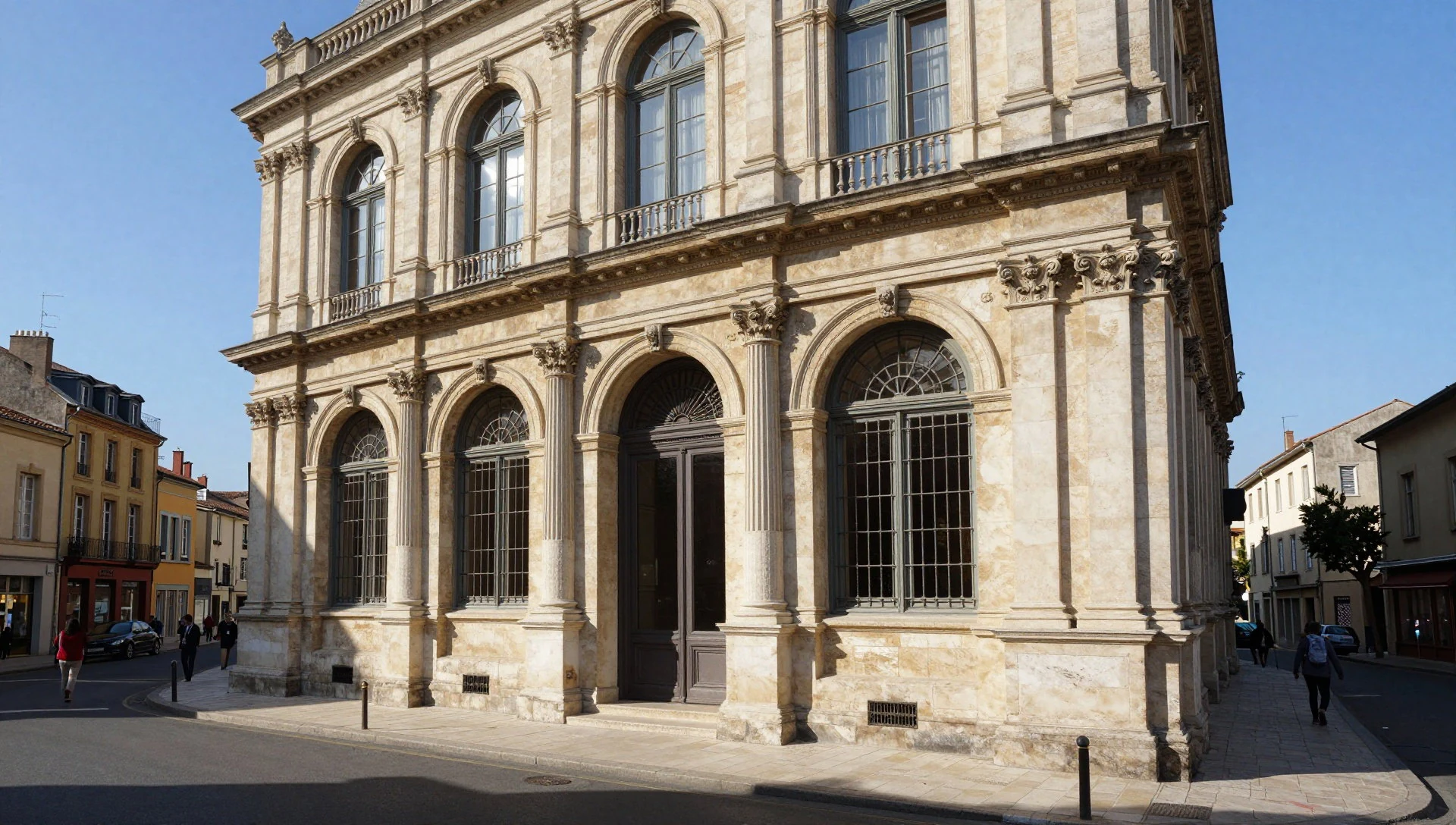
- Collection Lambert — South of the palace, old town
Collection Lambert is a contemporary art museum that grew from the private collection of Yvon Lambert. It sits a short walk south of the palace and makes a sharp contrast with medieval Gothic: modern installations and paintings in a city otherwise defined by its past. Check the museum's own site for current shows, as exhibitions change.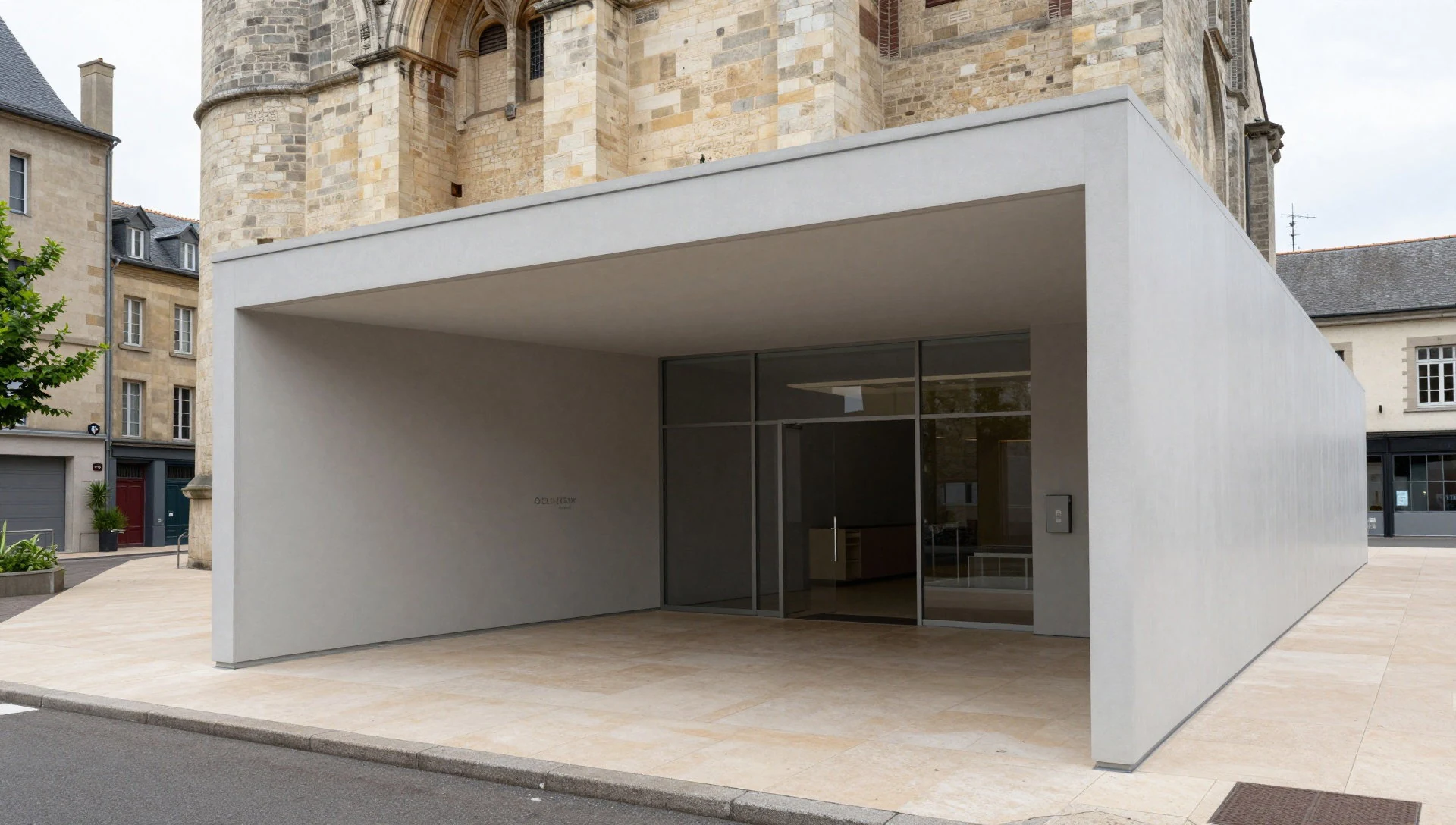
Culture
The Palais des Papes is a reminder that Avignon was once the administrative centre of Western Christianity, and that history still colours the city's sense of itself. Local culture is Provençal, with Occitan roots: in Occitan the palace is called lo Palais dei Papas, and regional language and traditions are celebrated alongside French. The papal legacy shows up in the wine as well, since Châteauneuf-du-Pape, 'the Pope's new house', is made in the Rhône vineyards nearby. In summer the city turns to theatre and street performance, with the palace courtyard serving as one of the open-air stages, and the squares fill with performers and audiences. Faith is part of the picture, but the palace is now a heritage site and museum rather than a working church, so the mood is closer to a museum visit with a few chapels along the way. Daily rhythm is southern: lunch is long, dinner is late by British standards, and some small shops close in the middle of the day. Locals also notice small courtesies, and a greeting costs nothing. Etiquette: say 'bonjour' when you enter a shop, café or ticket desk, keep your voice low in the chapels, and follow any signs or staff instructions about photography inside the rooms.
What to wear
Fashion around the Palais des Papes in Avignon follows the habits of Provence, where traditional dress is best remembered through the Arlésienne style: a long full skirt, a fitted bodice, a lace-edged shawl or fichu over the shoulders, and a ribbon-trimmed headdress. Provençal printed cottons, with small repeating floral motifs in strong colours, are the textile most associated with the region and appear in skirts, tablecloths and quilts. Costume is worn today mainly at festivals, folklore parades and traditional celebrations, not in daily life. Day to day, people in Avignon dress in a relaxed, neat southern French way: linen shirts, light cotton dresses, chinos, sandals or trainers in summer, and layers with a scarf or light jacket in cooler months. Colours lean to neutrals, blues and whites, and sunglasses are close to universal. Visitors should plan for strong sun in summer, with light breathable fabrics, a hat and sunscreen. The streets and palace floors are stone and often uneven, so comfortable closed shoes with grip are wiser than thin flip-flops. There is no dress code listed in our sources, but covering bare shoulders is a courtesy in chapels and churches, and the official site is the place to check for any rules. In winter and spring, a windproof layer helps, since the mistral can blow sharply across the open rock.
What to eat
- Châteauneuf-du-Pape — Wine bars and cellars in the old town, or tasting rooms in the villages nearby
The wine most associated with the Rhône valley around Avignon, its name meaning 'the Pope's new house'. The reds are the famous ones, though there are good whites too. Order a glass with lunch first, then decide whether a bottle is worth it.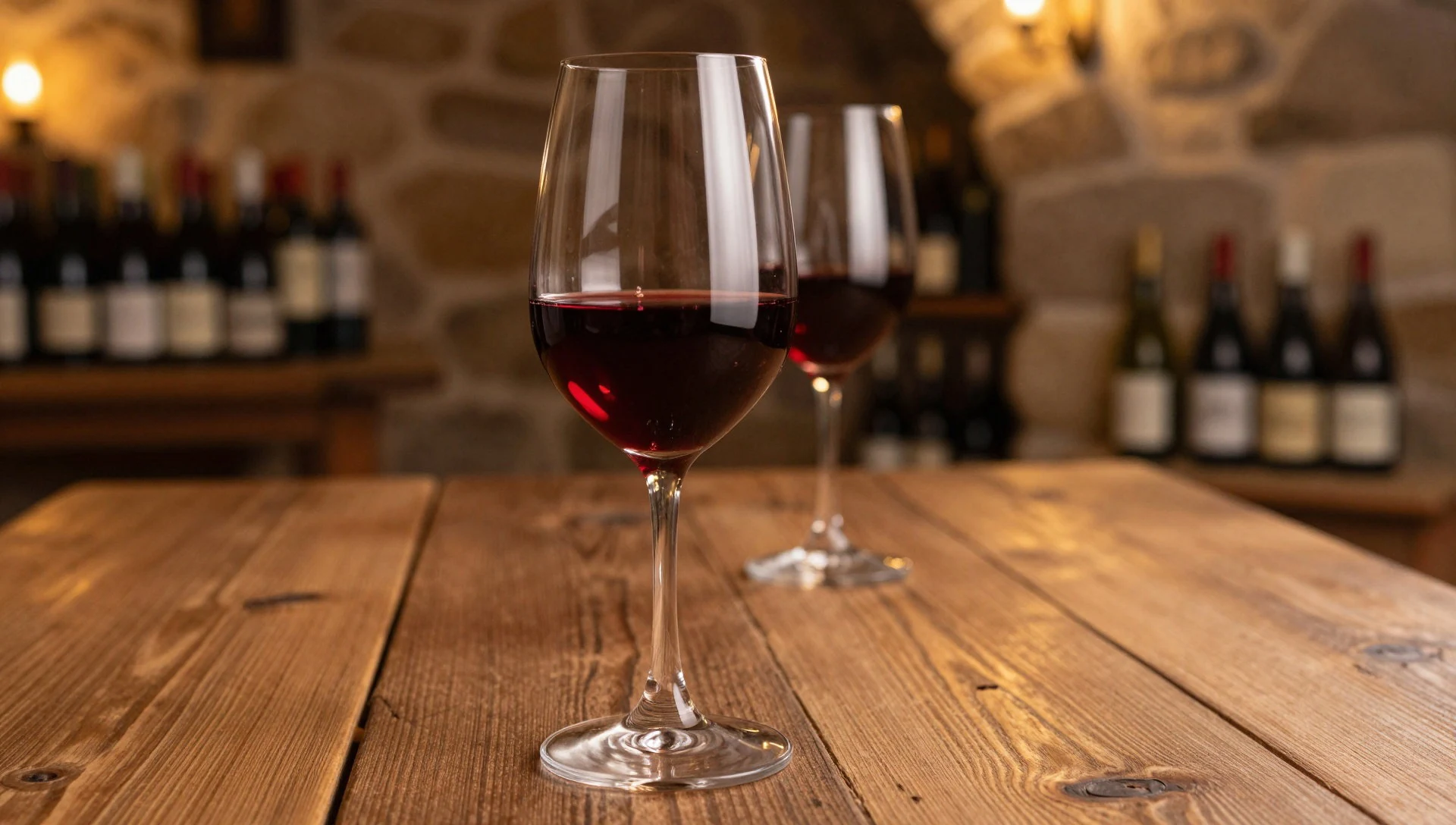
- Southern Rhône white wine — Café terraces and wine bars around the old town squares
Whites from the same valley are less celebrated than the reds but worth ordering in warm weather. Served cool on a terrace, they pair well with fish, goat's cheese and the herb-led cooking of Provence.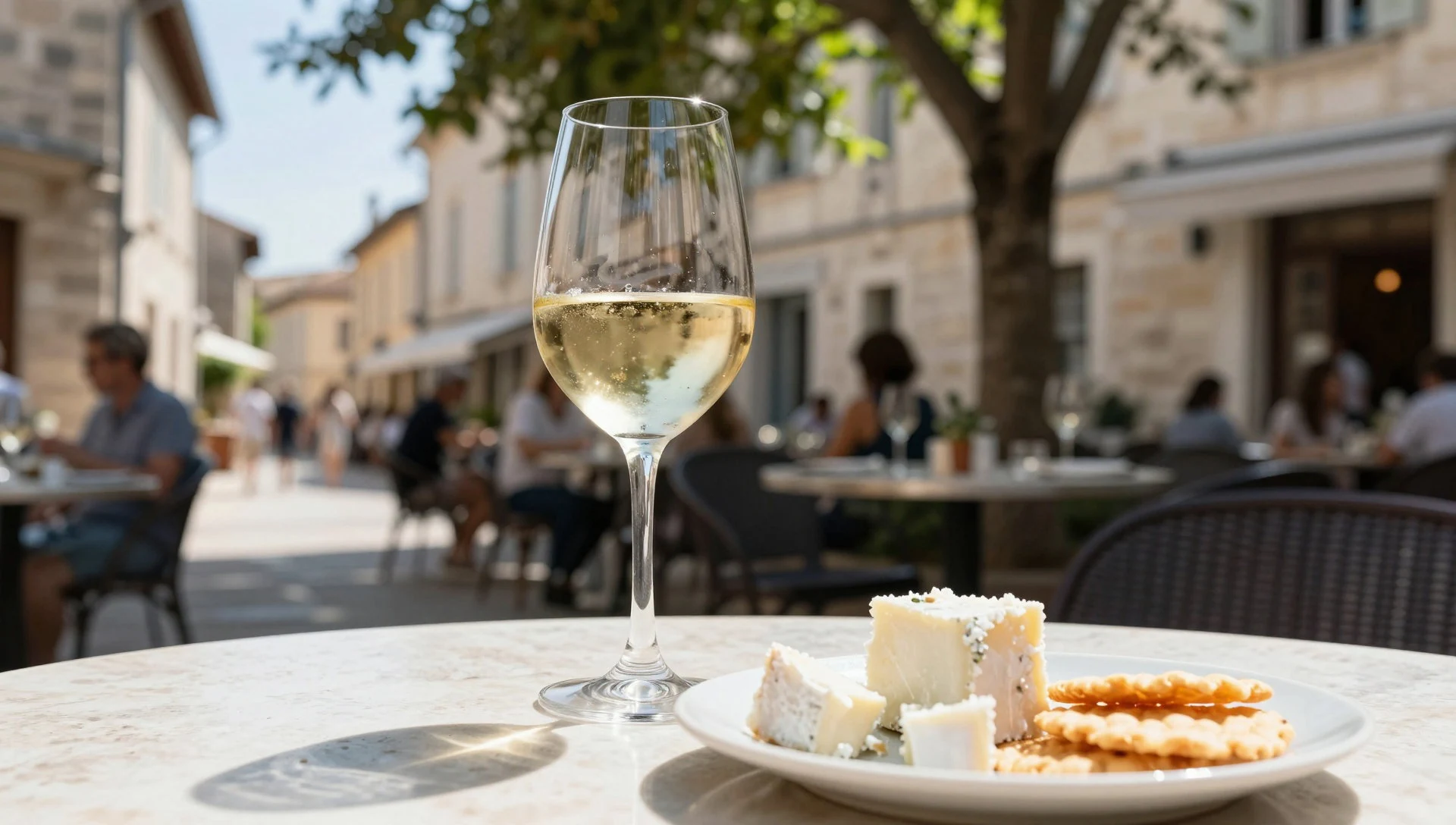
- Daube provençale — Traditional Provençal restaurants and bistros inside the walls
A slow-cooked beef stew in red wine with herbs, orange peel and sometimes olives, suited to a cool evening. The meat is cooked until it falls apart and is usually served with pasta, potatoes or rice. - Tapenade and olives — The covered market and open-air stalls in the old town
Tapenade is a paste of olives, capers and anchovy spread on bread as an aperitif. Marinated olives, flavoured with herbs, are sold loose by the scoop. Together with bread and a glass of local wine they make a simple lunch. - Ratatouille — Bistros and lunchtime set menus across the old town
A stew of aubergine, courgette, peppers, tomato and onion cooked in olive oil, eaten warm or cold. It tastes best in summer, when the vegetables come from local growers, and it is a dependable choice for vegetarians.
Plan it
Best time. April and October bring warm, comfortable weather and manageable crowds; June, July and August are the hottest months and busy, and winter is quieter and cooler, with the mistral wind sometimes blowing hard across the palace rock.
How long. 1–2
Getting there. Fly to Marseille Provence Airport, or take a TGV to Avignon TGV station, then a local train or shuttle to Avignon Centre station beside the city walls; the palace is a short walk through the old town. Regional buses use a terminal near the station. Drivers can use the park-and-ride lots with a free shuttle into the walled centre.
Budget. mid
Tips
- Check the official site (https://www.palais-des-papes.com) for tickets, hours and booking windows, and book ahead in summer
- Arrive at opening or in the late afternoon to avoid the midday queue and heat
- Wear comfortable shoes for stone steps and uneven floors
- Carry water and a hat in summer, as the courtyard is exposed
- Combine the palace with Pont Saint-Bénezet and the Petit Palais, which are close by
Etiquette
- Greet staff with 'bonjour' when you enter a shop, café or ticket desk
- Keep your voice low in chapels and follow photography signs
- Do not touch painted walls or frescoes
Nearby
Sources
- Wikidata Q143463 (CC0)
- Wikipedia: Palais des Papes (CC BY-SA 4.0)
- Wikivoyage: Avignon (CC BY-SA 4.0)
- Avignon, Palais des Papes, France — Jean-Marc Rosier (CC BY 3.0)
- Palais des papes à Avignon — François de Dijon (CC BY 3.0)
- Main entrance of the Palais des Papes — Tognopop (CC0 1.0)
- Avignon Papal Palace - Cour d'honneur — Ingo Mehling (CC BY 3.0)
- Les douze tours du Palais des Papes, façades par Viollet-le-Duc — Jean-Marc Rosier (CC BY 3.0)
- Chambre du cerf — Jean-Marc Rosier (CC BY 3.0)
- Plafond de la chapelle Saint-Martial — Jean-Marc Rosier (CC BY 3.0)
- La vie de saint Martial, Prédication du Christ devant saint Martial — Jean-Marc Rosier (CC BY 3.0)


