Palace of the Grand Master
Palace of the Grand Master, Greece
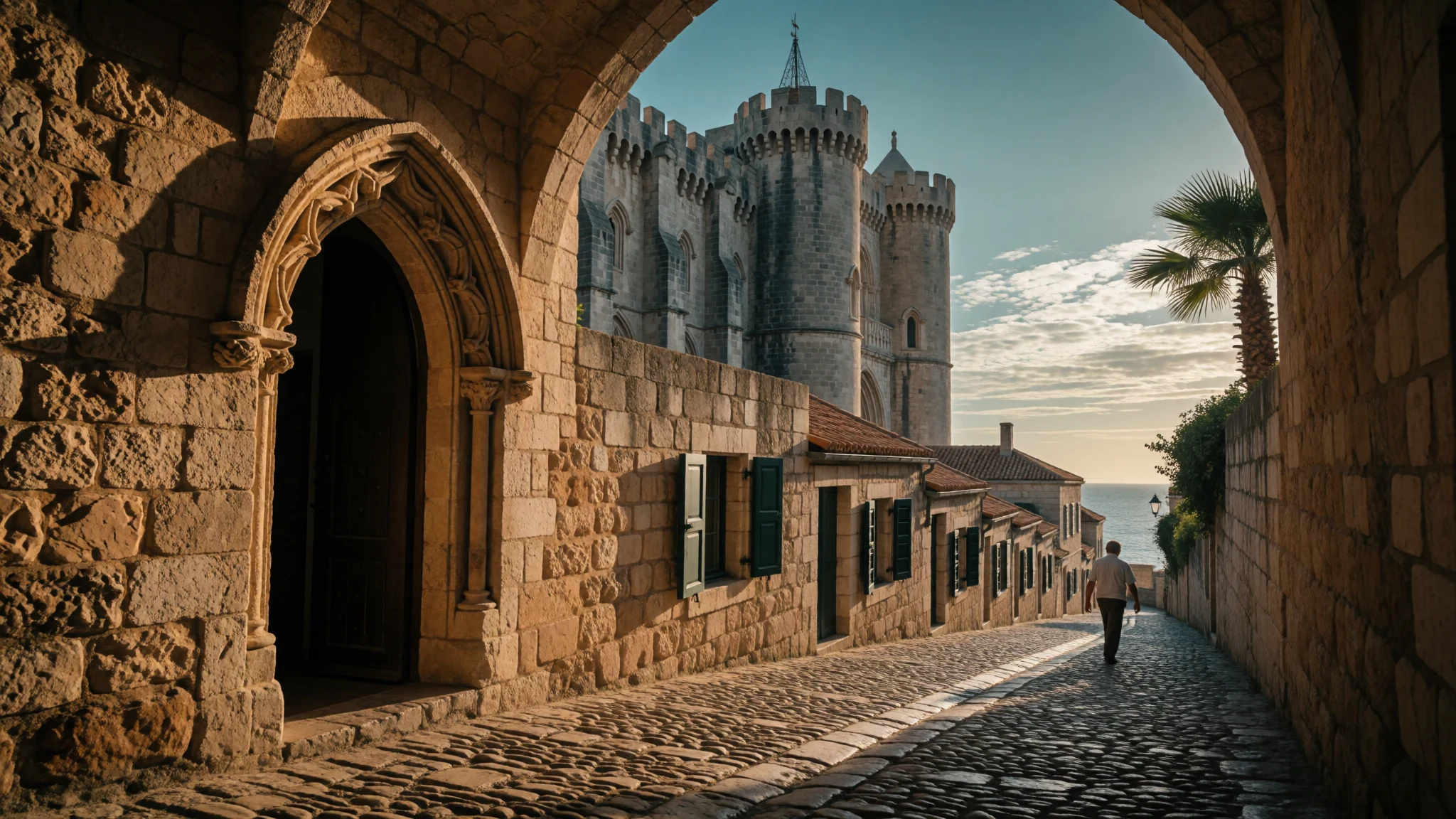
A restored Gothic fortress-palace in Rhodes Old Town where the Knights Hospitaller ruled, with a story of earthquake, explosion and rebuilding.
The place
The Palace of the Grand Master stands inside the walled Old Town of Rhodes, the main city of the Greek island of the same name. Locals often call it the Kastello, from the Italian word for castle. It is a rare piece of Gothic architecture in Greece, a country better known for classical marble and Byzantine domes. The Wikidata record gives its founding as about 1320, and it is catalogued as a palace, a museum and a crusader castle, which sums up its several lives.
The building was never only a home. It served the Knights Hospitaller as headquarters, citadel and residence of their leader, so it has the heavy, defensive look of a fortress with a ceremonial interior behind it. Walk in and the mood changes: an open courtyard, arched windows, carved doors and long stone halls that now work as a museum.
The setting matters as much as the palace. The Old Town is a maze of lanes, with the Street of the Knights close by, and the whole area is busy from spring to autumn. Rhodes is a package-holiday island, so expect tour groups, shops aimed at visitors and cruise passengers arriving in waves. Mornings and late afternoons are calmer. The island's tourism is concentrated on its beaches, but the palace is one of the reasons people also come for history. Opinions on whether it justifies the entry ticket vary, so decide after checking the official site: http://odysseus.culture.gr/h/1/gh153.jsp?obj_id=6301.
Its story
Recent study suggests the ground under the palace may once have held a temple of Helios, the sun god of ancient Rhodes, and possibly the spot associated with the Colossus. That is a hypothesis rather than settled fact, but it fits a hilltop that has been valued for centuries. A Byzantine citadel stood here before the Knights arrived.
In 1306 the Knights Hospitaller took Rhodes along with a few neighbouring islands, and they turned the old fortress into their administrative centre and the home of their Grand Master. They repaired it and made major changes in the following years. An earthquake in 1481 damaged the palace, and it was mended soon after.
The Knights lost the island to the Ottoman Empire in 1523. The palace then became a command post and fortress under new rulers, with little of its ceremonial role left.
The worst blow came in 1856. A store of gunpowder, thought to date from the siege of 1522, lay under the nearby Church of Saint John. Lightning struck it. The explosion killed many people, flattened the church and wrecked most of the palace. The upper floors fell in, though the ground-floor rooms survived.
Later, under Italian rule, the surviving Ottoman-era additions were cleared away. The authorities brought in an architect named Vittorio Mesturino, an expert in medieval buildings and conservation, to plan a reconstruction of the palace and the nearby Street of the Knights. What visitors see today is therefore a rebuilt medieval idea as much as a surviving original.
What to see
- The courtyard and ground-floor halls — Palace of the Grand Master, Rhodes Old Town
The inner courtyard is the best place to understand the palace as a whole, with stone arches, galleries and shaded corners. The ground floor is the oldest part to have survived the explosion that wrecked the floors above, so look for the heavier, plainer masonry compared with the rebuilt rooms.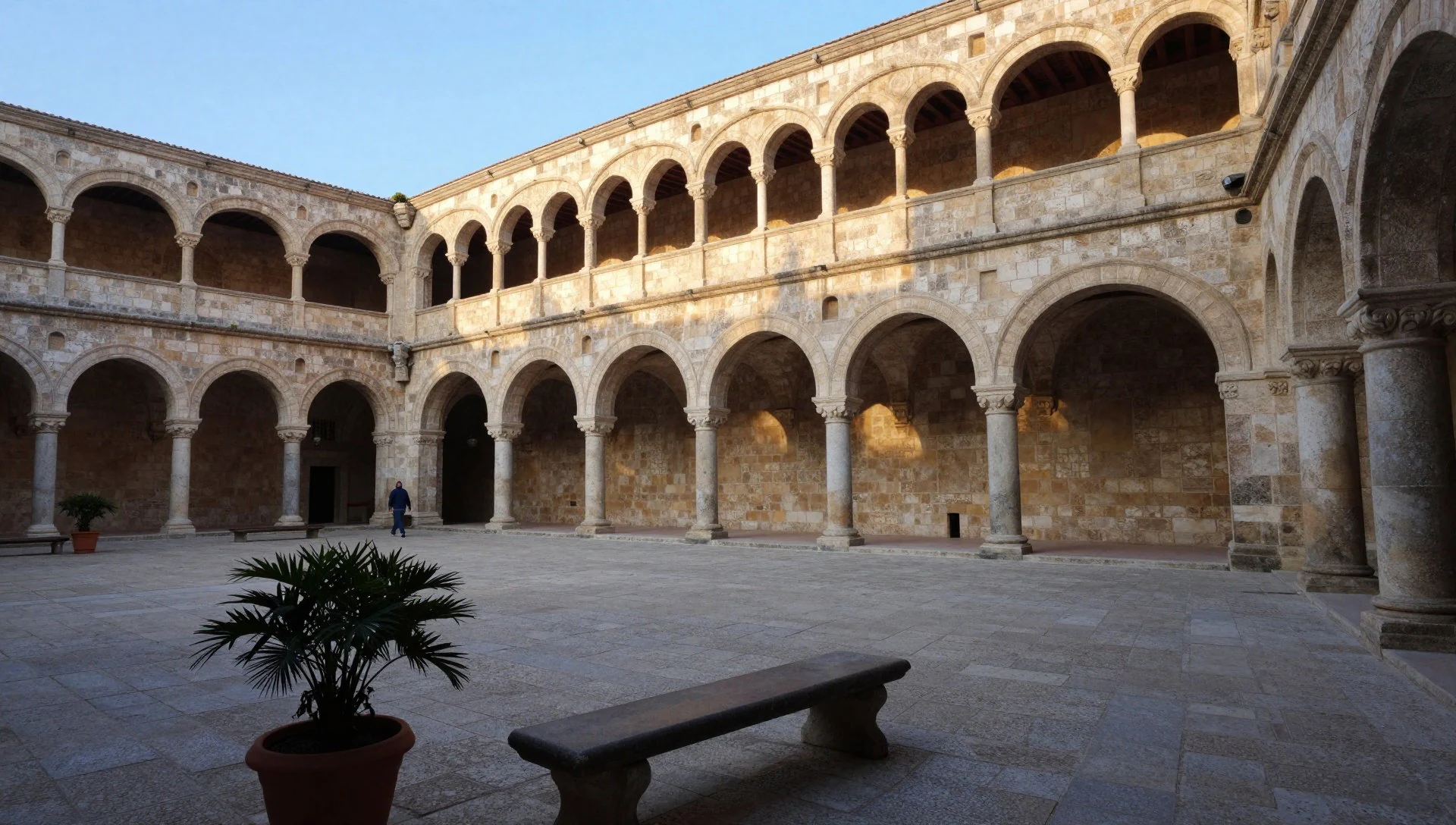
- The main gateway and towers — Entrance of the palace, Rhodes Old Town
The entrance front, with its two rounded towers, shows the palace as a fortress. Stand back across the approach to take in the whole façade, then move close to see the stonework and the arched portal. It is the classic view, so early morning gives clearer photographs and fewer people.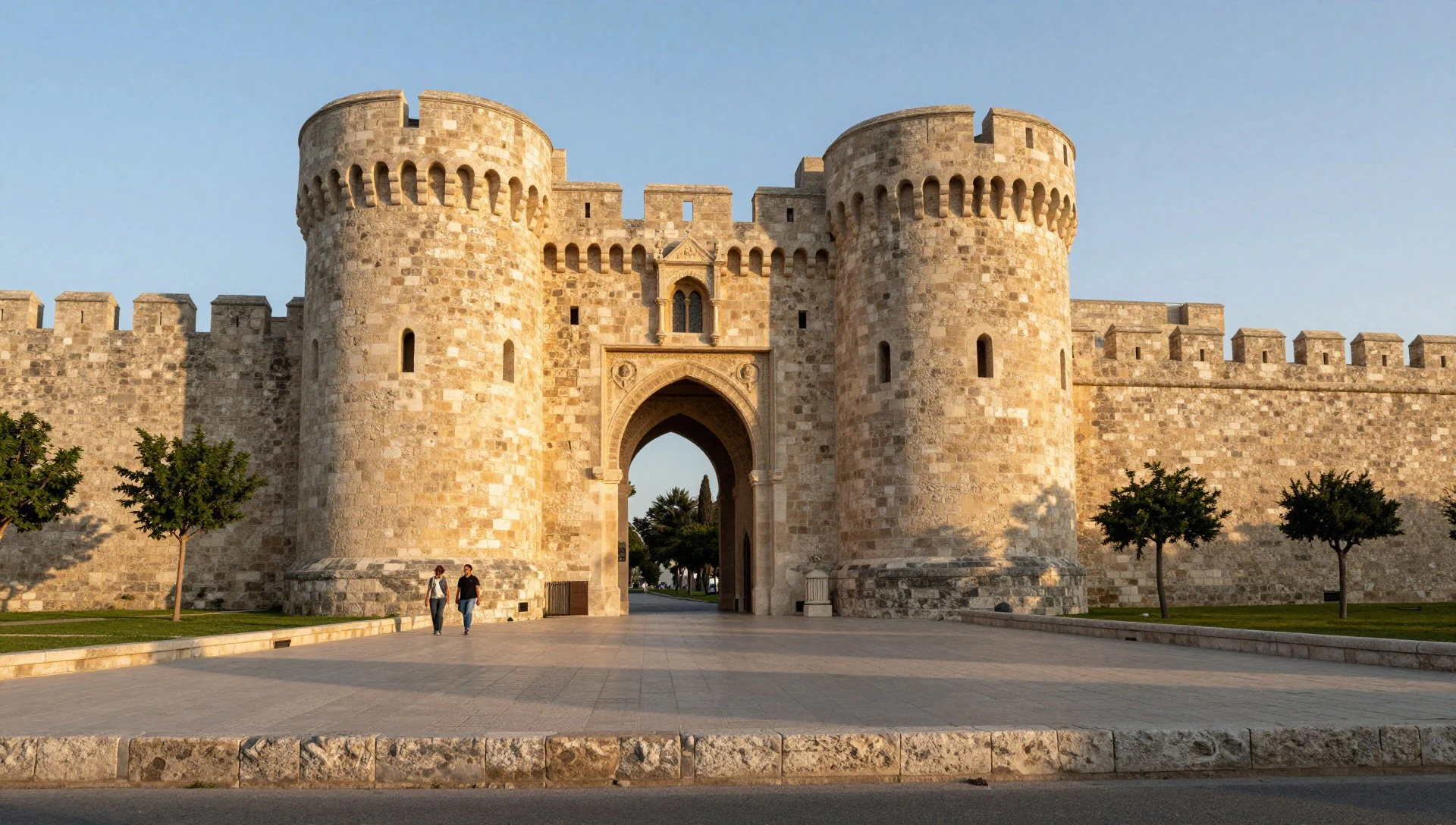
- Windows and carved doors — Facades and interior doorways of the palace
Details reward slow looking: Gothic window frames, heavy wooden doors and worn stone thresholds. Much of this is restoration work from the Italian period, modelled on medieval design, so it is useful to treat the building as an interpretation of the past rather than an untouched survival.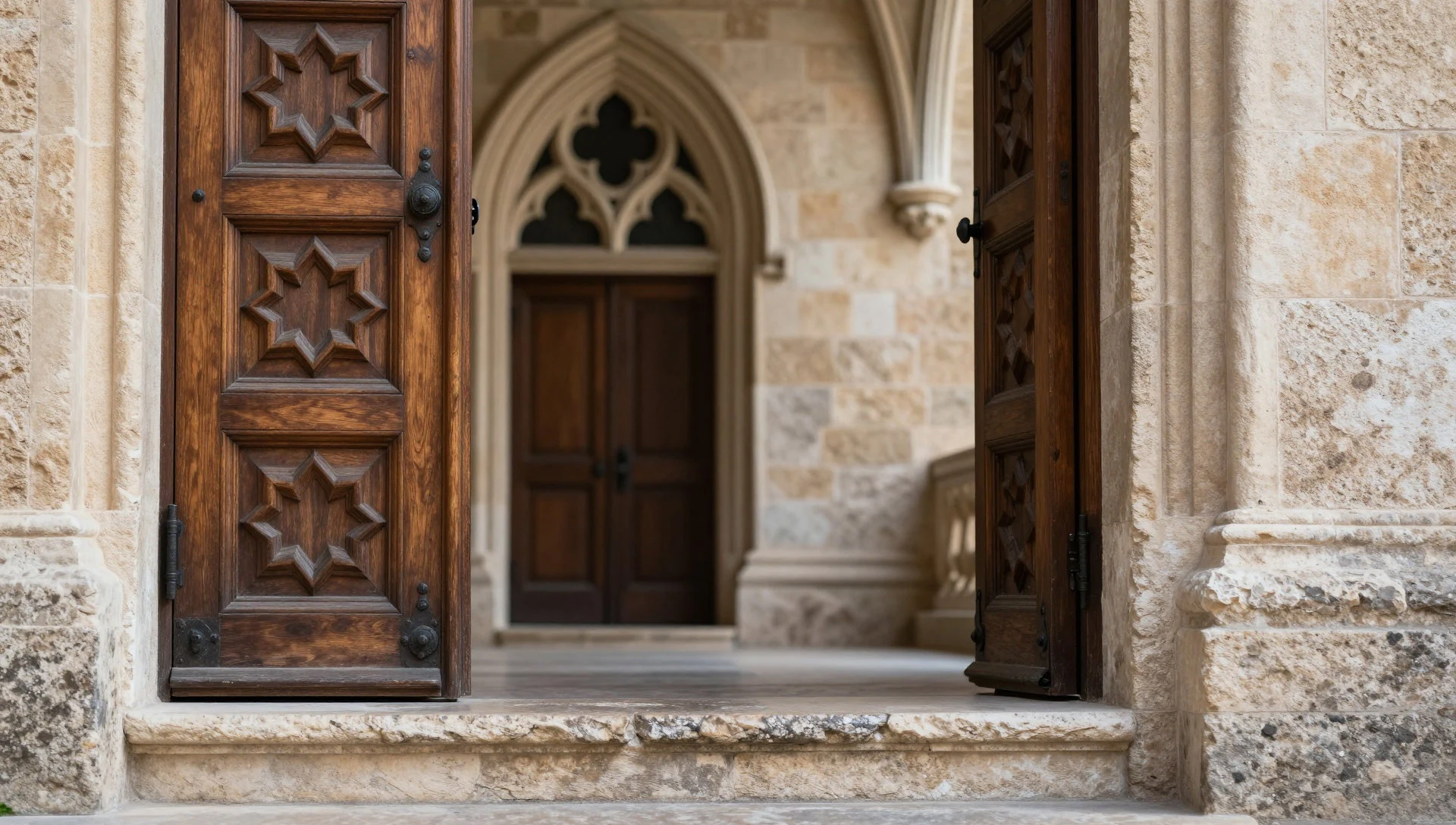
- Street of the Knights — Rhodes Old Town, close to the palace
A short, straight cobbled lane near the palace, lined with the stone façades of the Knights' former lodgings. It was reconstructed in the same Italian-era programme as the palace. It is lovely when quiet, so go early or late, and use it as a calm approach or exit.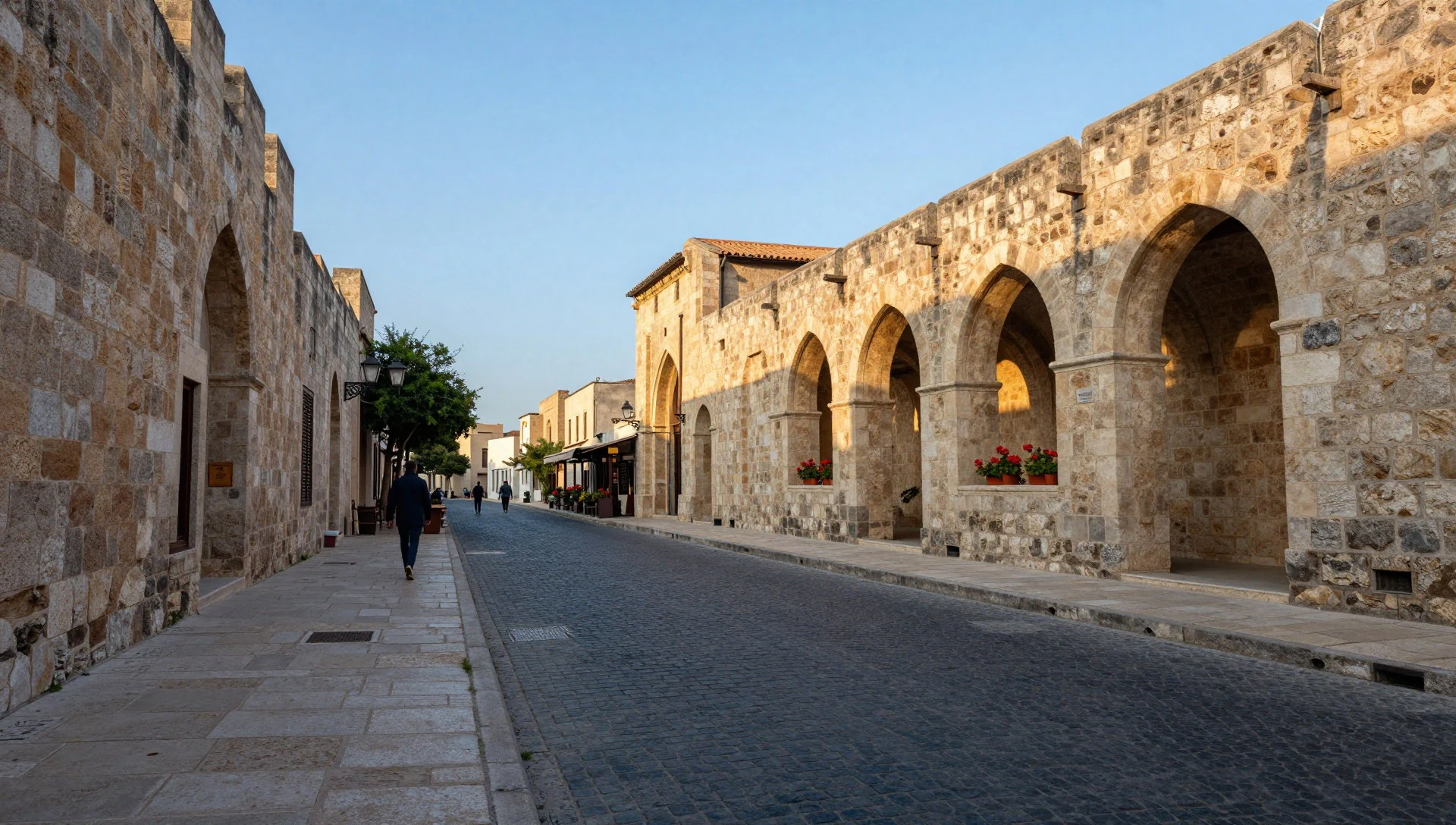
- Archaeological Museum and the back lanes — Northern Old Town, Rhodes
Local advice is to pair the palace with the Archaeological Museum, then wander the less busy back streets on foot. The museum gives context from ancient Rhodes onward, and the lanes behind the main routes show everyday Old Town life, with small chapels, workshops and houses.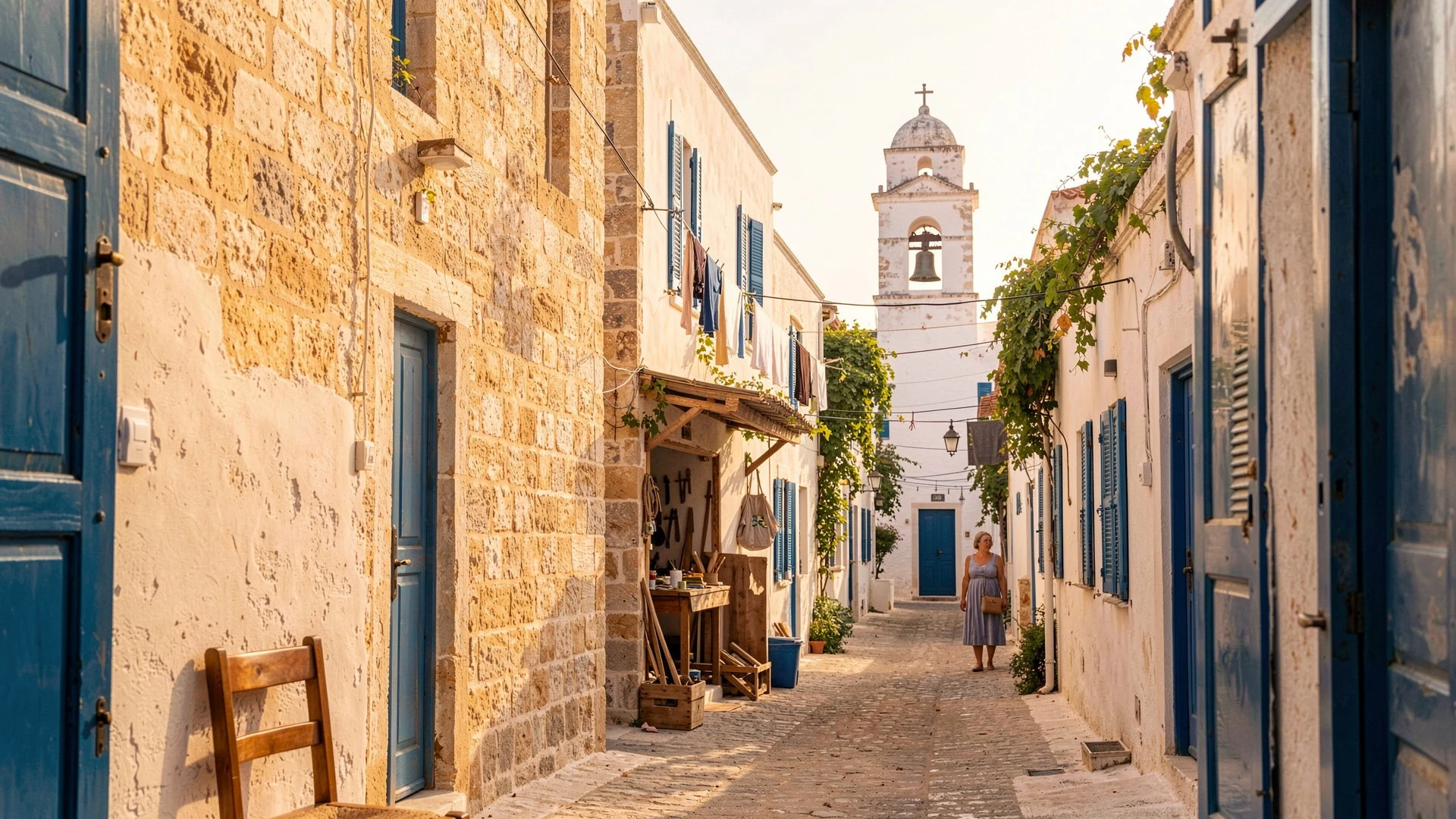
Culture
The palace's culture is the culture of a military and charitable order. The Knights Hospitaller began as carers for the sick and became a fighting force, and Rhodes was their island base for more than two centuries before the Ottoman conquest. Their legacy is visible in the Gothic stonework, the fortifications and the street names of the Old Town.
The building also carries layers of other peoples' stories. Byzantine builders were first on the hill, the Ottomans used it as a fortress, and Italian planners reconstructed much of it in the modern period. Greek visitors may see it as a monument that belongs to several rulers, not just the Knights. That mix is typical of Rhodes, where Greek, Turkish and Italian influences all remain in names, buildings and food.
The island's religious life is still Greek Orthodox for most residents, and village chapels, saints' days and church bells are part of the rhythm of the year. In the Old Town, small mosques and Ottoman-era houses remain alongside Latin-style buildings.
Locals are usually used to visitors and many speak English, German and other languages, but a few words of Greek are well received. Greetings and thanks go a long way in shops and cafés.
When you visit the palace, keep your voice low in the halls and courtyard, follow staff directions, and do not touch carved doors, stonework or displays.
What to wear
Rhodes has no single national costume that most visitors will see, but traditional island dress of the Dodecanese is known from museums and folk festivals. It typically used linen, cotton, wool and sometimes silk, with embroidered bodices, layered skirts, decorated aprons and headscarves for women, and loose trousers or breeches with sashes and waistcoats for men. Fine handwork, often geometric or floral, was a sign of skill and family pride. These outfits are mostly worn now for dance groups, parades, weddings in some villages and religious feast days.
Day to day, people in Rhodes Town dress as in most Mediterranean cities: light cotton and linen, shorts and sandals in the hottest months, jeans and a jacket in the cooler winter. Smart casual is usual for evenings out, and locals tend to be neater than beach-resort crowds.
For visitors, the main issues are heat and the surfaces. Choose breathable fabrics, a hat, sunscreen and sunglasses, because the courtyard and lanes have limited shade in summer. Wear comfortable shoes with grip; the old paving is uneven, worn smooth and can be slippery. The palace is a museum rather than a place of worship, so beachwear is not appropriate, though a light layer for shoulders is wise. If you plan to step into a church or chapel nearby, cover shoulders and knees, and carry a scarf or light shirt for that purpose.
What to eat
- Souvlaki and gyros — Grill counters in the Old Town and nearby streets
Grilled meat in flatbread with tomato, onion and yoghurt sauce is the quickest lunch while exploring. Look for small grill counters in the Old Town's lanes and in the newer town outside the walls, where locals eat too.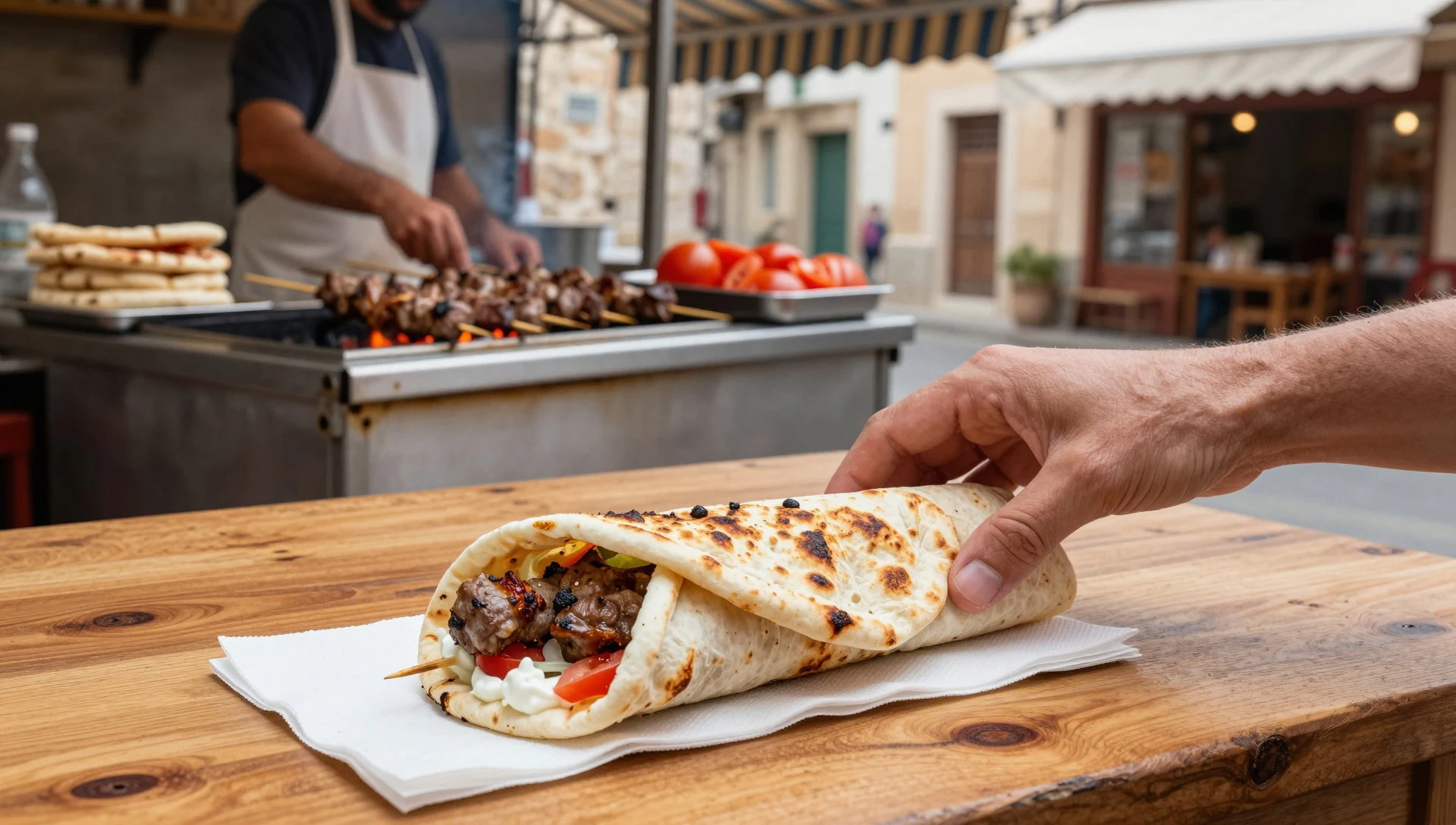
- Greek salad — Any taverna with courtyard or street tables
Tomato, cucumber, olives, onion and a slab of feta, dressed with olive oil and oregano. It is simple, cooling and best in summer when the tomatoes are ripe. Any taverna with outdoor tables will serve it.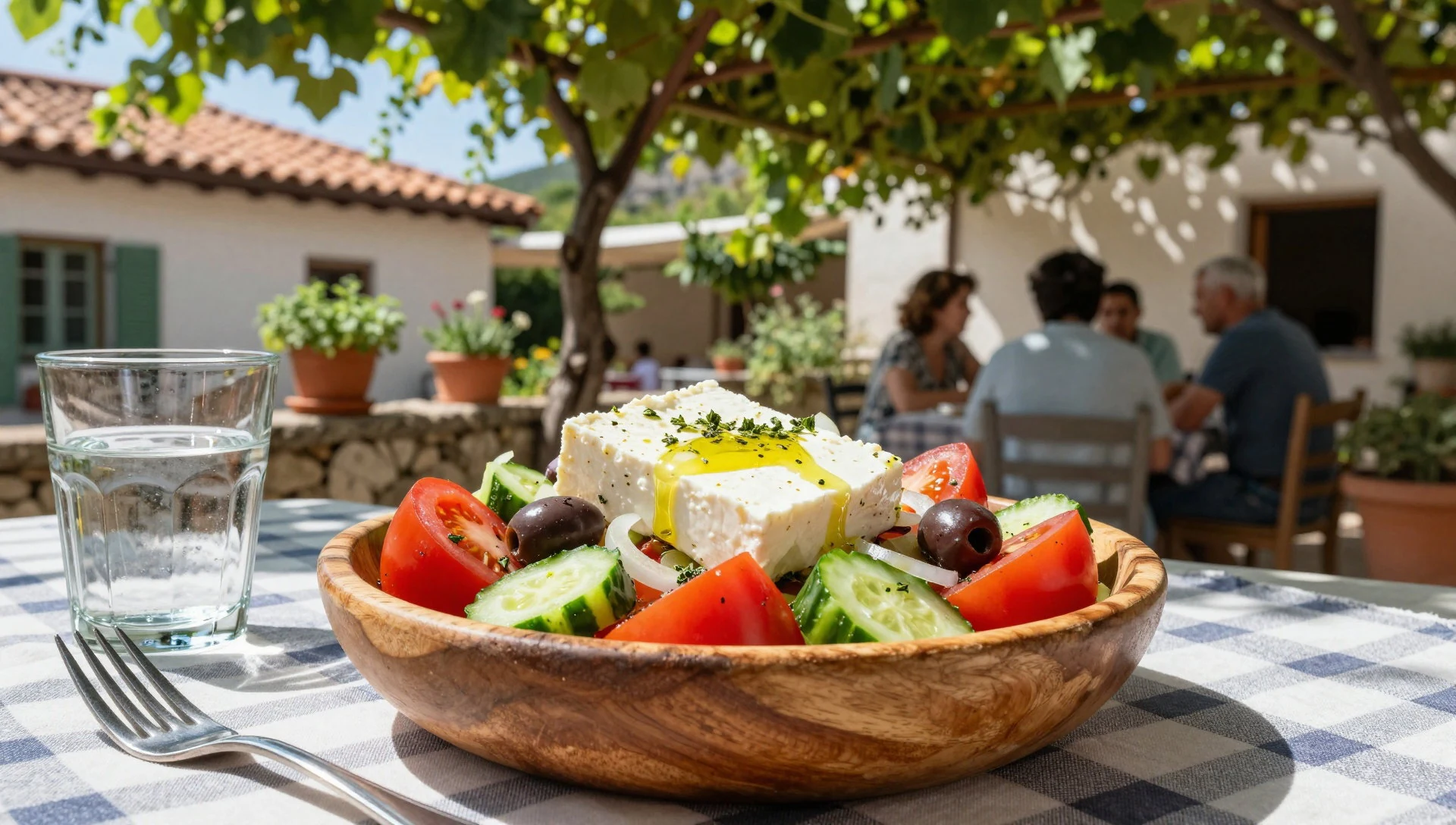
- Grilled fish and seafood — Eateries near the harbours and quieter Old Town lanes
On an island, fresh fish, squid and octopus are the sensible choice. Ask what was caught that day and how it is cooked. Harbour-side eateries are convenient, while quieter side streets often offer better value. - Pitaroudia — Traditional tavernas serving island dishes
These chickpea fritters are a traditional Rhodian snack, crisp outside and soft within, flavoured with herbs. They suit a quick bite between sights and often appear on menus of traditional tavernas. - Ouzo, souma and local wine — Cafés and tavernas, especially at sunset
Ouzo is the aniseed spirit served with water and small plates, while souma is a strong local grape spirit. Island wine is easy to find by the glass or carafe. Drink slowly, with food, especially in summer heat.
Plan it
Best time. May–June and September–October, when the sea is warm, the days are long and the heat is easier than in midsummer. July and August are hot and crowded. Flights from across Europe run mostly from April to October; in winter, flights are mainly domestic.
How long. 1–2
Getting there. Fly to Rhodes Diagoras Airport (RHO) on the west coast, then take a taxi or bus to Rhodes Town and walk into the Old Town. Ferries connect Rhodes with Symi, Tilos and Piraeus, and with Turkish ports such as Marmaris and Fethiye.
Budget. mid
Tips
- Visit early in the morning or late in the day to avoid tour groups and cruise-ship crowds
- Check the official site for opening times and ticket prices before you go: http://odysseus.culture.gr/h/1/gh153.jsp?obj_id=6301
- Carry water, a hat and sunscreen, as tap water is drinkable and shade is limited
- Wear shoes with good grip for the worn, uneven stone
- Combine the palace with the Archaeological Museum and a walk through the quieter back streets
Etiquette
- Keep voices down and do not touch carved doors or displays
- Dress modestly when entering churches or chapels nearby
- Greet shopkeepers and staff in Greek if you can; it is appreciated
Nearby
Sources
- Wikidata Q931371 (CC0)
- Wikipedia: Palace of the Grand Master of the Knights of Rhodes (rev 1365034297) (CC BY-SA 4.0)
- Wikivoyage: Rhodes (rev 5304787) (CC BY-SA 4.0)
- Courtyard des Großmeisterpalats in Rhodos mit Glyptofreunden, Burkhard Mücke (CC BY-SA 4.0)
- Palace of the Grand Masters of Rhodes, 1844 (Public domain)
- Medieval City of Rhodes, Greece, Bernard Gagnon (CC BY-SA 4.0)
- Palazzo dei gran maestri di rodi, entrata principale, sailko (CC BY 3.0)
- Palace of the Grand Master of the Knights of Rhodes, User:Piotrus (CC BY 3.0)
- Windows on the Palace of the Grand Masters of Rhodes, Bernard Gagnon (CC BY-SA 4.0)
- Rhodes old town palace, Norbert Nagel (CC BY 3.0)
- A door of the Palace of the Grand Masters of Rhodes, Bernard Gagnon (CC BY-SA 2.0)


