Palace of Tau
Palace of Tau, France
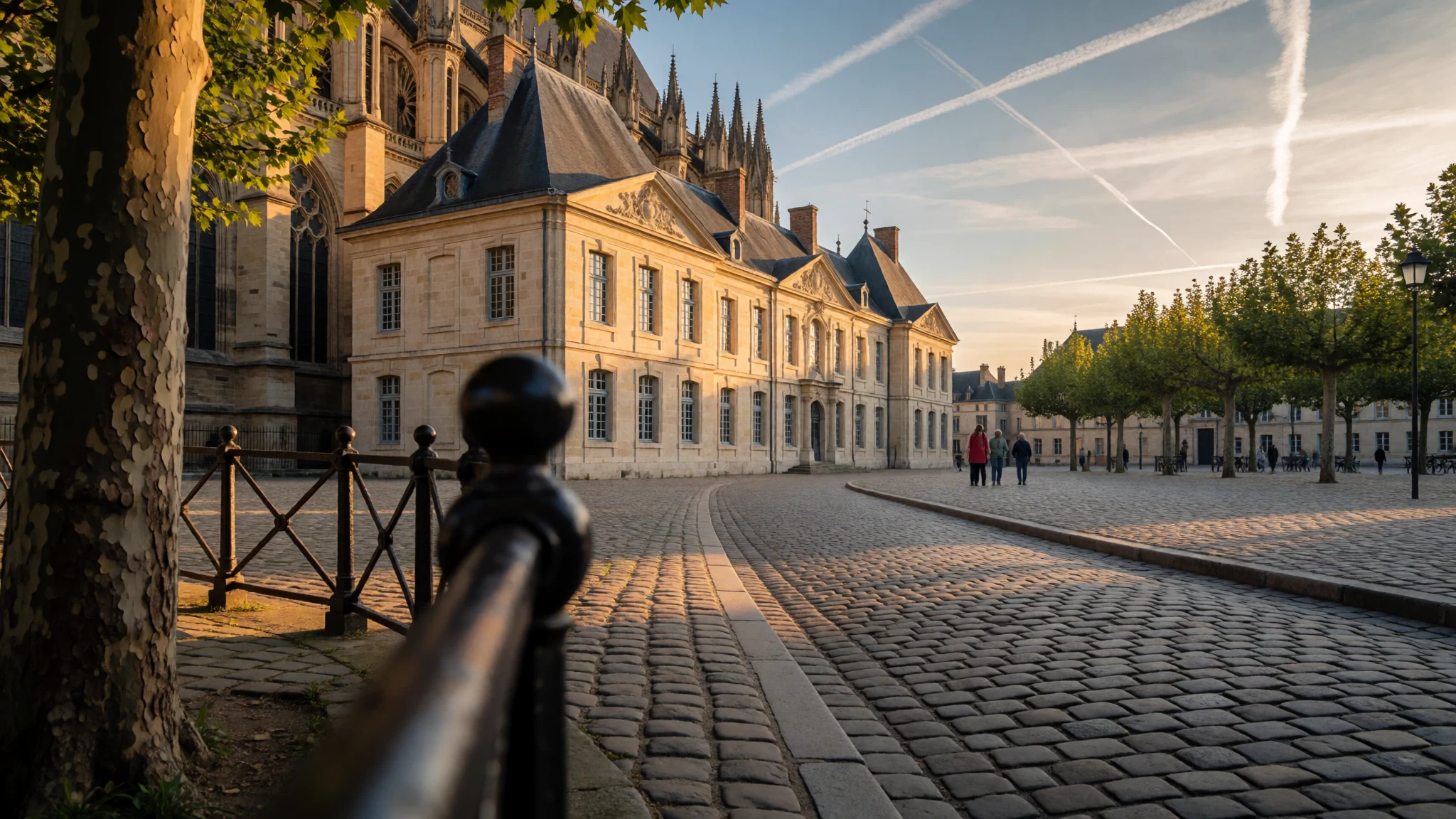
Palace of Tau in Reims is where French kings dressed and feasted for their coronations, and it now holds the cathedral's original statues and tapestries.
The place
The Palace of Tau (Palais du Tau) stands in Reims, in the Champagne country of north-eastern France, pressed against the side of the city's cathedral. It was the residence of the archbishops of Reims, and its fame comes from the kings of France, who were crowned next door and then feasted here. Today it is a museum rather than a palace, and a calmer visit than most French royal sites. The building is a long block of pale stone with a Baroque face and steep roofs, and its name comes from its ground plan, which resembles the Greek letter tau, a T. Inside, the rooms hold statues taken down from the cathedral façade, tapestries, and objects from the coronation ceremonies. Most visitors pair the palace with the cathedral, which draws the larger share of the crowds. Reims itself is a city of broad streets and Art Deco buildings, largely rebuilt after the destruction of the First World War, so it is not the medieval town that older photographs suggest. Champagne houses with chalk cellars sit around the centre, and many accept visitors by appointment only. The palace is a manageable stop: a couple of hours is enough, and it lies a short walk from the shops and cafés of the Place d'Erlon. The centre is flat and easy on foot. Together with the cathedral and the former abbey of Saint-Remi, the palace forms a World Heritage group inscribed in 1991. Opening times and tickets change, so check the official site at palais-tau.monuments-nationaux.fr before going.
Its story
The Palace of Tau in Reims stands on ground that was occupied long before its present stone. A large Gallo-Roman villa was still in use on the site in the early Middle Ages, and later gave way to a Carolingian palace. The name is first recorded in 1131 and refers to the T-shaped plan. Almost nothing of the early building survives; the chapel, dated to 1207, is the oldest part still standing. Gothic rebuilding took place between 1498 and 1509, and the architects Jules Hardouin-Mansart and Robert de Cotte then reshaped the palace into the Baroque form seen today, in work finished by 1710 and begun in 1671. Its role was bound up with coronations. The king prepared and dressed here, then crossed to the cathedral for the ceremony, and the court returned for the banquet. The first banquet on record took place in 990 and the last in 1825. A fire on 19 September 1914, during the First World War, damaged the building, and repairs waited until after the Second World War. Since 1972 the Musée de l'Œuvre has occupied the building, displaying statues and tapestries from the cathedral alongside surviving treasury pieces and coronation objects. In 1991 the palace joined the cathedral and the former Saint-Remi abbey on the World Heritage List, and it now draws around 100,000 visitors a year.
What to see
- The palace and its chapel — Cathedral quarter, Reims
The Palace of Tau itself rewards a slow look from the courtyard side. The stone façade is Baroque, but the palatine chapel inside is far older, dated to 1207. Seen from behind, the building leans against the cathedral, which makes clear how closely the archbishop's house and the coronation church were joined.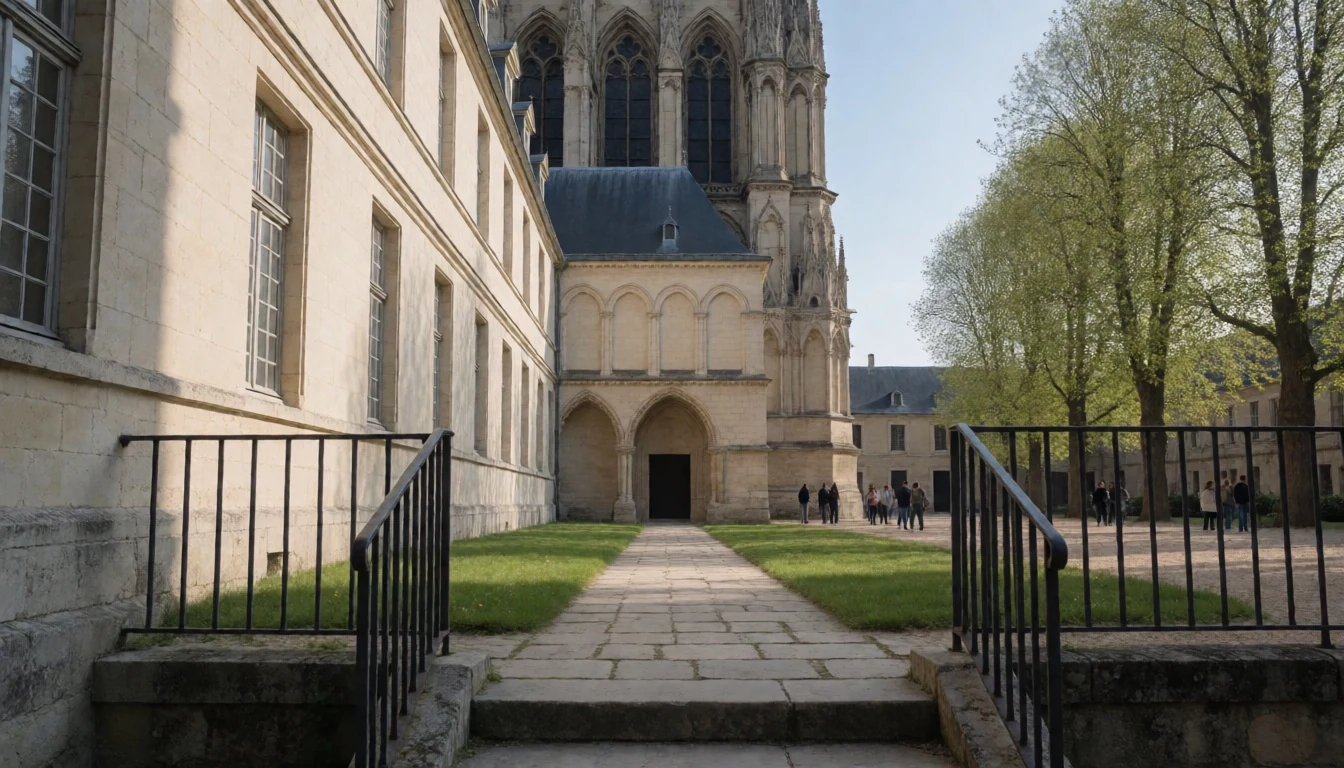
- Salle du Tau — Palace of Tau, first floor
The Salle du Tau is the great hall where coronation banquets were held. It is a tall, plain room, and standing in it helps to picture the court seated after the ceremony. Check the official site for any rooms closed for works or exhibitions, as the displays are rearranged from time to time.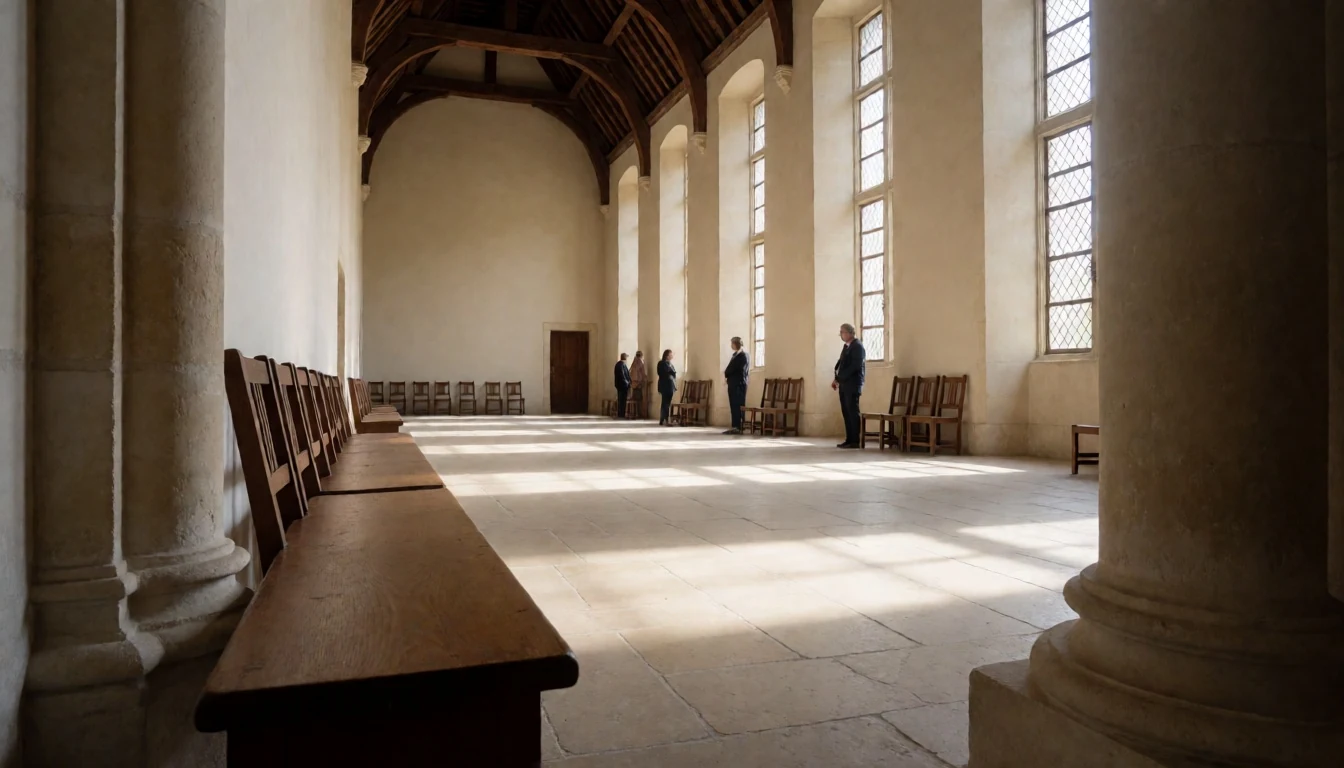
- The original cathedral statues — Musée de l'Œuvre, Palace of Tau
Weathered statues were moved indoors from the cathedral to save them from the elements, and copies now stand outside. Here they can be seen at eye level, including a figure of Abraham and the Coronation of the Virgin group that once crowned the central gable. The detail of faces and drapery is easy to study.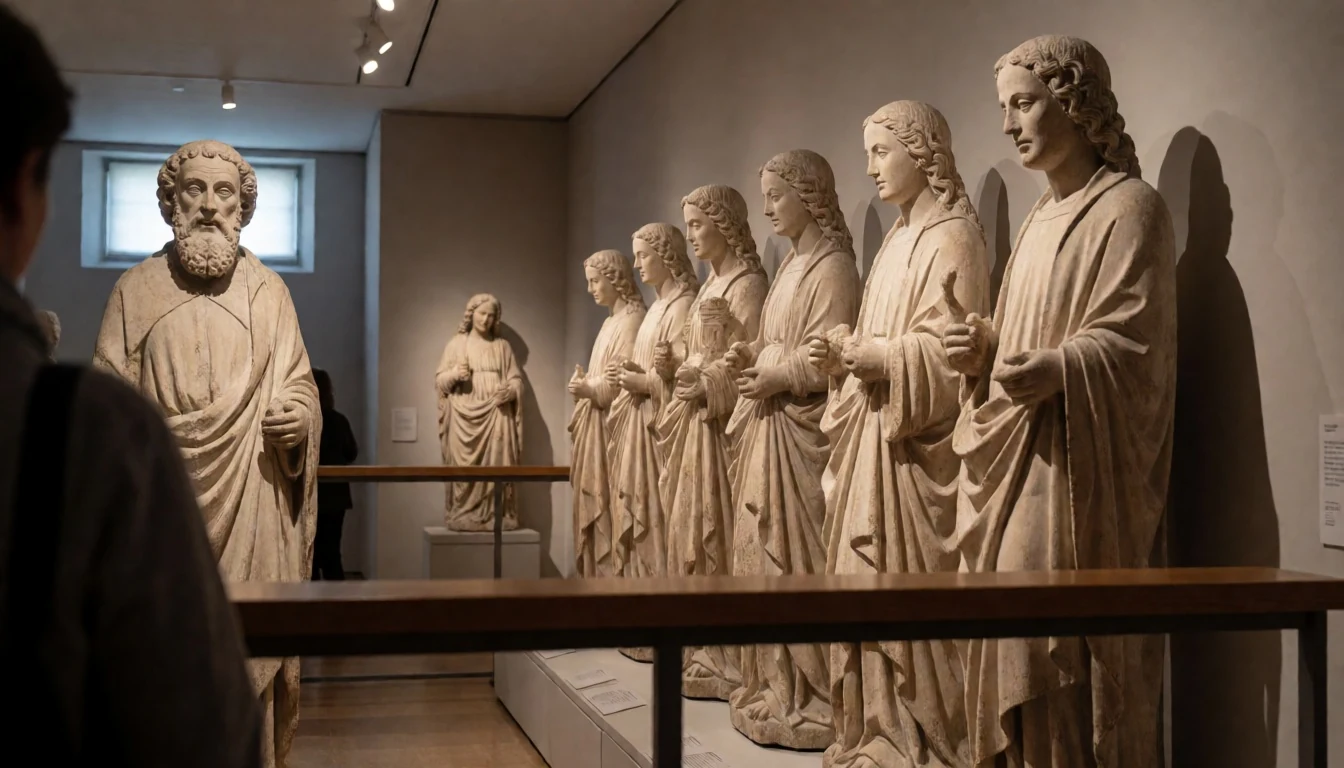
- The tapestries — Musée de l'Œuvre, Palace of Tau
Large woven hangings from the cathedral tell the life of the Virgin in scenes, each with a scroll of text. The colours are muted with age, but the storytelling is clear. Plan a slow pass, since the panels are long and the labels reward reading.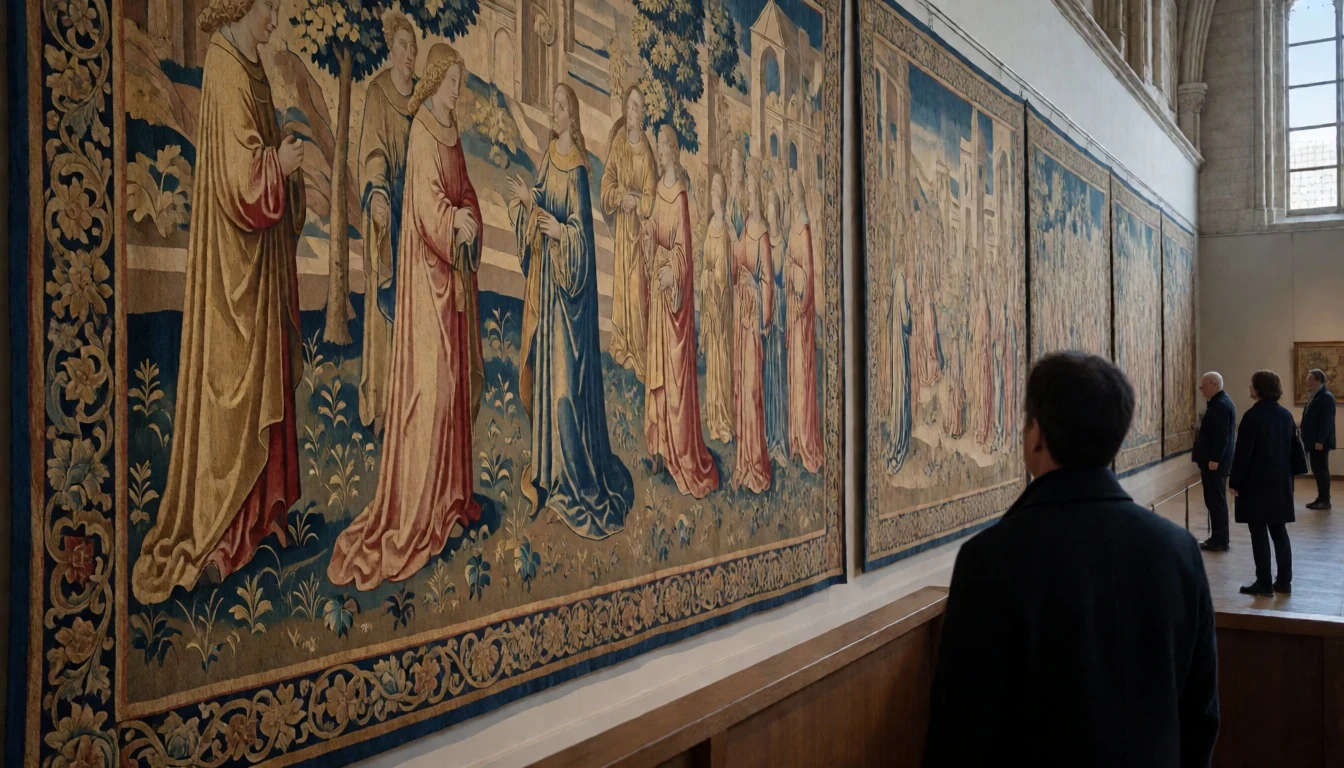
- Notre-Dame de Reims — Next to the palace
The cathedral next door is where almost all French kings were crowned over about a thousand years. Visit it before or after the palace to connect the rooms with the place of the ceremony. It is the busiest sight in town, so go early or late in the day.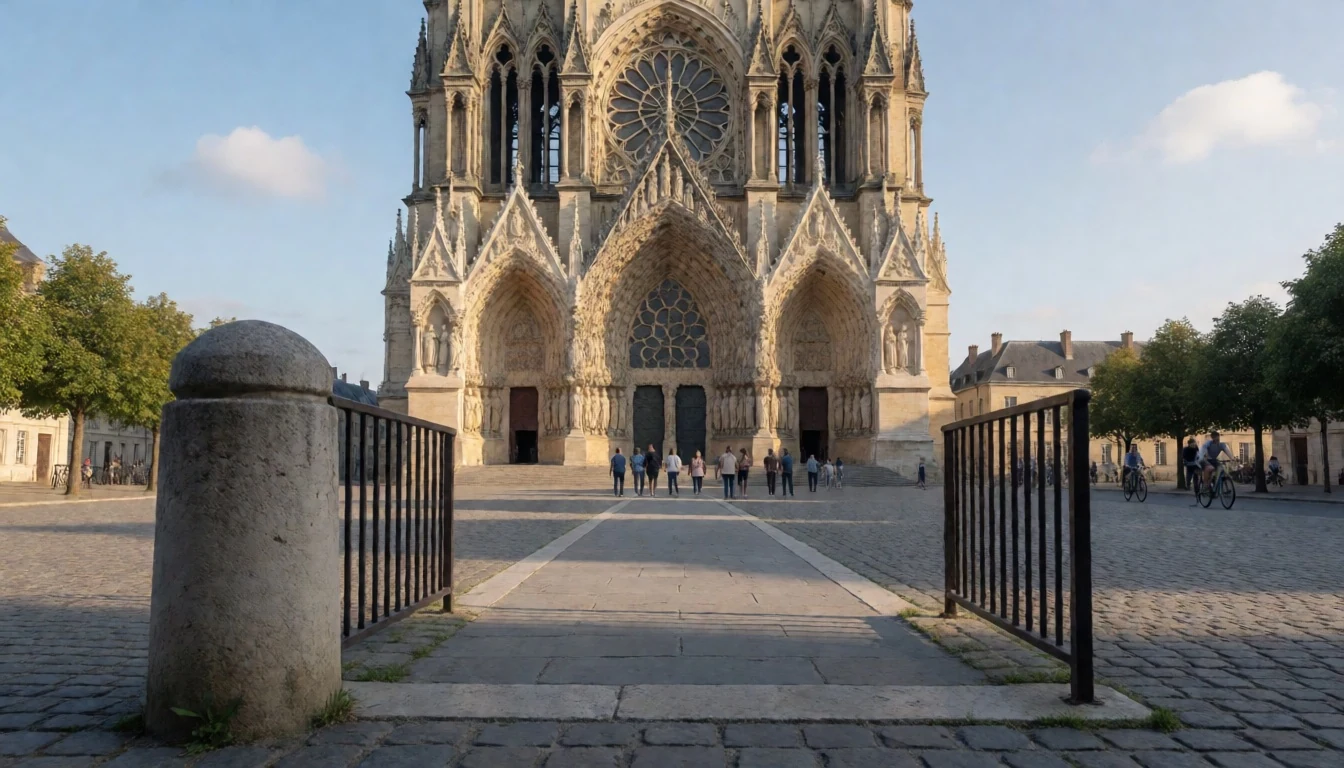
- Porte de Mars — North of the centre
This large triumphal arch dates from the late Roman period and stands on the northern side of the centre. It is a free, outdoor stop that reminds visitors Reims was a Roman town long before the kings. A short walk from the cathedral, it fits well into a loop around the old streets.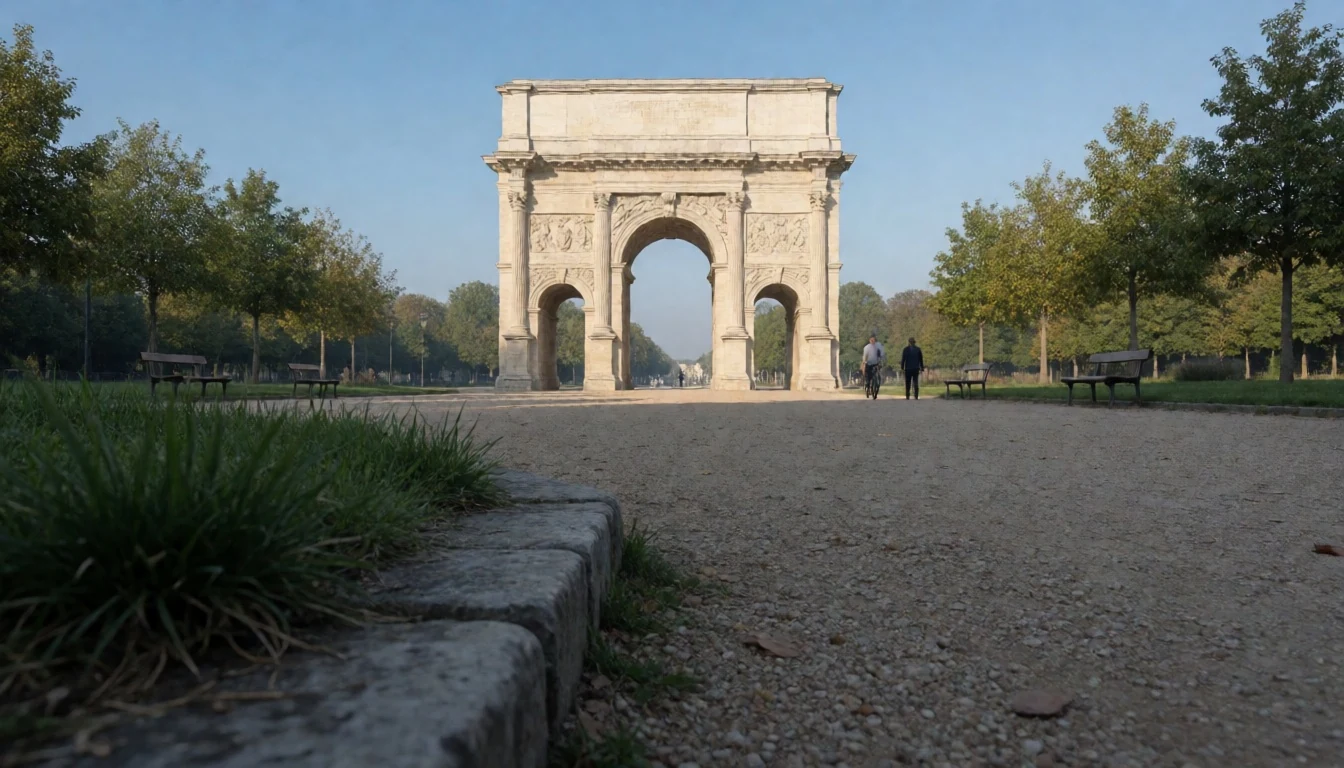
Culture
The Palace of Tau belongs to a culture of ceremony in which church and crown were tied together. For centuries the archbishop of Reims, as host, crowned kings in the cathedral beside the palace, and the palace served as the dressing room and dining hall for the occasion. That link still shapes how the city sees itself: Reims is proud of its royal past, and the French generally regard the cathedral as a national monument rather than just a church. The palace today is run as a state monument, and the museum's displays are mostly religious art and royal ceremony, so the atmosphere is hushed and respectful rather than festive. Reims is also the heart of champagne country, and the wine is part of local identity; many houses and chalk cellars are open to visitors, usually by appointment. Cultural events and galas are sometimes held in the palace itself. French cafés follow their own rhythm, with long lunches, restaurants closing between services, and shops often shut on Sundays, so a day here works best with a loose plan. Conversation in shops and restaurants starts with a greeting, and a polite bonjour goes a long way. Reims is a working city of its own and not only a heritage stop, so ordinary streets are lived in. Wartime destruction shaped the town, and visitors who read about the First World War will find that history woven into the Art Deco rebuilding. In the cathedral and the palace's chapel, keep your voice low, switch off flash photography and follow any signs about where photographs are allowed.
What to wear
Fashion around the Palace of Tau begins with ceremony rather than folk costume. The clothes of the coronation world were the vestments of the archbishop and the robes of the king, made from heavy woven textiles, and the museum's tapestries and treasury give a sense of that material world. Champagne has no widely worn regional costume today, and visitors should not expect to see one in the street. What people wear now is ordinary French city dress: dark or neutral colours, well-cut jackets, scarves, and trainers or leather shoes. Smart casual is the norm in restaurants and at champagne houses, and locals dress up a little for evenings out. Reims has a temperate climate, with cool winters and mild summers, so layers are more useful than any single heavy garment. For visitors, comfortable flat shoes matter most, because the centre is walked on paving and the palace and cathedral have stone floors that feel cold and hard underfoot. Bring a light waterproof, since showers come at any time of year. In the cathedral, covered shoulders and knees are the respectful choice, though nobody is likely to turn visitors away in summer clothes. Cellar visits are cool and damp, often with a steady chill below ground, so a jumper is worth carrying even on a hot afternoon. A small bag is sensible, since larger bags may need to be left at a cloakroom in the museum.
What to eat
- Champagne — Champagne houses and wine bars in the centre
The wine of the region is the obvious local order, poured in tasting rooms and chalk cellars around the city. Many houses take visitors by appointment only, so book ahead. Wine bars near the Place d'Erlon also serve it by the glass, which is a cheaper way to taste.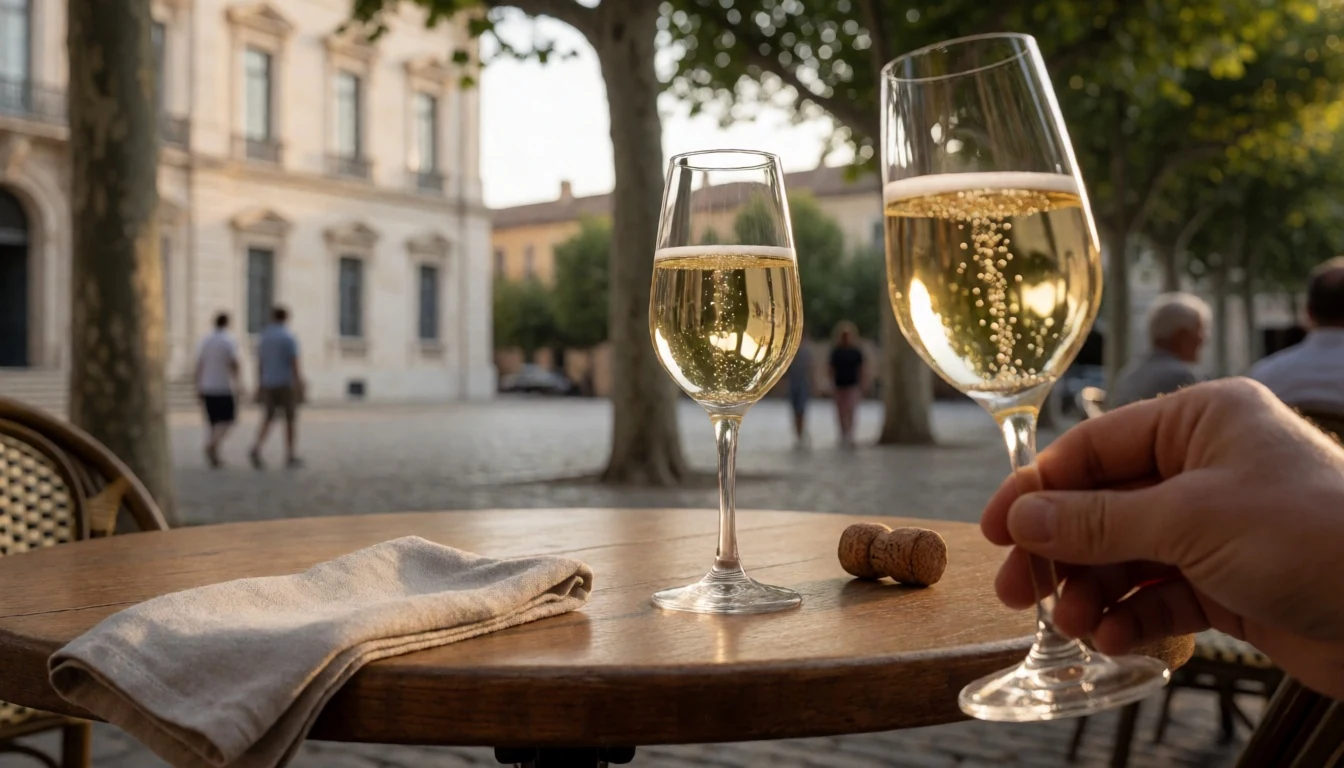
- Biscuit rose de Reims — Pâtisseries and gift shops around the cathedral
A dry, pink, finger-shaped biscuit made in the city, traditionally dipped into a glass of champagne because it stays firm. It is sold in tins and paper bags and makes an easy gift. Look for it in pâtisseries and food shops near the cathedral.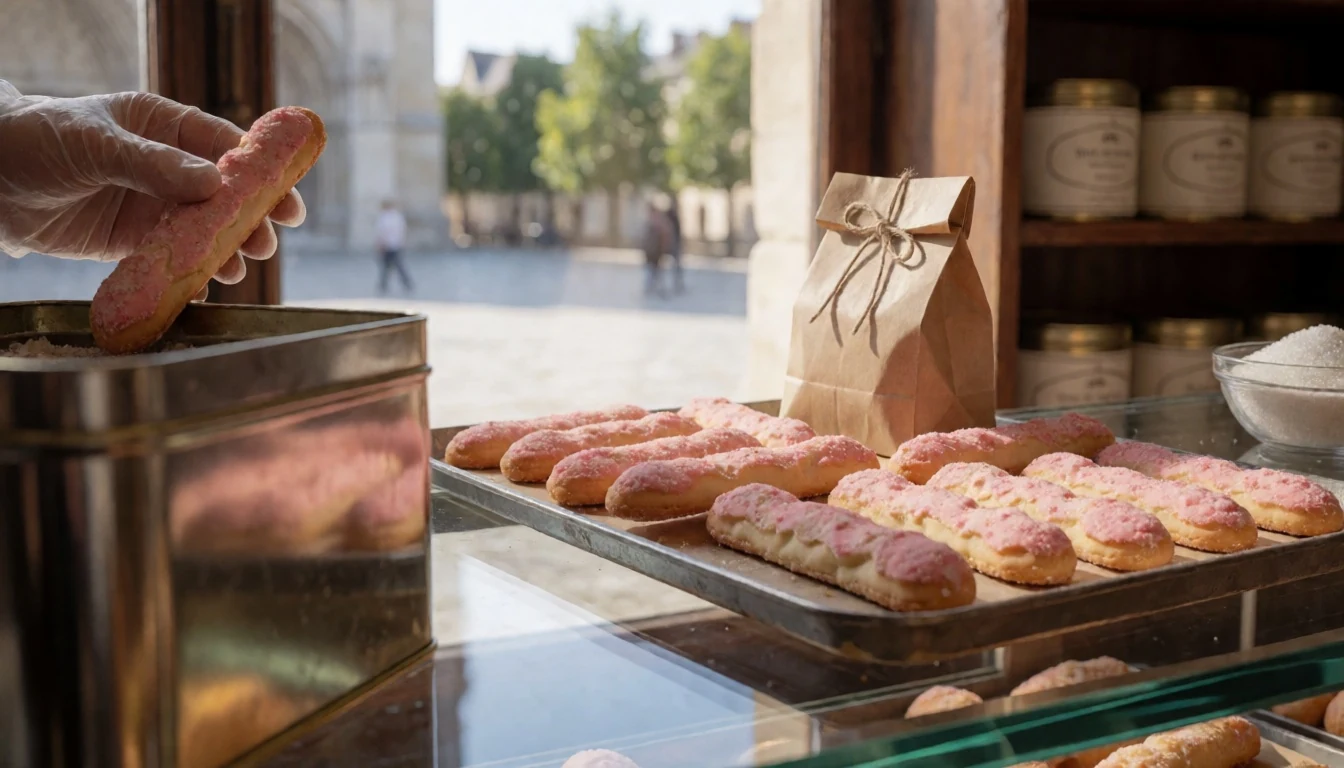
- Bistro steak and chips — Brasseries around the Place d'Erlon
Simple French brasserie cooking is the everyday choice in Reims: steak with chips, salads, and a daily dish chalked on a board. It suits a long lunch after a museum visit. The streets around the Place d'Erlon have many brasseries to choose from. - Chaource and other regional cheeses — Covered markets and cheese shops
Champagne is cheese country, with soft, creamy rounds such as Chaource that pair well with local wine. A cheese counter is a good place to ask for a ripe piece and a taste before buying. Look in covered markets and specialist shops. - Baguette sandwiches — Bakeries and sandwich kiosks near the centre
For a quick, cheap meal between sights, small kiosks and bakeries sell sandwiches on fresh baguette, often with ham, cheese or salad. They are easy to eat on a bench near the cathedral square. Queues move fast around midday.
Plan it
Best time. April–June and September–October, when the weather in Reims is mild and the streets are pleasant for walking; midsummer brings more visitors, and winter is cool and often damp, though the museum and cathedral are indoors.
How long. 1–2
Getting there. Reims has no airport of its own. From Paris Charles de Gaulle, a high-speed TGV takes about 30 minutes to Champagne-Ardenne TGV station at Bezannes, then a tram runs into the centre. Trains from other French cities usually arrive at that station too, so check which station your ticket names. The palace is a short walk from the cathedral in the old centre.
Budget. mid
Tips
- Check the official site, palais-tau.monuments-nationaux.fr, for opening days, tickets and any closed rooms before you go
- Book champagne house tours ahead, as many accept visitors by appointment only
- Check which Reims station your train uses, as people often mix up the TGV station and the central one
- Visit the cathedral early or late in the day to avoid the busiest hours
- Buy a TGV ticket a few weeks ahead if you can, for a better fare than the slower regular line
Etiquette
- Keep your voice low and follow photography signs in the chapel and cathedral
- Greet staff and shopkeepers with a bonjour before asking a question
- Do not take drinks or food into the museum rooms
Nearby
Sources
- Wikidata Q578771 (CC0)
- Wikipedia: Palace of Tau (rev 1365738582) (CC BY-SA 4.0)
- Wikivoyage: Reims (rev 5375564) (CC BY-SA 4.0)
- Photo: Palais du Tau in Reims (7), Tournasol7 (CC BY-SA 4.0)
- Photo: Palais du Tau et cathédrale, Ludovic Péron (CC BY-SA 1.0)
- Photo: Salle du Tau, Sergey Prokopenko (CC BY 3.0)
- Photo: Le Couronnement de la Vierge, Vassil (CC0 1.0)
- Photo: Statue d'Abraham, Vassil (CC0 1.0)
- Photo: Où paissent les brebis, G.Garitan (CC BY 3.0)
- Photo: Anne et Marie, G.Garitan (CC BY-SA 2.5)
- Photo: La vie de la vierge, Garitan (CC BY 3.0)


