Paestum
Paestum, Italy
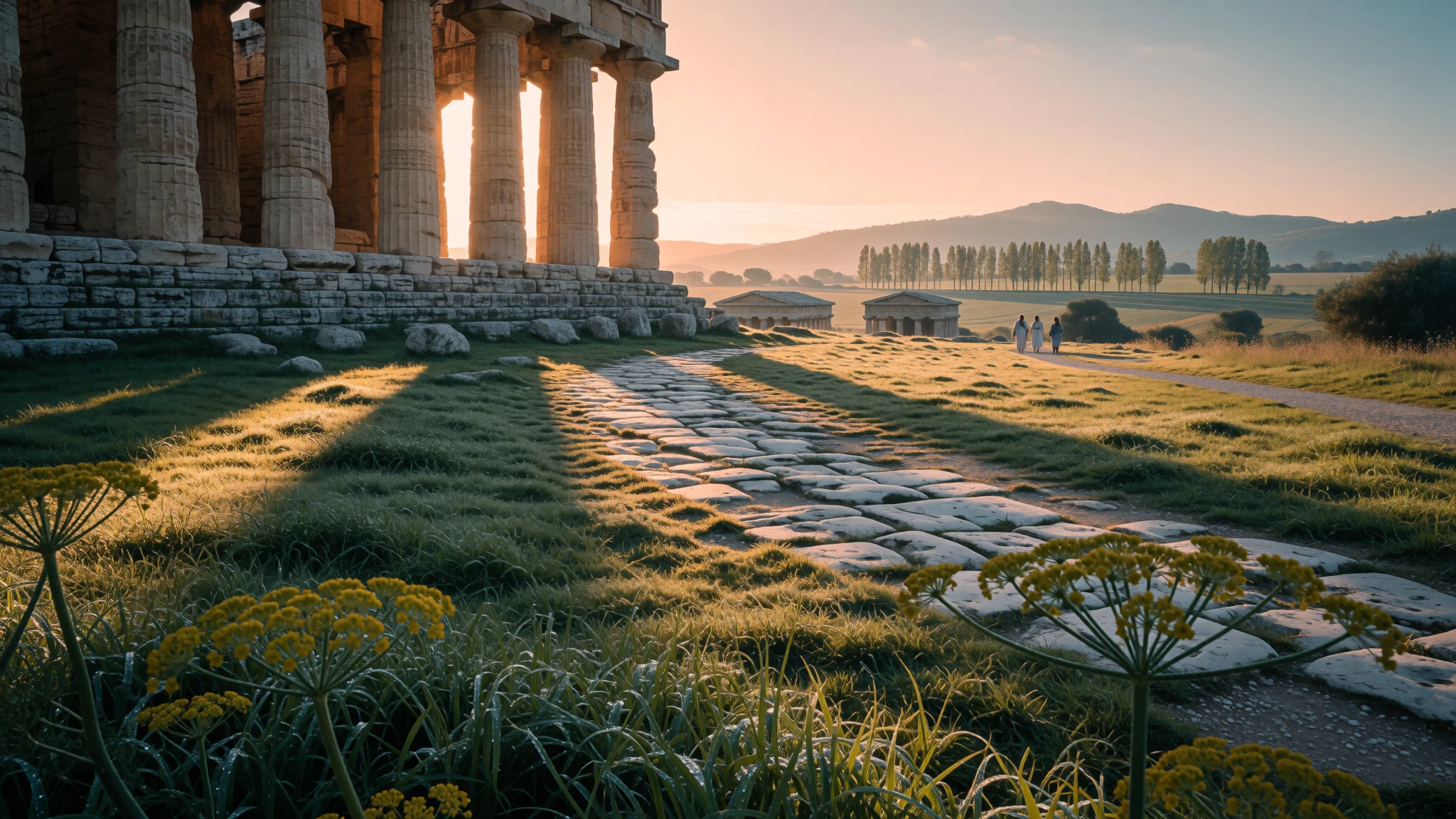
Paestum is a Greek town on the Italian coast whose Doric temples still stand in open grass, easy to reach from Naples or Salerno.
The place
Paestum lies on the flat Tyrrhenian coast of Campania, in the province of Salerno, only about 18 m above sea level. The ancient city now sits inside the modern village of Paestum, part of the comune of Capaccio Paestum, and it is a UNESCO World Heritage Site. What survives is less a single monument than a whole town laid out on the ground: a circuit of stone walls, paved streets, the footings of houses and public buildings, a partly intact amphitheatre, and three Doric temples that give the place its reputation. One temple stands in the north of the site and two in the south, each facing east toward the sunrise and set in open grass rather than squeezed between modern buildings. A national museum stands inside the grounds. It holds finds from Paestum and from the related sanctuary at Foce del Sele. The setting is gentler than at many famous ruins. Farmland surrounds the site, the sea is a short distance away, and beach resorts line the shore beyond. The railway station lies east of the park, within walking distance, so a car is not essential. Some honest warnings: shade is scarce, summer middays are hot, and tour groups tend to arrive mid-morning. Signs and maps on site do not always agree about which deity each temple belonged to, because scholars have revised the labels as new evidence has turned up. That muddle is part of the character of the place, and it is worth treating the names as provisional.
Its story
Paestum began as Poseidonia, a Greek colony founded around 600 BCE by settlers from Sybaris, itself a Greek colony in southern Italy. The name honours Poseidon, god of the sea. Ancient writers disagreed about who the settlers were. Strabo described Achaeans, Solinus spoke of Dorians, and a passage in Aristotle about Troezenians expelled from Sybaris has led some scholars to propose yet another origin. Strabo also reports that the colonists first fortified a spot close to the water and then chose higher ground further inland for the city proper. Tradition places a sanctuary of Poseidon on the promontory where Agropoli stands today. The ancient sources give no founding date, so the figure rests on archaeology, which shows roads, temples and other signs of a growing town in its early generations. The Greek city flourished for a couple of centuries and saw the rise of democratic government. Then the Lucanians, a people from the surrounding hills, seized it. Romans followed, renamed the city Paestum and settled it as a Latin colony. Decline came slowly, as trade routes shifted away and flooding turned the surrounding land to marsh. The town later became a bishopric, though only a titular one survives today. Deserted during the early Middle Ages, the site was left largely forgotten until the eighteenth century, when travellers and scholars rediscovered the temples. That long neglect is one reason the buildings are so well preserved: nobody lived there to pull them down for stone.
What to see
- Temple of Athena — Northern part of the archaeological site
Paestum's northern temple is attributed today to Athena, though older guidebooks call it a temple of Ceres or Minerva. It stands apart from the two southern buildings, so it is the natural place to begin or end a walk. Its east-facing front catches the low morning light well.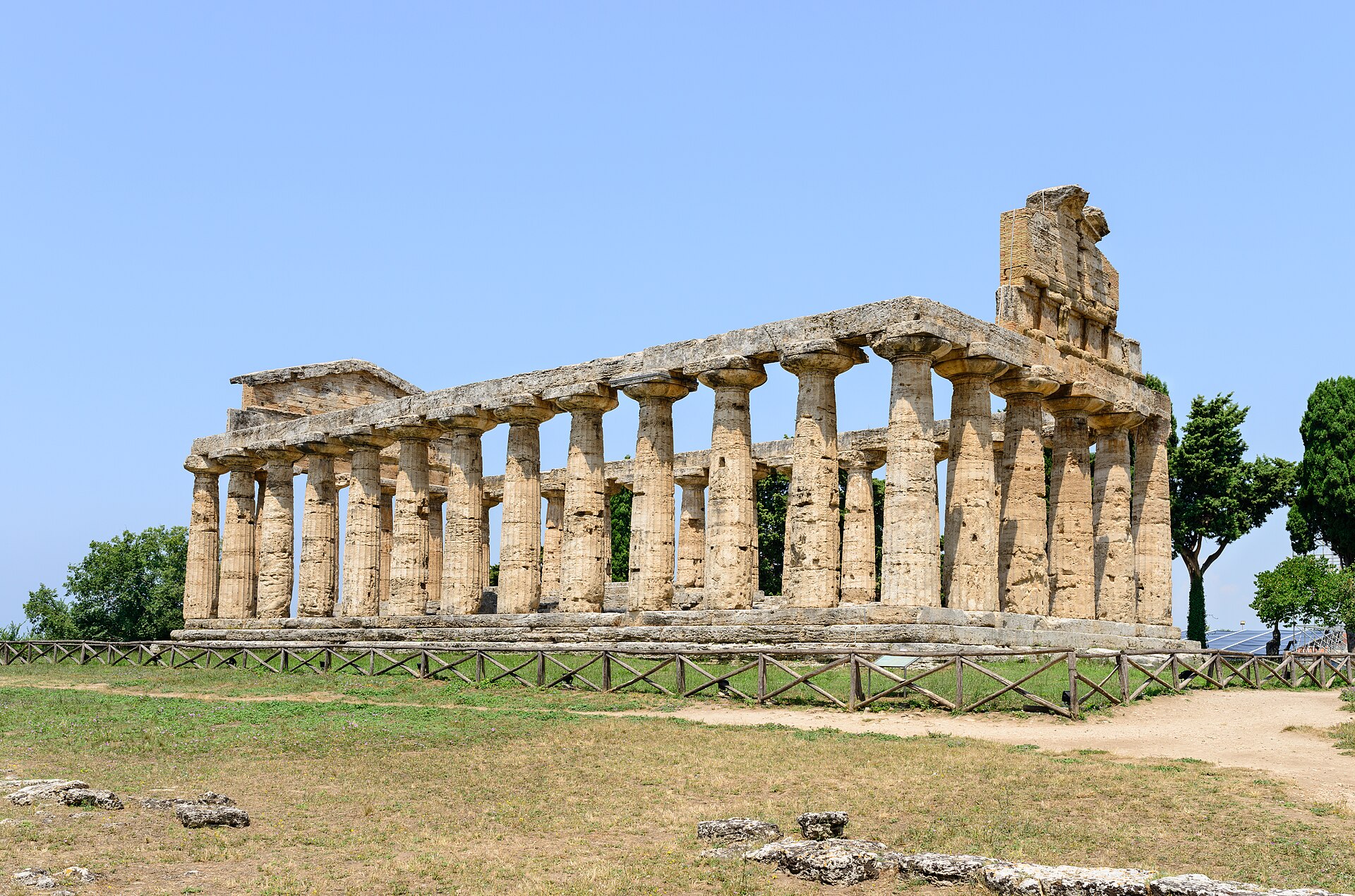
- Temple of Hera I — Southern part of the archaeological site
The southernmost temple is the earliest of the three and is often wrongly called the Basilica. It is broader than most Greek temples, with an odd number of columns across its front, which sets it apart from the usual pattern. Its weathered, slightly squat columns reward a slow walk around the whole base.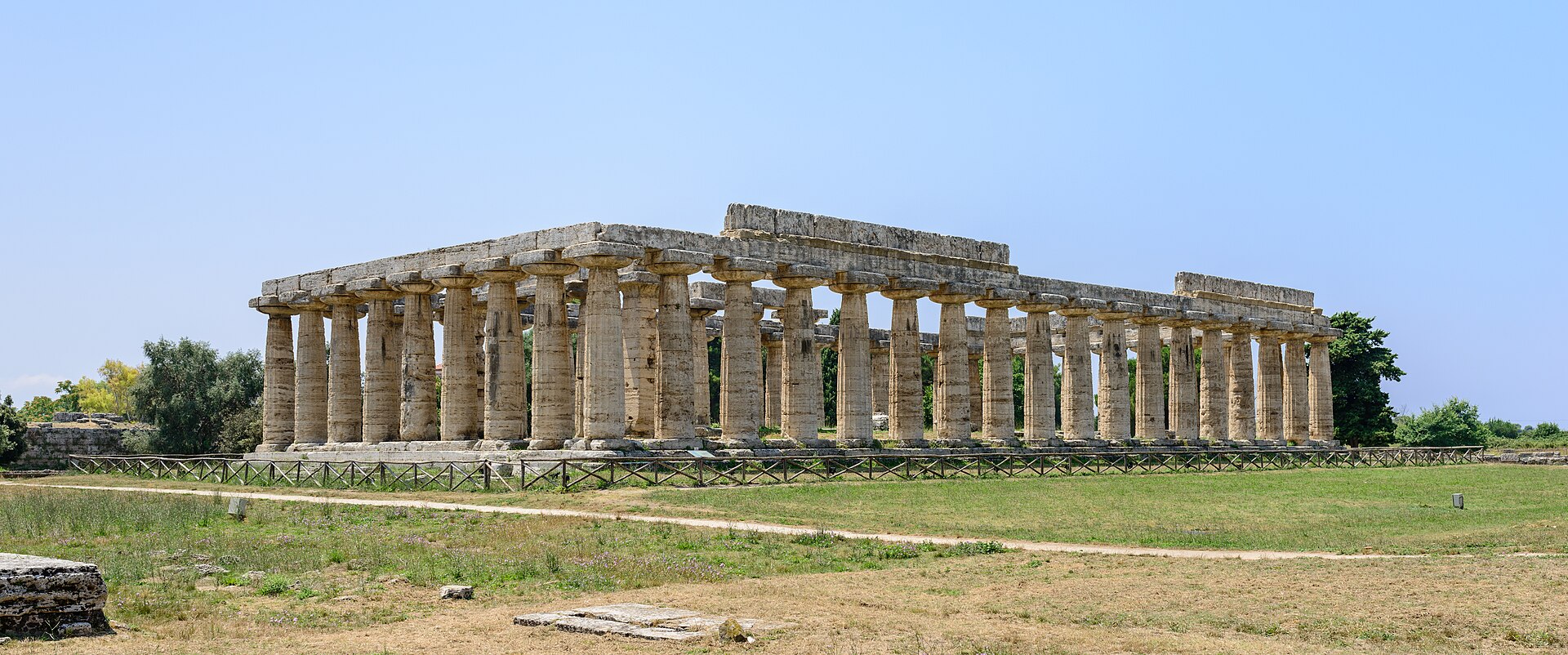
- Second Temple of Hera — Southern part, beside Hera I
Long known as the Temple of Neptune or Poseidon, this building is now assigned to Hera. Its outer colonnade and inner structure are unusually complete, so it gives the clearest sense of how a Doric temple was put together. Photographers favour the late afternoon, when the stone turns warm.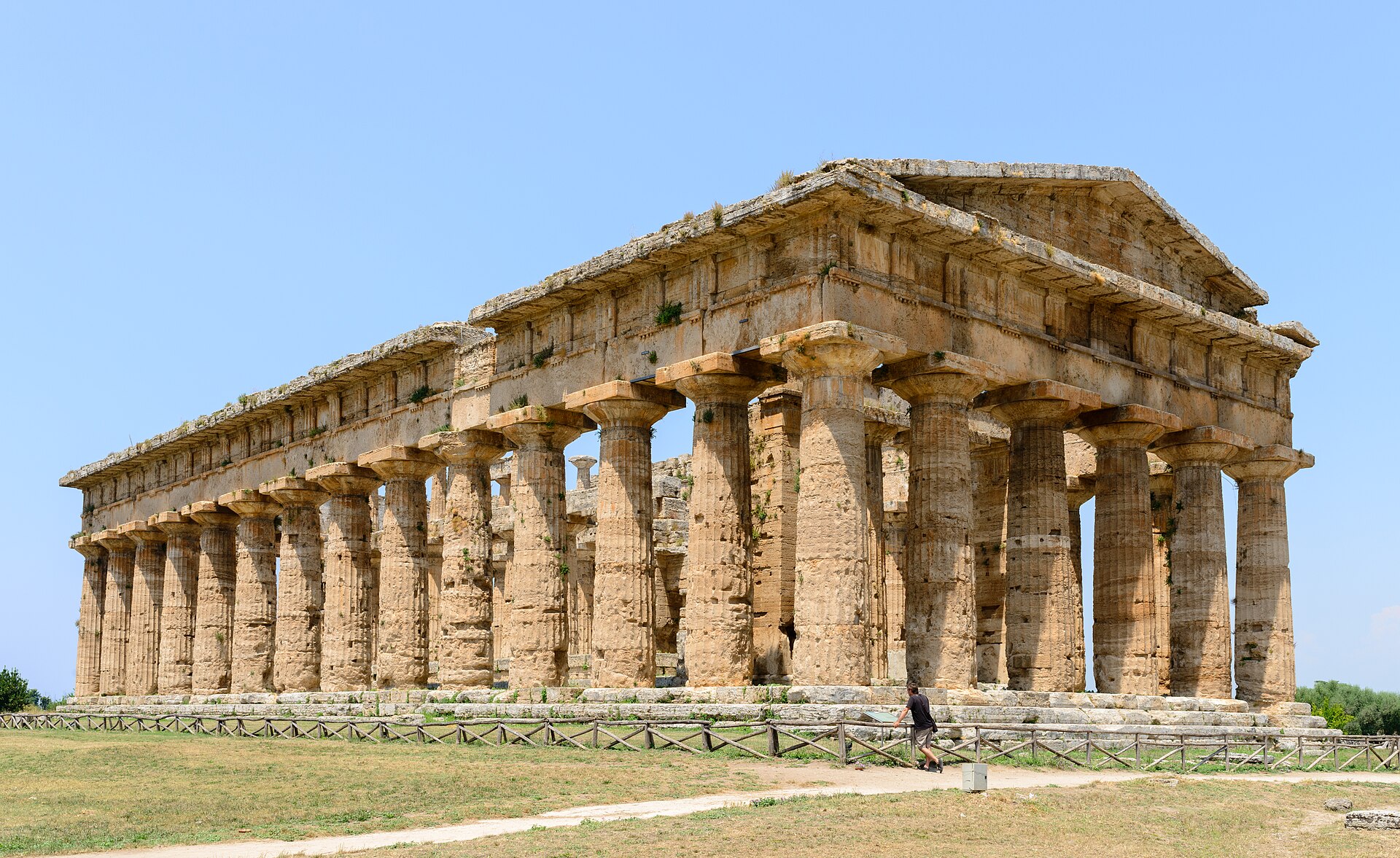
- National Archaeological Museum — Within the archaeological park
The museum inside the site holds the carved Sele metopes, wall paintings from tomb chambers and the contents of the Heroon. The best-known piece is the Tomb of the Diver fresco. It also covers the Allied landing at Paestum in the Second World War. It is a cool, shaded break from the heat.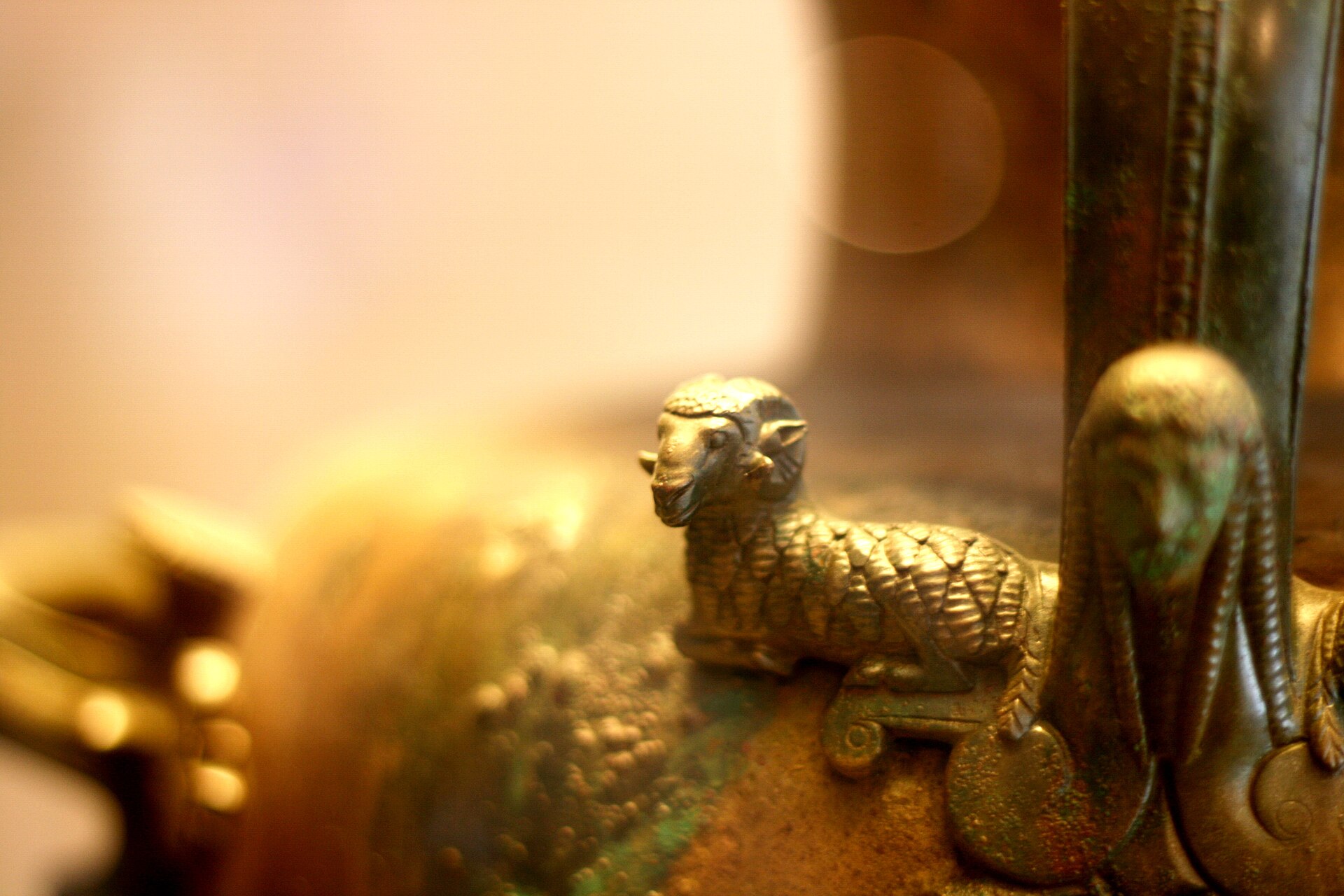
- City walls and paved streets — Edges and central axis of the site
Beyond the temples, the circuit of walls, the amphitheatre and the old paved roads show the ancient town as a working place. Walking a stretch of the wall at the edge of the site is quieter than the temple zone, and it makes the scale of the city easier to grasp.
Culture
Paestum belongs to Magna Graecia, the string of Greek colonies along southern Italy, and its culture is best read as layers. The Greek founders built temples to gods such as Hera and Athena, which served as the public face of the city's religion and civic pride. Later Lucanian and Roman residents reshaped the town, adding their own habits and buildings, and the amphitheatre belongs to that Roman phase. The museum shows how much of this life happened beyond the temples. Painted tomb chambers, including the Tomb of the Diver, give a rare glimpse of how people imagined death and the banquet. Everyday culture around the site today is distinctly Campanian. The surrounding farmland supports buffalo herds, and the cheese made from their milk is a point of local pride. Meals are social and unhurried, and mornings in the village begin with coffee taken standing at a bar. Locals tend to be relaxed about visitors, since the site has drawn travellers since its rediscovery in the eighteenth century. The names of the temples are still debated, so guides and signs may contradict each other, and nobody minds a polite question. Mediterranean summers shape the rhythm of the day, with a long, quiet break through the hottest hours and activity returning toward evening. Do not climb on, lean against or step over the temple stones or roped-off walls, as the footings are fragile and the site staff do enforce this.
What to wear
Paestum has no single famous costume of its own, so the traditional picture comes from two sources. Ancient Greek dress, shown on vases and in the museum's paintings, was built around the chiton and the himation, simple garments of wool or linen, pinned and draped rather than tailored. Later Campanian folk dress, now seen mostly at festivals and in dance groups, uses full skirts, aprons and embroidered bodices in cotton and wool. These are worn for feast days and performances, not day to day. What people wear now is ordinary southern Italian summer clothing: linen shirts, light trousers, sundresses, sandals and sunglasses, with swimwear on the beaches nearby. Locals dress a little more smartly for church and for evening strolls in town. A visitor should dress for sun and uneven ground. Bring a wide-brimmed hat, sunscreen and sunglasses, since the temple area has little shade. Wear flat, closed shoes with a good grip, because the paving is worn and the grass is uneven. Light, breathable cotton or linen covers the skin without overheating. Shoulders and knees need covering if you step into a church in the village, so a light scarf or shirt in the bag is useful. In winter and early spring, add a waterproof layer, as coastal showers and wind can make the open site feel cold.
What to eat
- Buffalo mozzarella — Dairy shops and farm counters around Paestum
The local speciality is mozzarella made from buffalo milk, soft and slightly tangy. It is eaten fresh, on its own with olive oil, or alongside tomatoes, bread and salad. Look for dairy shops and farm counters around the village, not just the tourist stalls. - Caprese salad — Restaurants and cafés near the museum
Sliced tomatoes, buffalo mozzarella, basil and olive oil make a simple, cold plate that suits a hot day among the ruins. It depends entirely on ripe tomatoes, so it tastes best in high summer, and nearly every eatery serves a version. - Pizza — Pizzerias in the village and near the site entrance
Campania is the home of pizza, and a pie topped with buffalo mozzarella is the obvious order here. Expect a soft, blistered base cooked fast in a wood oven. A lunchtime slice or whole pie is easy to find in the village. - Calzone — Pizzerias and casual eateries near the museum
A calzone is folded pizza dough filled with cheese and sometimes vegetables or cured meat, then baked until puffed. It is filling and portable, a good choice before a long walk around the temples, and it is often served with mozzarella. - Grilled bread with tomatoes — Cafés and trattorias around the archaeological park
Slices of toasted bread rubbed with tomato, olive oil and a little salt make a simple starter or light lunch. Mozzarella is often added on top. It is cheap, quick and easy to share between friends.
Plan it
Best time. April–May and September–October, when the days are warm but not punishing. July and August are hot and the site has little shade, while winter is mild but can be wet and breezy.
How long. 1
Getting there. Fly into Naples, then take a regional train to Paestum station, about 1.5 hours from Naples or about half an hour from Salerno. The station is east of the park, within walking distance. In summer, ferries run from Naples, Positano and Amalfi to Salerno, then a local bus or the train. By car, leave the motorway at Battipaglia from the north or Eboli from the south, and follow signs to Paestum.
Budget. mid
Tips
- Check the official site (https://parchipaestumvelia.cultura.gov.it/) for current opening hours and ticket details before you go
- Arrive early to beat tour groups and the midday heat, and save the museum for the hottest hours
- Buy your train ticket before you travel, as ticket sales at Paestum station are unreliable and the machine rarely works
- Carry water, a hat and sunscreen, because the temple area has almost no shade
Etiquette
- Stay off the temple stones and keep to marked paths
- Cover your shoulders and knees if you step into a church in the village
- Ask quietly before photographing locals or staff
Nearby
Sources
- Wikidata Q329967 (CC0)
- Wikipedia: Paestum (rev 1369259720) (CC BY-SA 4.0)
- Wikivoyage: Paestum (rev 5360408) (CC BY-SA 4.0)
- Aerial image of Paestum (view from the south), Carsten Steger (CC BY-SA 4.0)
- Veduta di Paestum, Oliver-Bonjoch (CC BY 3.0)
- Storia delle arti del disegno III (page 663 crop), Winckelmann / Fea (Public domain)
- Hera temple I, Paestum, Norbert Nagel (CC BY 3.0)
- Hera temple II, Paestum, Norbert Nagel (CC BY 3.0)
- Tempio di Nettuno, Paestum, Peppealb (CC BY 3.0)
- Athena temple, Paestum, Norbert Nagel (CC BY 3.0)
- Particolare di vaso nel Museo Archeologico Nazionale di Paestum, Annagialdini (CC BY 3.0)


