Padua
Padua, Italy
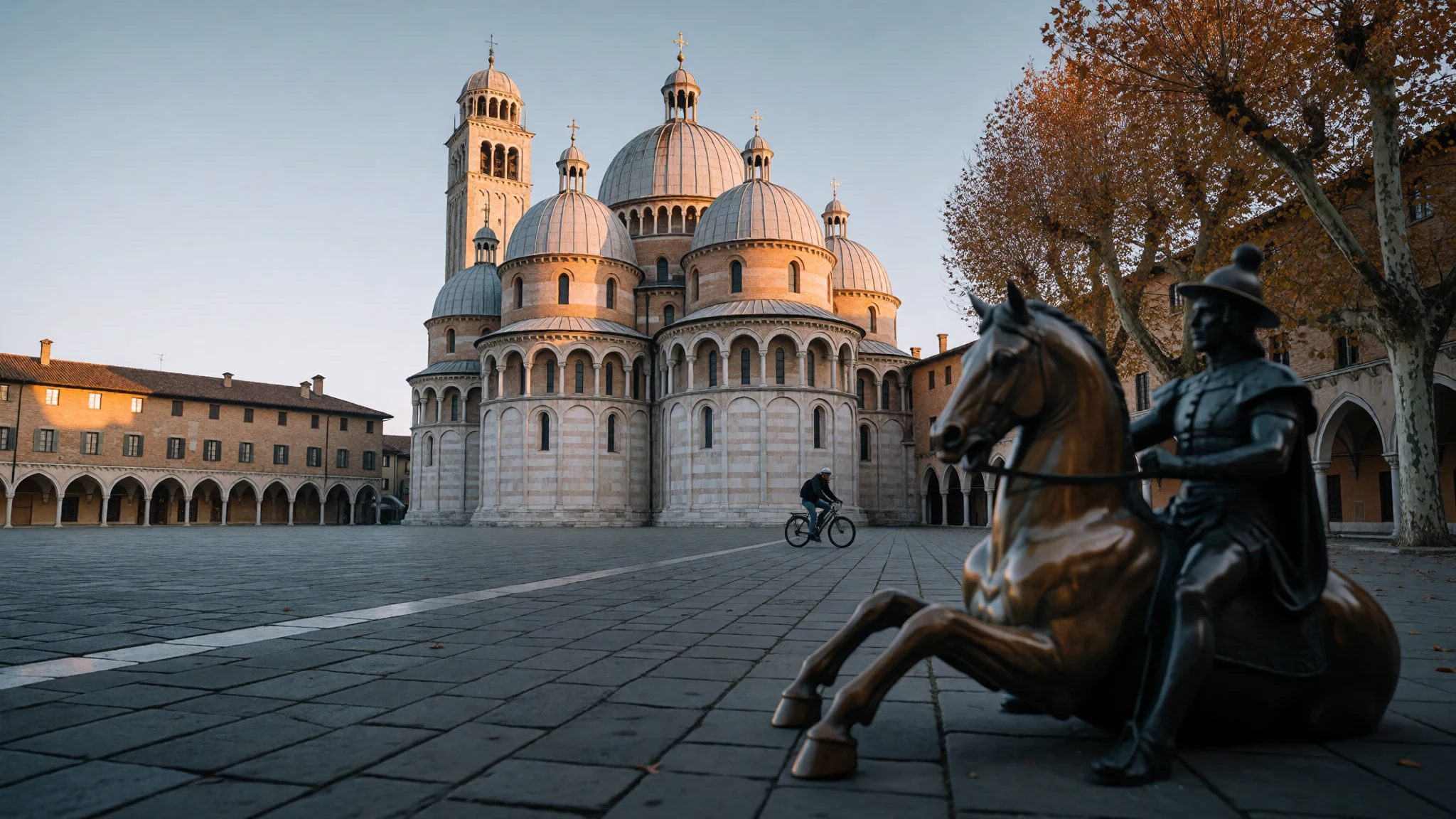
Padua packs Giotto's frescoes, a centuries-old university and a vast oval square into a compact, walkable city close to Venice.
The place
Padua sits on the Veneto plain in northern Italy, on the banks of the Bacchiglione, with Venice to the east and Vicenza to the west. About 206,000 people live in the commune, and a visible share of them are students, which gives the centre a bicycle-heavy, café-loving energy that Venice, half an hour away by train, rarely matches. The old core is a knot of arcaded streets, brick towers and church domes, with canals tracing the line of former defences. Two daily markets fill the squares on either side of the medieval town hall, one for vegetables and one for fruit, and the arcades nearby crowd with locals at aperitivo hour. Padua is a working city as much as a historic one, a hub for trains, trade and the surrounding province, so shutters come down at lunchtime and most faces on the pavement belong to residents rather than tourists. The terrain is flat, only about 12 metres above sea level, which makes walking and cycling easy, and one loop on foot links most of the main sights. To the south-west the Euganean Hills rise abruptly out of the farmland, a favourite for weekend walks and thermal baths. Summers are hot and humid, winters damp and often foggy, so the gentler seasons suit the city best.
Its story
Padua explains its own beginnings through a legend. Roman writers, among them Virgil and Livy, record that the city was founded by Antenor, a Trojan prince who escaped the fall of Troy and led refugees and allies, known as the Eneti, to the plain of the Veneto. The founding date recorded for the city is 1183 BCE. In 1274 workers unearthed a large stone coffin, and the medieval city council promptly declared that it held Antenor himself; a Latin verse by the local poet Lovato Lovati was placed beside it. Modern testing dates the coffin to the 4th or 3rd century BC, while excavations point to settlement in the centre between the 11th and 10th centuries BC, so the real story is ancient even if the hero is doubtful. Later chapters are better documented. The university began in 1222 and drew scholars for generations. Between 1303 and 1305 Giotto painted the walls of the Scrovegni Chapel. Padua then came under the Republic of Venice, which supervised the university through a small board of patricians, and afterwards belonged to the Habsburg monarchy and the Austrian Empire before joining the Kingdom of Italy. Each era left something visible: a Venetian-period anatomy theatre, Giotto's blue vault, and courtyards in the old university building crowded with the painted coats of arms of past students.
What to see
- Basilica of Saint Anthony — South of the centre
Pilgrims arrive from all over the world at the Basilica of Saint Anthony, begun soon after the saint's death in the 1200s. Its cluster of domes gives Padua an unmistakable skyline. Inside, a steady, quiet queue passes the tomb. Shoulders and knees must be covered, and the frescoed Oratory of Saint George on the same square is usually much calmer.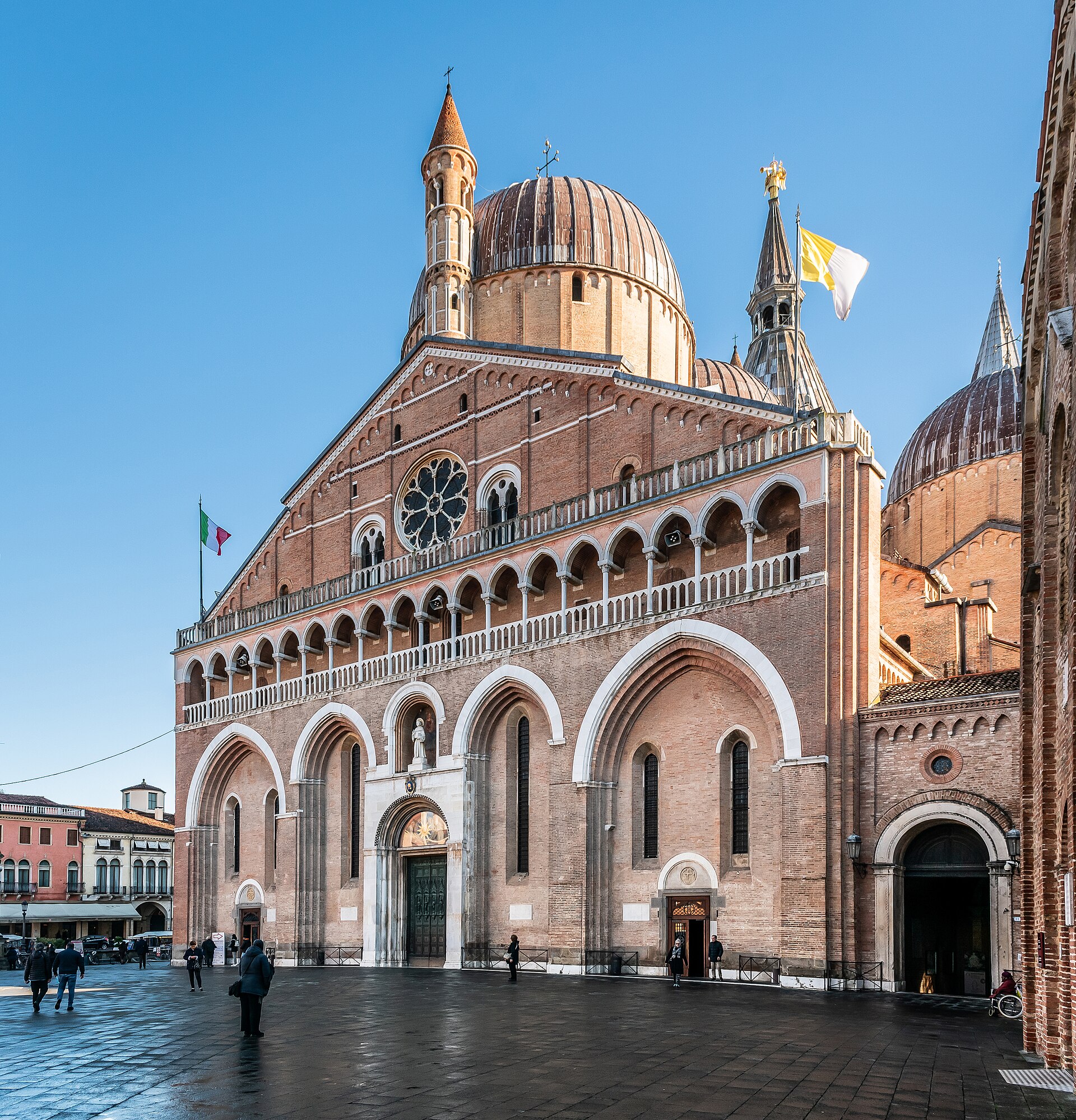
- Scrovegni Chapel — North of the centre
The Scrovegni Chapel stands in the north of the old centre, a short walk from the railway station. Giotto covered its walls and ceiling with frescoes between 1303 and 1305, a deep blue sky scattered with stars above scenes from the lives of Mary and Christ. Visits are controlled, so check the official booking arrangements well ahead. - Church of the Eremitani — North of the centre
The Eremitani church stands close to the Scrovegni Chapel and is easy to recognise by its unusual wooden ceiling. Bombing in the Second World War destroyed much of its art, so it feels sparer than many Italian churches, but what survived rewards a slow lap and makes a sensible companion to the chapel visit. - Palazzo della Ragione — Between the two market squares
The Palazzo della Ragione is the broad medieval hall standing between Piazza delle Erbe and Piazza della Frutta. Small shops and stalls occupy its ground-floor arcades, while the big hall sits above. It is the hinge of the old centre, a good place to get your bearings before wandering the surrounding lanes. - Palazzo Bo and the university — Central Padua
Palazzo Bo is the historic seat of the University of Padua, founded in 1222. Guided visits cover old lecture rooms, courtyards and the anatomy theatre of 1594, a steep wooden funnel of viewing tiers. Galileo taught here. Tours are best booked in advance, so check the university's official site.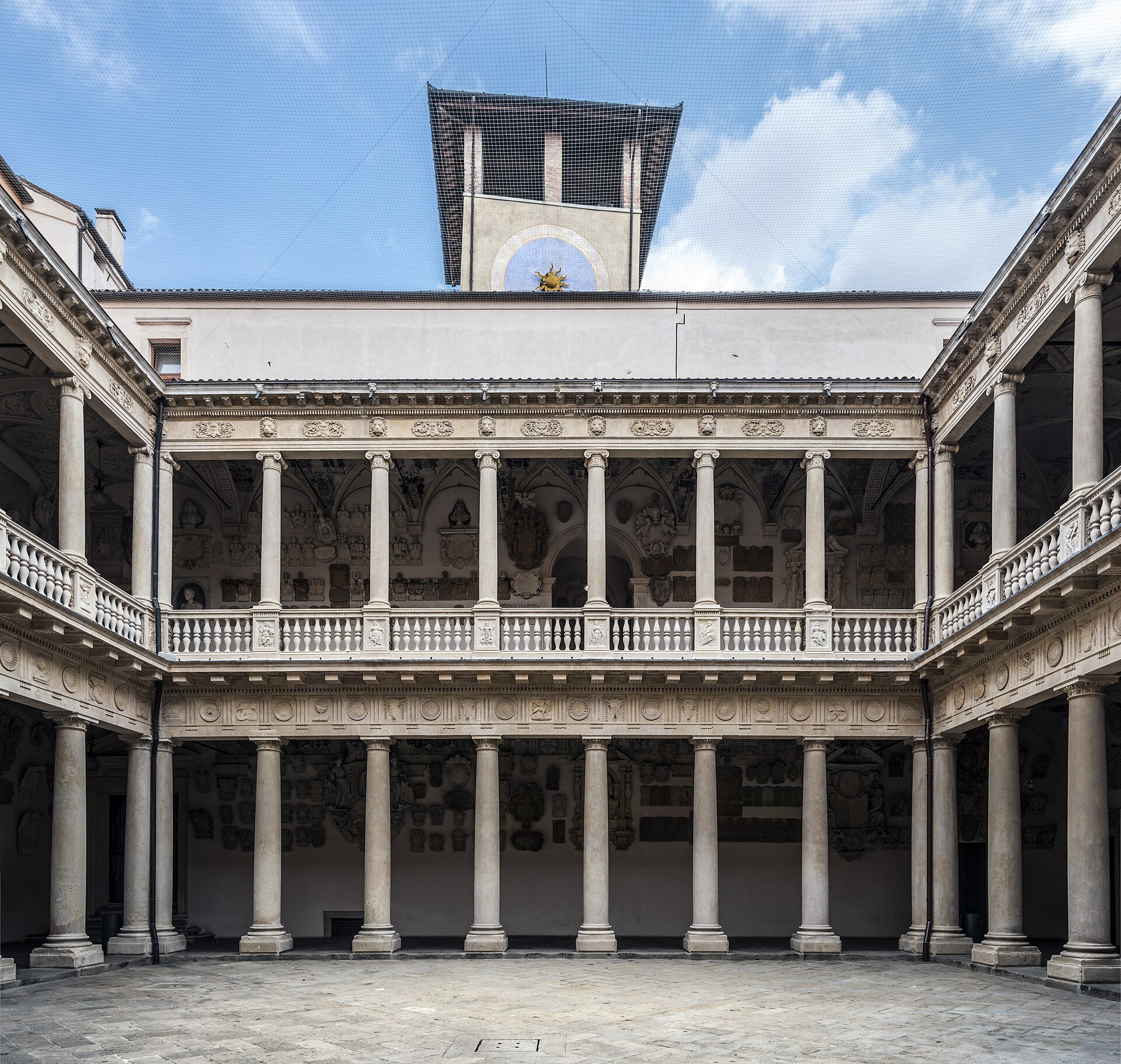
- Prato della Valle — South of the centre
Prato della Valle is a wide elliptical square south of the centre, circled by a shallow canal and lined with statues along its banks. A small green island, Isola Memmia, sits in the middle. Students picnic, joggers loop the path and the benches suit a slow end to a day of sightseeing.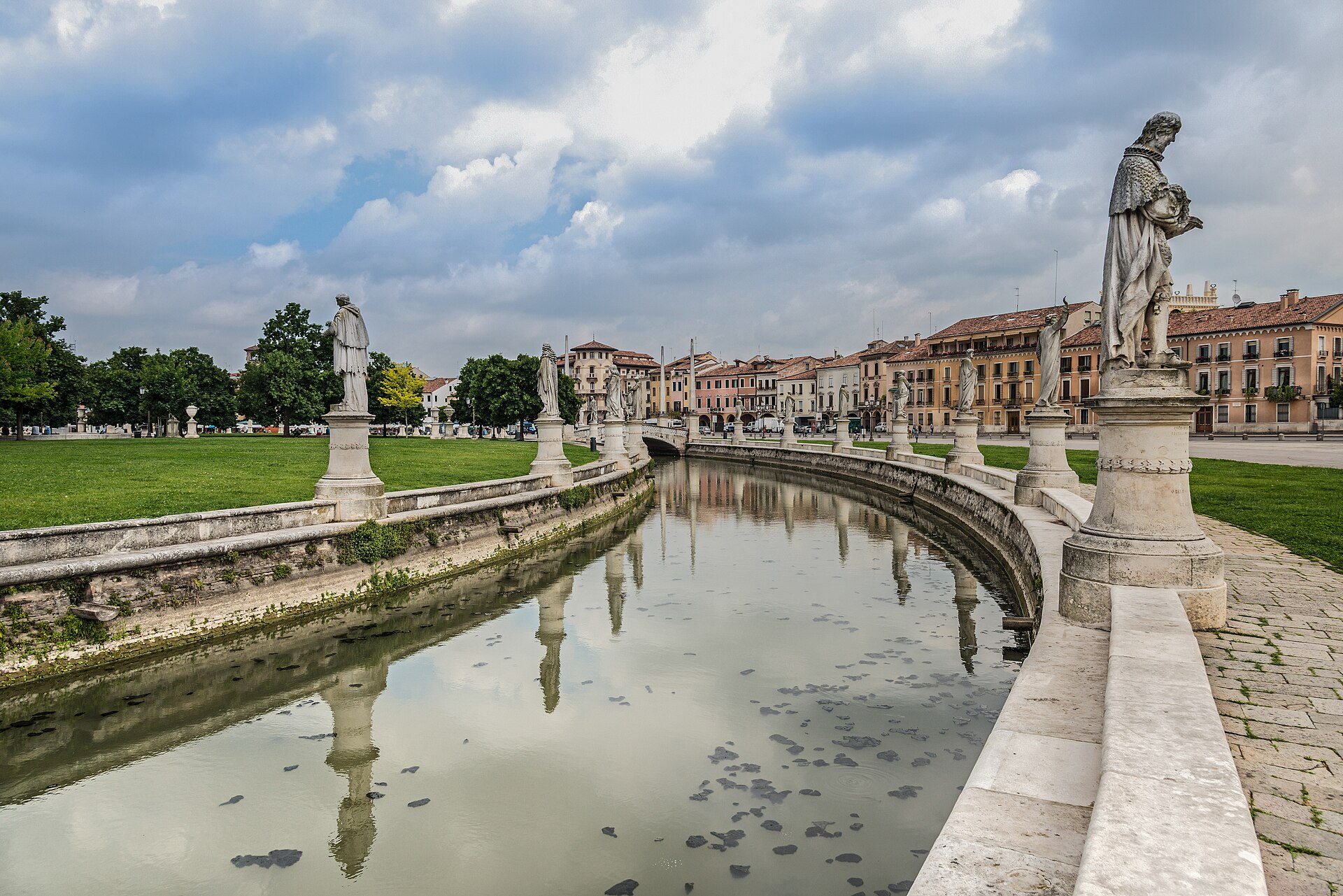
Culture
Padua's character comes from its university, founded in 1222. Under Venetian rule it was overseen by three patricians, and its roll of professors and students includes Copernicus, Vesalius and Galileo. In 1678 Elena Lucrezia Cornaro Piscopia graduated here, the first woman anywhere to take a university degree. The botanical garden, begun in 1545 as a physic garden for the medical faculty, still grows plants beside the old teaching rooms. Student life remains part of the street scene. Graduation is a public event: newly qualified graduates wear a laurel wreath and are cheered, teased and sprayed with drinks by friends in the squares, sometimes to the sound of comic songs. Alongside this runs deep devotion to Saint Anthony, known locally simply as the Saint, whose basilica draws pilgrims at every time of year and keeps a watchful hush around his tomb. Daily rhythm matters too: mornings at the markets, a long lunch, then the evening aperitivo, when the arcades fill with conversation and spritz glasses. Venetian dialect is still heard among older residents, although Italian is the language of shops and tourism. Visitors who greet staff politely and linger over a coffee are met warmly. Cover your shoulders and knees, keep your voice low and do not photograph people praying at Saint Anthony's tomb.
What to wear
Padua has no single regional costume of the kind seen in mountain valleys, but the wider Veneto left a few garments of note. The best known is the tabarro, a heavy wool cloak worn by men in Venetian times, which now turns up at carnival and costume events rather than on the street. Fine lace, famous from the Venetian lagoon islands, is also part of the region's textile story. The most Paduan tradition is the laurel wreath worn by graduates on their big day. Everyday dress today is smart casual and fairly dark in colour: jackets and scarves in cooler months, linen and loafers in summer, and a great many people cycling in ordinary clothes. Students dress more loosely, and evening aperitivo calls for a step up from trainers. A visitor should pack for the season. Summer is hot and humid, so light cotton or linen, a hat and sunscreen help. Winter needs a proper coat and an umbrella for damp, foggy days. Shoes matter more than anything: the old centre is paved with stone, and a day of sightseeing means comfortable, flat soles. Churches, particularly the Basilica of Saint Anthony, expect covered shoulders and knees, so a light scarf or shawl in the bag is useful.
What to eat
- Bigoli with duck ragù — Trattorias and osterie in the old centre
Bigoli are thick, rough strands of wholewheat-style pasta, traditionally served in the Veneto with a slow-cooked duck sauce. The sauce clings well to the strands. Look for it on the menu of an everyday trattoria or osteria in the old centre, especially in cooler months. - Risi e bisi — Family-run osterie, in spring
Risi e bisi is a loose, soupy dish of rice and fresh peas, a Venetian-region favourite that peaks in spring when peas are in season. It is gentle, savoury and comforting. Osterie and family-run restaurants usually serve it only while peas are fresh. - Sarde in saor — Wine bars near Piazza delle Erbe
Sarde in saor are fried sardines marinated with sweet-and-sour onions, vinegar and often raisins and pine nuts, a classic cicchetti-style bite of the Venetian lagoon region. Small plates like this appear at aperitivo time in wine bars around the market squares. - Gallina padovana — Traditional trattorias, in autumn and winter
The Padua hen, a local breed with a distinctive feathery crest, is traditionally simmered into broth or served boiled with sauces in the colder months. It is a dish of the countryside around the city, best tried at a traditional trattoria rather than a quick-service place. - Pizza and prosecco — Pizzerias around the university quarter
Student-friendly pizzerias are a feature of Padua, serving large, wood-fired pizzas with local sparkling wine by the glass or half-litre. Expect lively tables, especially on weekends and around graduation days, and enjoy the mix of families, friends and students. - Spritz at aperitivo — Piazza delle Erbe and Piazza della Frutta, early evening
The spritz, a long drink of sparkling wine, a bitter liqueur and soda, is the city's evening ritual, taken standing in the squares with small snacks. It is more a social habit than a drink, so a single glass can last an hour or more.
Plan it
Best time. March and November are the most comfortable months, with mild days and good walking weather. July and August are hot and humid, while winter is damp and often foggy.
How long. 2
Getting there. Venice Marco Polo airport (VCE) is about 50 km away, with a direct bus to Padua taking about an hour, or a bus to Venezia Mestre station and a train on. Treviso (TSF), about 42 km away, serves low-cost carriers. Padua's central station is on the main Veneto rail network: Venice is about 30 minutes by train, Bologna about an hour and a half and Milan about two and a half hours. The old centre is a short walk or tram ride from the station.
Budget. mid
Tips
- Book the Scrovegni Chapel and the Palazzo Bo tour well ahead through their official sites, as visits are controlled
- Do the markets in the morning, when stalls are fullest and the squares are least crowded
- Padua works well as a base for day trips to Venice, as trains run often
- Carry a card but keep some cash for small bars and market stalls
- Bring comfortable flat shoes for stone paving, and refill a water bottle at public fountains in summer
Etiquette
- Cover shoulders and knees in churches, especially the Basilica of Saint Anthony
- Keep voices low and do not photograph worshippers at the tomb
- Greet shop and café staff with a short buongiorno or buonasera
Nearby
Sources
- Wikidata Q617 (CC0)
- Wikipedia: Padua (rev 1383750578) (CC BY-SA 4.0)
- Wikivoyage: Padua (rev 5413680) (CC BY-SA 4.0)
- Didier Descouens, View Prato della Valle in Padua, via Wikimedia Commons (CC BY-SA 4.0)
- Hannelore, Prato della Valle, via Wikimedia Commons (CC BY 3.0)
- Tournasol7, Via San Francesco in Padua, via Wikimedia Commons (CC BY 4.0)
- Tournasol7, Saint Cantianus church in Padua, via Wikimedia Commons (CC BY-SA 4.0)
- Tournasol7, Saint Anthony of Padua basilica, via Wikimedia Commons (CC BY-SA 4.0)
- Tournasol7, Palazzo del Capitanio in Padua, via Wikimedia Commons (CC BY 4.0)
- Didier Descouens, Palazzo Bo (Padua), via Wikimedia Commons (CC BY-SA 4.0)
- Tournasol7, Cathedral of Padua, via Wikimedia Commons (CC BY-SA 4.0)


