Pachacámac
Pachacámac, Peru
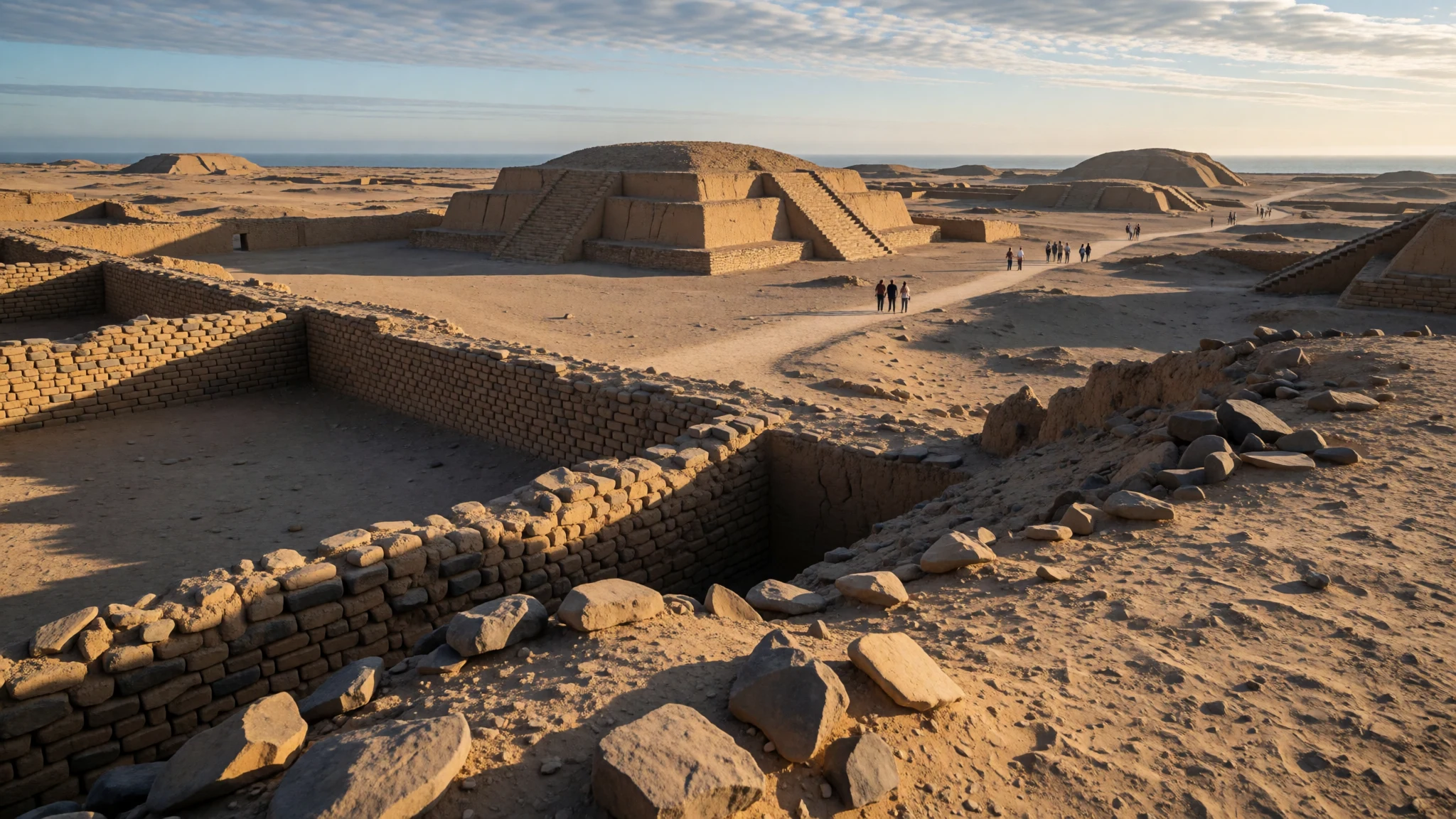
Pachacámac is a vast coastal sanctuary where ancient Andean civilisations worshipped the earth creator god across more than a millennium of history.
The place
Pachacámac lies in the fertile valley of the Lurín River, spreading across a vast expanse of arid coastal land in Peru. Set within sight of the Pacific Ocean, this archaeological complex covers a sprawling desert landscape where monumental pyramids, ramps, plazas, and courtyards rise from the sand. The geography of Pachacámac is defined by its dramatic contrast between the dry, ochre foothills and the distant blue of the sea, creating an imposing setting for one of the most significant ceremonial centres of the ancient central Andes. Visitors walking through the ruins encounter sun-baked adobe structures that have withstood centuries of coastal winds. The scale of the site becomes clear as you trace the ancient pathways connecting walled enclosures and pyramidal platforms. Positioned just south of the modern capital, the ruins remain remarkably quiet compared to the urban sprawl nearby, allowing travellers to appreciate the silent expanse of the desert valley. The layout reflects centuries of architectural evolution, with successive civilisations adding their own sacred spaces, administrative compounds, and residential quarters to the growing complex. Walking among the ruins reveals how ancient builders utilised local clay, stone, and reed materials to construct enduring monuments that harmonised with the stark desert topography. The dry coastal climate has helped preserve the earthen architecture, though centuries of wind and rare seismic tremors have left their weathered marks on the surviving walls.
Its story
Pachacámac takes its name from Pacha Kamaq, the revered earth creator deity whose oracle was consulted by pilgrims from across the Andes. The sanctuary was first established around the beginning of the common era, gradually growing into a major pilgrimage destination and political capital over the course of centuries. Successive Andean cultures, including the Wari and the Ychsma, left their distinct architectural and artistic imprints on the sanctuary before the Inca arrived to incorporate the sacred site into their vast imperial network. The Inca respected the immense spiritual authority of the local oracle, permitting the priests of Pachacámac to maintain considerable autonomy while constructing their own imposing monuments, such as the grand coastal temple dedicated to the sun. Pilgrims traveled great distances along ancient Andean roads to reach the sanctuary, bearing offerings of spondylus shells, fine textiles, and precious metals in exchange for divine prophecy and healing. When European forces arrived in the sixteenth century, the immense wealth accumulated by the sanctuary over generations drew their attention, leading to the rapid dismantling of indigenous authority and the eventual abandonment of the ceremonial functions. Despite the disruption of the conquest, the monumental remnants of Pachacámac endured through the colonial era and into the modern period as scholars began unearthing the stratified layers of Andean history buried beneath the desert sands.
What to see
- Templo del Sol — Western coastal ridge of the archaeological sanctuary
Perched dramatically on a high ridge facing the Pacific Ocean, the Temple of the Sun is the most striking structure at Pachacámac. Constructed by the Inca, its terraced red-painted stone walls offered sweeping views over the ocean and the surrounding ceremonial courtyards. - Templo Pintado — Central ceremonial zone near the main plaza
The Painted Temple stands as an important ceremonial enclosure where archaeologists have uncovered traces of ancient polychrome murals. These surviving red geometric designs and animal figures offer a rare glimpse into the vibrant visual artistry that once adorned the sacred adobe walls. - Templo Viejo — Northern sector of the archaeological complex
The Old Temple represents one of the earliest monumental phases at Pachacámac, built using millions of small hand-formed adobe bricks. This ancient platform structure showcases the early architectural traditions that laid the foundation for the sanctuary's long religious prominence. - The Site Museum — Main entrance pavilion and reception area
Located near the main entrance, the modern museum houses a curated collection of artefacts excavated from the ruins, including carved wooden idols, decorated ceramics, and intricate textiles. It provides essential context for understanding the various cultures that occupied the sanctuary. - The Plaza of the Pilgrims — Central valley floor between the major pyramid groups
This vast open gathering space once accommodated thousands of travelers who arrived at Pachacámac from distant Andean regions. The expansive plaza served as a bustling assembly point for rituals, commerce, and the distribution of offerings before pilgrims approached the inner shrines.
Culture
The cultural legacy of Pachacámac is deeply rooted in the ancient Andean worldview, where the landscape itself was imbued with sacred power and ancestral presence. Long before European contact, the Lurín Valley was a complex multi-ethnic hub where diverse peoples gathered to share goods, myths, and religious devotion under the authority of the great oracle. Modern Peruvians view the sanctuary as a cornerstone of national heritage, reflecting the sophisticated engineering, artistic mastery, and spiritual depth of pre-Columbian civilisations. Contemporary local communities near the Lurín River maintain a quiet respect for the ancient ruins, often viewing the surrounding desert hills with a sense of enduring reverence. Cultural preservation efforts work alongside local schools to ensure that younger generations understand the significance of the adobe pyramids and the fragile ecosystem that surrounds them. When exploring the archaeological complex, visitors should remain strictly on designated pathways and avoid climbing on fragile earthen walls to help preserve the ancient structures for future generations.
What to wear
Traditional textile arts at Pachacámac are represented by masterworks of pre-Columbian weaving, such as intricate fish-shaped cloths and patterned garments crafted from alpaca and cotton fibers using ancient loom techniques. These historic textiles demonstrated social status, religious devotion, and regional identity through sophisticated iconography and dyed yarns. Today, people living and working around the Lurín Valley dress in practical, contemporary casual clothing suitable for a coastal desert climate, including jeans, lightweight shirts, and sturdy footwear. Visitors exploring the ruins should wear comfortable walking shoes with good grip for sandy and uneven earthen terrain, along with breathable layers that can be adjusted as coastal temperatures shift. Because the desert sun is strong and shade is minimal across the open archaeological site, travellers need to wear a wide-brimmed hat, sunglasses, and high-factor sunscreen.
What to eat
- Causa Rellena — Traditional restaurants along the main Lurín Valley highway
A traditional layered potato terrine seasoned with yellow ají pepper and lime, typically stuffed with seasoned chicken or tuna and garnished with olives and avocado. This refreshing dish is widely enjoyed in traditional eateries throughout the Lurín Valley. - Seco de Cordero — Local family-run lunch spots near Pachacámac town
A tender lamb stew slow-cooked in a rich, aromatic sauce of coriander, garlic, and chicha de jora, served alongside white beans and cassava. This comforting preparation is a staple of traditional coastal Peruvian cooking. - Anticuchos — Traditional weekend food stalls and local grills in the valley
Skewers of marinated beef heart grilled over an open flame until tender and smoky, brushed with garlic, vinegar, and ají panca paste, and served with boiled potatoes and spicy yellow pepper sauce. - Chicha Morada — Every local eatery and refreshment kiosk near the archaeological site
A deeply refreshing non-alcoholic beverage brewed from purple maize boiled with pineapple rinds, cinnamon, and cloves, then sweetened and chilled with a squeeze of fresh lime juice. - Ceviche — Coastal seafood restaurants operating in nearby Lurín district
Fresh fish fillets cured in tart lime juice with sliced red onions, hot ají limo peppers, and fresh cilantro, served with crunchy corn kernels and sweet potato slices.
Plan it
Best time. May to October offers pleasant, overcast coastal weather known locally as garúa, which keeps the desert temperatures comfortable for walking without intense heat.
How long. 1–2
Getting there. Take a taxi or an organised excursion from Lima down the Pan-American Highway southeast toward the Lurín Valley, a journey of about 40 kilometres.
Budget. low
Tips
- Arrive early in the morning before the coastal fog clears or the midday sun peaks
- Wear sturdy walking shoes to navigate loose sand and uneven earthen paths
- Bring plenty of drinking water as there are limited facilities inside the vast archaeological complex
- Hire a certified local guide at the entrance to fully understand the history of the adobe pyramids
- Carry cash in local currency for admission fees and small purchases outside the main pavilion
Etiquette
- Stay strictly on marked walking paths to protect fragile archaeological remains
- Do not climb on ancient adobe walls or remove any stones or pottery sherds
Nearby
Sources
- Wikidata Q430563 (CC0)
- Wikipedia (rev 1373667392) (CC-BY-SA 4.0)
- Photo 01 (CC BY 3.0)
- Photo 02 (CC BY 2.5)
- Photo 03 (CC BY 3.0)
- Photo 04 (CC0 1.0)
- Photo 05 (CC BY 2.5)
- Photo 06 (CC BY 3.0)
- Photo 07 (CC BY 3.0)
- Photo 08 (CC BY 3.0)
- Wikivoyage (CC BY-SA 4.0)


