Ouzoud Falls
Ouzoud Falls, Morocco
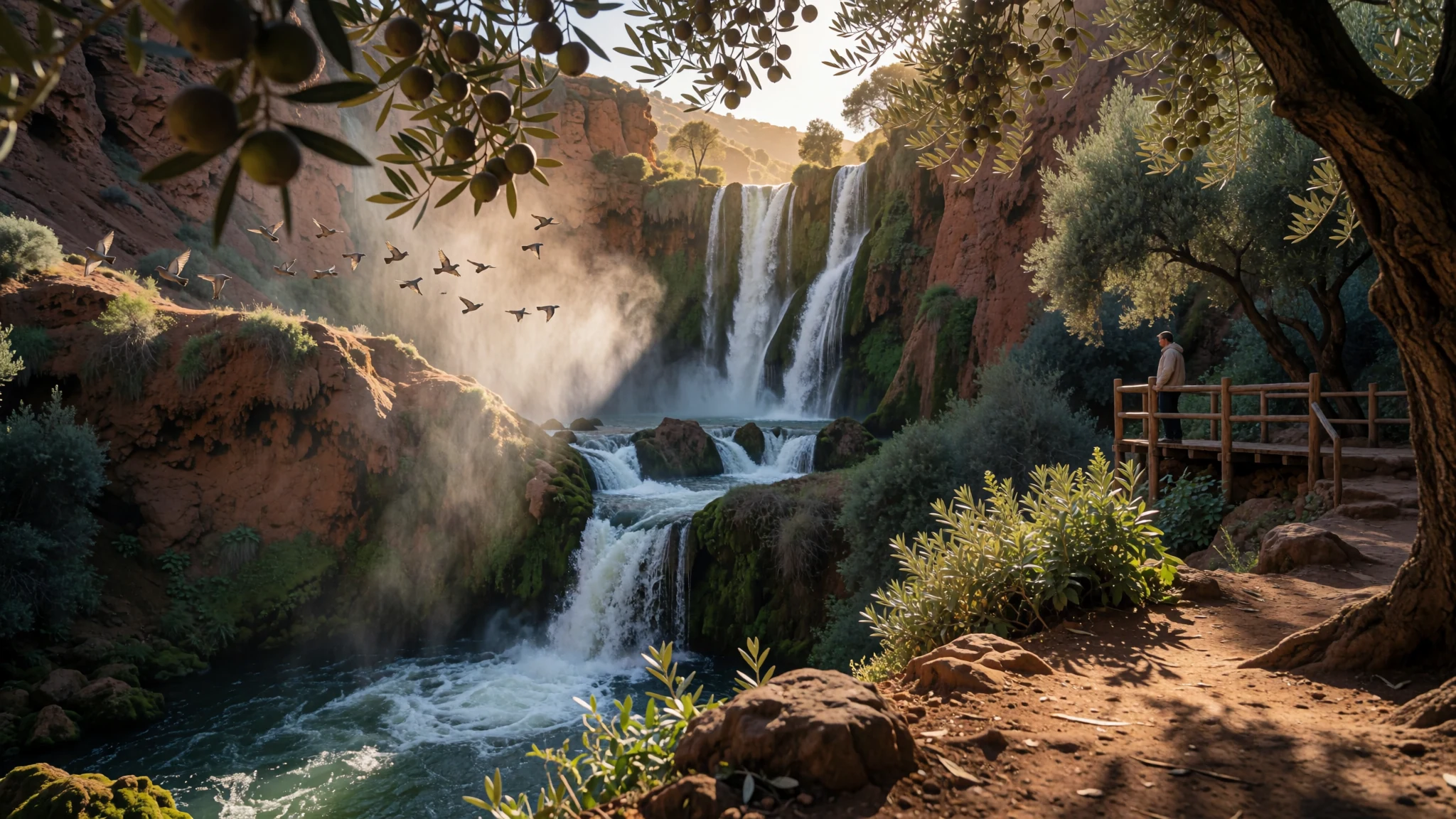
Ouzoud Falls tumble about 110 metres into a gorge in Azilal Province, a worthwhile day trip from Marrakech.
The place
Ouzoud Falls, known in French as the Cascades d'Ouzoud, is a set of waterfalls in Azilal Province in the Atlas mountains of Morocco. The water spills into the gorge of the El-Abid River, and the main drop is about 110 metres. The site lies roughly 150 kilometres north-east of Marrakech and 36 kilometres from Azilal, the nearest sizeable town, so most visitors arrive by road from the city in a hired car or shared taxi, with the last stretch winding through farmland.
The name is usually explained as a Berber phrase meaning the act of grinding grain, a hint at how the river has long been used for milling. Walnut, olive and fig trees cling to the cliffs and the lower terraces, giving the gorge a green, shaded feel. Above the rim the land turns dry and rocky, so the sudden greenery after the drive is the first thing many people notice.
Spray keeps the rocks and paths damp, and the pools at the foot of the falls are popular for a dip in warmer months. Small restaurants and guesthouses cluster near the lower viewpoint, and the site has become a steady stop for day trips and weekend visitors, so the middle of the day can feel crowded. Early and late hours bring softer light and quieter paths.
Its story
Ouzoud Falls take their shape from the El-Abid River, whose Arabic name is often translated as the Slaves' River, which has cut a deep gorge through the Atlas foothills before pouring over a sheer lip. The falls are a place where water has done its slow work for a very long time: wearing away rock, feeding orchards and turning millstones in the valley below.
Local people have shaped the river's flow for generations. Small irrigation channels carry water to fields and orchards, and grain that once went through village mills was an everyday part of life across the Azilal area. The Amazigh name, Imuzzar n wuẓuḍ, sits beside the French name Cascades d'Ouzoud on signs and maps, a reminder that Berber speakers were here long before the first tourists.
Visitors began arriving in larger numbers as roads improved and the route from Marrakech became a practical day out. Guesthouses and eating places grew up along the approach, and the lower paths were gradually made easier to walk. The falls now draw a mix of Moroccan families, independent travellers and organised groups, and the local economy leans on that steady flow of people through the summer and autumn.
The landscape itself tells much of the story. The cliffs are layered rock, the colour of the water changes with the season and the rain, and the spray that rises from the pool can soak anyone who lingers too close to the edge. Each generation has read the river differently: as a source of food, a route for trade, a place to rest, and now a place to photograph.
What to see
- Main cascade viewpoint — Lower viewpoint, near the main fall
The classic view is from the terraces near the lower falls, where the water drops about 110 metres into the gorge. From here the spray drifts across the rock face, and the falls look most dramatic when the flow is strong, usually in the wetter months. The lookouts are easy to reach from the parking area, and small cafés nearby make a good place to wait while the light settles on the water.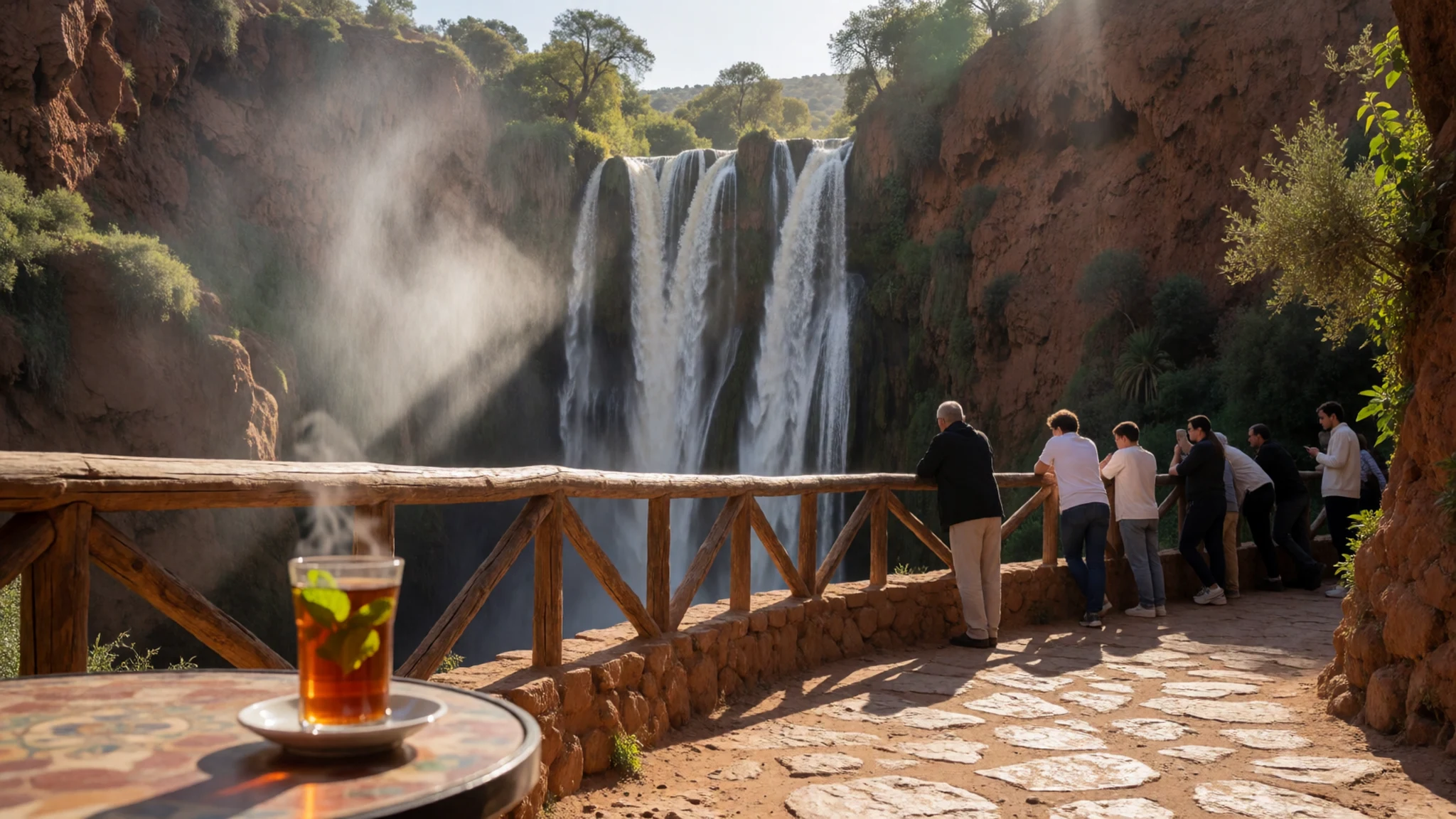
- Cliff path down the gorge — Gorge path, below the main cascade
A rough path winds down the gorge, with steps cut into the rock in places and wet patches near the water. Walkers pass walnut and olive trees, and the sound of the falls grows louder with each bend. The descent is steeper than it looks and takes longer on the way back up, so allow time, wear shoes with grip and move carefully where the surface is slick.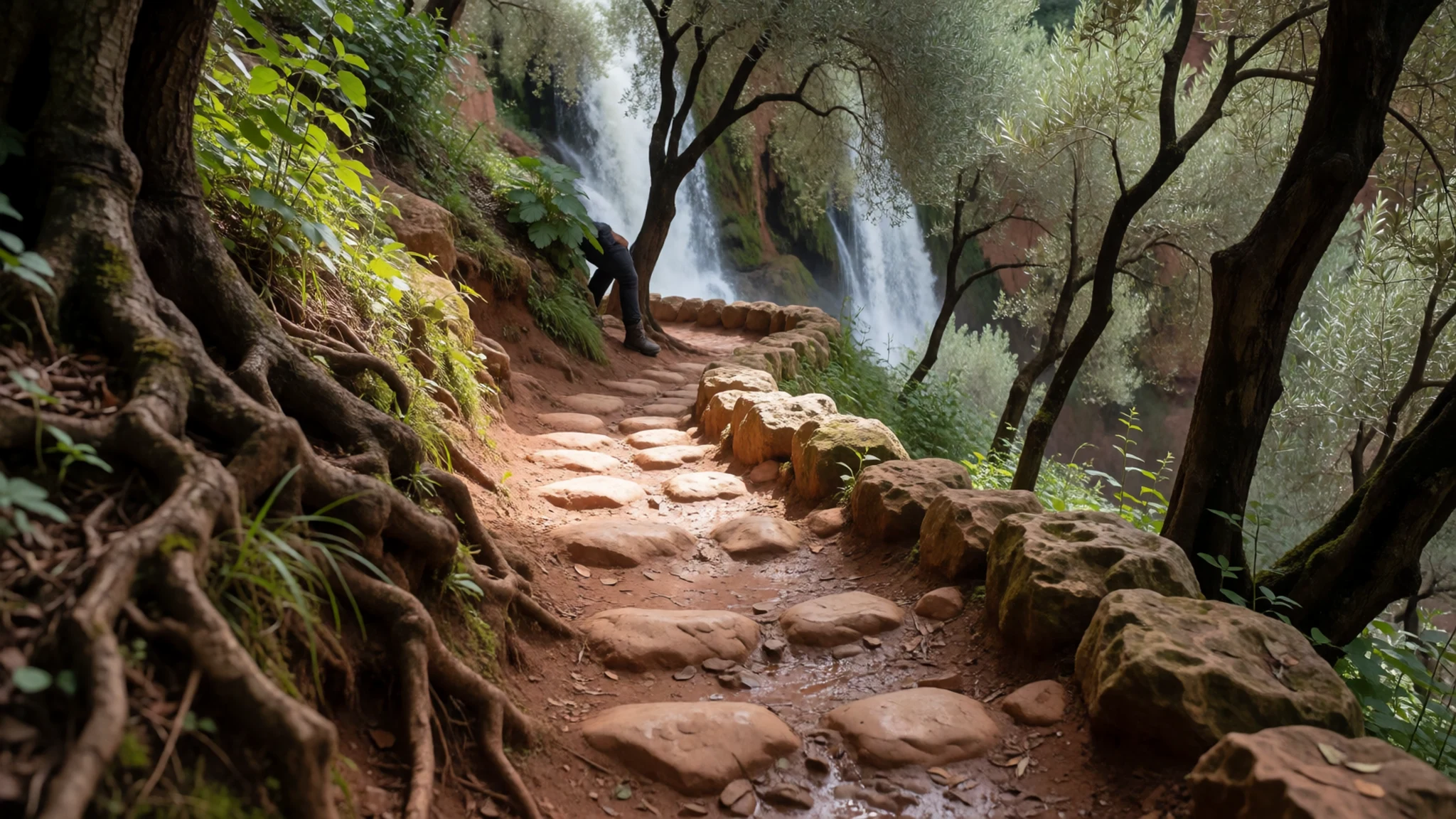
- Pools at the foot of the falls — River pools below the cascades
Below the drop, the El-Abid River gathers in green pools that attract locals and visitors for a cooling dip in warm weather. The water can be cold even in summer, and currents may be stronger near the falls, so keeping to the shallower edges is sensible. Swimming costumes are best saved for these spots rather than worn on the approach paths.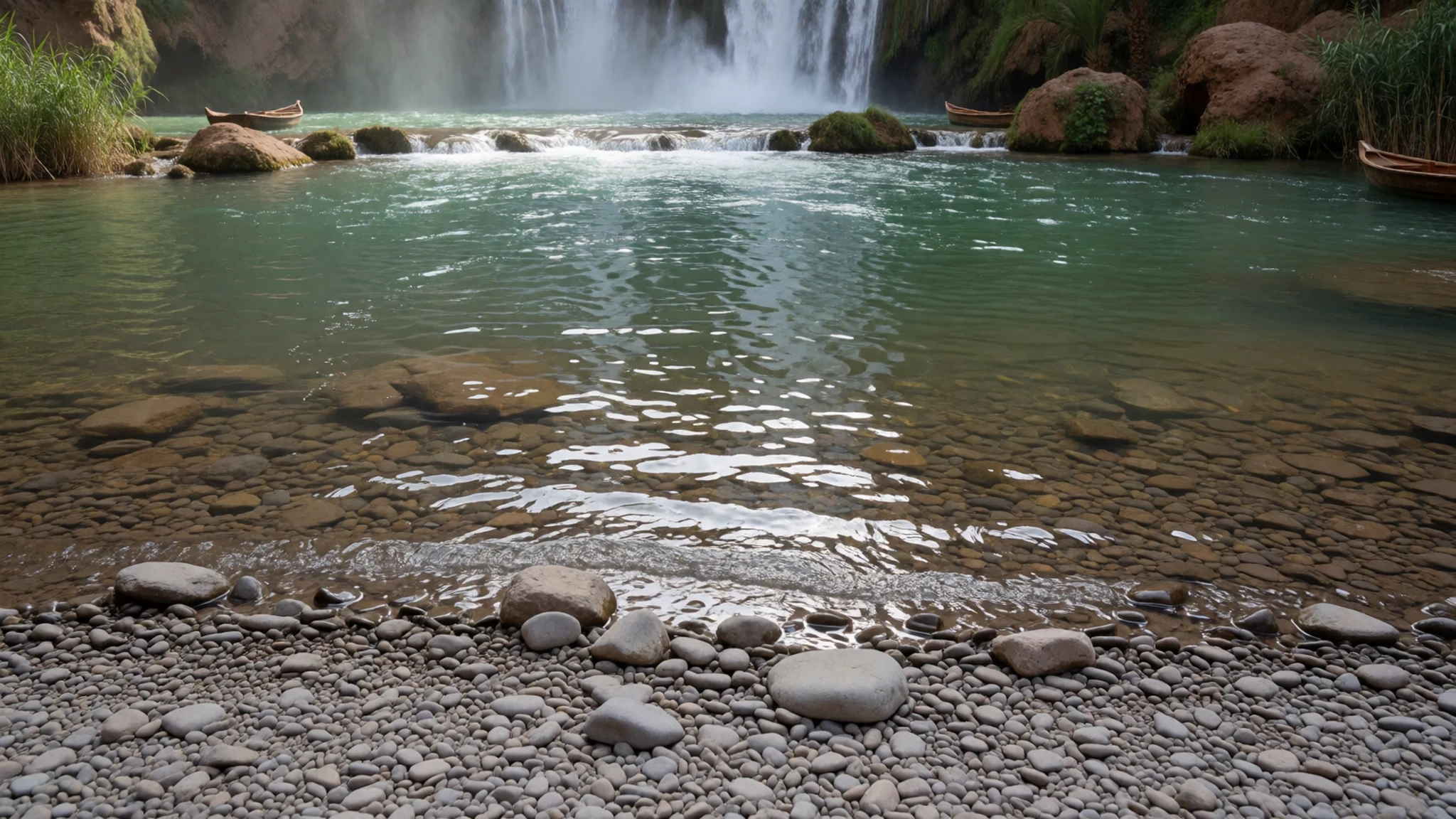
- Upper rim and the river above — Top of the falls, reached by the road above
Above the falls the river runs more gently across a wider bed, and the rim offers a different angle on the drop. The land here is dry and open, which makes a contrast with the greenery in the gorge below. It is a quieter place to pause, especially in the early morning before the day trippers arrive.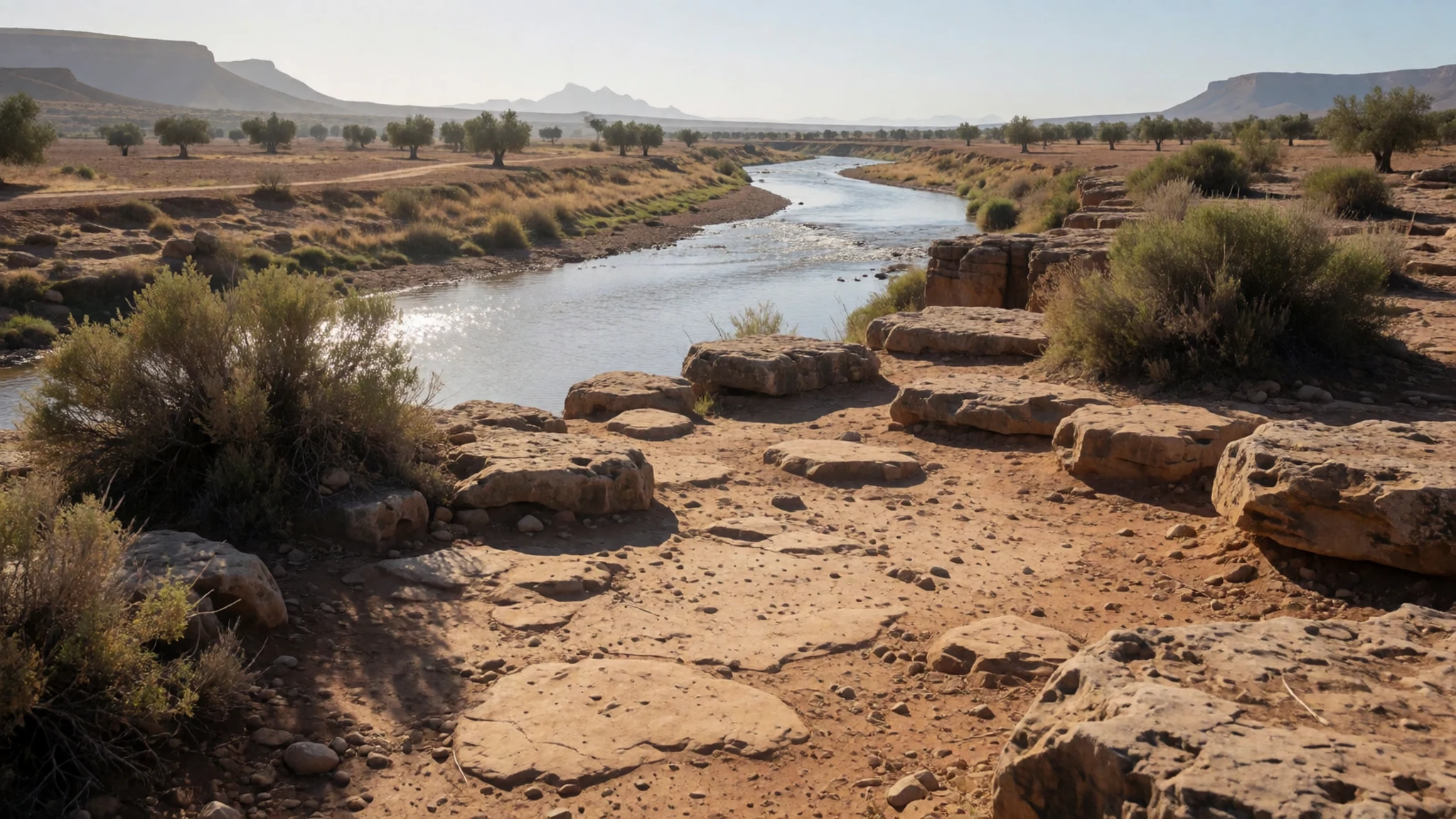
- Azilal town — Azilal, about 36 km away
Azilal is the nearest sizeable town and the place to pick up supplies before heading to the falls. Shops and bakeries cover everyday needs, and the town gives a glimpse of life across the wider province. Many visitors use it as a base for onward travel, so it is worth checking transport options there before setting off back towards Marrakech.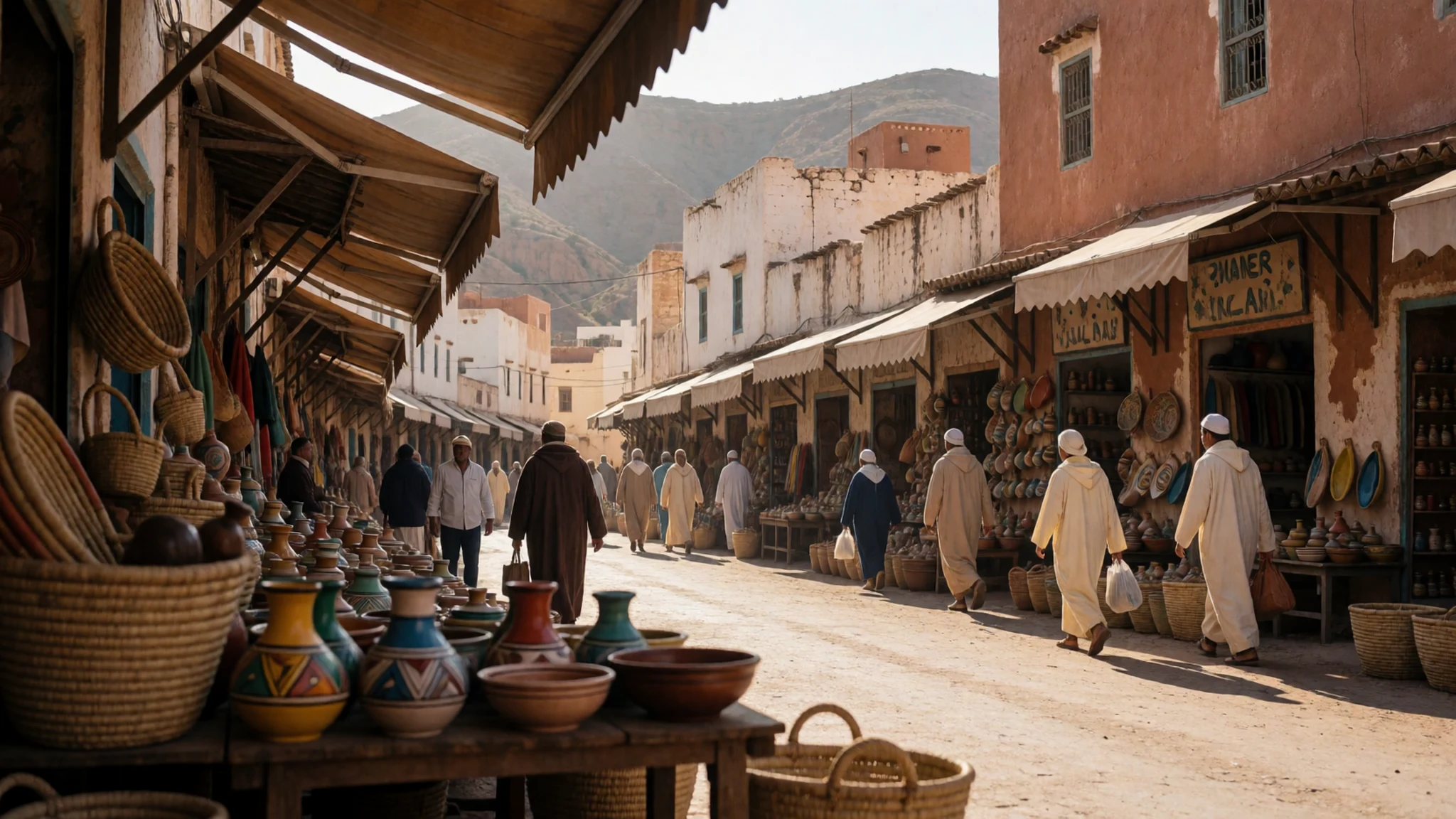
Culture
Ouzoud Falls lie in a region where Amazigh (Berber) and Arab traditions sit side by side, and Islam shapes daily life, including the rhythm of the day. Most people in the nearby villages are farmers, shopkeepers or guides, and many have family connections across the Atlas and beyond. Hospitality is central to local custom: a glass of mint tea offered at a small café is a gesture of welcome, and refusing it outright can seem unfriendly.
Public behaviour is more conservative than in the big cities. Many men and women here dress modestly, so swimming costumes are best kept to the pools themselves and away from the paths and village roads. During Ramadan, eating, drinking and smoking in public during daylight hours are considered disrespectful, and some eateries are quiet or closed until sunset. The Amazigh language is widely spoken in the villages, and a few words of Arabic or French go a long way with shopkeepers and guides.
Photography needs care. Men with donkeys, guides and stallholders often expect a small payment if they pose or appear prominently in a picture, and asking first is the courteous route. Tipping guides or porters a few dirham is customary when they have helped with bags or steps. Ask before photographing people, especially women, and agree a small payment beforehand if someone poses for you.
What to wear
Ouzoud Falls sit in a part of Morocco where dress has long been tied to the Amazigh communities of the Atlas and to the Arab traditions of the towns. Traditionally, Amazigh women wove wool and cotton into striped and geometric textiles, often in deep reds, browns, blues and cream, while men wore hooded wool cloaks and djellabas against the mountain cold. Silver jewellery and woven belts were common, and some village women still wear traditional patterns for weddings and festivals.
Today most people in the area dress in everyday clothing: jeans, t-shirts and long tunics, with djellabas still worn by many older men. Many women wear headscarves and long sleeves. Younger people in Azilal and Marrakech often follow international fashion, though modest cover remains the norm in villages and on religious occasions.
For a visit, dress for a warm day with cooler mornings and evenings. Light long trousers or a long skirt with a loose shirt that covers the shoulders protect skin from the sun and suit village paths. Carry a light layer for cooler shade near the water. Footwear matters most: the rocks and steps near the falls are wet and slippery, so choose shoes with good grip rather than flip-flops, and bring a hat and sunglasses.
What to eat
- Mint tea — Any café or restaurant terrace near the lower viewpoint
Sweet green mint tea, poured into small glasses, is the regional drink and a welcome way to begin or end a visit. It arrives hot and heavily sweetened, offered as a sign of hospitality. A pot on a café terrace near the water is a simple pleasure.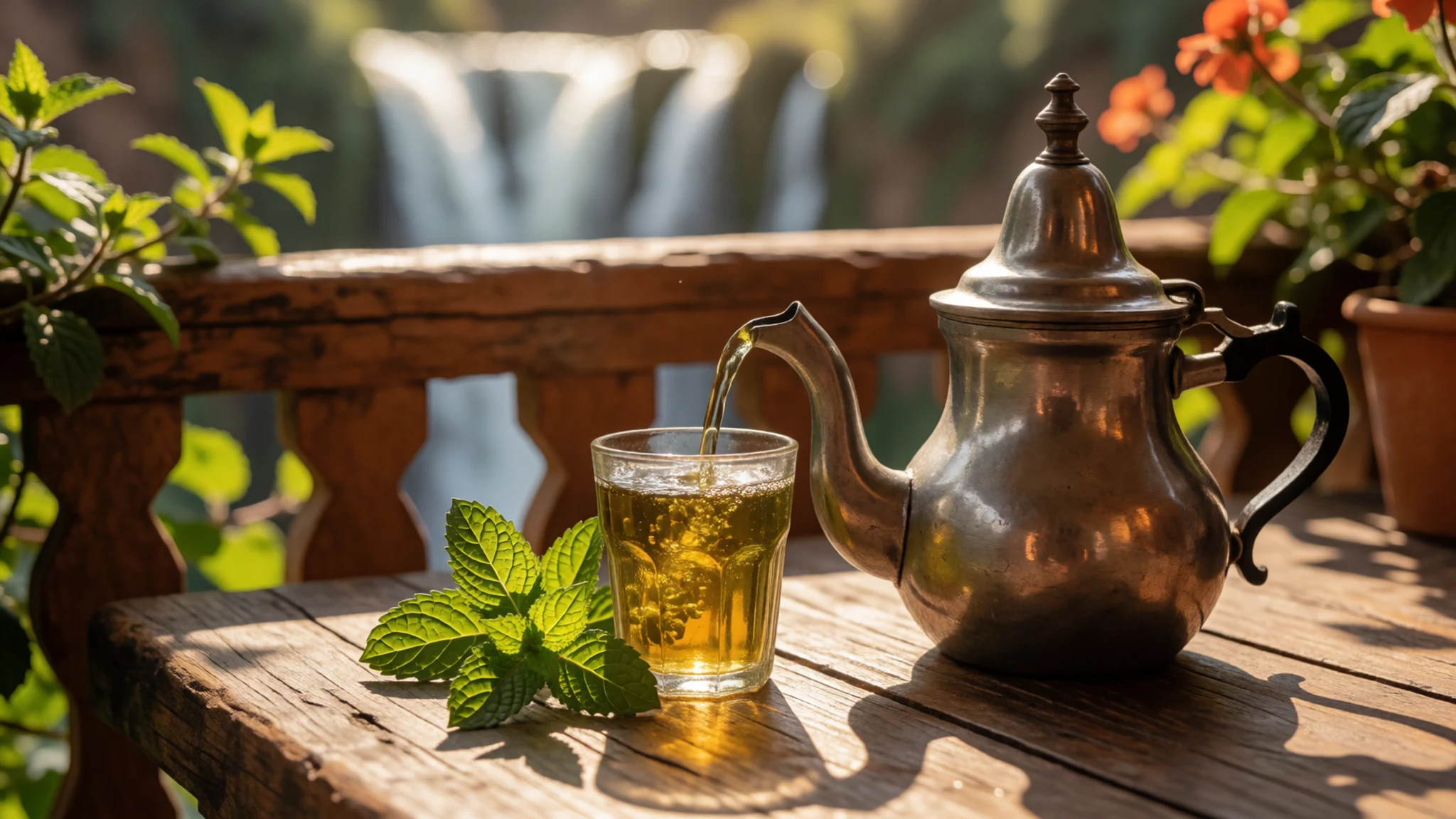
- Lamb or chicken tagine — Lunch restaurants along the approach road and near the falls
A slow-cooked stew in a conical clay pot, usually made with lamb or chicken, preserved lemon and olives or prunes. The meat becomes tender after long cooking and is served with bread for scooping. Order it at a lunch restaurant and allow time, since it is cooked slowly.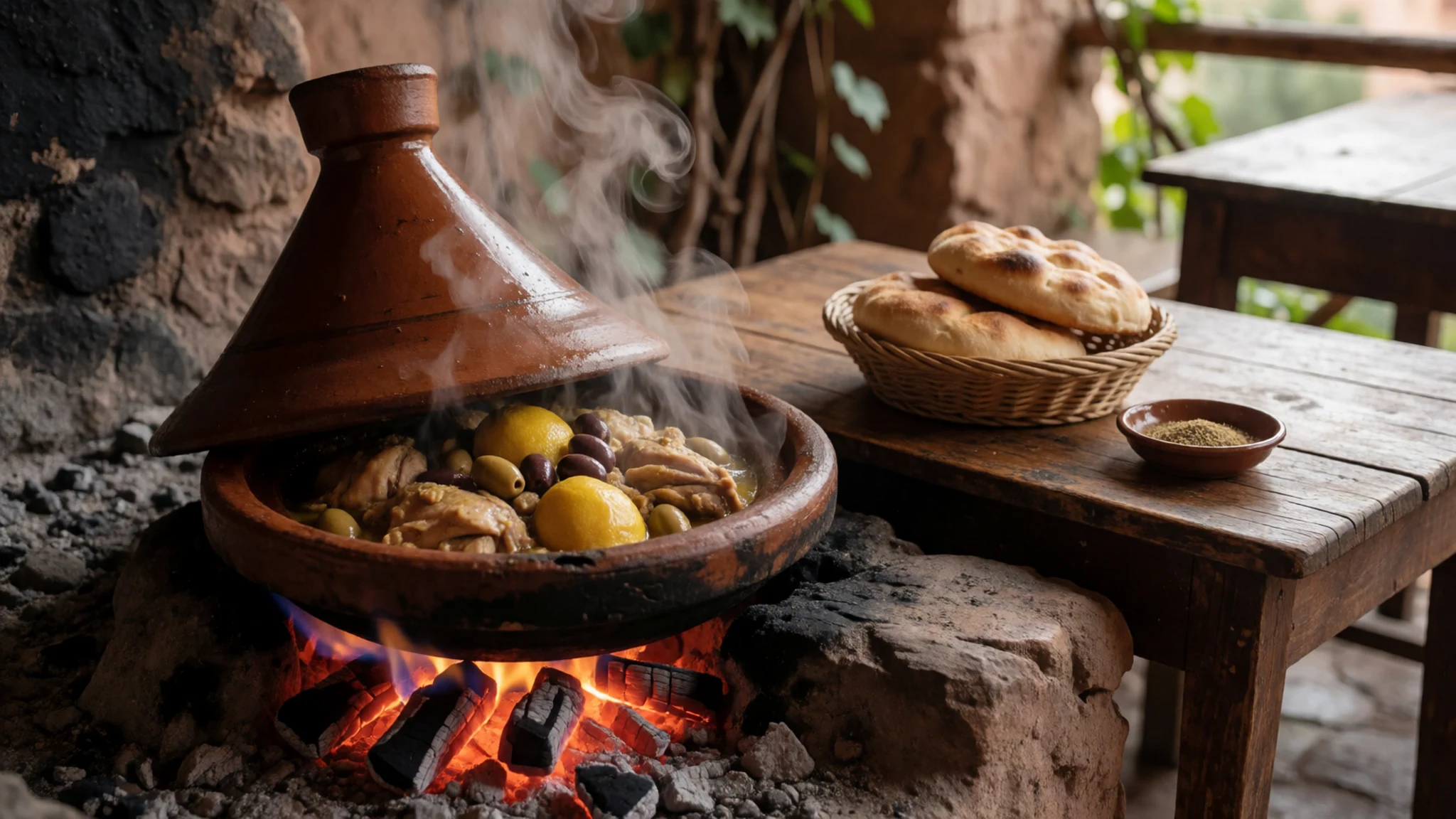
- Harira — Small eateries and soup stalls in Azilal town
A thick soup of tomato and lentils with chickpeas and herbs, sometimes with small pasta. It is eaten across Morocco to break the fast during Ramadan and as a light starter at any time. Small eateries in Azilal town serve bowls with bread and a squeeze of lemon. - Couscous on Friday — Family-style restaurants near the falls and in Azilal, especially on Fridays
Steamed semolina grains served with vegetables and meat in a broad dish, traditionally cooked for the midday meal on Friday. Many eateries near the falls and in Azilal serve it on that day. It makes a generous, filling plate after a morning walk down the gorge. - Msemen — Morning bakeries in Azilal town
Flaky square pancakes made from layered dough and fried on a griddle, served warm with honey, jam or butter. Bakeries in Azilal town are best in the morning, when the batch is fresh. They make an easy breakfast to take to the falls, wrapped in paper.
Plan it
Best time. December to February bring the coolest days, with highs of 25 to 28°C, while November and March are the wettest months and the flow runs strongest. High summer is very hot and the flow can drop, while winter at this altitude can be cold, with rain on the mountains.
How long. 1–2
Getting there. By road from Marrakech, about 150 km, by hired car or shared taxi; the last stretch passes through Azilal, the nearest sizeable town. No rail line serves the falls directly, so check current bus and taxi options at Marrakech before you set off.
Budget. low
Tips
- Start early, before the day trippers arrive in the middle of the day
- Wear shoes with grip for wet, slippery paths and steps
- Carry small notes in cash for guides, tea and parking
- Bring plenty of water, especially between April and October
- Book a guesthouse ahead for spring weekends
Etiquette
- Dress modestly in villages and carry a layer to cover your shoulders
- Ask before photographing people, and agree any payment first
- Avoid eating or drinking in public during Ramadan daylight hours
Nearby
Sources
- Wikidata Q38212 (CC0)
- Wikipedia: Ouzoud Falls (rev 1381619949) (CC BY-SA 4.0)
- Wikivoyage: Ouzoud Falls (rev 4776931) (CC BY-SA 4.0)
- Photo: Cascades d'ouzoud maroc 01, Alexander Leisser (CC BY-SA 4.0)
- Photo: Ouzoud waterfalls from below, Abderrahman Ait Ali (CC BY-SA 2.0)
- Photo: -Ouzoud -, Zemmama Chaimaa (CC BY-SA 4.0)
- Photo: Cascadas de Ouzoud 1, Miesbo71 (CC BY-SA 4.0)
- Photo: Cascadas de Ouzoud 2, Miesbo71 (CC BY-SA 4.0)
- Photo: Marrakech 070, Miesbo71 (CC BY-SA 4.0)
- Photo: Cascades d'Ouzoud (Marokko), Matthias Bethke (CC BY-SA 4.0)
- Photo: Cascadas de Ouzoud, Hassan bibrine (CC BY-SA 4.0)


