Ostrava
Ostrava, Czech Republic
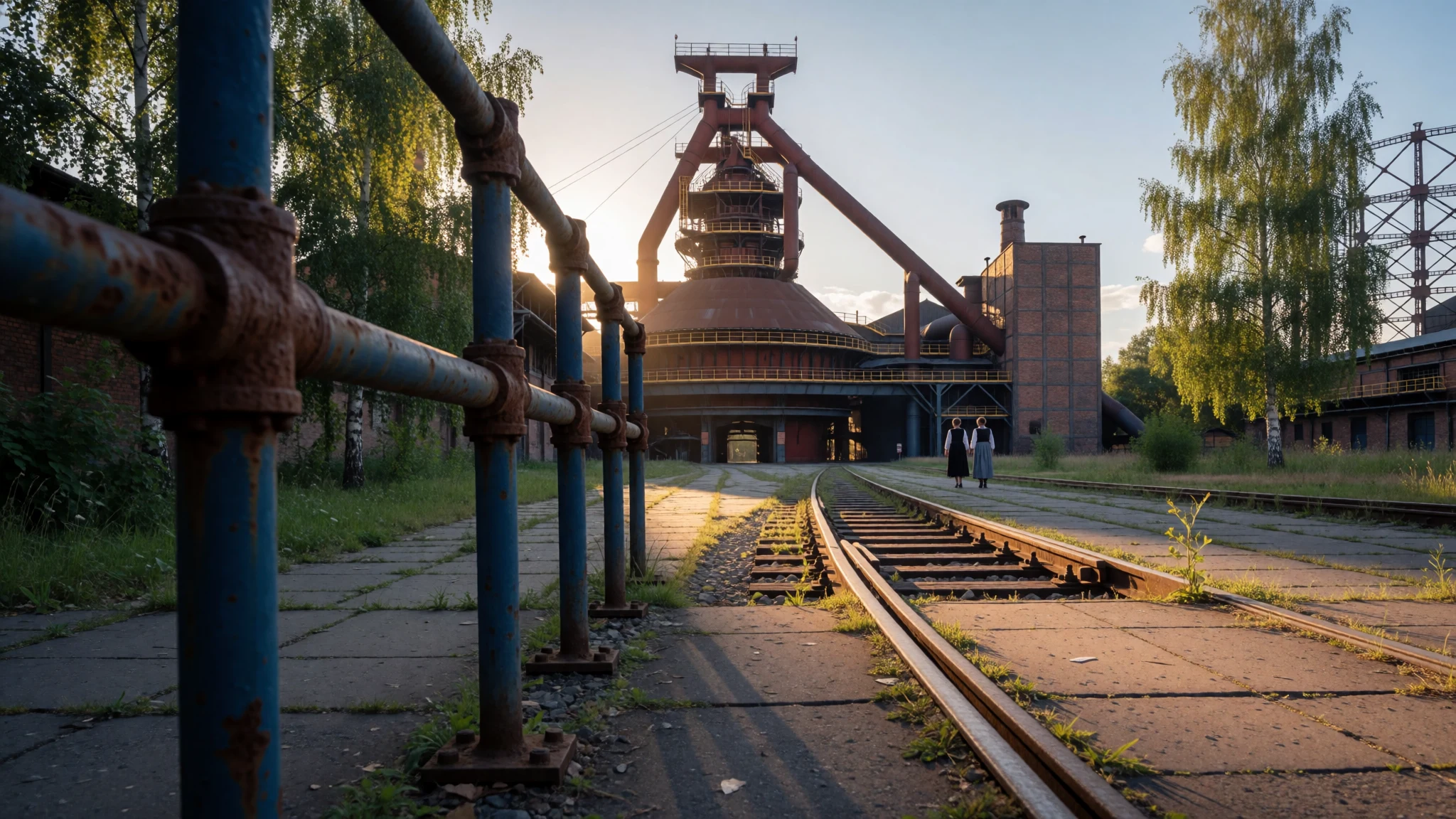
Ostrava is a former coal and steel city in the Czech north-east, now turning its furnaces, mines and spoil heaps into museums, venues and festivals.
The place
Ostrava sits in the north-east of the Czech Republic, a short way from the Polish border, where the Oder, Opava, Ostravice and Lučina rivers meet. About 283,000 people live in the city, at an elevation of 260 m, and it is the third-largest Czech city by both population and area. It is the capital of the Moravian-Silesian Region, and the old boundary between those two historic lands runs through the middle of town. That border explains the layered feel: Czech, Polish and German names sit side by side in the history books.
For much of the twentieth century Ostrava was called the 'steel heart' of Czechoslovakia, a place of pits, coking plants and blast furnaces. The last coal was dug in 1994, and the city has been reinventing itself ever since. Old works now host concerts and exhibitions, spoil heaps have gone green, and universities and technology firms have moved into the space left behind. The change is real but unfinished. Some districts are tidy and leafy, while others are still blocks of ageing concrete, and winter can be long and grey.
Visitors come for industrial heritage, for festivals, and for a lively, unpretentious theatre and pub scene rather than a polished old town. The city is best understood by mixing tram rides with long walks between steel, brick and river. Outside festival weekends it is quiet, and locals tend to be pleased that anyone has made the trip.
Its story
Ostrava takes its name from the Ostrá, the old name for the river now called the Ostravice, and the town was first recorded as a township in 1267. The river still divides the city into Moravian Ostrava and Silesian Ostrava. The site mattered because it lay on the frontier between Moravia and Silesia, along the ancient Amber Road that carried goods between the Baltic and the Adriatic.
The Thirty Years' War hurt the town badly, with Danish and then Swedish troops occupying it in the seventeenth century, and its fortunes sagged. The real turning point came in 1763, when good-quality bituminous coal was found on the Silesian bank of the Ostravice. Mining followed, and in 1828 the archbishop of Olomouc, Rudolf Jan, who owned the local estates, founded an ironworks named Rudolfshütte after him. It later passed to the Rothschild family and became the Vítkovice Ironworks, the engine of the district for generations.
Through the Austrian imperial era and then Czechoslovakia, coal, coke and steel drew workers from across central Europe and built the city's housing, theatres and tram lines. The Velvet Revolution of 1989 ended the communist system, and the heavy industries were cut back and restructured. When the last pit closed in 1994, Ostrava had to decide what to do with its vast industrial estate. Its answer, to keep and reuse the best of it as heritage, is the main reason to visit today.
What to see
- Vítkovice industrial area — Vítkovice, south of the centre
The old ironworks district of Vítkovice, in Ostrava, has been industrial ground since the early nineteenth century and is protected as a national cultural heritage site. Its blast furnace, gasholder and coking plant stand as huge rusting structures, and some have been given new life as exhibition and event spaces.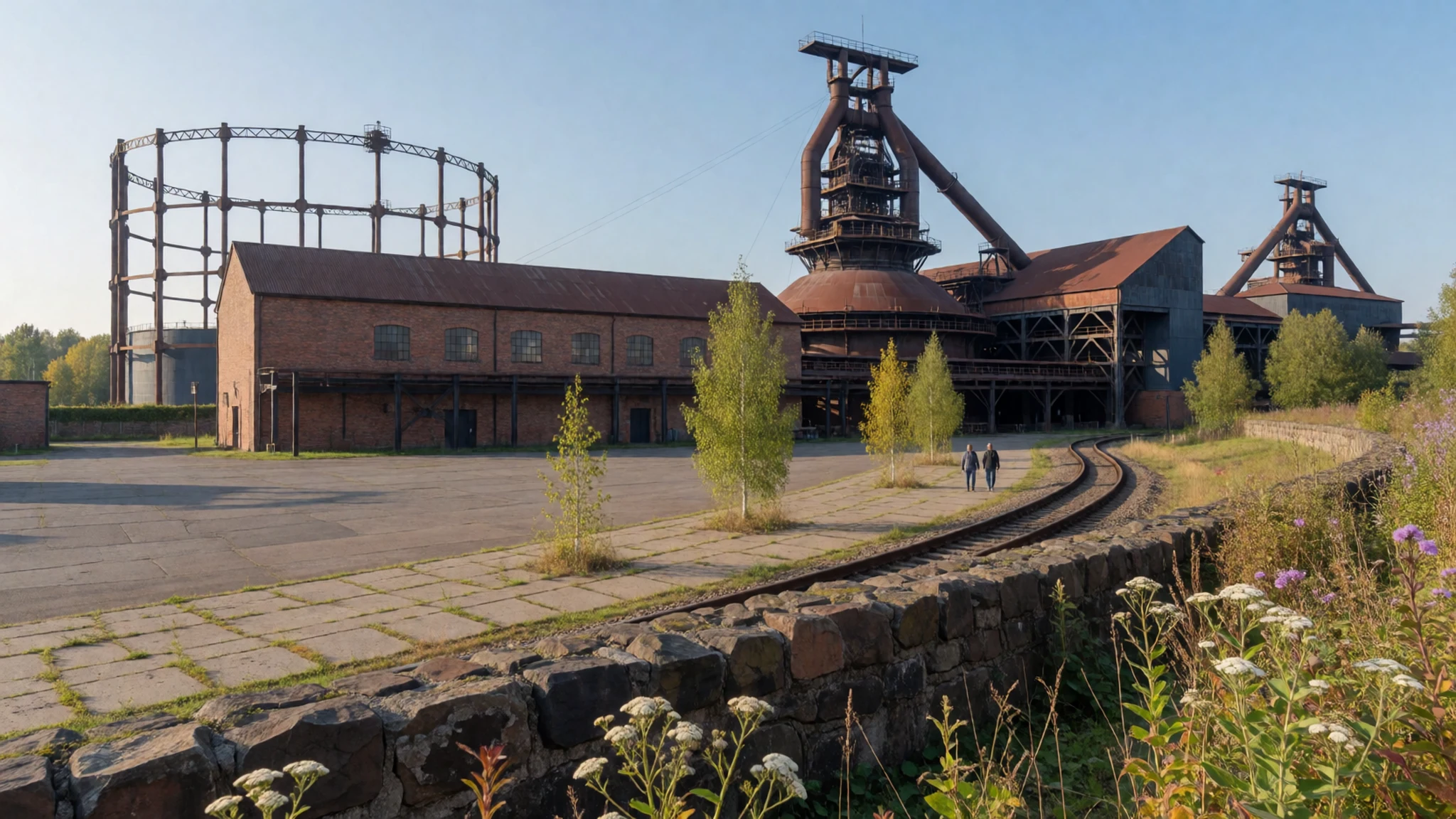
- Michal Mine — Michálkovice and Silesian Ostrava edge
Ostrava's Michal Mine is an authentic colliery whose buildings and machinery survive largely as they were worked, which makes it unusually honest as heritage. It was declared a national cultural landmark. Check the official site before going, as access to the underground and tower areas can vary.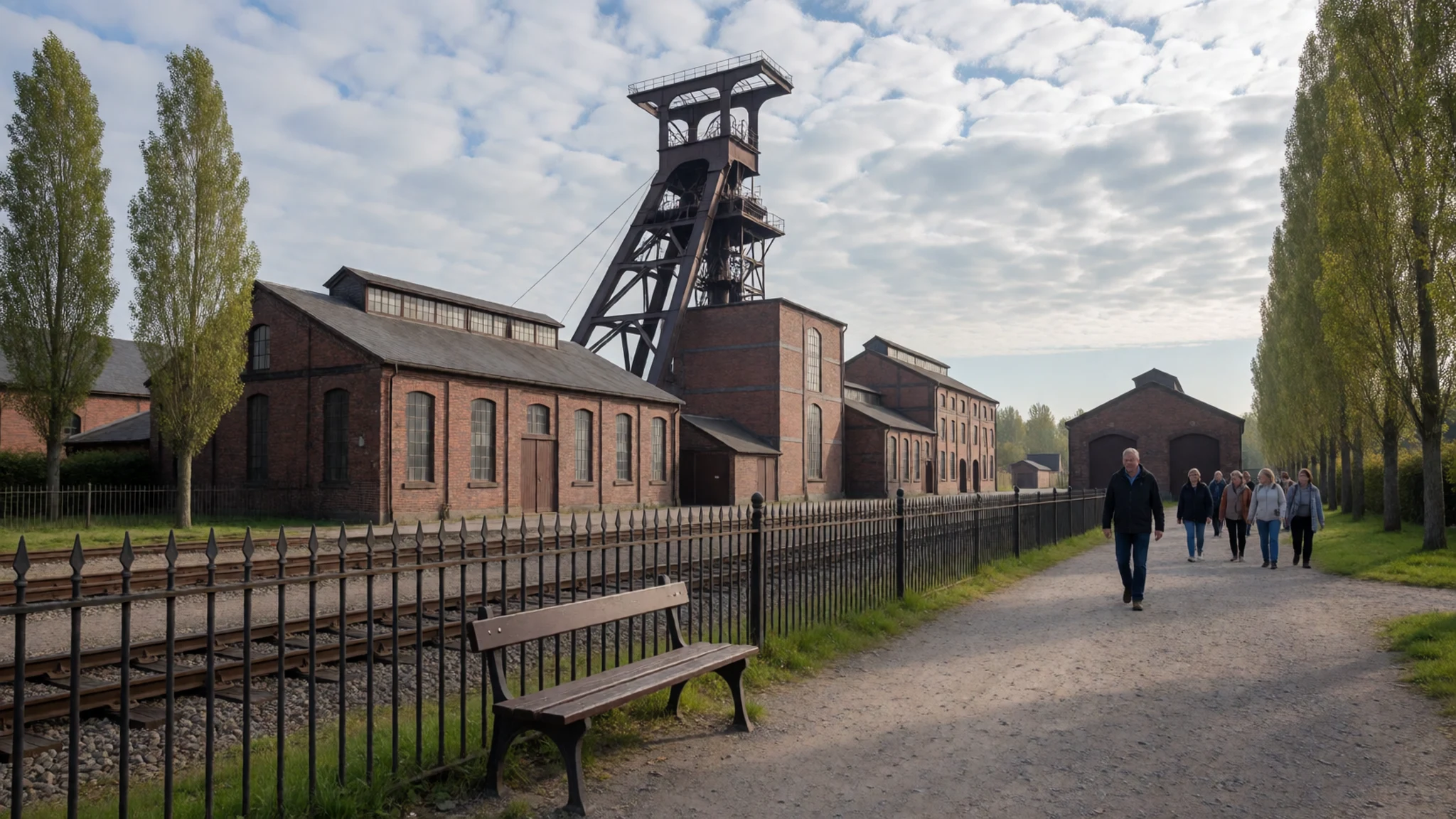
- Silesian Ostrava Castle — Silesian Ostrava, east bank of the Ostravice
Silesian Ostrava Castle is the city's oldest surviving cultural monument, standing on the Silesian side of the river. It is a good place to feel the medieval frontier that existed long before coal arrived, and the surrounding streets show how small the settlement once was.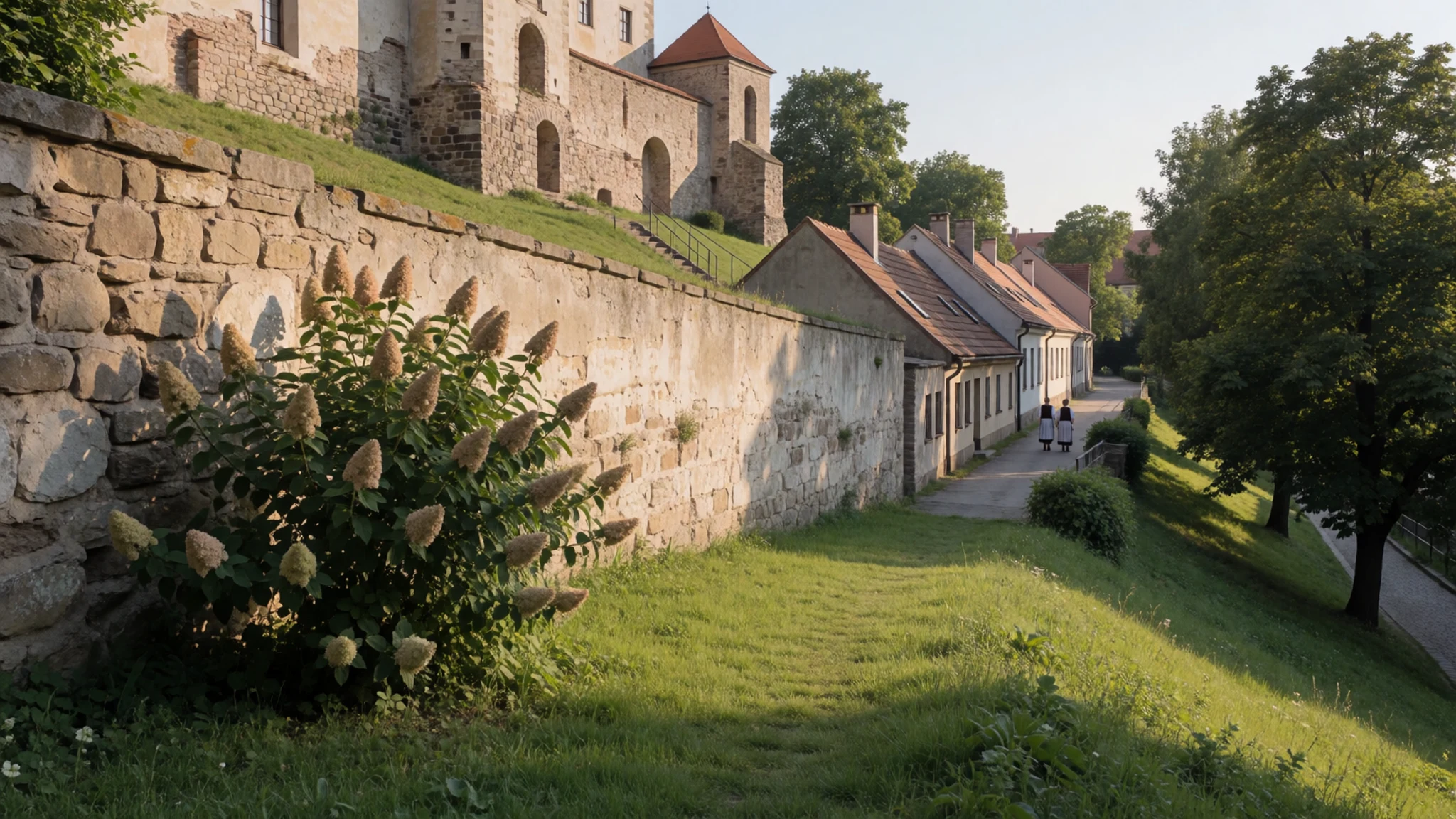
- Mining Museum in Landek Park — Landek Park, Petřkovice
The Mining Museum occupies the former Anselm Mine, one of the first pits opened in the area. Visitors learn how coal was cut and hauled, and the site gives a concrete sense of the labour behind the city. It sits inside Landek Park, so combine it with a walk.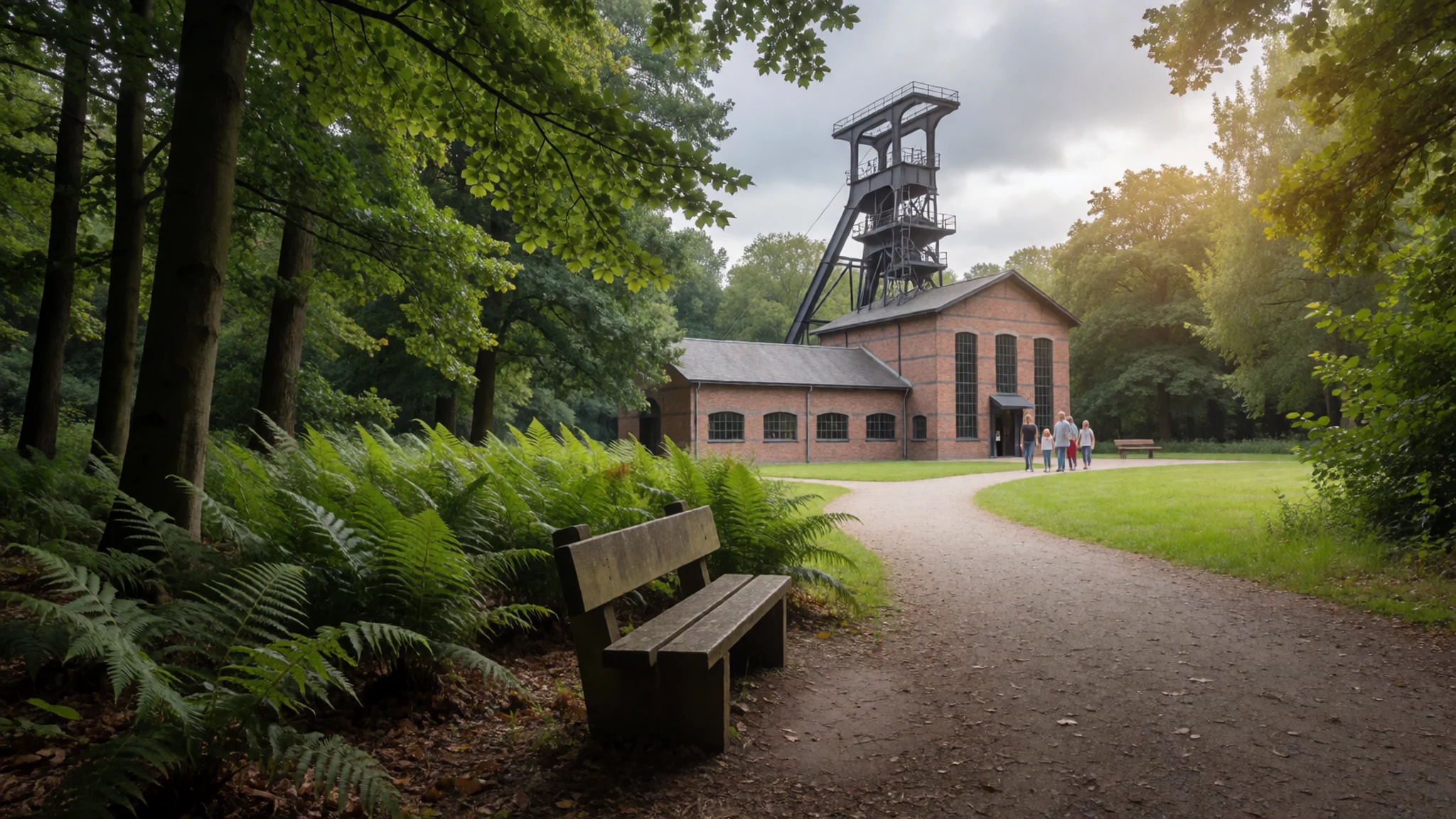
- Landek hill — Petřkovice, northern edge of the city
Landek is a wooded ridge above the Oder with a lookout tower where a castle once stood. It is a protected natural monument, and the Venus of Landek, a prehistoric figurine, was found here. It is a cooler, greener half-day for anyone tired of brick and steel.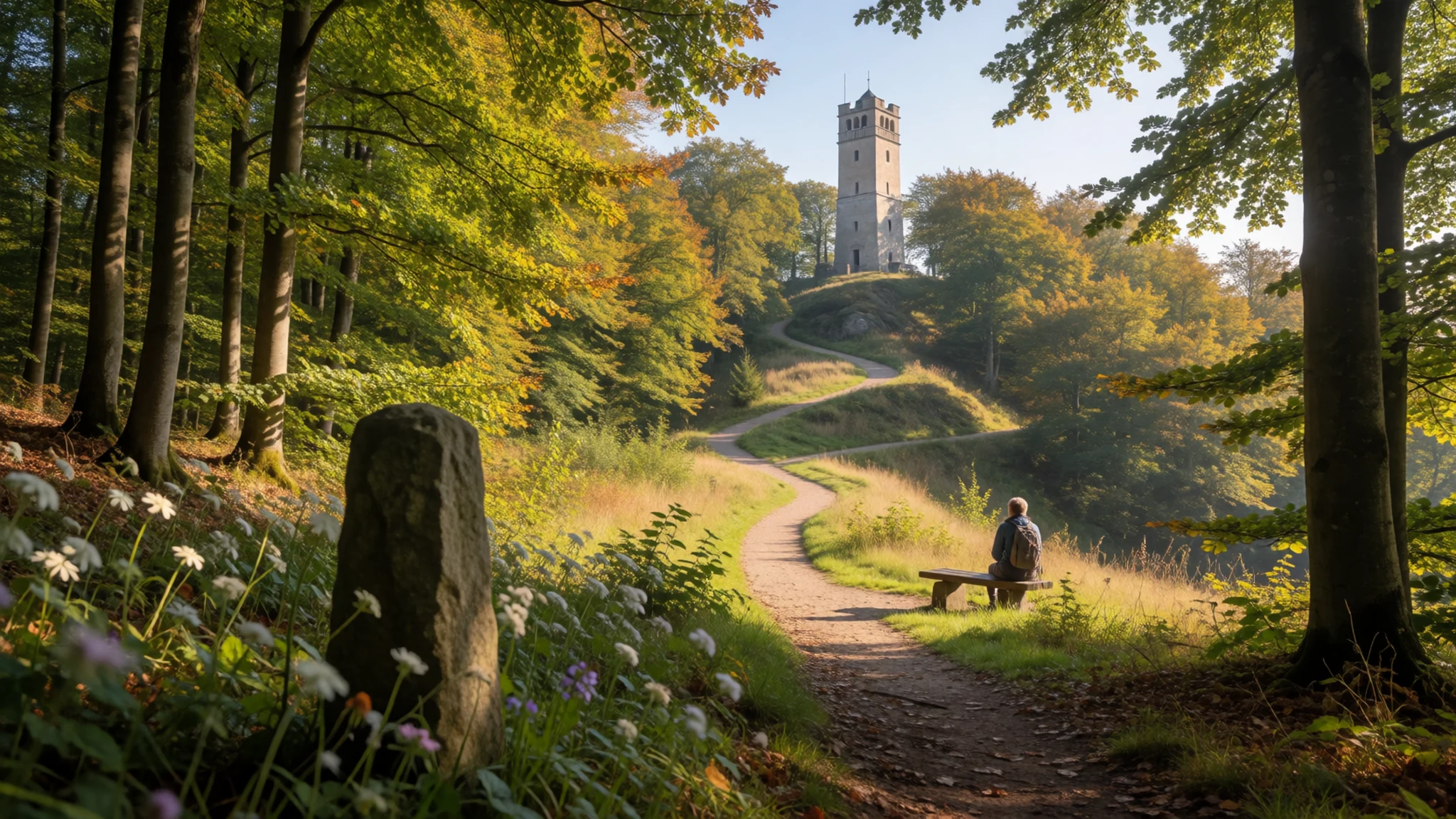
- Štítová colony — Ostrava mining districts
Štítová colony is a small estate of semi-detached single-storey houses built in the late nineteenth century for workers. It shows how the industrial owners housed their people, and its modest scale contrasts with the large works nearby. It is quiet, residential and best seen briefly, with respect for residents.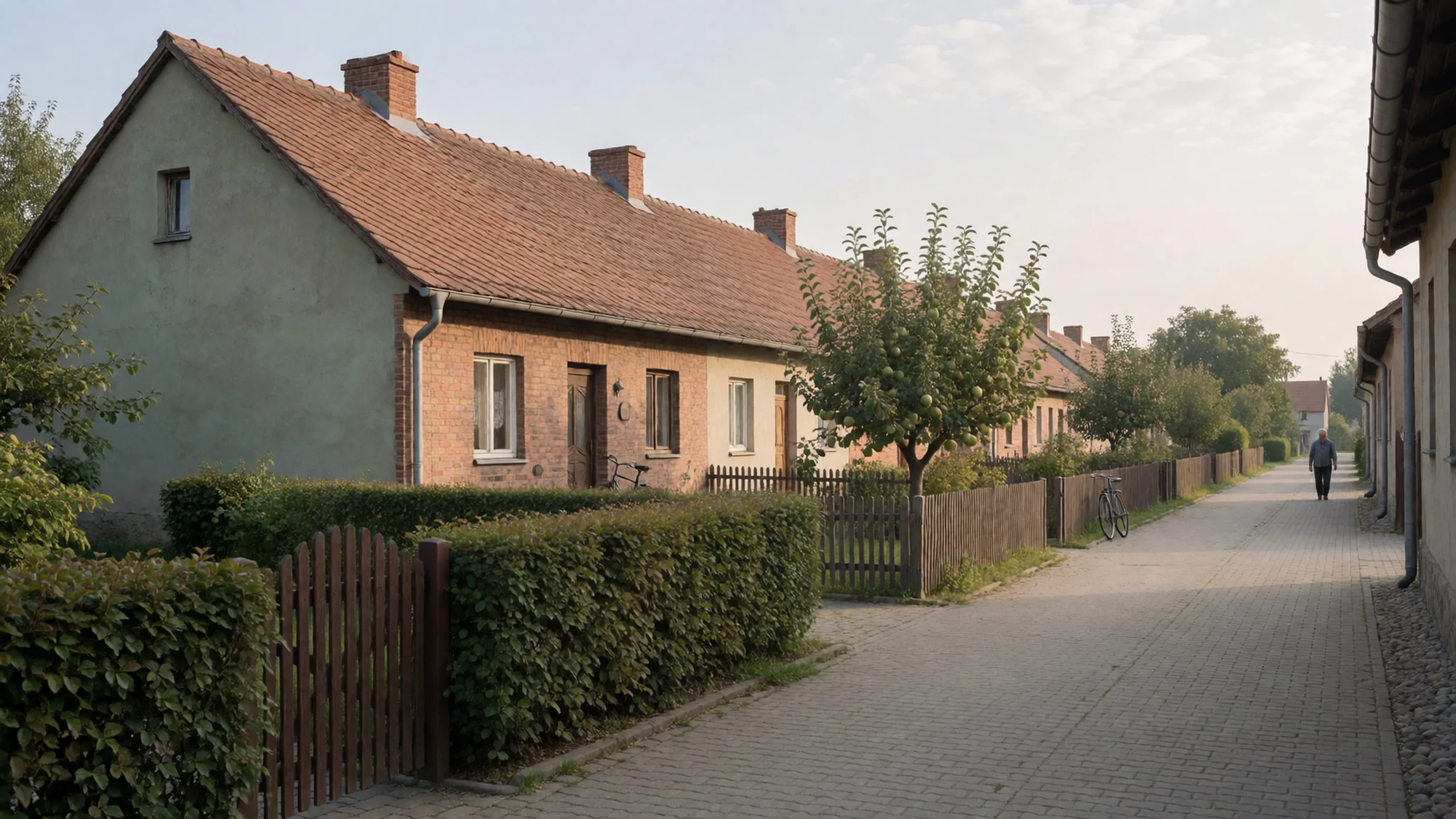
Culture
Ostrava's culture grew out of a working city that insisted on having its own theatres and orchestras. The National Moravian-Silesian Theatre plays in two venues named for the composer Antonín Dvořák and the actor Jiří Myron, and there are other permanent stages, including the Petr Bezruč Theatre, the Aréna Chamber Theatre and a puppet theatre. The puppet theatre hosts international festivals in alternating years.
Music is a particular strength. The Janáček Philharmonic Orchestra is based here, and the calendar includes the Janáček May and St Wenceslaus festivals and the Ostrava Days new music festival. Colours of Ostrava, a multi-genre festival with an international line-up, draws crowds of tens of thousands to the former ironworks, and it shows how well the city's industrial spaces suit big events.
Daily life revolves around the neighbourhood pub, football, hiking in the nearby hills and a dry, self-deprecating humour. Locals are proud of the city's toughness and slightly weary of outsiders who assume it is only smoke and slag heaps. They are usually happy to talk about mining families, the region's Polish and Silesian ties, and what the changes since 1989 have meant for them. Czech is the main language, with English more common among younger people and in cultural venues than in older neighbourhoods. In a Czech pub, ask whether a seat at a shared table is free before sitting, and wait to be served rather than waving the staff over.
What to wear
Traditional dress around Ostrava belongs to the Moravian-Silesian and Lachian folk traditions: embroidered linen blouses, wool skirts and waistcoats, ribbons and decorated aprons for women, and embroidered jackets, waistcoats and boots for men. Today these appear mainly at folk festivals, weddings and regional celebrations. Ceremonial miners' uniforms also turn up at local commemorations, a reminder of what the city once did for a living.
What people wear day to day is practical and understated: dark jackets, jeans, trainers and layers that suit changeable weather. Sportswear and outdoor brands are common, since the Beskid hills are close, and nobody dresses up for the pub. Theatre and concert audiences tend to smarten up a little, though a plain shirt or dress is plenty. The festival crowd goes for comfortable, casual clothes that can handle dust or rain.
For a visit, bring layers and a waterproof, because the continental climate means cold winters and warm summers, and showers can come at any time. The most useful item is sturdy, comfortable footwear: industrial sites mean steel stairs, gravel, cobbles and long walks between sights. Churches ask for no more than covered shoulders and knees, and hats off inside. In winter pack a proper coat, gloves and a hat, as the flat river valley can feel raw and damp.
What to eat
- Svíčková — traditional Czech restaurants across the centre
Marinated beef sirloin in a creamy root-vegetable sauce, served with sliced bread dumplings and a spoon of cranberries. It is a Czech classic found in most traditional restaurants and pub kitchens, and a sensible first order for anyone wanting a proper local meal.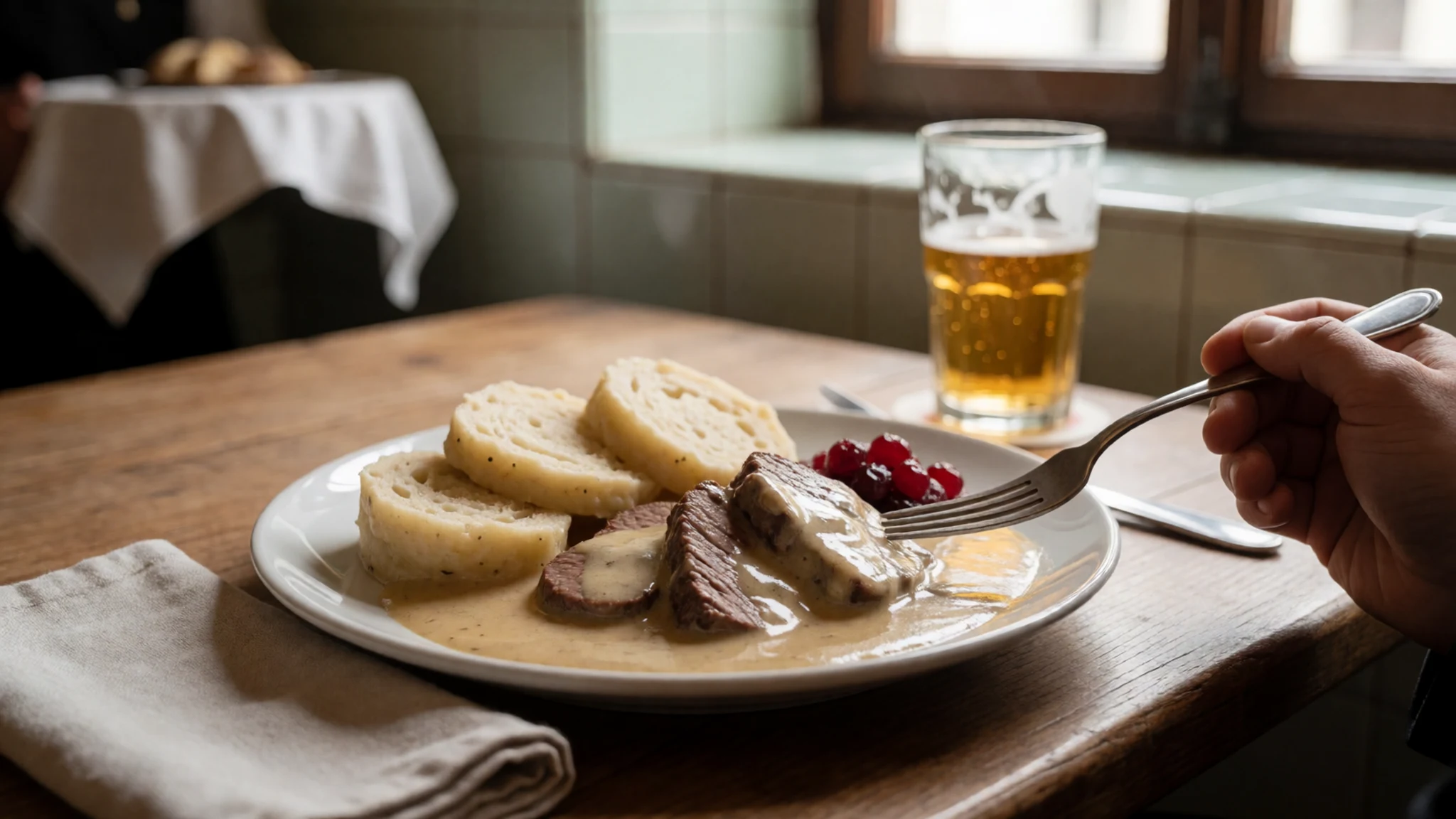
- Guláš with dumplings — neighbourhood pubs and canteen-style lunch places
A slow-cooked beef stew rich with paprika and onions, mopped up with bread dumplings. In an industrial city it fits the history well, being hearty, warming and filling. Portions are generous, so share if the appetite is modest.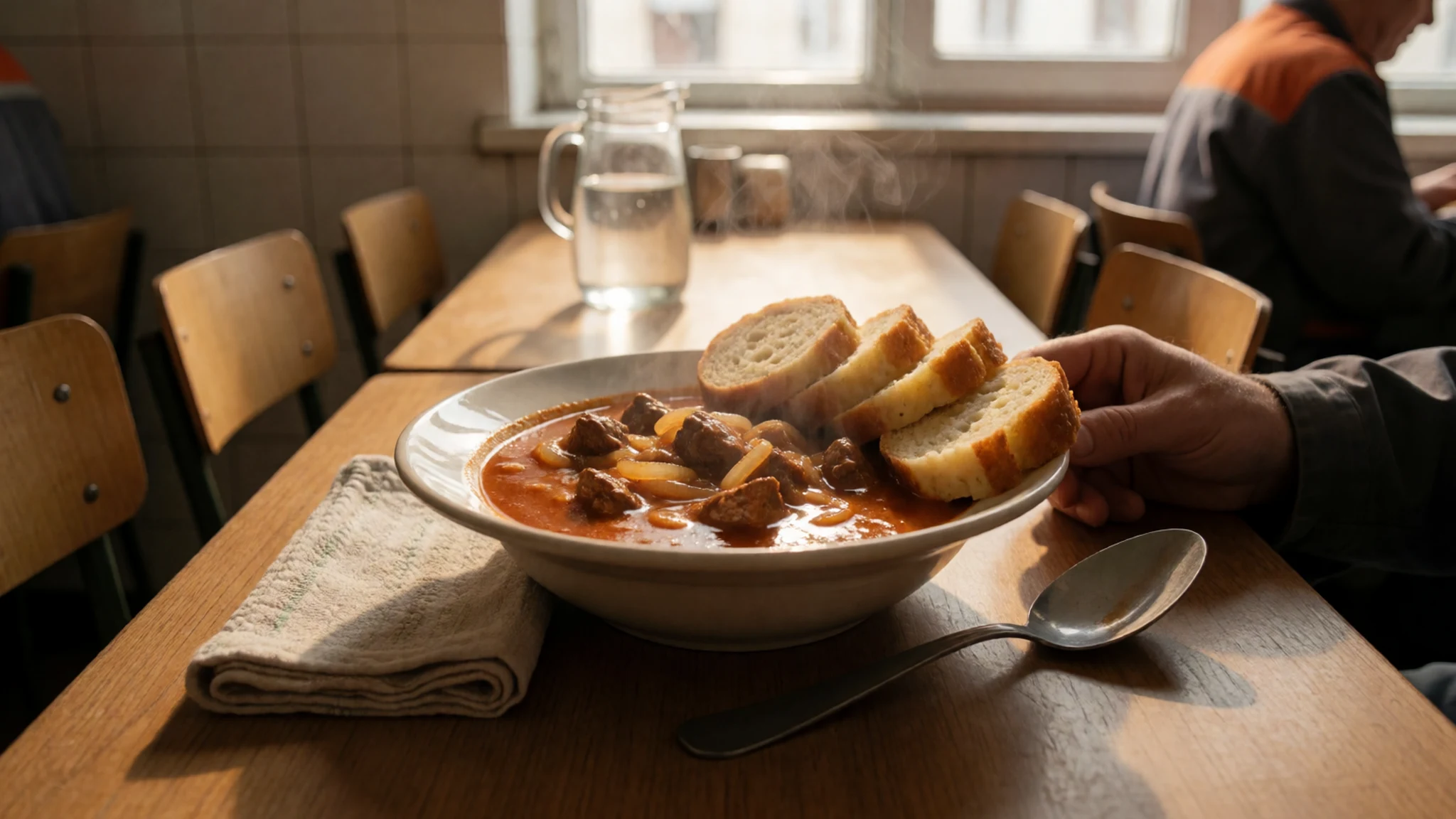
- Bramboráky — pubs and casual eateries, especially around Stodolní street
Crisp potato pancakes seasoned with garlic and marjoram, fried until golden. They make a cheap lunch or a pub snack, and the garlic is usually unapologetic. Eat them hot, with a cold beer if the day allows. - Řízek with potato salad — family restaurants and pub dining rooms
A breaded, fried schnitzel, often pork, served with Czech-style potato salad and a lemon wedge. The dish shows the Austrian influence on Moravian cooking and is a safe order in almost any restaurant, especially for visitors travelling with children. - Pirohy — restaurants serving regional Silesian cooking
Filled dumplings that reflect the Polish border nearby, often stuffed with potato and cheese, cabbage or meat and topped with fried onion or butter. They appear on regional menus as a lighter alternative to the heavier meat dishes. - Czech lager — pubs around Stodolní street and the old town
The local pub is where the drinking happens: a pale lager poured with a thick head, usually cheap, and served in a pub with simple food alongside. Ask staff what is on tap, and try the regional brewers as well as the famous names.
Plan it
Best time. May–June and September–October are the most comfortable months, with mild weather for walking industrial sites and outdoor events. Summer is warm and is festival season, while winters are cold and grey.
How long. 2–3
Getting there. Leoš Janáček Airport Ostrava lies outside the city. Most visitors arrive by train: from Prague takes roughly three to three and a half hours, and there are direct services from Vienna, Bratislava, Krakow and Budapest. Fast and international trains stop at both main stations, one in the north and one at the far western end, and trams carry you the last leg to the centre.
Budget. mid
Tips
- Book rooms early if your dates overlap with a large music festival, as the city fills up
- Buy rail tickets online in advance, as discounts and split-ticket offers are often cheaper than counter fares
- Wear sturdy shoes for the industrial sites, which have steel stairs, gravel and uneven ground
- Check opening days on the official site (http://www.ostrava.cz) before heading to mines and museums
- Carry a little Czech cash for small kiosks and pubs, though cards are widely accepted
Etiquette
- Greet staff when entering a shop or small restaurant, and say goodbye on leaving
- Ask before taking a seat at a shared pub table
- Treat former mining and industrial sites with care, as many are protected heritage and some are close to residents' homes
Nearby
Sources
- Wikidata Q8385 (CC0)
- Wikipedia: Ostrava (rev 1384668327) (CC BY-SA 4.0)
- Wikivoyage: Ostrava (rev 5413525) (CC BY-SA 4.0)
- Photo: Katedrála Božského Spasitele, Nová Karolina a Dolní oblast Vítkovic (Lukáš Mižoch) (CC BY 3.0)
- Photo: Koláž ostravských fotek (A. Novotná) (Public domain)
- Photo: Cadastral map of Ostrava (J-a-a-p) (CC BY 3.0)
- Photo: Postcard, Mähr. Ostrau Sophienhütte (I. Buchsbaum, Oderfurt) (CC BY-SA 4.0)
- Photo: Miloš Sýkora Bridge and Silesian Ostrava Town Hall (Khrabustovskyi) (CC BY-SA 4.0)
- Photo: Leoš Janáček airport terminal at night (FlyJacob) (Public domain)
- Photo: Vario LF, Nová Ves, Ostrava (Honza Groh) (CC BY 3.0)
- Photo: Ostrava-Svinov station and bus terminus (Aktron) (CC BY 3.0)


