Orongo
Orongo, Chile
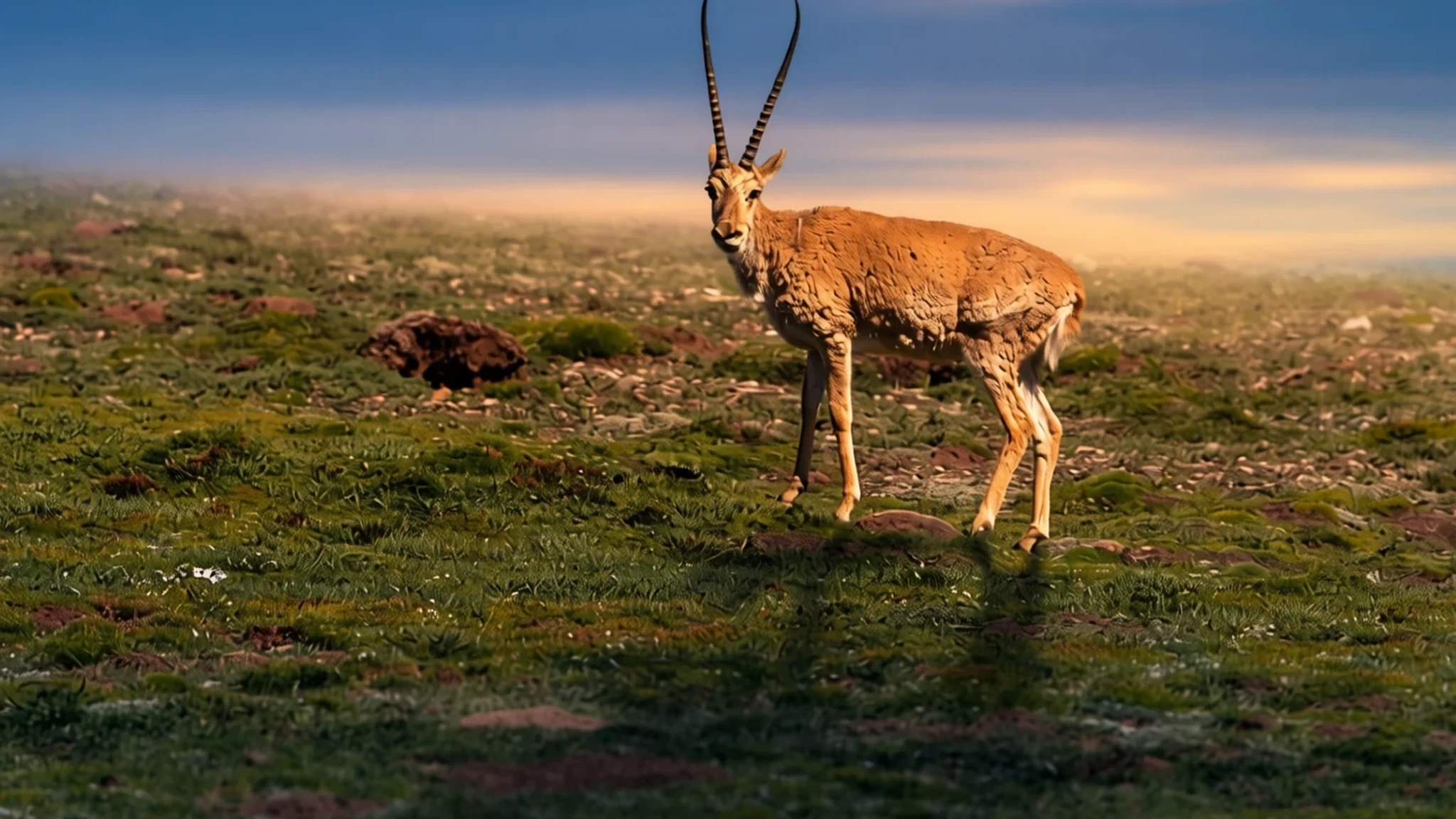
A stone village on the rim of a volcanic crater, once the setting for an island-wide race to bring back the first sooty tern egg of the season.
The place
Orongo is a stone village and ceremonial centre at the south-western tip of Rapa Nui, the island better known as Easter Island. It sits on the rim of Rano Kau, a large volcanic caldera whose inner basin holds a freshwater marsh. The village is a loose cluster of low, round-walled houses. Each has a sod roof and no windows, so from a distance the settlement can look like a grassy mound. The doorways are tiny, low enough that anyone going in must stoop. The houses stand at the very edge of the land. On one side a cliff of roughly 300 metres drops straight into the Pacific. On the other, a steep grassy slope falls toward the marsh inside the crater. The position gave clear views over the offshore islets, and it is still the first thing most visitors notice. Of the village's 53 stone masonry houses, the first half was investigated and restored with UNESCO backing, and the rest followed in later campaigns. The Orongo site holds World Heritage designation and lies within the boundaries of Rapa Nui National Park. The walk or drive out from the island's main town, Hanga Roa, crosses open ground, and the wind up on the rim can be strong at any time of year.
Its story
For a stretch of the centuries before the mid-nineteenth century, Orongo was the centre of a birdman cult. Its yearly high point was a race. Competitors went down the cliff, crossed to the islet of Motu Nui, and tried to secure the first sooty tern egg laid there that season. The egg then had to be carried back, unbroken, to the village above. Winning gave a man the title tangata manu, birdman, and a claim on the island's respect. The course was perilous. Hunters fell from the cliff face, and others were taken by sharks in the water. A cracked egg meant failure, and a lost climb could mean death. The rock surfaces around the houses carry many carvings, most of them of tangata manu. Some may commemorate successful racers, though the exact meaning of each figure is debated and nobody can say which individuals they honour.
The cult did not outlast the upheavals that reached the island. Epidemic disease, enslavement in the mid-nineteenth century, and then conversion to Christianity left the ceremonial village unused. Fragments of its ritual life survived only in memory and in stone. In 1868 the crew of a British naval vessel removed a huge basalt moai, Hoa Hakananai'a, from the site. It now stands in the British Museum in London, and it is still a sore point for many islanders who see it as a loss.
In modern times the main threat has been erosion. Rain washes soil off the slopes, and footfall speeds the damage. The World Monuments Fund placed the site on its watch lists, and afterwards helped devise a management plan supported by a private sponsor. Later funding was announced for a sustainable visitor centre. The aim is to protect the stonework and the ground around it while still letting people walk among the houses.
What to see
- The stone houses — Orongo village, on the Rano Kau rim
The village is made of low, round stone houses with turf roofs and doorways so small that visitors have to stoop to pass. Look closely at the masonry, with flat slabs set on edge along the base of each wall. Many houses were rebuilt during the restoration campaigns, so some walls are new, although the layout follows the original village. Keep to the paths between the houses and stay off the roofs, which are fragile.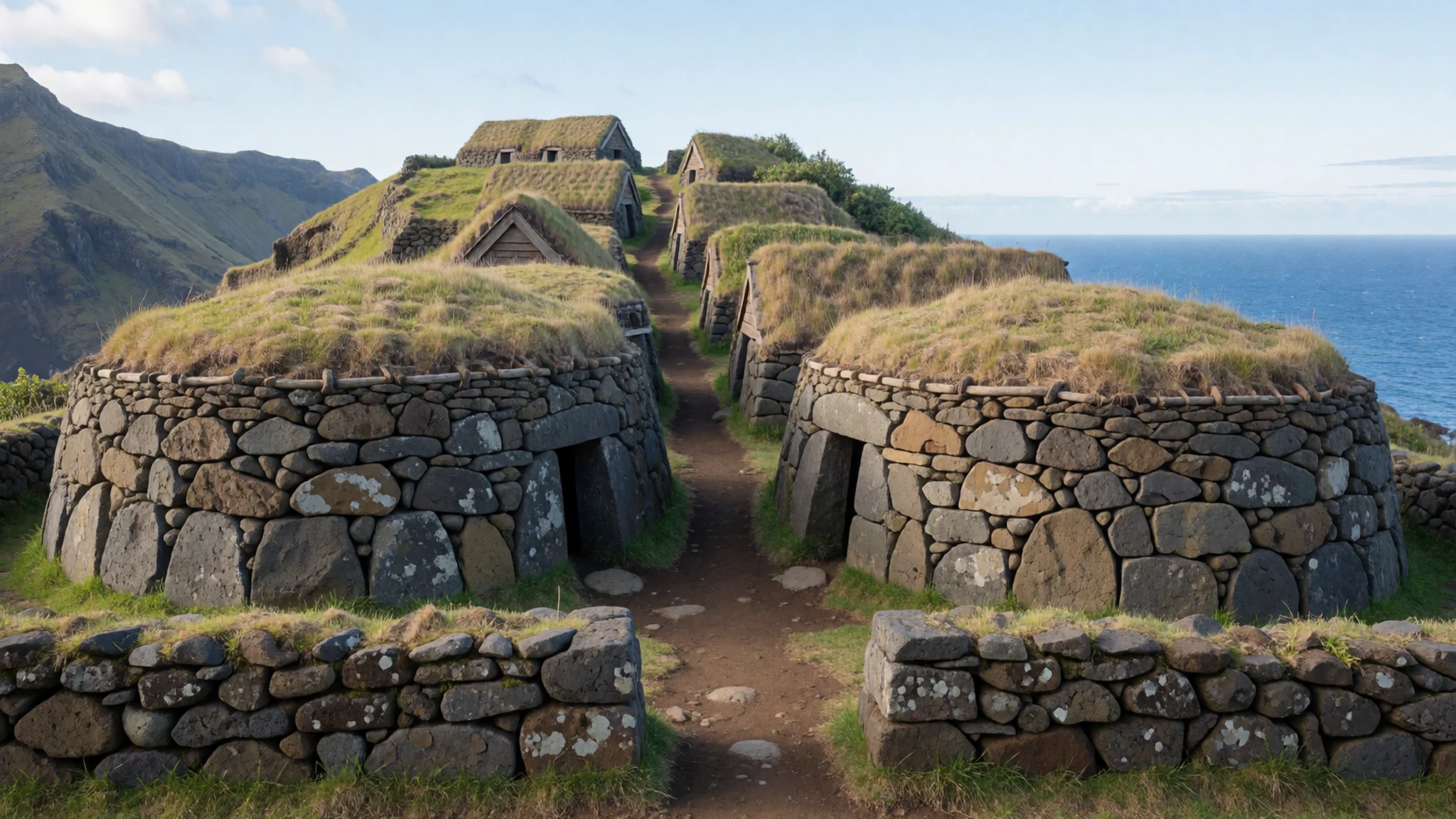
- Birdman petroglyphs — Rock surfaces around the Orongo houses
Rock faces around the houses carry carved images, most of them of tangata manu, the birdmen who were central to the annual race. Some figures show human bodies with bird heads, and the carvings are shallow and weathered. Their age and meaning are still argued over by researchers. Admire them from the path rather than touching the stone, since oils from skin and rubbing both wear the surface away.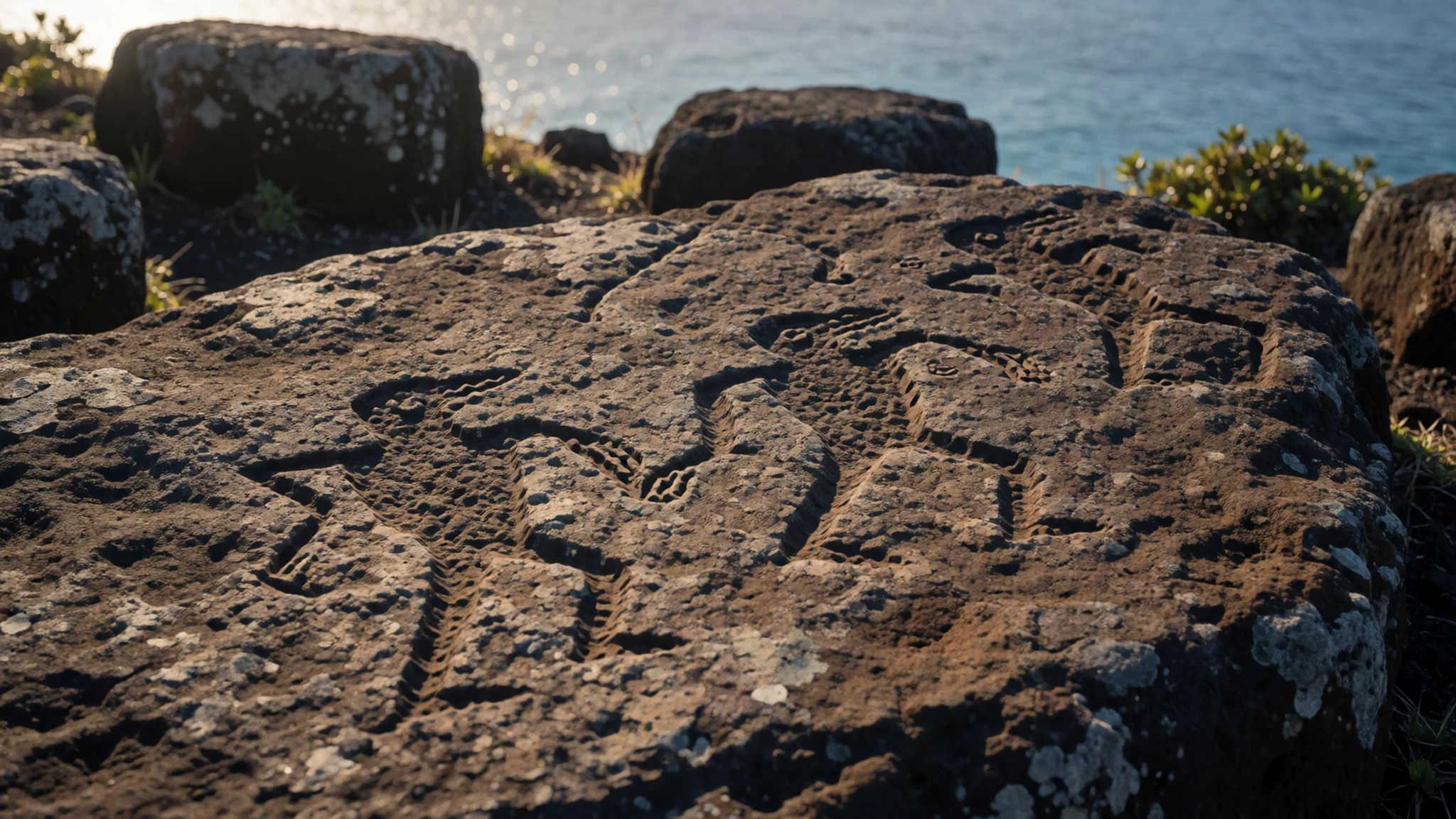
- Motu Nui and the islets — Cliff edge at Orongo, facing the sea
From the clifftop the three islets of Motu Nui, Motu Iti and Motu Kao Kao lie offshore, the island where the sooty tern egg was collected being the largest of them. The view explains why the race was so dangerous: the drop to the water is steep, and the currents below are strong. On a clear day the outline of the islets is easy to pick out, and the edge of the cliff is best approached with care.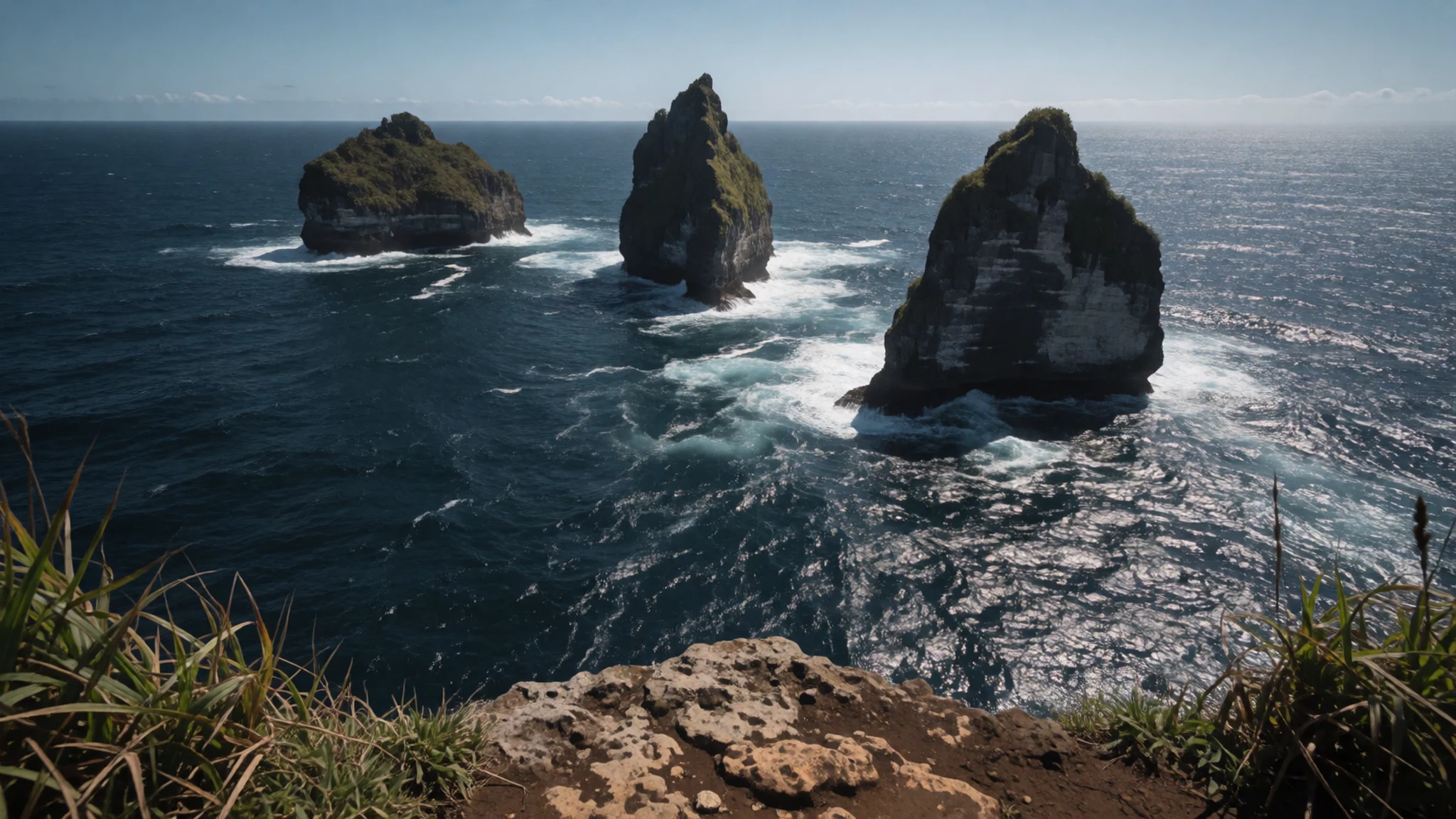
- The Rano Kau crater — The caldera rim above Orongo
The caldera at Rano Kau is a large bowl of volcanic rock, and its floor holds a freshwater marsh that has long been important to the island. The walk around the rim gives changing views of the water and the steep inner slopes. The ground here is exposed and the wind can be sharp, so plan for weather changes and carry water, since there is little shade.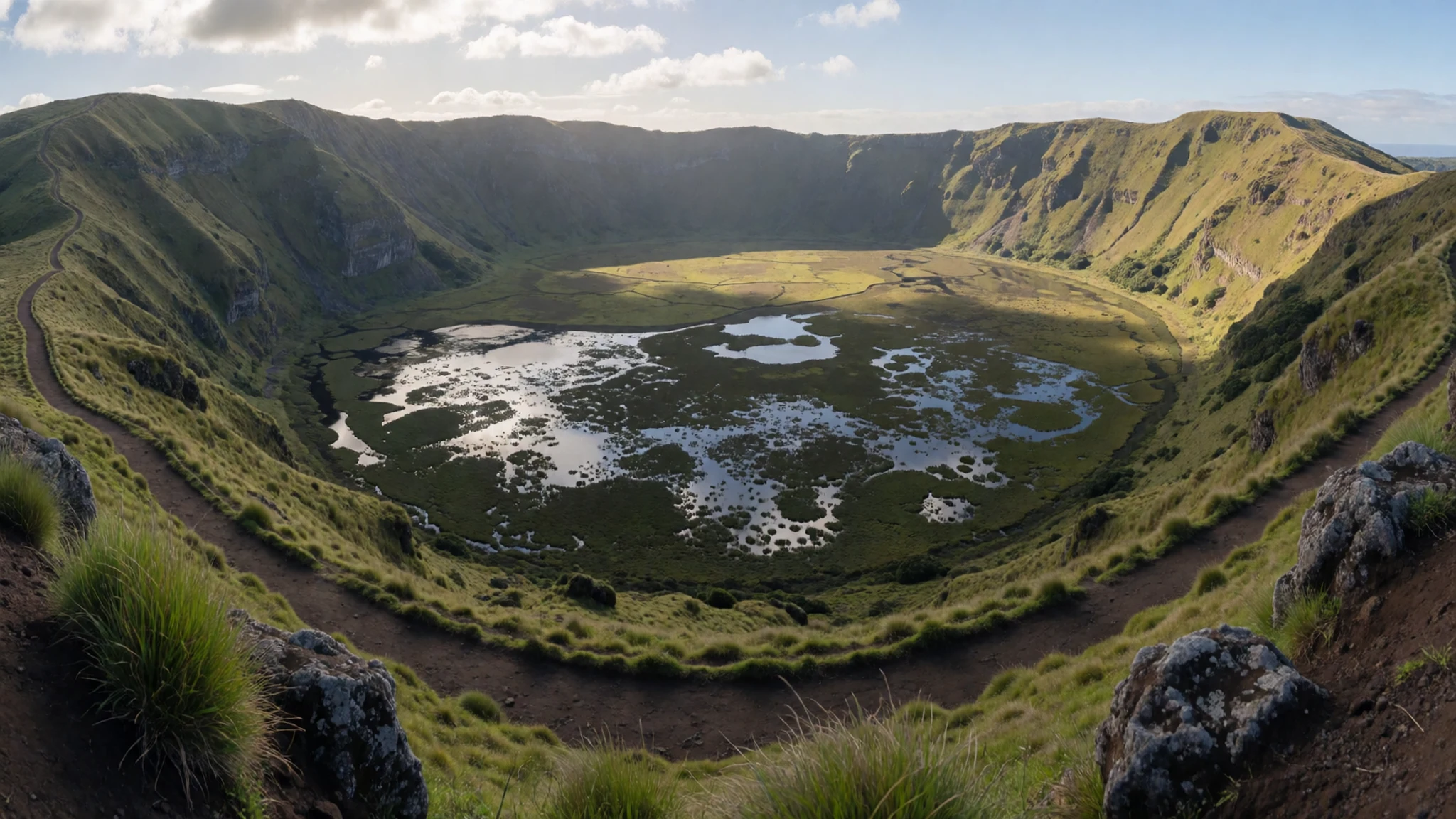
- Hoa Hakananai'a in London — British Museum, London
The basalt moai removed from Orongo in 1868 is one of the most important objects taken from the island, and it is now displayed at the British Museum. Seeing it there gives a sense of the scale and carving of Rapa Nui sculpture, which is hard to judge from photographs. Many islanders would like the statue to return, so visitors should read the museum's display with that debate in mind.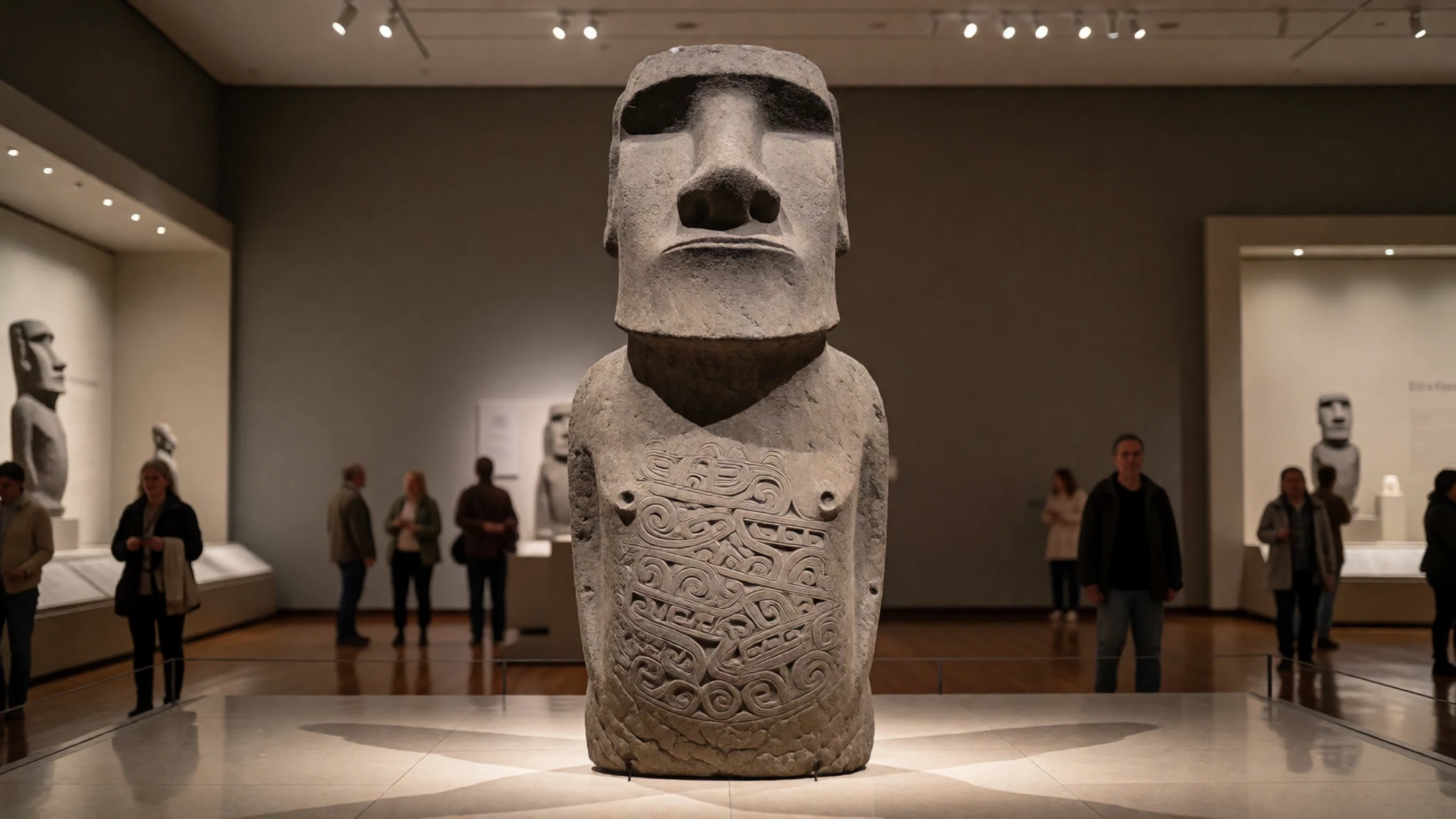
Culture
Orongo is a ceremonial and archaeological site on land that the Rapa Nui people regard as part of their own history, and it is best visited with that in mind. The village was built for ritual, and its houses and rock carvings are fragile. Local guides often explain the birdman rituals in ways that reflect family memory as well as published research, and listening to them is part of the experience. The removal of statues from the island in the nineteenth century is a subject that many islanders still raise, so conversation about it should be respectful rather than casual. Rapa Nui is a living community with its own language and customs, and people are usually glad to talk about them if asked politely. Keep to marked paths, because foot traffic already erodes the slopes. Do not climb on the stone houses or sit on carved rock faces, and ask before photographing anyone who is performing or leading a ceremony. Leave everything in place, including shells and fragments of pottery, and carry your rubbish back out.
What to wear
Orongo itself has no dress code, but the clothing of the people who built and used the village tells part of its story. Rapa Nui people once made garments from mahute, a cloth beaten from the inner bark of the paper mulberry, and from plant fibres woven into mats and skirts. Feathers carried weight in ceremony, as the birdman imagery at the site suggests. Those older materials are now mostly seen in museums, in dance costumes and at festivals, where performers wear woven grass headdresses, shell necklaces and bright fabrics. In everyday life islanders dress much as people do elsewhere in Chile or across the wider Pacific, in jeans, T-shirts, sundresses and sturdy trainers. Flower garlands appear at celebrations. For a visit to Orongo, pack for wind and sun more than for style. The rim is exposed, so a windproof layer, a sun hat and sunglasses matter in every season. Choose closed shoes with good grip for grass slopes and loose volcanic stone, since sandals are a poor choice on the paths. Light trousers or a long skirt protect your legs from grass and sun, and covering your shoulders is sensible if you visit a church in Hanga Roa. Swimwear belongs at the beach, not on the site.
What to eat
- Umu-cooked meat — A family umu or a celebration feast in Hanga Roa
Chicken and pork are often cooked in an earth oven, the traditional umu, with hot stones and leaves sealing in the heat. The meat comes out tender and smoky, and it is usually served with root vegetables from the same pit. Feasts for family gatherings and celebrations are the best place to taste it.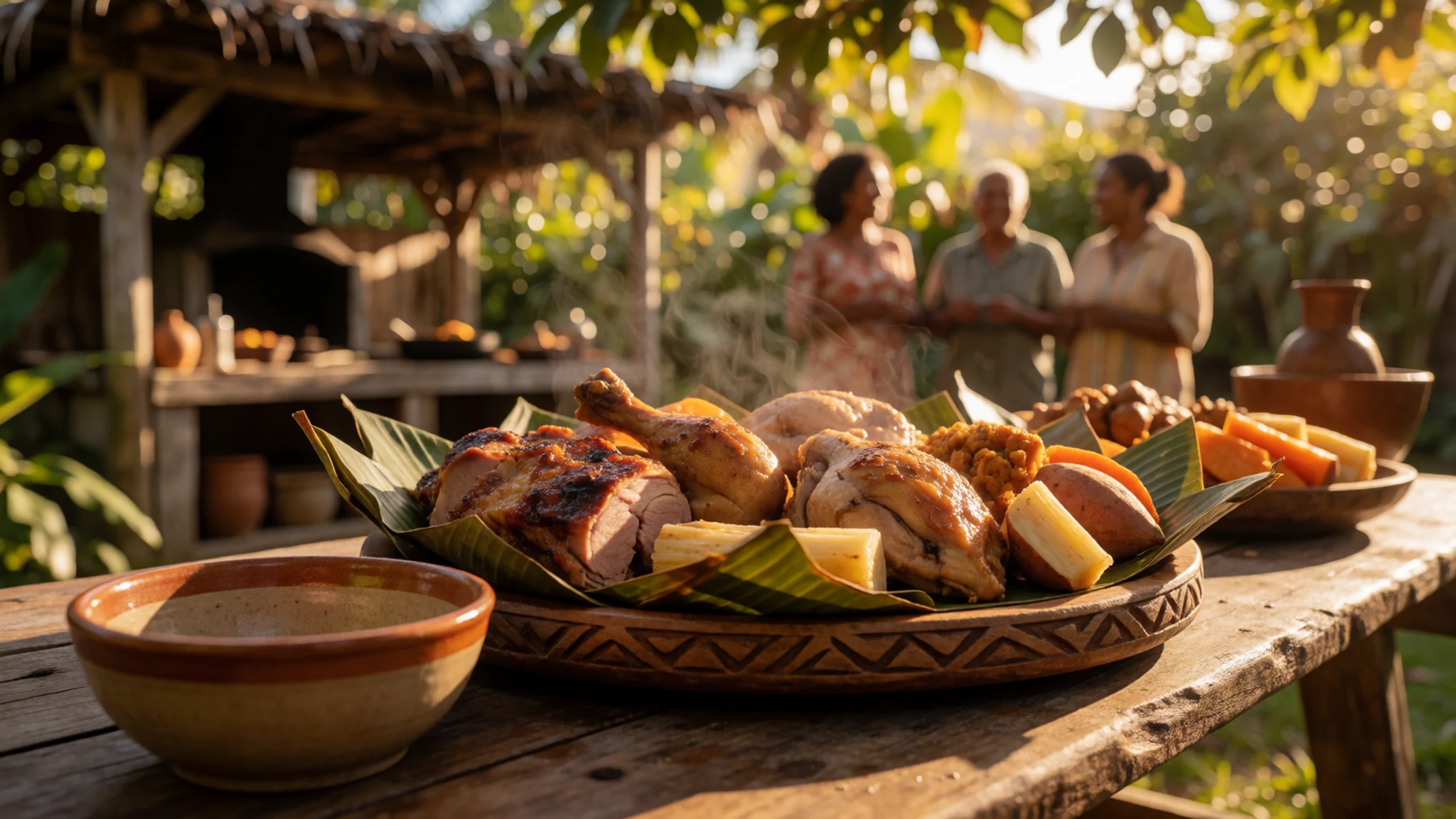
- Raw tuna in lime and coconut — Small fish stalls and eateries near the harbour in Hanga Roa
Fresh tuna is cut into small cubes and marinated in lime juice, then mixed with coconut milk, onion and chilli. The dish is bright and cool, a good contrast to the heavier cooked food. It is best eaten the same day, when the fish is at its freshest.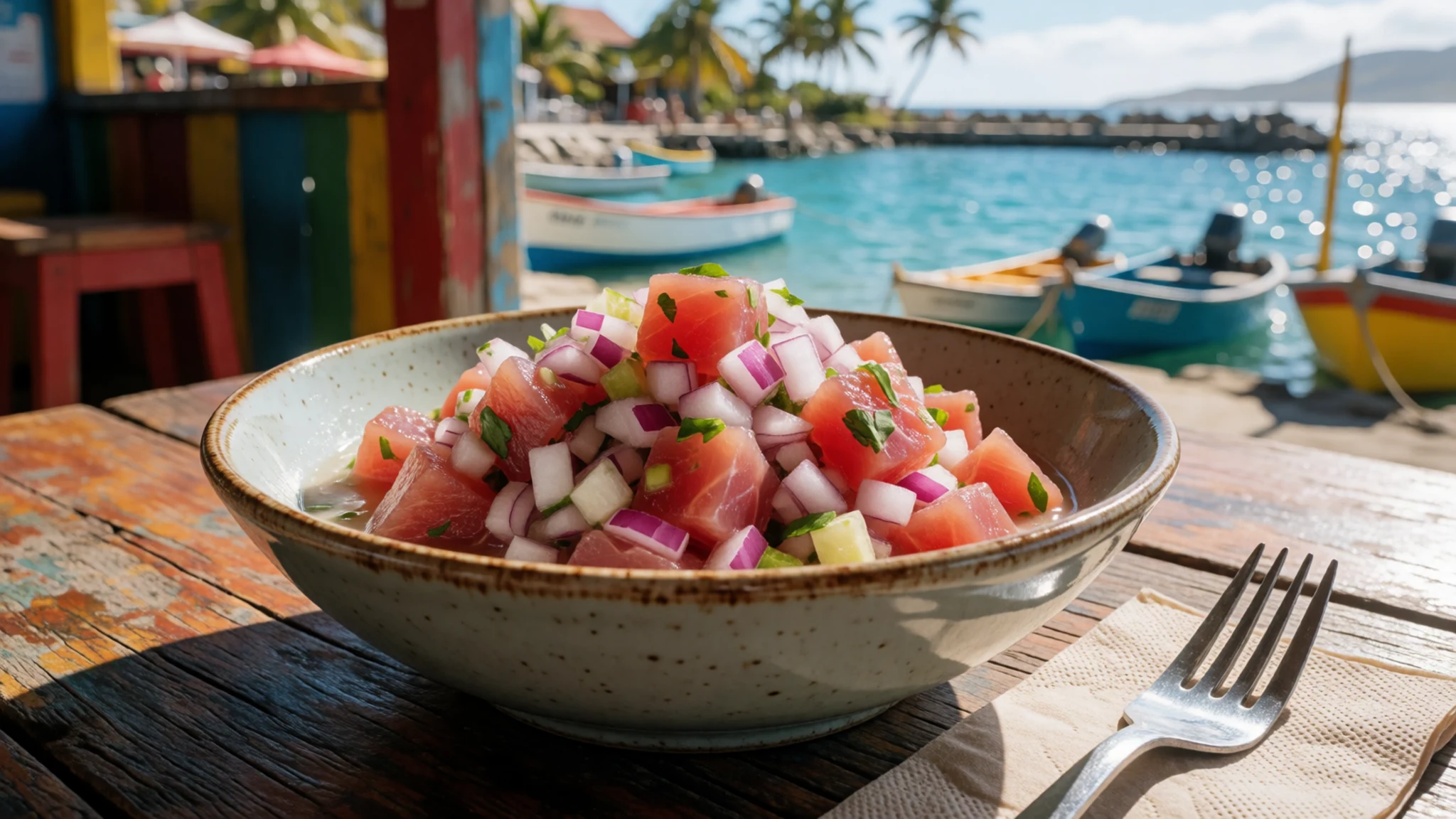
- Sweet potato and taro — The morning market or a home kitchen in Hanga Roa
Sweet potato and taro are staples that have long been grown on the island. They appear boiled, baked or mashed, and they are often served beside fish or umu-cooked meat. Their earthy flavour is simple and filling, and they make a good introduction to local eating.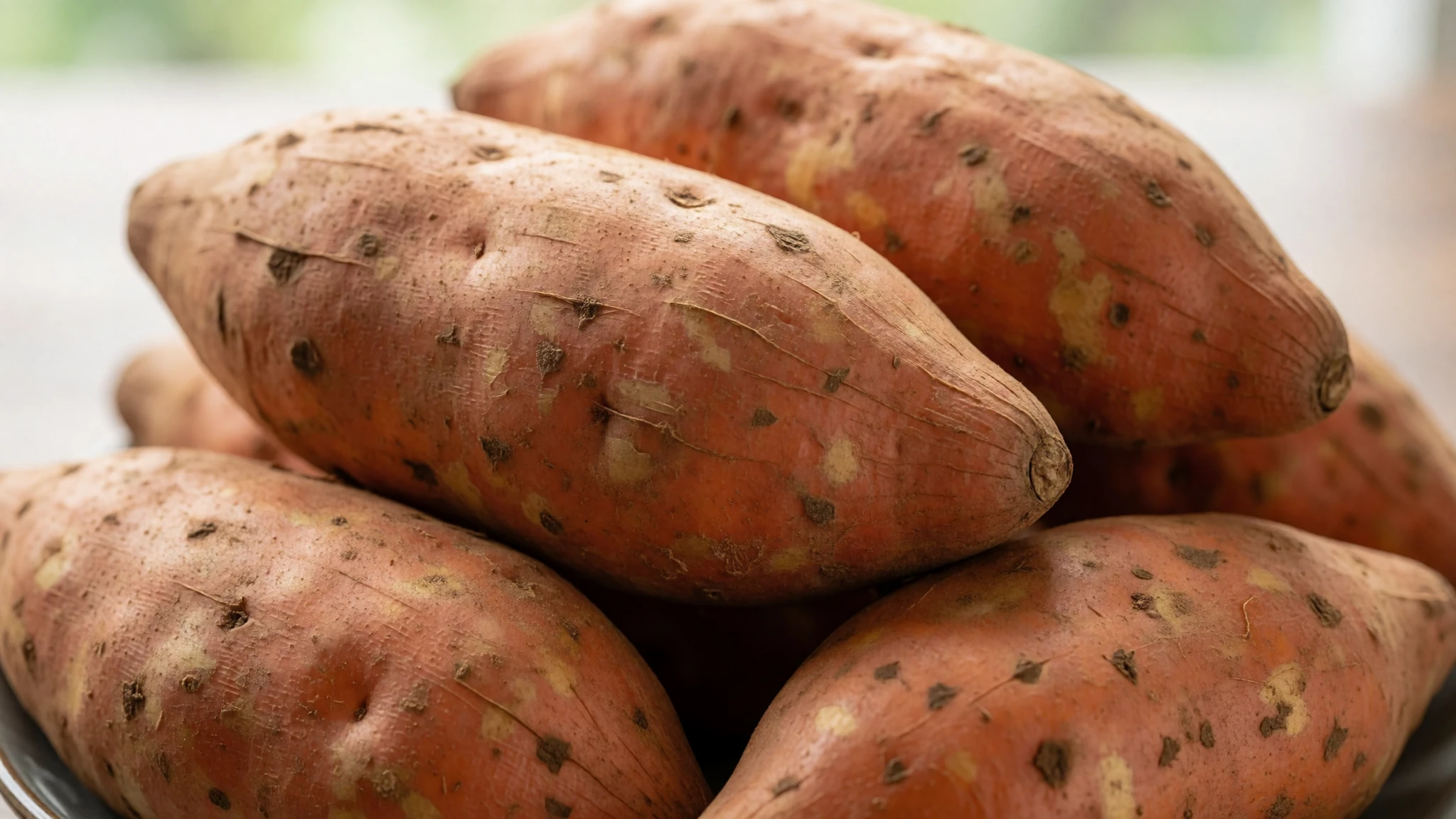
- Grilled reef fish — Seafront grills and simple eateries in Hanga Roa
Whatever the fishing boats bring in is often grilled over charcoal with a little salt and lime. The fish is served whole or in fillets with rice or potatoes. Ask what was caught that morning, because the menu changes with the catch.
Plan it
Best time. Roughly November to March, when the weather is warmer and the days are longer. The winter months are cooler, wetter and windier, and the wind on the rim can be strong at any time of year.
How long. 2–3
Getting there. Fly into Mataveri International Airport on Rapa Nui, with flights from mainland Chile; check current schedules as services change. From the airport, reach Orongo by taxi, rental car or a guided tour, a drive of about half an hour across the island.
Budget. high
Tips
- Go early or late in the day for softer light and fewer visitors
- Wear sturdy closed shoes, since the paths are grassy and rocky
- Carry water and sun protection, because there is little shade on the rim
- Check the official Rapa Nui National Park site for tickets and opening times before you travel
- Bring cash for small stalls and guides, as card payment is not always available
Etiquette
- Stay on the marked paths and off the stone houses
- Do not touch or sit on the petroglyph rocks
- Ask before photographing guides, performers or ceremonies
Nearby
Sources
- Wikidata Q1551834 (CC0)
- Wikipedia: Orongo (CC BY-SA 4.0)
- Wikivoyage: Easter Island (CC BY-SA 4.0)
- Photo: Chile-03344 Subdivision (Dennis Jarvis) (CC BY-SA 2.0)
- Photo: Orongohaeuser (American at German Wikipedia) (CC BY 3.0)
- Photo: Orongomotus (American at German Wikipedia) (CC BY 3.0)
- Photo: 16 Velikonočni otok (Ljuba brank) (CC BY-SA 4.0)
- Photo: Aldea ceremonial de Orongo (Jucar1967) (CC BY 3.0)
- Photo: Camino a Orongo (Gallardoval) (CC BY 3.0)
- Photo: Casas en Orongo reconstruidas (Carlos Reusser Monsalvez) (CC BY 2.5)
- Photo: Ceremonia rapanui en Orongo (Patricio Antonio Soto Latrille) (CC BY 3.0)


