Olinda
Olinda, Brazil
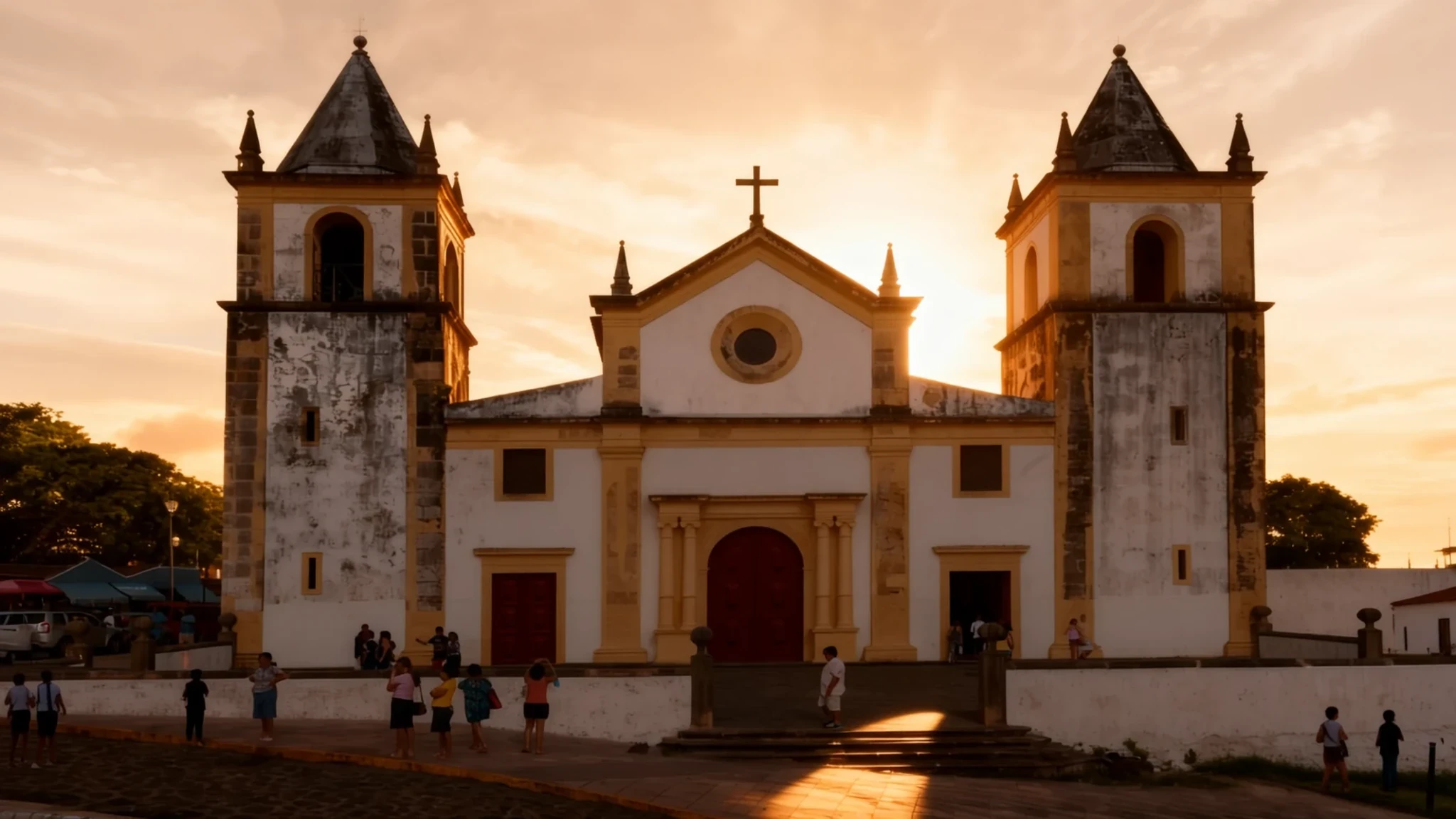
Olinda is a colonial hilltop town beside Recife, known for baroque churches, steep cobbled lanes and a free street Carnival.
The place
Olinda sits on the Atlantic coast of Pernambuco, in the metropolitan area of Recife, the state capital. The old town is built on hills, with steep lanes climbing between colonial houses, convents and churches. Below it the modern city spreads along the coast, but the historic centre is compact enough to walk in a day. Most visitors stay in the old quarter for this reason, and they move around on foot rather than by car.
The hills here are low in height, so the climbs are more about gradient than altitude. The cobbles are uneven, and the steeper stretches can be slippery after rain, so flat shoes with good grip matter more than a map. Olinda was the seat of the old captaincy of Pernambuco, and its historic buildings are the reason the centre is protected and visited. The town has kept a strong street culture, most visibly during Carnival, when small bands and single performers fill the squares.
The beaches are a short trip away. The coast around Recife has a different rhythm, with offices, flats and heavier traffic. Olinda rewards a slow morning: walk past the churches, then sit in a café with a view over the rooftops toward the sea. In the wetter months rain can arrive suddenly and heavily, so carry a light cover and plan the longer outdoor walks for the drier hours of the day.
Its story
Olinda's story begins well before the Portuguese arrived. Several indigenous peoples lived along this stretch of coast for thousands of years, and the hills where the town now stands held Caeté and Tupinambá settlements, which were often at war with one another. French traders are thought to have been the first Europeans in the region, but it was the Portuguese who exploited the rivalries between these groups and built a stronghold on a former Caeté village on a high hill.
The settlement was founded in 1535 by Duarte Coelho Pereira, and it was raised to the status of a town a couple of years later. Its economy grew around sugarcane, and cultivation depended on enslaved labour brought from Africa. That trade shaped the town's wealth and its buildings as much as its religious life. Olinda became the capital of the hereditary captaincy of Pernambuco, and a bishop's seat followed, later becoming a diocese.
The town's most dramatic chapter came with the Dutch invasion, when Dutch forces burned much of the settlement. The Portuguese rebuilt on the hill rather than the lower ground. The decision was partly practical: the high site was easier to defend, and it made drainage and sewers easier to manage. The rebuilt town is largely the one you walk today. Recent studies by the Federal University of Pernambuco have added evidence about the people who lived in the area before colonisation, so the older story is still being pieced together.
What to see
- Mosteiro de São Bento — Historic centre, on the upper hill
The Benedictine monastery is a substantial complex on the hill, and it once housed Brazil's first law school. The chapel is the reason many visitors come, because its woodcarvings are exceptional. Sunday mass is sung with Gregorian chant, which makes it a good reason to plan a visit around the weekend service. Check the official site for current opening times before you go, and dress with shoulders covered.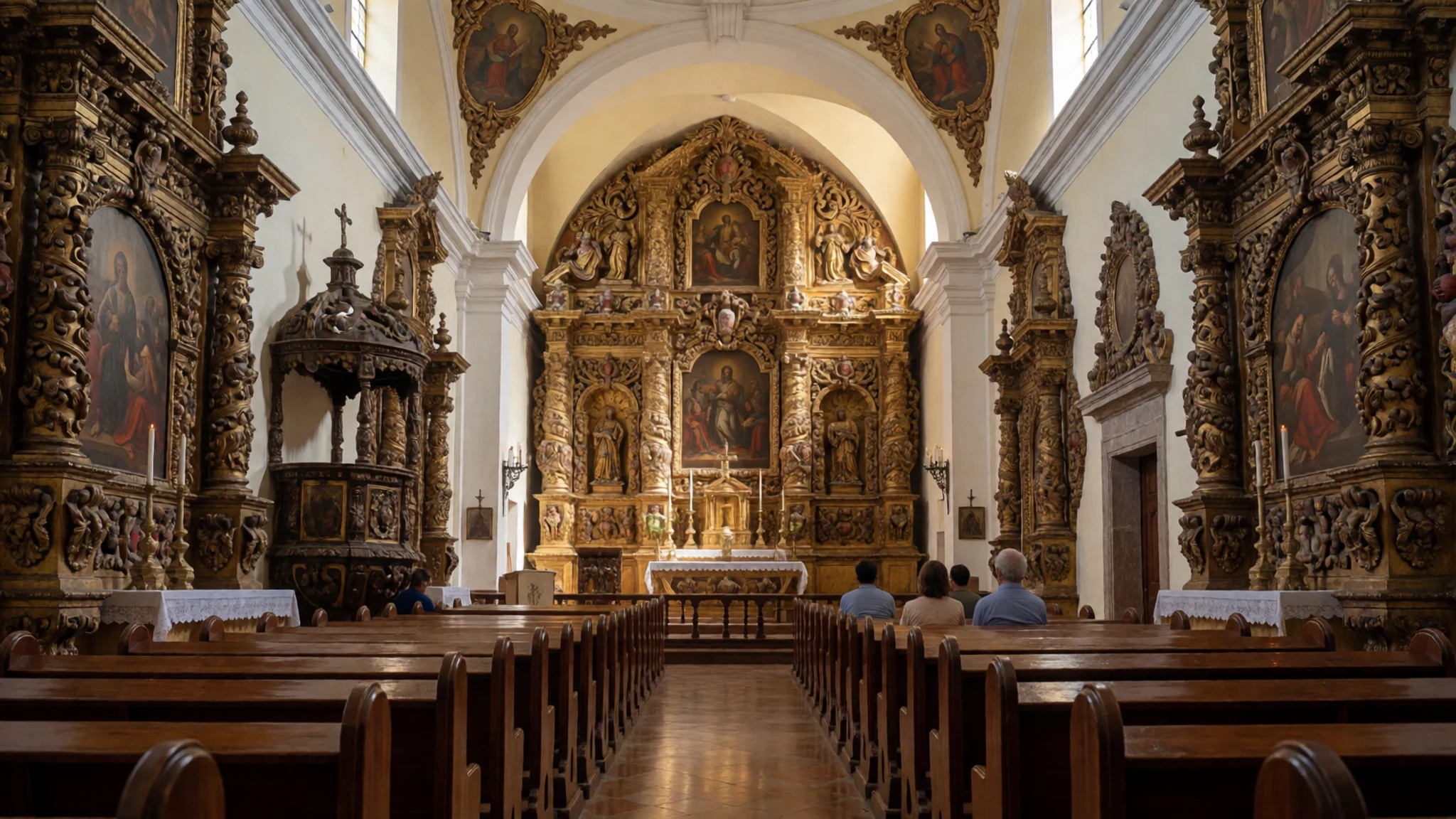
- Convento São Francisco — Historic centre, near the upper hill
The Franciscan convent and its church are among the baroque buildings that give Olinda its character, alongside the Benedictine monastery. The interiors are richly decorated and carved, and the cloisters make a quiet stop after the climb. Photography rules and opening times change, so ask at the door before you take pictures inside. Allow time to walk slowly through the older rooms.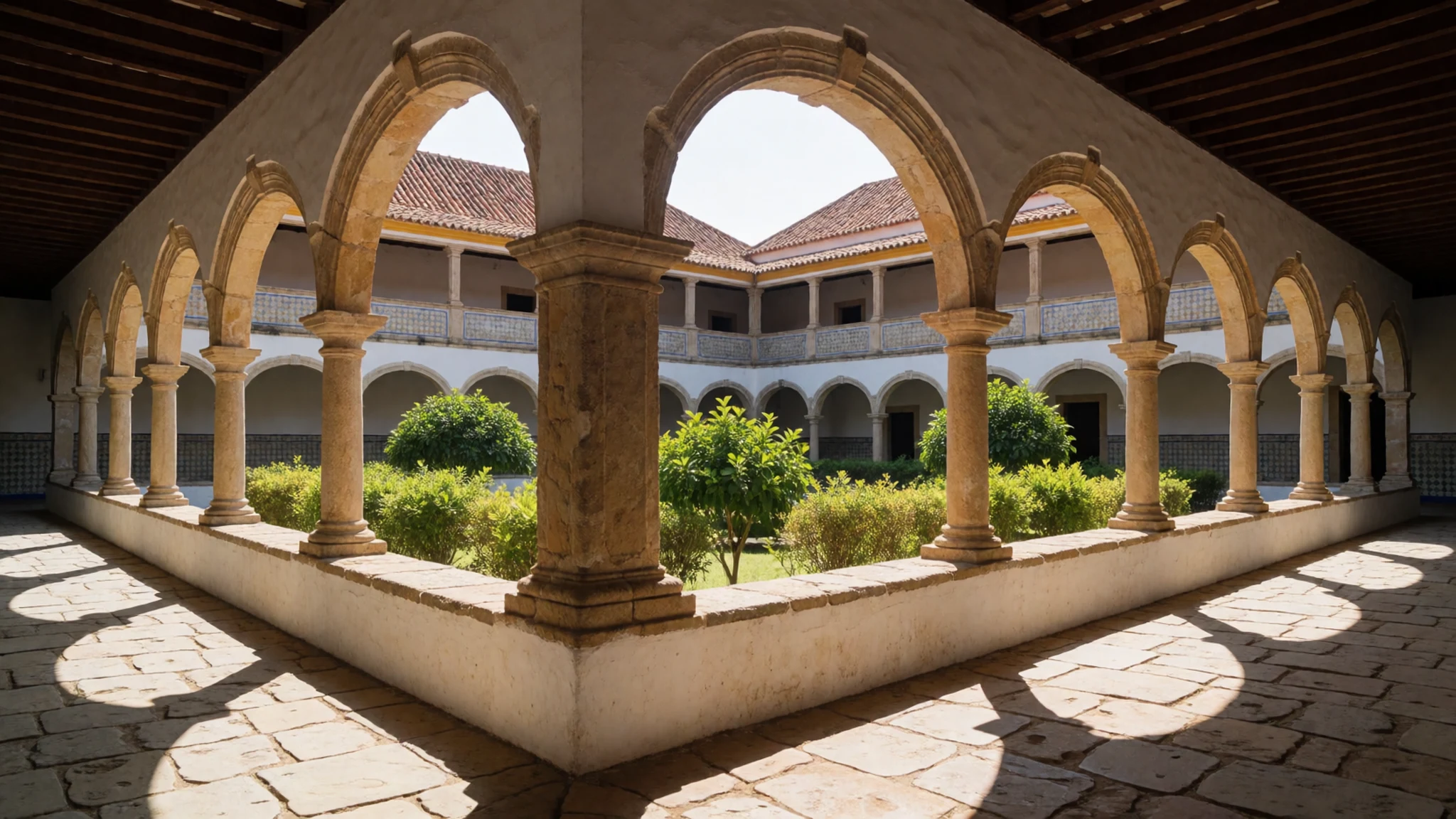
- Igreja da Misericórdia — Historic centre
This church is known for its azulejos, the painted ceramic tiles that line its walls, and for its gilded carvings. The tiles are worth a slow look from the nave, where the light is softer than outside. It is an active place of worship, so keep your visit respectful and avoid the middle of services. The church is a good stop on a loop through the older lanes.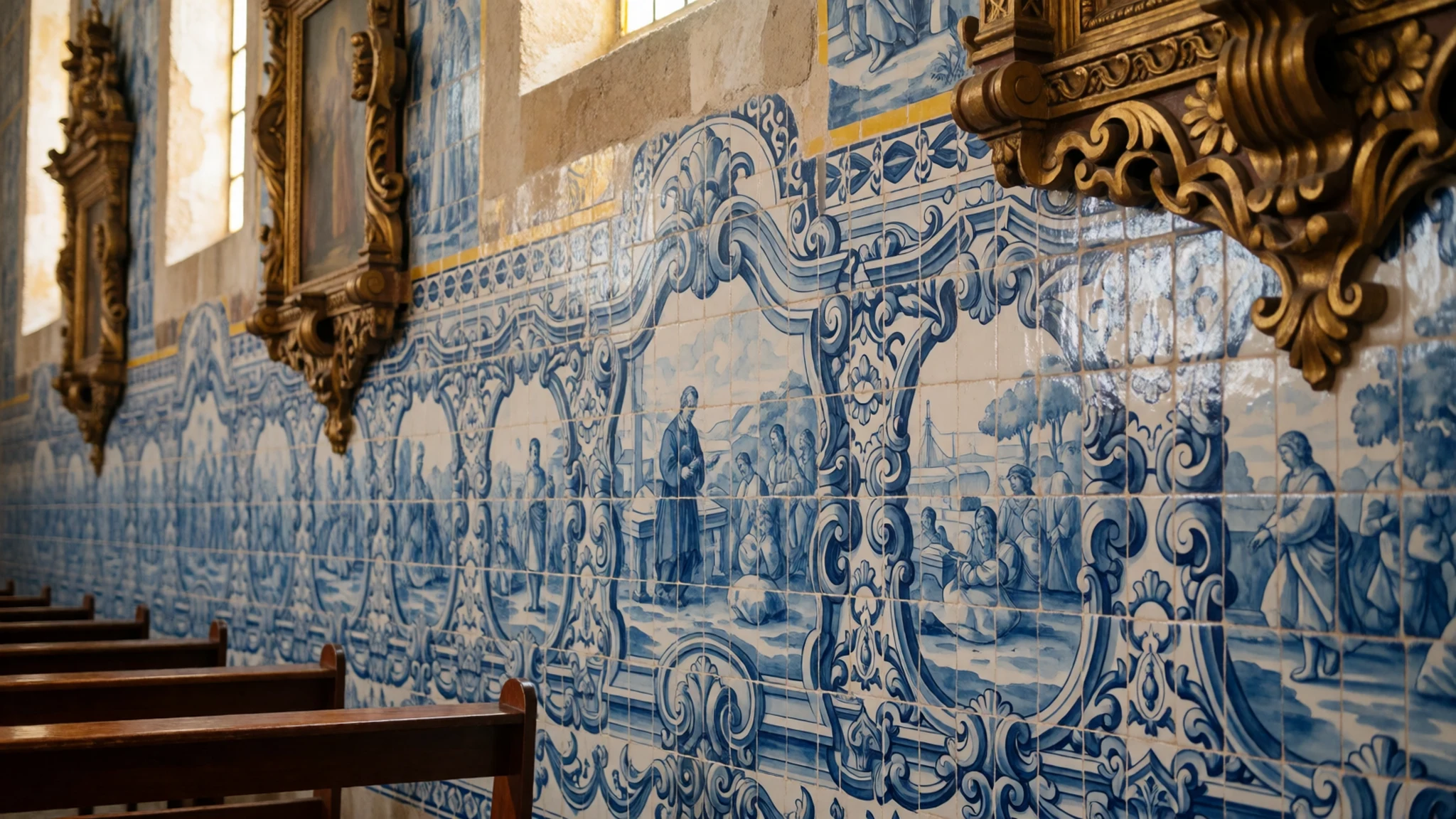
- Church of Carmel (Igreja do Carmo) — Praça do Carmo, near the beachfront side of town
The Carmelite church stands near the main square, and it is often the first building visitors reach from the bus stop at Praça do Carmo. Its façade and interior show the layered decoration typical of the town's churches. The square around it is busy in the evening, with food vendors and music. Look up at the tower from the square before going in.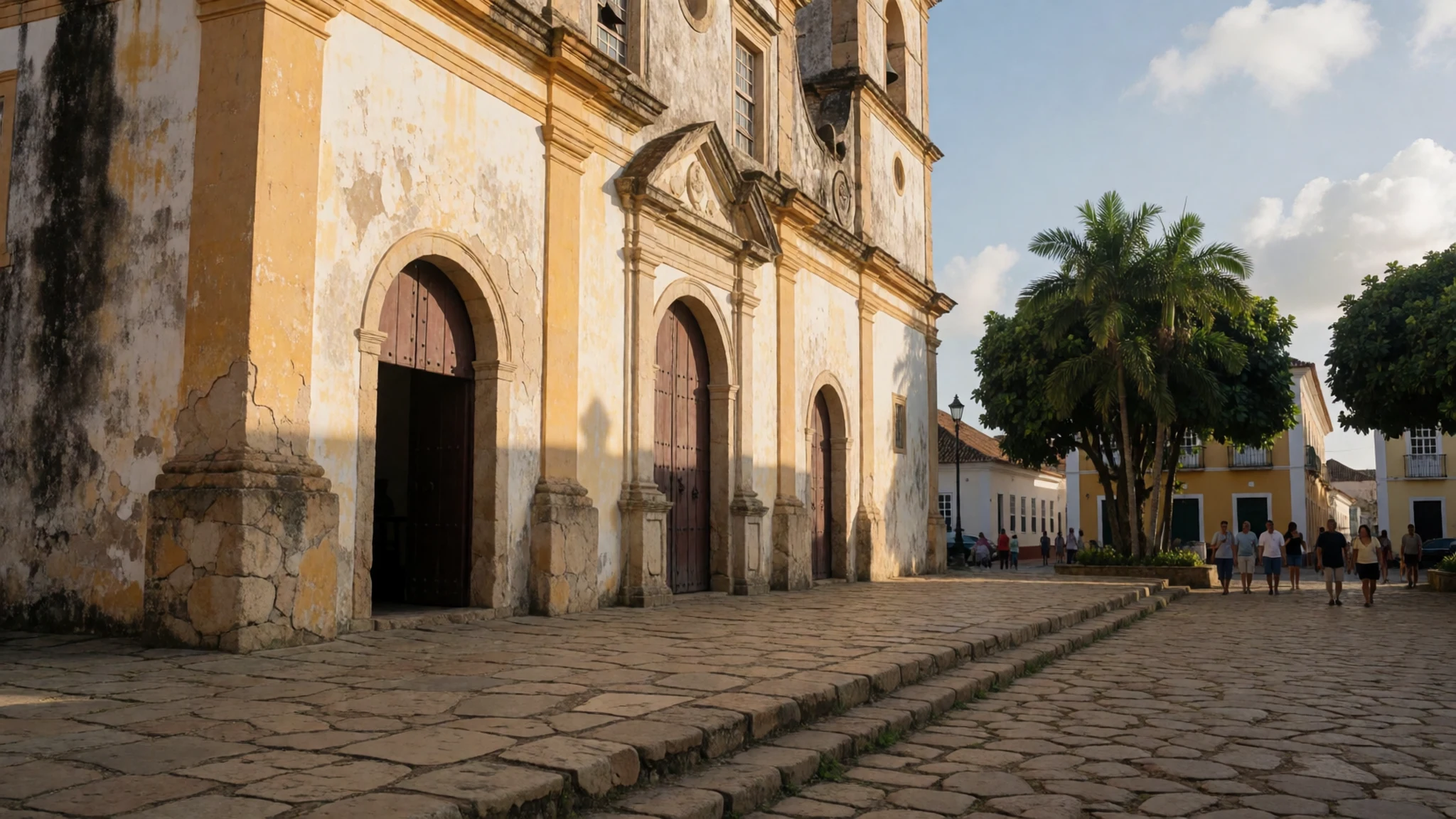
- Contemporary Art Museum of Pernambuco (MAC) — Varadouro neighbourhood
The museum's collection includes works by well-known Brazilian artists, among them Portinari, Di Cavalcanti and Djanira, and it gives a good sense of the region's modern art. It occupies a historic building in the Varadouro neighbourhood, which is less crowded than the main churches. Check the official site for current hours and exhibitions, as the displays change. It makes a calm break between churches.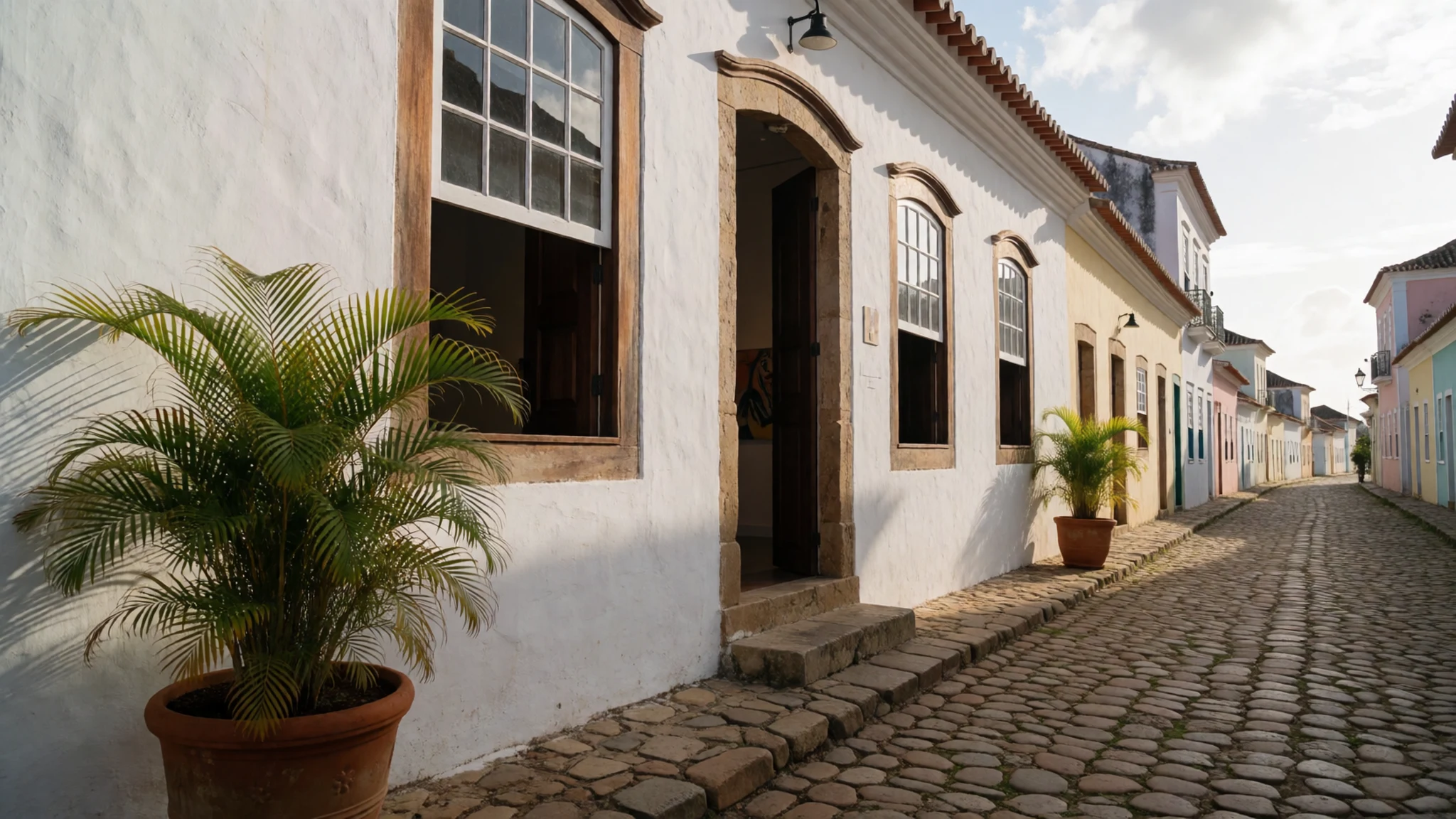
Culture
Olinda's culture is most visible on the street. Carnival here is a free street party with no bleachers or ropes, so the crowds, the music and the dancing belong to the public space. Hundreds of small musical groups, some made up of a single performer, play in many genres, and the African-influenced dances that run through the festivities reflect the history of the Northeast. Outside Carnival the rhythm is slower, with live music in bars and in the market hall on many evenings.
Religion is part of daily life too. Many churches and convents are still active, with services and processions, so treat them as places of worship first and as monuments second. Visitors are often welcome inside during quieter hours, but a building's own rules and any service in progress come first. Keep your voice low inside, and ask before photographing anyone at prayer.
What to wear
Traditional dress in Olinda is tied to Carnival and the dances of Pernambuco rather than to a single everyday costume. The frevo dancers who fill the streets wear bright, lightweight outfits of cotton and light fabrics so they can move quickly, and they carry small coloured umbrellas, called sombrinhas, which become part of the dance. Maracatu and other Afro-Brazilian groups bring their own costumes, often in embroidered and richly coloured cloth, worn for processions and performances rather than for daily life.
Most people in Olinda today dress for the heat: shorts, cotton t-shirts, simple dresses and sandals. Church services are attended in ordinary clothes, though people tend to be neater than on the beach. During Carnival, fancy dress and street group costumes are everywhere, and the lanes fill with glitter and bright colours.
For a visitor, light, breathable cotton or linen is the sensible choice, with a hat and sunscreen for the midday sun. Cover shoulders and knees when going into churches and convents, and carry a light layer or scarf for that purpose. Footwear matters more than fashion here: the streets are cobbled and steep, so choose flat shoes with grip and leave the heels at your accommodation.
What to eat
- Baked pumpkin stuffed with shrimp or fish — A restaurant on the upper old town with a view over Recife
Baked pumpkin stuffed with shrimp or fish and cooked in a coconut sauce, the kind of dish that makes a good splurge. It is served in the upper restaurants of the old town, where the view over Recife is part of the meal. Order it for an evening meal, when the view is at its best.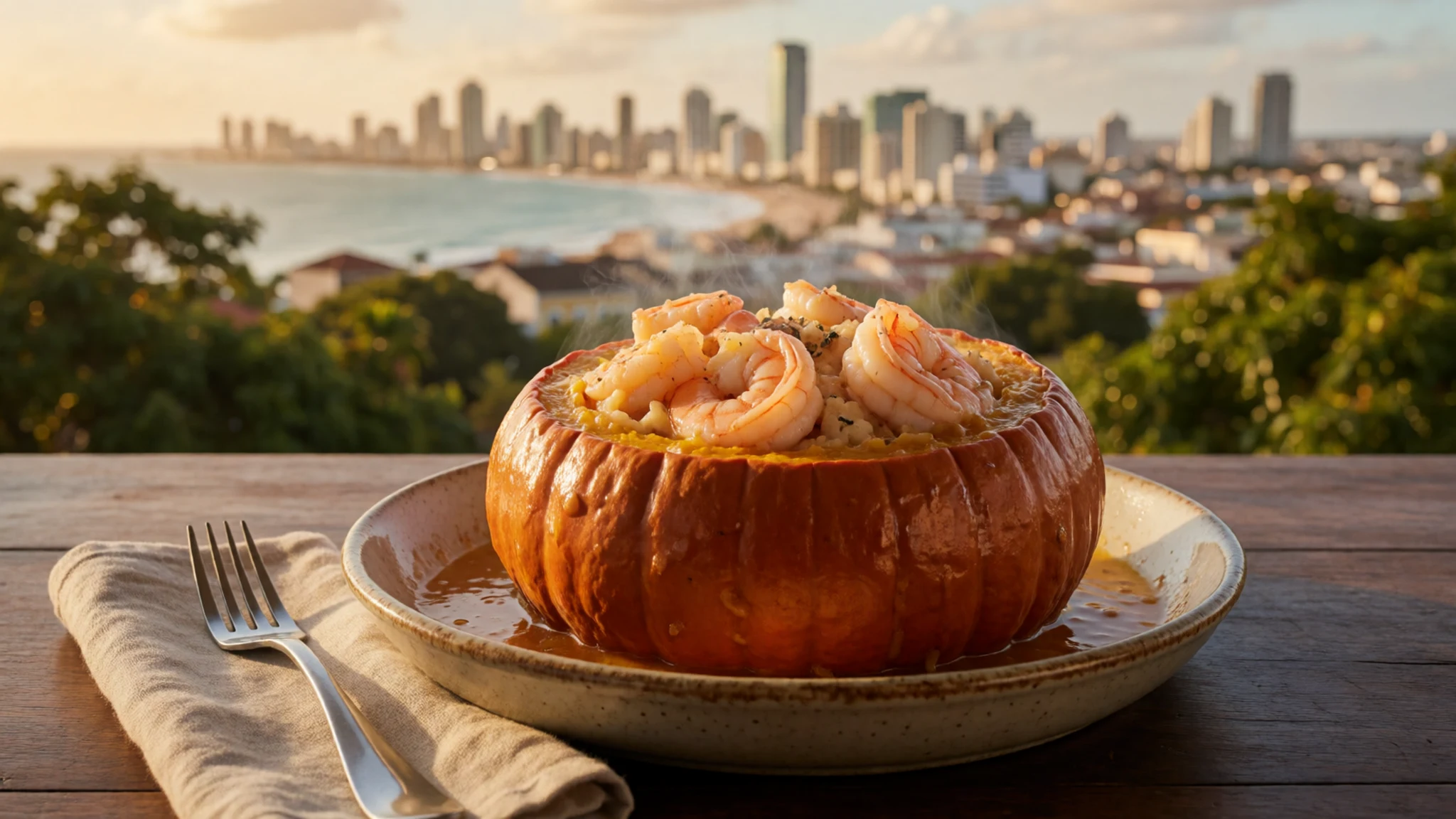
- Snacks from the Alto da Sé vendors — Alto da Sé hilltop, early evening
Snacks and simple plates from the food vendors on the Alto da Sé hilltop, busiest in the early evening when the square fills. Look for grilled skewers, fried pastries and cold drinks sold from carts. Eat standing at the stall, pay in cash, and pick the busiest stall, which usually means the freshest food.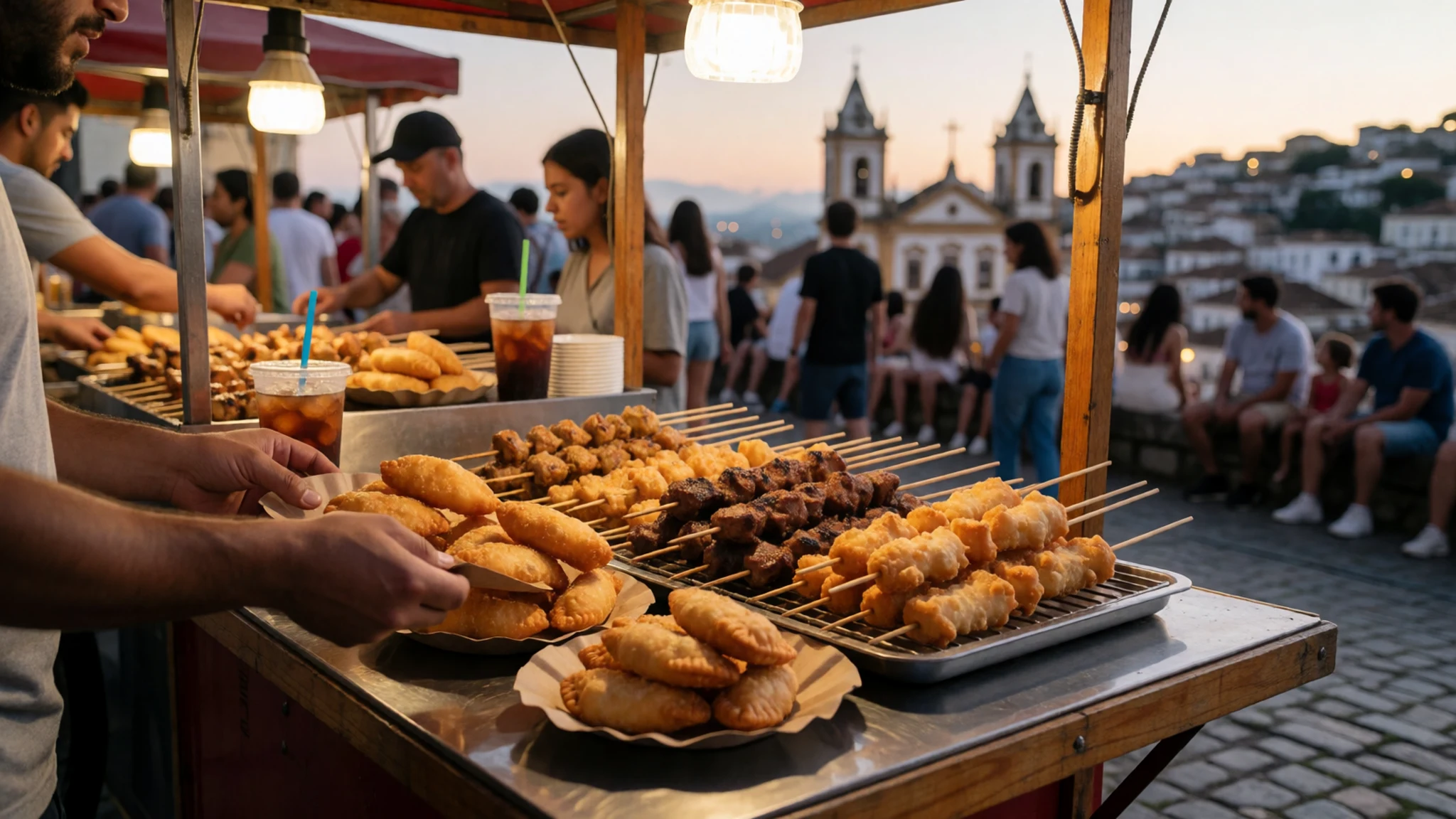
- Sandwiches and burgers late at night — A casual spot near Praça do Carmo, close to the beachfront
Simple sandwiches and burgers are the late-night choice in this part of town. The casual spots near the beachfront stay open into the small hours, which suits a day of walking the hills. Expect a relaxed, informal meal rather than a long sit-down dinner, and ask staff what is freshest.
- Market snacks and cold drinks — Mercado Eufrasio Barbosa, the market hall
The market hall is a good place for a light snack and a cold drink between visits to the churches. It often hosts cultural presentations and live music, so an evening there can double as entertainment. Buy from the stalls that look busiest with locals, and keep small notes handy for the vendors. - Self-service lunch — A self-service eatery on Praça João Alfredo
A self-service lunch is the most economical option when you want a proper midday meal without a long wait. Choose from the trays, pay by weight or by plate depending on the place, and eat in the shade. It is a good way to refuel before walking the afternoon hills.
Plan it
Best time. The drier months from around September to February suit walking the hills, with the warmest and wettest weeks at different points of the year. Carnival falls in the hot, busy summer, so it brings the biggest crowds and the highest prices; book well ahead if you want those dates.
How long. 2–3
Getting there. Recife's Guararapes Airport is the nearest airport. From there, take a taxi or ride-hailing car to the old town, or a local bus into Recife and then onward; Praça do Carmo is the primary bus stop in Olinda, though it is easily overlooked. Taxis from central Recife take less than an hour.
Budget. mid
Tips
- Book accommodation early for January and February, when Carnival lifts prices sharply
- Stay in the old town if you want to walk to churches, museums and bars
- Walk the hills early in the morning or late in the afternoon, when the heat eases
- Carry cash for small stalls and cafés, and check which cards are accepted before you order
- Pick up the monthly nightlife guide from tourist offices or your accommodation
- Wear shoes with grip, since the cobbles turn slippery after rain
Etiquette
- Dress covered at churches and convents, with shoulders and knees covered
- Keep your voice low inside churches and step aside for worshippers
- Ask before photographing people, especially musicians up close and anyone at prayer
- Check the official site for opening times, because services can close a church to visitors
Nearby
Sources
- Wikidata Q28301 (CC0)
- Wikipedia (rev 1376955659) (CC BY-SA 4.0)
- Wikivoyage (rev 5413273) (CC BY-SA 4.0)
- Photo: Convento de São Francisco, Valdiney Pimenta (CC BY 2.5)
- Photo: Olinda e Recife, Portal da Copa/ME (CC BY 3.0 br)
- Photo: Mosteiro de São Bento, Prefeitura de Olinda (CC BY 2.5)
- Photo: Church of Carmel, Matti Blume (CC BY-SA 4.0)
- Photo: Palácio dos Governadores, Prefeitura de Olinda (CC BY 2.5)
- Photo: Museu de Arte Contemporânea de Pernambuco, Prefeitura de Olinda (CC BY 2.5)
- Photo: Igreja de São Salvador do Mundo, Jan Ribeiro (CC BY 2.5)
- Photo: Bandeira de Olinda, Prefeitura de Olinda (Public domain)


