Old San Juan
Old San Juan, United States
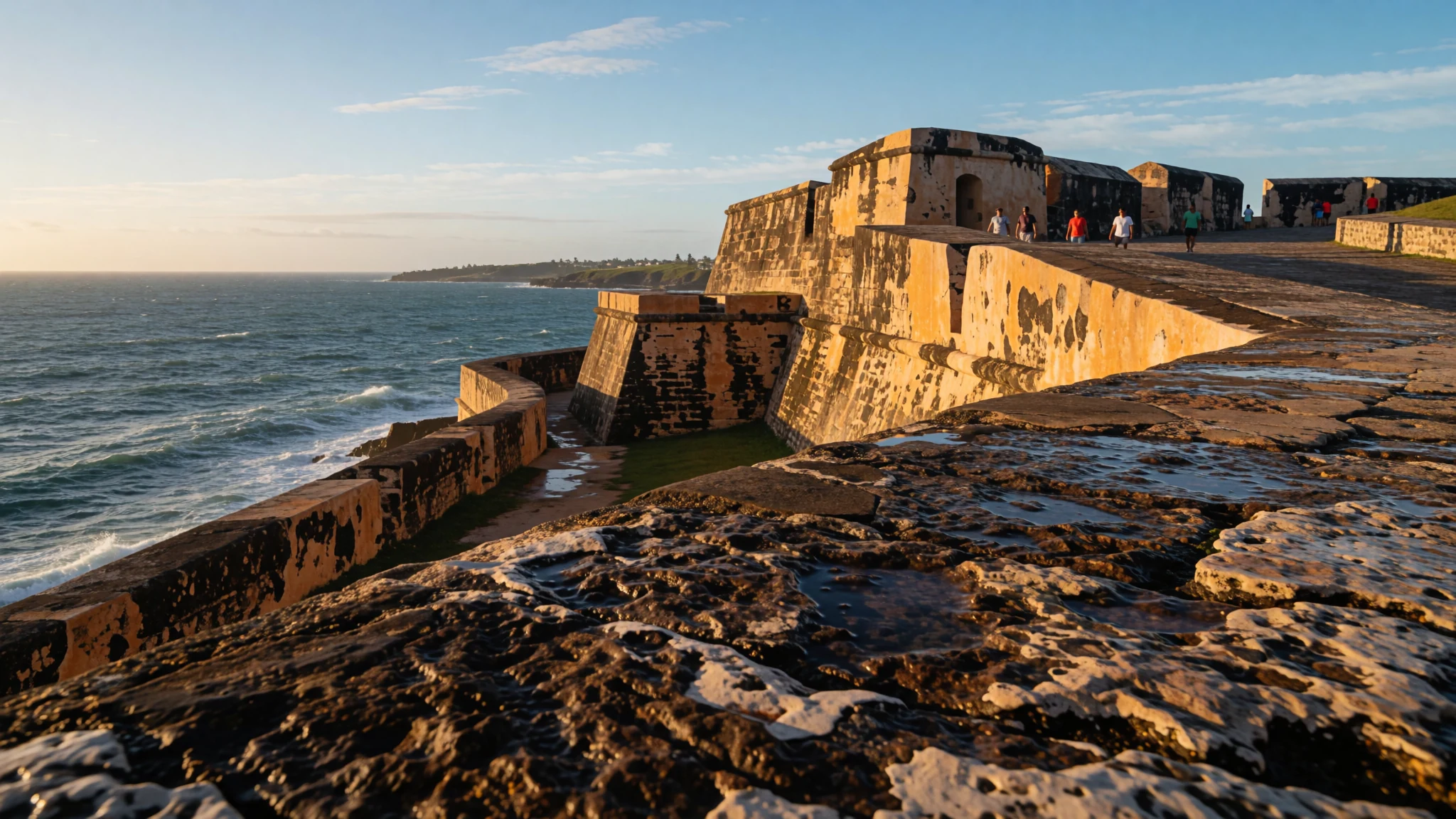
Old San Juan rewards slow walking: colonial forts, old churches and painted streets, best explored before the cruise crowds arrive.
The place
Old San Juan occupies the north-western corner of a small, narrow islet on Puerto Rico's northern coast. It is joined to the mainland by bridges, with the Atlantic on one side and San Juan Bay on the other. This is the oldest part of the city and the island's original colonial core, a tight network of cobbled streets, pastel-fronted houses and squares laid out after the settlement was founded on the islet in 1509. Walking is the main activity here. Some lanes are steep, the paving can be slick after rain, and most sights sit within a few blocks of one another. The main commercial spine, Calle Cristo and Calle Fortaleza, is lined with shops, galleries and restaurants, while the upper floors of many buildings are homes. That keeps the district lived-in after the day visitors leave. Much of the area is protected as a historic zone and a national landmark district, and several forts and the city walls form part of a World Heritage listing. Restoration is visible everywhere, from fresh paint on balconies to carefully repointed masonry. Expect the streets to feel busiest from late morning into the afternoon, when cruise passengers arrive in groups. Early mornings and evenings are calmer, and the plazas come alive after dark with music and outdoor eating. Because the streets are narrow, driving and parking inside the walls is difficult, so most people arrive on foot, by taxi or by ferry across the bay.
Its story
Old San Juan began as a move rather than a single founding. In 1508 Juan Ponce de León set up a settlement called Caparra on the mainland side of the bay. Within a year, in 1509, the site was abandoned for a better harbour on the islet, which took the name Puerto Rico, meaning rich or good port. The new town's religious roots came early. The archdiocese was established in 1511, and a first wooden cathedral followed in 1513. By 1521 the settlement had its formal name, Ciudad de Puerto Rico de San Juan Bautista, and its first streets and squares were laid out, including Calle del Cristo and the plazas around the cathedral. The church of San José, founded as a monastery in 1523, is among the oldest churches in continuous use in the New World. The city hall dates from 1602, and the forts grew over the following centuries. El Morro, the citadel at the north-western tip, and San Cristóbal, which guards the landward approach, form the most visible military legacy. The district's buildings, from the governor's residence to the stone warehouses along the waterfront, reflect centuries of rebuilding. Recognition came in 1983, when the forts and walls were inscribed as a World Heritage Site. The past is not confined to museums. The same streets carry names given soon after 1521, and the same squares still host the city's public life.
What to see
- El Morro — North-western tip of the islet
El Morro is a colonial citadel on the north-western point of the islet and the defining view of Old San Juan. Its thick walls and sea-facing batteries drop toward the rocks, and the upper ramparts give a wide view over the Atlantic. It is part of the San Juan National Historic Site. Go early or late in the day to avoid the heat and the cruise groups.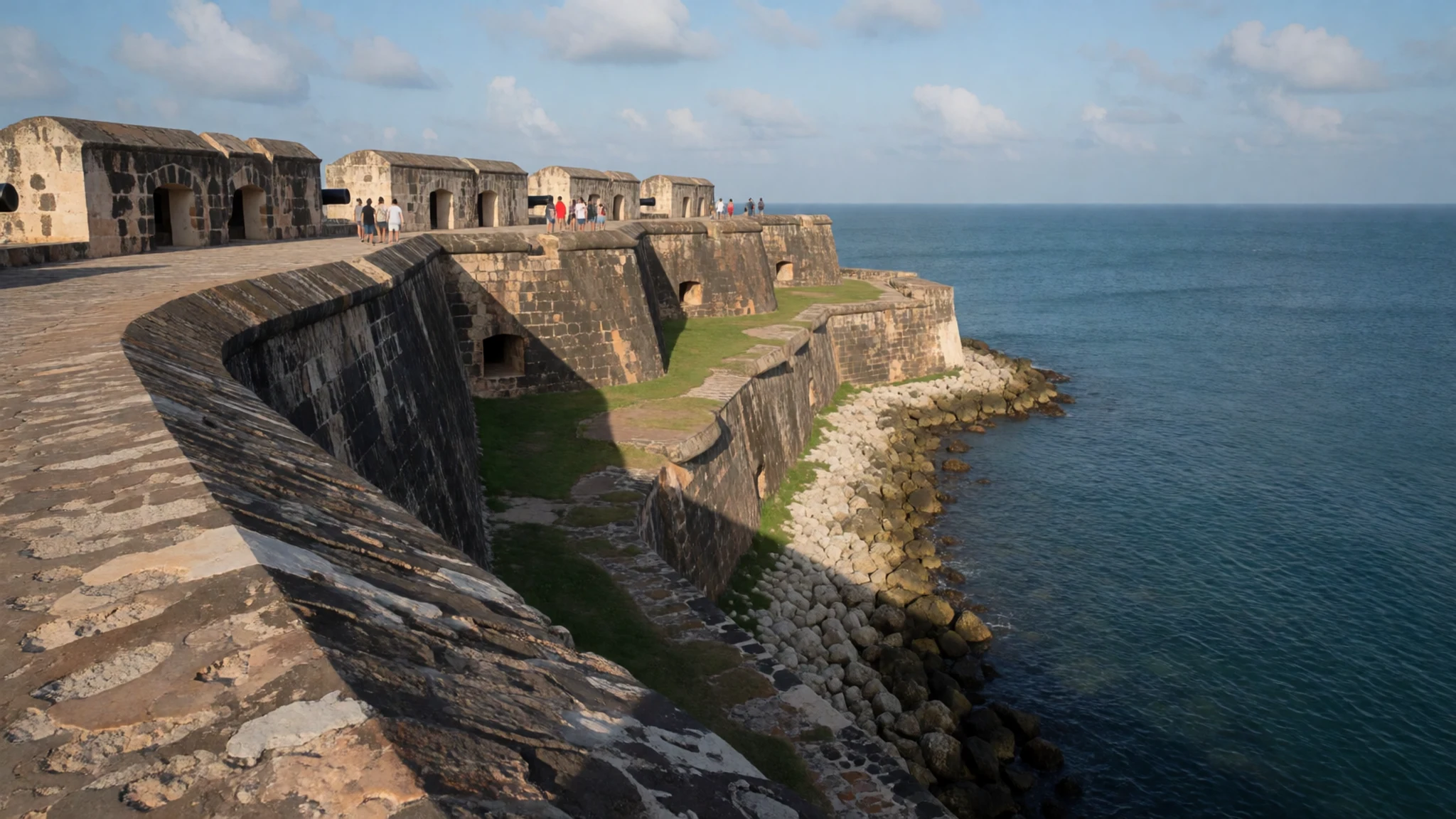
- Castillo San Cristóbal — Landward side of the old town
San Cristóbal guards the landward approach to the city and was built to stop attacks from the land side. It is one of the largest Spanish fortresses in the New World, with batteries and wide views over the rooftops. A National Park Service visitor centre sits off Avenida Luis Muñoz Rivera. Allow a good hour, wear sensible shoes and carry water, as the open ramparts offer little shade.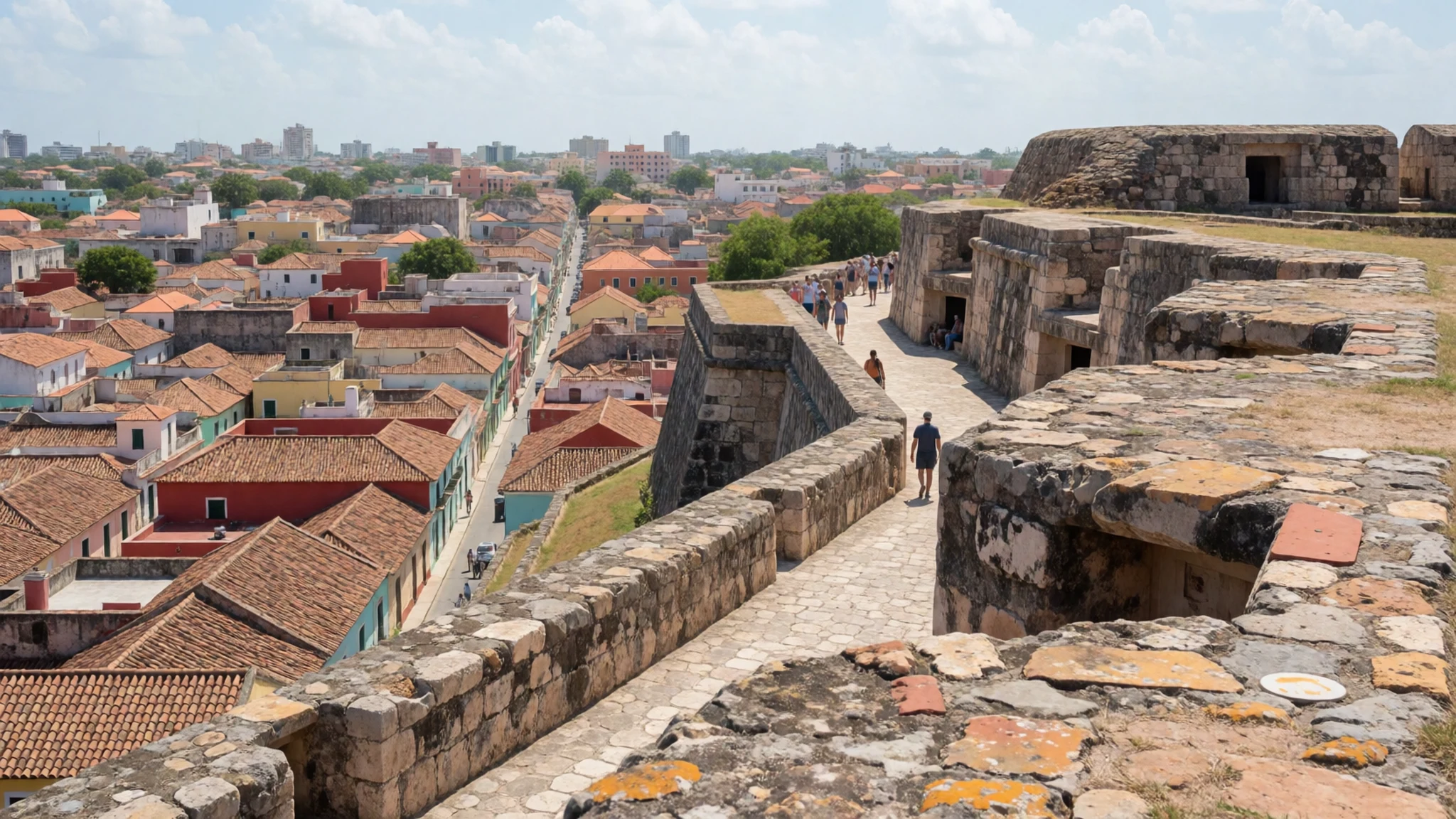
- San José Church — Old quarter, near the main streets
San José was founded in 1523 as the Church and Monastery of Saint Thomas Aquinas and is among the oldest churches in continuous use in the New World. Its stone interior is cool and quiet compared with the streets outside. Services continue here, so keep your voice low and dress modestly. Midday on a weekday is usually the least crowded time to visit.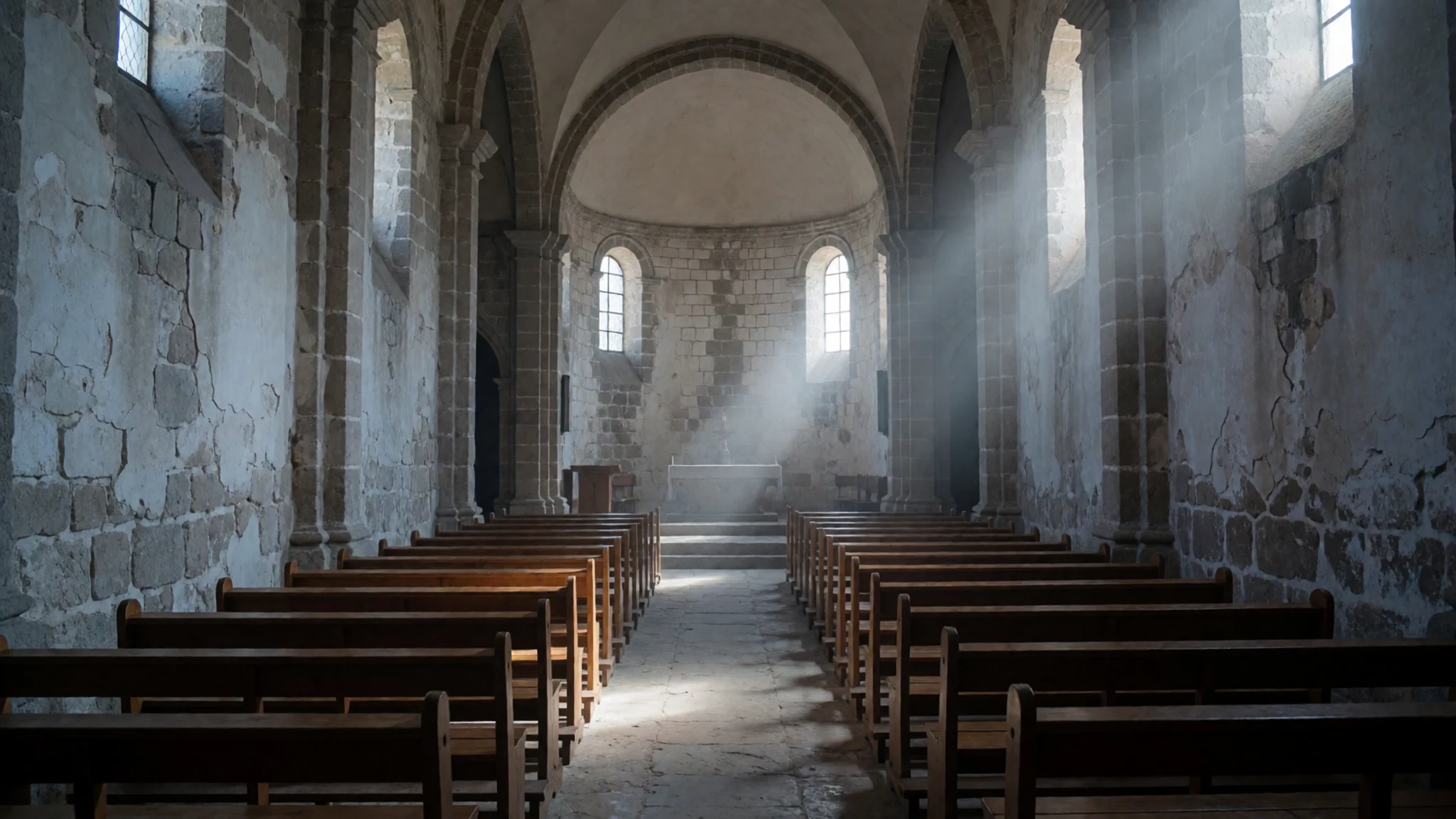
- La Fortaleza — Northern edge of the old town, above the harbour
La Fortaleza, also called the Palacio de Santa Catalina, is the official residence of Puerto Rico's governor and the seat of government, so it remains a working building. Its name means the fortress, a reminder of its origins as a defensive stronghold above the harbour. Public access is limited, so check the official site for any tours before you go. It is most rewarding as a walk-by on the way to the cathedral.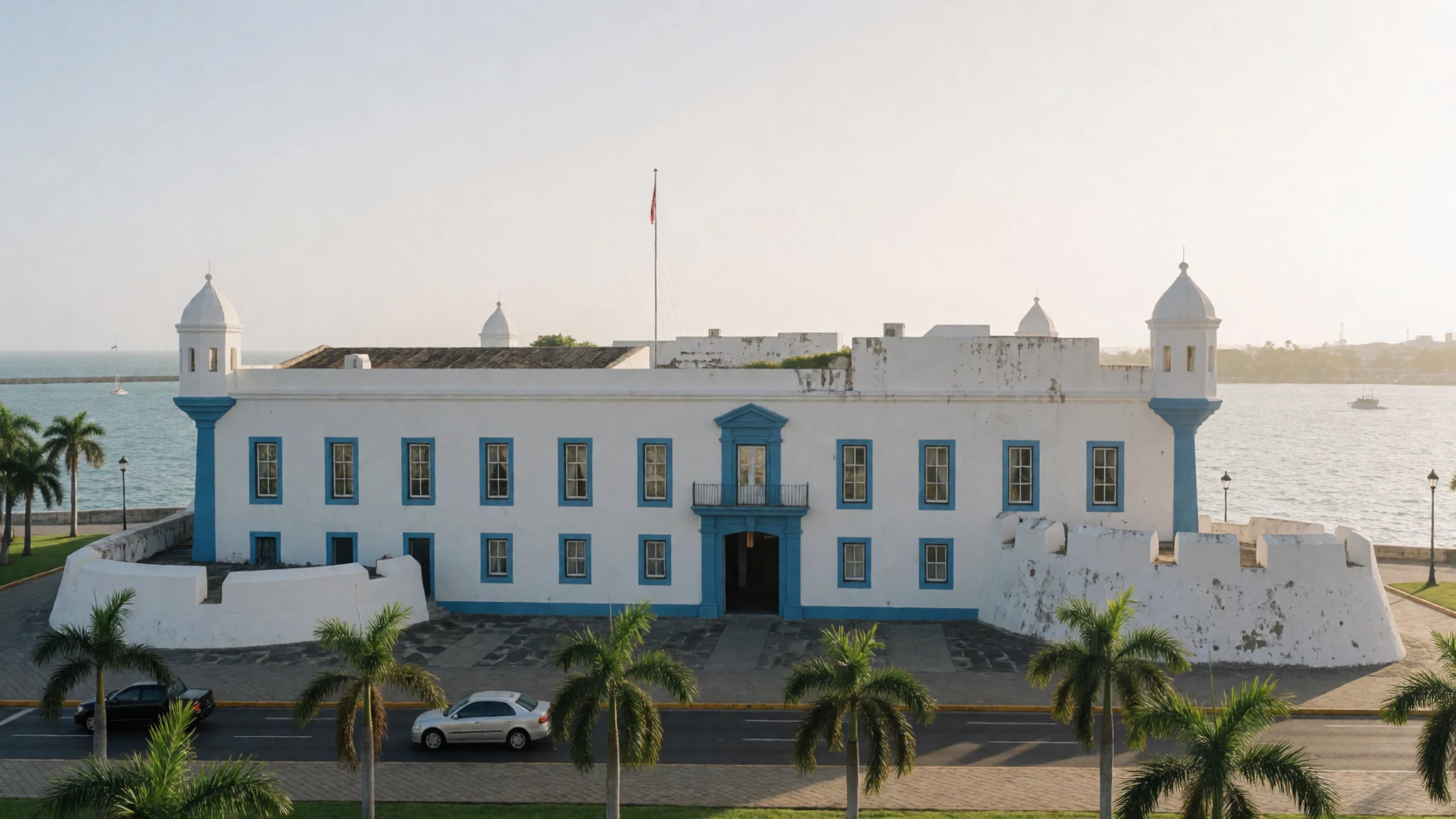
- San Juan Cathedral — Plaza de la Catedral
The cathedral on the Plaza de la Catedral holds the tomb of Juan Ponce de León, the explorer who founded the first settlement at Caparra. The building has been rebuilt over the centuries since the first wooden church of 1513. Inside, the simple vaults and side chapels offer a quieter break from the sun. Check the official site for current opening times and dress modestly for the visit.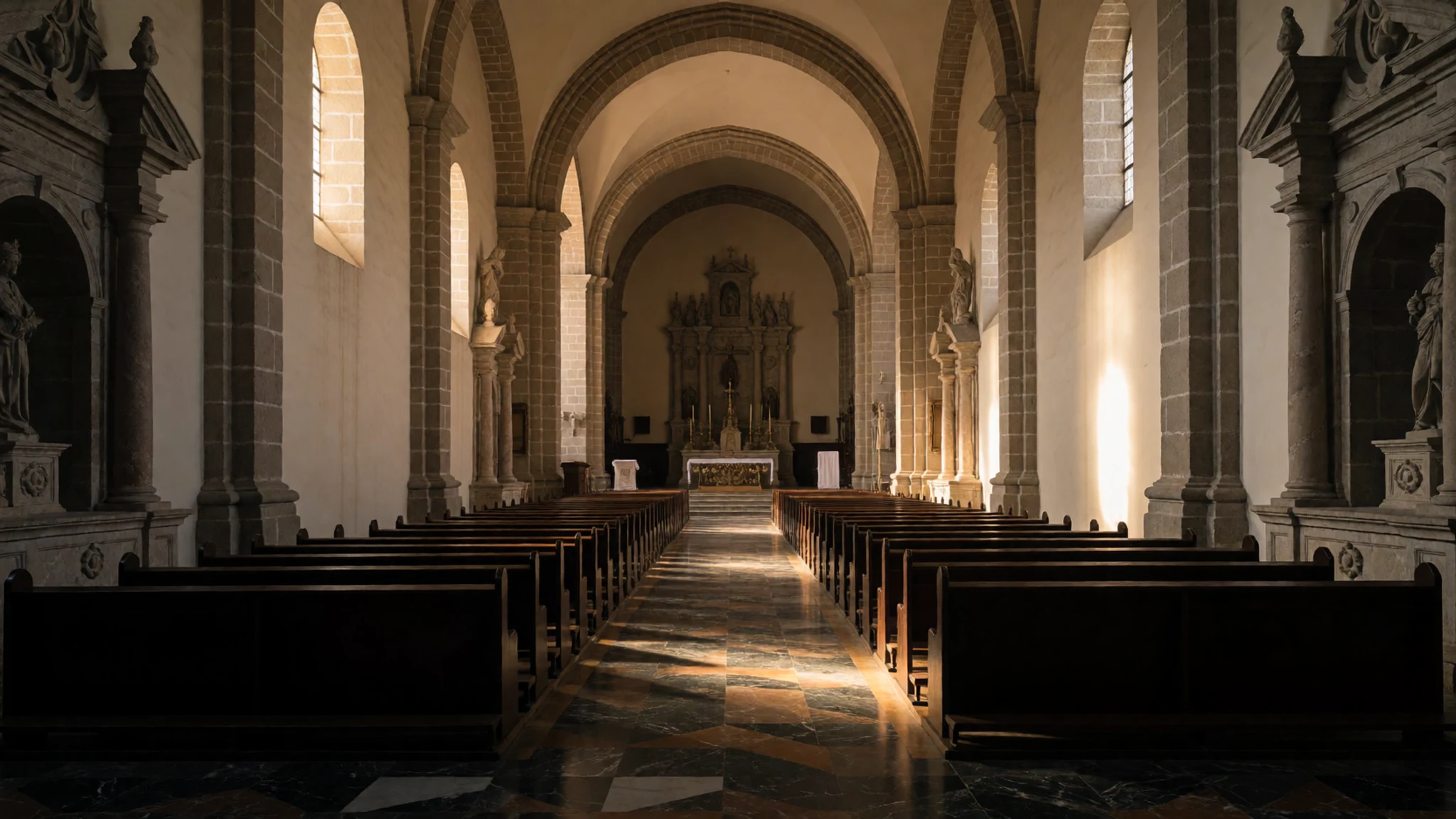
- Casa Blanca — Hillside above the city walls
Casa Blanca was the ancestral home of the Ponce de León family and is now a museum. It sits above the city near the walls and shows how a prosperous colonial household lived, with courtyards and cool rooms. The approach involves a short climb, so visit in the morning and bring water. Check the official site for opening hours before you go.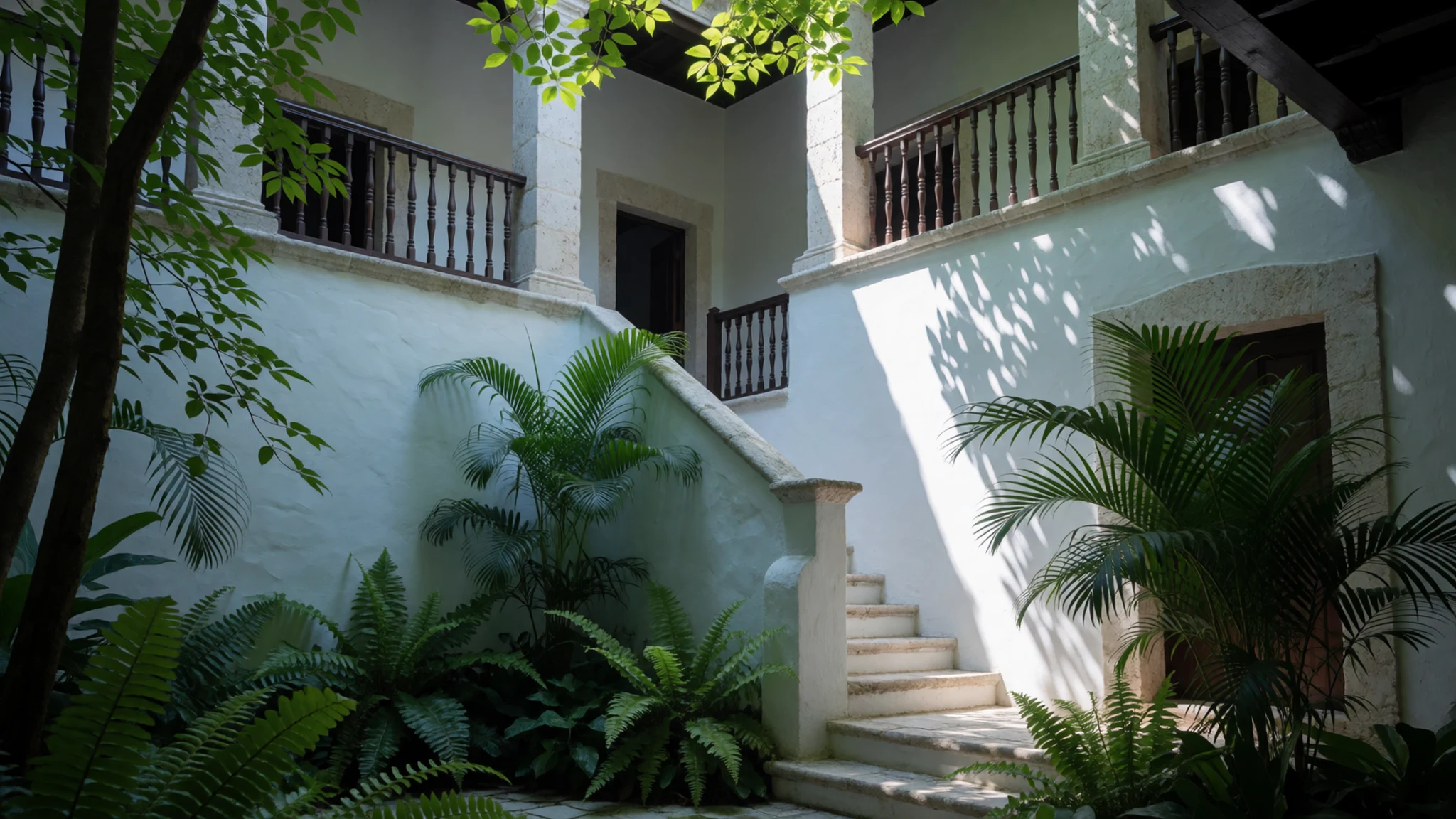
Culture
Old San Juan is a living neighbourhood as well as a monument, and people here still run the shops, bars and households that fill the streets. Spanish is the everyday language, and many shopkeepers also speak English, so a few words of Spanish go a long way. Puerto Rican identity runs strongly through the district, with music, dance and festival life spilling into the plazas, especially in the evenings and at weekends. Eating and drinking are social occasions, and conversations often run late. Churches such as San José are active places of worship, and the cathedral and chapels are used for services and quiet prayer, so behaviour inside them differs from behaviour in the streets. Many residents live above the shops, so noise after midnight is a real concern on the narrow lanes. Ask before photographing people, especially stallholders and musicians, and keep your voice down in churches and on residential lanes after dark.
What to wear
Old San Juan dresses for heat and humidity far more than for ceremony, although its traditional dress appears at festivals and in the shops. The classic countryside look is the jíbaro outfit, with a wide-brimmed straw hat called a pava, and the guayabera, a loose shirt with pleated panels, usually in cotton or linen, worn by men for both work and dancing. Bomba and plena performers wear bright, full skirts in cotton that moves well with the drums, and these costumes are most often seen at cultural events rather than on everyday streets. Today people wear light cotton clothing, shorts, sundresses and sneakers or sandals. Evenings out are a little smarter, and the restaurants along the plazas are relaxed rather than formal. As a visitor, choose breathable cotton or linen, a hat and sunglasses, and sun protection, since there is little shade on the walls. Cover shoulders and knees for churches and the cathedral, and leave swimwear for the beach. Wear closed or well-gripped shoes with thin soles for the cobbles and stepped alleys, because the stone can be slippery after rain.
What to eat
- Mofongo — Traditional sit-down eateries on the main streets
Green plantain is fried, then mashed with garlic and oil, often with pork crackling or seafood folded through it. It is usually shaped in a dome and served hot. Order it at a traditional eatery on the main streets, where the portions are generous and it is ideal for sharing.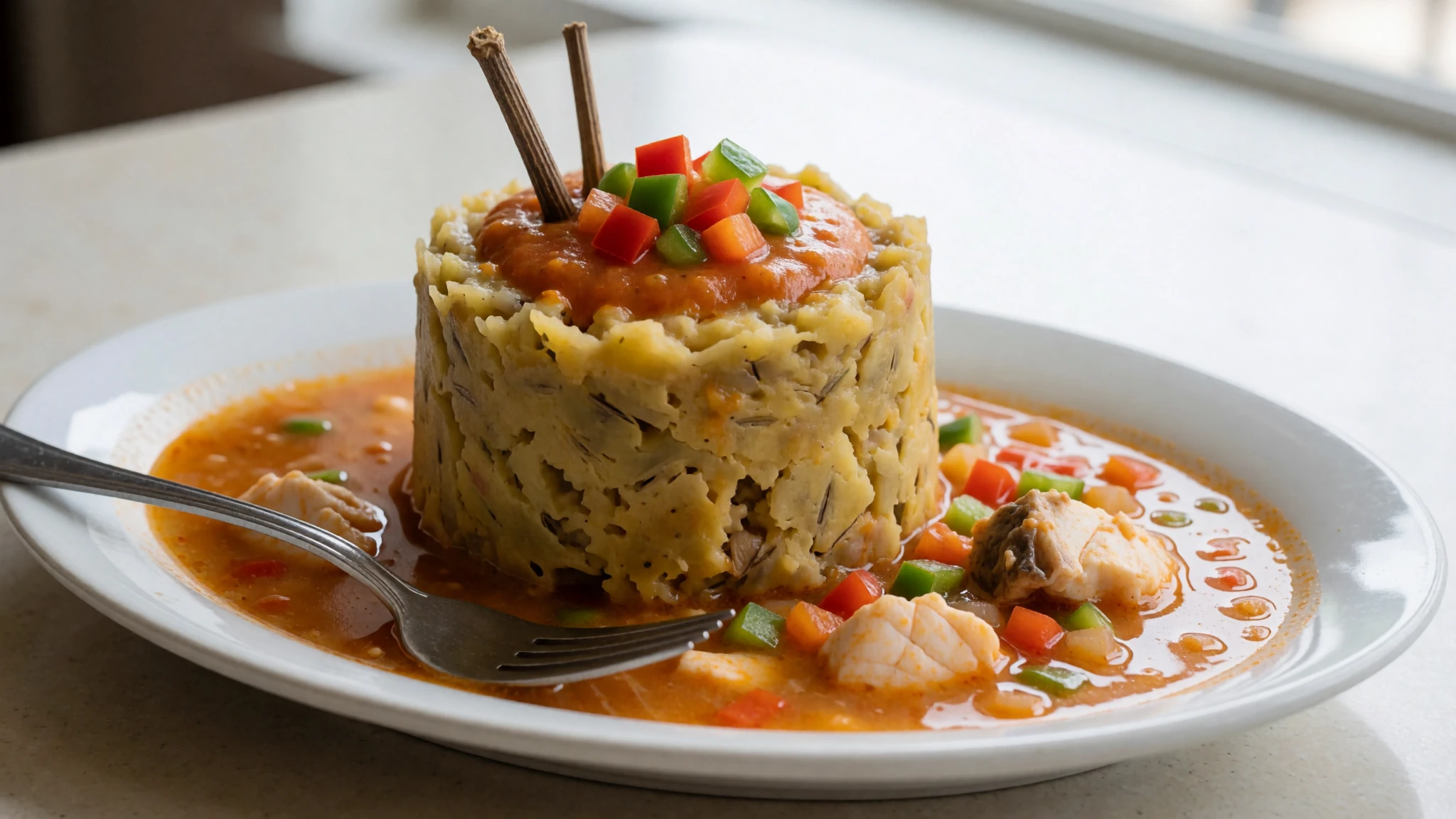
- Alcapurrias — Street stalls and snack counters near the plazas
These fritters are made from grated green banana and taro, wrapped around a filling of seasoned meat or crab, then fried until crisp. They are a classic snack for eating standing up. Look for them at the street counters and small food stalls near the plazas, especially in the afternoon.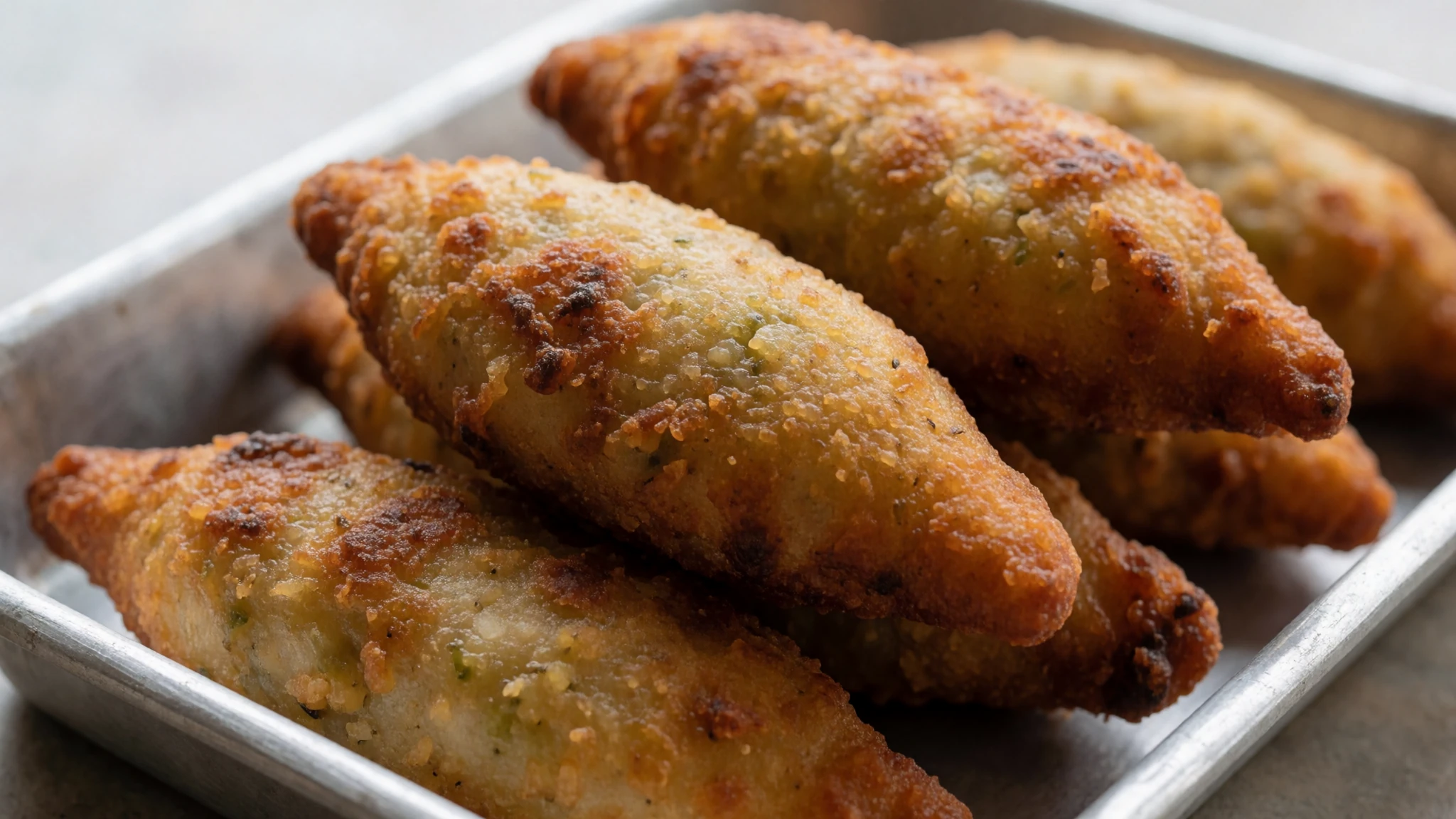
- Pastelillos — Bakeries and pastry counters in the old quarter
These turnovers are filled with seasoned beef or cheese and sold fried or baked. They are good with coffee at any time of day, and the morning batches are the freshest. Pick them up at a bakery or pastry counter in the old quarter.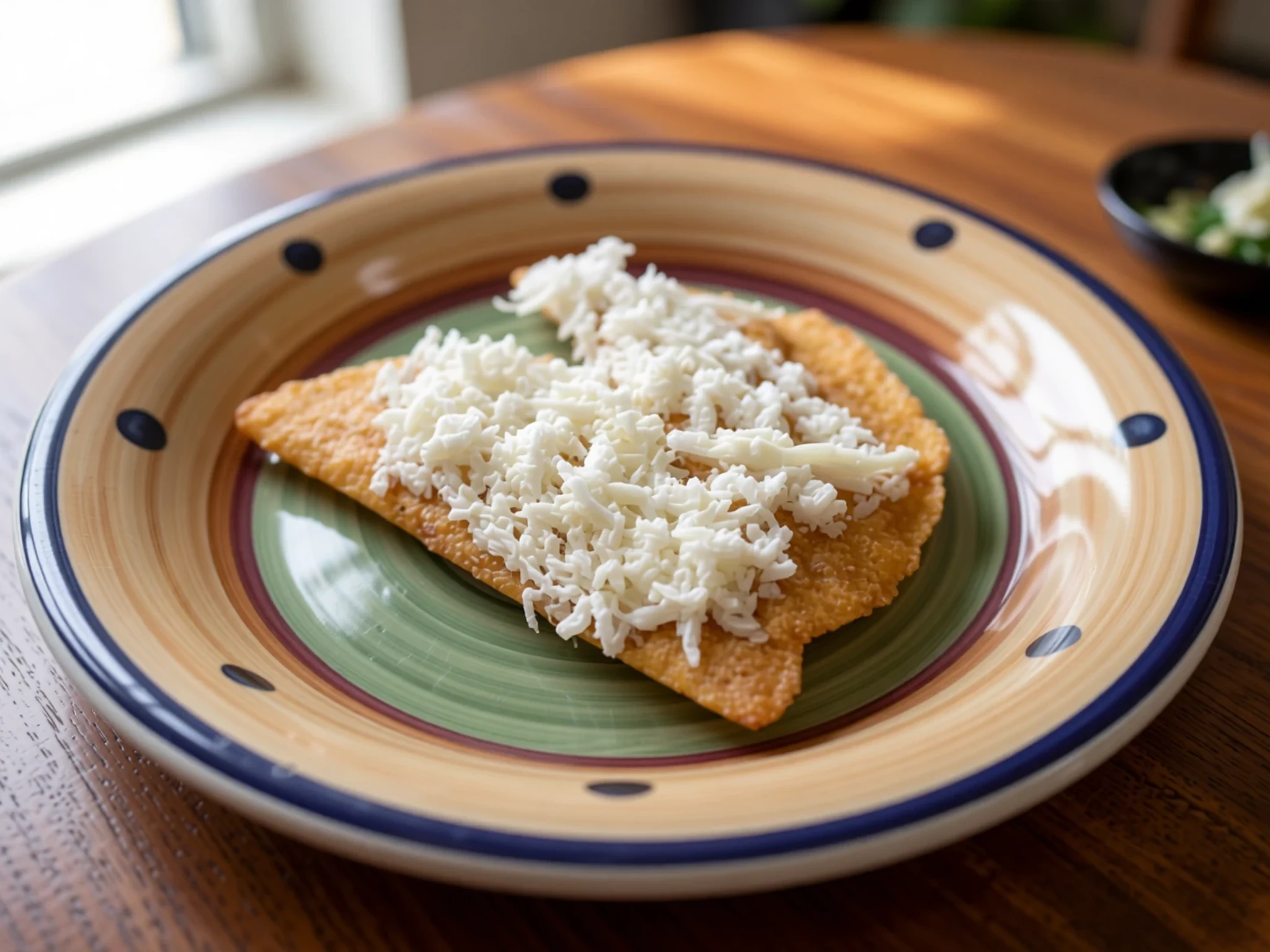
- Arroz con gandules — Lunch counters and sit-down eateries in the old quarter
Rice is cooked with pigeon peas, sofrito and ham or pork, and it forms the backbone of a typical Puerto Rican lunch. It is served alongside meat or fish, and it is a good way to try local seasoning. Lunch counters and sit-down eateries serve it daily. - Café con leche — Long-established cafés in the old quarter
Strong coffee is mixed with hot milk, often sweetened, and is the default drink from breakfast onwards. Long-established cafés such as La Bombonera keep a local feel, and the coffee is a good reason to slow down for a while. Order it with a pastry for a simple local breakfast.
Plan it
Best time. December to March is the drier season, when rain is lightest and the breeze makes walking the walls more comfortable. April to November is the wetter season, with rain peaking in September and October, and hurricane risk peaking from August to October.
How long. 2–3
Getting there. Fly into Luis Muñoz Marín International Airport, then take a taxi into the old quarter. Cruise ships dock at piers within the old town, and ferries run across the bay as an alternative.
Budget. mid
Tips
- Walk the forts early, before the midday heat and the cruise crowds peak.
- Check the official site for current opening times and entry rules before each fort visit.
- Carry some cash for small stalls, though cards are widely accepted in shops and restaurants.
- Bring water and a hat, as the ramparts offer little shade.
- Book dinner ahead for popular restaurants on weekend evenings.
- Expect steep, cobbled streets and wear flat, grippy shoes.
Etiquette
- Dress modestly when entering churches and the cathedral.
- Ask before photographing people, especially at street stalls.
- Keep noise down on residential lanes after dark.
Nearby
Sources
- Wikidata Q1136674 (CC0)
- Wikipedia: Old San Juan (CC BY-SA 4.0)
- Wikivoyage: San Juan (CC BY-SA 4.0)
- Photo 01-old-san-juan-aerial-view.jpg (Public domain)
- Photo 02-castillo-san-felipe-del-morro-aerial-may-2024-01.jpg (CC BY 4.0)
- Photo 03-iss047-e-783-view-of-puerto-rico.jpg (Public domain)
- Photo 04-san-juan-antiguo.jpg (CC BY 3.0)
- Photo 05-sj-aerial-view-1952.jpg (Public domain)
- Photo 06-puerta-san-juan-sju-06-2019-8631.jpg (CC BY-SA 4.0)
- Photo 07-restaurant-near-capilla-del-cristo-san-juan-puerto-rico.jpg (Public domain)
- Photo 08-old-san-juan-stepped-alley-puerto-rico.jpg (CC BY 3.0)


