Olbia
Olbia, Ukraine
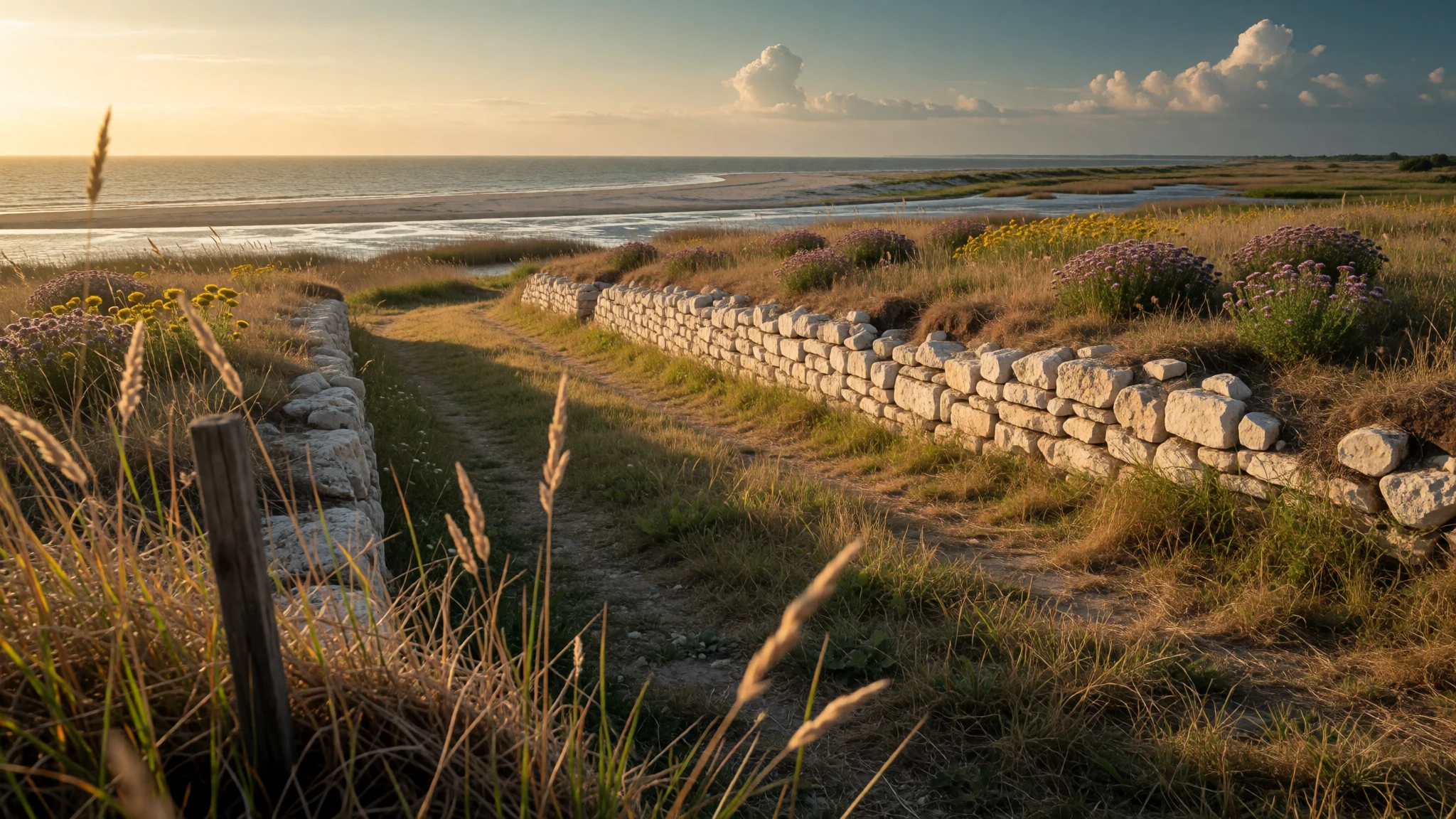
Olbia is a Greek trading city on the Black Sea steppe, now quiet ruins above an estuary, where dolphin-shaped money was once cast.
The place
Olbia lies on the shore of the Southern Bug estuary in Ukraine's Mykolaiv Oblast, close to the village of Parutyne, where the river widens on its way to the Black Sea. What survives is an archaeological site rather than a town: low foundations, grassy lanes, excavation trenches and open ground on a windswept bluff above the water. Little stands higher than knee height, so the appeal lies in the layout and in the long view across the estuary. The land is run as a national historic and archaeological reserve, which also works as a research institute under the National Academy of Sciences of Ukraine, so digging and conservation carry on beside the visitor paths. The Greek name means happy or rich, and the setting explains the optimism. Fertile steppe lay behind the settlement, a sheltered estuary in front, and a river route led inland to peoples who wanted Greek wine, pottery and metalwork. In return the port shipped out grain and fish, and slaves too, which is a part of the story that deserves plain mention. The facts record Olbia as an emporium, a polis and an archaeological site, founded around 700 BCE, and all three labels fit: it was a trading post, a self-governing city and now a field of ruins. Expect big skies, wind, little shade and a quiet that feels far from the Black Sea resorts. Reaching it depends on the security situation in southern Ukraine, which has changed repeatedly, so current conditions matter before anything else.
Its story
Olbia began as a Greek colony planted by settlers from Miletus, in the years around 700 BCE according to the facts. The earliest pottery turns up on Berezan Island, and the mainland settlement seems to have grown until it absorbed that first foothold. The city traded for a very long time, and Herodotus, who visited in the Classical period, left the fullest ancient description of the town and its people. Its money was odd. Instead of the round struck coins common across the Greek world, Olbia cast bronze tokens stamped with Gorgon heads and, more famously, small bronze dolphins, a form said to descend from offerings made at the temple of Apollo Delphinios. Scratched Orphic inscriptions found here have led some scholars to see the city as a meeting point between Greek religion and ideas from further east. Later the citizens adopted a democratic constitution and signed a treaty with Miletus that let the two cities cooperate against an army sent by Alexander the Great's general Zopyrion. Decline followed, and Olbia accepted the overlordship of the Scythian king Skilurus, then recovered under Mithridates Eupator. The Getae under Burebista sacked it, and its commercial standing never returned. Rome restored a much smaller town, probably with a largely non-Greek population, and the old Greek city never regained its former reach.
What to see
- The excavated streets — The main site, Parutyne
Low stone foundations of houses and lanes spread across the bluff above the estuary. Walking them gives a feel for the scale of a Greek trading town: compact, close to the water, and laid out on open ground. Read any interpretation boards first, before the wind and sun wear down your patience.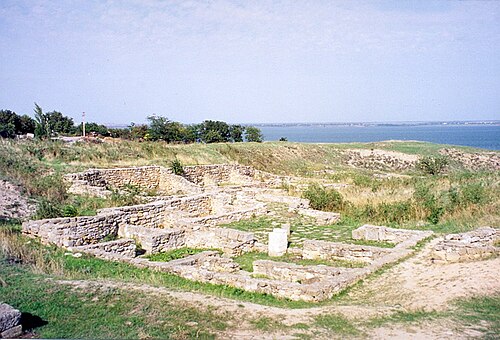
- The sacred ground of Apollo Delphinios — The main site, Parutyne
The god Apollo Delphinios was honoured here, and his temple is tied to the dolphin-shaped tokens the city later cast. Ask the reserve staff which sacred areas can be reached on foot and what is fenced off, since excavation trenches change from season to season and some ground may be closed.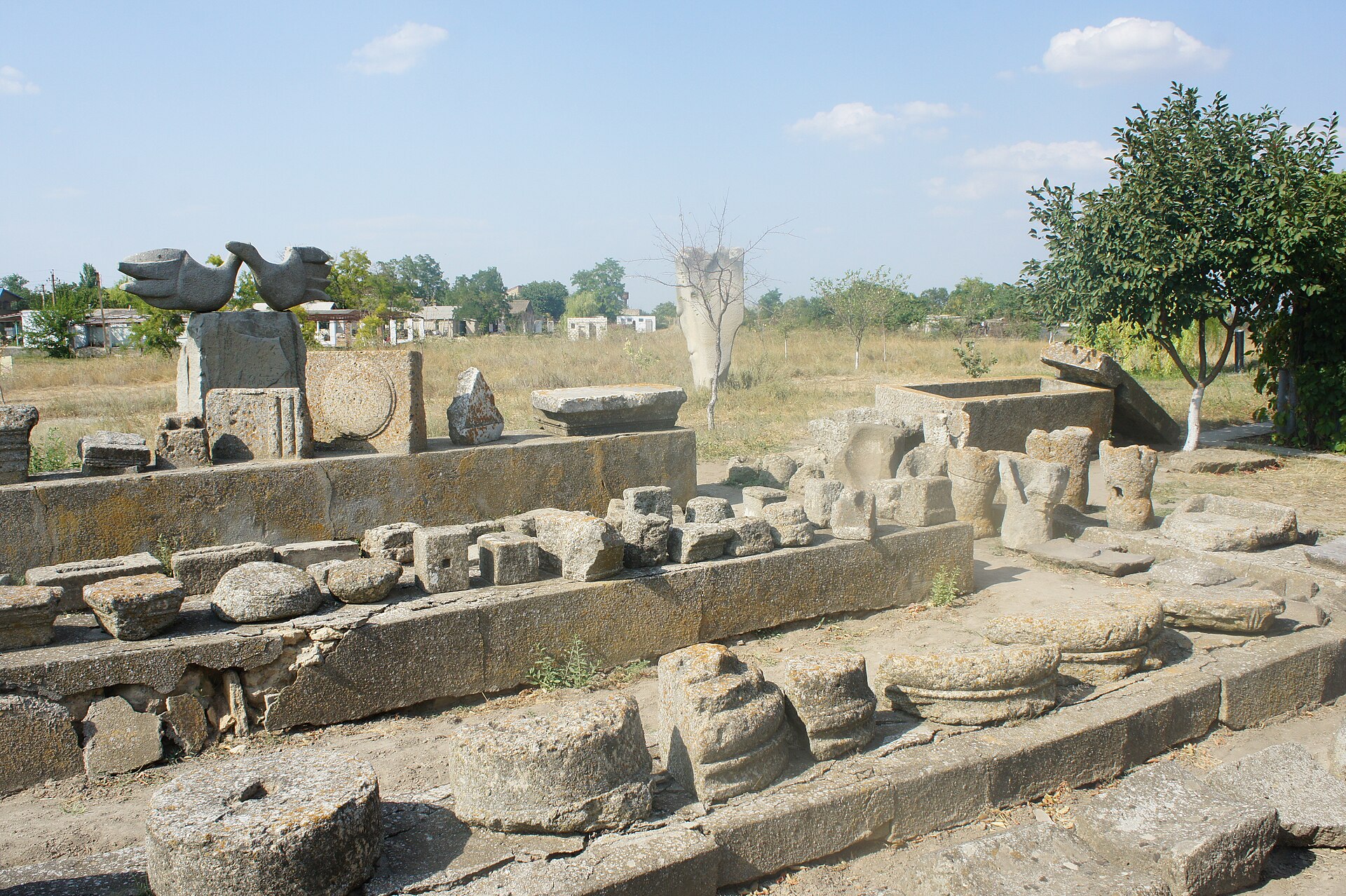
- The dolphin coins — Museum displays and reserve exhibits
Small bronze dolphins, cast rather than struck, served as early money in Olbia and are the site's signature objects. Originals are usually kept in museum collections, so ask the reserve what is on display, and treat photographs and catalogues as a fallback for a closer look.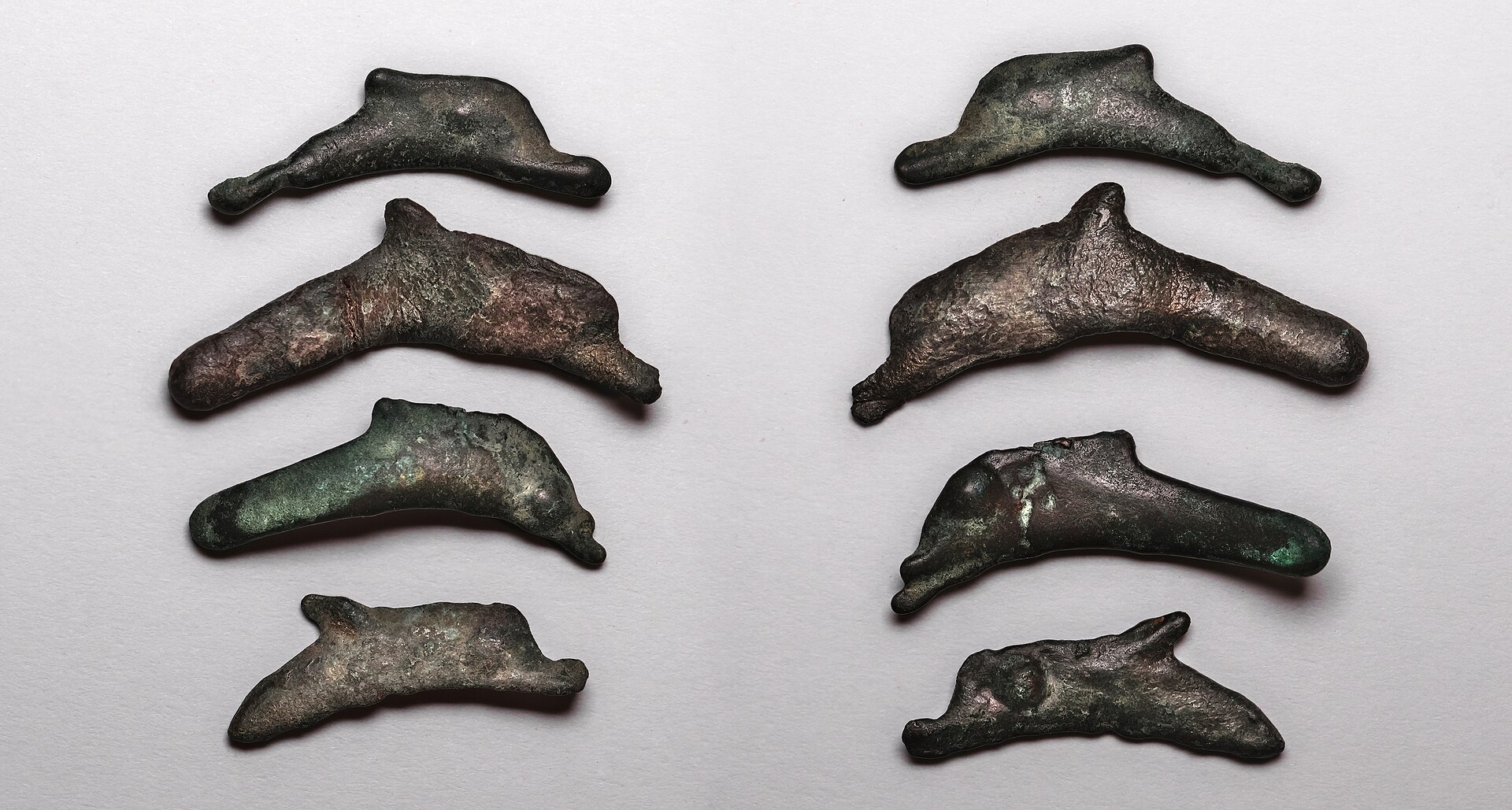
- The river-god coins — Museum displays and reserve exhibits
Later Olbian coins carry the bearded head of Borysthenes, the river god named for the Dnieper. The image shows how the city saw itself: Greek in language and religion, yet defined by a great steppe river and its trade. Look for these in museum displays and numismatic catalogues.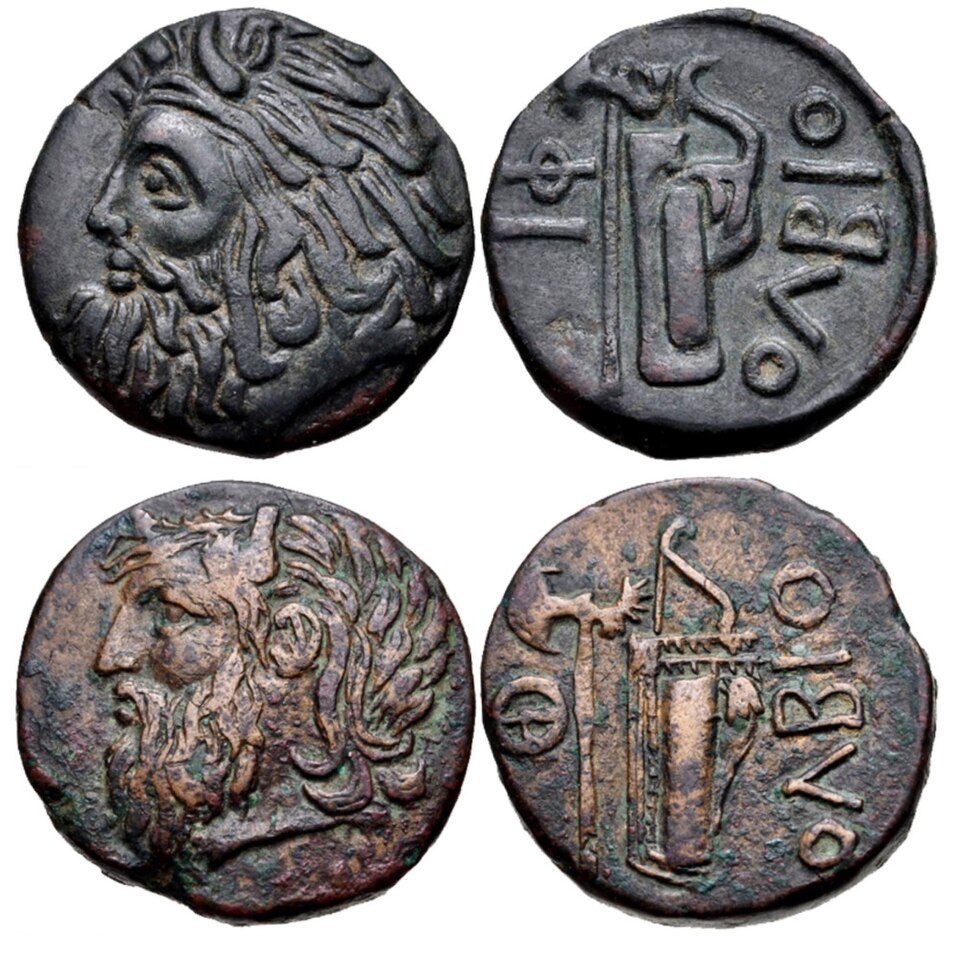
- The estuary edge — The shoreline of the Southern Bug estuary
Walk to the edge of the bluff and the reason for the city's position becomes obvious: sheltered water, a river route inland, and open steppe all around. Bring a hat in summer, because there is little shade, and a windproof layer in spring and autumn, when the wind off the water can be sharp.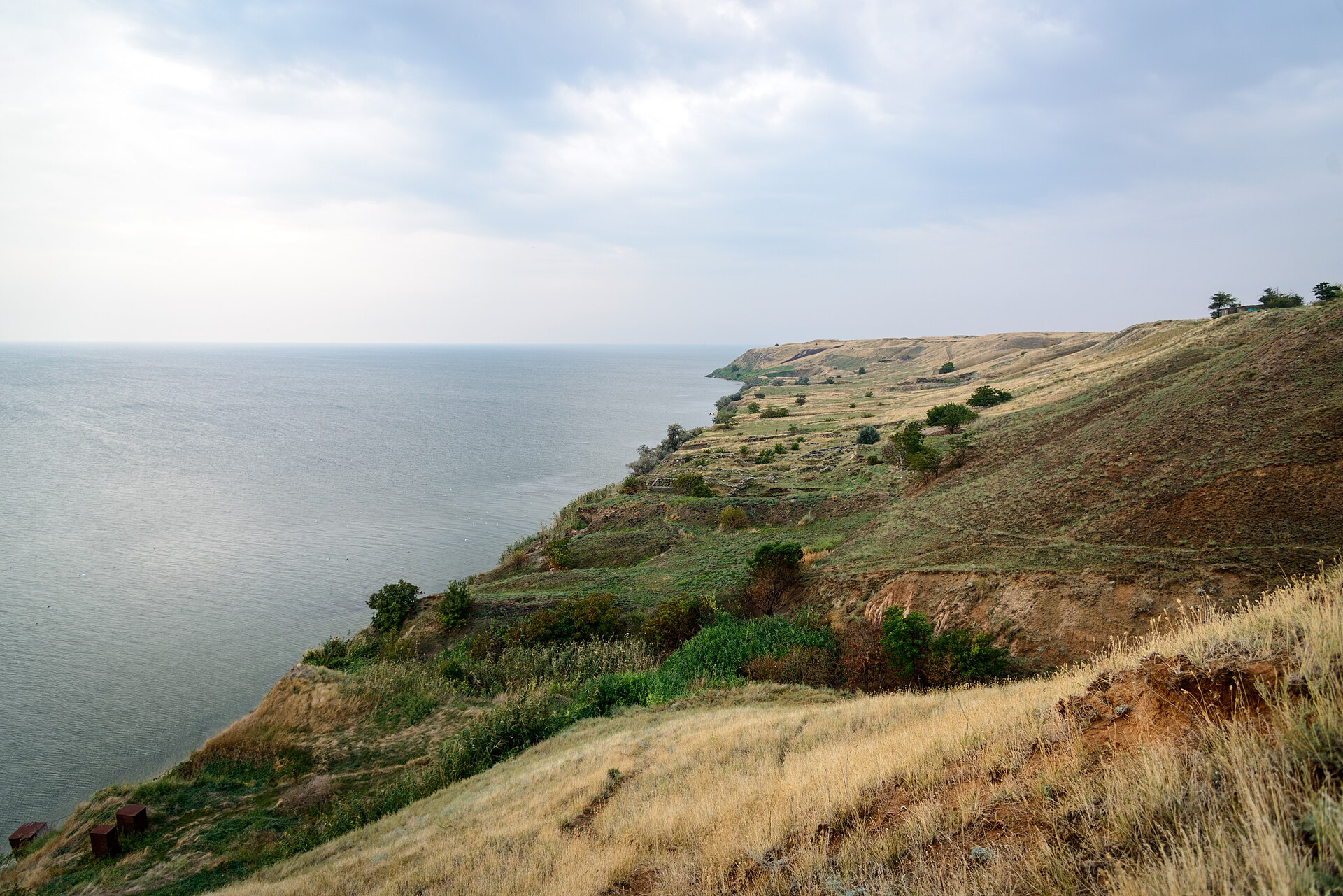
Culture
Olbia carries two layers of meaning for Ukrainians. It is a Greek city, tied to Miletus, Apollo and Herodotus, yet it stands on Ukrainian land and is studied and protected by Ukrainian institutions as part of the country's own heritage. The Greek colonists lived beside Scythian and other steppe peoples, and the finds reflect that mixing: Greek pottery and inscriptions alongside local goods and tastes. Religion here was practical and civic. Apollo in his dolphin form watched over sailors and the harbour, while scratched Orphic inscriptions hint at private, mystical belief too. Today the village of Parutyne beside the site is a working rural community, and the reserve is a place of study as much as tourism, with archaeologists, students and conservators active on the ground. Ukrainian is the language to try, and greeting people in it rather than in Russian is widely appreciated; a few words, such as dyakuyu for thank you, go a long way. Southern Ukraine has lived through war, so conversations about it call for tact and listening more than questions. Visitors who treat the place as a working research site rather than a backdrop will find staff generous with explanations. Stay on the marked paths and leave every stone, potsherd and bone where it lies, because moving finds destroys the evidence that archaeologists rely on.
What to wear
Olbia's Greek colonists dressed in the chiton, a tunic of linen or wool pinned at the shoulders, with a himation cloak of wool over the top, while their Scythian neighbours wore trousers, belted tunics and felt or leather. Ukrainian traditional dress draws on a different tradition: the vyshyvanka, a linen or cotton shirt embroidered at collar, cuffs and chest in regional patterns, often paired for women with a woven wool wraparound skirt called a plakhta. These are worn at weddings, festivals and on Vyshyvanka Day in May, and increasingly as a quiet statement of identity. Day to day, people around Parutyne and Mykolaiv wear plain practical clothes: jeans, trainers, work jackets, and light cotton in summer. A visitor should dress for an exposed site. In summer, light long sleeves, a wide hat, sunglasses and sunscreen matter more than style, and sturdy closed shoes suit uneven ground, loose stones and long grass. In spring and autumn a windproof layer is useful, and in winter warm layers and waterproof boots are needed, since the estuary wind is cold. No special modesty rules apply at the ruins, but cover shoulders and knees when stepping into a working church in the village.
What to eat
- Borshch — Village cafés near Parutyne and home-style canteens in Mykolaiv
Beetroot soup, usually with cabbage, potato and sometimes meat, served with sour cream and dark bread. Recipes vary by family and region, so try it at a village café or home-style canteen near Parutyne or in Mykolaiv. - Varenyky — Home-style canteens and market stalls in Mykolaiv
Dumplings of soft dough filled with potato, cheese, cabbage or cherries, then boiled and served with sour cream or fried onion. Look for them at home-style canteens and market stalls in Mykolaiv, where the fillings change with the season. - Fried estuary fish — Riverside cafés and fish stalls in the city market
Freshwater and estuary fish, often rolled in flour and pan-fried until crisp, is a natural match for a former Greek fishing port. Find it at riverside cafés and at the fish stalls of Mykolaiv's central market. - Ukha — Riverside cafés along the Southern Bug
A clear fish soup with potato, onion and herbs, cooked simply and eaten hot with bread. It suits a cool day on the estuary and turns up at riverside cafés and in home cooking along the Southern Bug. - Southern watermelon — Roadside stands and markets, late summer
Late-summer watermelons and tomatoes from the southern fields are sold from roadside stands and market tables. Buy by the slice or whole, and eat them in the shade after a hot walk around the ruins.
Plan it
Best time. May, June and September: warm, long days and open skies without the full heat of midsummer. July and August are hot with almost no shade on the site, while winter is cold, windy and often muddy underfoot.
How long. 1
Getting there. The site is near Parutyne in Mykolaiv Oblast, and the regional city of Mykolaiv is the usual base. Reach Mykolaiv by rail or bus from other Ukrainian cities, then ask locally for the last leg by taxi or local bus. Travel in southern Ukraine has been disrupted by the war, so check current services and your government's travel advice first.
Budget. low
Tips
- Confirm before you set out that the reserve is open and safe to visit, as the situation in southern Ukraine has changed often
- Carry water, a hat and sunscreen, because shade is scarce on the bluff
- Bring some cash for small purchases in the village, as cards may not work everywhere
- Ask the reserve staff about a guided walk, since the ruins are low and hard to read alone
- Wear sturdy closed shoes for uneven ground and long grass
Etiquette
- Stay on marked paths and never pick up or pocket pottery, coins or stones
- Ask before photographing archaeologists at work or local people
- Greet people in Ukrainian and be tactful when the war comes up
Nearby
Sources
- Wikidata Q1143233 (CC0)
- Wikipedia, Pontic Olbia (rev 1382298929) (CC BY-SA 4.0)
- Wikivoyage, Olbia (rev 5422650) (CC BY-SA 4.0)
- Ruins of Olbia, Ivengo (RUS) at Russian Wikipedia (Public domain)
- Olbia coins with river-god Borysthenes, Classical Numismatic Group (CNG), Inc. (CC BY 3.0)
- Olbian dolphin coins, Krigore (CC BY-SA 4.0)
- Ancient city of Olbia, Parutyne, Катерина Середа (CC BY-SA 4.0)
- Ancient city of Olbia, Parutyne (second view), Катерина Середа (CC BY-SA 4.0)
- Ancient city of Olbia, Parutyne, Yurii-mr (AAA_1288) (CC BY-SA 4.0)
- Ancient city of Olbia, Parutyne, Yurii-mr (AAA_1289) (CC BY-SA 4.0)
- Ancient city of Olbia, Parutyne, Yurii-mr (AAA_1412) (CC BY-SA 4.0)


