Oia
Oia, Greece
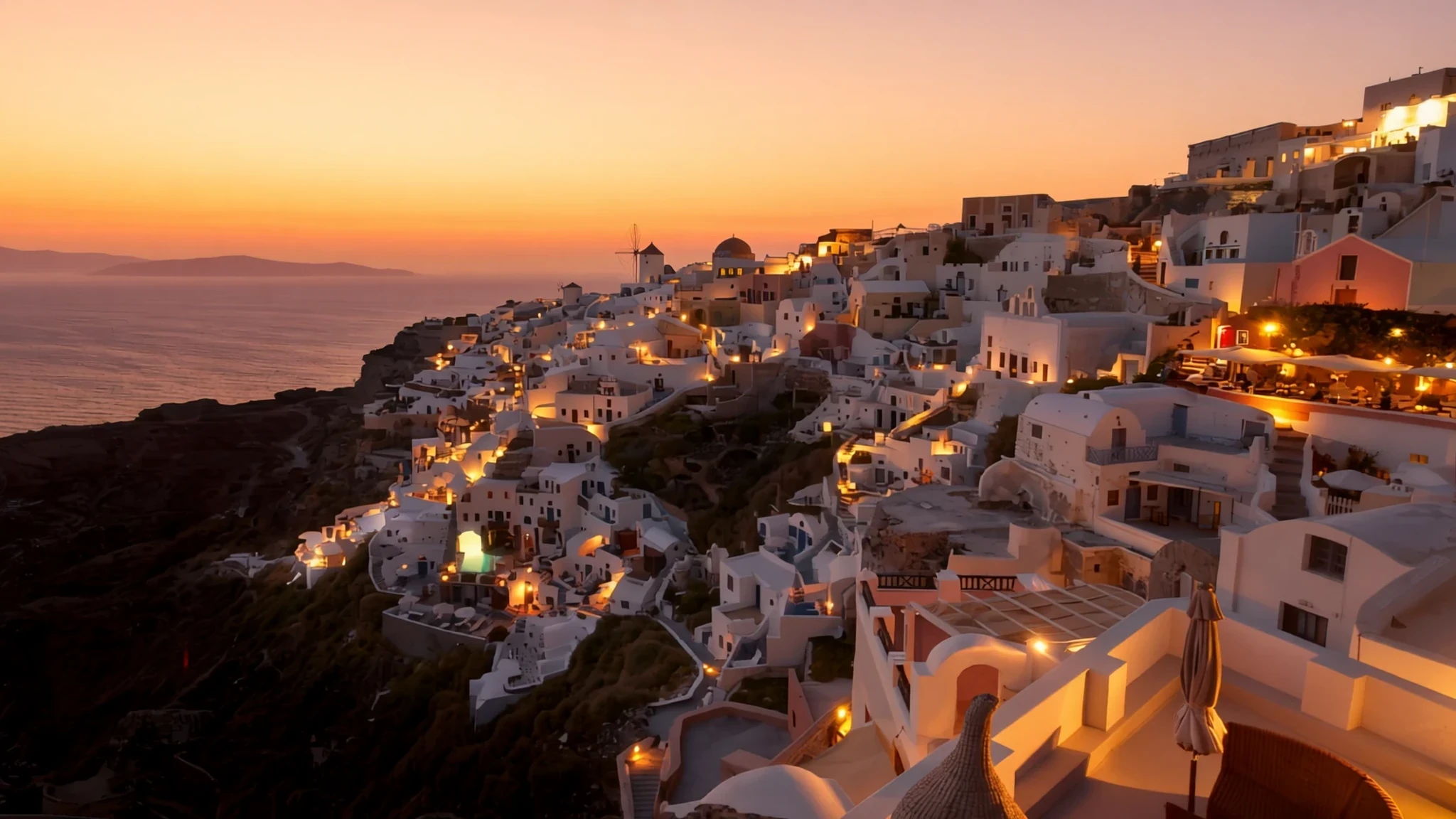
A cliff-edge village of whitewashed houses and blue domes above the Santorini caldera, best seen early or late in the day.
The place
Oia, also written Ia, is a small village at the north-west tip of Santorini, the island the Greeks call Thira. It runs for almost two kilometres along the rim of the caldera, the flooded crater that gives the island its dramatic shape, and the same municipal unit takes in the whole of neighbouring Therasia across the water. Its houses are stacked up the cliff in white and pale blue, with churches whose domes catch the light, and most lanes lead either up towards the main street or down to the sea.
Amoudi Bay sits far below the town, reached by a long flight of steps or a walk down from the main road. It is the scene most visitors picture when they think of Oia: a crescent of dark cliffs, fishing boats and tavernas. Above it, the ruins of Londsa Castle mark the oldest quarter, and the views from there are at their best as the sun goes down.
The village is compact, but in summer the lanes fill with people and progress slows to a shuffle. Early morning is quieter, the light is softer and the shops are only just opening. Late afternoon brings the sunset crowds, so if you want a viewpoint to yourself, go before the rush or choose a quieter stretch of the cliff path.
Accommodation ranges from cave-style rooms cut into the rock to former sea captains' mansions converted into suites. Prices climb steeply in high season, and many properties are reached by steps, so pack light.
Its story
Oia's story begins well before its famous views. Travel reports mention the settlement before Venetian rule arrived in the early thirteenth century, when feudal government was set up on the island. Under the da Corogna family it was one of five local citadels, and its residential keep, Goulas, still stands on the south-western edge of the old town. For centuries the place appeared on maps as Apanomeria, and an earlier traveller recorded it as Castelli San Nicolas. The name Oia only settled in the second half of the nineteenth century.
Its real golden age came in the late nineteenth and early twentieth centuries. Oia was a mariners' town, and its merchant fleet carried cargo across the Mediterranean, especially on the run between Russia and Alexandria. Around 1890 the village had roughly 2,500 residents and some 130 sailing ships, and a wharf served the bay of Armeni. Good wine from the inland slopes went out to France and elsewhere. The two-storey captains' houses on the highest ground are the legacy of that money.
The trade did not last. Steamships and the concentration of shipping at Piraeus pulled business away, and emigration drained both the farms and the families. The 1956 earthquake destroyed part of the town as well. Parts of the village have been rebuilt since, and the shift from sea trade to tourism came gradually over the twentieth century, leaving the captains' houses as the clearest reminder of how rich the place once was.
What to see
- Amoudi Bay — Below the village, north-west coast
Amoudi Bay is a moon-shaped bay ringed by barren cliffs, with a promenade of restaurants along its edge. Boats moor in the water below the village, and the steps down from the main road are steep, so allow time for the walk back up. It is busiest around midday in summer, so mornings and the hour before sunset are the calmer times to go.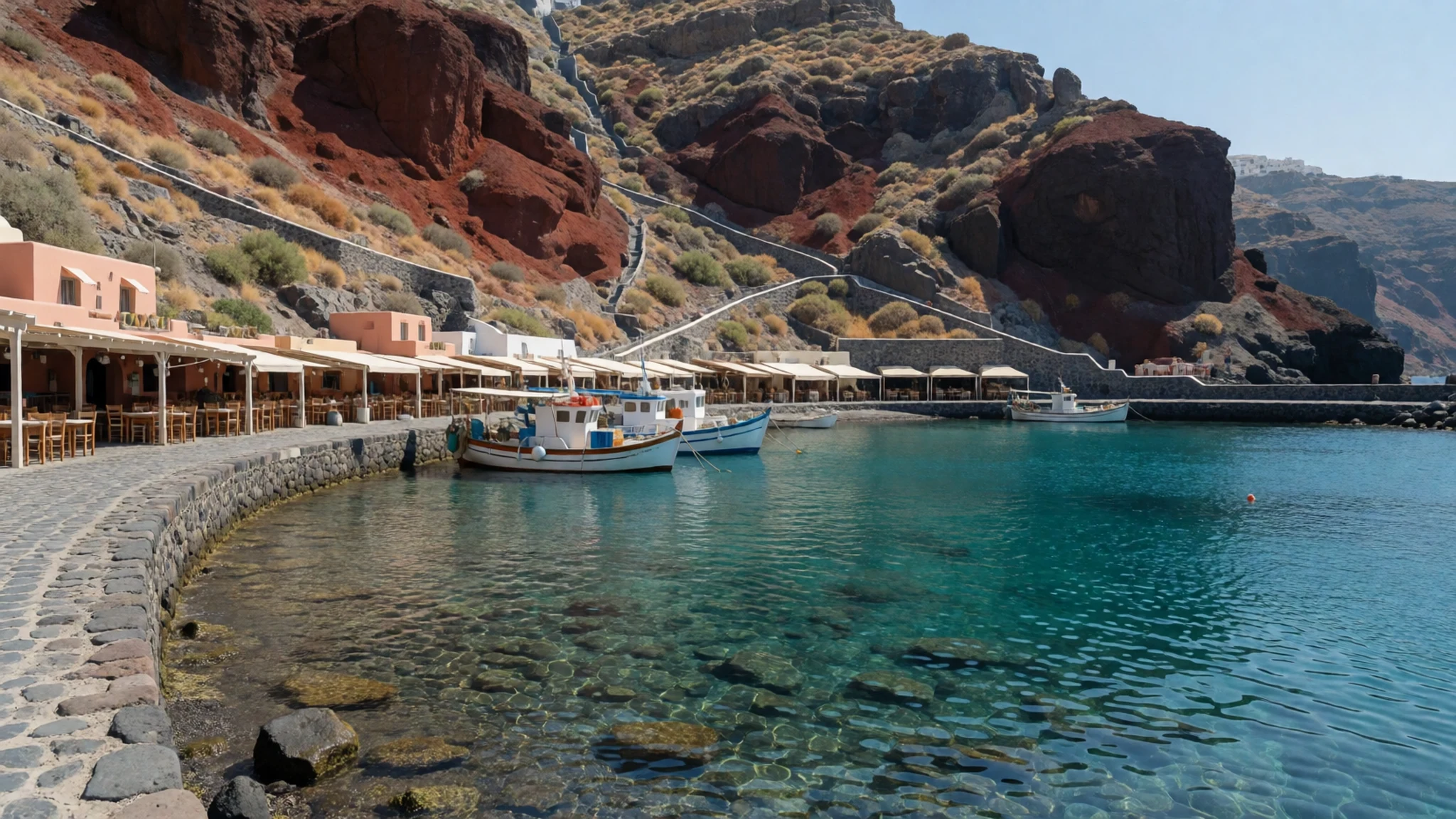
- Londsa Castle — Oldest quarter of the village
The ruins of a Byzantine fortress stand in the oldest part of town and make a useful landmark when you are lost in the lanes. Come in the evening, when the views over the caldera are at their best. Wear sensible shoes, because the paths are uneven and there is little shade.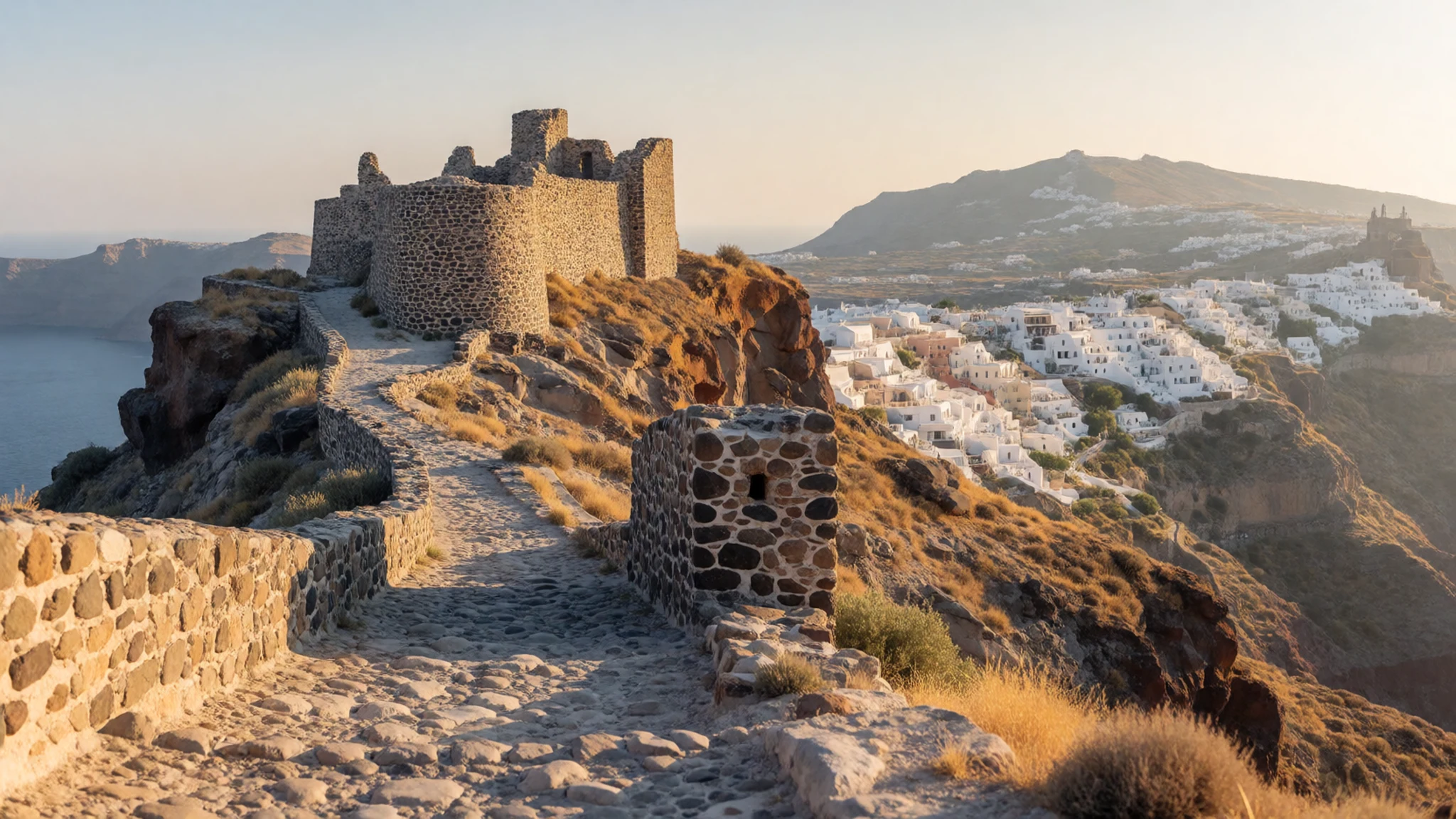
- Naval Museum — Centre of the village
The Naval Museum occupies a converted traditional house in the centre of the village. Its collection covers figureheads, seamen's chests, historic maritime equipment, drawings and maps, and models of old and new Thirean ships. It is the easiest way to understand the village's seafaring past before you walk its streets.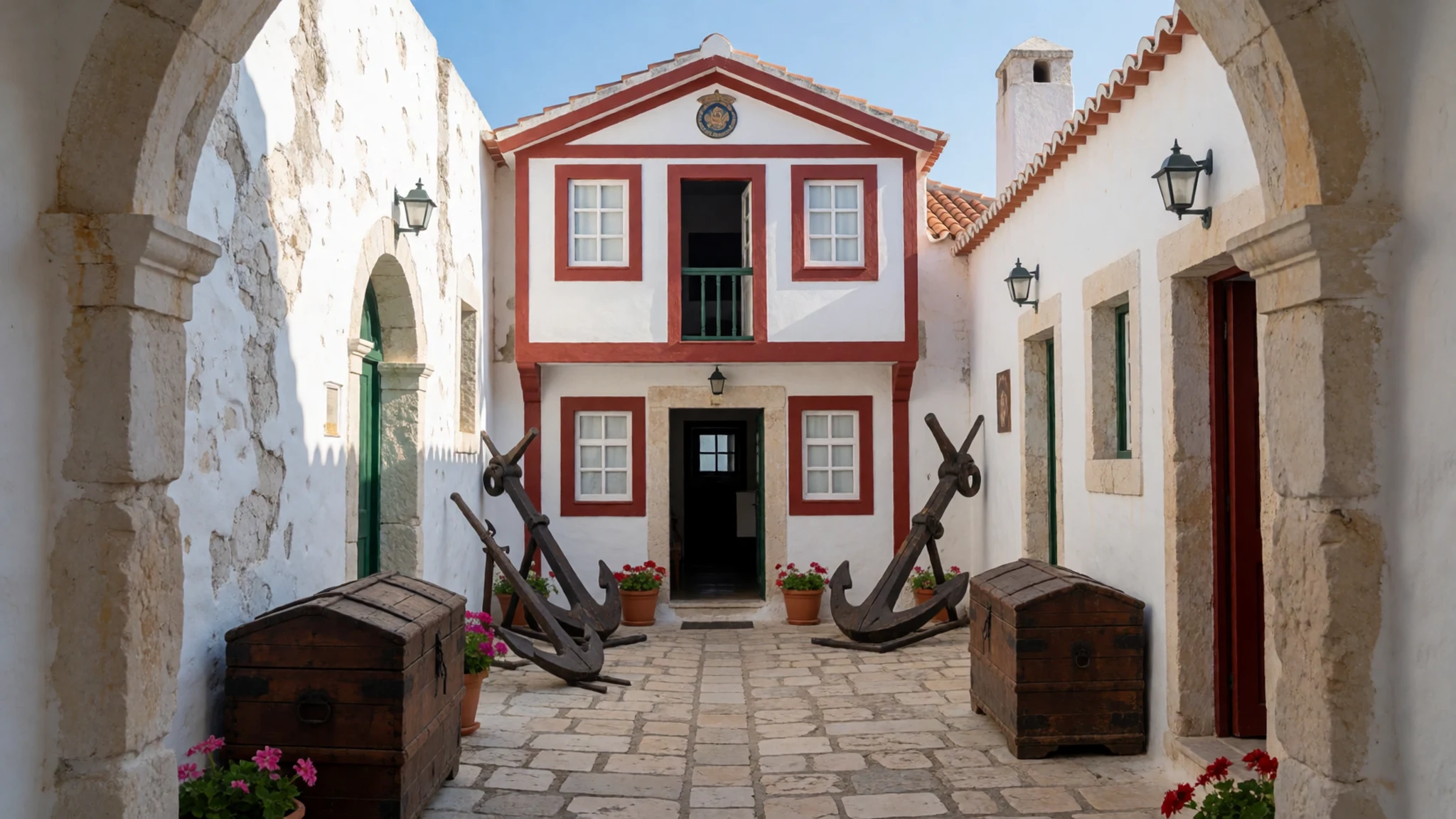
- Armeni Bay — North-east of the village, reached on foot or by boat
Armeni Bay is harder to reach than Amoudi Bay, which keeps it quieter. Facilities are limited, so bring water, shade and everything you need for the day. It suits a swim away from the crowds, and the effort of getting there is the price of that calm.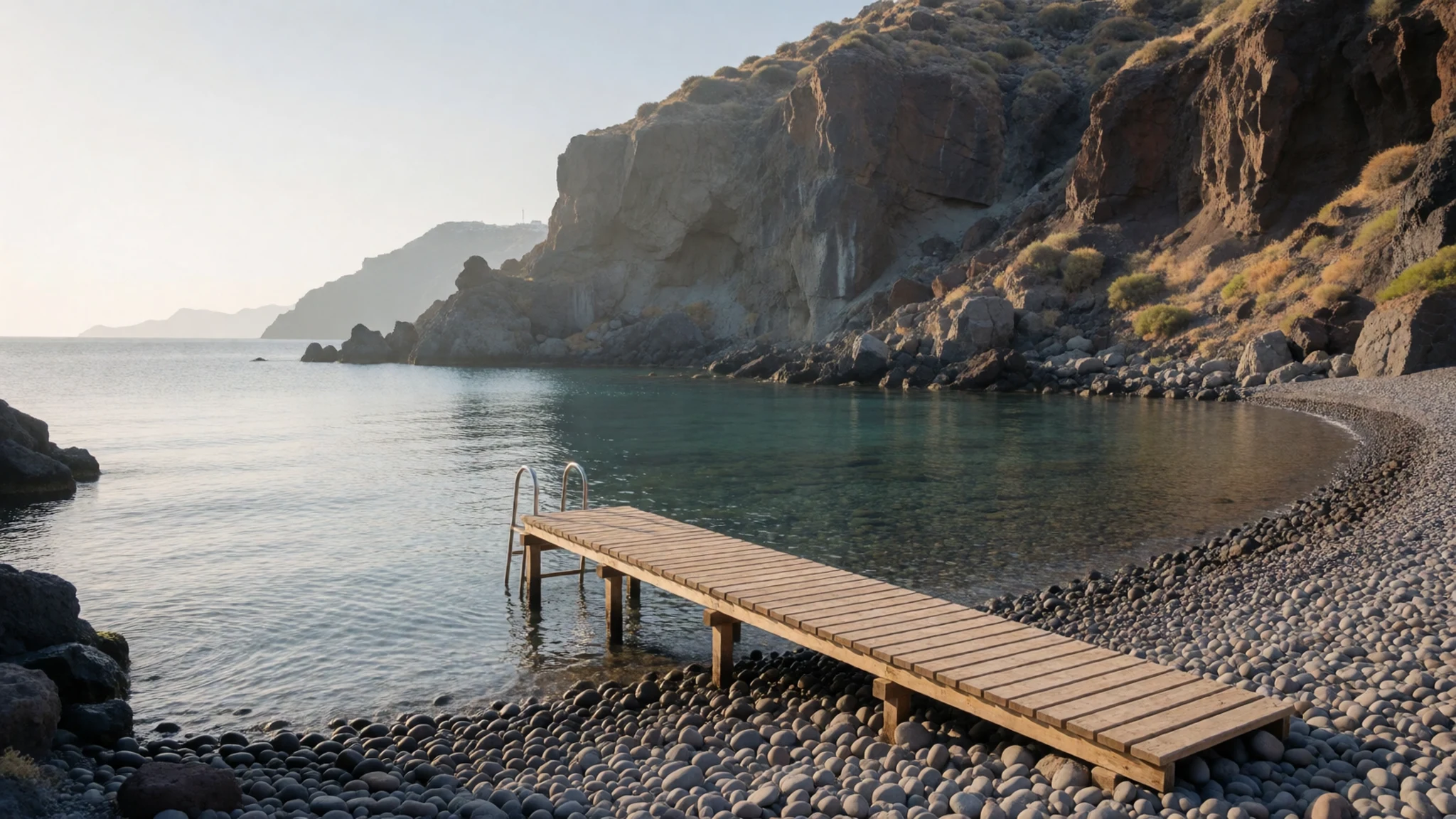
- The Fira to Oia walk — Caldera rim path, between Oia and Fira
The walk of about 11 km along the crater rim to Fira is, by most accounts, the island's finest hike, with views across the caldera to the other islands. Stairs are steep in places, especially on the way back, so start early and carry water. If your legs give out, the bus can take you back to the village.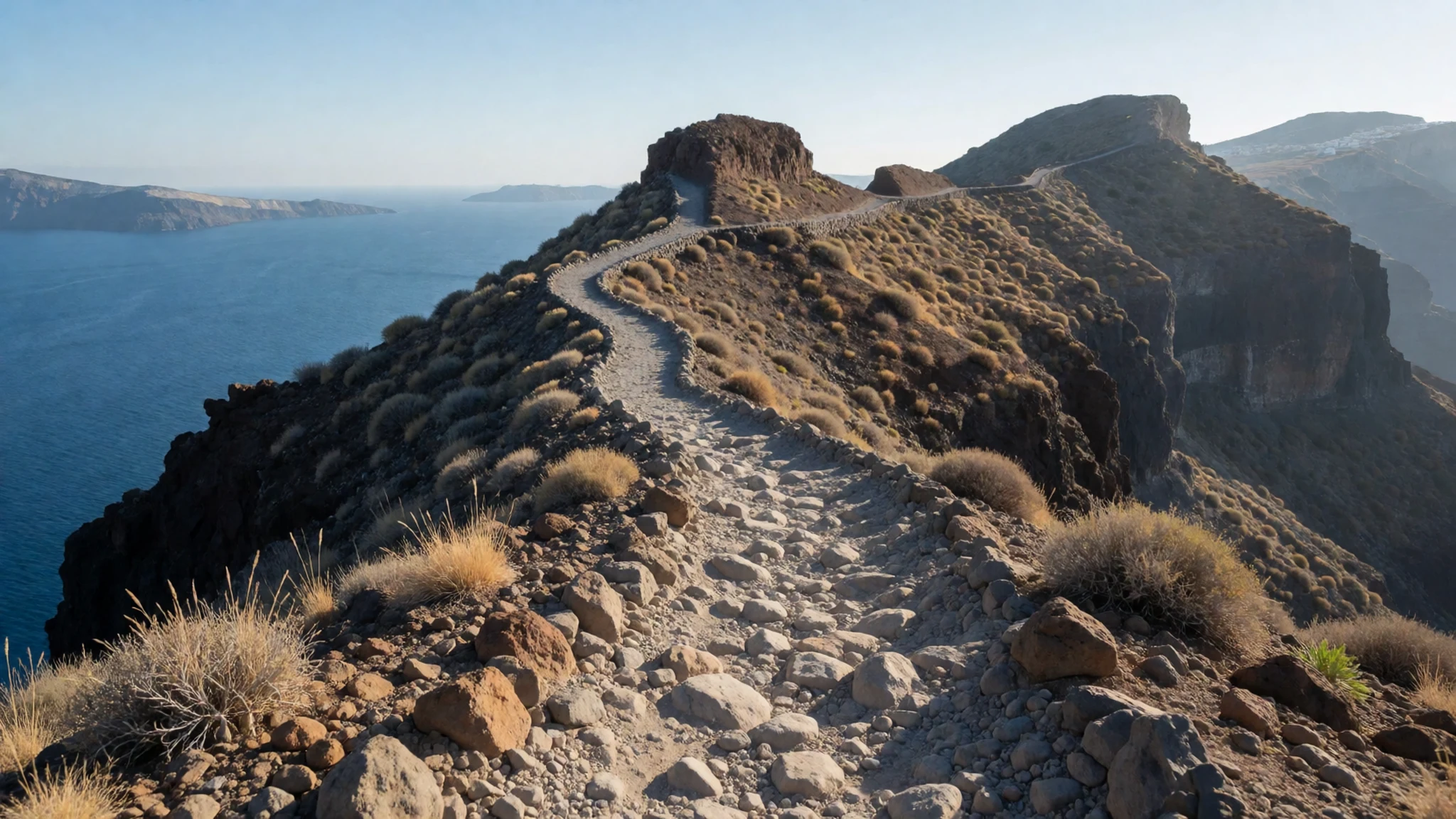
Culture
Oia is a village whose identity still leans on the sea. Its people call themselves Apanomerites, a name that goes back to the older label Apano Meria, meaning upper side, and the old captains' houses remind visitors of the seafaring families who once lived here. Daily life revolves around family, church and the long meal. Greek Orthodox churches are part of the village rhythm, with services held in them and small chapels tucked along the lanes. Most churches welcome visitors to step inside, but treat them as places of worship rather than photo stops. Tavernas and bars on the cliffs come alive after dark, and a Greek evening meal often starts late and runs long, so it is a social occasion rather than a rush. Staff in the village are used to a mix of day visitors and overnight guests, so a relaxed pace is normal. When you go into a church, cover your shoulders and step quietly, and keep your voice down in the lanes after dark.
What to wear
Oia's traditional dress shares its roots with the wider Cycladic islands rather than belonging to the village alone, and today it appears mainly at festivals, weddings and church celebrations rather than in daily life. Island costume traditionally used dark wool and cotton, with embroidered aprons, headscarves and woven sashes, much of it made at home on handlooms. Men's dress was plainer, with dark trousers, waistcoats and a sash for work or feast days. Embroidery is the detail to look for in museum collections and in older photographs of the island.
What people wear now is everyday Greek summer clothing: linen shirts, cotton dresses, sandals and sunglasses, with the whitewash and blue of the village setting the palette. Locals dress up for church on Sundays and feast days, and some older women still wear black during periods of mourning.
What a visitor should wear depends on the heat and the ground. The sun is strong and the paths are steep, so breathable clothes, a hat and shoes with real grip matter more than style. The steps and cobbles are uneven, so flat sandals with a firm sole or trainers suit the cliff walks. For churches, cover shoulders and knees, and leave short shorts and vest tops for the beach.
What to eat
- Souvlaki — Lotza and Niko's, in the village centre
Skewered grilled meat, usually pork or chicken, wrapped in pita with tomato, onion and tzatziki. Lotza serves large portions, and Niko's is the place to order it simply and eat it on the go. The tzatziki can be quite hot, so ask first if you prefer it mild.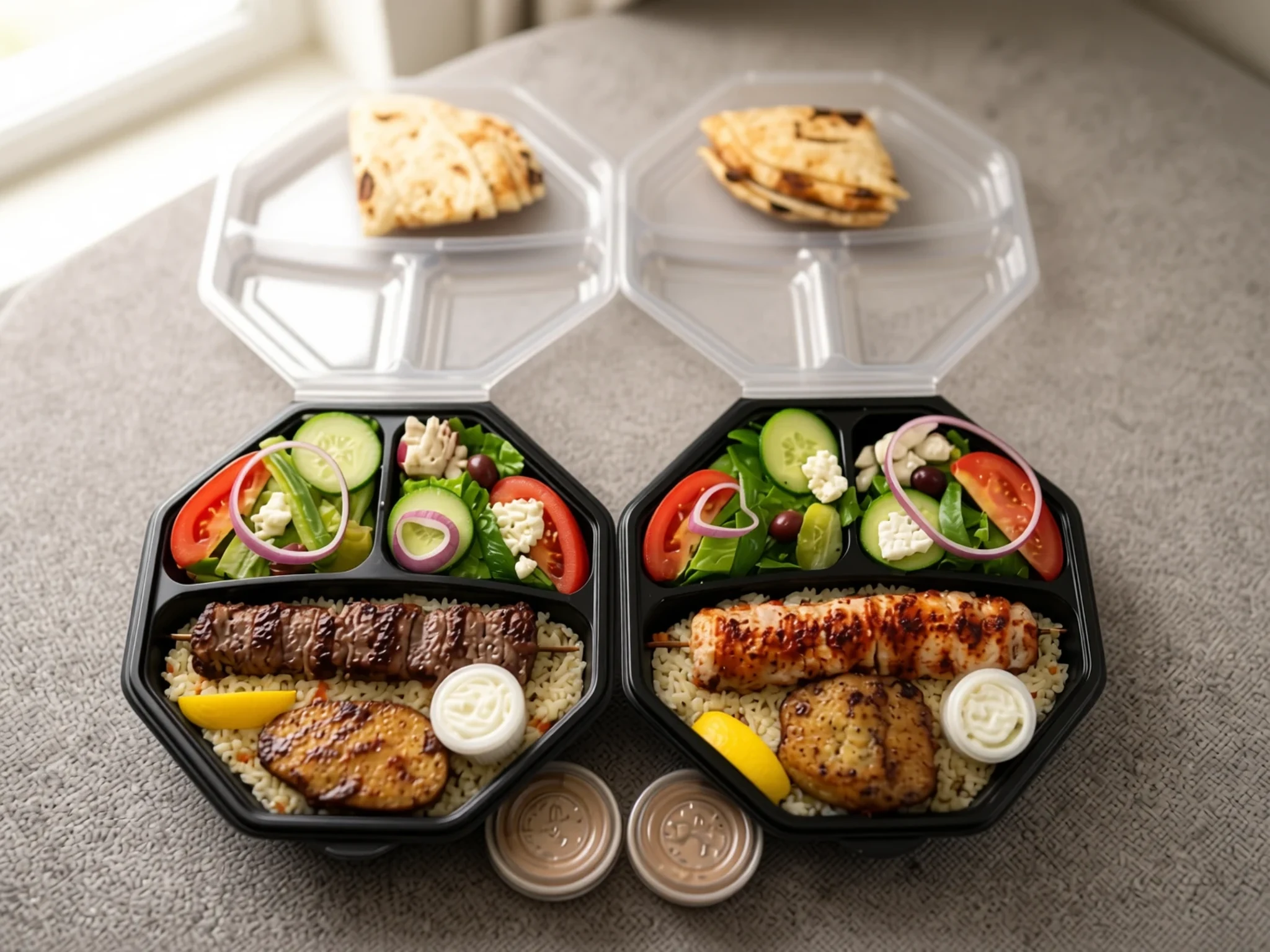
- Kalamaki with pita — Niko's, in the village
Kalamaki, a name often used for skewers of meat or seafood, is a popular order at Niko's and is served with warm pita. Ask for it with the bread rather than a plate, and expect simple, smoky grilling rather than elaborate sauces. It suits a light lunch.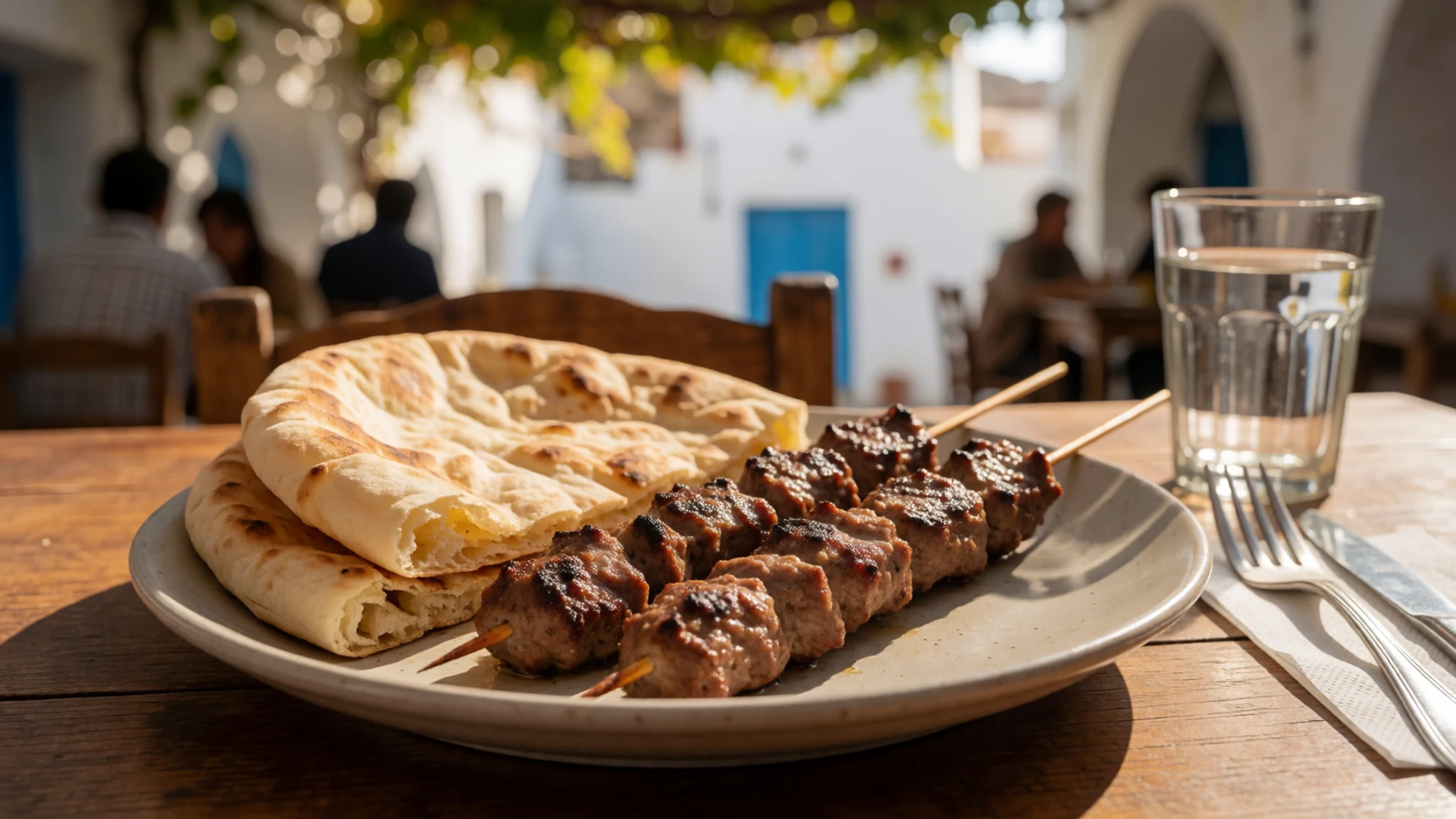
- Grilled seafood — The tavernas at Ammoudi Bay, below the village
Fresh grilled fish and seafood, cooked over the grill and served simply with lemon, is what the tavernas at the foot of Ammoudi Bay are known for. Three of them sit side by side, so compare the menus before choosing. The food is decent, though it can feel a little dear. - Home-style Greek cooking — Roka, in the village
Home-style Greek cooking is the draw at Roka, one of the village's best-regarded places for it. The staff make you feel like regulars, which is rare in a place this busy. Book ahead in summer, as tables fill early. - A special dinner — 1800-Floga, a restaurant in the village centre
A splurge: 1800-Floga blends some local-inspired dishes with international cooking in a setting that suits a special dinner. It is the choice for a romantic evening rather than a casual bite. Dress a little smarter, and book ahead for a sunset table.
Plan it
Best time. April to June and September to October suit a visit best: the weather is warm without the full force of midsummer, and the paths and lanes are less crowded than in July and August, when the sun is at its strongest and the village is busiest.
How long. 2–3
Getting there. Fly into Santorini's airport, then take a taxi, which is the easiest option with luggage, or the public KTEL bus, which runs from Fira to Oia's bus station. Ferries land at the port below Fira, and the road from there to Oia winds steeply, so allow time.
Budget. high
Tips
- Check the current KTEL timetable before you travel, as services change by season
- Carry cash for buses, since they do not take cards
- Visit Amoudi Bay or Londsa Castle early or before sunset to avoid the densest crowds
- Walk the caldera path from Fira if you are fit, and allow plenty of time for the steps
- Carry water and sun protection, because most of the walking is exposed
Etiquette
- Keep to the lanes and do not block doorways, which belong to residents
- Dress modestly when you visit churches
- Do not climb on walls or cliff edges for photographs
Nearby
Sources
- Wikidata Q1655349 (CC0)
- Wikipedia, Oia, Greece (rev 1379073233) (CC BY-SA 4.0)
- Wikivoyage, Oia (Greece) (rev 5413162) (CC BY-SA 4.0)
- Coast of Oia, Meersan (CC BY-SA 2.5)
- Oia sunset, TomasEE (CC BY 3.0)
- Vista di Oia e il suo porto dal battello, Sidvics (CC BY-SA 4.0)
- Oia Santorini View, Skigo Wedding Stories (CC BY 4.0)
- Church, Oia, Santorini, Wolfgang Staudt (CC BY 2.5)
- Steilküste von Santorin mit dem Ort Oia, Martin Kraft (CC BY 3.0)
- Oia Sunset, Navin75 (CC BY-SA 2.0)
- Four bells with shadow in Ia, Dietmar Rabich (CC BY-SA 4.0)


