Odzala National Park
Odzala National Park, Republic of the Congo
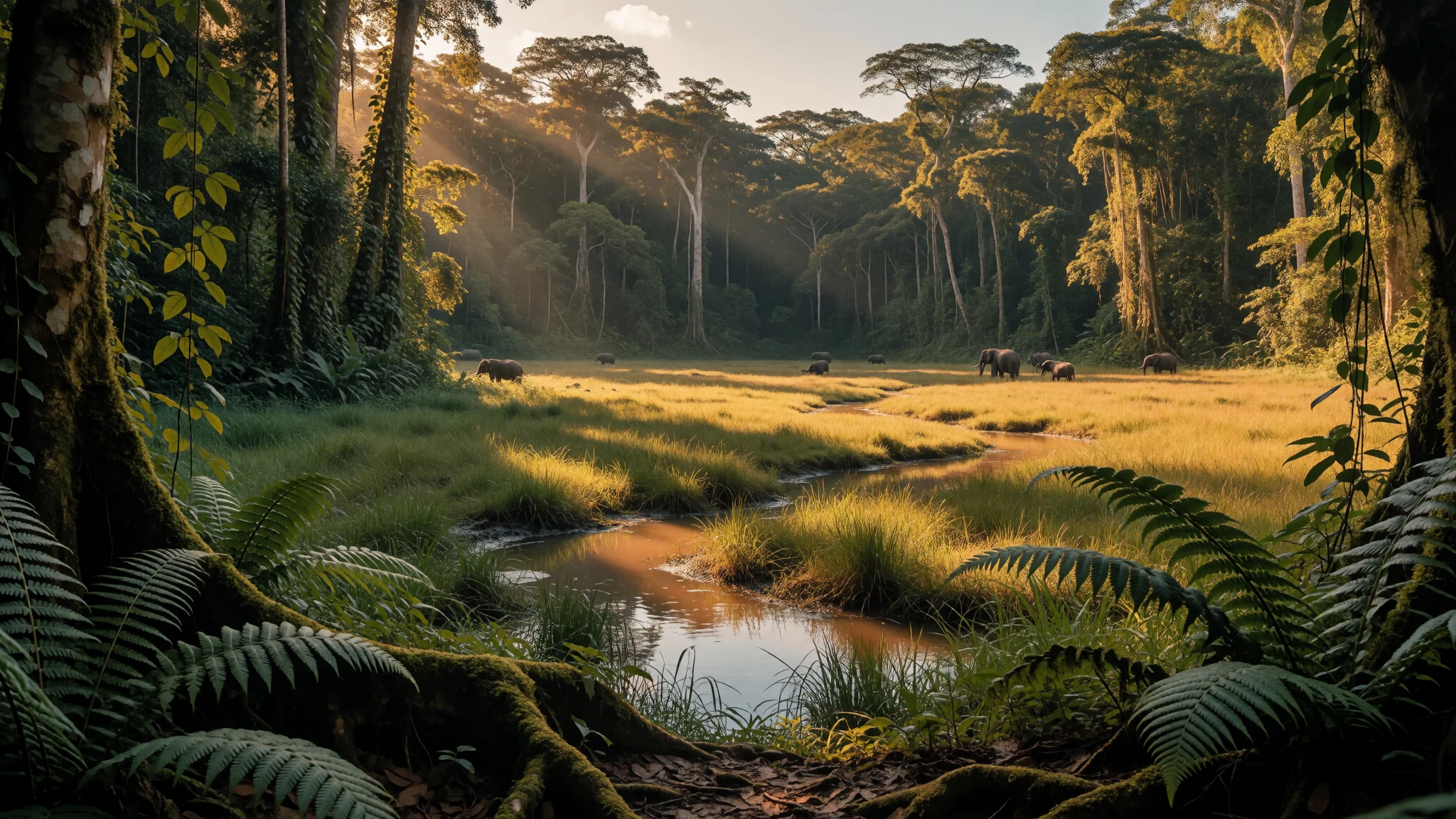
Odzala National Park holds old rainforest, open clearings and habituated western lowland gorillas in northwestern Congo.
The place
Odzala National Park, also called Odzala-Kokoua, lies in the northwest of the Republic of the Congo, near the equator, at 555 metres above sea level. Protection dates from 1935. The land is a stack of habitats rather than one forest. Mature rainforest covers the north, marantaceae forms a dense band through the middle, and the south opens into savanna cut by gallery woodland along the streams. Baïs — natural clearings — puncture that cover. Animals come to them to drink, and forest elephants gather there, which a closed canopy would hide.
The park is also a biosphere reserve and a UNESCO World Heritage site. African Parks has managed it with the Congolese forest ministry since 2010. The mammal list runs to 114 species. Western lowland gorillas are the heart of it: about 22,000 live here, around a fifth of the world's remaining population, and researchers have habituated a couple of groups for carefully guided visits. Chimpanzees live in the same forest, though a walker can easily miss them. Putty-nosed monkeys travel the canopy. Smaller life tied to the park in published records includes the butterfly Grillotius bergeri and the mormyrid fish Petrocephalus arnegardi.
WWF counts the forest a biodiversity priority inside TRIDOM, the Trinational Dja–Odzala–Minkébé landscape. There is no town in the interior. Nearly everyone sleeps in a small camp, reached by air or by a long, poor road. Poaching has not ended, and the quiet of a visit sits on years when both wildlife and tourism were badly reduced.
Its story
Odzala National Park was first protected in 1935. It became a biosphere reserve in 1977, and in 2001 a presidential decree from Denis Sassou Nguesso gave it formal national-park status. UNESCO inscription came in 2023. From 1992 the administration drew on ECOFAC, a European Union programme for conserving Central African rainforest.
War and disease then emptied the project of momentum. During the Republic of the Congo Civil War, from 1997 to 1999, conservation work shrank. Ebola outbreaks in those years left the forest neglected, wildlife declined and poaching grew heavy. Tourism had almost stopped: 50 visitors came in 2011.
In 2010 African Parks took management under a 25-year agreement with the ministry for forests and sustainable development, working with the Congolese state. Law enforcement was rebuilt, though poaching is still described as a threat. In 2013 the managers offered ranger posts to people who handed in firearms and information on illegal hunting. Early in 2014, reports put 76 guards on patrol. That same year, two Malinois were taught to sniff out ivory and bushmeat. In 2016, separate reporting found mining permits overlapping land that park status was meant to close to extraction.
Tourist visits resumed in August 2012. An operator improved infrastructure, built two luxury lodges and trained guides and rangers; full operation took six years, helped by philanthropic money. Ngaga, just outside the boundary, is the gorilla base. From Lango the view is a river and a baï, with gallery forest tight around the camp. Mboko lines a side river with its row of rooms. The recovery is real and unfinished: more staff, a few guests, and hunting pressure that has not lifted.
What to see
- Western lowland gorillas — Ngaga, a concession just outside the park
Odzala National Park's western lowland gorillas are why most itineraries exist. About 22,000 of them live in the park, and a couple of groups have been habituated by researchers so a small party can spend time nearby. Chimpanzees use the same trails of forest and rarely show themselves. Walks leave from Ngaga, just outside the boundary, and can be long, wet and slow. Guides decide how close anyone stands.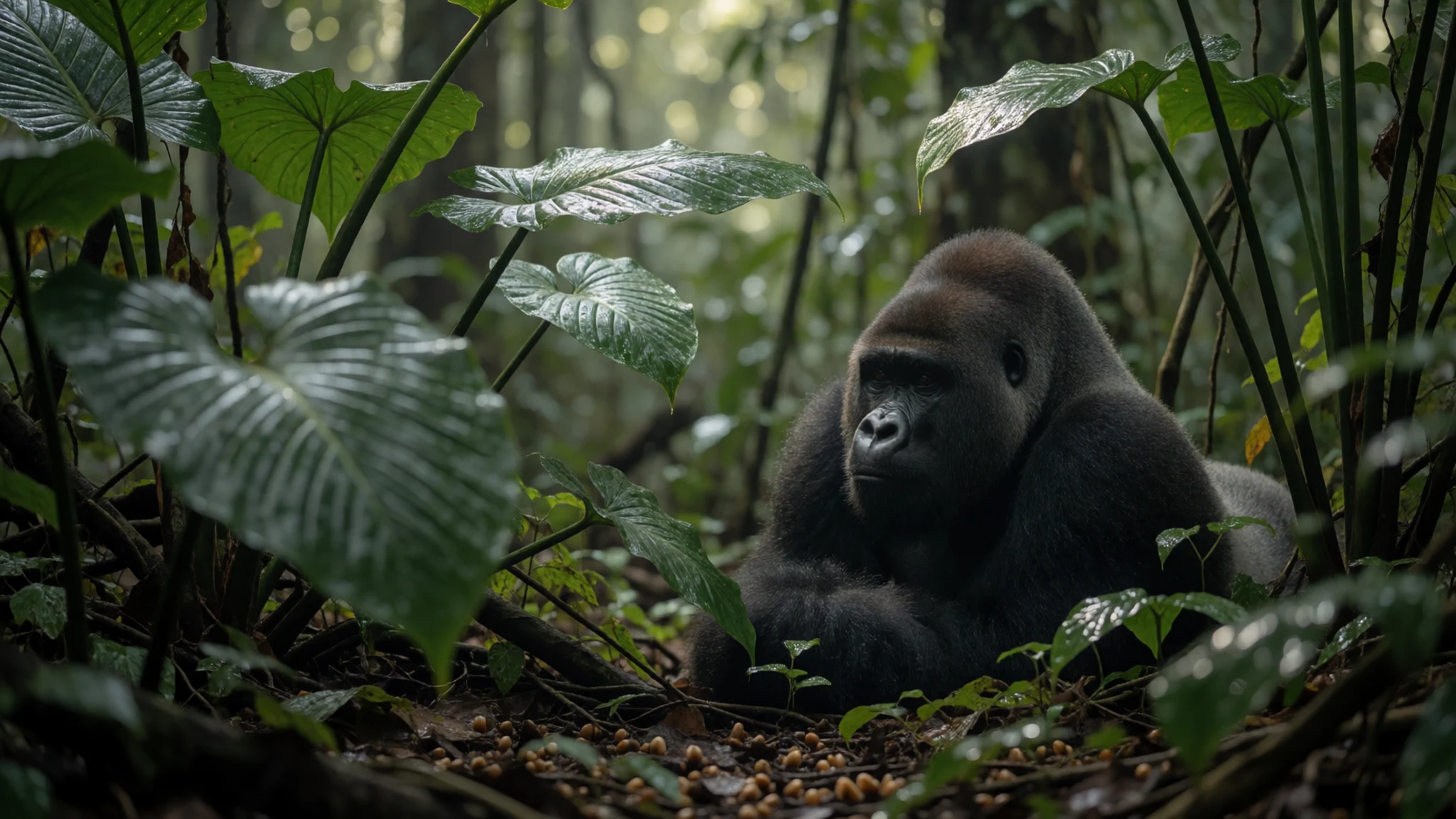
- Forest elephants — Forest clearings (baïs) through the park
Forest elephants, Loxodonta cyclotis, treat the baïs of Odzala National Park as gathering places. Clearings open the canopy and hold water, so the animals step out of the trees where they can be watched. They use the same mosaic as the rest of the park: savanna, gallery forest and deep shade. A sighting is a matter of waiting at a clearing, not of rushing between camps.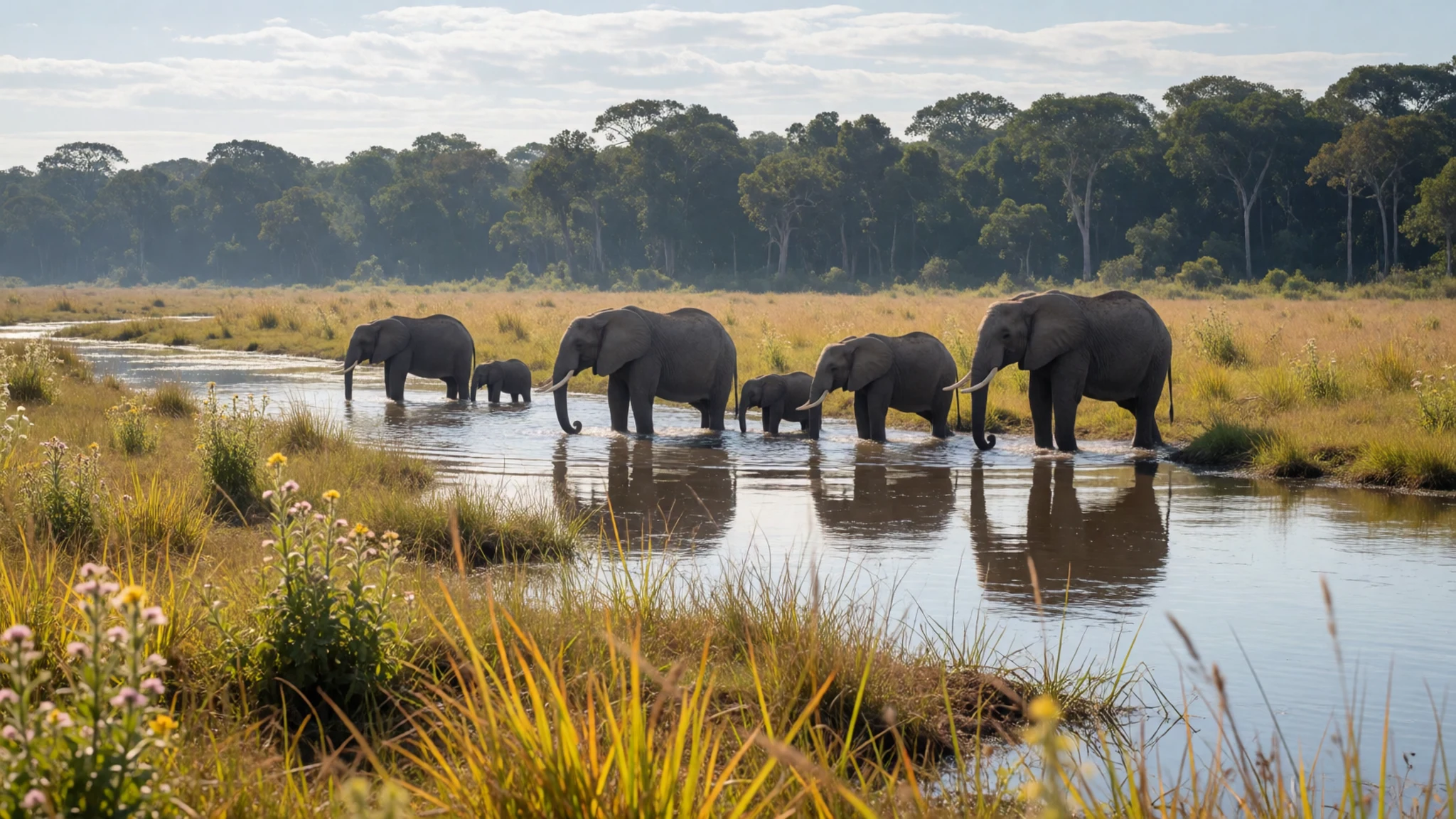
- Putty-nosed monkeys — Rainforest canopy
Putty-nosed monkeys, Cercopithecus nictitans, are a canopy primate of Odzala National Park, pale at the nose and dark through the rest of the coat. Troops announce themselves with movement and calls long before a face is clear. The park's primate community is broad, and many species stay high and shy. A tracker following those calls will find more than a visitor searching the leaves alone.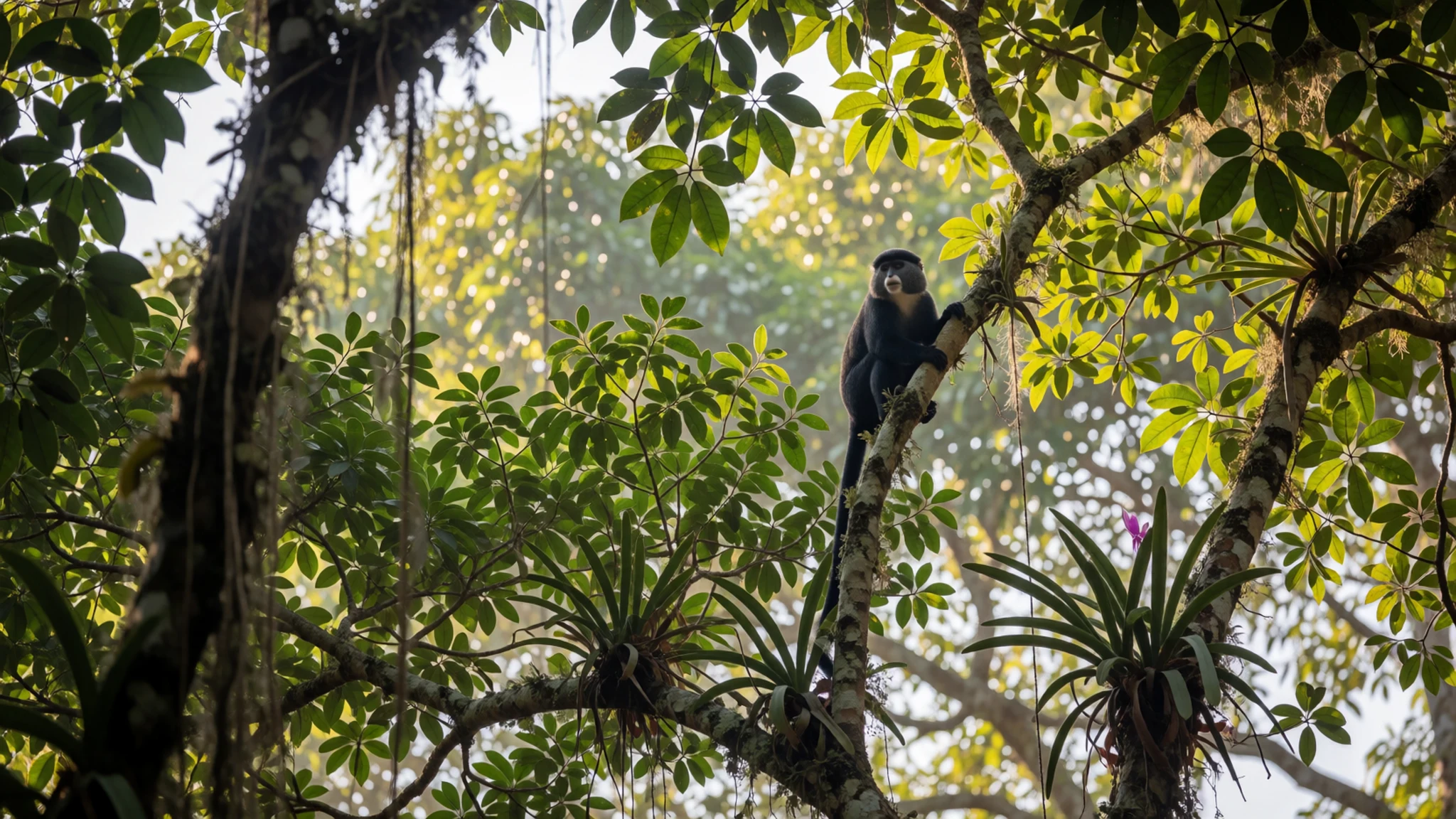
- Lango and its baï — Gallery forest inside the park
Lango is the clearing camp of Odzala National Park: gallery trees crowd the cabins, and a river runs past an open baï. Six rooms mean the bank never feels like a resort. Mammals, elephants included, cross that open ground on their own timetable. The pleasure is the wait, with frogs and insects louder than people.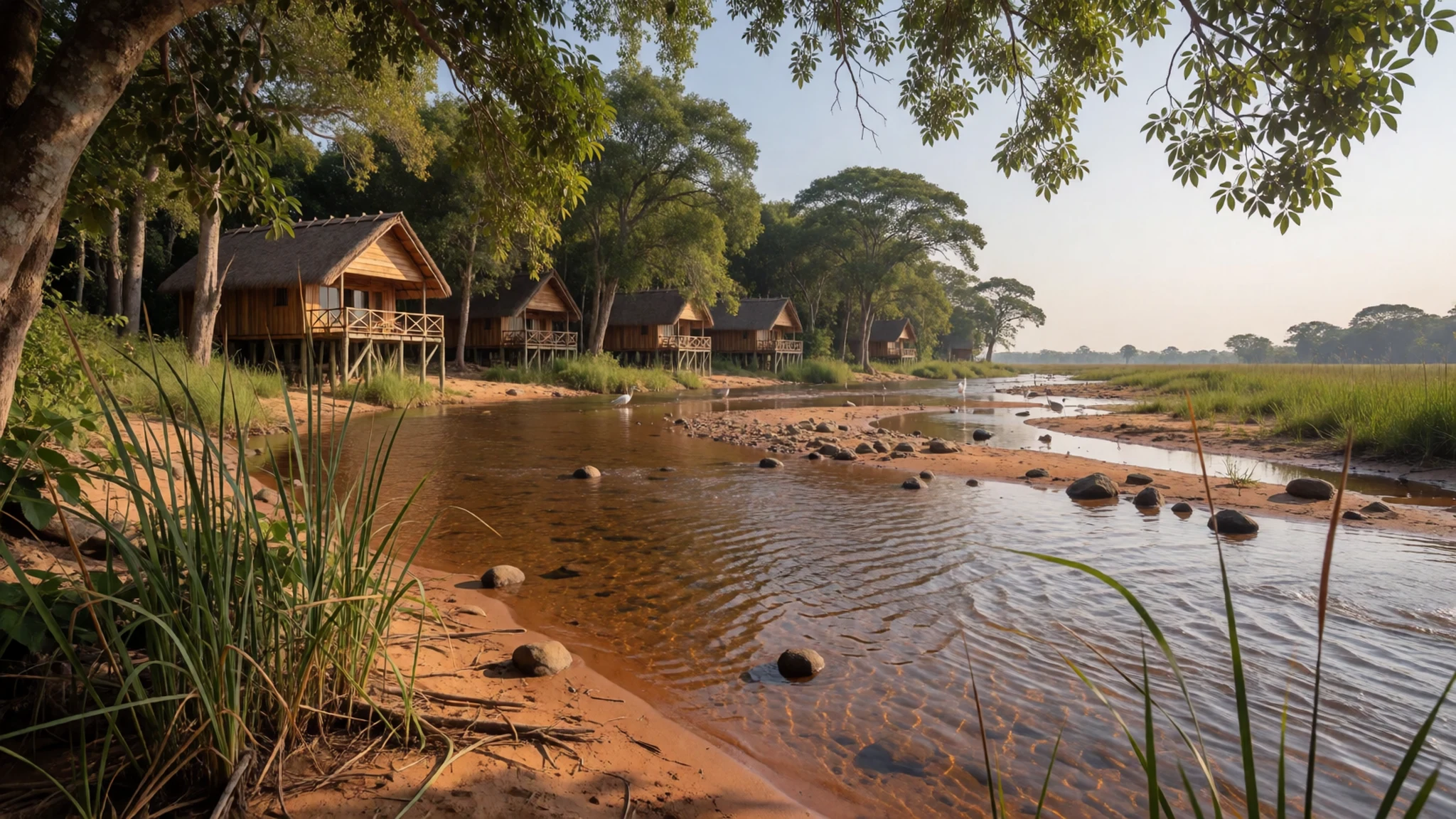
Culture
Many thousands of people live around Odzala National Park, and since 2010 the managers have tried to link them to conservation work, including ranger jobs for those who turned in hunting guns. That is the social fact under a gorilla trek: the animals are also meat and income, and park rules sit on older claims to the same forest.
In this part of the Republic of the Congo, French is the language of officials and Lingala carries through markets and radio. Village life is farming, fishing and forest skill, conducted at a pace set by heat and by the state of the road. A visiting party is a guest in a workplace of guides, trackers and researchers. The habituated gorillas remain a research group, not a show.
Camps are small, staff live on site, and there is no tourist strip. Courtesy here is unshowy: greetings, patience with a slow morning, and remembering the forest is lived in.
When you are with gorillas in Odzala National Park, stay behind the guide, keep your voice low, and do not move closer for a photograph.
What to wear
Dress around Odzala National Park divides between town cotton and forest workwear. The familiar textile is the pagne, a wax-print cotton wrap women wear as a skirt, a headtie or a sling, cut from bolts in Brazzaville's markets. For weddings, funerals and other ceremonies, men may put on an embroidered boubou over trousers. Bark-cloth and raffia still appear in forest ceremonies; they are no longer what people farm or hunt in. Those days are worn cotton, shorts and rubber boots.
Most people now dress for heat, rain and mud: T-shirts, football shirts, second-hand trousers, sandals. Camp staff and rangers look different because the work demands it — field shirts, thick socks, boots that survive thorns and a long wet walk.
Visitors should copy the rangers, not the city. Dull green, brown or khaki long sleeves and trousers are the right gorilla-trek clothes; bright prints read as noise in the understorey and bare arms feed the mosquitoes. A light waterproof, a layer for a soaked dawn, and boots with grip already worn in complete the kit. The marantaceae belt is slippery when the path floods. Modest, neutral clothes also suit a small camp dinner.
What to eat
- Saka-saka — Camp kitchens, and market cookshops in Brazzaville
Saka-saka at Odzala National Park is pounded cassava leaf simmered in palm oil with onion and a little smoked fish or meat. It is ordinary home cooking across the Republic of the Congo, and the camp kitchens plate it beside a starch when the greens are in.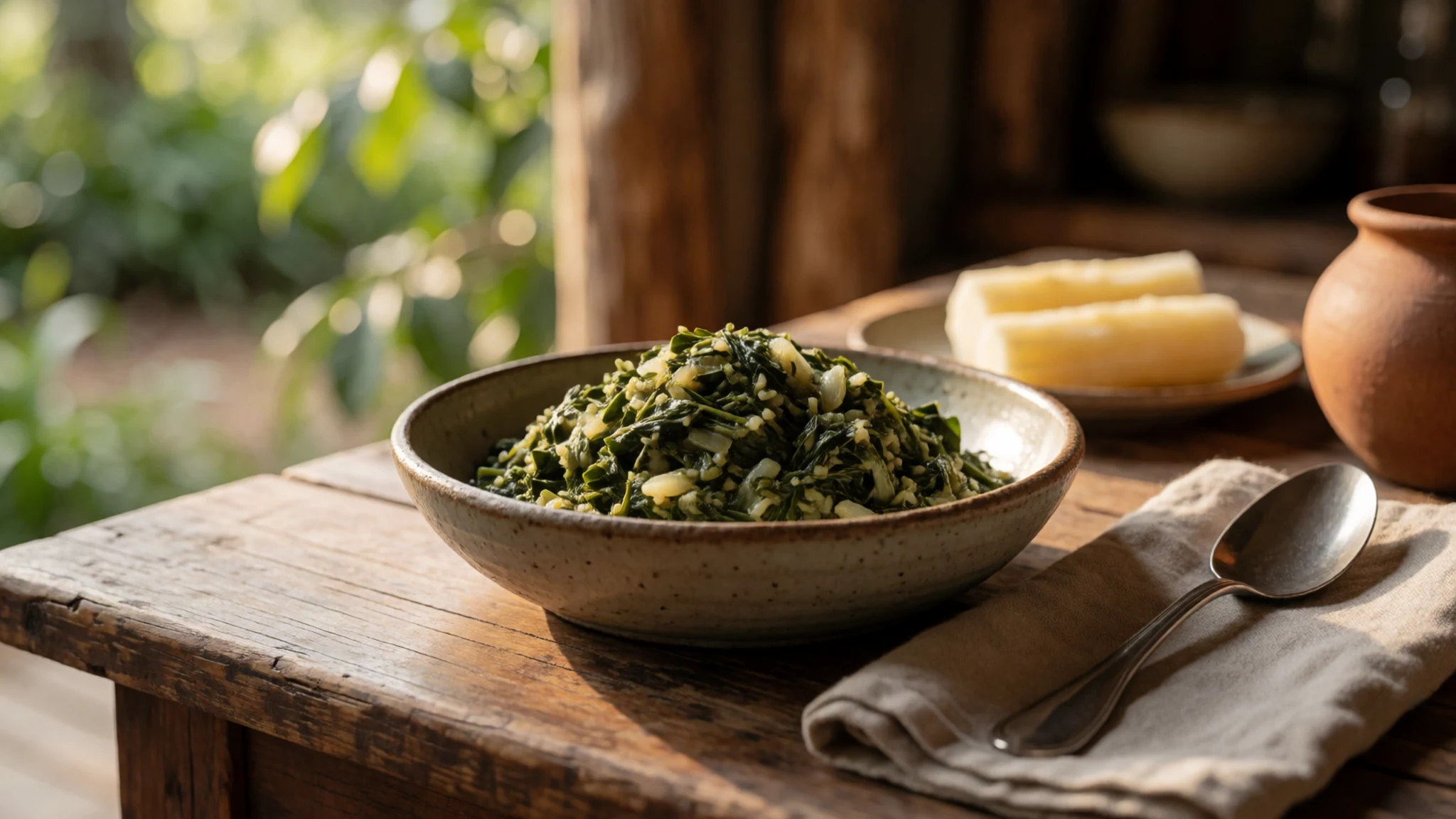
- Poulet moambe — Restaurants in Brazzaville and camp kitchens
Poulet moambe is chicken in a sauce of palm nuts, and Odzala National Park's kitchens cook it when a resupply brings the bird. The red-orange gravy is celebration food in the Republic of the Congo. Restaurants in Brazzaville serve it with rice or foufou.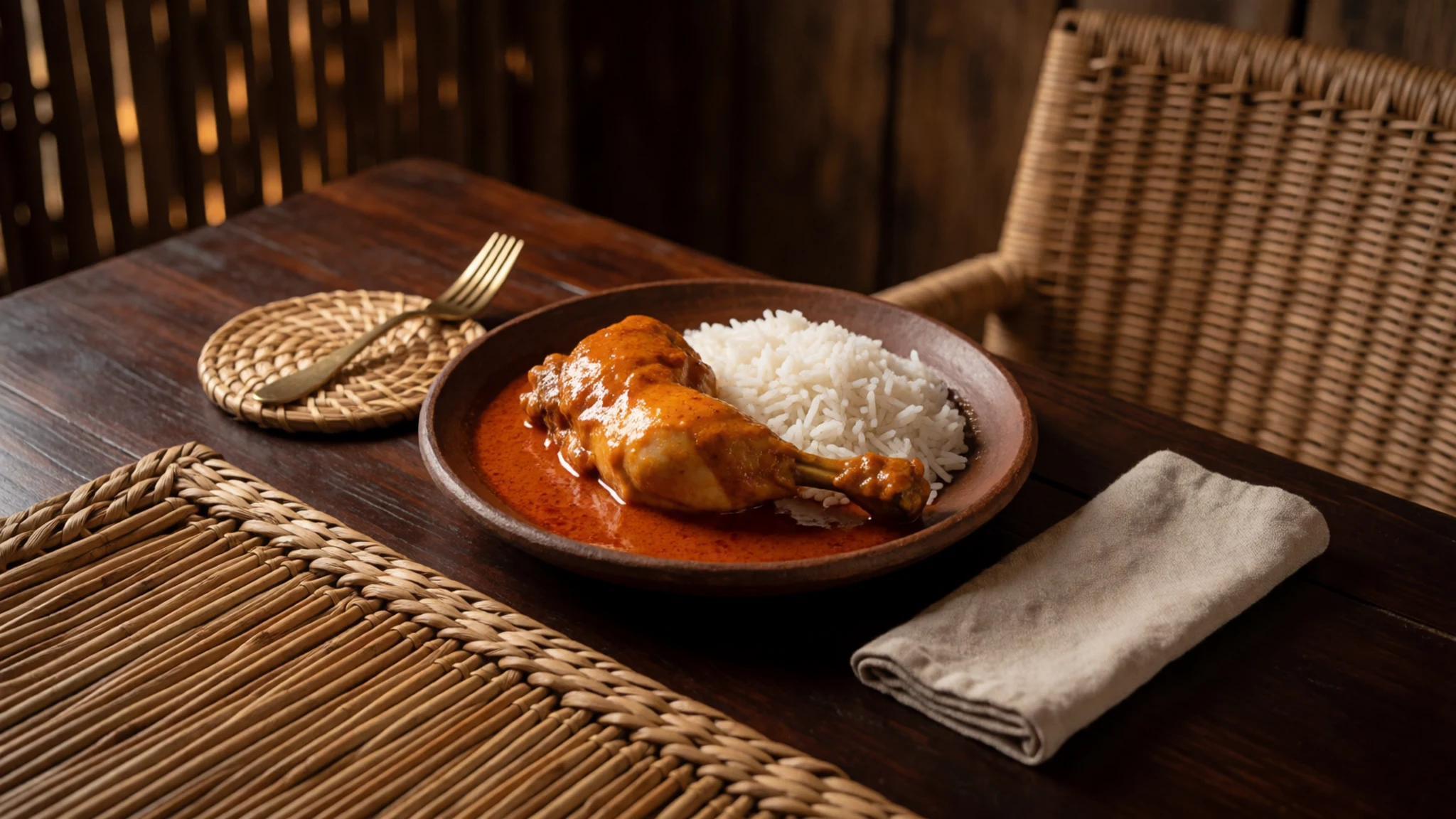
- Liboke — Tributary camps such as Mboko, and riverside village stalls
Liboke in Odzala National Park is fish, sometimes meat, sealed in broad leaves and steamed so the parcel stays moist. It is river cooking. At Mboko's tributary, and at stalls in riverside villages, people eat it hot with a starch. - Foufou — Camp kitchens and morning markets in Brazzaville
Foufou, also called fufu, is the cassava dough Odzala National Park's kitchens treat as the ordinary starch, torn by hand to scoop stew. Sometimes it is mixed with plantain. Across the Republic of the Congo it sits beside saka-saka and moambe, and Brazzaville markets pound it fresh in the morning. - Plantain — Village stalls on the approach, and camp kitchens
Fried or boiled plantain accompanies meals on the road to Odzala National Park and in the camps. Ripe, it is sweet and sold with grilled meat at village stalls. Green, it stands in as another starch. Which one appears depends on the week's resupply.
Plan it
Best time. Odzala National Park lies near the equator, so the forest is warm and humid in every month. Ask the operator which dates they run gorilla tracking, and check with the lodge before you fix your dates.
How long. 5–7
Getting there. From Brazzaville a charter reaches Odzala National Park in about two hours, and seats are scheduled on only two days each week. The overland route consumes about 16 hours on a bad surface, and visitors are steered away from driving it. A bus is sometimes offered to guests who want the country beyond the boundary.
Budget. high
Tips
- Book the camp and the charter together, because the flight from Brazzaville runs only twice a week.
- Beds are the limit, not ticket queues: Ngaga and Lango have six rooms each and Mboko has twelve.
- Keep a spare morning; gorilla walks depend on the animals and on the rain.
- Carry cash for Brazzaville and any village stop. Cards are not a plan inside the forest.
- Drink water the camp gives you, and do not drink from forest streams.
- Do not drive the 16-hour road unless the operator has told you the surface is passable.
Etiquette
- Stay behind the guide with gorillas, keep quiet, and turn back if you are ill so you do not pass a cold to them.
- Ask before you photograph guides, staff or people in villages.
- Do not feed animals or leave food out where it can draw wildlife into camp.
- Keep to the path the tracker chooses; the understorey is easy to leave and hard to rejoin.
Nearby
Sources
- Wikidata Q263883 (CC0)
- Wikipedia (rev 1372783337) (CC BY-SA 4.0)
- Wikivoyage (rev 5216313) (CC BY-SA 4.0)
- Photo photos/01-primage2.jpg (CC BY-SA 4.0)
- Photo photos/02-loxodonta-cyclotis-3970045.jpg (CC BY 4.0)
- Photo photos/03-grillotius-bergeri-rb095-male-up.jpg (CC BY 3.0)
- Photo photos/04-petrocephalus-arnegardi-lavou-and-sullivan-2014-zookeys.jpg (CC BY 4.0)
- Photo photos/05-cercopithecus-nictitans-putty-nosed-monkey-imported-from-ina.jpg (CC BY 4.0)
- Photo photos/06-damon-johnstonii-4079192.jpg (CC BY-SA 4.0)
- Photo photos/07-damon-johnstonii-4079196.jpg (CC BY-SA 4.0)
- Photo photos/08-damon-johnstonii-4079197.jpg (CC BY-SA 4.0)


