Łódź
Łódź, Poland
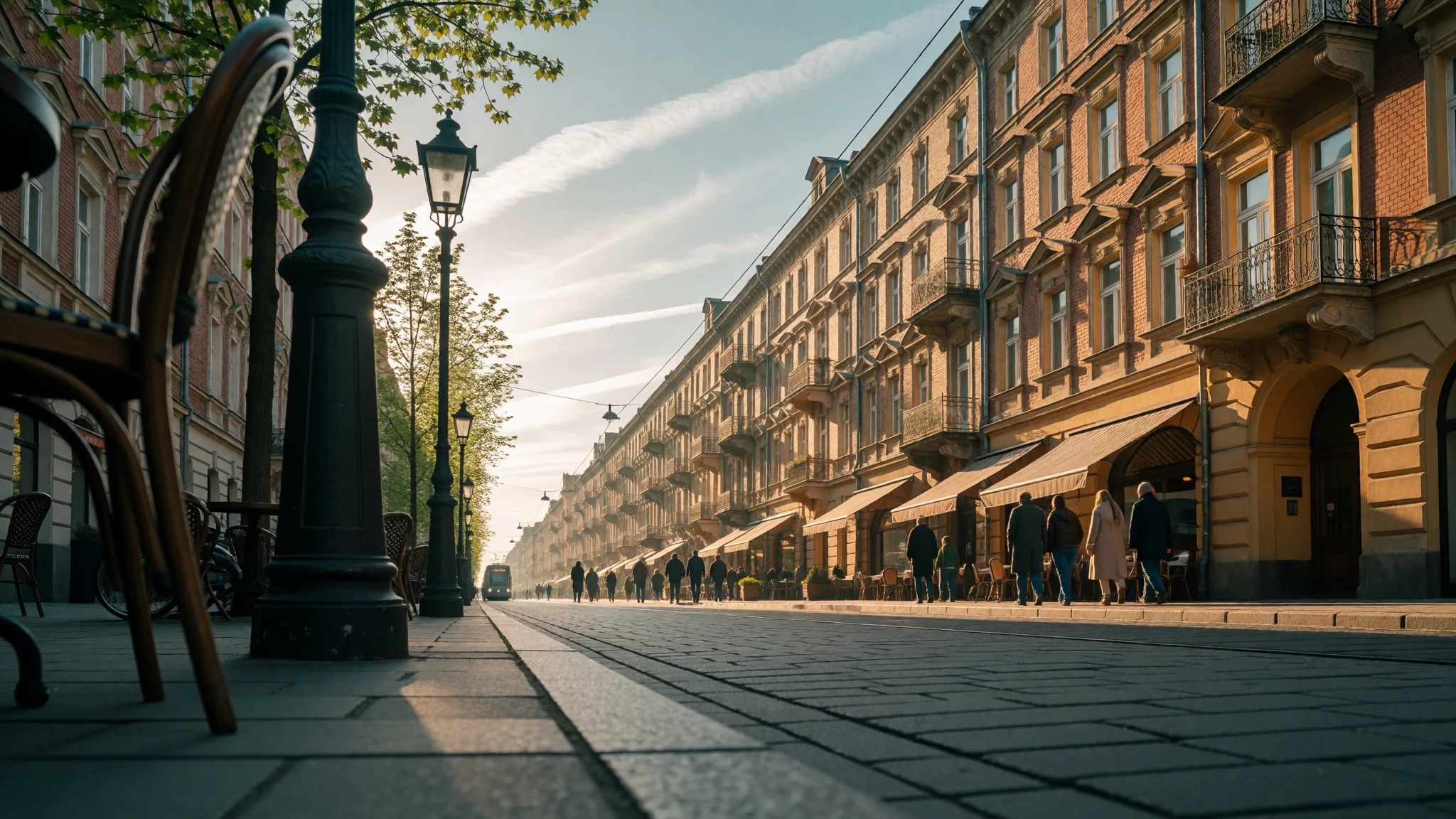
Łódź is a red-brick textile city turned film town, with restored mills, grand façades and few crowds to share them with.
The place
Łódź is a big, unpolished and quietly likeable city in the middle of Poland, built on cloth rather than on royalty. About 648,711 people live here, at an elevation of 219 m on flat country with no grand river to give it a waterfront. Its identity comes from the textile boom of the nineteenth century. Red-brick mills, workers' tenements and the mansions of factory owners were put up within sight of one another, and a great many of them survive. Some mills now hold flats, shops, museums and galleries, while others stand empty with small trees growing from the gutters. That mix of restored and half-forgotten is the city's real character. The centre is organised around one long, straight main street lined with cafés, bars and renovated façades, and the districts either side are a patchwork of courtyards, murals and student bars. Łódź also calls itself the Polish Hollywood, and the pavement carries stars for its film people. It is not a city of famous skylines. Visitors come for atmosphere, architecture and a cheaper, calmer alternative to Warsaw or Kraków. Winters are cold and grey, summers warm and easy, and crowds stay thin in every season. The city rewards slow walking, trams when the legs give out, and a willingness to peek through open gateways into courtyards.
Its story
Łódź began as a modest village among woods and marshes, and for centuries nobody expected much of it. A document of 1332 passed it to the bishops of Włocławek and listed what the villagers could do: graze animals, make pastures, cut timber. In 1423 King Władysław II Jagiełło granted it town rights, yet it stayed a small church-owned place living off farming. Its earliest coats of arms, from the sixteenth century, show a boat with an oar. Politics then shuffled it around. Prussia annexed it in 1793, church estates were secularised in 1798, and in 1815 it fell inside the Russian-controlled Kingdom of Poland. From about 1850 the textile mills multiplied and people poured in from the countryside and abroad, among them many Jews and Germans. Łódź became a Polish, Jewish, German and Russian city at once, with great wealth and bitter poverty living side by side. That tension is the subject of Władysław Reymont's novel The Promised Land. The twentieth century was far darker. Under German occupation the city was renamed Litzmannstadt and a ghetto was forced on its Jewish population, thousands of whom were sent to death camps. Since then much of the story has been about finding new purposes for the old factories.
What to see
- Piotrkowska Street — City centre
Łódź's main street runs dead straight between Liberty Square and Independence Square and is lined with renovated nineteenth-century façades, cafés and bars. It is busiest on summer evenings. Walk it once end to end, then turn into the side courtyards, where the quieter and more interesting corners are.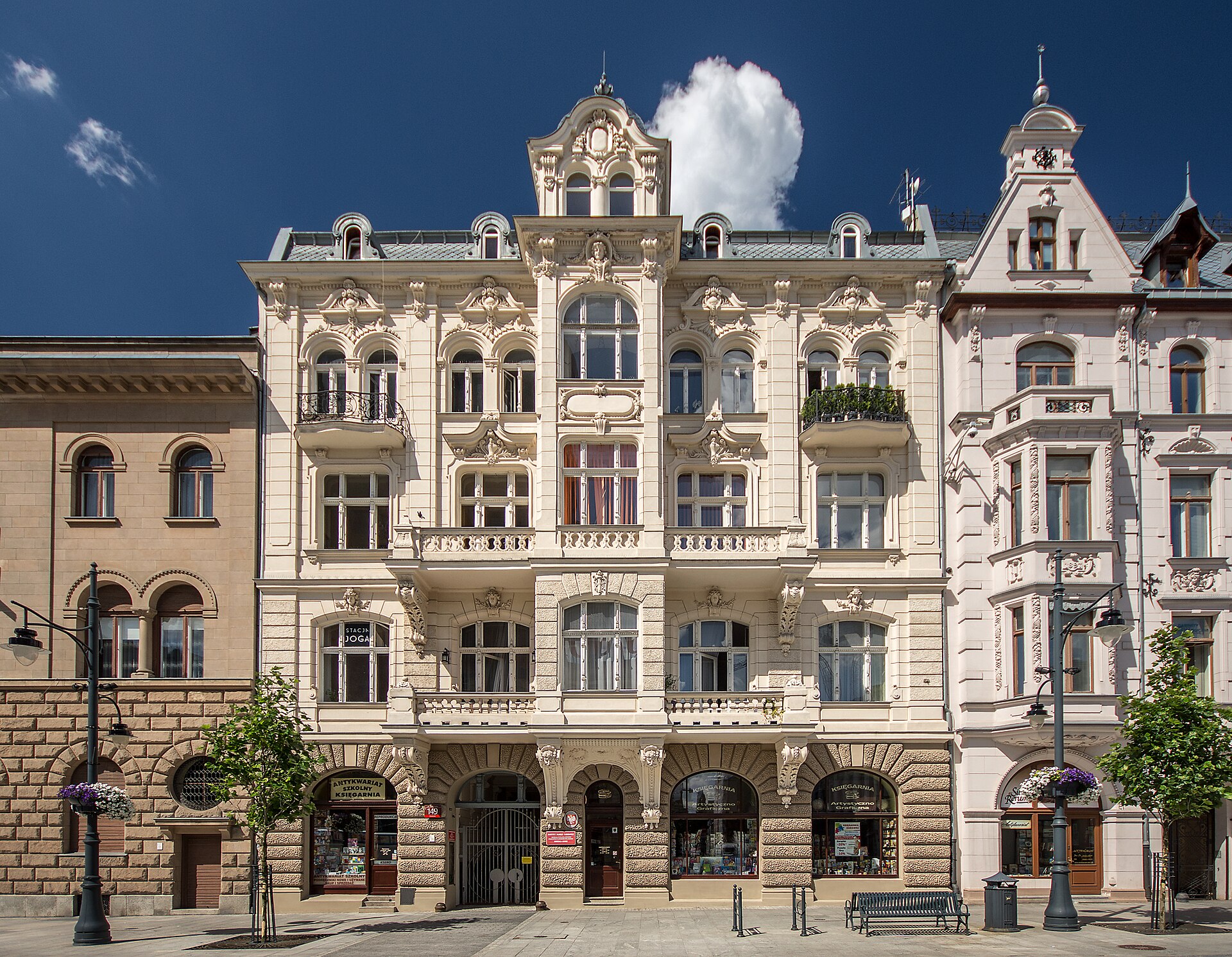
- Łódź Walk of Fame — Piotrkowska Street, central section
Łódź likes to call itself the Polish Hollywood, and this stretch of pavement backs the claim with stars for film names such as Pola Negri, Roman Polański and Andrzej Wajda. It is a pleasant, free ten-minute detour, best taken slowly with a coffee in hand. - Manufaktura — North of the centre
A former textile complex whose old fire station, power plant and technical offices now house restaurants and shops around a large square. It is touristy and busy at weekends, but it shows clearly how the city has reused its mills, and the brickwork is handsome.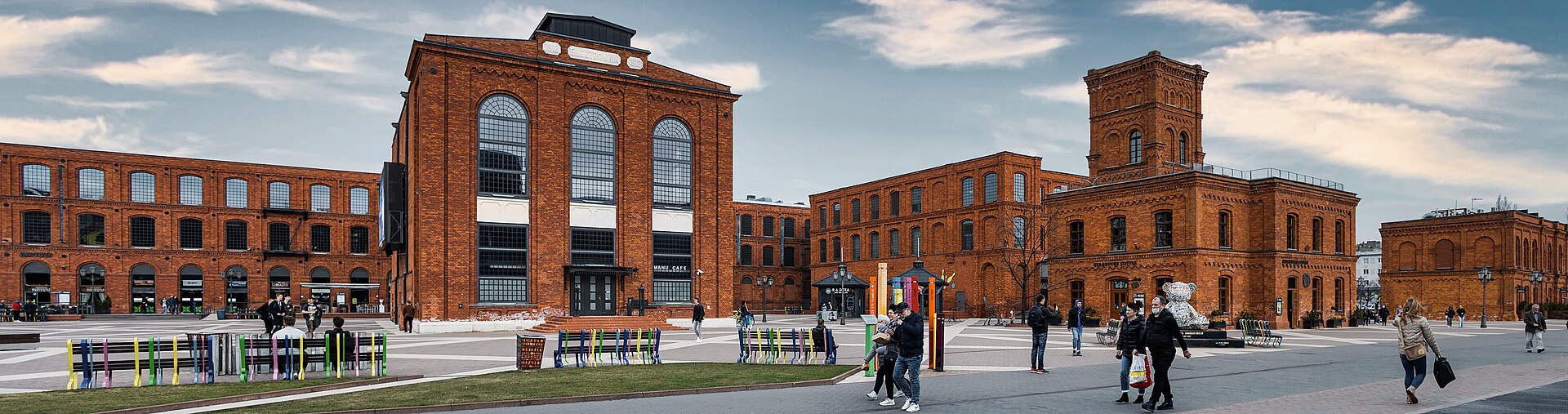
- Poznański Palace — Near the Poznański mill complex
The grand home of a factory-owning family, standing next to its mills, shows the wealth that cloth brought to a few. The ornate façade is worth a look from the street, and inside the building opening times vary, so check the city's official site before going.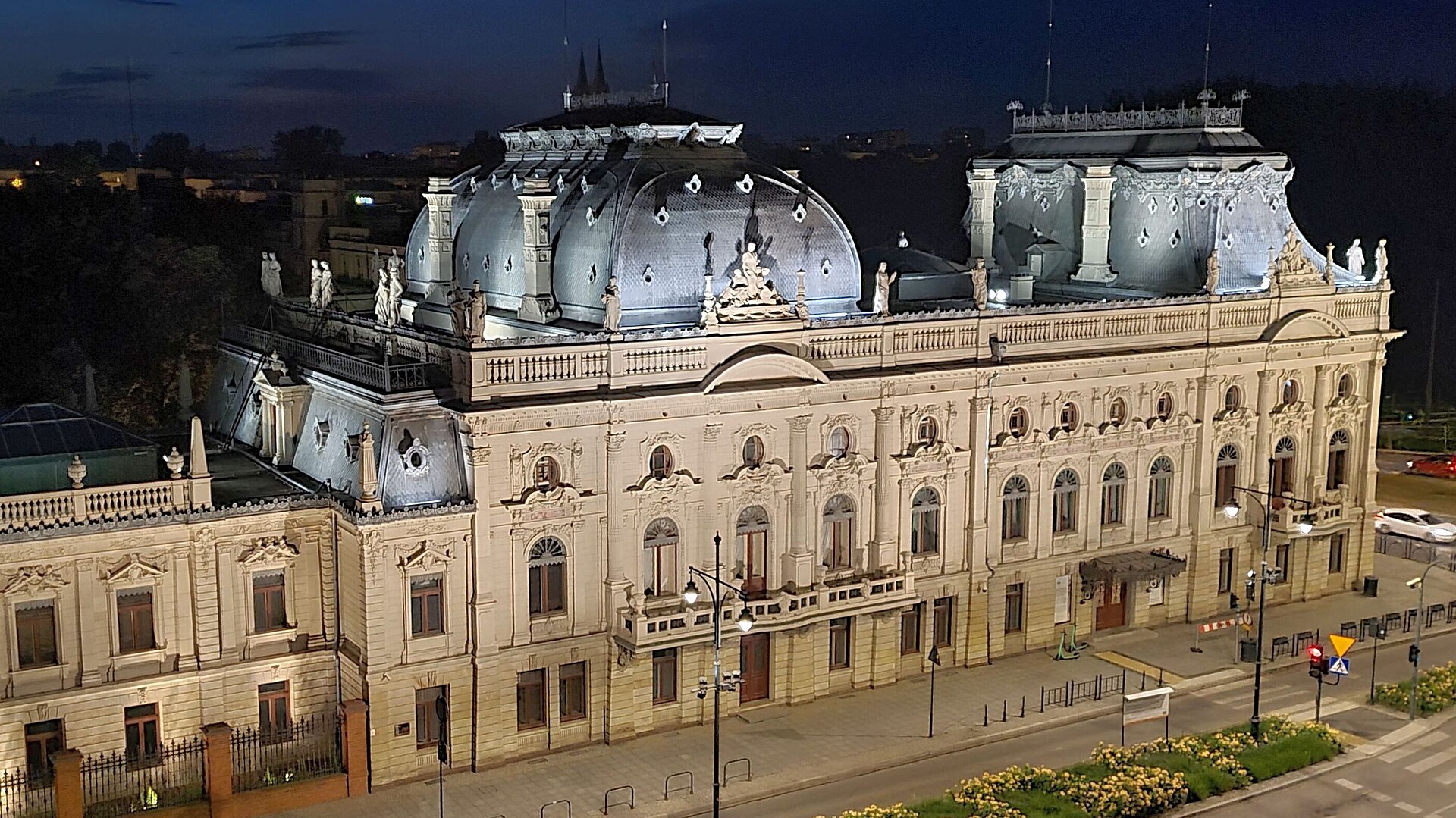
- Księży Młyn — East of the centre
This old mill district keeps its red-brick factory blocks and workers' housing in a tight, walkable cluster. It is quieter and less polished than the main street, and a good place to understand how the owners and workers of Łódź lived close together.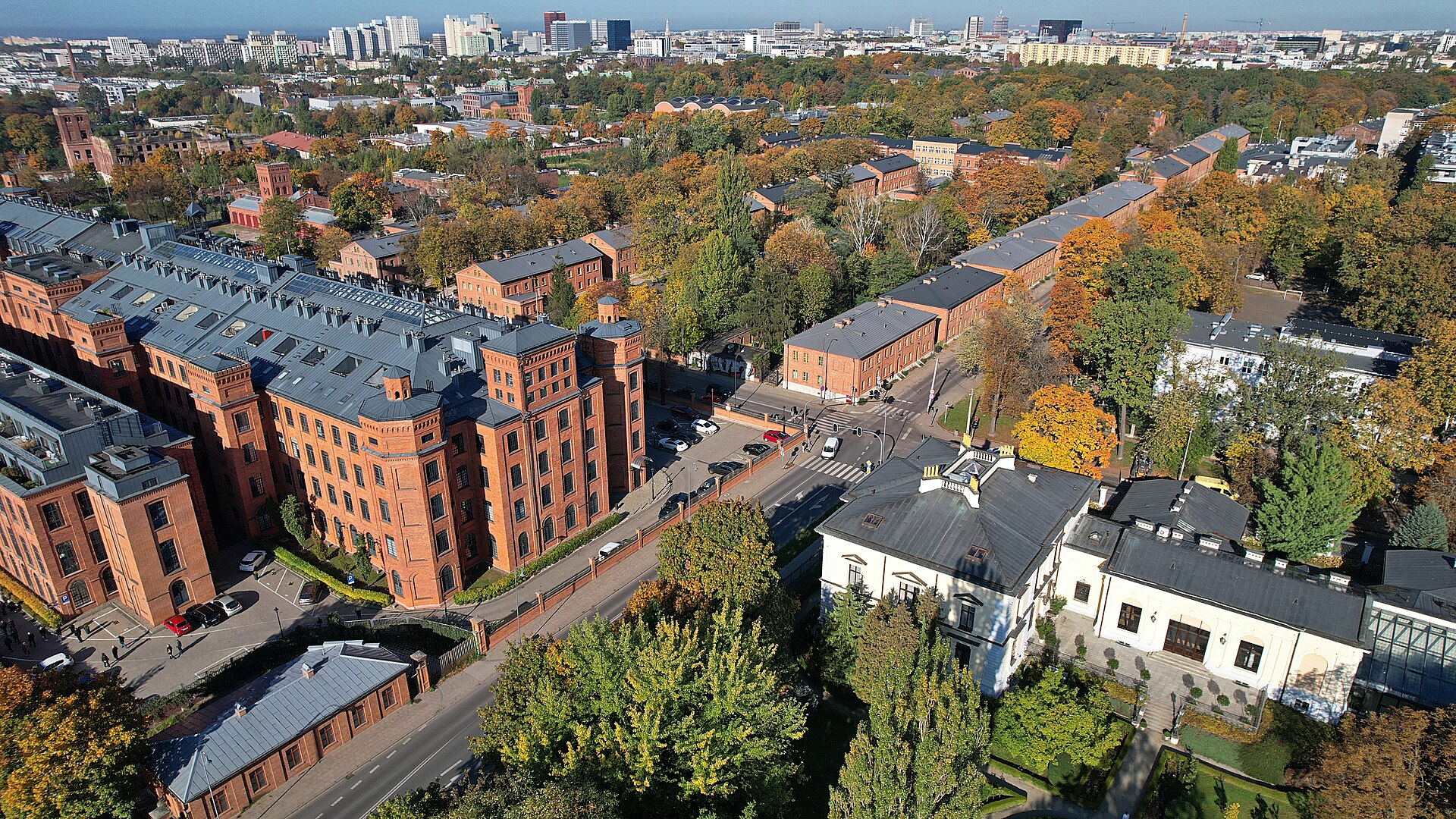
- Litzmannstadt Ghetto sites and Radegast Station — Northern districts and the Old Town park
The ghetto area and Radegast Station, from which thousands were sent to death camps, are the city's most sobering places. The Decalogue Memorial in Staromiejski Park honours coexistence of Poles and Jews. Allow time and quiet; these are memorials, not attractions.
Culture
Łódź has a layered culture shaped by its mixed population. Poles, Jews, Germans and Russians all built here, which is why a Catholic cathedral, the Church of the Descent of the Holy Spirit and St Matthew's Lutheran church stand along the same main street, near the Old Town Hall. That street is also the social spine of the city, with most restaurants, bars and cafés strung along it and local life spilling out onto the pavement on warm evenings. The film heritage is worn lightly but proudly, from the stars set into the paving to the festivals and screenings that fill cinemas through the year. Memory of Jewish Łódź is handled seriously. The Decalogue Memorial speaks of coexistence, and the ghetto sites and Radegast Station are places of mourning that locals treat with care. The old industrial past is celebrated as well, with former mills used as galleries, studios, shops and music venues, so the city feels more like a workshop than a museum. Poles tend to be reserved on first meeting and generous once talking, and a few words of Polish, such as dzień dobry for good day, are warmly received. Keep your voice low and avoid posing for casual photos at the ghetto sites and Radegast Station, and cover your shoulders and remove your hat when stepping into a church.
What to wear
Łódź has no single city costume, but its fashion story is about cloth. The region's mills produced cotton and wool for much of the country, and nearby areas such as Łowicz are known for striped wool skirts and embroidered folk dress that appear at festivals, religious processions and folk events rather than daily life. Today people in Łódź dress much as in other Central European cities: smart-casual, practical and a little understated, with dark colours in winter, plenty of denim, trainers, and a creative edge among students and the arts crowd. Offices lean smart, and evenings out in the centre are relaxed rather than dressy. A visitor should dress for the weather first. Winters are cold and grey, so pack a warm coat, hat, gloves and shoes with grip, while summers are warm enough for light cotton and a layer for evenings. Rain can come in any season, so a compact umbrella or waterproof jacket is sensible. Comfortable, well-broken-in shoes matter most, because the sights are best covered on foot over cobbles and uneven courtyard paving. For churches, cover shoulders and avoid very short shorts, and carry a light scarf if useful. At the ghetto memorials and Radegast Station, plain, respectful clothing suits the mood.
What to eat
- Pierogi — Milk bars and traditional restaurants in the centre
Dumplings filled with potato and cheese, meat, cabbage and mushroom, or seasonal fruit, then boiled or fried. They are the most dependable order in Poland, and one plate makes a filling lunch. Choose a simple traditional eatery for the plainest, best versions. - Żurek — Traditional Polish restaurants along and near Piotrkowska Street
A sour rye soup, often served with sausage and egg, and sometimes in a bread bowl. It is tangy, warming and ideal on a cold day, which in Łódź covers many months of the year. Ask whether it is made from scratch. - Placki ziemniaczane — Casual restaurants and milk bars in the centre
Crisp potato pancakes, served plain with sour cream or piled under a goulash or mushroom sauce. They are cheap, greasy in the best sense and easy to share. A good choice for vegetarians when the topping is mushrooms. - Naleśniki — Pancake restaurants near the main street
Thin pancakes served in nearly every variety, sweet with cheese, jam or fruit, or savoury with meat, spinach or mushrooms, and sometimes baked under cheese. One large portion is a light meal, and several places in the centre specialise in them. - Pizza — Pizzerias in the city centre
Pizza is a surprisingly local habit here, with a small independent pizzeria in the centre claiming to be the oldest in the city, and a chain whose big pizzas feed two. It is an easy, quick option after a long day of walking.
Plan it
Best time. May–June and September are the easiest months, with mild to warm days and long light for walking; July can be hot, while winters are cold and grey, though Christmas markets and cosy cafés have their own appeal.
How long. 2–3
Getting there. Most visitors fly into Warsaw Chopin Airport (WAW) and take a direct train to Łódź Fabryczna, the central terminus; direct trains also run from Kraków, Gdynia and Poznań. Łódź Widzew, east of the centre, handles most intercity services. Buses 65A and 65B serve the city's own small airport, and taxis wait outside its terminal.
Budget. low
Tips
- Book intercity train tickets ahead for weekends and holidays
- Carry some cash for small cafés and markets, though cards are widely accepted
- Wear comfortable shoes for cobbles and courtyard paving
- Visit the ghetto sites and Radegast Station on a quiet morning and allow time
- Check the official city site, uml.lodz.pl, for events, museum hours and transport
Etiquette
- Keep voices low and photography respectful at memorial sites
- Cover shoulders and remove hats when entering churches
- Greet shop and café staff with dzień dobry
Nearby
Sources
- Wikidata Q580 (CC0)
- Wikipedia: Łódź (rev 1384601267) (CC BY-SA 4.0)
- Wikivoyage: Łódź (rev 5423408) (CC BY-SA 4.0)
- Photo: Łódź Fabryczna, 2017 (Sebastian Glapinski) (CC0 1.0)
- Photo: Kościół Zesłania Ducha Świętego (Michał Tomczak) (CC BY-SA 4.0)
- Photo: Piotrkowska 149 (Sławomir Milejski) (CC BY-SA 4.0)
- Photo: Izrael Poznański Palace (Derbrauni) (CC BY 4.0)
- Photo: Księży Młyn, 2024 (Zakochaj się w Łodzi) (CC BY-SA 4.0)
- Photo: Łódź Fabryczna, 2017, cropped (Sebastian Glapinski) (CC0 1.0)
- Photo: Rynek Manufaktury (Michał Węzowski) (CC BY-SA 4.0)
- Photo: Coat of Arms of Łódź, 1577 (Ralf Lotys) (Public domain)


