Odense
Odense, Denmark
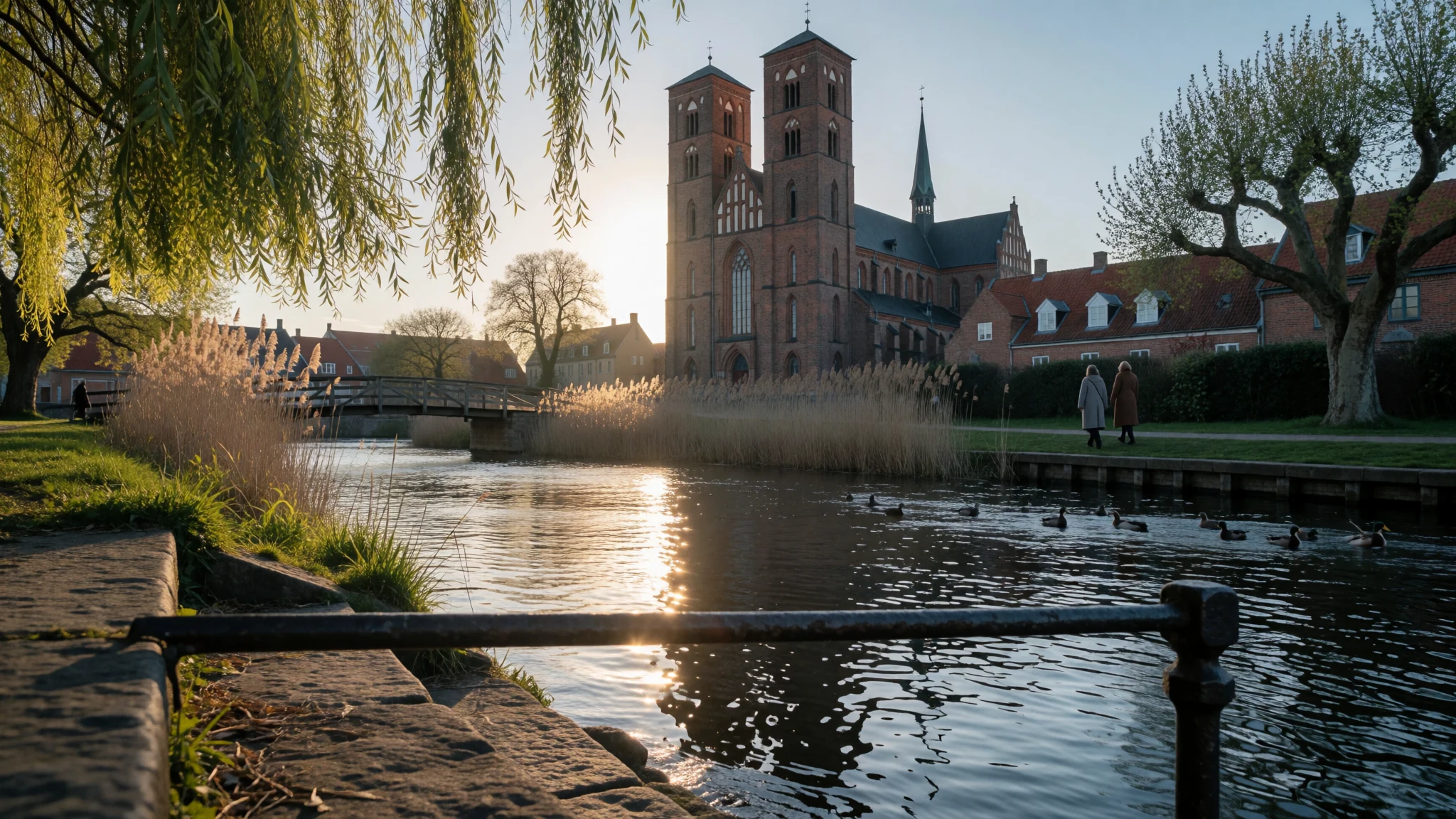
Odense is Hans Christian Andersen's home town, a compact Funen city of cobbled lanes, a Gothic cathedral, riverside gardens and easy Danish calm.
The place
Odense is the main city of Funen, the island that sits between mainland Jutland and Zealand, and it has a population of 185,480. It is a flat, green and unhurried place, with a centre low enough to cross on foot and an elevation of only 13 metres. Copenhagen lies east across the Great Belt, and Aarhus is a short journey north in Jutland, so the city works well as a stop between the two.
The old core is a loose grid of pedestrian streets around the cathedral and the city hall, where small half-timbered houses stand beside brick shopfronts. The Odense River winds through the middle and feeds a string of parks, so a short walk from the shops brings a visitor to willows, benches and ducks. Cycling is the normal way to get about, and the bike lanes are as busy as the roads.
The city has two reputations that sit side by side. One is literary: Hans Christian Andersen was born here in 1805 and spent his childhood in its narrow streets, and the town leans on that link in its museums, statues and souvenirs. The other is practical. Odense is a working regional capital with a university, a harbour, industry and rail links, and much of it feels lived in rather than staged.
The seasons shape a visit. Summer evenings are long and mild, with outdoor tables and park picnics. Winter is dark, damp and quiet, though the lit-up streets have their own charm. Crowds stay modest all year, even around the Andersen sites.
Its story
Odense has been settled for a very long time. Digs around the city point to people living here for more than 4,000 years, back into the Stone Age. The earliest community gathered on higher ground between the Odense River and a lake that has since dried up. Nearby stood a Viking ring fortress, one of several defences built along the river to hold off raiders arriving from the coast. The Møntergården museum keeps finds from that early period.
The name first appears in writing in 988, in a letter from the German emperor Otto III granting rights to Odense and neighbouring settlements. The same year the town became the seat of a Catholic diocese. The first bishops are recorded in the early eleventh century, and archaeology shows the town spreading around the streets and squares that still form its old centre.
In 1086 King Canute IV was killed by rebellious peasants in St Alban's Priory in Odense. He is often described as the last Viking king, and the church later honoured him as a saint, which made the city a place of pilgrimage. His name lives on in the cathedral.
Fire struck in 1249 after a quarrel among royal rivals, yet the town recovered quickly and grew as a market and trading centre through the Middle Ages. Centuries later, in 1805, a cobbler's son named Hans Christian Andersen was born here. He left for Copenhagen to chase a stage career and became the world-famous teller of fairy tales, and Odense has treated him as its patron ever since.
What to see
- Hans Christian Andersen Museum — Old town
This museum follows Andersen's life from a poor Odense childhood to fame abroad, and sets his stories alongside the places that shaped them. Allow a relaxed morning. Opening hours and ticket details change by season, so check the official site before heading over. - Hans Christian Andersen's childhood house — Old town
A small yellow corner house, probably the most photographed building in town. Local tradition says the writer was born here, though he never confirmed it. It is best enjoyed as a street scene: the low roofline and cobbles show how modest the surroundings were.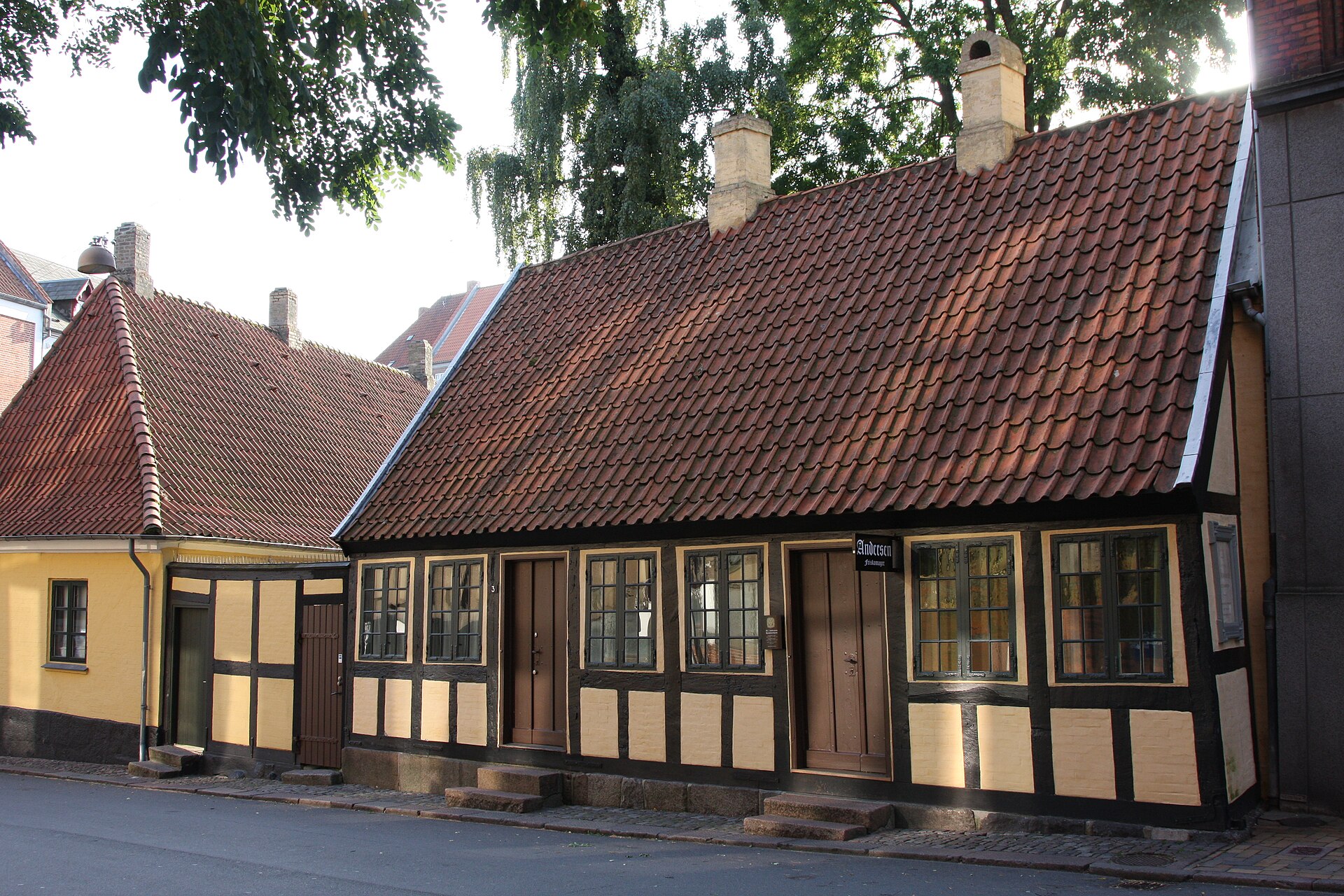
- St Canute's Cathedral — City centre
The Gothic brick cathedral is named for the king killed nearby in 1086. Its tall interior is plain by Catholic standards and calm in the way Danish churches tend to be. Visits can be limited during services, so check the opening notice at the door.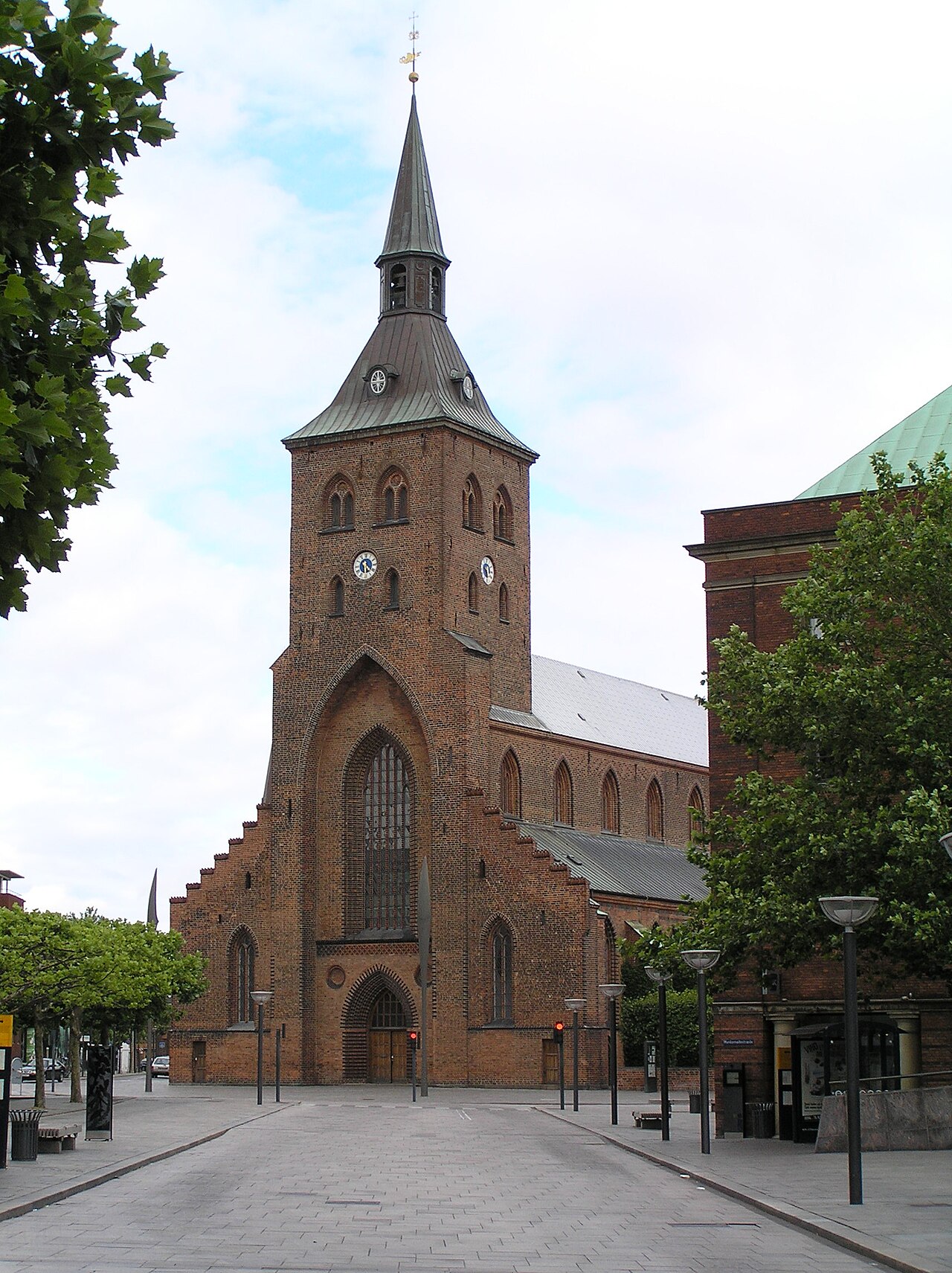
- Brandts Klædefabrik — Near the river, central
A former textile mill turned arts quarter, with museums of media and photography, galleries, shops and cafés in its courtyards. It suits a wet afternoon, and the mix of old brick and contemporary exhibitions shows another side of the city. - Danish Railway Museum — Near the station
Old locomotives, carriages and railway memorabilia fill a large site beside the working station. It is a good choice for families or anyone curious about how Denmark was stitched together by rail. Check the museum's website for current opening days.
Culture
Odense's cultural life is built around storytelling, and Andersen is the thread. His tales of mermaids, tin soldiers and ugly ducklings are taught to Danish children, and the city treats him as a local son: bronze figures, themed shops, and a culture of reading aloud. Yet the town does not feel like a theme park, and locals tend to be matter-of-fact about their famous neighbour.
Daily manners follow the wider Danish pattern. People are polite but reserved, and conversation with strangers tends to be short and friendly rather than effusive. Queues are respected, punctuality counts, and public spaces stay quiet; loud talk on trains or in cafés draws glances. Cycling is part of the culture too, and cyclists expect to be treated as proper traffic.
The idea of hygge, a cosy, unhurried togetherness with candles, coffee and good company, shows up in the cafés and in winter evenings. It is more a mood than a ritual, and it explains why people linger over a table rather than rushing.
Religion is a quiet presence. Most Danes belong to the Lutheran national church but attend rarely, so churches are more often visited for concerts, history and silence than for worship. St Canute's reminds the city of its medieval Catholic past, and the saint-king is still part of the local story.
When you walk around Odense, stay out of the red-surfaced bike lanes and look both ways before crossing them, because cyclists move fast and rarely stop.
What to wear
Odense, like the rest of Denmark, keeps traditional dress for special occasions rather than daily life. Regional folk costumes, usually made of wool and linen, include long skirts, fitted bodices, white blouses, aprons and caps for women, and breeches, waistcoats and jackets for men. They appear at folk-dance groups, heritage events and some historical celebrations. Fine embroidery and woven bands often mark one village from another.
Everyday style in Odense is plain, practical and well cut. Dark neutrals, denim, knitwear and good raincoats dominate, with trainers or leather boots rather than anything flashy. Students and cyclists favour comfortable layers, and a bike helmet or waterproof trousers are a common sight when the weather turns. Smart-casual is enough for most restaurants and theatres.
For a visitor, comfort and weather come first. Bring layers even in summer, since the Danish climate is mild but changeable, and carry a light waterproof jacket. In winter, add a warm coat, hat, gloves and shoes with grip for wet or icy cobbles. Comfortable walking shoes matter because the old centre is paved with stone and best explored on foot. Churches, including the cathedral, have no strict dress code, though covered shoulders and no beachwear is the polite choice. There are no modesty rules for sightseeing.
What to eat
- Smørrebrød — A traditional inn or lunch restaurant, such as those in the Fruens Bøge woods
Open sandwiches on dense rye bread, topped with pickled herring, roast beef, egg or liver pâté. They are eaten with knife and fork at lunchtime. Order two or three different ones to get a feel for the range. - Frikadeller — Home-style Danish restaurants and café lunch menus
Pan-fried pork meatballs, served warm with boiled potatoes, gravy and pickled red cabbage, or cold on rye bread. This is comfort food Danish families cook at home, and it is filling without being fancy. - Pølser (Danish hot dogs) — Street-side stands and kiosks in the pedestrian centre
Sausages in a soft bun with crispy fried onions, pickled cucumber, ketchup and mustard. Cheap, quick and eaten standing up. The red sausage is the classic, though other types are on offer. - Wienerbrød — Any neighbourhood bakery
Flaky, buttery Danish pastries in spirals, envelopes and twists, often filled with custard, marzipan or jam. They are the usual coffee companion in the morning, and bakeries sell out early on weekends. - Rødgrød med fløde — Traditional restaurants in summer, and some café dessert menus
A thick red berry pudding served with cold cream. The name is notoriously hard for foreigners to pronounce. It is light, tart and refreshing on a warm evening, and a good way to finish a Danish meal.
Plan it
Best time. Late May to early September, when days are long, temperatures are mild and parks and outdoor tables are at their best. Winter is dark, cold and damp, but quiet and good for museums and cosy cafés.
How long. 1–2
Getting there. Fly to Copenhagen Airport and take a direct train towards Odense, or drive east to west across the Great Belt Bridge, where a toll applies. From Billund Airport, take a local bus to Kolding or Vejle, then a train to Odense. Danish trains run often and are usually punctual.
Budget. mid
Tips
- Buy your train ticket before boarding, because tickets cannot be bought on the train; DSB sells them directly, with cheaper advance fares online
- Walk or hire a bike to cover the compact centre, and keep a waterproof layer in your bag
- Check the museums' official sites for current hours and ticket details before planning the day
- Be a little cautious late at night, and skip the Vollsmose area, which has little to interest visitors
- Cards are accepted almost everywhere, so you need very little cash
Etiquette
- Stay clear of cycle lanes and look before stepping across them
- Keep your voice down on trains and in churches
- Join queues patiently rather than pushing to the front
Nearby
Sources
- Wikidata Q25331 (CC0)
- Wikipedia: Odense (rev 1377543572) (CC BY-SA 4.0)
- Wikivoyage: Odense (rev 5413101) (CC BY-SA 4.0)
- Odense city hall — Emelie Graven (CC BY-SA 4.0)
- Odense - Sankt Knuds kirke 2005-07-16 (Public domain)
- Sankt Knud den Hellige — Orf3us (CC BY 3.0)
- Engraving of Odense — Braun & Hogenberg (Public domain)
- Hans Christian Andersen's childhood home — Kåre Thor Olsen (CC BY 3.0)
- Tornø i Odense Fjord — Nils Jepsen (CC BY 3.0)
- Winter at Skovsøen — Kåre Thor Olsen (CC BY 3.0)
- Odense Inner Harbour industry — Kåre Thor Olsen (CC BY 3.0)


