Nusa Penida
Nusa Penida, Indonesia
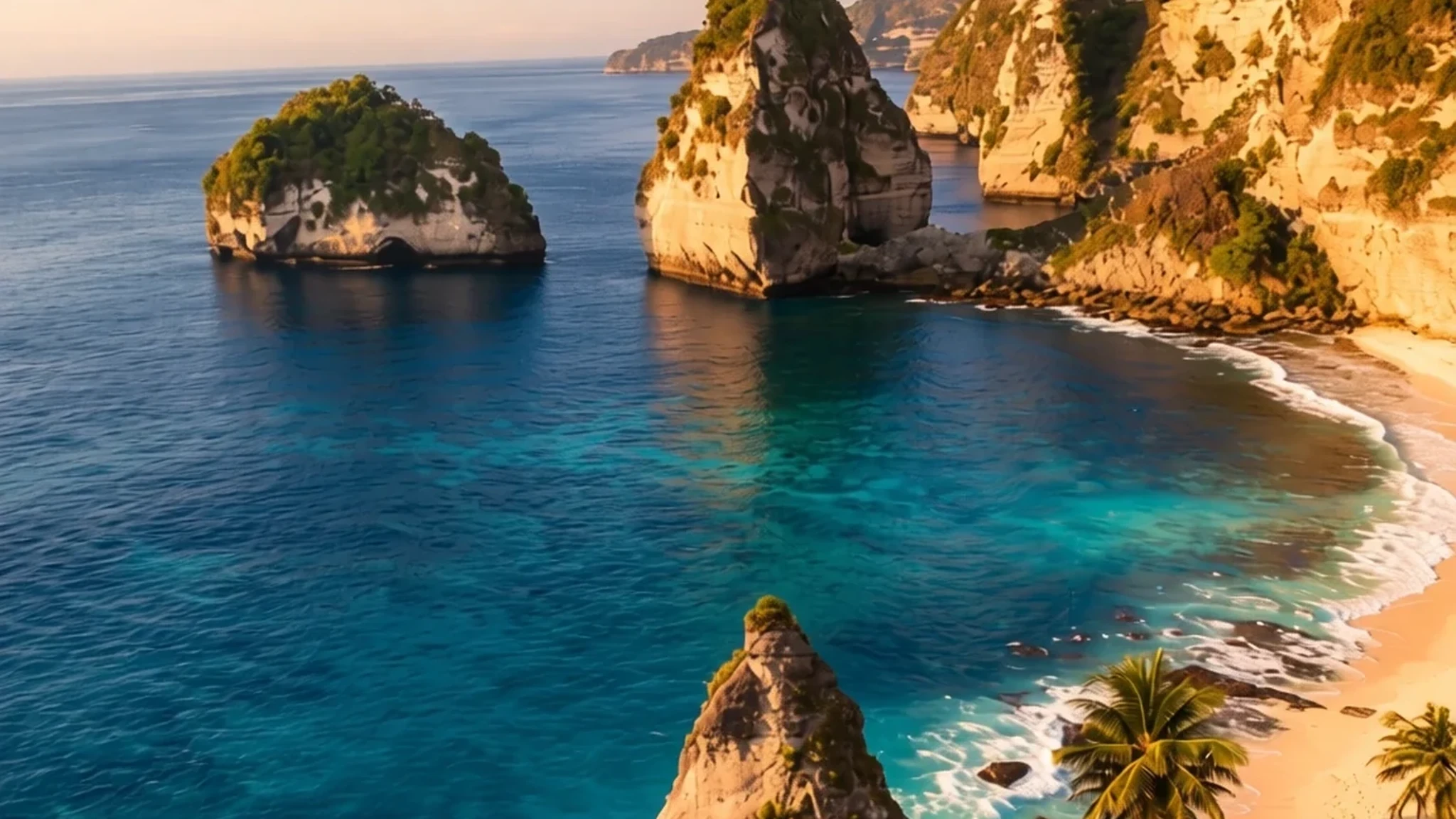
A short boat ride from Bali leads to dramatic cliffs, a drier hilly interior and one of the region's best-known bird sanctuaries.
The place
Nusa Penida is a hilly island lying a short distance off the southeast coast of Bali, separated from it by the Badung Strait. Together with the nearby islands of Nusa Lembongan and Nusa Ceningan and a scatter of smaller islets, it forms a district of the same name within Klungkung Regency. The regency's administrative seat, the town of Klungkung, lies on Bali itself. The interior climbs to about 500 metres, and the land is noticeably drier than Bali, which shapes how green the hills look for much of the year. Around 65,000 people live across the district, according to the official estimate for 2024, and the district covers roughly 200 square kilometres. Tourism has grown quickly, and the island's clifftop viewpoints, sheltered bays and boat links have made it a popular day-trip destination from southern Bali. Most settlements sit on the flatter ground near the coast. Roads on the upland stretches are narrow and steep, so journeys take longer than the map suggests. The island works best as a stay of several nights rather than a rushed day, because visitors gather at the same few viewpoints in late morning and the afternoon heat can be intense.
Its story
The island's recorded history reaches back to the tenth century. A pillar at Belanjong, dating to 914 AD, carries an inscription describing an expedition by the early Balinese king Sri Kesari Warmadewa to bring Nusa Penida under his control. For a long time the island's own people resisted the Balinese courts that followed, fending off several campaigns. That changed in the second half of the seventeenth century, when a force from the Gelgel dynasty took the island, and its last king, Dalem Bungkut, died in the fighting. Afterwards Nusa Penida became a dependency of the Klungkung palace, whose rulers held sway over much of Bali. The island's reputation as a place of exile is one of its more striking legacies. A Dutch map drawn in 1900 labels it Bandit Island, a name that recalls the Klungkung court's habit of sending criminals, political opponents and practitioners of black magic there. When the Dutch brought Bali under colonial rule in 1908, the district stayed attached to Klungkung, and it later became part of independent Indonesia along with the rest of the archipelago. The island's past is tied less to grand monuments than to the politics of the Klungkung court, whose story is still told in the palace and memorials on the Bali side of the strait.
What to see
- Bali starling sanctuary — Nusa Penida and its neighbouring islands
Nusa Penida, Lembongan and Ceningan together form a bird sanctuary, and the villages protect it through their own traditional rules. The star of the scheme is the Bali starling, which had dwindled dangerously low in the wild before a breeding and release programme began. Visits work best with a local guide who knows where the birds gather, and nests should be left undisturbed.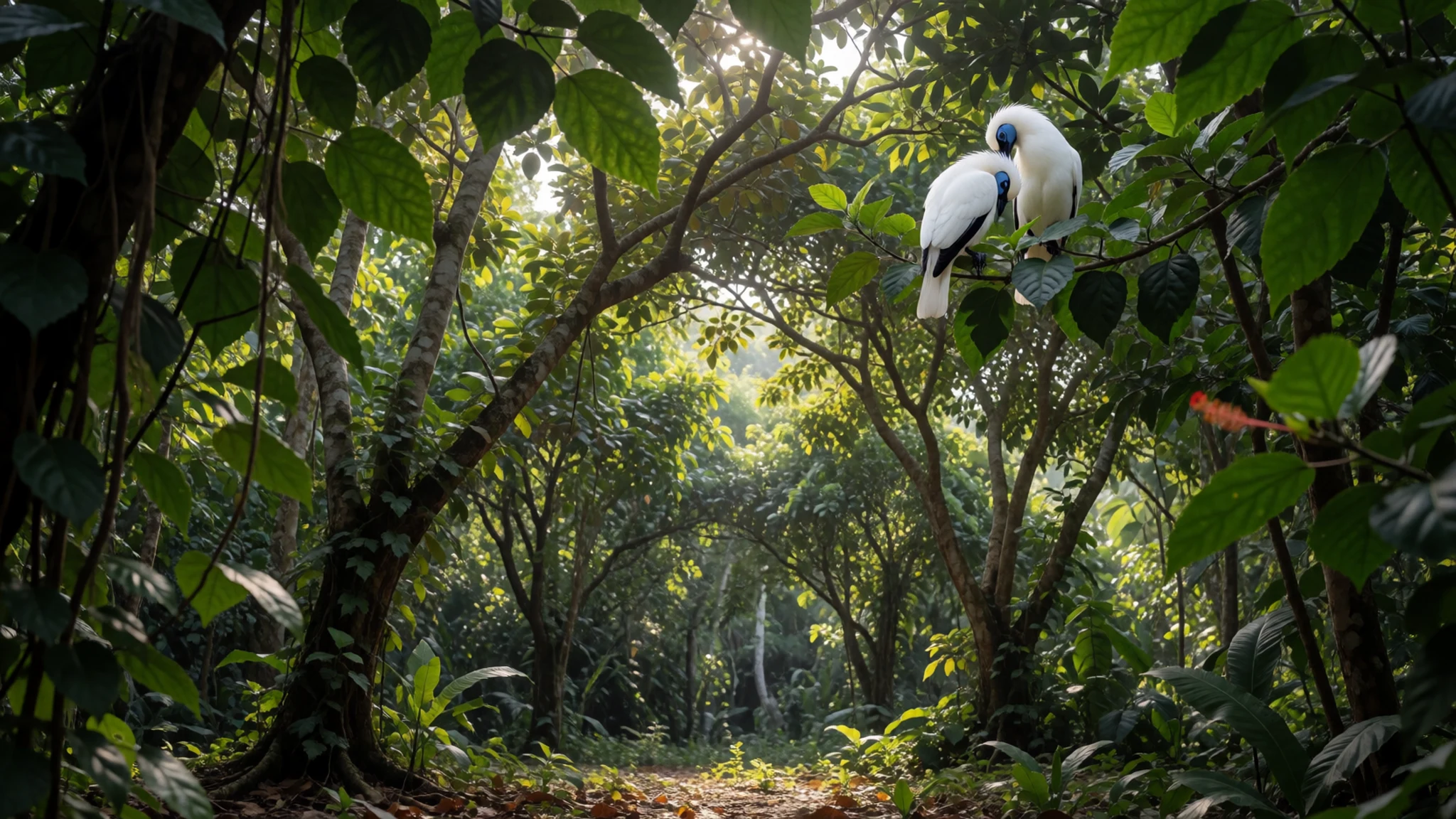
- Pura Goa Lawah — Bali's southeast coast, across the strait from Nusa Penida
One of Bali's directional temples, important to Balinese Hindus, sits in front of a cave where thousands of bats roost during the day. The bats are a constant presence, so the site suits a slow look rather than a quick photograph. Dress properly for the temple before going inside, and expect a short walk and some steps.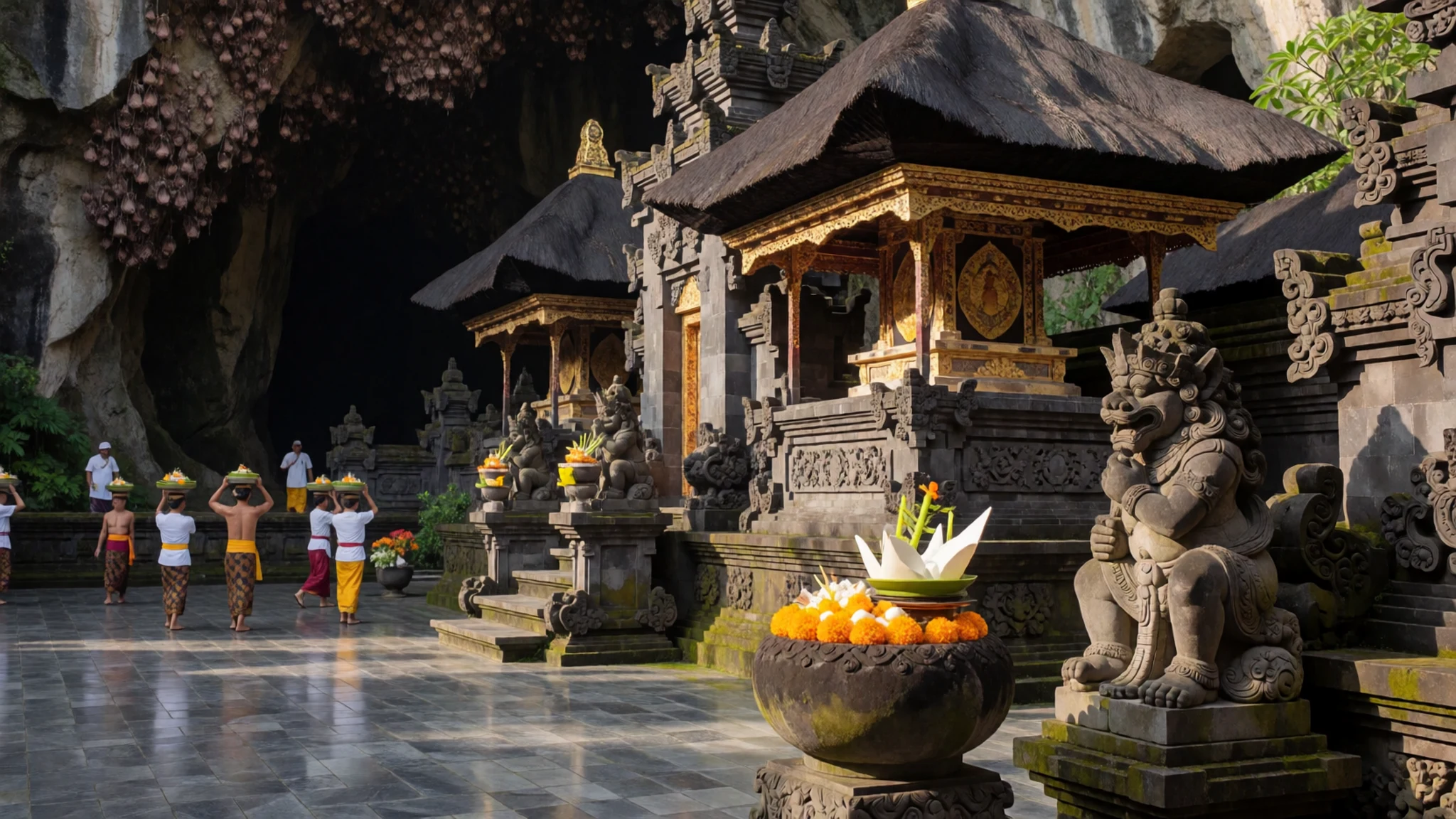
- Klungkung Palace — Klungkung town, central Bali
The palace and court of justice dates from the seventeenth century and was once the seat of a court that claimed authority across a wide region. The highlight is the painted ceiling of the Kerta Gosa pavilion, the only surviving example of classical wayang painting in Bali. Mornings are the most comfortable time to walk the grounds.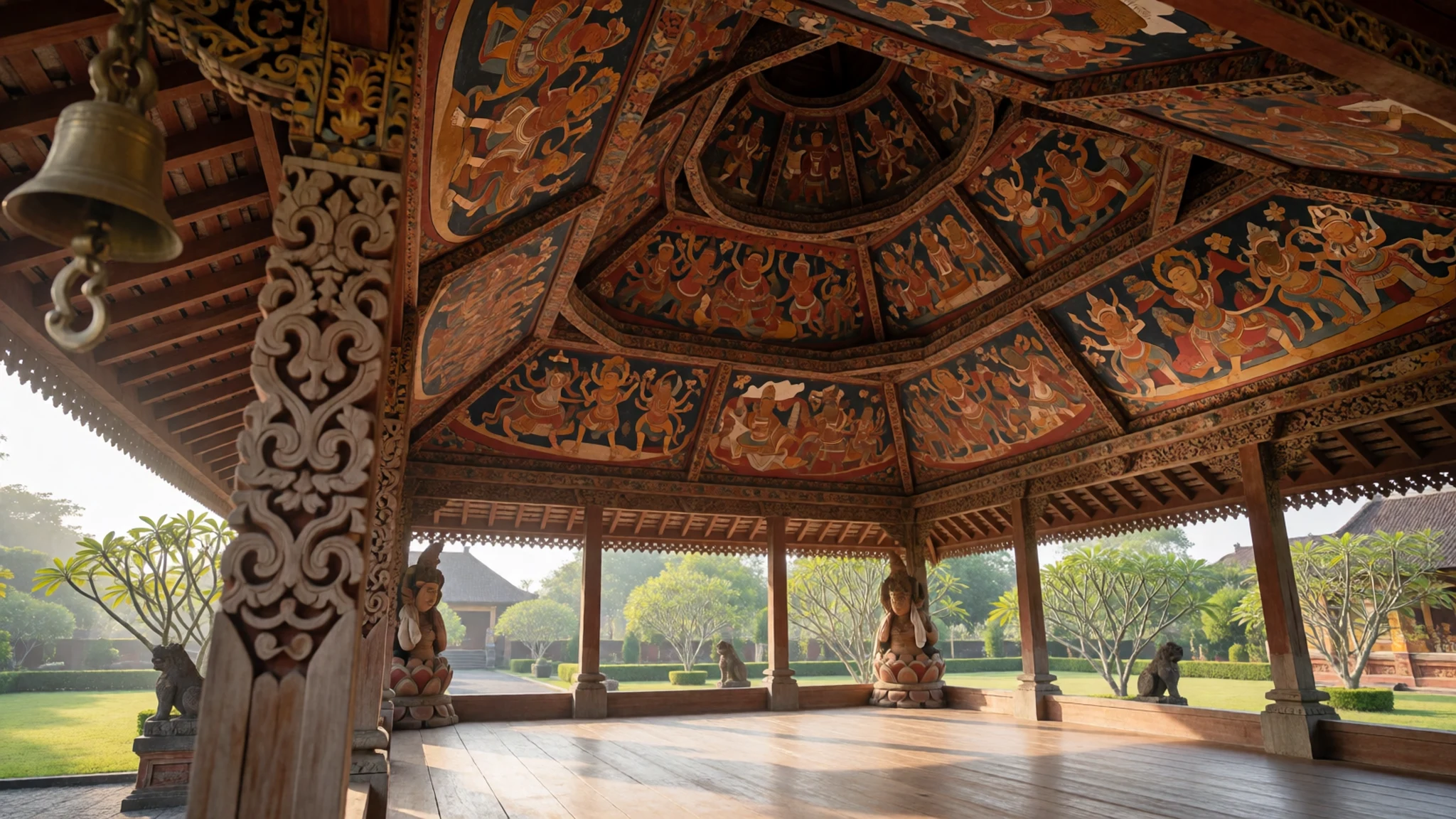
- Kamasan village — Village near Klungkung, central Bali
Kamasan is the centre of the classical wayang style of painting, with many studios where artists work on cloth and paper. Shops sell everything from small prints to large works, and prices are usually open to discussion. Ask before photographing artists at their work, since many are working to a commission.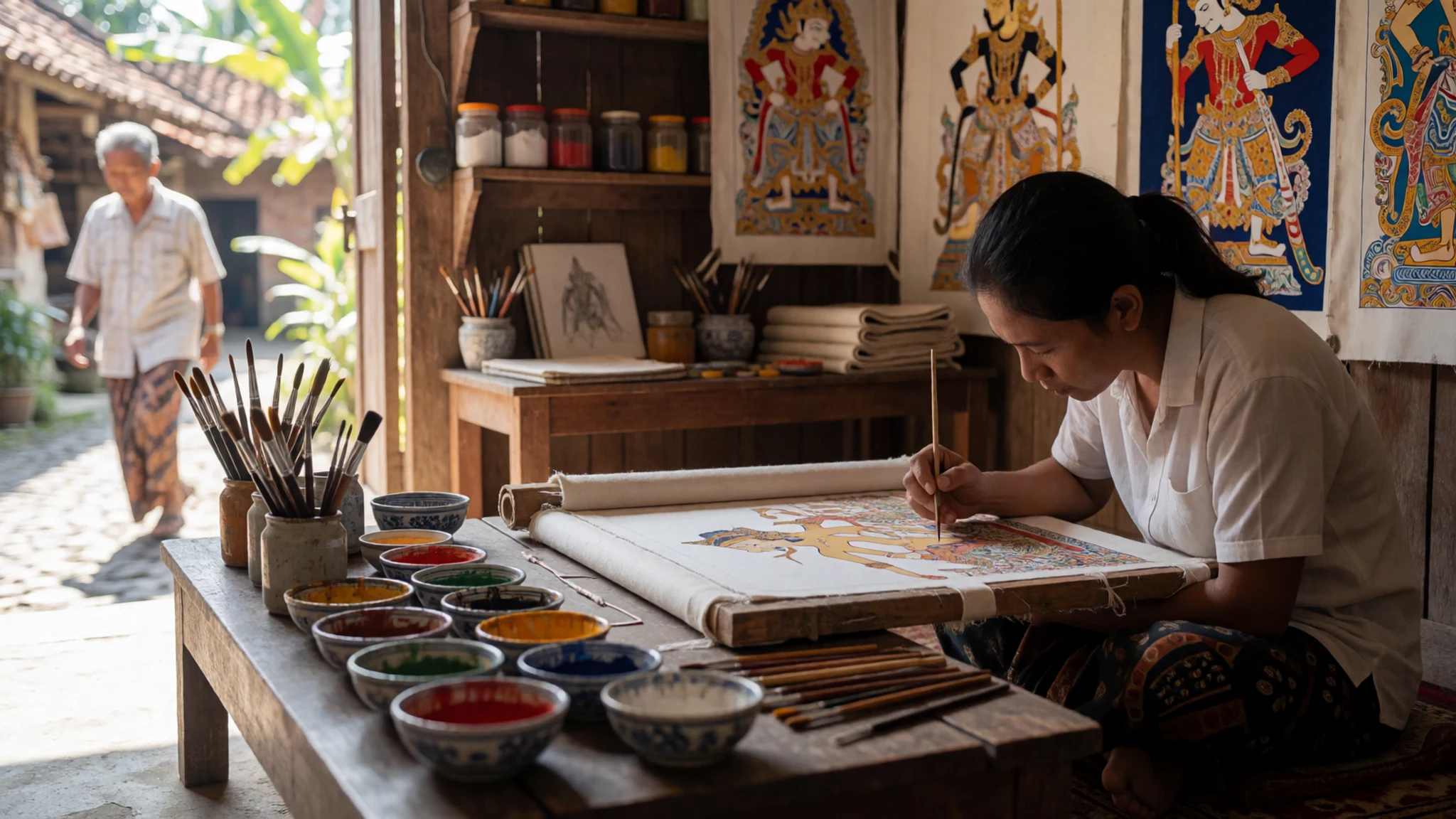
- Puputan Monument — Klungkung town, central Bali
The monument commemorates the 200 members of the Klungkung royal family and court who died in the puputan of 1908, when they marched into Dutch fire rather than surrender. The site is a sober place for reflection and takes only a few minutes on the way through town.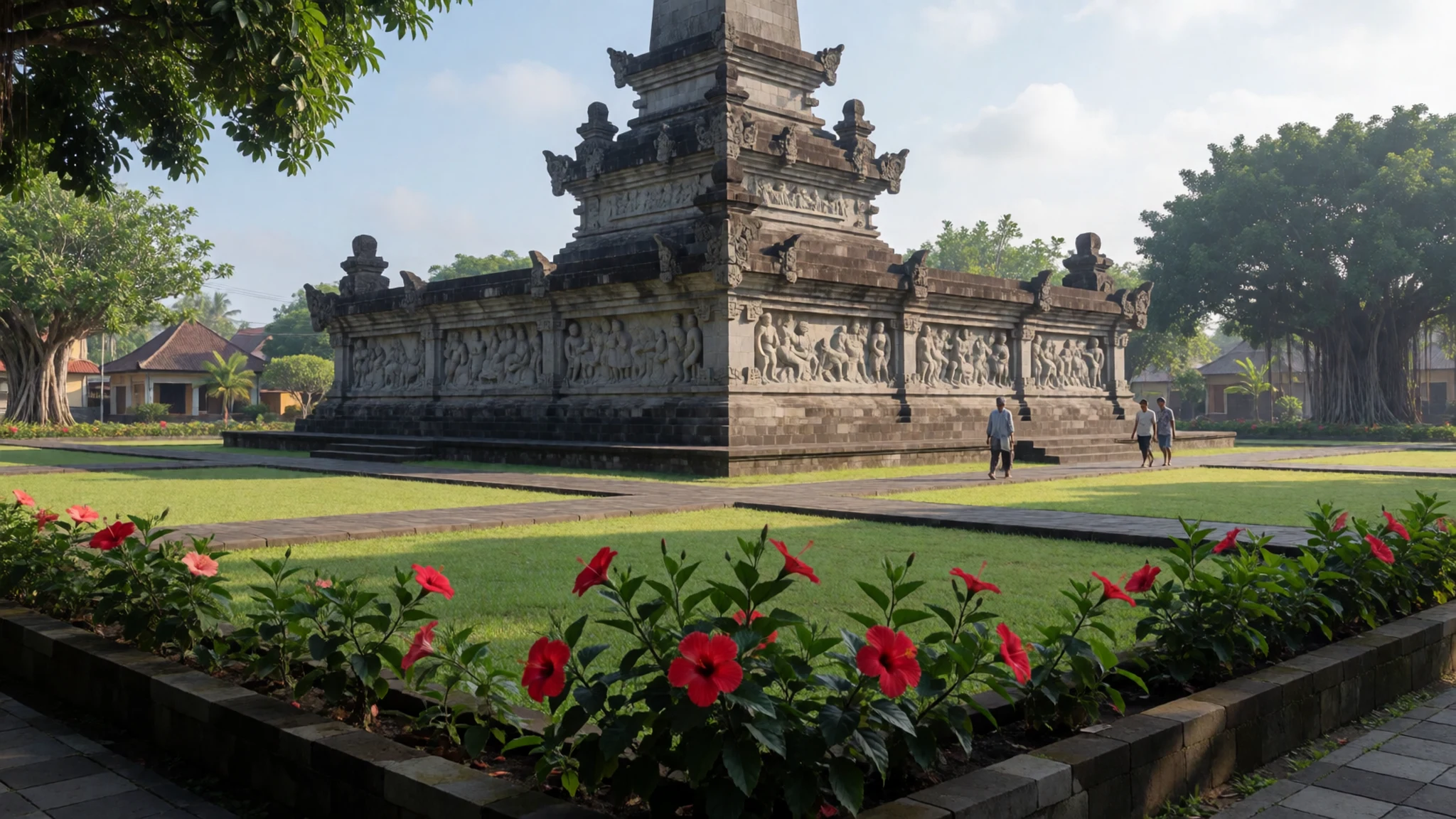
Culture
Culture on Nusa Penida is inseparable from Balinese Hindu life, and village regulations shape daily behaviour as much as the temples do. The island's communities have written bird protection into their traditional rules, which says a good deal about how seriously local people treat shared agreements. Daily life centres on family compounds and small shrines, where offerings of flowers, rice and incense are placed at doorways, shops and roadsides each morning. Ceremonies are frequent and often noisy with processions and music, and they can block a road for an hour or more. Visitors who pause to watch are generally welcome, but should stay out of the way and keep a respectful distance from families at prayer. Many temples ask visitors to wear a sarong and sash, which are usually available at the entrance. Ask before entering a family compound or photographing a ceremony, and never step over the small offerings placed on the ground.
What to wear
Traditional dress on Nusa Penida is the Balinese dress worn across the island. Women wear the kebaya, a fitted blouse, with a kamben, a wrapped sarong, and a selendang sash at the waist. Men wear a sarong with a headcloth called udeng, often with a sash. Textiles include endek, a woven cloth with patterned threads, and songket, which is woven with gold or silver thread and reserved for ceremonies and festivals. Daily wear is much more relaxed: shorts, T-shirts and sundresses are common, and younger people often dress in Western clothes, bringing out the kebaya for temple festivals. For a visitor, light cotton clothing suits the heat, and shoulders and knees should be covered at temples, with a sarong and sash worn at the entrance. A sunhat, sunscreen and sturdy sandals or closed shoes help on steep steps and rough tracks. Swimwear belongs on beaches, and modest clothing is the rule when walking through villages.
What to eat
- Babi guling — Small eateries in Klungkung town centre and along the main roads
Spit-roasted suckling pig, seasoned with a paste of turmeric, chilli and local herbs, is the signature Balinese dish. It is usually served with rice, crisp skin and spiced vegetables. Eateries often sell out by midday, so lunch is the best time to try it.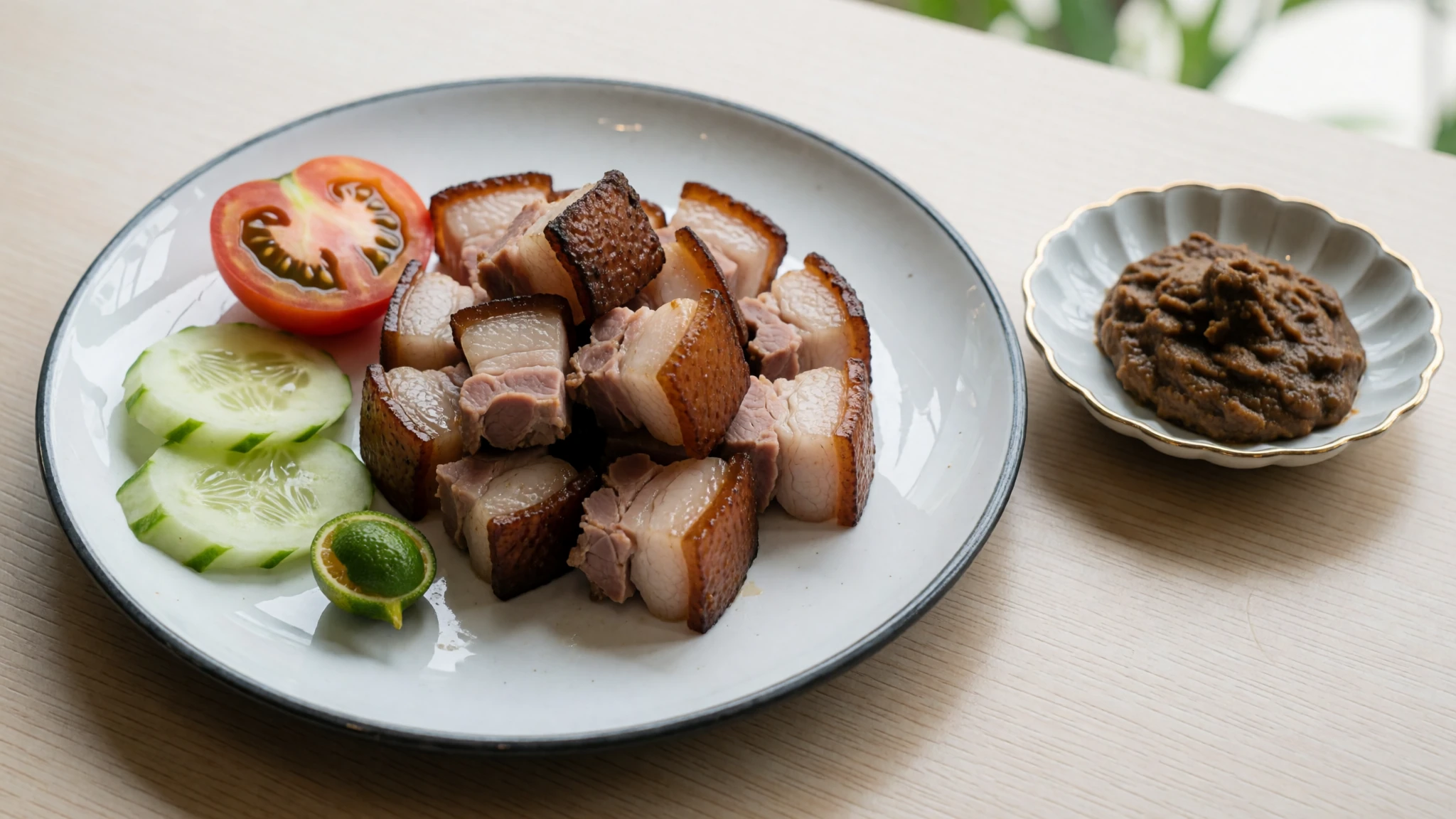
- Nasi campur — Any local warung in the town centre
A mixed plate of rice with a selection of small dishes, which may include vegetables, sambal, tempeh and a little meat. It is an everyday meal rather than a special occasion, and is one of the easiest ways to sample several flavours at once.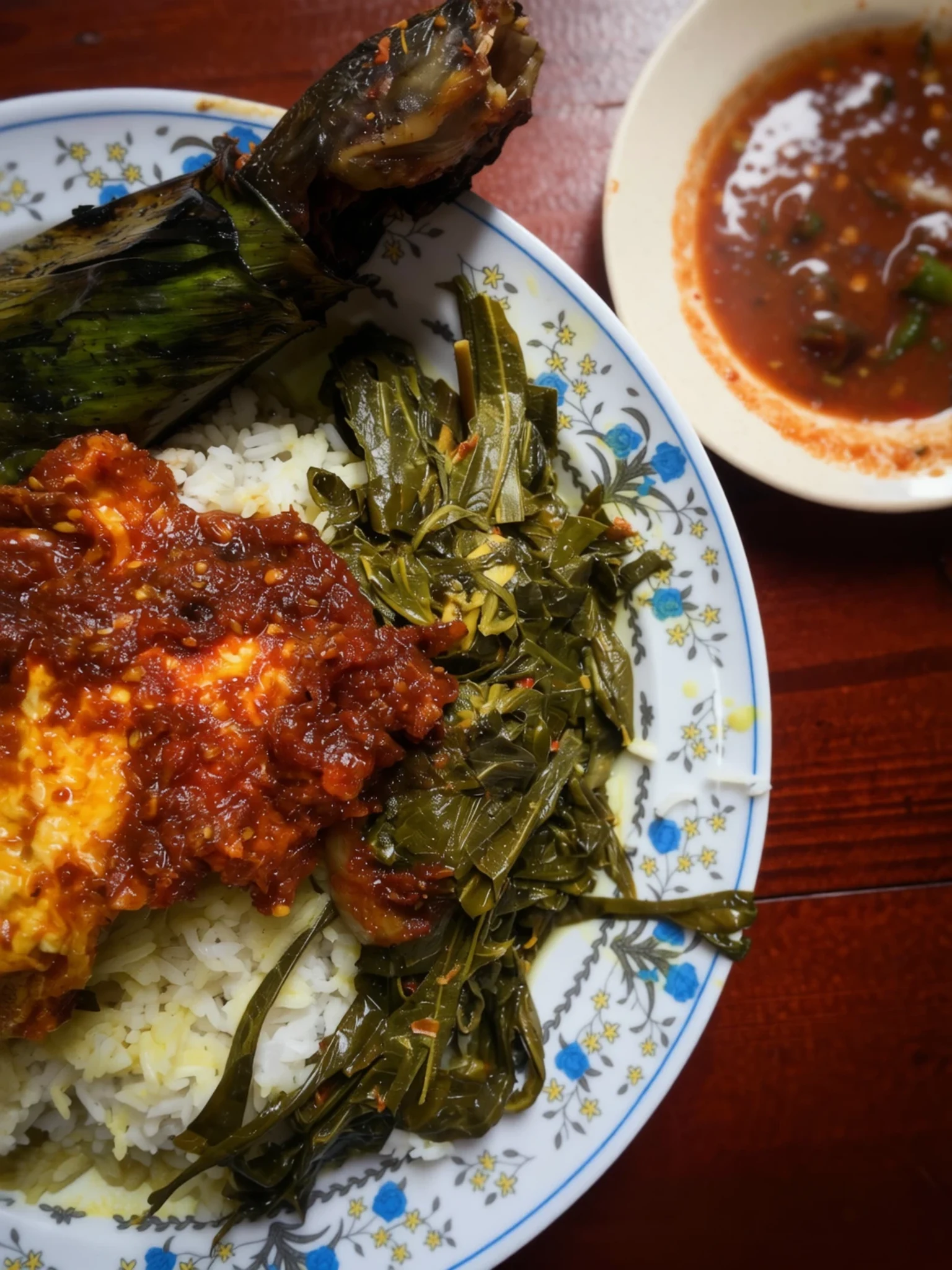
- Sate lilit — Beachfront warungs on the island's coast
Minced fish or meat, mixed with spices and coconut, is pressed around lemongrass stalks and grilled over charcoal. The grilled skewers are typically served with rice and sambal. They are a good choice when the sea is calm and the warungs are busy.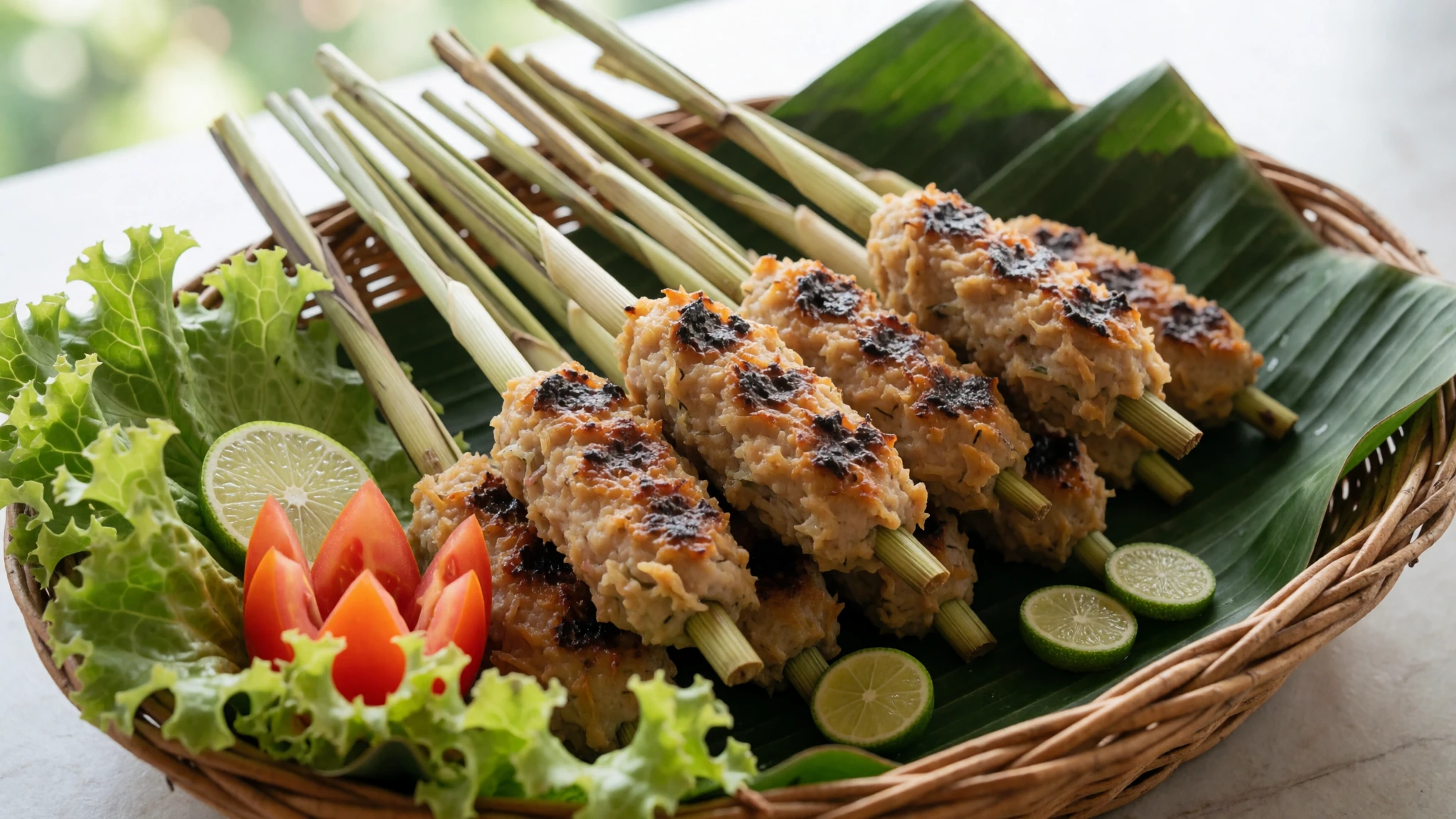
- Night market snacks — The night market on Jalan Gunung Rinjani in Klungkung town
The evening market is the place for grilled satay, fried snacks and sweet pancakes cooked to order. Stalls change nightly and the food moves quickly, which makes it a lively way to finish an evening. Carry small notes for paying.
Plan it
Best time. May to September, the drier months, when boat crossings are generally calmer and the hills are at their most open. The late dry season brings strong heat and dusty paths, and the wet months bring rougher water and heavier rain.
How long. 2–3
Getting there. Fly into Ngurah Rai International Airport near Denpasar, then take a public or fast boat from a mainland harbour such as Sanur or Padang Bai to one of the island's dock points.
Budget. mid
Tips
- Book boat seats a day ahead in high season and confirm your return time before you arrive
- Reach the cliff viewpoints before late morning, when tour groups arrive
- Carry cash for warungs, parking and small fees, since card payment is limited outside larger places
- Hire a driver for the steep, uneven roads unless you are very confident on a scooter
- Fill water bottles before leaving the main roads, as shops are sparse in the interior
- Allow for boat cancellations in rough seas and keep a flexible plan
Etiquette
- Dress modestly when entering villages and temples
- Keep away from bird nests and do not feed the birds
- Ask before photographing people or ceremonies
Nearby
Sources
- Wikidata Q4201319 (CC0)
- Wikipedia: Nusa Penida (CC BY-SA 4.0)
- Wikivoyage: Klungkung (CC BY-SA 4.0)